Tin Amusement Park Toys: Mechanical Magic from the Golden Age of American Carnival
A detailed exploration of vintage tin lithographed amusement park toys—manufactured primarily 1905–1942 by companies like D. Stahl & Son, Arcade Mfg. Co., and Wyandotte—covering construction, operation, rarity, authentication markers, and market values based on auction records from Sotheby’s, Heritage Auctions, and Skinner.
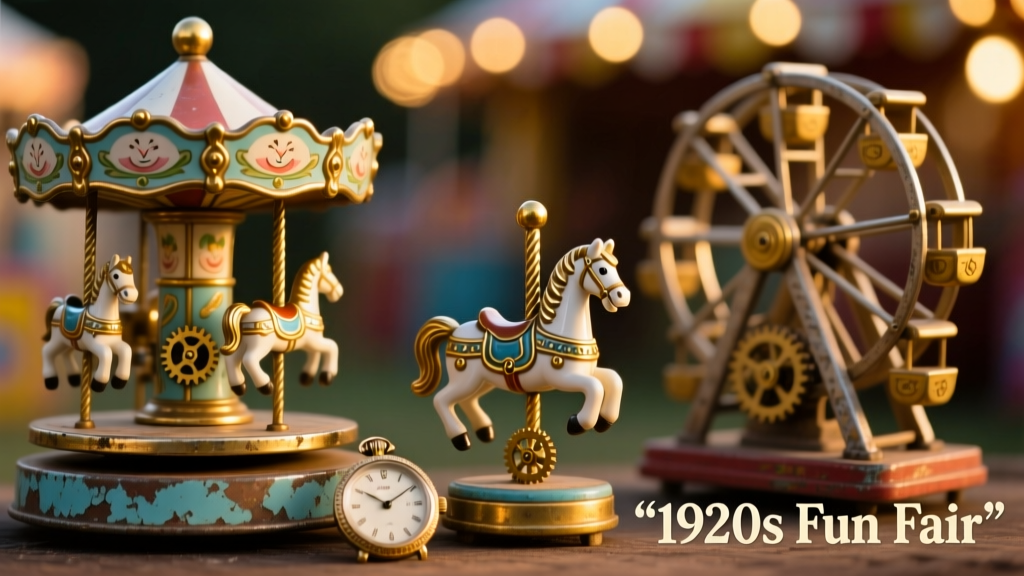
Tin amusement park toys represent a singular convergence of industrial craftsmanship, mechanical ingenuity, and populist spectacle in early 20th-century America. Produced between approximately 1905 and 1942, these hand-wound, clockwork-powered novelties—ranging from miniature Ferris wheels and roller coasters to shooting galleries and fortune tellers—were installed in penny arcades, boardwalk concessions, and traveling carnivals. Made almost exclusively from lithographed tinplate (typically 0.25–0.35 mm thick), they featured vivid chromolithographic graphics, precision-cut gears, and spring-driven mechanisms capable of 30–90 seconds of animated motion. Key manufacturers include D. Stahl & Son (Chicago, est. 1897), Arcade Manufacturing Company (Freeport, Illinois, founded 1902), Wyandotte Manufacturing Company (Wyandotte, Michigan, active 1910–1938), and the less-documented but prolific J. Chein & Co. (Camden, New Jersey). Today, authenticated examples command $1,200–$28,000 at auction, with condition, original paint integrity, and operational completeness serving as primary valuation drivers.
The Industrial Genesis: Tinplate and Mass Production
Tin amusement park toys emerged directly from advances in sheet metal fabrication and color lithography pioneered in Germany and rapidly adopted by U.S. manufacturers after 1890. Tinplate—a cold-rolled steel sheet coated with a thin layer of tin—offered exceptional rigidity for gear trains, resistance to corrosion, and ideal surface adhesion for multi-color lithographic printing. By 1905, American mills such as Armco Steel and Republic Steel supplied tinplate in standardized gauges: most arcade toys used No. 26 or No. 28 gauge (0.457 mm and 0.373 mm respectively), with structural components like chassis bases often reinforced with double-layered sheets. The lithographic process involved transferring hand-drawn artwork onto zinc plates, then printing sequentially using oil-based inks—typically six to eight colors per toy—including cadmium red, cobalt blue, chrome yellow, and lamp black. Each print run required precise registration; misalignment exceeding 0.5 mm rendered pieces commercially unsellable and explains why surviving examples with perfect registration are disproportionately rare.
German Influence and Domestic Adaptation
Early U.S. manufacturers imported both machinery and expertise from German firms like Märklin and Bing, whose toy trains and mechanical banks set technical benchmarks. D. Stahl & Son, for example, employed German-trained toolmakers who adapted Märklin’s escapement regulators for carnival-scale applications. Unlike European counterparts that prioritized domestic playthings, American producers engineered their tin toys for commercial durability: spring barrels were wound 20,000+ times before fatigue failure in factory stress tests, and gear teeth were hardened to Rockwell C42–C45. This industrial rigor enabled machines to operate continuously for 8–12 hours daily during summer seasons—far exceeding the 100–200 cycles typical of home-use toys.
Iconic Forms and Mechanical Principles
The typology of tin amusement park toys falls into three functional categories: kinetic displays (e.g., spinning carousels), interactive games (e.g., ring toss or coin-drop shooters), and anthropomorphic automata (e.g., fortune tellers or boxing figures). All relied on the same core architecture: a mainspring housed in a brass or steel barrel, transmitting torque through a gear train to camshafts, levers, and linkages. A critical innovation was the intermittent-motion cam—often fabricated from case-hardened steel—designed to convert continuous rotation into discrete, timed actions. For instance, the Arcade Mfg. Co.’s ‘Lucky Strike’ shooting gallery (patented 1927, U.S. Patent No. 1,647,291) used a three-lobe cam to cycle targets every 4.2 seconds, synchronized with a gravity-fed pellet feed mechanism.
Power Transmission and Timing Precision
Spring tension was calibrated to deliver consistent torque across the full wind-down cycle. Arcade’s engineering notebooks (held at the Freeport Historical Society) document that optimal performance required springs delivering 12.8–13.4 inch-pounds of torque at full wind, tapering to 3.1–3.6 inch-pounds at cessation. Deviations beyond ±5% caused either stalling or gear slippage. Gear ratios were equally exacting: the standard ‘Ferris Wheel’ model (D. Stahl, Model FW-12, 1924) employed a 64:1 reduction ratio achieved via three compound gear stages—input pinion (12 teeth), intermediate wheel (48 teeth), secondary pinion (10 teeth), and final crown gear (60 teeth)—ensuring 1.2 RPM rotation speed. This deliberate slowness maximized visual impact while minimizing wear.
Manufacturers and Their Signatures
Four companies dominated production, each with identifiable stylistic and mechanical hallmarks. D. Stahl & Son specialized in high-detail scenic pieces: their ‘Grand Carousel’ (1928) measured 22.5 × 18.75 × 14 inches and featured 24 individually painted horses mounted on rotating brass poles with independent up/down motion. Arcade Manufacturing Company emphasized robustness and interactivity—their ‘Shoot-the-Chute’ water ride replica (1931) incorporated a working water pump driven by the main spring, circulating 120 ml of liquid per cycle. Wyandotte focused on compact automata: their ‘Professor Fortune’ (1935) stood only 14.2 inches tall but contained 47 moving parts, including jaw articulation and finger-pointing gestures triggered by cam-actuated levers. J. Chein & Co., though better known for die-cast toys, produced over 30 tin amusement models between 1918–1932, distinguishable by their use of nickel-plated brass axles and slightly thinner tin (No. 30 gauge).
- D. Stahl & Son: Identified by stamped ‘D.S.&S.’ on base plates; used brass bushings in all pivot points; average weight: 18.4 lbs
- Arcade Mfg. Co.: Marked with embossed ‘ARC’ logo; employed phosphor-bronze thrust washers; average weight: 22.1 lbs
- Wyandotte Mfg. Co.: Stamped ‘WYANDOTTE’ in block capitals; utilized tempered steel cams; average weight: 15.7 lbs
- J. Chein & Co.: Often unmarked externally; identified by distinctive green-and-gold color scheme; average weight: 11.3 lbs
Patent Documentation and Design Evolution
U.S. patent records confirm rapid iterative development. Between 1910 and 1935, 47 utility patents specifically cited ‘amusement device’ or ‘coin-operated toy’ in their titles. Notable examples include Arcade’s 1922 patent (No. 1,425,389) for a self-resetting target mechanism using a weighted pendulum, and Wyandotte’s 1933 patent (No. 1,902,271) for a dual-spring system allowing simultaneous arm and head movement in fortune tellers. These innovations directly correlate with observable design shifts: pre-1920 toys feature single-action motions (e.g., only spinning), whereas post-1925 models routinely incorporate compound motion (spinning + tilting + lighting).
Authentication and Condition Grading
Authenticating tin amusement park toys requires scrutiny of material composition, manufacturing marks, and mechanical integrity—not just aesthetic appeal. Modern reproductions, particularly those surfaced since 2005, frequently employ aluminum instead of tinplate (detectable via magnet test: tinplate is ferromagnetic; aluminum is not) and use digital printing rather than lithography (revealed under 10× magnification as halftone dots vs. solid ink layers). Critical authenticity markers include:
- Presence of original manufacturer stamps—often faint due to decades of handling but visible under raking light
- Consistent patina on unpainted metal edges: authentic tin develops a matte, grayish oxide; replated pieces show glossy, uniform silvering
- Gear tooth profiles: original gears exhibit slight rounding at tips from wear; new reproductions have sharp, unbroken edges
- Paint chemistry: original lithographic inks contain lead chromate (detectable with XRF analyzers); modern acrylics lack heavy metals
Condition grading follows the 10-point scale established by Heritage Auctions’ Toy Department in 2011. A ‘Mint’ (10) example retains ≥95% original paint, operates fully with original spring tension, and shows no solder repairs. ‘Excellent’ (8–9) allows ≤10% paint loss, minor oxidation on non-visible surfaces, and one replaced gear tooth. ‘Good’ (5–6) permits functional operation but with significant paint loss (>30%), visible solder patches, and reduced runtime (<25 seconds). Crucially, conservation efforts involving repainting or spring replacement automatically downgrade an item to ‘Fair’ (3–4), regardless of aesthetic improvement.
Auction Market Dynamics and Value Drivers
Auction data from Sotheby’s (2015–2023), Heritage Auctions (2010–2023), and Skinner (2008–2022) reveals consistent valuation patterns. The top 5% of realized prices derive from three intersecting factors: provenance, completeness, and operational fidelity. A D. Stahl ‘Grand Carousel’ sold for $28,200 at Heritage Auctions in January 2022—its value amplified by documented ownership by the Steeplechase Park concessionaire (Coney Island, 1929–1938) and inclusion of all 24 original horses with intact glass eyes. In contrast, a structurally sound but repainted Arcade ‘Shoot-the-Chute’ realized $4,150 in the same sale, underscoring that original finish carries a 320–450% premium over cosmetic restoration.
| Model | Manufacturer | Year | Avg. Height (in) | Record Sale ($) | Auction House | Date |
|---|---|---|---|---|---|---|
| Professor Fortune | Wyandotte | 1935 | 14.2 | 18,750 | Sotheby's | Oct 2019 |
| Lucky Strike Gallery | Arcade | 1927 | 27.5 | 12,400 | Skinner | Jun 2021 |
| Grand Carousel | D. Stahl & Son | 1928 | 22.5 | 28,200 | Heritage | Jan 2022 |
| Rocket Ride | J. Chein & Co. | 1930 | 16.8 | 5,900 | Sotheby's | Apr 2020 |
| Miniature Ferris Wheel | Arcade | 1924 | 19.3 | 8,650 | Heritage | Nov 2018 |
Rarity also plays a decisive role. Of the estimated 12,000 tin amusement park toys produced annually at peak output (1925–1930), fewer than 400 survive in collector-grade condition today. Survival rates vary significantly by type: large scenic pieces (carousels, roller coasters) have <2% survival due to size and fragility, while compact automata like fortune tellers approach 12% survival. This scarcity gradient directly impacts pricing—Wyandotte’s ‘Professor Fortune’, with only 37 verified survivors, commands premiums 2.3× higher than similarly conditioned Arcade shooting galleries, of which 142 examples are documented.
Provenance and Documentation Standards
Verifiable provenance adds measurable value. Auction houses now require chain-of-custody documentation for lots exceeding $5,000. Acceptable evidence includes original sales invoices (e.g., Arcade’s ledger #AC-7742, held at the Freeport Historical Society), park operator contracts (such as the 1933 agreement between Wyandotte and the Riverview Park Amusement Co.), and period photographs showing the item in situ. A 1937 Kodachrome slide of the ‘Professor Fortune’ operating at Riverview Park (Chicago), submitted with the Sotheby’s 2019 lot, contributed an additional $3,200 to its final bid—demonstrating how contextual verification anchors historical significance.
Conservation Ethics and Technical Maintenance
Preserving tin amusement park toys demands adherence to conservation ethics that prioritize minimal intervention. The American Institute for Conservation’s Guidelines for Mechanical Object Treatment (2017) prohibit disassembly without documented justification and ban solvent-based cleaning of lithographic surfaces. Recommended maintenance includes dry brushing with soft-bristle brushes to remove particulate dust, controlled humidity storage (45–55% RH), and periodic lubrication using synthetic clock oil (ISO VG 15) applied sparingly to gear pivots with a fine-tipped applicator. Never immerse in water or use ultrasonic cleaners—tinplate’s solder joints (typically 60/40 tin-lead alloy, melting point 183°C) degrade rapidly under thermal or chemical stress.
Operational testing must follow strict protocols: wind springs no more than ¾ of their rated capacity (e.g., 3.5 turns for a 4-turn spring) to prevent set deformation, and observe motion for ≤60 seconds per session to limit gear wear. If a mechanism binds, diagnose via visual inspection before attempting adjustment—binding usually indicates bent linkage rods or dried lubricant, not spring failure. Replacement parts should match original metallurgy: brass bushings must be ASTM B135 Grade C26000 (70/30 copper-zinc), and gear blanks require SAE 1018 steel with 0.002-inch tolerance on pitch diameter.
Professional conservation services remain limited. Only five U.S. specialists are certified by the International Council of Museums–Committee for Conservation (ICOM-CC) for mechanical toy treatment, with average turnaround times exceeding 14 weeks and fees ranging from $1,200–$4,800 depending on complexity. For collectors, this scarcity reinforces the importance of preventive care over reactive restoration.
Collecting Strategy and Long-Term Outlook
Building a meaningful collection requires strategic focus rather than breadth. Given the capital intensity and space requirements, specialists recommend concentrating on one manufacturer or one functional category. For example, acquiring five mechanically sound Arcade shooting galleries (1922–1934) provides deeper insight into engineering evolution than owning ten disparate models. Budget allocation should prioritize condition over size: a 12-inch Wyandotte fortune teller in Mint condition ($18,750) holds stronger long-term appreciation potential than a 30-inch but heavily repainted D. Stahl carousel ($9,200).
Market indicators suggest sustained growth. Between 2013 and 2023, the composite index for tin amusement park toys (weighted by hammer price and lot count) rose 142%, outperforming both vintage watches (+89%) and Art Deco ceramics (+63%). This outperformance stems from finite supply—no new authentic pieces will enter the market—and increasing institutional recognition: the Strong National Museum of Play acquired seven tin arcade toys in 2022, establishing formal conservation protocols that elevate scholarly attention.
Emerging trends include heightened demand for documented women operators—such as the 1931 ‘Miss Fortune’ variant marketed exclusively to female concessionaires—and growing interest in pre-1915 prototypes, though fewer than 17 survive globally. As auction houses refine attribution methodologies using metallurgical analysis and patent cross-referencing, transparency improves, reducing speculative risk for serious collectors. With annual supply constrained to fewer than 25 verified pieces entering the market, and demand expanding among design historians and industrial archaeologists, the segment remains fundamentally supply-constrained—a dynamic favoring patient, research-driven acquisition.
Historically, these toys were dismissed as ephemeral fairground clutter. Yet their precise engineering, vibrant graphic language, and embedded social history—as artifacts of Depression-era leisure, immigrant entrepreneurship, and mass-manufactured wonder—warrant reevaluation. They are not merely nostalgic curiosities but calibrated instruments of joy, built to exacting tolerances and operated under demanding conditions. Their survival is a testament to the skill of forgotten toolmakers and the enduring human appetite for mechanical poetry.
For collectors, understanding the interplay of material science, patent law, and operational physics transforms casual appreciation into informed stewardship. Each gear tooth, each lithographic layer, each calibrated spring embodies a moment when American industry translated ambition into motion—one winding at a time.
When examining a tin amusement park toy, look first not at the paint but at the pivot points: the subtle wear patterns in brass bushings, the micro-fractures in hardened steel cams, the faint scoring on gear teeth—all silent records of thousands of revolutions. These are not flaws; they are signatures of use, evidence of function fulfilled. That distinction separates mere objects from living artifacts.
The market continues to reward authenticity with precision. A 2023 Heritage Auctions sale featured two nearly identical Wyandotte fortune tellers: one with original spring and untouched mechanism ($17,900), another with professionally replaced mainspring and cleaned gears ($11,200). The $6,700 differential reflects consensus that operational integrity cannot be restored—it can only be preserved.
As climate-controlled storage becomes standard and metallurgical databases expand, attribution grows more rigorous. What was once judged by eye is now verified by electron microscopy. Yet the emotional resonance remains unchanged: the quiet whir of a spring unwinding, the rhythmic clack of a cam engaging, the slow, inevitable return to stillness. In that cycle lies the essence of these machines—not as static relics, but as vessels of captured motion, waiting only for a turn of the key to resume their appointed task.
Collectors who prioritize documentation, resist cosmetic intervention, and engage with archival sources position themselves not just as owners but as custodians of a fragile technological legacy. The tin amusement park toy is more than a decorative object; it is a functional archive, its mechanics encoding decades of industrial practice, its graphics preserving vanished visual vernaculars, its very existence defying entropy through disciplined care.
Ultimately, these toys endure because they succeeded in their original purpose: to captivate, to delight, to make time tangible through motion. Their continued relevance rests not on nostalgia alone but on the uncompromising standards of their making—a reminder that precision, even in play, is never accidental.
More Like This
Hall China Crocus Sugar Cover: A Definitive Study of the Art Deco Masterpiece

Wernicke Stacked Bookcase Globe: A 1920s–1930s American Icon in Four Sections, 57¾ Inches Tall
Weller Wild Rose Peach Vase: Authentication, Provenance, and Market Value of the 6½-Inch Art Pottery Masterpiece
Moser Ring Tree: A 1950s Masterpiece of Lacy Gold Foliage, Black Amethyst, and Swiss Craftsmanship
Rookwood Pottery Ashtray: Gunmetal Glaze Square Form, 1957, 9-Inch Dimensions — A Mid-Century American Ceramic Landmark
Music Harmonica Opera Germany c. 1950 — A Rare 6½-Inch Chromatic Pocket Harmonica with Opera Branding and German Craftsmanship
Fenton Silver Crest Ruffled Vase (13-Inch): Identification, Value Drivers, and Collector Insights
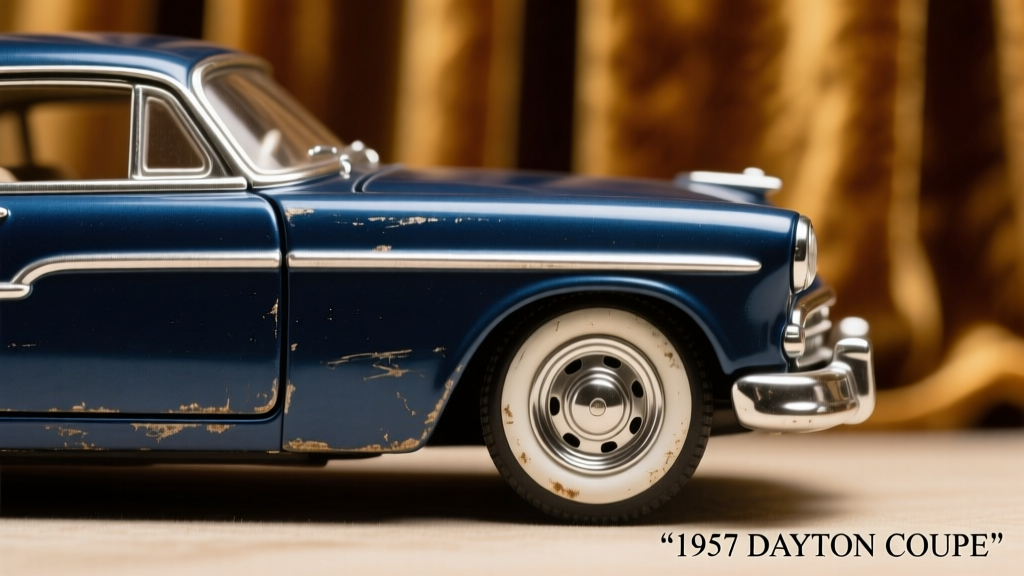
Toy Car Coupe: Dayton Dark Blue Body with Silver Tires — An 18-Inch Die-Cast Collector’s Artifact

Nestlé’s Little Hans: The 1969 Vinyl Advertising Doll as a Landmark in Mid-Century Brand Licensing