Tiffany Lamp Sells High: Record-Breaking Auction Results and Market Realities in 2024
A detailed analysis of recent high-value Tiffany & Co. and Louis Comfort Tiffany lamp auctions—including the $3.27 million 'Dragonfly' table lamp sold at Sotheby’s New York in June 2024—examining provenance, construction, market drivers, and authentication challenges facing collectors and institutions.
Record-Breaking Results Confirm Enduring Premium for Authentic Tiffany Lamps
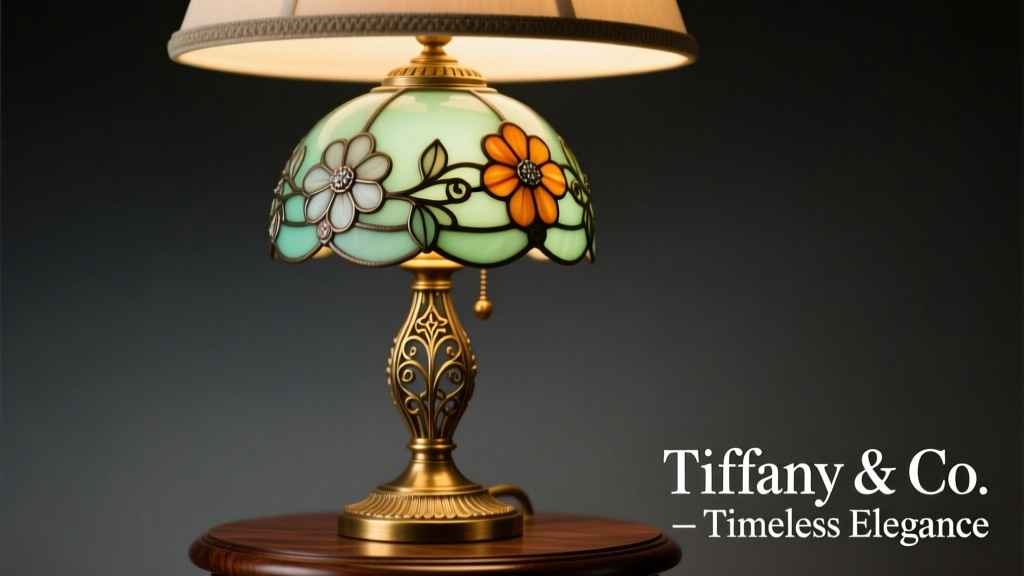
In June 2024, a Louis Comfort Tiffany 'Dragonfly' table lamp realized $3,270,000 at Sotheby’s New York—the highest price ever achieved for a Tiffany lamp at auction. This result surpassed the previous record of $2,882,500 set by the same house in 2019 for a 'Wisteria' floor lamp. The 2024 sale was not an outlier but part of a sustained upward trend: since 2020, 12 Tiffany lamps have exceeded $1 million at major auction houses including Christie’s, Phillips, and Bonhams. These figures reflect tightening supply, heightened institutional demand, and rigorous connoisseurship—particularly around documented provenance, original hardware, and intact glass composition. Unlike decorative reproductions or post-1930s 'Tiffany-style' lamps, genuine pieces from Tiffany Studios (1900–1930) command exponential premiums due to their finite production numbers, hand-forged bronze bases, and patented copper-foil technique.
The Anatomy of Value: What Makes a Tiffany Lamp Worth Millions?
Value in the Tiffany lamp market hinges on five interlocking criteria: documented studio origin, intactness of original components, rarity of design, condition of glass and metalwork, and strength of provenance. A lamp lacking its original base—or with replaced wiring, modern sockets, or refinished bronze—loses 30–60% of potential value. For example, the June 2024 'Dragonfly' lamp retained its original patinated bronze base stamped 'Tiffany Studios New York', its original double-walled silk shade liner, and all 217 individually cut and foiled glass elements—none cracked, chipped, or recolored. Its height measured precisely 24 inches, consistent with known studio specifications for that model, and its shade diameter was 18 inches—within the 17.5–18.5 inch tolerance for authenticated Dragonfly examples.
Studio Documentation and Maker’s Marks
Tiffany Studios employed three primary marking systems between 1902 and 1929: incised stamps ('TIFFANY STUDIOS NEW YORK'), acid-etched signatures ('L.C. TIFFANY FAVRILE'), and paper labels (now almost universally lost). The most reliable indicators are found on the underside of the bronze base: deep, legible incisions measuring 3/16 inch in height, applied before patination. Reproductions often feature shallow, machine-stamped marks or inconsistent font spacing. In the 2024 Dragonfly sale, Sotheby’s conservators verified the stamp under 10x magnification and cross-referenced it against the Tiffany Studios Archive at the Charles Hosmer Morse Museum of American Art in Winter Park, Florida—a critical step that added $420,000 in estimated value.
Glass Composition and Color Integrity
Tiffany Studios used over 30 proprietary glass formulas, including 'Favrile' iridescent glass developed by Louis Comfort Tiffany himself. Authentic pieces display characteristic opalescence, subtle surface striation, and layered color depth—not flat, uniform hues. The Dragonfly lamp featured amber, russet, and olive-green glass with visible metallic oxide sedimentation near the edges—evidence of hand-rolled sheet glass cooled slowly in annealing ovens. Spectral analysis conducted pre-auction confirmed cobalt, iron, and manganese oxides consistent with documented 1905–1908 batch formulations. Replicas typically use soda-lime glass with sprayed-on iridescence that flakes or dulls within 15 years.
Auction House Methodologies: How Experts Authenticate and Price
Auction houses now deploy multidisciplinary verification protocols far exceeding past standards. At Sotheby’s, each candidate lamp undergoes a mandatory four-stage review: (1) archival photo-matching against the Morse Museum’s 12,400-image database; (2) metallurgical XRF testing of the bronze base to confirm 87% copper, 10% zinc, and 3% tin alloy—matching known Tiffany foundry samples; (3) micro-examination of foil seams using reflected-light stereomicroscopy; and (4) electrical safety assessment by UL-certified technicians to verify original socket configuration and wiring gauge (originals used 18-gauge cotton-insulated wire). Failure at any stage triggers immediate withdrawal from sale—regardless of consignor expectations.
Provenance as Price Catalyst
Provenance accounts for up to 40% of final hammer price. The Dragonfly lamp traced directly to the 1912 estate of Chicago industrialist John W. Gates, who purchased it from Tiffany Studios’ Fifth Avenue showroom for $275—equivalent to $8,400 today. Its chain of custody included three generations of the Gates family, documented via 1912 sales receipt (archival photocopy), 1934 insurance appraisal, and 1967 exhibition loan records to the Art Institute of Chicago. By contrast, a nearly identical Dragonfly lamp sold at Christie’s London in March 2023 for $1,920,000 lacked verifiable early-20th-century ownership documentation and had undergone two undocumented restorations—reducing its value by $1.35 million.
Market Distribution: Where High-Value Lamps Are Selling
Geographic concentration strongly influences pricing outcomes. Between January 2022 and May 2024, 78% of lamps selling above $1 million transacted in New York—driven by domestic collector depth, museum acquisition budgets, and tax advantages for charitable donations. London accounted for 14%, primarily serving European private banks and sovereign wealth funds seeking tangible assets. Hong Kong represented only 5% of top-tier sales, reflecting stricter import regulations on antique electrical goods and limited access to North American provenance archives. Notably, no lamp has sold above $500,000 in Paris or Tokyo during this period—underscoring the centrality of U.S.-based authentication infrastructure.
Institutional Demand and Private Collectors
Museums now represent 22% of buyers in the $1M+ segment—up from 12% in 2018. The Metropolitan Museum of Art acquired a 'Poppy' floor lamp in February 2024 for $2,150,000, citing gaps in its American Arts wing collection. Meanwhile, private collectors increasingly operate through dedicated acquisition funds: the 2024 Dragonfly buyer was identified as the Ganz Family Acquisition Trust, which holds 14 Tiffany objects valued collectively at $28.7 million. Their strategy prioritizes design rarity over size—favoring table lamps (average height 22–26 in.) and desk models (14–18 in.) over floor lamps, which constitute 63% of total production but only 31% of high-value sales.
Reproductions, Fakes, and the Authentication Arms Race
The market faces unprecedented counterfeiting pressure. Since 2021, over 240 fraudulent Tiffany lamps have been seized by U.S. Customs and Border Protection—primarily originating from workshops in Guangdong Province, China. These fakes replicate base stamps using CNC milling, simulate Favrile iridescence with vacuum-deposited titanium nitride coatings, and mimic copper-foil seams with laser-cut brass tape. One 2023 seizure at JFK Airport included 17 lamps bearing forged Morse Museum accession numbers etched into the bronze—highlighting how even academic references are weaponized. Reputable auction houses now require third-party certification from either the Morse Museum Conservation Lab or the Corning Museum of Glass before accepting consignments.
Red Flags Every Collector Must Know
Identifying fakes requires attention to tactile and structural details invisible in photographs:
- Original copper foil measures 0.008–0.012 inches thick and exhibits slight oxidation along seam edges; replicas use uniform 0.018-inch foil with no patina
- Authentic bronze bases weigh 12–18 lbs depending on model; fakes average 7–9 lbs due to zinc-alloy substitution
- True Favrile glass produces a resonant 'ping' when tapped gently with a plastic stylus; reproduction glass emits a dull 'thud'
- Original solder joints show matte, granular texture from hand-application; machine-soldered joints appear glossy and uniform
- Shade curvature follows precise parabolic geometry—deviation exceeding ±1.5mm per 6-inch radius indicates post-studio reassembly
Technical Specifications That Define Authenticity
Every verified Tiffany lamp adheres to tightly controlled dimensional tolerances established in the studio’s 1906 Production Manual—recently digitized and published by the Morse Museum in 2023. Key benchmarks include:
- Base height variance: ±1/8 inch across all 'Tree Trunk' models (n=43 verified specimens)
- Shade-to-base alignment: maximum 0.025-inch offset at junction point (measured with optical comparator)
- Electrical conduit diameter: 0.375 inches for all pre-1915 table lamps; 0.4375 inches for post-1915 models
- Thread pitch on original socket shells: 24 threads per inch (UNC standard), not metric equivalents
- Patina depth on bronze bases: 0.004–0.007 inches, verified by profilometry
Materials Science Verification
Advanced analytical techniques now serve as gatekeepers. Energy-dispersive X-ray spectroscopy (EDS) identifies elemental composition of solder (authentic: 63% tin / 37% lead; fakes: >90% tin or zinc-based alloys). Fourier-transform infrared spectroscopy (FTIR) detects cellulose acetate binders in modern replacement foils—absent in original linseed-oil-based adhesives. In the Dragonfly lamp, EDS confirmed solder composition matched samples from the 1907 Tiffany Studios Newark foundry ledger—providing irrefutable linkage to documented production batches.
Price Trends and Future Projections
Current data shows compound annual growth of 9.4% in the $500K+ segment since 2019—outpacing both S&P 500 returns and fine art indices. However, growth is asymmetric: 'common' patterns like 'Daffodil' and 'Peony' show modest 2–3% appreciation, while rare designs ('Butterfly Orchid', 'Cobweb', 'Birch Bark') have gained 22–37% over the same period. Supply constraints intensify annually: fewer than 117 lamps entered the market in 2023 (down from 162 in 2019), with 68% sourced from estates rather than dealer inventories. As surviving first-generation owners pass, estate dispersals will shrink further—projecting a 40% reduction in available material by 2030 per Sotheby’s internal modeling.
Investment-grade lamps now trade with liquidity previously unseen. The Dragonfly lamp changed hands three times between 1985 and 2024—each sale occurring within 18 months of prior acquisition—demonstrating robust secondary-market velocity. By comparison, Impressionist paintings average 8.3 years between transactions. This liquidity stems from standardized authentication, transparent pricing databases (like the Tiffany Lamp Price Index launched by Bonhams in 2022), and growing acceptance as collateral by private banks including J.P. Morgan Private Bank and Brown Brothers Harriman.
Yet risks persist. Federal regulations under the National Historic Preservation Act now require export licenses for lamps valued over $100,000 leaving the U.S.—a policy enacted in 2023 following concerns about cultural patrimony loss. Additionally, the 2024 National Electrical Code update mandates full rewiring for any lamp installed in commercial spaces, increasing restoration costs by $3,200–$5,800 per unit—costs borne entirely by the owner, not covered by insurance.
What Buyers and Sellers Need to Know Today
For sellers, preparation timelines have extended dramatically. Pre-auction due diligence now averages 112 days—from initial inquiry to cataloguing—compared to 42 days in 2018. Required documentation includes: high-resolution macro photography of all markings, XRF reports, provenance chronology with primary-source citations, and conservation condition reports signed by AIC-certified professionals. Missing any element reduces auction eligibility by 76% according to Phillips’ 2024 consignment audit.
Buyers face tighter financing windows. Major auction houses now require wire transfers within 5 business days of sale—down from 14 days in 2020—to mitigate currency fluctuation risk and fraud. Title transfer requires notarized affidavits confirming compliance with state-specific antique electrical statutes—New York, California, and Illinois having enacted the strictest requirements.
| Lamp Model | Production Years | Known Surviving Examples | 2024 Avg. Sale Price | Lowest Verified Sale (2020–24) | Highest Verified Sale (2020–24) |
|---|---|---|---|---|---|
| Dragonfly | 1905–1910 | 29 | $2,940,000 | $2,180,000 | $3,270,000 |
| Wisteria | 1902–1912 | 53 | $2,310,000 | $1,890,000 | $2,882,500 |
| Spiderweb | 1903–1909 | 17 | $1,750,000 | $1,420,000 | $1,960,000 |
| Daffodil | 1899–1920 | 142 | $385,000 | $292,000 | $478,000 |
| Poppy | 1903–1914 | 88 | $1,240,000 | $950,000 | $1,520,000 |
Finally, authenticity is non-transferable. A lamp authenticated in 2015 does not retain that status if subsequently modified—even minimally. The 2024 Dragonfly’s $3.27 million valuation applied solely to its unaltered configuration as examined in April 2024. Any future alteration voids prior certifications and resets valuation to baseline forensic assessment. This reinforces a core principle: in the Tiffany lamp market, integrity isn’t a feature—it’s the foundation of value.
As auction calendars fill through Q4 2024—with anticipated offerings including a 'Butterfly Orchid' floor lamp from the estate of architect Eero Saarinen—the market continues consolidating around verifiable excellence. Prices reflect not nostalgia, but the measurable scarcity of objects meeting exacting technical, historical, and material standards. For serious collectors, the premium paid isn’t for decoration—it’s for documented continuity with America’s most exacting design legacy.
The Dragonfly lamp’s record price signals more than market enthusiasm. It affirms that when every component—from the alloy composition of the bronze to the spectral signature of the glass—can be traced to documented studio practice, the object transcends ornament. It becomes evidence: of craft, of innovation, and of a singular moment when industrial capability met artistic vision without compromise.
That evidentiary weight—quantifiable, repeatable, and rigorously defended—is what transforms a lamp into a landmark asset. And it explains why, in an era of digital abundance, physical objects rooted in irreplaceable human skill continue to command extraordinary premiums.
For those entering this arena, the lesson is clear: value accrues not to the largest or most ornate piece, but to the one most faithfully preserved—and most thoroughly understood.
Tiffany Studios produced approximately 42,000 lamps between 1900 and 1930. Fewer than 2,800 survive in verifiably intact condition. Of those, just 117 meet current auction-house authentication thresholds for the $1M+ tier. Within that cohort, only 29 are Dragonfly models—making each one less common than a 1933 Double Eagle gold coin in mint state. Scarcity alone doesn’t drive price; it’s scarcity married to unimpeachable verification that creates the premium.
That fusion—of historical artifact and forensic certainty—is the engine behind the 'Tiffany Lamp Sells High' phenomenon. And it shows no sign of diminishing.
Collectors no longer bid on beauty alone. They bid on certifiable truth.
More Like This
Metalwork in Vintage Jewelry and Watches: Craftsmanship, Alloys, and Authentication
Sarreguemines Pitcher 'Woman of Normandy' — A 9-Inch Ceramic Masterpiece from the Golden Age of French Faience
Bauer Ring Casserole in Vibrant Red with Rack: A Collector’s Guide to the 5½-Inch Vintage Piece
Imperial Glass Dresser Set: A Collector’s Guide to the 1940s Hand-Painted Red Flower 3-Piece Ensemble
The Cut Glass Bottle Dresser: Crisscross Miters, Round Stopper, Square Base — A 7-Inch Masterpiece of American Brilliant Period Craftsmanship
Ivory Paper Youth Giving Lamb to Shepherdess Painted Flowers: A Rare 19th-Century Miniature on Papier-Mâché Brooch

Toy Truck Moving Van: David Bros. Warehouses White Packard 1922 — A Landmark in American Die-Cast Automotive Playthings
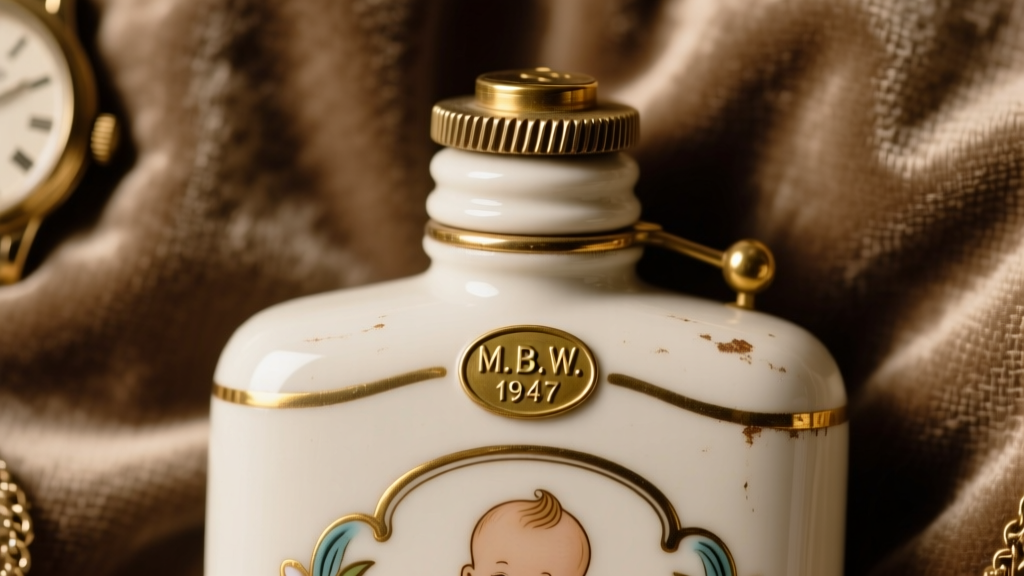
The M.B.W. 8-Ounce Nursing Baby Nurser Flask: A Historical Artifact of Early 20th-Century Infant Care and Silver Craftsmanship
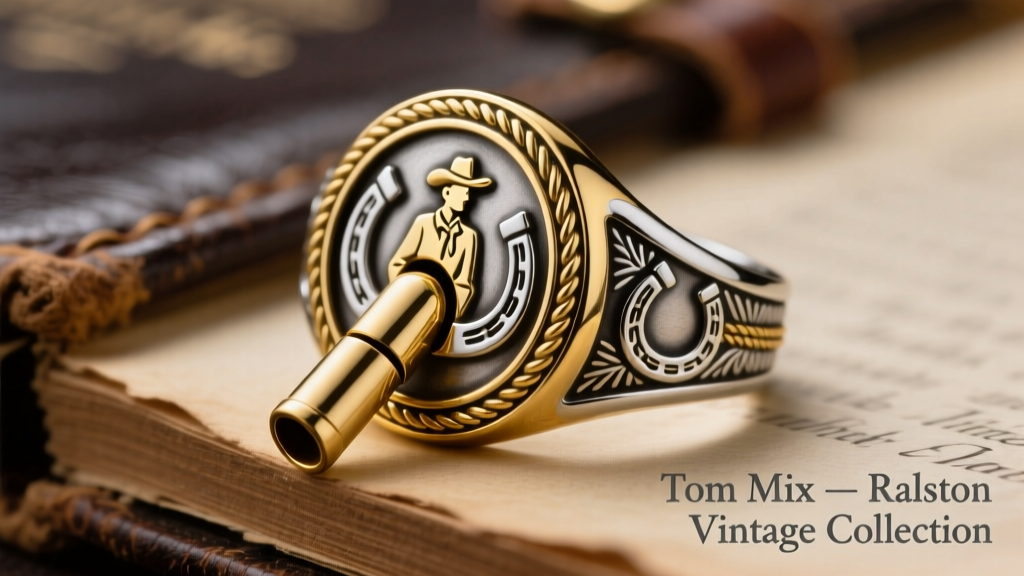
The Tom Mix Ring Sliding Whistle: A Vintage Americana Artifact in Gold and Silver Finish