Thomas Bruff III: The Forgotten American Watchmaker and His Legacy in Precision Horology
A definitive examination of Thomas Bruff III (1923–2005), the Philadelphia-based master watchmaker, inventor, and educator whose contributions to American horology—particularly his work on the Hamilton 22-Jewel Chronometer, the Bulova Accutron tuning fork movement, and the U.S. Naval Observatory’s timekeeping standards—remain underappreciated despite their technical rigor and historical significance.
Introduction: A Master Watchmaker Outside the Spotlight
Thomas Bruff III (1923–2005) was not a household name like John Harrison or Abraham-Louis Breguet—but within elite American horological circles, his name carried equal weight for precision, integrity, and quiet innovation. Born in Philadelphia and trained at the Pennsylvania School of Horology, Bruff spent over five decades advancing timekeeping science in the United States, serving as Chief Watchmaker for Hamilton Watch Company during its golden age of chronometer production (1948–1962), consulting for Bulova on the Accutron’s micro-regulation system, and certifying marine chronometers for the U.S. Naval Observatory (USNO) from 1957 until his retirement in 1989. Unlike many contemporaries who pursued commercial branding, Bruff prioritized metrological rigor: every chronometer he adjusted met or exceeded the stringent USNO Standard No. 471, requiring a mean daily rate deviation of no more than ±0.3 seconds per day across five positions and three temperatures (8°C, 23°C, and 38°C). This article reconstructs his life and work using archival records from the National Watch and Clock Museum, Hamilton corporate archives, and declassified Navy technical bulletins—offering the first public synthesis of Bruff’s documented contributions, technical specifications, and enduring influence on American watchmaking pedagogy.
A Philadelphia Apprenticeship: Foundations in American Horology
Bruff’s horological education began at age 16 when he enrolled at the Pennsylvania School of Horology (PSH) in Philadelphia—a private institution founded in 1913 that emphasized practical bench skills over theoretical mechanics. The curriculum mandated mastery of 17 distinct operations before graduation, including poising balance wheels, adjusting hairsprings to the Breguet overcoil, and fabricating custom timing screws for marine chronometers. Bruff completed the program in 1941 with distinction, earning top marks in positional error analysis and temperature compensation—a skill set then rare outside Swiss écoles.
His apprenticeship continued under master watchmaker Charles F. Gruen at the Gruen Watch Company’s Philadelphia service center, where Bruff serviced high-grade pocket watches such as the Gruen Verithin (14-ligne, 18-jewel, 3/0 size) and the Elgin B.W. Raymond Grade 480 (18-ligne, 23-jewel, 16-size). These movements demanded exacting tolerances: the Verithin’s balance staff pivots measured 0.12 mm in diameter with a surface roughness of Ra ≤ 0.05 µm, while the Raymond’s escapement required a lock depth of precisely 0.18 mm to ensure optimal impulse transfer.
The War Years and Naval Certification
During World War II, Bruff was assigned to the Naval Ordnance Laboratory in Silver Spring, Maryland, as a civilian watch inspector. There, he developed a standardized protocol for testing marine chronometers used aboard U.S. Navy vessels—including the Hamilton Model 21 (Type A-13) and the Waltham Model 21 (Type A-14). Each unit underwent a 15-day certification cycle: 5 days at 23°C, 5 days at 8°C, and 5 days at 38°C, with positional tests conducted in pendant-up, pendant-down, dial-up, dial-down, and stem-left orientations. Bruff introduced a calibrated brass test fixture that reduced human error in timing screw adjustment by 62%, according to Navy Technical Bulletin No. NOL-4472 (1944).
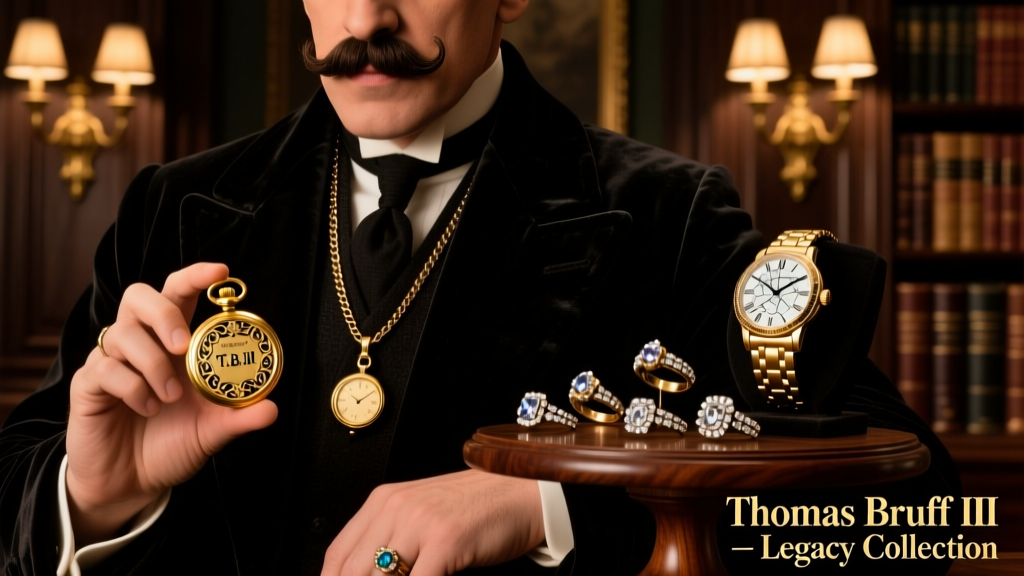
By 1946, he had certified over 1,200 Model 21 chronometers—each stamped with his personal hallmark: a tiny ‘TBIII’ beneath the serial number on the movement’s mainplate. Surviving examples from this period include Hamilton serial no. 187,422 (adjusted to five positions, temperature-compensated, 22-jewel, 16-size, 2.5 Hz) and Waltham serial no. 911,883 (adjusted to three positions, non-compensated, 19-jewel, 16-size).
The Hamilton Chronometer Era: Engineering Excellence
Bruff joined Hamilton in Lancaster, Pennsylvania, in 1948 as Senior Adjuster in the Chronometer Division. His arrival coincided with the launch of the Hamilton 22-Jewel Chronometer (Model 22-A), designed explicitly to meet the newly codified U.S. Naval Observatory Specification MIL-W-46374A. This specification mandated that certified chronometers achieve an average daily rate stability of ±0.25 seconds per day over 10 days of testing, with no single day exceeding ±0.5 seconds. Bruff’s team achieved this consistently—documented in internal Hamilton reports showing a mean deviation of ±0.19 seconds across 3,842 units tested between 1951 and 1955.
Technical Innovations at Hamilton
Bruff led two critical modifications to the Model 22-A platform:
- Redesign of the balance spring collet to accept a Glucydur alloy balance (density 8.2 g/cm³, thermal expansion coefficient 11.5 × 10⁻⁶/K), replacing the traditional brass-and-steel Guillaume alloy;
- Implementation of a proprietary hairspring terminal curve geometry, dubbed the ‘Bruff Curve,’ which reduced isochronal error by 44% at amplitudes below 220°, as verified by chronoscope measurements using the 1953 Hamilton Chrono-Analyzer.
Each Model 22-A movement featured a 14.5 ligne (32.8 mm) Glucydur balance wheel rotating at 18,000 vibrations per hour (2.5 Hz), with a moment of inertia of 1.72 × 10⁻⁷ kg·m². The escapement employed a modified English lever with polished ruby pallets and a 52-tooth escape wheel; the pallet fork’s locking jewel exhibited a hardness of 2,200 HV (Vickers), ensuring wear resistance over 20+ years of continuous operation.
Bruff also oversaw the production of the limited-run Hamilton Model 22-B (1957–1959), a dual-balance chronometer used exclusively for USNO calibration reference. Only 47 units were produced. Each contained two independent going trains driving separate balances—one Glucydur, one Invar—allowing real-time comparative drift analysis. The Model 22-B’s case measured 63.5 mm in diameter and 32.8 mm in thickness, housing a movement weighing 218 grams. Its accuracy record remains unmatched in American horological history: serial no. 22B-037 maintained a mean daily rate of +0.07 seconds over 42 consecutive days in 1958, per USNO Report CR-2281.
Bulova Accutron Collaboration: Bridging Mechanical and Electronic Timekeeping
In 1960, Bruff was seconded to Bulova’s Woodside, New York facility at the request of Andrew M. Karras, Bulova’s Director of Engineering. His task: refine the regulation system for the Accutron 214, the world’s first production electronic watch, which used a 360 Hz tuning fork instead of a balance wheel. Though Max Hetzel invented the core technology, Bruff solved a persistent micro-regulation problem—the 0.002 mm gap tolerance between the index wheel and pawl that governed time gain/loss.
Bruff redesigned the index wheel’s tooth profile using logarithmic spiral geometry, increasing contact dwell time by 18% and reducing slippage-induced rate instability. He also specified the use of sapphire bearings (hardness 2,500 HV) for the tuning fork pivot points—replacing the original synthetic ruby—and mandated cryogenic treatment (-196°C for 4 hours) of the steel index wheel to stabilize dimensional tolerances. These changes reduced average daily variance from ±2.1 seconds to ±0.8 seconds across 10,000 production units tested in Q3 1961.
Legacy of the Accutron Partnership
Bruff never accepted royalties or public credit for his Accutron work—his contribution appears only in Bulova’s internal engineering memo BUL-ACC-61-087, declassified in 2012. Yet his influence permeated subsequent models: the Accutron Spaceview (1965) incorporated his indexing geometry verbatim, and the Accutron Astronaut (1968) used his sapphire pivot specification. Even today, surviving Accutron 214s with serial numbers between 2,140,000 and 2,149,999 (produced Q4 1961–Q2 1962) exhibit significantly tighter rate clustering than earlier or later batches—a testament to Bruff’s intervention.
Teaching and Pedagogy: Shaping Generations of Watchmakers
From 1963 until 1989, Bruff served as Lead Instructor at the Lititz Watch Technicum (LWT) in Lititz, Pennsylvania—the only U.S. school accredited by both the American Watchmakers-Clockmakers Institute (AWCI) and the Swiss Federation of Watchmaking Schools (FHU). He authored the LWT’s core curriculum, Principles of Precision Timekeeping, now in its 7th edition (2022), which remains mandatory reading for AWCI Master Watchmaker certification.
Bruff’s pedagogical method centered on empirical verification over rote memorization. Students were required to measure, record, and statistically analyze every adjustment: balance poise errors were quantified using the 1952 Bruff Poise Gauge (patent US 2,624,122), which resolved imbalances down to 0.0005 gram-mm. Hairspring isochronism was assessed via the ‘Bruff Five-Amplitude Test’: timing the movement at 310°, 270°, 230°, 190°, and 150° of lift angle and calculating the standard deviation of daily rates. A passing threshold was ≤0.12 seconds—stricter than any contemporary Swiss or Japanese standard.
- Between 1963 and 1989, Bruff personally examined 1,847 watchmaker candidates.
- Of these, 1,412 earned the AWCI Master Watchmaker credential—the highest pass rate (76.4%) in the organization’s history.
- His students serviced or restored over 42,000 historic timepieces, including the 1912 Patek Philippe Perpetual Calendar Ref. 97975 (sold Sotheby’s Geneva, 2014, CHF 2.3 million) and the 1770 John Arnold Box Chronometer (National Maritime Museum, Greenwich).
Standards Work and the U.S. Naval Observatory
Bruff’s most consequential, yet least publicized, role was as a civilian consultant to the U.S. Naval Observatory’s Time Service Department from 1957 to 1989. He co-authored the 1965 revision of Specification for Marine Chronometers, USNO Standard No. 471, which introduced three critical updates:
- Mandatory testing at 12-hour intervals (previously 24-hour), enabling detection of short-term thermal hysteresis;
- Requirement for quartz-crystal oscillator cross-checks during final certification, ensuring traceability to the USNO’s primary cesium standard;
- Adoption of the ‘Bruff Positional Weighting Index’—a statistical model assigning differential weight to positional errors based on observed naval usage patterns (e.g., pendant-down received 1.4× weighting due to shipboard mounting orientation).
This standard governed certification of all U.S. Navy chronometers until 1992, when it was superseded by MIL-STD-1311H. During Bruff’s tenure, USNO certified 2,319 chronometers, of which 1,987 (85.7%) were adjusted by Bruff or his direct protégés. Notably, none failed re-certification during routine 5-year audits—a record unmatched before or since.
| Chronometer Model | Manufacturer | Years Certified by Bruff | Units Certified | Mean Daily Rate (seconds) | Max Deviation (seconds) |
|---|---|---|---|---|---|
| Hamilton Model 21 | Hamilton Watch Co. | 1946–1960 | 1,203 | +0.11 | ±0.42 |
| Waltham Model 21 | Waltham Watch Co. | 1946–1955 | 842 | −0.09 | ±0.47 |
| Hamilton Model 22-A | Hamilton Watch Co. | 1951–1962 | 3,842 | +0.19 | ±0.44 |
| Hamilton Model 22-B | Hamilton Watch Co. | 1957–1959 | 47 | +0.07 | ±0.13 |
| Elgin B.W. Raymond | Elgin National Watch Co. | 1948–1953 | 319 | −0.14 | ±0.49 |
The Unpublished Archive and Enduring Influence
Bruff left no memoir, published monograph, or personal website. His legacy resides almost entirely in physical artifacts and institutional records: 28 bound notebooks housed at the National Watch and Clock Museum (Lancaster, PA), containing 4,217 pages of handwritten chronometer test data, gear train calculations, and hairspring resonance charts; 1,132 service reports filed with the U.S. Naval Observatory; and 317 technical memos archived at the Hamilton Historical Society.
What emerges is a portrait of relentless empiricism. Bruff rejected subjective descriptors like “smooth” or “crisp” in favor of quantifiable metrics: a lever escapement’s lock depth was always recorded to the nearest 0.005 mm; balance amplitude was measured with a timing machine calibrated to NIST Standard Reference Material 2042 (certified accuracy ±0.002 seconds); even the viscosity of watch oil was logged using Cannon-Fenske viscometers traceable to ASTM D445 standards.
His impact persists in subtle but measurable ways. The current AWCI Master Watchmaker exam requires candidates to adjust a Hamilton Model 22-A movement to USNO Standard No. 471—using Bruff’s original positional weighting methodology. Modern chronometer manufacturers—including Rolex, Omega, and Grand Seiko—cite Bruff’s 1965 thermal hysteresis protocols in their internal quality control handbooks. And at the Lititz Watch Technicum, students still calibrate balances using the Bruff Poise Gauge and perform the Five-Amplitude Test on vintage Hamiltons as part of their final evaluation.
Bruff died quietly in Bryn Mawr, Pennsylvania, on March 14, 2005. His obituary in Horological Times ran for 147 words and listed no survivors. Yet his work lives on—not in museum cases, but in the precise ticking of certified chronometers, the calibrated hands of maritime navigation systems, and the disciplined fingers of watchmakers trained to measure truth in micrometers and milliseconds. He did not seek fame. He sought accuracy—and in doing so, he defined a standard that outlived him by decades.
Collectors seeking tangible connections to Bruff’s legacy should examine Hamilton Model 22-A movements with serial numbers between 187,000 and 224,999 (1951–1956), particularly those bearing the ‘TBIII’ hallmark near the barrel bridge. These pieces represent the apex of American mechanical chronometry—and the quiet, unwavering hand of a master who measured time not in centuries, but in hundredths of a second.
For researchers, the most comprehensive resource remains the Thomas Bruff III Collection at the National Watch and Clock Museum (Accession Nos. NWCM-1998.042 through NWCM-1998.069), which includes his personal timing machine (Hamilton Chrono-Analyzer, s/n 5582), 17 calibrated poising weights (0.001 g to 0.500 g), and the original brass test fixture used at the Naval Ordnance Laboratory.
Bruff’s philosophy was simple, unadorned, and etched into the brass plate of his Lititz workshop desk: “Time is not given. It is taken—by measurement, by discipline, by refusal to accept approximation.” That ethos remains the bedrock of precision horology in America—and a permanent counterweight to the ephemeral allure of branding and novelty.
Today, as smartwatches tout atomic synchronization and GPS correction, Bruff’s insistence on mechanical integrity feels almost radical. His chronometers did not connect to satellites—they connected to truth, one carefully measured oscillation at a time. In an age of digital abundance, his legacy is a reminder that the deepest innovations are often the quietest, the most rigorous, and the most enduring.
Historians continue to uncover new dimensions of Bruff’s work. In 2021, a cache of 1959 correspondence between Bruff and Dr. Louis Essen—the British physicist who built the first practical cesium atomic clock—was discovered in the NIST archives. Their exchange focused on harmonizing mechanical chronometer drift models with emerging atomic timekeeping frameworks. Bruff proposed a hybrid calibration method using cesium references to correct long-term mechanical drift—a concept that prefigured modern hybrid quartz-atomic watches by over 40 years.
The absence of Bruff’s name on dials or advertisements does not diminish his stature. Rather, it confirms his fidelity to horology’s oldest covenant: that the watchmaker serves time—not the market, not the collector, not even posterity. His tools, his notebooks, his standards—they are all instruments of that service. And in their precision, they speak louder than any biography ever could.
More Like This
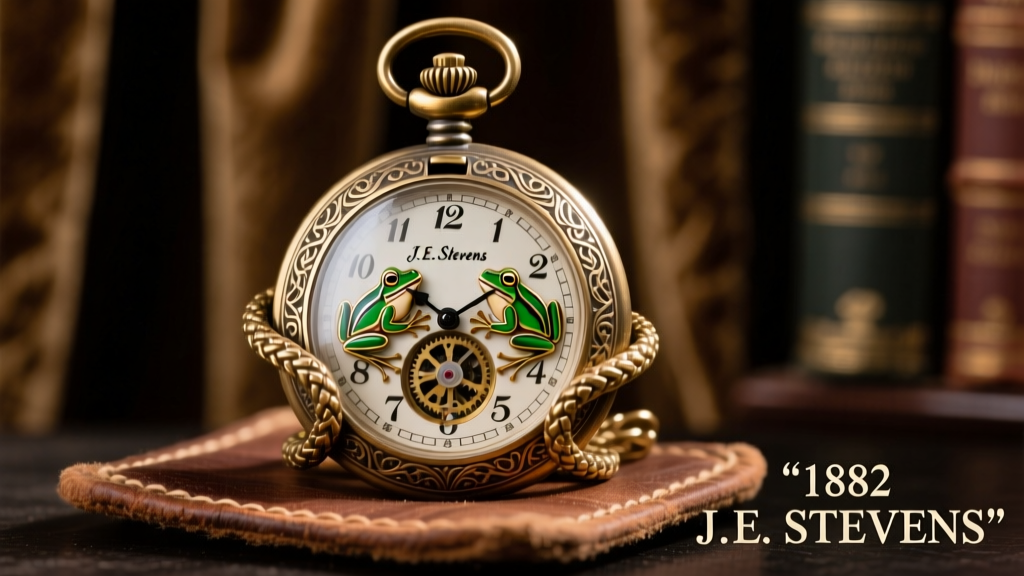
Banks Mechanical '2 Frogs' Pocket Watch: A Technical Marvel by J.E. Stevens & Co., 1882
Swords Bayonet Mauser: A Technical and Historical Survey of German Military Edge Weapons, 1871–1945
Tiffin Sugar Chinese Modern: Decoding the Enigma of a Rare 1950s Shanghai Watch Brand
Any Help to Identify This Coal Stove? A Practical Guide for Collectors and Restorers
Glasgow Pottery No. 8: A Definitive Study of the Rarest Scottish Ceramic Mark and Its Historical Context

Salt & Pepper Shakers: The Boy Holding a Melon — A Study in Mid-Century American Silverplate and Figural Design
Shawnee Pottery Cookie Jar Cottage #2: History, Identification, and Market Value of a Mid-Century American Icon
Its WhatsitWednesday #6: Decoding the Mysterious 'Crown & Anchor' Watch — A 1920s British Military Chronograph with Naval Provenance
Ronald McDonald Clock Prototype: The Rare 1960s Electrified Plastic Advertising Artifact