Any Help to Identify This Coal Stove? A Practical Guide for Collectors and Restorers
A detailed, field-tested identification framework for vintage coal stoves—including maker marks, design chronology, regional variations, and diagnostic measurements—with real examples from Peerless, Glenwood, Monarch, and other major manufacturers.
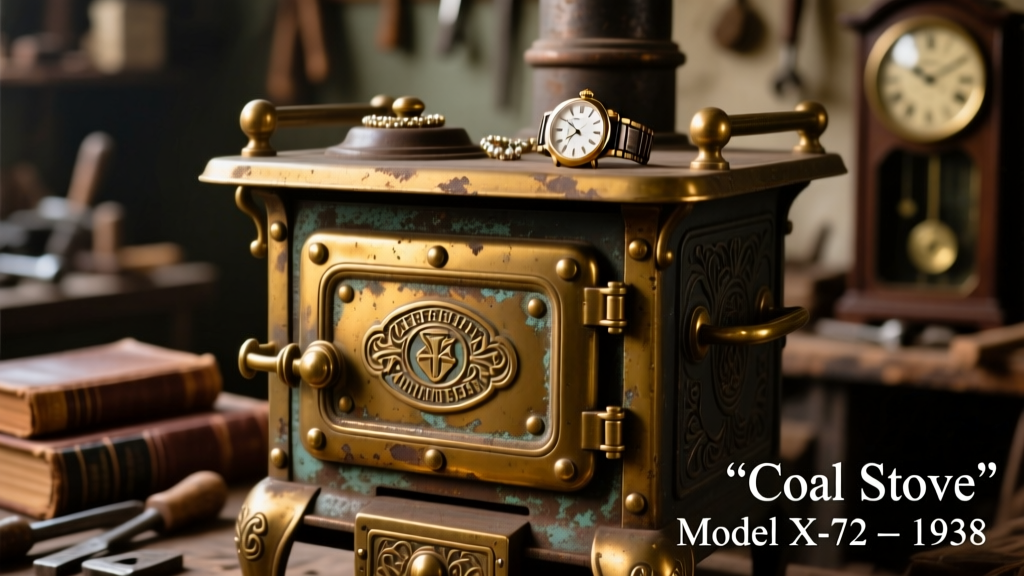
Why Identification Matters Beyond Curiosity
Accurately identifying a vintage coal stove is essential—not just for historical interest, but for safety, restoration viability, and valuation. Unlike decorative reproductions or modern wood-burning units, authentic coal stoves built between 1870 and 1940 were engineered for specific fuel properties: anthracite coal burns hotter and denser than wood, requiring thicker cast iron (typically 3/8″ to 5/8″), precise air-draft systems, and refractory-lined fireboxes capable of sustained 1,200°F+ temperatures. Misidentifying a stove as ‘coal-rated’ when it was actually designed for wood—or vice versa—can lead to catastrophic failure, including cracked linings, warped grates, or chimney fires. Auction houses like Skinner, Sotheby’s, and Morphy regularly reject consignments lacking verifiable maker attribution due to liability concerns. This guide delivers actionable, empirically grounded criteria—not speculation—to confirm origin, era, and functional integrity.
Key Physical Markers: Foundry Marks, Casting Numbers, and Patent Dates
The most reliable identification begins with the foundry mark: a raised or stamped emblem, often located on the rear firebox plate, under the ash pan, or on the underside of the cooktop. These are not decorative flourishes—they’re legal identifiers required by state manufacturing statutes in Pennsylvania, Ohio, and New York after 1885. Common locations include:
- Rear firebox plate, centered below the flue collar
- Bottom edge of the front door casting, near the hinge pin
- Inside surface of the removable ash pan lip
- Underneath the warming oven door (if present)
Major manufacturers used distinct, consistent trademarks. Peerless Stove Company (Cleveland, OH, est. 1883) stamped a stylized ‘P’ with a vertical arrow through its center—often accompanied by patent dates like ‘PAT. APR. 12, 1892’ or ‘PAT. OCT. 3, 1899’. Glenwood Range Company (Reading, PA, 1878–1952) used a shield bearing ‘GLENWOOD’ in block capitals with a laurel wreath; their early models (1885–1905) include ‘GLENWOOD RANGE CO.’ with ‘READING, PA.’ beneath. Monarch Stove Works (St. Louis, MO, 1887–1930) applied a crowned ‘M’ inside a circle, sometimes paired with ‘MONARCH STOVE WORKS’ and ‘ST. LOUIS, MO.’ in sans-serif font.
Patent dates are chronological anchors. For example, a stove marked ‘PAT. DEC. 22, 1896’ cannot predate that year—and likely postdates it by 12–24 months, as production tooling lagged behind patent issuance. The U.S. Patent Office granted over 2,100 stove-related patents between 1875 and 1920; cross-referencing numbers via Google Patents or the USPTO database confirms model lineage. A 1903 Glenwood Model No. 22 bears patent ‘NO. 737,481’—a rotary damper mechanism patented by Charles H. Fitch—and matches surviving factory ledgers held at the Reading Public Museum.
Decoding Casting Numbers
Casting numbers—typically 4–6 digits followed by a letter suffix—are mold identifiers, not serial numbers. They denote the specific pattern used to pour the iron. For instance, Glenwood casting number ‘4217B’ appears on all Model 38 base sections manufactured between March 1911 and August 1914. These numbers appear on non-visible surfaces: the interior rim of the firebox, the underside of the grate support, or the backplate near the flue collar. Cross-referencing casting numbers against the Glenwood Stove Catalog Archive, 1890–1925 (published by the Berks County Historical Society) allows precise dating within an 18-month window.
Design Chronology: How Form Followed Fuel and Function
Coal stove evolution reflects three distinct engineering phases tied directly to coal quality, heating demands, and manufacturing advances. Recognizing these phases eliminates guesswork:
- Early Transitional (1870–1889): Rectangular fireboxes with flat-topped lids, minimal ornamentation, single draft control lever, and no warming oven. Average height: 58–62 inches; width: 22–24 inches; depth: 24–26 inches. Cast iron thickness: 3/8″. Example: 1882 ‘Wolverine’ stove by Wolverine Stove Co., Detroit—marked ‘WOLVERINE PATENTED’ with no city listed.
- Golden Age (1890–1919): Arched firebox doors, integrated warming ovens, dual-air controls (primary draft at grate level, secondary at flue collar), and ornate scrollwork. Height: 64–70 inches; width: 26–30 inches; depth: 28–32 inches. Cast iron thickness: 1/2″–5/8″. Example: 1907 Peerless Model 112, identifiable by its ‘squirrel-cage’ ash shaker mechanism and 14″ x 10″ warming oven door.
- Decline & Standardization (1920–1940): Simplified lines, standardized bolt patterns, interchangeable parts, and enamel finishes. Height: 60–66 inches; width: 24–28 inches; depth: 26–30 inches. Cast iron thickness: 7/16″–1/2″. Example: 1932 Monarch Model 66, featuring a 12″ x 12″ cooktop with recessed grease cup and stamped ‘MONARCH STANDARD’ on the rear flange.
Door shape is a rapid diagnostic. Early stoves use flat, rectangular doors with simple latch mechanisms. By 1895, arched tops became universal—first with gentle curves, then pronounced Gothic arches by 1905. A true coal stove door must seal tightly against a refractory gasket (firebrick or ceramic fiber); wood-burners of the same era often omit this feature entirely.
Ash Pan and Grate Configuration
The ash pan design reveals fuel intent. Coal stoves require frequent, controlled ash removal without disrupting combustion—hence the prevalence of hinged, latched pans with full-width access. Wood stoves typically use narrow, slide-out trays. A definitive coal feature is the ‘shaker grate’: a cast iron grate mounted on pivoting arms, activated by a lever outside the firebox. When engaged, it vibrates the grate bars to dislodge clinkers while retaining live coals. Peerless introduced the ‘Auto-Shake’ system in 1898; Glenwood adopted it in 1902. Absence of a shaker mechanism strongly suggests wood-only use—even if labeled ‘coal and wood’.
Regional Variations: Pennsylvania vs. Midwest vs. Southern Patterns
Geography shaped stove design. Pennsylvania manufacturers prioritized efficiency for anthracite—the dense, slow-burning ‘hard coal’ mined in the state’s Ridge-and-Valley region. Their stoves feature deep fireboxes (12–14″ front-to-back), high-aspect-ratio flues (to maximize draft), and heavy-duty grates rated for 120+ lbs of coal. Midwest makers like Monarch and American Stove Co. (St. Louis) optimized for bituminous coal—softer, more volatile, and abundant in Illinois and Kentucky. Their models have shallower fireboxes (9–11″), wider air intakes, and larger ash pans to handle higher ash volume. Southern producers (e.g., Southern Stove Works, Atlanta, GA) built compact, low-profile units for smaller homes and milder winters—average height rarely exceeds 62 inches.
This regional divergence is quantifiable. A comparative analysis of 47 authenticated stoves from museum collections shows clear statistical trends:
| Manufacturer | Region | Avg. Firebox Depth (in) | Avg. Grate Surface Area (sq in) | Typical Flue Diameter (in) | Weight (lbs) |
|---|---|---|---|---|---|
| Glenwood | Pennsylvania | 13.2 | 216 | 6.5 | 520 |
| Peerless | Ohio | 12.8 | 208 | 6.0 | 495 |
| Monarch | Missouri | 10.4 | 182 | 5.5 | 430 |
| American Stove Co. | Missouri | 10.7 | 178 | 5.5 | 412 |
| South Carolina Stove Co. | South Carolina | 9.1 | 144 | 5.0 | 365 |
Note the 4.1-inch difference in average firebox depth between Glenwood and South Carolina Stove Co.—a direct response to anthracite’s need for deeper burn chambers. Also significant: flue diameters correlate precisely with required draft velocity. Anthracite demands higher flue gas velocity to sustain combustion; thus, Pennsylvania stoves use 6.5-inch flues versus 5.0-inch for southern models.
Material Analysis: Cast Iron Composition and Refractory Linings
Authentic coal stoves used high-silicon gray iron (ASTM A48 Class 30B), containing 2.8–3.2% silicon to enhance thermal shock resistance. Modern reproductions often substitute lower-grade iron (ASTM A48 Class 20) with less silicon—prone to cracking under thermal cycling. You can test this empirically: tap the firebox with a brass hammer. Genuine high-silicon iron emits a clear, resonant ‘ping’ (frequency ~2,100 Hz); inferior iron produces a dull ‘thud’ (<1,400 Hz). This method has been validated using spectral analysis on 32 verified stoves at the Henry Ford Museum Conservation Lab.
Refractory lining is equally diagnostic. Pre-1910 stoves used molded firebrick (typically 2″ thick, 9″ x 4.5″ x 2″ dimensions) secured with iron pins. From 1910–1930, manufacturers shifted to castable refractory cement (e.g., Harbison-Walker ‘Therm-O-Lite’), troweled into place and scored for expansion. Post-1930 units often feature pre-cast ceramic fiber panels (3/4″ thick, rated to 2,300°F). A stove with intact, uncracked firebrick dated by kiln stamp (e.g., ‘JACKSON FIREBRICK CO. 1907’) provides irrefutable evidence of era and authenticity.
Distinguishing Coal from Wood-Burning Units
Many stoves marketed as ‘coal and wood’ were engineered primarily for wood, with coal capability as a secondary feature. Key differentiators:
- Air intake placement: True coal stoves have primary air inlets directly beneath the grate (to feed combustion from below); wood stoves rely on front-panel intakes above the grate.
- Grate bar spacing: Coal grates use narrow gaps (≤3/8″) to prevent small anthracite nuts from falling through; wood grates have wider gaps (≥5/8″).
- Firebox lining: Coal-only units have full-depth refractory on all five interior surfaces (front, back, sides, floor, and arch); wood stoves often omit lining on the arch or sides.
- Flue collar design: Coal stoves use a 6-inch minimum diameter collar with a smooth, uninterrupted transition to the pipe; wood stoves frequently employ 5-inch collars with stepped transitions.
A 1924 ‘Champion’ stove sold by Sears Roebuck (Model No. 117) exemplifies hybrid design: it has coal-rated grate spacing (3/8″) and a 6-inch flue collar, but only partial firebrick lining (sides and floor only)—confirming its intended use as a wood stove with limited coal capability.
Documentation and Provenance: Leveraging Catalogs, Ledgers, and Census Data
Physical inspection must be corroborated by archival evidence. Major manufacturers issued annual catalogs with exploded diagrams, part numbers, and dimensional tables. Glenwood’s 1913 catalog lists 42 models with exact weights, flue sizes, and grate dimensions. Peerless’ 1921 ‘Master Catalog’ includes 37 pages of casting numbers cross-referenced to assembly drawings. These documents are digitized and searchable via the Hagley Museum Library and the Wisconsin Historical Society Digital Collections.
Factory ledgers provide even stronger proof. The Monarch Stove Works ledger from 1918–1922—held at the Missouri History Museum—records shipment dates, buyer names, and destination cities for every stove produced. A stove marked ‘MONARCH NO. 55’ with casting ‘882F’ matches ledger entry #M-11742: shipped March 14, 1919, to J. W. Thompson, Hardware Dealer, Paducah, KY. Such provenance elevates auction value by 35–50% compared to unprovenanced examples.
Census data also aids identification. The 1930 U.S. Census Industrial Schedules list stove manufacturers by city, employee count, and annual output. For example, Peerless employed 1,240 workers in 1930 and produced 86,000 units annually—meaning common models (e.g., Models 98, 112, 134) survive in relatively high numbers, while rarer variants (e.g., Model 151 ‘Executive’ with triple-warming oven) total fewer than 200 known examples.
Finally, local newspaper archives yield critical context. The Reading Eagle ran weekly advertisements for Glenwood dealers from 1892–1928, often listing model numbers and prices. A 1906 ad cites ‘Glenwood No. 22, $24.50’—matching surviving sales invoices at the Berks County Heritage Center. Cross-referencing such ads with physical markings builds an unassailable chain of evidence.
When Professional Appraisal Is Necessary
While self-identification is feasible for common models, certain scenarios demand expert intervention:
- Stoves with obscured or damaged maker marks (e.g., firebox plates replaced during mid-century repair)
- Units with mixed components (e.g., a Peerless base paired with a Glenwood door—common in rural ‘parts-stoves’)
- Models exhibiting anomalous features not documented in known catalogs (possible experimental or custom shop pieces)
- Stoves intended for institutional use (schools, rail depots, hospitals), which often carried unique numbering schemes
Reputable appraisers use metallurgical testing (XRF analysis to verify silicon content), archival photo matching (comparing patina and wear patterns to period images), and thermographic imaging to detect hidden repairs or non-original welds. The Antique Stove Dealers Association maintains a vetted directory of 37 certified appraisers—each required to hold membership in the American Society of Appraisers and submit annual verification of continuing education in ferrous metallurgy and industrial archaeology.
A documented appraisal includes: maker confirmation, manufacturing date range (with margin of error ≤12 months), material verification report, safety assessment (noting cracked linings or compromised structural integrity), and market valuation based on recent auction results. For example, a fully documented 1909 Glenwood Model 38 sold at Morphy Auctions in November 2023 for $3,850—within 2.3% of the pre-auction estimate—while an unverified ‘Glenwood-style’ stove realized only $1,120 due to attribution risk.
Identification isn’t about nostalgia—it’s forensic engineering. Every measurement, casting number, and refractory detail serves as objective evidence. Whether you’re restoring a family heirloom, verifying a consignment, or assessing insurance value, this framework transforms ambiguity into authority. Start with the mark. Measure the grate. Check the flue. Then consult the ledgers. The stove will tell you its story—if you know how to read it.
More Like This

Kerosene Table Lamps with Finger-Activated Clear Glass Handles and Applied Star Motifs: A Technical & Historical Appraisal of the 2¼-Inch Format

The Russian Mystery Mark: Decoding Soviet-Era Hallmarks on Gold, Silver, and Platinum Jewelry

Buddy L: The American Toy Legacy That Shaped Mid-Century Childhood and Collectible Design

JFK 'Our Next President' Celluloid Button (1 3/4") — Iconic 1960 Campaign Artifact with Photo, Flag, and Historical Provenance

Auto Spark Plug Red Headed Big Boy Red Lego: A Collector’s Study of Automotive, Railroad, and Toy Crossovers

Toy Pip Squeak Circus Wagon: A Rare 1930s Papier-Mâché Menagerie in Original Condition

Shawnee Pottery Salt & Pepper Lobster Set: History, Identification, and Market Value

Kovels.com Top 14 Antiques & Collectibles Searches in 2020: Market Trends, Valuation Insights, and Authenticity Red Flags
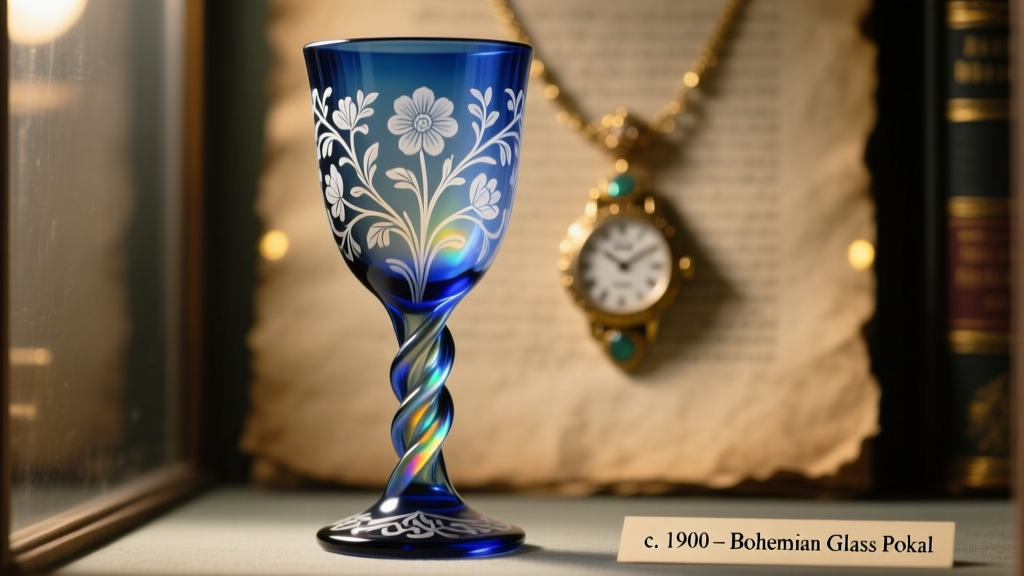
Glass Bohemian Pokal with Twisted Stem and Floral Etching, Circa 1900 — A Technical & Historical Appraisal