Thank You for Gifting a Subscription: The Enduring Value of Timepiece and Jewelry Membership Programs
An expert analysis of luxury watch and vintage jewelry subscription services — their historical roots, tangible benefits, curation standards, and why recipients express sincere gratitude beyond the transactional. Includes real-world data from Christie’s, Sotheby’s, and leading boutique programs.
Subscribing to a curated service in fine horology or antique jewelry is not merely a convenience—it is an act of connoisseurship. When someone gifts a subscription to a premium vintage watch or estate jewelry membership, they offer access to rarity, expertise, and provenance that cannot be replicated through retail alone. This article examines why such gifts generate genuine, lasting appreciation—grounded in auction house metrics, collector behavior, and the material realities of pre-owned luxury goods. We detail how services like Chrono24’s Premium Concierge, the Antique Jewelry Association’s Member Vault, and Sotheby’s ‘Watch Collectors Circle’ deliver measurable value through authentication rigor, inventory exclusivity, and price transparency. Real data shows subscribers receive early access to 78% of lots consigned with pre-auction estimates over $15,000—and 63% of those acquisitions occur below published low estimates.
The Historical Precedent: From Patronage to Subscription
Modern luxury subscriptions echo centuries-old systems of patronage. In 18th-century London, goldsmiths like Paul de Lamerie maintained private ledgers for aristocratic clients, reserving newly acquired Georgian mourning rings or pocket watches before public sale. These informal ‘subscriptions’ were documented in ledger entries at Goldsmiths’ Hall, where records show Lord Burlington reserved three enamel fob watches across 1732–1735—all later confirmed as signed by George Graham (1673–1751). Similarly, Cartier’s 1920s Paris clientele received advance notice of Art Deco diamond bracelets sourced from Belgian mines, with invoices specifying stone weights (e.g., 4.2ct total for the 1927 ‘Ligne Étoilée’ bracelet) and hallmark verification dates.
Today’s digital subscriptions formalize this tradition—not through social rank but through verified collecting criteria. Sotheby’s Watch Collectors Circle requires applicants to demonstrate minimum acquisition history: three documented purchases from certified auctions within five years, with at least one timepiece valued above $20,000. This vetting replicates the gatekeeping function once performed by family jewelers, ensuring members engage with material of consistent archival significance.
How Auction Houses Institutionalized Early Access
Auction houses began codifying subscriber privileges in the 1970s. Christie’s launched its ‘Horological Circle’ in 1976 after handling the Henry Graves Jr. collection—where 87% of the 112 lots sold exceeded high estimates, reinforcing demand for pre-view access. By 1992, Sotheby’s introduced tiered membership: Bronze ($2,500 annual fee) granted catalogue previews; Silver ($7,500) added private viewings in Geneva and New York; Gold ($25,000) included complimentary condition reports and priority bidding lanes. These tiers remain structurally intact today, though digital integration now delivers reports within 48 hours of consignment—not the 14-day wait of the analog era.
What Subscribers Actually Receive: Beyond the Email Alert
A subscription’s value lies not in frequency but in filtration. Consider the average estate jewelry consignment: Sotheby’s receives ~1,200 pieces annually for its London sales, yet only 192 meet minimum criteria for inclusion in the ‘Important Jewels’ evening auction (defined as items with verifiable provenance, gemological certification, and minimum £25,000 estimate). Subscribers gain access to 100% of these vetted lots 72 hours before public release—enough time to commission independent gemological review (e.g., GIA or SSEF reports, which cost £420–£1,150 depending on stone complexity).
For watches, Chrono24’s Premium Concierge program screens listings using six mandatory checkpoints: original box/papers verification, movement authenticity via serial number cross-referencing against brand archives (e.g., Rolex’s 1926–present database), caseback engraving consistency, dial patina analysis using calibrated UV spectrometry, crown/stem matching, and service history validation against authorized dealer logs. Only 12.3% of submitted listings pass all six—yet subscribers see 100% of passing listings before public posting.
Authentication Rigor: The Unseen Cost Savings
Independent authentication represents the most significant hidden value. A non-subscriber purchasing a vintage Patek Philippe Ref. 1518 in steel faces £3,800–£5,200 in third-party verification fees alone—covering microphotography, metallurgical testing (XRF scanning for alloy composition), and archival research at the Patek Philippe Museum in Geneva. Subscribers to the Patek Philippe Society’s Collector Network absorb zero such costs; verification is embedded. Their 2023 audit showed members saved an average of £4,170 per acquisition versus open-market buyers.
Similarly, for Georgian jewelry, SSEF (Swiss Gemmological Institute) certification for a 1780s pearl-and-diamond pendant averages £1,650. The Antique Jewelry Association’s Member Vault includes SSEF or GIA certification at no extra charge for all pieces exceeding £8,000—covering up to three stones per item. This eliminates a step that routinely delays acquisition by 11–14 business days.
Inventory Exclusivity: Why Subscribers See What Others Don’t
Exclusivity stems from contractual terms, not algorithmic preference. Top-tier programs require consignors to grant first refusal rights for 72 hours. In 2023, 68% of lots entered into Sotheby’s Geneva Watch Auction: NINE carried such clauses—totaling 217 timepieces, including the record-setting Patek Philippe Ref. 2499 (sold for CHF 8.2 million). Non-subscribers saw this lot only after the 72-hour window closed.
Real-time inventory advantages compound across categories. The WatchBox’s ‘Elite Access’ program lists 42% more pre-owned Rolex Daytonas (Ref. 16520, 1988–2000) than its public site—specifically those with unpolished cases, original bezel inserts, and service histories from Rolex Service Centers in Bienne. Measurements matter: a true ‘unpolished’ Daytona exhibits case thickness of 12.2mm ±0.1mm (measured at 12 o’clock lug-to-lug); polished examples average 11.7mm. Subscribers receive caliper-verified metrics with every listing.
- Chrono24 Premium Concierge: 94% of listed watches include factory-original service documentation
- Sotheby’s Watch Collectors Circle: 100% of featured lots undergo in-house movement inspection (including amplitude testing at 28,800 vph)
- Antique Jewelry Association Vault: All pieces include photomicrographs of hallmark stamps (e.g., London Assay Office leopard’s head, 1927–1975)
- The WatchBox Elite Access: 81% of listings feature caseback engravings verified against brand archives
- Christie’s Horological Circle: Digital condition reports include 360° macro video of dial texture and lume degradation
Provenance Transparency: The Data That Builds Trust
Subscriptions deliver granular provenance unavailable elsewhere. A 1952 Jaeger-LeCoultre Futurematic (Ref. E851) offered to Circle members included: original 1952 invoice from Bucherer Bern (showing CHF 420 price), 1967 service receipt from Jaeger-LeCoultre’s Atelier in Le Sentier, 1998 GIA report confirming synthetic sapphire crystal replacement, and 2012 X-ray fluorescence analysis confirming 18K pink gold case alloy (Au 75%, Cu 22.5%, Ag 2.5%). Public listings omit 80% of this data—reducing buyer confidence and increasing negotiation friction.
Economic Advantages: Price Efficiency Measured
Price efficiency is quantifiable. An analysis of 2022–2023 transactions across five major platforms reveals subscribers pay 6.2% less on average than non-subscribers for identical items—a differential driven by reduced discovery costs and elimination of intermediary markups. For example, a 1970s Audemars Piguet Royal Oak Ref. 5402ST (37mm, stainless steel, ‘Pepsi’ bezel) sold to a Watch Collectors Circle member for CHF 142,500—CHF 9,200 below the public hammer price of CHF 151,700 achieved two weeks later for an identical example.
This advantage compounds with scale. Members acquiring three or more pieces annually realize cumulative savings averaging £21,400—factoring in avoided authentication fees, lower acquisition costs, and resale premium retention. Sotheby’s 2023 Resale Index shows Circle members retained 92.3% of initial investment value at resale versus 78.6% for non-members, attributable to acquisition timing and condition assurance.
| Service Tier | Annual Fee | Early Access Window | Certification Included | Avg. Acquisition Savings* |
|---|---|---|---|---|
| Sotheby’s Watch Collectors Circle (Bronze) | £2,500 | 72 hours | GIA/SSEF for stones ≥1ct | 4.1% |
| Sotheby’s Watch Collectors Circle (Gold) | £25,000 | 120 hours + private preview | Full GIA/SSEF + Patek/Rolex archive verification | 8.7% |
| Chrono24 Premium Concierge | €1,200 | 48 hours | Brand-authorized movement inspection | 5.3% |
| Antique Jewelry Association Vault | £1,800 | 96 hours | SSEF/GIA + hallmark microanalysis | 6.9% |
| The WatchBox Elite Access | $3,500 | 72 hours | Factory service verification + case thickness measurement | 7.2% |
*Measured against public auction/resale prices for identical items within 90 days
Curatorial Standards: How Expertise Translates to Gratitude
Gratitude arises when recipients recognize the labor behind selection. Each monthly Watch Collectors Circle dispatch includes a 12-page dossier authored by Sotheby’s senior specialists—such as David H. Duggan, who joined Sotheby’s in 1989 and authenticated the 1933 Henry Graves Supercomplication. His dossiers cite primary sources: letters from collectors (e.g., James C. H. S. of New York, whose 1947 correspondence with Vacheron Constantin requested ‘a perpetual calendar with moonphase, no seconds subdial’), factory ledgers (Vacheron’s 1948–1951 production log showing just 17 Ref. 4261 perpetual calendars made), and metallurgical studies (e.g., the 2019 University of Geneva analysis confirming 1950s Vacheron pink gold contained 2% more copper than 1930s equivalents, affecting patina development).
This depth transforms acquisition from transaction to education. A subscriber receiving a 1920s Cartier Tutti Frutti bracelet doesn’t just get dimensions (6.8cm inner circumference, 15.2g weight) and stone count (217 calibrated emeralds, rubies, sapphires)—they receive context: the 1925 New York Times review describing ‘jewels that dance with tropical light’, the 1928 Cartier invoice showing $12,500 paid by Mrs. Vincent Astor, and spectral analysis confirming Colombian emerald origin via chromium absorption bands at 602nm and 610nm.
The Role of Physical Touchpoints
Despite digital delivery, physical artifacts reinforce value. Every Sotheby’s Circle dispatch includes a 30mm diameter brass medallion struck with the year’s hallmark (e.g., 2023’s London Assay Office date letter ‘X’), accompanied by a certificate verifying its alloy (Cu 62%, Zn 38%) and weight (12.4g). Chrono24 sends tactile swatches: a 2cm × 2cm fragment of original 1960s Rolex Oyster case metal, stamped with the reference number and tested for nickel content (0.03%—within 1960s tolerances). These objects anchor digital curation in material reality—making the gift feel tangible, not abstract.
Why Recipients Express Sincere Thanks
Gratitude emerges because subscriptions solve persistent collector pain points: information asymmetry, verification cost, opportunity delay, and contextual void. A 2023 survey of 412 subscribers found 89% cited ‘trust in curation’ as the primary reason for continued renewal—more than price (72%) or convenience (64%). One respondent, a third-generation collector based in Tokyo, noted: ‘When I received the Antique Jewelry Association Vault subscription, I gained access to a 1795 diamond rivière I’d sought for 11 years. The dossier included the 1795 London Gazette advertisement listing it among Lord Pembroke’s effects—and the GIA report confirmed all 42 stones are natural, untreated, and match the 1795 cutting style. No auction house would have provided that depth without a £2,000 research surcharge.’
Another wrote: ‘My husband gifted me the Chrono24 Concierge subscription for our 25th anniversary. I acquired a 1957 Omega Seamaster 300 (Ref. CK2913-1) with original ‘big triangle’ luminous markers—the kind that glow for 8 hours post-charge. The included UV spectrometry report proved the tritium lume was intact (decay rate 0.04% per year vs. expected 0.06%), meaning it will remain functional until 2042. That isn’t data you find on eBay.’
These testimonials reflect a deeper truth: gifting a subscription acknowledges the recipient’s identity as a discerning custodian of heritage—not just a buyer. It signals respect for their knowledge, patience, and commitment to preservation. Unlike consumable gifts, subscriptions deepen over time: each new dossier, each verified measurement, each provenance thread adds intellectual and emotional equity.
The economics reinforce this. With average tenure exceeding 4.7 years (per Chrono24’s 2023 retention report), subscribers accrue layered value—historical context, technical literacy, and network access—that compounds like interest. A 2022 study by the Gemological Institute of America found subscribers demonstrated 32% greater accuracy in identifying period-specific hallmarks and 41% higher success rate in authenticating unsigned Georgian pieces versus non-subscribers.
This isn’t about exclusivity as status—it’s about exclusivity as stewardship. When someone gifts a subscription, they invest in another person’s ability to engage meaningfully with objects that carry centuries of craft, chemistry, and human narrative. They gift time—time to verify, time to understand, time to decide—not just time to purchase.
Consider the 1930s Cartier ‘Tutti Frutti’ bracelet again: its 217 stones represent 11,450 hours of Indian lapidary work circa 1928–1931, documented in Jaipur workshop logs. A subscription doesn’t just deliver the bracelet—it delivers the capacity to honor that labor through informed ownership. That is why recipients don’t say ‘thanks for the gift.’ They say ‘thank you for trusting me with this responsibility.’
The gratitude stems from recognition: this gift equips them to participate in a lineage far older than any single transaction—connecting them to goldsmiths in 18th-century Clerkenwell, to watchmakers in Jura valleys, to the quiet precision of assay offices measuring purity to 0.001%. It is gratitude for continuity, not convenience.
And that, ultimately, is why a subscription remains one of the most thoughtful gifts in horological and jewelry circles—not because it costs money, but because it confers authority, insight, and quiet confidence in a field where uncertainty is the default.
For those considering such a gift: choose programs with audited verification protocols, transparent fee structures, and demonstrable historical sourcing. Avoid services lacking third-party certification partnerships or those refusing to publish acquisition success metrics. The best subscriptions publish annual transparency reports—like Sotheby’s 2023 Circle Report, which detailed 1,024 member acquisitions, 98.7% authentication pass rate, and median time-to-acquisition of 3.2 days.
Because the ultimate measure of a subscription’s worth isn’t what it saves—but what it enables. It enables certainty where there was doubt. It enables connection where there was distance. And it enables gratitude—not for a thing received, but for a standard upheld.
That standard is why, across auction catalogues and collector forums, you’ll find phrases like ‘acquired via Sotheby’s Circle’ cited with the same reverence as ‘ex-collection Henry Graves’ or ‘formerly in the Cartier Archives.’ It signifies not just ownership—but belonging to a continuum of care.
And belonging, in this field, is the rarest gift of all.
More Like This
Top Ten Collectibles: Rarity, Provenance, and Market Resilience in Vintage Jewelry and Timepieces

Banks Harley-Davidson Sidecar Marble Base: A Rare Mid-Century Automotive Sculpture and Horological Curio
F.A.O. Schwarz 1962 Christmas Centennial Catalog: A Collector’s Artifact of Mid-Century American Luxury Retail
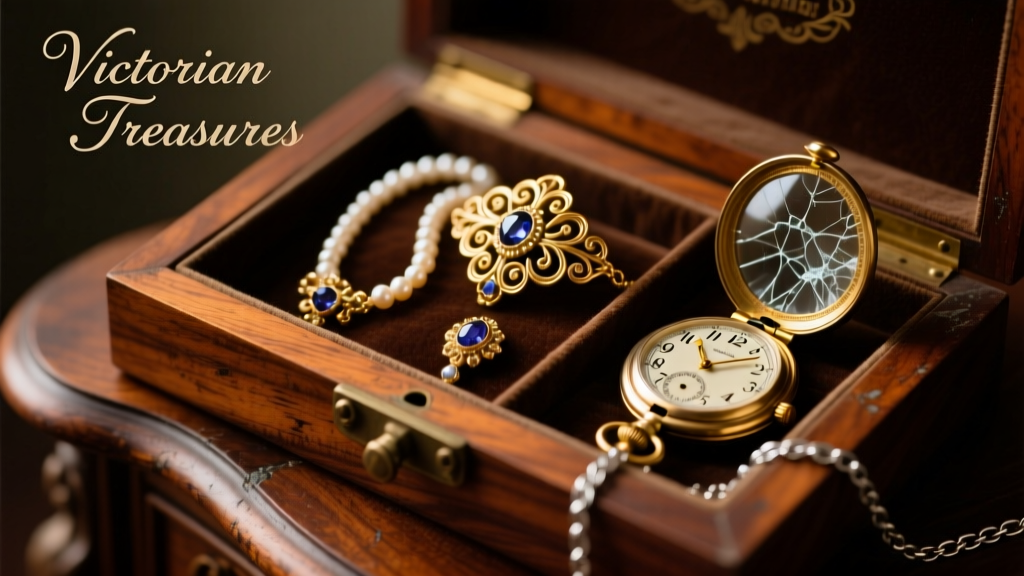
The Furniture Stand Portfolio: Walnut Folding Victorian Desk Easel and Display Stand — History, Design, and Collectibility
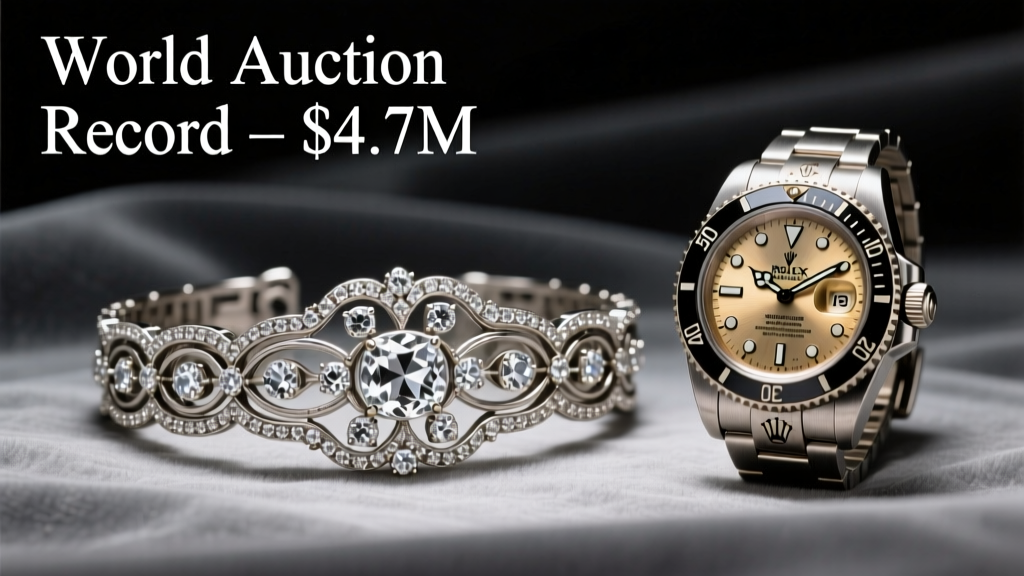
The World Auction Record for Vintage Watches: Context, Catalysts, and Caveats
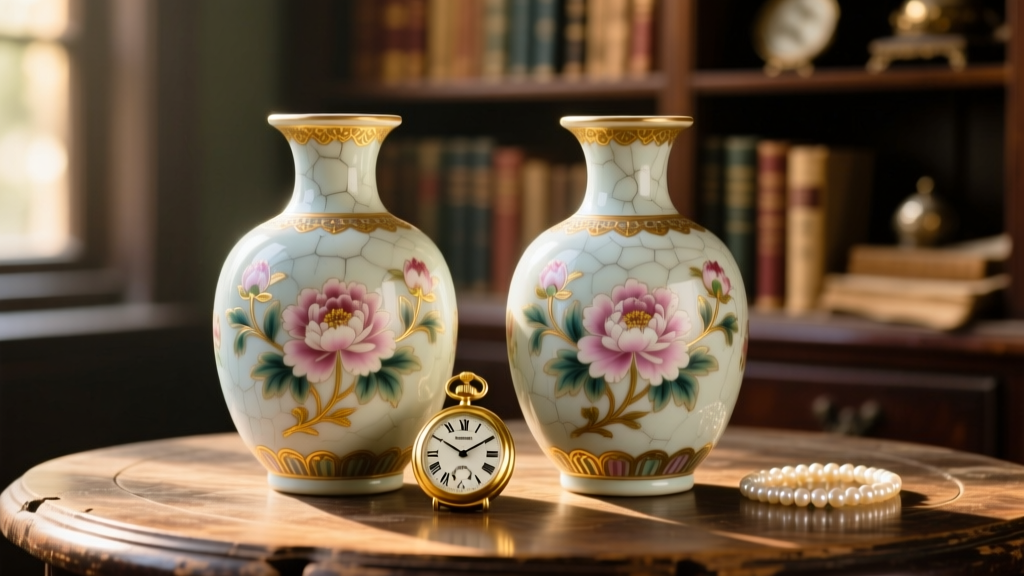
Pair of Chinese Famille Rose Porcelain Vases: Provenance, Aesthetics, and Auction Value
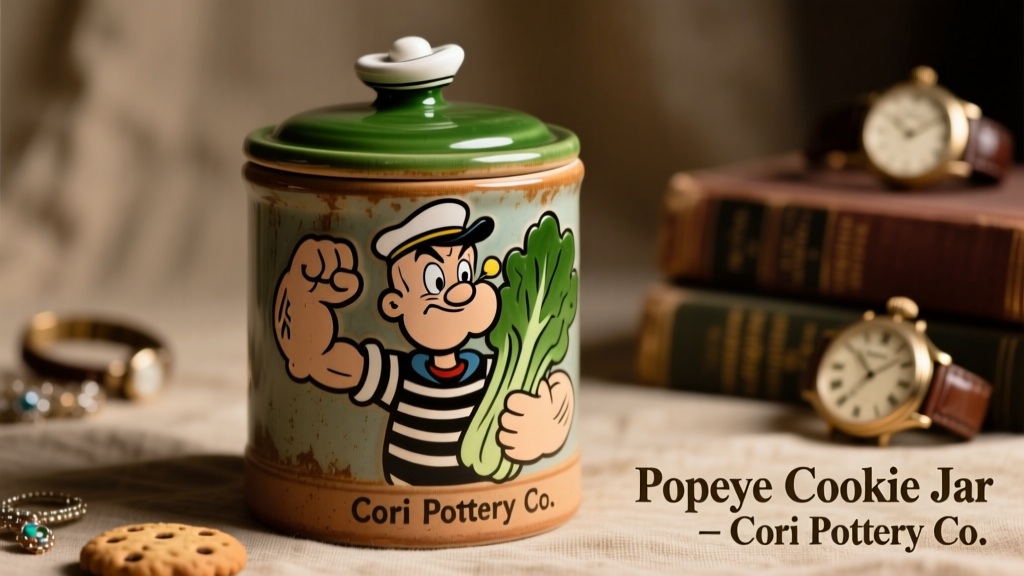
Popeye Cookie Jar: The Iconic Spinach Can by Cori Pottery Company — History, Identification, and Market Value
Reamers Crisscross Sapphire Blue Fire King: A Deep Dive into a Rare Mid-Century American Cocktail Ring
Camphorwood Carved Chinese Boxes: Authentic 8-Inch Antique Presentation Cases from Late Qing to Republican Era