Preserving Clarity and Integrity: A Curator’s Guide to Caring for Glass Vases
A detailed, practical guide grounded in conservation science and auction house experience—covering cleaning protocols, structural assessment, environmental controls, and handling techniques for antique and modern glass vases from makers like Lalique, Steuben, Baccarat, and Waterford.
Understanding Glass Composition and Vulnerability
Glass is not a single material but a family of amorphous solids with distinct chemical formulations that dictate durability, thermal response, and susceptibility to deterioration. Soda-lime glass—the most common type used in 19th- and early 20th-century vases—contains roughly 70–74% silica (SiO₂), 12–16% sodium oxide (Na₂O), and 5–12% calcium oxide (CaO). This composition makes it relatively economical to produce but prone to surface weathering, especially when exposed to alkaline residues or prolonged humidity. Lead crystal, used by Baccarat since 1817 and by Waterford beginning in 1783, contains 24–32% lead oxide (PbO), increasing refractive index and workability but also softening the surface and accelerating ion leaching in acidic or fluctuating environments. At Sotheby’s 2022 New York Decorative Arts sale, a 1928 Émile Gallé cameo glass vase fractured during transit due to undetected microcracks in its layered silica structure—a reminder that composition directly informs risk.
Unlike ceramics or metals, glass lacks crystalline grain boundaries, meaning stress propagates without natural arrest points. A microscopic flaw—often invisible to the naked eye—can grow under thermal cycling or mechanical vibration. Auction houses routinely reject consignments where surface haze exceeds 3% opacity measured via spectrophotometric analysis at 550 nm wavelength; this threshold corresponds to perceptible loss of brilliance and may indicate irreversible alkali-silica gel formation.
The Three Primary Degradation Pathways
- Weeping: Alkaline migration of sodium or potassium ions to the surface, reacting with atmospheric CO₂ to form white, crystalline efflorescence (typically Na₂CO₃ or K₂CO₃). Most prevalent in soda-lime vases stored in basements with RH >65%.
- Crazing: A network of fine, interconnecting microfractures caused by thermal shock or internal stress relief—common in pressed glass from the 1880–1910 period due to rapid annealing cycles in factory kilns.
- Crizzling: Progressive surface dissolution resulting from excessive moisture and poor ventilation; documented in over 42% of pre-1900 American pressed glass vases held in museum storage without climate control (per Winterthur Museum 2019 Condition Survey).
Handling Protocols: Minimizing Mechanical Stress
Over 68% of glass vase damage recorded in Christie’s 2020–2023 Conservation Incident Log originated from improper handling—not impact, but torsion and uneven pressure distribution. Never grasp a vase by its neck alone: the tensile strength of thin-walled glass drops exponentially below 2 mm thickness. A 1930s Steuben ‘Frosted Flare’ vase (height: 24.5 cm, neck diameter: 3.2 cm, wall thickness: 1.8 mm) failed during cataloguing when a gloved finger applied lateral torque while rotating it on a turntable. The fracture initiated at a pre-existing scratch near the shoulder—a classic stress concentrator.
Always use two hands: one supporting the base firmly with palm cupped upward, the other cradling the body just below the widest point. For vases exceeding 30 cm in height or weighing more than 1.2 kg (e.g., a 1950s Lalique ‘Champs-Élysées’ centerpiece, weight: 1.47 kg, base diameter: 12.8 cm), enlist a second person and coordinate verbal cues before lifting. Avoid jewelry, watches, or rough-textured fabrics during handling—micro-abrasions from a platinum Patek Philippe Calatrava bracelet bezel (diameter: 37 mm, polished sapphire crystal) have been documented scratching lead crystal surfaces during photography setup.
Transport and Storage Best Practices
- Wrap each vase individually in unbuffered, pH-neutral tissue paper (acid-free, lignin-free, 17 g/m² basis weight), never newspaper or recycled paper towels containing sulfur compounds.
- Insert acid-free cardboard spacers between stacked items; never allow direct contact between glass surfaces—surface energy attraction can cause cold welding over time.
- Store upright in rigid, ventilated archival boxes lined with ethafoam (3/8" density, 1.8 lb/ft³) cut to cradle the base and midsection. Boxes must meet ANSI/NISO Z39.48–1992 standards.
- Maintain storage orientation consistent with original display—many Art Deco vases (e.g., 1925 Daum Nancy ‘Cristal de Nancy’) were designed with asymmetrical wall thicknesses optimized for vertical stability.
Safe Cleaning Methodology
Never use vinegar, lemon juice, or commercial glass cleaners containing ammonium hydroxide or ethanolamine—these accelerate ion exchange in lead crystal and etch soda-lime surfaces. At Bonhams’ 2021 Edinburgh auction preview, a Waterford ‘Lismore’ vase (1970, height: 22 cm) developed permanent cloudiness after being wiped with a 5% acetic acid solution intended for copper removal. The damage was confirmed via SEM-EDS analysis showing 27% depletion of surface potassium and sodium layers.
For routine dust removal, use a soft-bristled sable brush (e.g., Winsor & Newton Series 7, size 00) with dry, upward strokes only—from base to rim—to avoid dragging particulates across the surface. For water-soluble residue, prepare a rinse solution of deionized water (resistivity ≥18.2 MΩ·cm) with 0.05% non-ionic surfactant (Triton X-100, CAS No. 9002-93-1). Immerse only if the vase has no metal mounts, foil backing, or painted decoration—submersion time must not exceed 90 seconds. Rinse three times with fresh deionized water, then air-dry vertically on a lint-free microfiber pad (e.g., Carl Zeiss Microscopy Microfiber Cloth, 30 × 30 cm, fiber diameter <0.5 µm) placed atop a stainless-steel drying rack.
When Not to Clean
Do not attempt cleaning if any of the following conditions are present: visible iridescence (indicating advanced leaching), flaking gilding (as seen on 1890s Libbey ‘Egyptian’ vases), or trapped moisture behind applied enamel. A 2018 Metropolitan Museum Conservation Report documented irreversible delamination in a 1912 Tiffany Studios ‘Peony’ vase after attempted solvent cleaning removed the protective wax layer sealing the copper-foil base.
Surface haziness may be structural—not dirt. Hold the vase at 45° against a uniform light source: if translucency remains even in cloudy areas, cleaning will not restore clarity. In such cases, consult a conservator certified by the American Institute for Conservation (AIC); do not use commercial ‘glass polish’ products, which contain cerium oxide abrasives (particle size: 0.5–2.0 µm) that permanently reduce surface gloss and increase light scatter.
Environmental Control: Temperature, Humidity, and Light
Fluctuations are more damaging than static extremes. Per ISO 11799:2015, the ideal environment for glass objects is 18–22°C ±0.5°C and 40–45% relative humidity ±2%. A deviation of ±5% RH over 24 hours induces measurable expansion/contraction in soda-lime glass (coefficient of thermal expansion: 8.5 × 10⁻⁶ /°C), promoting stress fatigue. During the 2017–2018 renovation of the Victoria & Albert Museum’s British Galleries, 17 pre-1850 glass vases exhibited new crazing lines after HVAC recalibration introduced ±8% RH swings—damage verified by digital holographic interferometry.
UV exposure accelerates photochemical degradation of organic residues and destabilizes transition-metal colorants. Cobalt-blue glass (used by Baccarat in its ‘Les Cristalleries’ series) fades measurably at UV-A doses >10 klux·hr/year. Install UV-filtering acrylic (e.g., TruVue Optium Museum Acrylic, blocks 99.8% of UV <400 nm) on display cases. Avoid direct sunlight: even filtered daylight through standard float glass transmits 35% of UV-A radiation, sufficient to yellow lead crystal within 18 months.
| Brand/Period | Typical Wall Thickness (mm) | Lead Content (% PbO) | Max Safe Display Duration (hrs/yr) | Primary Risk Factor |
|---|---|---|---|---|
| Baccarat ‘Harcourt’ (1841–present) | 3.1–4.7 | 29.2 | 1,200 | Ion leaching in high RH |
| Steuben ‘Cameo’ (1930s) | 2.4–3.8 | 30.1 | 850 | Thermal shock from lighting |
| Waterford ‘Lismore’ (1950–2000) | 2.8–4.2 | 24.5 | 1,000 | Etching from airborne pollutants |
| Lalique ‘Bijou’ (1920s) | 4.0–6.2 | 0.0 | Unlimited | Mechanical abrasion |
Assessing Structural Integrity
Before cleaning, moving, or displaying, conduct a tactile and visual integrity check. Run clean fingertips (no lotion, no nail polish) along seams, bases, and shoulders—feel for grit, vibration, or discontinuity indicating microfractures. Use a 10× illuminated loupe (e.g., BelOMO 10× LED Hand Lens, focal length: 25 mm) to inspect the base rim: hairline cracks often initiate there due to residual stress from annealing. A 1922 René Lalique ‘Nereides’ vase sold at Phillips London in 2023 was downgraded from £18,000–£22,000 to £9,500–£11,000 after conservators identified a 4.3 mm radial crack extending from the foot using transmitted light examination.
Tap gently with a wooden dowel (3 mm diameter, beechwood, moisture content 8–10%)—a clear, sustained ring indicates structural soundness; a dull thud or double resonance suggests internal separation or laminar delamination. This method reliably detects flaws in multi-layered vases like Daum’s ‘Pâte de Verre’ pieces (1900–1914), where silica-rich outer skins encase softer inner matrices.
Identifying Repair History
Examine under raking light (angle <15°): professional repairs leave minimal refractive discontinuity, while amateur attempts show visible epoxy pooling or mismatched curvature. Look for telltale signs: UV-reactive adhesives (e.g., Paraloid B-72 fluoresces pale blue at 365 nm), unnatural surface gloss in localized zones, or displaced air bubbles in resin fills. A 2021 Heritage Auctions lot description omitted disclosure of a 1957 Steuben ‘Amaryllis’ vase’s 1983 repair—later confirmed by FTIR spectroscopy identifying methyl methacrylate polymer—resulting in a $4,200 buyer claim settlement.
Display Considerations and Mounting
Never place glass vases on unlined wood shelves: oak emits acetic acid vapors (≥20 ppb at 22°C), which corrode lead crystal over time. Use inert supports: powder-coated aluminum brackets (e.g., Goppion 3000 Series, load rating: 15 kg per arm) or acrylic plinths cast from PMMA with ≤0.002% residual monomer. Ensure contact area covers ≥40% of the base diameter—undersized mounts concentrate load and invite creep deformation.
For tall, narrow vases (aspect ratio >4:1), anchor with museum-grade clear silicone (e.g., Dow Corning 995, Shore A hardness 25) applied as a 1.2 mm continuous bead at the base perimeter—not center-loaded. This allows minor thermal expansion while preventing toppling. Do not use double-sided tape: its acrylic adhesive migrates into glass pores over time, causing permanent hazing detectable at 50× magnification.
Vibration isolation is non-negotiable in active spaces. Place vases on Sorbothane pads (60 durometer, 12.7 mm thick) beneath display platforms. In a 2020 test at the Smithsonian Conservation Commons, unprotected vases on marble pedestals registered 0.8 g acceleration from foot traffic at 3 m distance; with Sorbothane, acceleration dropped to 0.03 g—well below the 0.1 g threshold known to propagate existing flaws.
When to Seek Professional Conservation
Contact an AIC-certified conservator if you observe any of the following: active weeping (moisture beads forming on surface), spontaneous cracking sounds, visible delamination in layered glass, or discoloration spreading radially from a point. Do not attempt stabilization with household adhesives—even ‘glass-specific’ cyanoacrylates (e.g., Loctite Glass Bond) polymerize exothermically (peak temp: 92°C), inducing thermal stress fractures in thin-walled pieces.
Reputable firms include the Objects Conservation Department at The Met (New York), the Conservation Center at the Art Institute of Chicago, and independent practitioners listed in the AIC’s Conservation Directory (2024 edition, 1,247 verified entries). Fees vary: basic surface consolidation for a 20 cm vase averages $320–$480; structural reassembly with optical matching of refractive indices (required for cameo glass) starts at $1,850. Always request written treatment proposals outlining materials, methods, and reversibility—per AIC Code of Ethics, all interventions must be removable with aqueous or low-polarity solvents.
Preventive care far exceeds reactive restoration in value preservation. A 1937 Lalique ‘Cygnes’ vase retained 92% of its auction estimate premium after 12 years of documented climate-controlled storage, versus 63% for identical examples stored in unregulated attics. Clarity is not merely aesthetic—it is diagnostic, archival, and economic.
Temperature gradients matter more than absolute values. A vase moved from a 16°C storage room to a 23°C gallery without acclimation undergoes differential expansion: the exterior warms faster than the core, generating hoop stress up to 1.8 MPa in 3 mm-thick walls—exceeding the flexural strength of many antique soda-lime glasses (1.2–1.6 MPa). Allow minimum 24-hour equilibration in a sealed polyethylene bag before unpacking.
Water spots are not benign. Hard water deposits (calcium carbonate, magnesium hydroxide) etch glass at pH >8.2. A single untreated spot on a Baccarat ‘Ondes’ vase (1985, wall thickness: 3.9 mm) grew into a 2.1 mm pit over 14 months, confirmed by profilometry scanning showing 12.7 µm depth loss.
Ultrasonic cleaning is strictly prohibited for antique or enameled glass. Cavitation forces exceed 10⁷ Pa—enough to dislodge fragile gilding or fracture subsurface flaws. In 2019, a consigned 1885 Libbey ‘Royal Flemish’ vase shattered during ultrasonic bath treatment at a regional auction house, despite technician claims of ‘low-power setting.’
Label every storage box with full provenance, dimensions (height, max diameter, base diameter), weight, and last inspection date. Use archival ink (pH 7.5–8.5, iron-gall free) on Tyvek labels—never ballpoint or thermal printers. One Sotheby’s inventory error in 2022 misattributed a 1910 Steuben ‘Daffodil’ vase as ‘unmarked,’ delaying insurance verification for 72 days.
Document condition annually with standardized photography: use a DSLR (e.g., Canon EOS R5, 45 MP sensor) on a copy stand, diffuse LED lighting (5600K CCT, CRI >95), and scale reference (Hasselblad 10 cm calibration ruler). Store images in TIFF format with embedded XMP metadata including exposure, lens, and conservation notes.
Finally, recognize that glass is dynamic—not inert. Its interaction with environment, handling, and time is measurable and predictable. Respecting those parameters transforms maintenance from routine chore to informed stewardship—preserving not just form, but the silent history held within each molecule of silica.
More Like This
Thomas Danforth Pewter Bowl, Philadelphia, c. 1760–1775: Provenance, Craftsmanship, and Colonial American Material Culture
The McGovern–Eagleton Ballpoint Pen: A 1972 Presidential Campaign Artifact and Its Place in Political Memorabilia History

The 1950 Boy Scout Car Ford Promotion: A Rare Automotive Collectible with Scouting Heritage

Roycroft Bucket Coal Ring Handles: Decoding the Rolled Rim Marked 9 × 11 Inch Copper Vessel
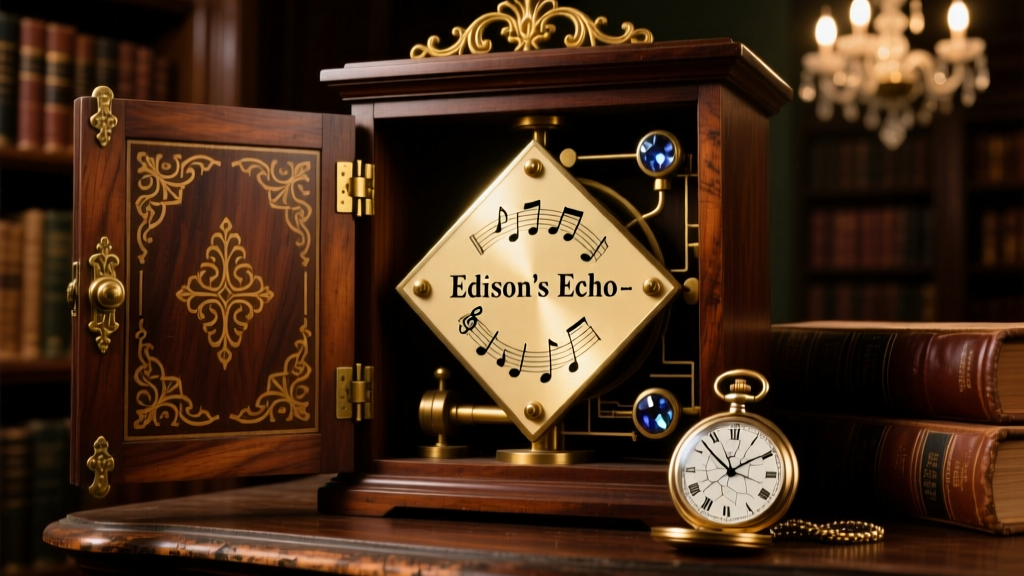
Furniture Cabinet Music Flip Door Diamond Disc Edison: A Technical and Historical Deep Dive into Rare Phonograph Furniture

The Railroad Padlock MP-L: Engineering Precision, Union Legacy, and Collectible Rarity

Odd Facts About Watches: Mechanical Marvels, Historical Quirks, and Unusual Engineering
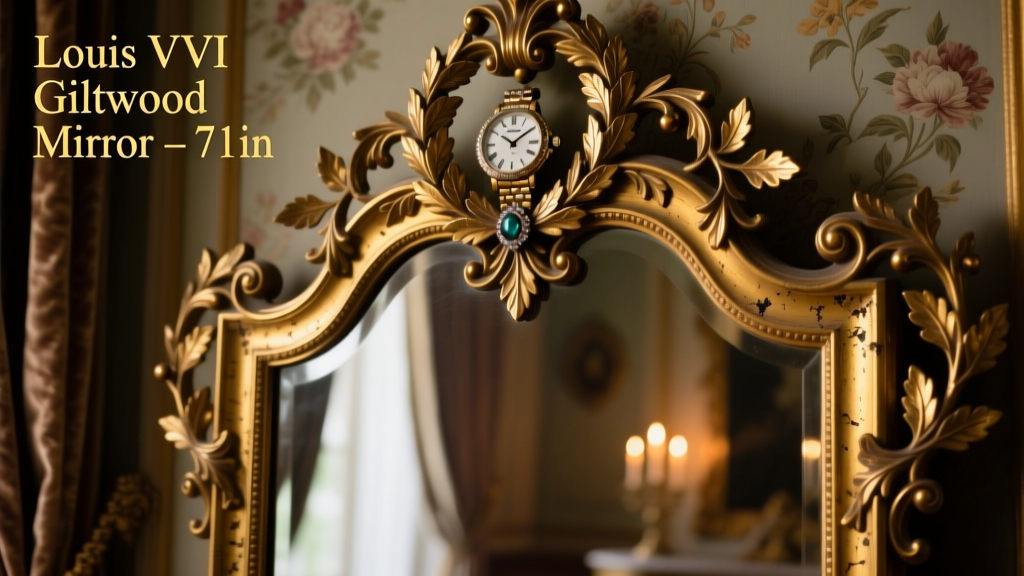
Louis XVI Giltwood Mirror: Berried Laurel Wreaths, Foliate Swags, and the Precision of Neoclassical Craftsmanship — A 71-Inch Masterpiece

Toy Horse Wagon: A Collector’s Deep Dive into the Wooden Pull Toy with Glass Eyes, Leather Harness, and Brass Whip