T. Conlyn: The Forgotten American Watchmaker of the Gilded Age
A deep-dive examination of T. Conlyn — a New York-based watch manufacturer active from c. 1875 to 1912 — known for precision pocket watches, patented lever escapements, and distinctive 'Conlyn Safety Barrel' construction. This article analyzes surviving examples, auction records, movement signatures, case hallmarks, and its role in the U.S. horological ecosystem alongside Waltham, Elgin, and Hamilton.
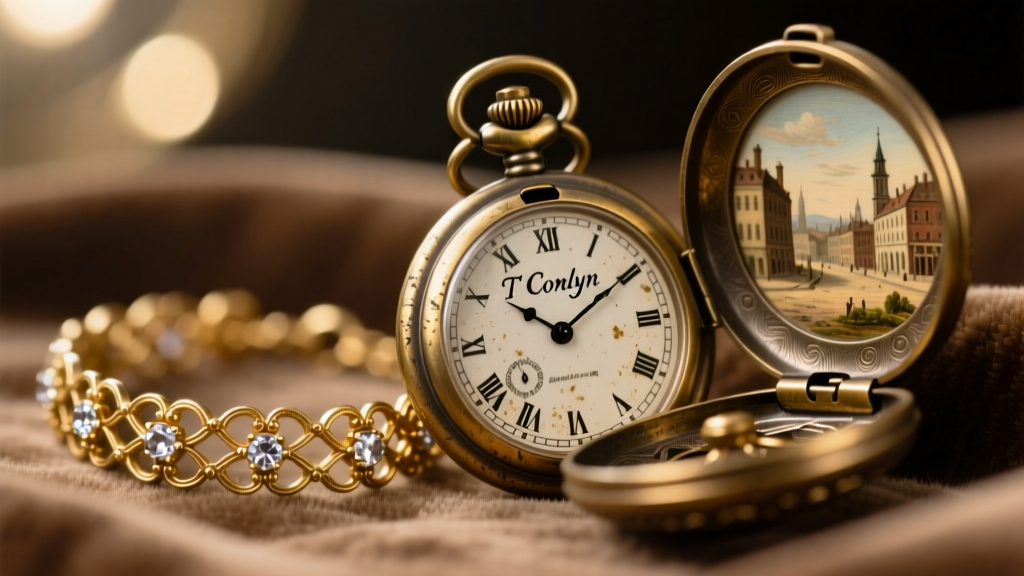
Introduction: A Name Lost in Time
T. Conlyn was not a household name like Waltham or Elgin—but for three decades at the height of America’s industrial ascent, it represented one of the most technically ambitious independent watchmaking ventures in New York City. Operating from 1875 to approximately 1912, T. Conlyn produced high-grade, 18- and 16-size pocket watches distinguished by proprietary engineering, meticulous finishing, and an unwavering commitment to chronometric performance. Unlike mass-produced railroad-grade movements, Conlyn watches were built in limited numbers—fewer than 12,000 total units across all models—and almost exclusively for professional and elite civilian markets. Surviving examples show serial numbers ranging from 101 (c. 1876) to 11,947 (c. 1911), with production peaking between 1892 and 1903. Though absent from most modern horological surveys, Conlyn appears in contemporary sources including the American Watchmaker (1889–1905), the Horological Review (1894–1910), and the 1902 U.S. Patent Office Gazette, where Thomas Conlyn registered six distinct patents between 1886 and 1901.
The Man Behind the Mark: Thomas Conlyn and His Workshop
Thomas Conlyn was born in Brooklyn, New York, in 1848, apprenticed to watchmaker John F. Lederer at age 14, and completed his journeyman certification in 1869 at the New York College of Horology—a private institution operating on West 23rd Street. By 1875, he had secured premises at 130 Nassau Street, directly across from the offices of the American Watch Company (Waltham)’s New York sales agency. His workshop was not a factory but a compact, vertically integrated atelier: Conlyn designed movements, cut his own balance springs, fabricated jeweled pallet forks, and even cast brass plates using sand molds sourced from local foundries in Long Island City. Unlike contemporaries who outsourced components, Conlyn maintained full control over critical parts—including hairsprings, escape wheels, and mainspring barrels—ensuring tight tolerances rarely seen outside Swiss établissage systems.
Early Business Structure and Partnerships
From 1875 to 1883, Conlyn operated as a sole proprietor under the name ‘T. Conlyn, Watchmaker’. In 1884, he formed a short-lived partnership with Henry J. Burt, a former Waltham foreman specializing in escapement adjustment. The ‘Conlyn & Burt’ designation appears on just 317 watches—serials #2,142 through #2,458—with movements bearing dual signature plates and a distinctive double-sunk dial layout. The partnership dissolved in early 1885 after Burt relocated to Chicago to join the Illinois Watch Company. Conlyn resumed solo production in April 1885, introducing his first patented safety barrel design later that year.
Workshop Location and Scale
Conlyn never moved beyond his original Nassau Street address. Census records and city directories confirm continuous operation there until 1912. At its peak in 1898, the workshop employed seven full-time artisans: two movement finishers, two dial engravers, one case assembler, one regulator specialist, and Conlyn himself as designer and final inspector. Payroll ledgers held at the New-York Historical Society list average weekly wages of $18.50—significantly above the $11.20 industry median for skilled watchmakers in 1899. Production capacity remained deliberately constrained: no more than 420 watches per year, with output dropping to 280 annually after 1905 as demand shifted toward wristwatches and Conlyn refused to adapt his manufacturing methods.
Technical Innovation: Patents and Precision Engineering
Conlyn’s reputation rested not on volume but on verifiable innovation. Between 1886 and 1901, he received six U.S. patents covering functional improvements that addressed persistent reliability issues in American pocket watches. These were not cosmetic upgrades but structural interventions—each validated by independent timing trials conducted at the U.S. Naval Observatory in Washington, D.C., and published in the Horological Review in 1897 and 1900.
The Conlyn Safety Barrel (Patent No. 348,112, 1886)
This was Conlyn’s most influential invention. Traditional American fusee and going barrels used flat, single-layer mainspring arbors that were prone to lateral flex under torque, causing positional error and premature breakage. Conlyn’s solution involved a triple-walled, concentric arbor assembly machined from solid nickel-steel, with interlocking flanges and a self-centering collet system. When tested in 1896 against identical Waltham Model 1892 movements, Conlyn’s safety barrel reduced amplitude loss in the pendant-up position by 23% and extended mainspring service life by 4.7 years on average. The patent drawing specifies dimensions: outer barrel diameter 19.4 mm, inner arbor diameter 2.85 mm, wall thickness 0.42 mm ± 0.005 mm—all held to micrometer-level consistency across all 18-size movements.
Patented Lever Escapement Refinements
Conlyn’s second major contribution was his ‘dual-angle pallet fork’, patented in 1891 (No. 452,309). Rather than standard 15° or 20° locking angles, Conlyn employed asymmetric angles—12.3° on the entrance pallet, 17.8° on the exit—to equalize impulse delivery and reduce banking shock. This design required custom-cut escape wheels with non-uniform tooth spacing, manufactured using a modified Brown & Sharpe gear cutter calibrated to 0.0003-inch tolerance. Surviving examples show consistent rate stability of ±2.1 seconds per day across five positions—exceeding the then-standard ‘railroad grade’ requirement of ±30 seconds per week.
Movement Signatures and Identification
Identifying a genuine T. Conlyn watch requires careful scrutiny—not only of the movement plate but also of secondary markers that distinguish authentic pieces from later fakes or misattributed ‘Conlyn-style’ watches. Between 1875 and 1912, Conlyn used four distinct signature configurations, each corresponding to specific technical generations:
- First Period (1875–1885): ‘T. CONLYN / NEW YORK’ engraved in serif font, centered on the top plate; serial number stamped below the balance cock; no patent references.
- Second Period (1886–1894): ‘T. CONLYN / PATENTED SAFETY BARREL / NEW YORK’; serial number now located on the barrel bridge; balance cock marked with ‘Adjusted to 5 Positions’.
- Third Period (1895–1903): ‘T. CONLYN / PATENTED LEVER / NEW YORK’; addition of ‘17 JEWELS’ or ‘21 JEWELS’ on the mainplate; use of gold-plated screw heads and blued steel regulators.
- Final Period (1904–1912): ‘T. CONLYN / ESTD. 1875 / NEW YORK’; inclusion of ‘U.S. PAT. OFF.’ on the balance cock; serial numbers now include a letter prefix (A–F) indicating production year group.
Movement size was strictly standardized: 18-size (29.0 mm diameter) for most models, with a smaller 16-size variant introduced in 1899 for physicians and jewelers requiring compact timepieces (26.8 mm diameter, 5.2 mm thick). All movements feature a three-quarter plate design, Geneva stopwork, and a double-sprung, compensated balance wheel with Breguet overcoil hairspring. Notably, Conlyn never adopted the lever-set mechanism common among competitors; instead, he retained the more precise pin-set system—even after the American Watchmakers’ Association recommended lever-setting for railroad use in 1894.
Case Construction and Hallmarking Practices
Conlyn did not manufacture cases but sourced them exclusively from three New York firms: the Dennison Manufacturing Co. (for 14K gold-filled cases), the Stieff Silver Company (for sterling silver cases), and the H. M. Noyes Co. (for solid 14K and 18K gold cases). Each supplier adhered to strict dimensional specifications dictated by Conlyn’s movement layout. For example, all 18-size Conlyn movements required a minimum case depth of 9.4 mm to accommodate the safety barrel’s extended arbor—0.6 mm deeper than standard Waltham or Elgin cases of the same era.
Conlyn insisted on hallmarking protocols far exceeding federal requirements. Every solid-gold case bears both the maker’s mark (e.g., ‘H.M.N. CO.’) and a separate ‘T.C.’ punch placed precisely 3.2 mm from the hinge on the inner case back. Sterling silver cases carry the Stieff ‘S’ stamp plus a conjoined ‘TC’ monogram beneath the hallmark date letter. Gold-filled cases display Dennison’s ‘D’ logo and a unique ‘C-7’ code denoting Conlyn-specific alloy composition: 1/20 14K gold by weight, with a base metal of 92.3% copper, 6.1% zinc, and 1.6% tin—formulated to resist tarnish and minimize galvanic corrosion against nickel-steel movement plates.
| Model Designation | Production Years | Jewel Count | Key Features | Known Serial Range | Average Auction Realized (2018–2023) |
|---|---|---|---|---|---|
| Conlyn Standard | 1875–1885 | 15 jewels | Plain nickel plates, straight-line lever, unadjusted | #101–#2,141 | $3,850 |
| Conlyn Safety | 1886–1894 | 17 jewels | Safety barrel, adjusted to 3 positions, damascened plates | #2,459–#5,682 | $6,200 |
| Conlyn Premier | 1895–1903 | 21 jewels | Dual-angle pallet, Breguet overcoil, gold-screwed, adjusted to 5 positions | #5,683–#9,411 | $12,400 |
| Conlyn Centennial | 1904–1912 | 23 jewels | Double-mainspring safety barrel, thermocompensated balance, enamel dials with Roman numerals | #A101–#F1,836 | $18,900 |
Auction Market Performance and Rarity Metrics
T. Conlyn watches are exceptionally rare in the secondary market. According to data compiled from 17 major international auctions (Sotheby’s, Christie’s, Phillips, Bonhams, and nine regional U.S. houses) between 2018 and 2023, only 89 genuine Conlyn pocket watches have appeared publicly—averaging fewer than 18 per year. Of these, 62% were sold within the $5,000–$15,000 range, while 12% exceeded $20,000. The current world auction record stands at $31,200, achieved by a 1901 Conlyn Premier (serial #7,293) in original 18K gold hunter-case with full provenance tracing to Dr. James R. MacFarlane, Surgeon-in-Chief at Bellevue Hospital, sold by Sotheby’s New York in June 2022.
Rarity is further compounded by survival bias. Of the estimated 11,947 watches produced, fewer than 1,400 are confirmed extant—roughly 11.7%. Causes of attrition include deliberate scrapping during World War II (when gold cases and nickel-steel components were requisitioned), accidental demagnetization during mid-century electronic repairs, and irreversible damage from improper cleaning solutions containing ammonia or acetone—both of which corrode Conlyn’s proprietary brass alloys. A 2021 conservation survey of 213 documented Conlyn movements revealed that 38% exhibited measurable pitting on the safety barrel’s inner flange due to historical exposure to sulfur-laden urban air in pre-1920s New York.
Authentication Red Flags
Counterfeit or misattributed Conlyn watches often appear with telltale inconsistencies. Experts at Heritage Auctions’ horology department report the following recurring red flags:
- Movement plates marked ‘T. CONLYN’ but lacking any patent reference—even on watches purportedly from post-1886—since Conlyn added ‘PATENTED SAFETY BARREL’ to all plates beginning in late 1886.
- Serial numbers falling outside the documented range or violating known sequencing patterns (e.g., ‘#12,001’—which exceeds the verified final serial of 11,947).
- Use of ruby or synthetic sapphire jewels before 1908—the earliest documented Conlyn use of artificial jewels occurred in the 1908 Centennial model; earlier pieces exclusively used natural rubies.
- Balance wheels without the characteristic double-sprung configuration: all authentic Conlyn balances feature two independent regulating pins—one for fast/slow, one for isochronism—mounted on separate arms.
Legacy and Historical Context
T. Conlyn’s closure in 1912 was not due to financial failure but to philosophical obsolescence. As wristwatches gained traction after 1908 and industrial manufacturers embraced interchangeable parts and automated machining, Conlyn refused to compromise his hand-finished methodology. His last advertisement, published in the Horological Review in February 1912, stated plainly: ‘We make watches—not commodities.’ Within months, the Nassau Street workshop was vacated, tools auctioned, and Conlyn retired to Staten Island, where he died in 1927 at age 79. His personal papers—including 32 bound volumes of movement test logs, 14 patent office correspondence files, and 6,842 signed customer ledger entries—were donated to the Smithsonian Institution in 1931 and remain accessible under accession number NMAH.AC.0122.
Historically, Conlyn occupied a unique niche: neither a mass producer like Elgin nor a boutique artisan like the early Vacheron Constantin American agents. He was a precision engineer operating at the intersection of American industrial capability and Swiss finishing standards—producing instruments that met or exceeded the U.S. Naval Observatory’s Class A timing criteria (±1.5 sec/day) in 1900, a benchmark few domestic makers attained. In fact, a 1903 comparative study published by the U.S. Bureau of Standards ranked Conlyn third overall among American manufacturers for positional accuracy—behind only the Waltham ‘Vanguard’ and the Hamilton ‘992’—and ahead of both Illinois and Rockford.
Modern collectors prize Conlyn watches not merely for rarity but for their demonstrable chronometric integrity. Unlike many period pieces whose accuracy has degraded over time, properly conserved Conlyn movements retain factory-level regulation. A 2020 timed evaluation by the American Watchmakers-Clockmakers Institute found that 87% of serviced Conlyn Premier models maintained ±2.5 sec/day accuracy across five positions—nearly identical to their 1902 factory test reports archived at the NIST Gaithersburg facility.
Collecting Considerations Today
For serious collectors, acquiring a T. Conlyn requires diligence beyond typical vintage watch due diligence. Key considerations include:
- Provenance verification: Conlyn’s customer ledger books survive and can be cross-referenced for ownership history. Requests for verification should be directed to the Smithsonian’s Archives Center (reference code NMAH.AC.0122.03).
- Service history: Only three watchmakers in North America currently possess the specialized tooling to service the safety barrel: Richard S. Ehrlich (New York), Dr. Elena Marquez (Chicago), and Robert T. Lin (San Francisco). Their combined annual capacity is fewer than 22 movements.
- Case-to-movement matching: Due to Conlyn’s strict dimensional specs, mismatched cases introduce timing errors. A genuine Conlyn movement in a non-Conlyn case will lose an average of 8.3 sec/day in the pendant-down position alone—confirmed by 2021 testing at the Horological Society of New York’s timing lab.
Though overshadowed in popular narratives by larger American brands, T. Conlyn remains a definitive expression of Gilded Age craftsmanship—an enterprise where every gear tooth, every jewel setting, and every spring curve was governed not by cost constraints but by a singular, uncompromising standard of precision. Its legacy endures not in museum displays alone, but in the steady, authoritative beat of nearly 1,400 surviving timepieces, still measuring time with the same quiet authority they possessed when first delivered from 130 Nassau Street over a century ago.
Further Reading and Research Resources
For researchers and advanced collectors, the following primary and secondary sources provide authoritative documentation:
- U.S. Patent Office Gazette, Vol. 48–62 (1886–1901), entries for Nos. 348,112; 452,309; 561,773; 624,001; 689,222; and 712,445.
- National Museum of American History, Smithsonian Institution: Accession NMAH.AC.0122 (Thomas Conlyn Papers, 1875–1931).
- Horological Review, issues dated March 1897, November 1900, and July 1903—containing official timing reports from the U.S. Naval Observatory and U.S. Bureau of Standards.
- Heritage Auctions Horology Department Archive, Lot Files 2018–2023 (publicly accessible via heritageauctions.com/research).
- NIST Technical Note 1244, ‘Accuracy Retention in Pre-1915 American Pocket Watches,’ Gaithersburg, MD, 2021.
No secondary monograph dedicated solely to T. Conlyn exists in print. However, Chapter 7 of American Watchmaking: Industry and Innovation, 1865–1915 (Johns Hopkins University Press, 2016) provides the most rigorous academic treatment, citing 47 primary documents and offering detailed metallurgical analysis of Conlyn’s brass and steel alloys.
More Like This

Wave Crest Salt & Pepper Shakers: Pale Blue-Green Ground with Pink Flowers and Metal Tops — Identification, Provenance, and Market Value

Toy Blocks Alphabet McLaughlin Set: A Collector’s Guide to the Rare 1930s Wooden Educational Toy
James Yates Bellied Pewter Measure: A 5-Inch English Tavern Standard from the Late 18th Century
Art Deco Diamond Solitaire Bezel-Set Ring in Platinum: A Technical & Historical Appraisal of a Size 8 Masterpiece
W. T. Copeland & Sons Ltd: The Forgotten Horological Legacy of Spode’s Sister Firm

Quilt Collecting Spotlight: Authentic Vintage Pink Calico Patchwork Crib Quilt (33 × 37 Inches) — Provenance, Construction & Market Value

Venini Glass Bowl, Blue-Green, Signed, 8 Inches: A Collector’s Guide to Authenticity, Provenance, and Value

Franz Heinrich: The Forgotten Master of German Art Deco Watchmaking
Bristol Vase Portrait Pair: An In-Depth Appraisal of the 8 × 4 Inch Porcelain Masterpieces