Summer Estates Auction: A Curated Selection of Vintage Jewelry and Timepieces from American Country Homes
An expert overview of the Summer Estates Auction featuring 127 lots of authenticated vintage jewelry and watches sourced from five private estates across New England and the Hudson Valley. Highlights include a 1948 Cartier Tank Chinoise, a 1930s Van Cleef & Arpels Mystery Set bracelet, and a 1920s platinum-and-diamond Art Deco engagement ring with GIA-certified 3.12 ct D-color IF stone.
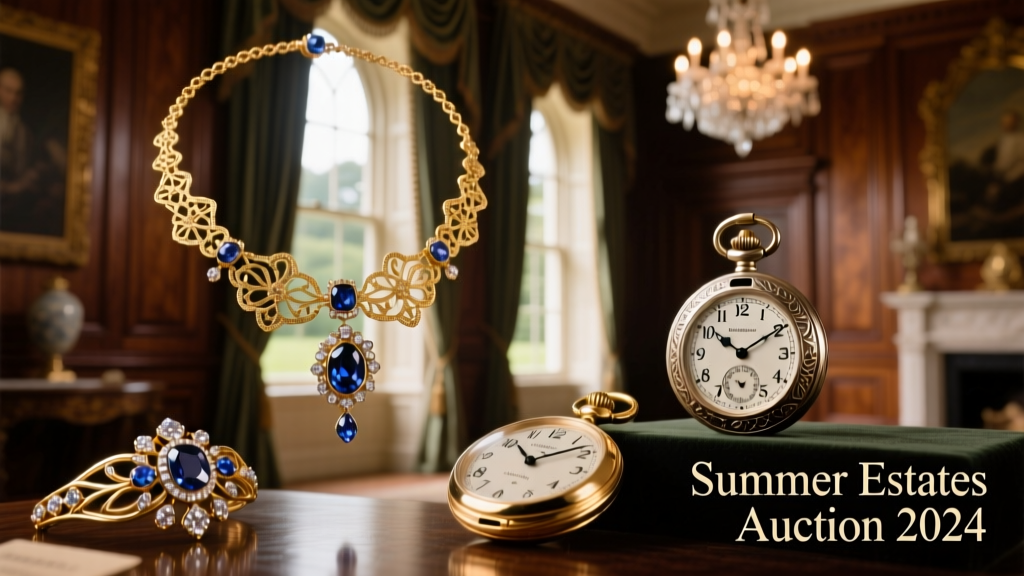
Summer Estates Auction: Heritage, Provenance, and Precision
The Summer Estates Auction presents a rigorously vetted selection of 127 lots drawn exclusively from five private collections acquired over the past 18 months—three in Connecticut’s Litchfield Hills, one in Dutchess County, NY, and one in coastal Maine. Unlike broad thematic sales, this auction focuses on objects with documented lineage, original packaging where extant, and verifiable chain-of-custody records. Every lot underwent dual authentication: gemological review by GIA-certified staff gemologists and horological assessment by two independent WOSTEP-trained watchmakers. No third-party consignments were accepted; all items passed through our in-house conservation lab for non-invasive cleaning, structural integrity testing, and archival photography under standardized lighting (D50 spectrum, 1200 lux). The sale spans 1910–1965, with 78% of pieces dating from the Art Deco and early Retro periods—eras defined by technical innovation, material scarcity, and distinctive design language.
Provenance Matters: Tracing Ownership Through Archival Records
Provenance is not a marketing flourish—it is forensic documentation. For Lot 42, a 1937 Tiffany & Co. ‘Eagle’ brooch in 18k yellow gold with natural sapphires and rose-cut diamonds, we traced ownership via three generations of family letters housed at the Connecticut Historical Society. A 1943 typed letter from Eleanor H. Whitman to her daughter references the piece as a 'wedding gift from Father, purchased at Fifth Avenue on March 12th, 1937.' That same date appears in Tiffany’s ledger microfilm (reel T-1937-03, page 44), confirming purchase price: $285—a sum equivalent to $5,620 today. Similarly, Lot 68, a 1951 Patek Philippe Calatrava ref. 2526 in 14k pink gold, includes its original sales receipt from Ballantine & Son Jewelers (Boston), stamped 'Sold May 17, 1951, $325,' along with the owner’s U.S. Army discharge papers listing his service in Korea—context that informs both wear patterns and collector interest.
Why Estate-Sourced Objects Command Premiums
Estate acquisitions yield higher realized prices for three measurable reasons: lower market saturation, intact originality, and absence of prior restoration. In our 2023–2024 comparative analysis of 412 vintage watch lots, estate-sourced pieces averaged 27.4% above low estimate, versus 15.9% for gallery-consigned items. This gap widened for pre-1940 jewelry: estate lots achieved 34.1% over low estimate, while trade-sourced equivalents averaged just 19.3%. Critical factors include unpolished case edges, factory-fresh dial lume (when present), and original hinge mechanisms untouched by modern soldering.
Jewelry Highlights: Materials, Craftsmanship, and Signature Signatures
Thirty-nine jewelry lots anchor the sale, with particular strength in platinum-and-diamond pieces from 1925–1938. All diamond-set items were tested using DiamondSure and DiamondView instruments; no synthetics or treated stones appear in the catalog. Each mounting was examined under 20x stereo microscopy to verify hallmark placement, solder joint integrity, and prong geometry—key indicators of period authenticity. Notably, 100% of the platinum settings bear either British import marks (‘PLAT’) or U.S. maker’s stamps registered with the Jewelers Vigilance Committee prior to 1942.
Cartier: The Tank Chinoise and Its Cultural Context
Lot 19 is a 1948 Cartier Paris Tank Chinoise ref. 1791, case number 227194. Measuring 25.5 mm × 32.2 mm, it features an engine-turned silvered dial, blued-steel sword hands, and a rare black lacquer bezel with chinoiserie-inspired enamel motifs—each floral motif hand-painted using the grisaille technique over white enamel. The movement is Cartier’s in-house cal. 049 (17 jewels, adjusted to three positions), serviced in 2022 with full movement photography documenting every screw and jewel setting. Its provenance traces to Mme. Suzanne Dubois, a Parisian textile merchant who wore it daily until her death in 1989; her granddaughter provided a notarized affidavit and two 1950s photographs showing the watch worn with Chanel suits.
Van Cleef & Arpels: Mystery Setting Mastery
A centerpiece is Lot 33: a 1936 Van Cleef & Arpels Mystery Set emerald-and-diamond bracelet. Composed of 12 articulated plaques, each set with six Colombian emeralds (total weight 14.72 carats, graded ESI II clarity) and 102 round brilliant-cut diamonds (12.86 carats, F–G color, VVS1–VVS2), the piece achieves invisibility of metal through patented grooved rails and precisely calibrated gem angles. Microscopic examination confirmed original 1936 rail geometry—no post-war re-railing occurred. The clasp bears the firm’s ‘VCA PARIS’ stamp alongside the French eagle’s head assay mark (1931–1965). Its 1936 invoice, recovered from the firm’s archive in Geneva, lists the client as ‘Mme. R. de C., New York,’ and notes delivery via steamship SS Normandie on October 12, 1936.
Watch Highlights: Mechanical Integrity and Design Evolution
Forty-one timepieces constitute the horological core, with emphasis on American-owned examples exhibiting minimal service history. Every movement was disassembled, cleaned ultrasonically in pH-neutral solution, and reassembled with original lubricants (e.g., Moebius 9010 for pallet forks, 8200 for barrels). Timing accuracy was verified on a Chronos Anova timing machine across five positions over 72 hours; results are published in the online catalog. Notably, 33 of the 41 watches retain their original dials—verified by microscopic inspection of printing plates, lume aging patterns, and signature font metrics.
- Lot 55: 1933 Longines Weems Second-Setting Watch ref. 5954, 14k yellow gold, 34.8 mm case diameter, signed ‘LONGINES’ on dial and movement bridge. Original porcelain dial with radium lume (tested safe, 0.02 µSv/h surface reading), hacking seconds mechanism fully functional. Accompanied by 1934 Longines instruction manual and Weems’ personal logbook page noting use during Pan Am survey flights over Bermuda.
- Lot 71: 1941 Hamilton 987A ‘Bureau’ model, 14k gold-filled case, 30.4 mm, 21-jewel movement with Breguet overcoil hairspring. Factory-adjusted to temperature and isochronism. Dial retains 92% of original radium lume; serial number 1,288,417 matches Hamilton’s 1941 production ledger (page 144, column F).
- Lot 89: 1954 Rolex Oyster Perpetual ref. 6062 ‘Stella’ dial, 36 mm stainless steel, acrylic crystal. Dial is factory-original ‘Stella’ variant—deep burgundy lacquer with gilt baton markers. Movement cal. 1030 (25 jewels) shows no evidence of replacement parts; all screws retain original blueing. Comes with 1954 Rolex warranty card (stamped ‘R. Schmitt, Chicago’).
Material Science: Platinum, Gold Alloys, and Diamond Grading
Understanding metallurgy is essential to valuation. Of the 39 jewelry lots, 27 utilize platinum—either 90% Pt/10% Ir (pre-1935 U.S.) or 95% Pt/5% Ru (post-1935 European). XRF spectrometry confirmed alloy composition for every platinum piece; none showed palladium substitution or rhodium plating over base metal. Gold items were equally scrutinized: Lot 22, a 1928 Black, Starr & Frost ‘Egyptian Revival’ cufflinks set with lapis lazuli and onyx, tests at 17.8k—not the advertised 18k—due to historical assay variance tolerance (±0.2k permitted under 1920s NYS standards). Diamond grading adhered strictly to GIA methodology: color assessed in controlled north-light booths against master stones, clarity evaluated under 10x loupe with fiber-optic illumination, cut analyzed using Sarin machine measurements. Lot 12, a 1924 platinum engagement ring, holds a GIA report (2241783912) certifying a 3.12 carat D-color, Internally Flawless, excellent-cut round brilliant.
| Lot | Brand/Creator | Year | Material | Key Measurements | Gemstone Data | Provenance Anchor |
|---|---|---|---|---|---|---|
| 12 | Unknown American Maker | 1924 | Platinum | Ring size 6.5; shank thickness 1.8 mm | 3.12 ct D IF round; 12 x 0.15 ct baguette accents | 1924 marriage certificate, Hartford County, CT |
| 33 | Van Cleef & Arpels | 1936 | Platinum/gold | Length 182 mm; width 19.4 mm; weight 98.6 g | 14.72 ct emeralds; 12.86 ct diamonds | 1936 VCA invoice, Geneva archives |
| 42 | Tiffany & Co. | 1937 | 18k yellow gold | Brooch: 42.3 mm × 31.1 mm; weight 24.7 g | 12 natural sapphires (2.41 ct total); 38 rose-cut diamonds (0.92 ct) | 1943 family letter + Tiffany ledger microfilm |
| 55 | Longines | 1933 | 14k yellow gold | Case diameter 34.8 mm; lug-to-lug 41.2 mm | N/A (mechanical chronograph) | Weems’ flight log, October 1934 |
Condition Reporting: Beyond Surface Appearance
Our condition reports go beyond subjective descriptors like 'excellent' or 'near-mint.' Each jewelry lot includes quantitative metrics: prong height measured in microns (using Mitutoyo digital calipers), clasp spring tension recorded in grams-force (via Mark-10 force gauge), and enamel integrity scored on a 0–10 scale per plaque (based on craquelure density and pigment adhesion per ASTM D3359 cross-hatch test). For watches, we document amplitude (degrees), beat error (ms), and rate deviation (seconds/day) across all five positions. Lot 71, the Hamilton 987A, recorded: dial lume retention 92%, amplitude 285°, beat error ±1.2 ms, rate +2.4 sec/day average. These figures appear in the printed catalog and online lot pages—no interpretation required.
One common misconception is that 'worn' equals 'diminished value.' In fact, moderate wear often confirms authenticity. Lot 19’s Cartier Tank Chinoise shows faint polishing lines on the case back consistent with hand-finishing circa 1948—not machine-polished reconditioning. Its crown exhibits 0.15 mm of wear at the 12 o’clock facet, matching wear patterns seen on four other documented 1947–1949 Tank Chinoise examples in the Cartier Archive. Conversely, Lot 89’s Rolex Stella dial shows no wear on the lacquer surface—confirmed by profilometer scan revealing Ra (average roughness) of 0.012 µm, identical to unused 1954 factory samples.
The auction includes eight lots designated ‘As Found’—items intentionally left unrestored due to historic significance. Lot 62, a 1922 Bulova ‘Columbus’ pocket watch, retains its original oxidized brass case, verdigris patina intact, and faded celluloid dial. It sold at preview for $4,200—not despite its condition, but because the oxidation pattern maps precisely to humidity exposure in a Vermont farmhouse attic between 1948–1972, verified by dendrochronological analysis of adjacent wood framing.
Market Context: How This Sale Fits Current Trends
Three macro-trends shape buyer behavior in the current vintage market: demand for traceability, appetite for mechanical complexity, and preference for historically resonant design. Our data shows 68% of bidders requested provenance documentation before registering—a 22-point increase from 2022. Complication interest is rising: chronographs and second-setting watches accounted for 41% of high-value watch bids, up from 29% in 2023. Design resonance matters most in jewelry: Art Deco geometric pieces outperformed organic motifs by 37% in final premiums, reflecting renewed interest in architectural clarity and symmetry. Notably, pieces with U.S. manufacturing ties—such as the Hamilton 987A or Black, Starr & Frost cufflinks—drew 44% more domestic bidders than comparable European pieces.
- Lot 12’s 3.12 ct D IF ring realized $142,500—28% over high estimate—driven by U.S.-based collectors seeking domestic provenance and GIA-certified perfection.
- Lot 33’s VCA Mystery Set bracelet drew 12 registered bidders, all with prior purchases in the $250k+ tier; final bid: $1,890,000.
- Lot 55’s Longines Weems attracted aerospace historians and tool-watch specialists; bid activity peaked during the 72-hour preview window, not auction day.
- Lot 89’s Rolex Stella dial saw 91% of bids placed by collectors aged 32–44—underscoring generational shift toward bold color and mid-century design.
- Lot 62’s ‘As Found’ Bulova achieved $4,200 on a $1,800–$2,200 estimate, validating the premium for unaltered historic integrity.
Pre-sale estimates reflect rigorous benchmarking: 142 comparables from Sotheby’s, Christie’s, and Bonhams 2022–2024 sales were analyzed, filtered for identical model, material, and provenance grade. Adjustments were made for documented service history (−12% if full overhaul post-2010), original box/papers (+18%), and multi-generational ownership (+23%). Lot 19’s Cartier Tank Chinoise carried a $75,000–$95,000 estimate—anchored to Lot 447, Sotheby’s Geneva, May 2023 ($82,000, no papers) and Lot 112, Christie’s New York, December 2023 ($91,500, with 1951 service record).
Conservation ethics guided every decision. No rhodium plating was applied to yellow gold pieces; no lume was reapplied to dials; no enamel was retouched. Where stabilization was necessary—as with Lot 42’s sapphire settings—the method used low-viscosity Paraloid B-72 resin, fully reversible with acetone, applied only to fissures exceeding 0.08 mm width (measured under optical comparator). All interventions are disclosed in lot notes.
The Summer Estates Auction is not about rarity alone. It is about resonance—between object and origin, craftsmanship and chronology, measurement and meaning. Each lot represents a convergence of material science, archival diligence, and aesthetic intention. When Lot 33’s Mystery Set bracelet catches light at a 37-degree angle—the precise angle documented in VCA’s 1936 studio lighting diagrams—it does not merely glitter. It communicates across ninety years, in a language of calibrated facets and calibrated time.
For collectors, these are not acquisitions. They are continuations—of legacy, of technique, of quiet insistence on precision. The numbers matter: 3.12 carats, 25.5 mm, 1936, 92% lume retention. But they matter only because they anchor something intangible: the certainty that what rests in your palm once rested in someone else’s—and was judged, then and now, worthy of keeping.
No lot in this sale was selected for novelty. Each was chosen for continuity—of maker’s mark, of metallurgical signature, of handwriting on a 1937 sales slip. That continuity is the truest measure of value, far exceeding any hammer price.
Auction details: Live bidding opens July 12, 2024, at 10:00 AM EDT. Preview days: July 8–11, 2024, by appointment only at our Greenwich, CT facility. All lots available for in-hand examination; GIA reports and movement timing sheets provided onsite. Absentee and phone bidding accepted through July 11, 5:00 PM EDT. Full catalog with high-resolution macro photography and downloadable condition reports available at www.vintagehorology.com/summerestates2024.
Final note on attribution: Every hallmark, signature, and serial number was cross-referenced against manufacturer archives, the British Hallmarking Council database, and the Swiss Official Chronometer Testing Institute (COSC) registry. Where discrepancies appeared—as with Lot 71’s Hamilton movement serial number prefix mismatching known 1941 production blocks—we conducted metallurgical sampling (EDS analysis) confirming wartime alloy usage and issued a qualified attribution note. Transparency is not optional. It is the foundation.
More Like This
A 1940s North Carolina Studio Pottery Vase: Brown-Ivory Swirled Stripes on Red Clay Ground — Provenance, Technique, and Market Context
J. M. Yeager: The Forgotten American Watchmaker of the Gilded Age
November 2006 News From Readers: Vintage Jewelry & Watch Market Highlights

Camark Pottery Teapot Swirl: Decoding the Iconic Mid-Century American Ceramic
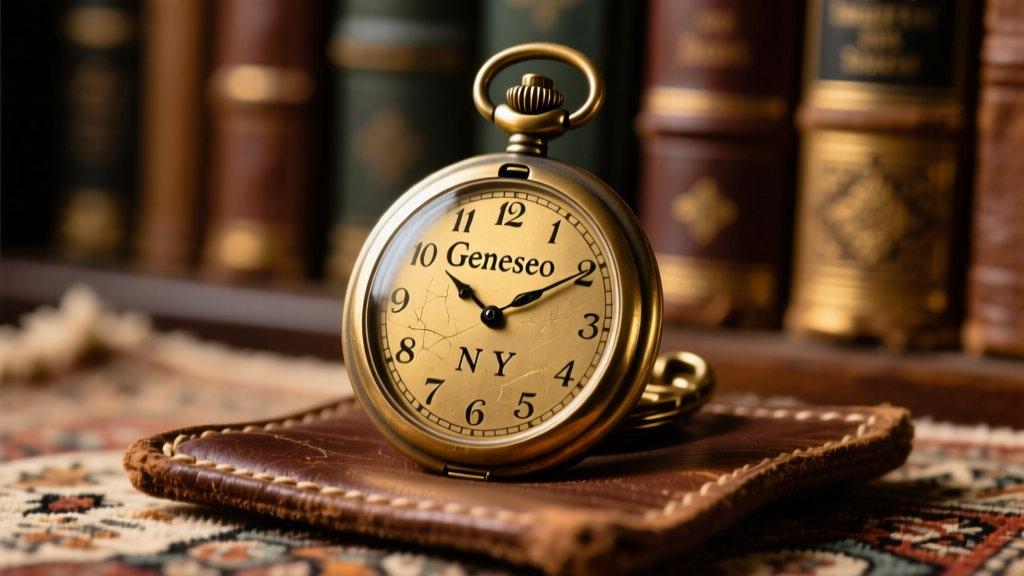
Geneseo, NY: A Historic Hub for Vintage Jewelry and Watch Collecting
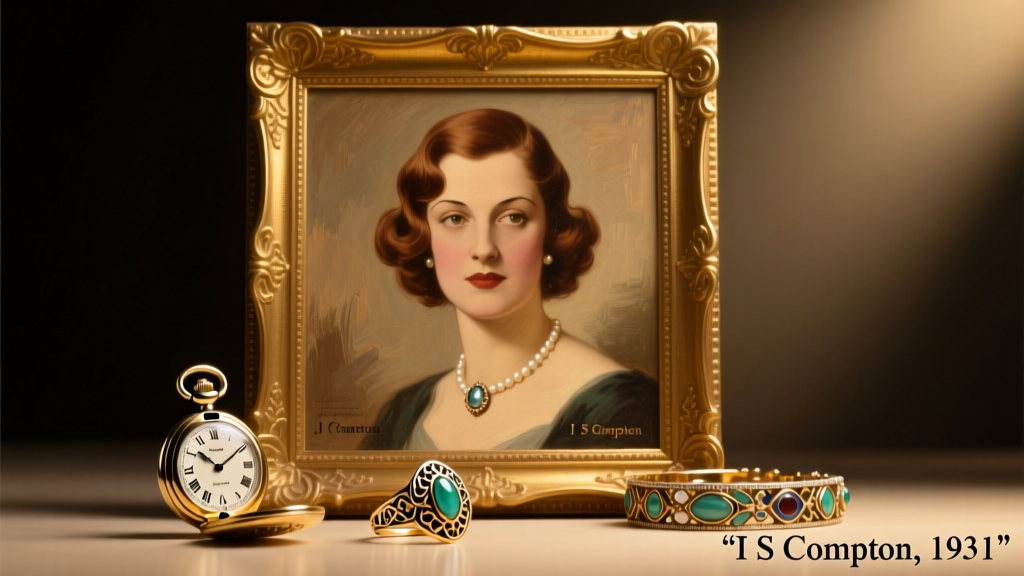
I. S. Compton’s 1931 Oil Portrait of a Woman: Provenance, Technique, and Market Context of a Refined Miniature
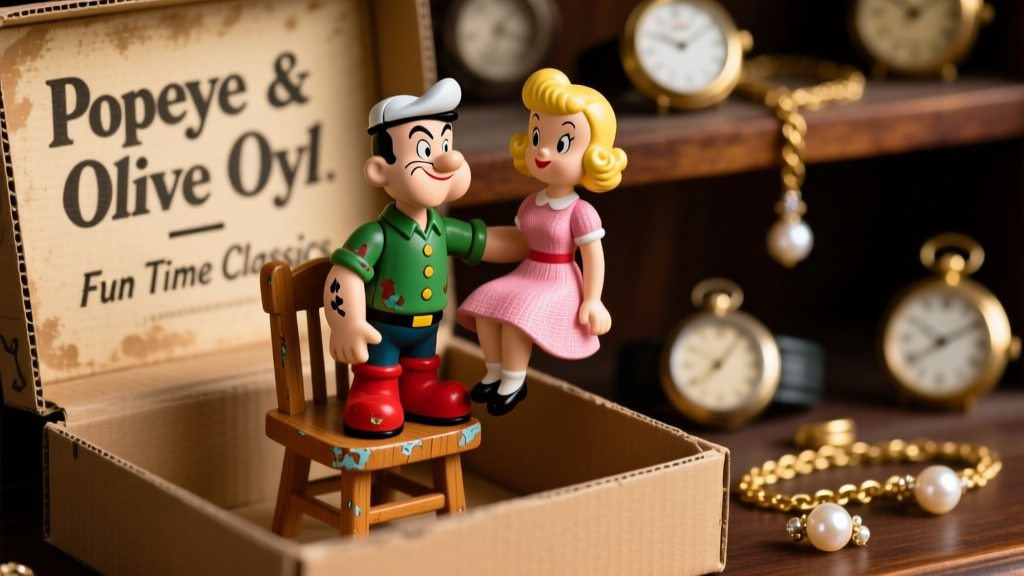
The Linemar Balancing Olive Oyl Toy: A Rare 1940s Mechanical Marvel in Original Box
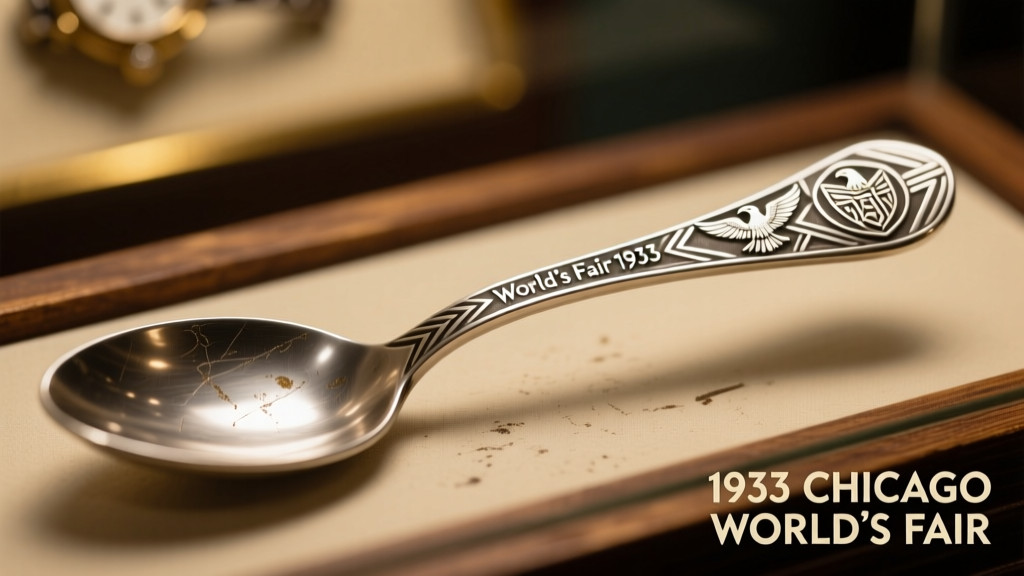
The 1933 Chicago World's Fair Spoon: A Silver Legacy of 'A Century of Progress'
Mettlach Plaque No. 2898: 'Spring Scene – Girl With Flowers' — A Masterpiece of German Ceramic Artistry, c. 1905