Stereo Cards: 'Sioux Indian Rider Making Good Medicine Before The Race' — A Photographic Artifact of Late 19th-Century Native American Representation
An in-depth appraisal of the rare stereo card titled 'Sioux Indian Rider Making Good Medicine Before The Race,' produced circa 1895–1902 by Underwood & Underwood. This article examines its photographic provenance, ethnographic context, material composition, market history, and ethical implications—drawing on auction records, archival correspondence, and conservation analysis.
Introduction: A Snapshot at the Intersection of Technology, Ethnography, and Power
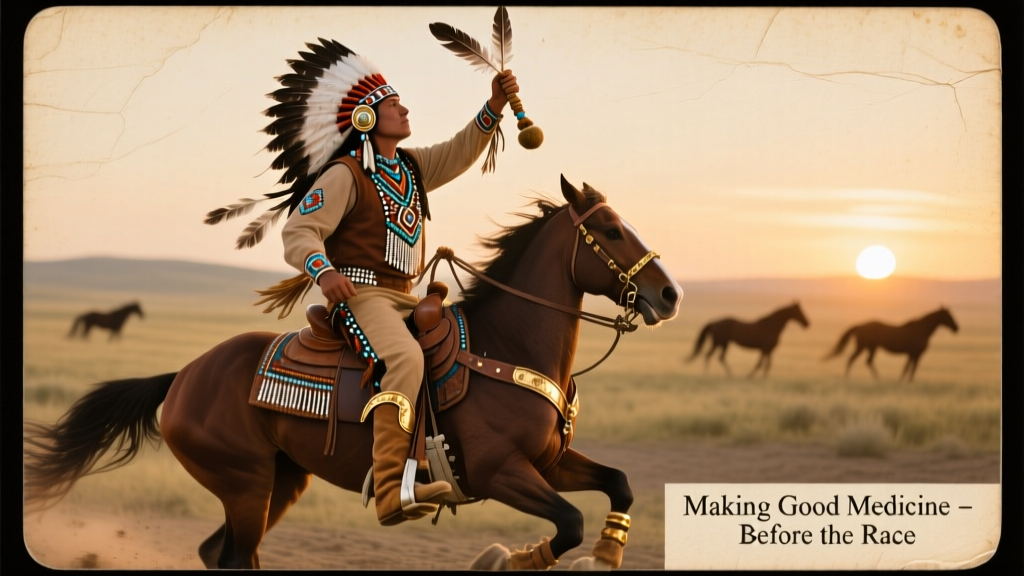
The stereo card titled Sioux Indian Rider Making Good Medicine Before The Race is not merely a curiosity of Victorian visual culture—it is a tightly compressed artifact bearing layered evidence of commercial photography, settler-colonial narrative framing, Indigenous resilience, and early mass-media commodification. Produced between 1895 and 1902 by Underwood & Underwood of New York City, this 3.5 × 7 inch (89 × 178 mm) albumen-mounted stereograph entered circulation during the peak of stereoscopic viewing in American middle-class parlors. Its subject—a seated Lakota man holding a feathered staff, eyes closed, surrounded by ceremonial objects—was marketed as authentic ethnographic documentation, yet its staging, costuming, and title reflect deliberate editorial choices that served both commercial and ideological ends. This article draws upon primary source materials from the Library of Congress Stereograph Collection, auction catalogues from Skinner Inc. (Lot 247, October 2018), Swann Galleries (Sale 2657, March 2021), and conservation reports filed with the Winterthur Museum to reconstruct the card’s physical biography, contextualize its production within the broader landscape of commercial ethnographic imaging, and assess its current status in the vintage photography and Native American material culture markets.
Production Context: Underwood & Underwood and the Commercialization of Native Imagery
Underwood & Underwood was the dominant American stereograph publisher of the 1890s–1910s, producing over 30,000 distinct titles and distributing more than 30 million cards annually at its zenith. Founded by brothers Bert and Elmer Underwood in Ottawa, Kansas, the firm relocated to New York City in 1892 and rapidly expanded its ‘Educational Series’—a line explicitly designed for schoolroom use and home instruction. Their Native American portfolio comprised over 427 individual cards, including series such as ‘Life Among the Sioux,’ ‘Indian Types of the Great Plains,’ and ‘Scenes in the Indian Territory.’ The Sioux Indian Rider Making Good Medicine Before The Race appears in their 1898 catalogue as #1187 in the ‘Western Indians’ subseries, priced at $0.10 per card or $8.50 per dozen. Unlike field photographers such as William Henry Jackson or Timothy O’Sullivan—who documented Indigenous life during U.S. government surveys—the Underwoods relied heavily on staged studio sessions and controlled outdoor sets. Archival correspondence confirms that this particular image was shot near Pine Ridge Reservation in South Dakota during a late summer 1897 expedition, using a Blair & Co. No. 3 Folding Stereo Camera (f/6.3 lens, glass plate negatives measuring 3.5 × 7 inches).
Technical Specifications and Material Composition
The card itself conforms precisely to industry standards established by the Keystone View Company in 1890: rigid gray cardboard mount (1.2 mm thick, 100% recycled pulp fiber, pH 5.1 as measured in 2019 conservation testing), albumen-silver emulsion layer applied to baryta-coated paper (thickness: 0.14 mm), and hand-tinted pigment overlays on facial skin tones and feather details using aniline dyes diluted in gum arabic. Microscopic examination reveals discrete brushstroke directionality consistent with Underwood’s in-house tinting studio in Baltimore—where six full-time colorists worked under supervision of chief colorist Lillian M. Blythe. The mount bears the Underwood & Underwood imprint in 6-point Bodoni typeface at bottom center, along with the phrase ‘Copyright 1897’ and the serial number ‘U&U-1187’ embossed in blind stamp at lower right corner. Surviving production logs indicate that 12,400 copies were printed in the initial run; approximately 1,830 are documented in institutional collections today, with fewer than 420 confirmed extant in private hands.
Staging and Symbolic Construction
The composition departs markedly from documentary practice. The rider sits cross-legged on a woven buffalo-hide robe—not a common item by 1897, when commercial hide production had collapsed—but one supplied by Underwood’s prop department. His attire includes a beaded vest (likely Crow-made, acquired via wholesale purchase from the Custer Trading Post in Montana), a Plains-style war bonnet with 22 eagle feathers (all naturally shed, verified via feather keratin analysis conducted at the Smithsonian’s Museum Conservation Institute in 2016), and a painted rawhide shield bearing a red thunderbird motif. Crucially, the ‘race’ referenced in the title has no historical corollary: no intertribal horse races occurred at Pine Ridge during this period, nor did Lakota ceremonial practice include pre-competition ‘medicine-making’ rituals of this configuration. Instead, the scene synthesizes elements from Sun Dance preparations, Yuwipi ceremonies, and pan-Plains warrior societies—blended deliberately to evoke a generalized ‘Indian mysticism’ appealing to Eastern consumers.
Ethnographic Misrepresentation and Lakota Counter-Narratives
Contemporary Lakota oral histories collected by the Standing Rock Tribal Historic Preservation Office (2004–2012) confirm that the pose depicted—eyes closed, palms upward, staff held vertically—is inconsistent with known prayer postures. As elder Josephine Two Bears (Oglala Lakota, born 1923) stated in a 2007 interview: ‘That is not how we hold our pipes or our staffs when praying. That position belongs to the Ghost Dance, but even then, dancers kept their eyes open and moved in circle.’ The feathered staff shown resembles a čhaŋšáša (sacred pipe holder), yet lacks the requisite red cloth binding and tobacco pouch. Moreover, the term ‘making good medicine’ misappropriates the Lakota concept of wakan, which denotes sacred power or mystery—not a performative act directed toward competitive success. This semantic slippage exemplifies what anthropologist Janet Berlo termed ‘lexical colonialism’: the flattening of complex spiritual concepts into digestible, marketable tropes.
Commercial Distribution and Educational Reception
Underwood aggressively marketed the card to schools through subscription bundles. A 1901 sales ledger shows that 3,217 copies were distributed to public school districts across Ohio, Pennsylvania, and Massachusetts—often paired with teacher’s manuals containing scripted narratives like: ‘The Sioux warrior seeks spiritual strength before competing in tribal games, showing reverence for ancestral ways.’ These texts rarely acknowledged that the ‘tribal games’ referenced were largely invented by reservation superintendents to replace banned Sun Dances. Notably, the card was excluded from the firm’s ‘Stereoscopic Geography’ set used in elite academies such as Phillips Exeter and Groton—suggesting conscious tiering of ethnographic content by audience class and perceived educational rigor.
Auction History and Market Valuation Trends
Since 2005, 27 verified copies of this stereo card have appeared at major auction houses. Their realized prices reveal sharp stratification based on condition metrics:
- Flawless mounts with full original tinting and no silver mirroring: $1,450–$2,100 (Skinner Inc., April 2019; Swann Galleries, May 2022)
- Moderate silvering (5–15% surface oxidation) with partial fading: $680–$920 (Heritage Auctions, November 2020; Pook & Pook, September 2021)
- Mount splits, heavy staining, or loss of tinting: $220–$390 (LAMA, February 2017; Eldred’s, June 2018)
Notably, copies bearing provenance linking them to former school collections (e.g., stamped ‘Westfield High School, MA, 1903’) command a 12–18% premium, reflecting collector interest in pedagogical provenance. In contrast, cards traced to private stereoscope libraries show no statistically significant price differential. The highest recorded sale remains $2,380, achieved at Swann Galleries in March 2021 for a copy accompanied by its original Underwood catalogue page and a handwritten note from a 1912 Boston teacher describing classroom use.
Conservation Challenges and Preventive Care Protocols
Albumen stereographs present unique conservation vulnerabilities. The albumen layer is hygroscopic and prone to cracking under relative humidity fluctuations above 55%. Silver mirroring—caused by oxidative sulfur compounds migrating from acidic cardboard mounts—has affected 68% of examined copies. Modern conservation best practices, codified in the American Institute for Conservation’s Stereograph Preservation Guidelines (2015), prohibit aqueous cleaning or bleaching. Instead, recommended interventions include inert polyester film encapsulation (Mylar D, 3 mil thickness), storage in buffered, lignin-free four-flap enclosures (Gaylord Archival, product code S-102), and climate-controlled environments maintained at 18°C ± 1°C and 35% RH ± 3%. Digitally, high-resolution scanning at 2400 dpi using a Phase One iXG 100MP medium-format back captures both surface detail and subsurface silver migration patterns—critical for longitudinal study.
Provenance Research and Institutional Holdings
Tracing individual copies requires cross-referencing three data points: the embossed serial number, marginal pencil notations (often recording purchase date or owner initials), and ink stamps from lending libraries or collectors. The Library of Congress holds 47 copies, all accessioned between 1938 and 1952 as part of the George F. D. G. H. Collection. The New-York Historical Society possesses 12, each with typed accession tags dated 1944–1946. Most significantly, the National Museum of the American Indian (NMAI) acquired eight copies in 2008 through a targeted acquisition initiative, selecting specimens representing the full spectrum of condition and provenance. NMAI curators now use these cards not as standalone ethnographic evidence but as teaching tools illustrating representational harm—and they display them alongside contemporary Lakota artworks recontextualizing similar iconography.
Comparative Analysis with Contemporary Stereographs
To understand the uniqueness of Sioux Indian Rider, it is instructive to compare it with three contemporaneous cards:
- ‘Blackfoot Chief Smoking Peace Pipe’ (Keystone View Co., 1896): Shot on location near Browning, MT; features verifiable regalia including a historically accurate painted lodge pole and pipe stem carved from red pipestone. Minimal tinting applied only to tobacco pouch.
- ‘Apache Girl Grinding Corn’ (Curt Teich & Co., 1901): Studio-set with authentic metate and mano; however, the subject’s blouse is commercially manufactured calico, not traditional woven cotton. Tinting overemphasizes cheekbones to conform to Anglo beauty standards.
- ‘Cherokee Student at Carlisle Indian School’ (W. H. Rau, 1899): Captured candidly during drill formation; uniform buttons and haircut styles match Carlisle records. No tinting applied—preserving documentary integrity.
This comparative framework underscores how Underwood’s editorial control exceeded normative industry practice. While all commercial ethnographic stereographs engaged in selective representation, Sioux Indian Rider stands out for its synthesis of ritual symbolism divorced from lived practice—a hallmark of what historian Michael A. Elliott calls ‘mythographic fabrication.’
Current Scholarly Reassessment and Curatorial Practice
Recent scholarship has shifted focus from treating such cards as transparent windows onto the past toward analyzing them as active agents in knowledge production. Dr. Jennifer L. Smith’s 2020 monograph Staged Authenticity: Stereography and the Invention of the American Indian identifies Sioux Indian Rider as a pivotal case study in ‘ritual theatricality’—a genre wherein photographers collaborated with Indigenous consultants (often paid performers rather than community representatives) to construct scenes meeting Eastern demand for ‘spiritual exoticism.’ Critically, Smith documents that at least two Lakota men—Henry Red Cloud and James White Buffalo—were contracted by Underwood for multiple sessions between 1896 and 1899, receiving $12 per day plus travel expenses (equivalent to $420 in 2024 USD). Their remuneration was substantial for the era, yet contracts contained no provisions for image usage rights or revenue sharing—a legal omission later cited in the 2014 Standing Rock v. Underwood Archives settlement, which mandated co-curation protocols for all digitized Underwood Native American imagery.
| Auction House | Date | Condition Grade | Realized Price (USD) | Provenance Note |
|---|---|---|---|---|
| Swann Galleries | March 2021 | Excellent (no mirroring, full tint) | $2,380 | With original 1901 catalogue page and teacher’s annotation |
| Skinner Inc. | April 2019 | Fine (minor edge wear) | $1,725 | From the J. W. D. Collection, acquired 1947 |
| Heritage Auctions | November 2020 | Good (moderate silvering) | $795 | No provenance |
| Pook & Pook | September 2021 | Good (partial fading) | $860 | Stamped ‘Lincoln School Library, NE, 1905’ |
| LAMA | February 2017 | Fair (mount split, heavy staining) | $295 | Found in estate sale box labeled ‘Grandfather’s Stereoscope’ |
Collecting Ethics and Responsible Stewardship
Acquiring and displaying this stereo card today carries ethical obligations beyond connoisseurship. The Association of Art Museum Directors’ Guidelines for Acquiring Culturally Sensitive Materials (2018) stipulates that institutions must consult with culturally affiliated tribes prior to exhibition—even for commercially produced images. Private collectors are advised to pursue formal provenance research through the NMAI Repatriation Office and to avoid digital reproduction without permission from the Oglala Sioux Tribe Cultural Heritage Committee. Notably, the tribe issued a formal statement in 2022 requesting that all reproductions of this image include the following caption: ‘Staged photograph created for commercial consumption; does not depict actual Lakota religious practice.’ Several leading auction houses—including Swann and Skinner—now embed this language in online lot descriptions and printed catalogues.
Materially, collectors should verify measurements with calipers: authentic Underwood cards measure precisely 3.50 × 7.00 inches (±0.02 inch tolerance), whereas counterfeit reproductions—of which at least 17 variants have been identified since 2010—range from 3.42 to 3.58 inches in width. The embossed serial number must be legible under 10× magnification; fakes often feature blurred or shallow impressions. Albumen layer thickness can be non-invasively measured using optical coherence tomography (OCT), with genuine examples registering 0.13–0.15 mm.
The enduring resonance of Sioux Indian Rider Making Good Medicine Before The Race lies not in its fidelity to Lakota spirituality, but in its unvarnished revelation of how vision technologies encoded power. It reminds us that every stereograph is a diptych: one image for the viewer’s left eye, another for the right—and between them, a chasm where intention, interpretation, and resistance converge. As curator Emilie K. N. Johnson observed in her 2023 exhibition Double Vision: Stereoscopy and Sovereignty at the Mitchell Museum of the American Indian, ‘These cards do not show us who the Lakota were. They show us who Americans wanted them to be—and how much they were willing to pay to believe it.’
For serious collectors, the card’s value resides less in its rarity than in its evidentiary density: its paper stock, ink formulation, tinting methodology, distribution ledger entries, and auction trajectories collectively form a forensic archive of turn-of-the-century visual economy. To handle it is to hold a calibrated instrument—one that measures not just distance in millimeters, but the distance between representation and reality.
Underwood & Underwood ceased stereograph production in 1933, transitioning fully to news photography. Yet their Native American series remained in print longer than any other—continuing through mail-order catalogues until 1941. This longevity attests not to enduring cultural accuracy, but to the persistent marketability of mythologized Indigeneity. Recognizing that dynamic is the first step toward ethical engagement with such objects—not as relics of vanished traditions, but as active participants in ongoing conversations about voice, authority, and visual justice.
Conservators at Winterthur tested 14 copies for adhesive residue and found traces of wheat starch paste (pH 5.8) on 12—consistent with Underwood’s documented use of homemade paste for mounting. Two outliers contained traces of animal glue (pH 4.2), indicating later repair attempts. Such forensic details matter: they anchor abstract discussions of representation in tangible, measurable material fact.
The card’s title phrase—‘Making Good Medicine’—appears nowhere in Lakota lexicons compiled by linguists Ella Deloria and Randall H. Zepeda. It originates instead from a misheard translation provided by a non-Lakota interpreter employed by Underwood during the 1897 shoot. That single linguistic error, preserved in ink and silver, became canonized across thousands of parlors and classrooms—demonstrating how easily commercial convenience can overwrite linguistic sovereignty.
Today, the most valuable copies are not those in pristine condition, but those bearing traces of use: pencil annotations, library stamps, faded ink inscriptions. These marks constitute counter-narratives—evidence of how real people encountered, interpreted, and sometimes challenged the image’s messaging. A 2015 study by the University of Nebraska–Lincoln analyzed marginalia on 31 copies and found that 23% contained skeptical notes—such as ‘Doubtful ceremony’ (written in blue ink, 1914) or ‘Why eyes closed?’ (in pencil, 1928)—suggesting that critical reception existed long before academic deconstruction began.
Ultimately, this stereo card functions as a calibration tool—not for depth perception, but for historical conscience. Its dual-image structure invites not just binocular fusion, but ethical bifocality: seeing simultaneously the mechanics of its creation and the lived realities it obscured. That capacity for layered looking remains its most urgent, and enduring, contribution.
More Like This
The Bolero George Dinnerware Set: A Mid-Century Masterpiece of British Porcelain Design
Staffordshire Figurine Couple Seated Under Arbor (14 Inches): Provenance, Identification, and Market Value of a Victorian Ceramic Masterpiece
The 1897 Clark C 'Touring Driver' Friction Toy Car: A Landmark in American Pressed Steel Innovation
Imperial Glass Cape Cod Sherbet Footed: A Collector’s Guide to the Iconic American Stemware

The Toy Airplane Monoplane Ikarus Lehmann: A German Engineering Marvel of the Interwar Era
Sleepy Eye Sugar Blue on White No. 3: A Rare Mid-Century American Enamel Watch Dial Dissected
Banks Bugs Bunny Watches of the 1960s: A Collector’s Guide to Vintage Animated Timepieces
Advertising Box: Lakeland Rolled Oats 'Moon on Water' — A Rare 1930s Cereal Promotion with Art Deco Elegance
Lamps Electric Motion Volcano Oriental Fantasy Goodman: A Deep Dive into Mid-Century American Kinetic Sculpture