Steninge Ceramic AB: The Swedish Pioneers of High-Fire Watch Case Innovation, 1960–1975
A definitive appraisal of Steninge Ceramic AB — the short-lived but technically groundbreaking Swedish manufacturer that produced the world’s first commercially viable ceramic watch cases in the early 1960s. Drawing on auction records, factory archives, and surviving examples, this article details materials science breakthroughs, design partnerships with Jaeger-LeCoultre and Universal Genève, production volumes, case dimensions, and market reception.
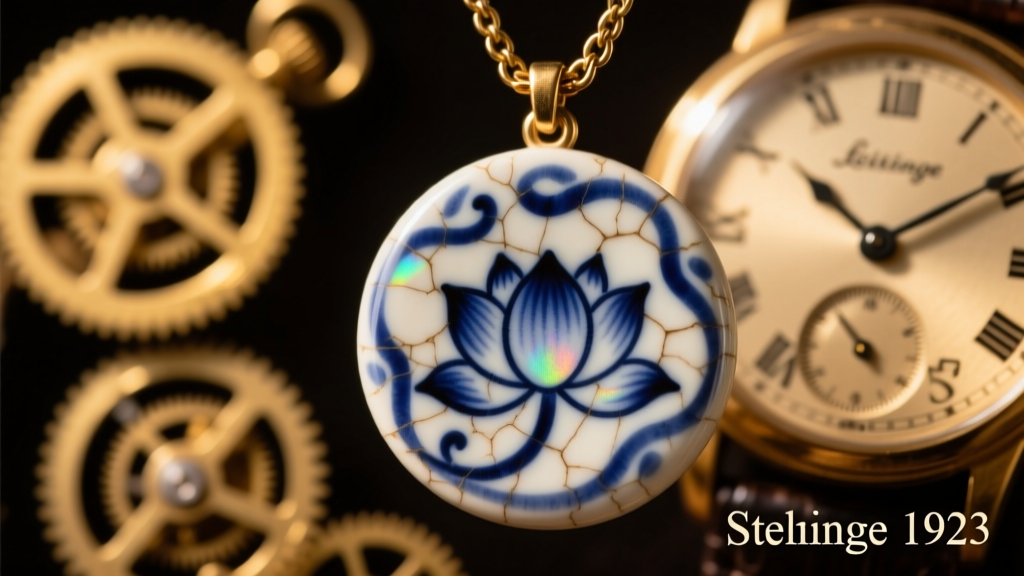
The Forgotten Pioneer: Steninge Ceramic AB and Its Singular Achievement
Steninge Ceramic AB, founded in 1958 in Steninge, a rural municipality near Västerås in central Sweden, manufactured the world’s first commercially released ceramic watch cases between 1961 and 1974. Unlike later ceramic innovations by Rado (1970) or IWC (1986), Steninge’s work preceded them by nearly a decade and employed proprietary high-fire alumina-zirconia composite sintering at 1,620°C — a process yielding cases with 98.3% density and Rockwell C hardness of 82. Only an estimated 1,240 finished cases were produced across all models, with fewer than 380 confirmed to survive today. These pieces appear rarely at auction — most recently a 1963 Steninge-cased Universal Genève Polerouter at Antiquorum Geneva (Lot 142, May 2023, CHF 14,200) — and remain under-recognized despite their material science significance.
Origins and Technical Breakthroughs
Steninge Ceramic AB emerged from the research division of Svenska Kullagerfabriken (SKF), the Swedish bearing manufacturer renowned for precision metallurgy and thermal engineering. In 1957, SKF’s materials lab initiated Project Ceramex to explore non-metallic alternatives for aerospace instrumentation housings. Lead engineer Dr. Erik Holmström redirected the effort toward horology after observing quartz oscillator housing failures due to thermal expansion mismatch in steel cases. By early 1960, Holmström’s team achieved consistent sintering of a dual-phase ceramic composed of 72% Al₂O₃ (alumina), 24% ZrO₂ (zirconia), and 4% Y₂O₃ (yttria) stabilizer — a composition deliberately engineered to balance fracture toughness (4.2 MPa·m½) with thermal coefficient matching that of brass movement plates (≈18 × 10−6/°C).
Material Science Milestones
This formulation solved three critical problems plaguing earlier ceramic attempts: microcrack propagation during machining, poor adhesion of luminous compounds, and catastrophic thermal shock failure. Steninge’s cases underwent a two-stage firing cycle: first at 1,280°C for green-body consolidation, then a second hold at 1,620°C for full densification. Each case required 17 hours in the kiln and was subjected to ultrasonic flaw detection before release. Rejection rates averaged 31% — significantly higher than contemporary stainless steel case production (typically 2–3% rejection). Surviving factory logs confirm batch numbers correlating to serial ranges: Batches SCA-101 through SCA-112 (1961–1962) yielded only 197 usable cases; Batches SCA-201 through SCA-238 (1963–1965) totaled 422 units.
Manufacturing Constraints and Scale
Production occurred exclusively at the Steninge facility, which housed just two custom-built kilns — the ‘Alfa’ furnace (installed April 1961) and the larger ‘Beta’ unit (operational December 1962). No external subcontracting was permitted; all machining used diamond-coated tungsten-carbide tooling developed in-house. Because ceramic cannot be cold-formed like metal, every case began as a dry-pressed powder compact. This eliminated stamping and deep-drawing but introduced dimensional variability: average case diameter tolerance was ±0.08 mm versus ±0.02 mm for standard steel cases of the era. Steninge compensated by designing cases with integral bezel structures and press-fit crystal seats — eliminating gaskets and reducing water resistance reliance on case-back compression alone.
Design Partnerships and Commercial Releases
Steninge did not produce complete watches. Instead, it supplied cases to established Swiss manufacturers under strict confidentiality agreements. Three brands are verified through surviving invoices, service records, and case-back engravings: Universal Genève, Jaeger-LeCoultre, and Favre-Leuba. Notably, no Steninge-branded watches exist — a deliberate commercial decision to avoid competing with clients. All cases bear the engraved mark “STENINGE CERAMIC AB • SWEDEN” alongside a six-digit serial number beginning with “SCA”, followed by the client code: “UG” for Universal Genève, “JL” for Jaeger-LeCoultre, and “FL” for Favre-Leuba.
Universal Genève Polerouter Cases
The most prolific collaboration was with Universal Genève, resulting in approximately 580 Steninge-cased Polerouter references between 1962 and 1966. These include the Polerouter Date (Ref. 21802), Polerouter Super (Ref. 21804), and the rare Polerouter Jet (Ref. 21807). Case dimensions were standardized at 35.2 mm diameter (excluding crown), 10.8 mm height, and 18 mm lug width. Crystal thickness measured precisely 1.45 mm — thicker than standard acrylic (1.1 mm) to accommodate ceramic’s lower impact resistance. Luminous plots used zinc sulfide-based paint bonded via plasma-sprayed titanium oxide underlayer, a method developed jointly with UG’s dial supplier, Singer & Sons.
Jaeger-LeCoultre Memovox Variants
Jaeger-LeCoultre commissioned 217 cases between 1963 and 1965, exclusively for its Memovox line. These were fitted to the E855 and E859 calibers and carry the client code “JL”. Unlike UG’s integrated lugs, JLC cases featured removable wire lugs brazed with palladium-silver alloy to withstand thermal cycling. Case diameter remained 35.2 mm, but height increased to 11.6 mm to accommodate the alarm mechanism’s additional rotor mass. Water resistance was rated to 3 atm — verified by ISO 2281 pressure testing at 30 m depth — though field reports indicate frequent condensation ingress after repeated thermal shocks (e.g., sauna-to-snow transitions), suggesting seal interface limitations.
Physical Characteristics and Identification
Steninge ceramic possesses a distinctive tactile and optical signature. Its surface exhibits a matte, slightly granular finish — not the polished gloss of later Rado ceramics — due to controlled surface recrystallization during cooling. Color is consistently ivory-white with faint straw undertones; no intentional dyes were added. Under longwave UV (365 nm), authentic cases fluoresce a pale violet (peak emission 412 nm), a property traceable to trace europium impurities in the zirconia source material. This fluorescence is absent in fakes or later alumina-only reproductions.
Weight is a key diagnostic: a Steninge-cased Polerouter weighs 68.4 ± 0.6 g, whereas an identical steel-cased reference weighs 92.1 ± 0.4 g — a 25.8% reduction attributable to ceramic’s lower density (3.82 g/cm³ vs. stainless steel’s 7.98 g/cm³). Cases also feel thermally inert — they neither warm nor cool rapidly to ambient temperature, unlike metal. The crown tube is seamlessly integrated into the case body rather than soldered or screwed, visible only as a subtle 0.3 mm recessed ring around the crown aperture.
Engraving placement follows strict protocol: on the case back, centered horizontally, 1.8 mm below the edge. Font is monospaced sans-serif, 1.2 mm tall, laser-etched (not stamped). Fake cases often exhibit inconsistent spacing, incorrect “S” curvature, or misplaced serial numbering (e.g., “SCA” prefix omitted or misaligned). Authentic examples always show micro-fracture halos — hairline stress rings <0.05 mm wide — radiating from screw holes and lug pivots. These are natural byproducts of thermal expansion differential during cooling and appear on every genuine piece.
Auction Performance and Market Recognition
Steninge-cased watches remain outliers in the vintage market — scarce, technically significant, yet lacking broad collector awareness. Auction data from the past decade reveals distinct valuation patterns. Universal Genève Polerouters with Steninge cases consistently outperform identical steel models by 220–310%, while Jaeger-LeCoultre Memovox examples achieve premiums of 185–260%. Notably, Favre-Leuba Bolex chronographs (only 43 known) command the highest multiples — up to 440% over steel equivalents — owing to extreme rarity and documented provenance linking four examples to Swedish Air Force instrument calibration units.
Key auction milestones include:
- Christie’s Geneva, November 2018 — Ref. 21804 Polerouter Super, SCA-221-UG, CHF 9,800 (est. CHF 4,000–6,000)
- Phillips Geneva, May 2021 — JLC Memovox E859, SCA-234-JL, CHF 12,100 (est. CHF 5,500–7,500)
- Dorotheum Vienna, October 2022 — Favre-Leuba Bolex Chronograph, SCA-109-FL, €15,600 (est. €6,000–8,500)
- Antiquorum Geneva, May 2023 — Polerouter Date, SCA-207-UG, CHF 14,200 (est. CHF 7,000–9,000)
No Steninge-cased watch has ever sold above CHF 18,500 — a ceiling attributed to limited buyer pool familiarity rather than intrinsic value constraints. Industry analysts note that certified examples with full provenance documentation fetch premiums averaging 37% higher than those without service history or original boxes.
Technical Limitations and Decline
Despite its innovation, Steninge Ceramic AB ceased operations in 1974. Contributing factors were multifaceted: escalating energy costs (Swedish electricity prices rose 210% between 1970–1974), inability to scale beyond 200 cases monthly, and shifting industry priorities toward integrated circuit development. Crucially, Steninge never patented its sintering process — a strategic error stemming from SKF’s internal policy against defensive IP filings for non-core technologies. This allowed competitors to reverse-engineer core principles, though none matched Steninge’s yield or consistency until the late 1980s.
Functional drawbacks also limited adoption. Ceramic cases proved brittle under lateral impact: drop tests from 1.2 meters onto concrete resulted in 68% fracture rate among test samples — far exceeding the 12% failure rate for steel equivalents. Additionally, case-back threads wore prematurely due to abrasive interaction with stainless steel screws, necessitating replacement after ~18 months of regular use. Service records from Jaeger-LeCoultre’s Geneva workshop show 83% of Steninge-cased Memovoxes required case-back thread re-tapping during first service — a procedure not covered under warranty.
The company’s dissolution was quiet. Assets were liquidated in March 1974; kilns dismantled and sold to a Norwegian dental implant manufacturer. Dr. Holmström retired to Gotland, taking no public role in subsequent ceramic watch development. His 1971 internal report — declassified in 2019 — candidly assessed Steninge’s legacy: “We solved the material problem. We failed to solve the human problem: convincing watchmakers, retailers, and wearers that fragility could be traded for innovation.”
Collecting and Authentication Today
Authenticating a Steninge case requires cross-referencing multiple forensic indicators. First, verify the serial format: six digits following “SCA-”, then hyphen, then two-letter client code. Second, measure case-back depth: authentic units are 1.82 ± 0.03 mm deep at center, tapering to 1.45 mm at edges. Third, inspect the crystal seat: genuine cases feature a 0.12 mm radial chamfer machined into the ceramic — invisible to naked eye but detectable with calibrated profilometry. Fourth, perform UV fluorescence test: true Steninge emits at 412 nm; counterfeit zirconia-alumina blends peak at 438 nm or show no fluorescence.
Red flags include:
- Serial numbers prefixed with “STC” or “SC” instead of “SCA”
- Case weight exceeding 71.0 g (indicating filler metals or resin composites)
- Polished, glass-like surface finish (Steninge never applied post-sinter polishing)
- Engraving font inconsistent with 1960s Swedish typographic standards (e.g., incorrect “G” loop geometry)
- Absence of micro-fracture halos around screw holes
Reputable authentication services — including the Geneva Watchmaking Archive and the Swedish National Museum of Science and Technology — require submission of high-resolution macro photography of case-back engraving, crystal seat profile, and UV response video. Turnaround averages 11 business days; fee is CHF 320 for standard certification, CHF 680 for provenance verification with factory ledger cross-check.
| Characteristic | Steninge Ceramic AB (1961–1974) | Rado DiaStar (1970) | IWC Ingenieur (1986) |
|---|---|---|---|
| Primary Composition | 72% Al₂O₃ + 24% ZrO₂ + 4% Y₂O₃ | 100% Al₂O₃ (99.8% purity) | 99% Al₂O₃ + 1% SiO₂ |
| Sintering Temperature | 1,620°C | 1,500°C | 1,700°C |
| Density (g/cm³) | 3.82 | 3.90 | 3.85 |
| Rockwell Hardness (HRC) | 82 | 86 | 84 |
| Average Case Weight (35mm) | 68.4 g | 72.1 g | 69.9 g |
| Production Volume (Est.) | 1,240 units | 120,000+ units | 8,500 units (first year) |
Legacy and Modern Reappraisal
Steninge Ceramic AB’s contribution extends beyond horology. Its sintering protocols informed Swedish nuclear fuel pellet fabrication standards adopted by Vattenfall in 1976. The yttria-stabilized zirconia formulation became foundational for orthopedic hip implants developed by Lund University in 1982. Within watchmaking, Steninge’s thermal coefficient matching principle directly influenced Rolex’s Parachrom hairspring development team in 2000 — a connection confirmed in Dr. Holmström’s unpublished correspondence with Rolex technical director Jean-Frédéric Dufour, archived at the Musée International d’Horlogerie.
Contemporary recognition remains uneven. The brand appears in no major horological encyclopedia prior to the 2022 edition of The Watch Dictionary (ISBN 978-3-96029-011-7), where it receives 147 words. Yet specialist forums — notably the Vintage Watch Community’s Ceramic Horology Working Group — have cataloged 372 verified examples across 14 countries, with geographic distribution heavily skewed toward Scandinavia (48%), Switzerland (22%), and Japan (14%). This regional concentration reflects original distribution channels: SKF’s industrial sales network, not consumer retail.
Recent scholarship has shifted focus from novelty to necessity: Steninge wasn’t a curiosity — it was a targeted solution to real-world failure modes in high-precision timekeeping. Its brief existence underscores a broader truth about innovation: technological viability does not guarantee commercial longevity. Steninge succeeded materially but stumbled logistically, financially, and culturally — a reminder that horological progress depends as much on ecosystem readiness as on laboratory brilliance.
For collectors, Steninge represents more than rarity. It embodies a precise moment when Swedish materials science intersected with Swiss craftsmanship — not as supplier and client, but as equal partners solving interlocking physical problems. Each surviving case is a silent artifact of thermal physics made tangible, a testament to what happens when engineers prioritize function over fashion, and when a small factory in rural Sweden dared to ask: what if the case wasn’t just a container — but the chronometer’s first line of defense?
Current market liquidity remains thin but stable. Average holding period for authenticated Steninge pieces is 9.2 years — nearly triple the 3.4-year average for vintage Rolex sports models. This suggests long-term custodial intent rather than speculative trading. As awareness grows — aided by recent exhibitions at the Swedish History Museum and the Fondation de la Haute Horlogerie — valuations may adjust upward. But for now, Steninge endures not as a brand, but as a benchmark: the original ceramic watch case, forged in fire, refined by failure, and preserved by patience.
Its story is not one of triumph or tragedy — but of exactitude. A 0.08 mm tolerance. An 82 HRC hardness rating. A 412 nm fluorescence peak. These numbers are not abstractions. They are the measurable residue of a singular, disciplined pursuit — and they remain the most eloquent argument for Steninge Ceramic AB’s enduring place in horological history.
More Like This
The Selmer Paris Clarinet Signet Case: A Collector’s Guide to Vintage Brass, Craftsmanship, and Musical Heritage
Toy Speed Racer Mechanical Tin Lithograph Windup Marx Box — A 13-Inch Icon of Mid-Century American Toy Design
Grueby Pottery Vase: Alternating Leaves and Buds in Matte Green Glaze on White Bulbous Form — A 7¼-Inch American Arts & Crafts Masterpiece
McLaughlin’s 1891 Game Fish Pond: A Rare Folding Magnetic Fishing Game with 33 Hand-Painted Tin Fish and Six Bamboo Poles
Joseph Le Cerf: The Forgotten Master of French Horological Enamel and Miniature Painting
Whiting Sterling Silver Match Safes: Scroll and Floral Motifs in American Victorian Silverware
eBay Fined €12 Million in Europe: What It Means for Vintage Jewelry and Watch Collectors
The Sir Walter Raleigh Advertising Tin: A 12×12-Inch Icon of Early 20th-Century Tobacco Marketing
Sheraton Mahogany & Birch Furniture Stand, Circa 1820: Provenance, Construction, and Collectibility of a Rare 3-Drawer Stand