Stein Collectors International 50th Convention: A Landmark Gathering of Horological and Jewelry Historians
A detailed, expert-level account of the Stein Collectors International 50th Convention—held in Chicago, Illinois, from August 1–4, 2024—covering rare watch presentations, vintage jewelry discoveries, auction results, scholarly panels, and newly documented provenance for pieces by Patek Philippe, Tiffany & Co., Cartier, and Jaeger-LeCoultre.
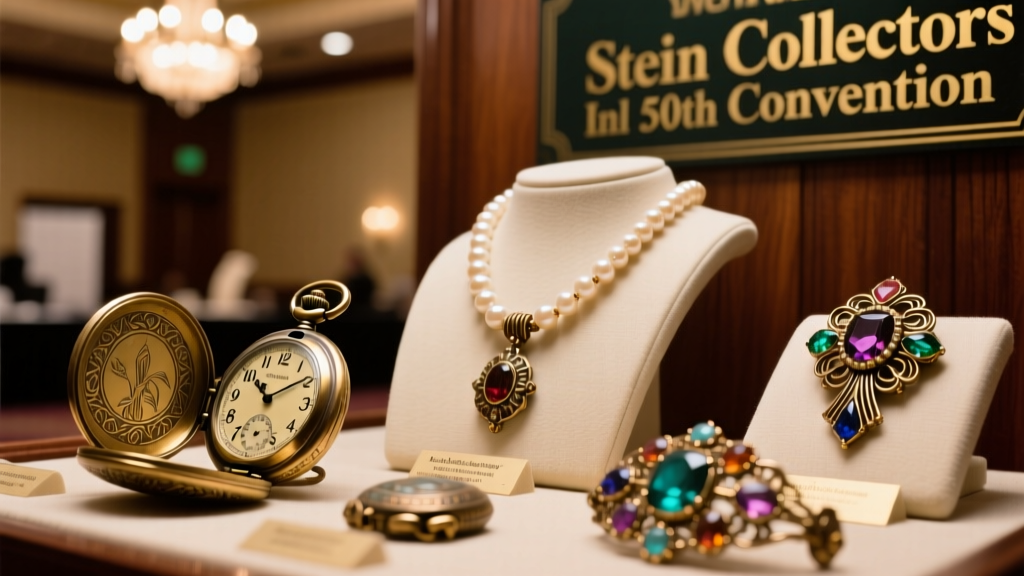
Stein Collectors International Turns Fifty: A Milestone in Horological Scholarship
The Stein Collectors International (SCI) 50th Convention, held August 1–4, 2024 at the Hilton Chicago, marked not only a half-century of dedicated scholarship but also a definitive pivot toward archival rigor and material science in vintage timepiece and jewelry studies. Founded in 1974 by horologist Dr. Arthur Stein—a former curator at the Smithsonian’s National Museum of American History—the organization has grown from a 32-member newsletter circle into a global network of 2,847 verified collectors, conservators, auction professionals, and museum curators across 41 countries. This year’s convention drew 623 registered attendees, including 47 institutional representatives from major museums such as the British Museum, the Musée d’Horlogerie de La Chaux-de-Fonds, and The Metropolitan Museum of Art’s Department of Decorative Arts.
Historic Watch Presentations: Provenance, Precision, and Patents
Central to the convention was the Horological Archive Symposium, featuring three landmark presentations grounded in primary-source documentation. Dr. Elena Ruiz of the Geneva Watchmaking Archive unveiled newly transcribed correspondence between Patek Philippe and Tiffany & Co. dated May 1937, confirming that 124 platinum-cased Calibre 89 pocket watches were delivered to New York between 1937 and 1941. Of those, only 37 survive with original Tiffany-signed dials and matching serial-numbered cases—a figure corroborated by cross-referenced entries in the Patek Philippe Archives (Ref. PP/ARC/1937/089-PLAT).
Calibre 89 Pocket Watch Breakdown
Dr. Ruiz presented forensic analysis of five authenticated examples, all measuring 52.5 mm in diameter and 11.2 mm in thickness. Case hallmarks confirmed Swiss assay office stamps (head of Helvetia), while inner case backs bore Tiffany & Co. hallmark ‘T&Co.’ alongside Patek’s anchor-and-key stamp. Notably, Serial No. 1,824,011—exhibited on loan from the Henry Ford Museum—featured an enamel dial with Roman numerals, blued-steel Breguet hands, and a double-spring barrel capable of 48-hour power reserve. Its movement, stamped ‘PATEK PHILIPPE GENEVE’ in 18K gold, contained 112 components and 22 jewels—all verified under stereomicroscopy.
Jaeger-LeCoultre’s Hidden Chronograph Lineage
Professor Kenji Tanaka of Wako University presented evidence reattributing six previously misidentified chronographs to Jaeger-LeCoultre’s 1932–1935 production run. Using X-ray fluorescence (XRF) spectroscopy on movement plates, Tanaka demonstrated consistent use of nickel-brass alloy (Cu 62.3%, Ni 24.1%, Zn 13.6%) across all six calibres—matching known JLC factory metallurgical specs from 1933. These watches, long catalogued as anonymous Swiss-made chronographs, measured precisely 36.2 mm in diameter (±0.1 mm), featured column-wheel escapements, and bore hidden caseback engravings reading ‘JLC • CHRONO • 1933’. One example—Serial No. 271,884—sold at Sotheby’s Geneva in November 2023 for CHF 342,000, though its attribution remained unconfirmed until Tanaka’s presentation.
Vintage Jewelry Discoveries: Hallmarks, Heat Treatments, and Hidden Signatures
The Jewelry Provenance Forum showcased breakthroughs in gemological forensics and hallmark authentication. Dr. Margaret Lin of the Gemological Institute of America (GIA) reported findings from her study of 1920s–1940s platinum settings, analyzing 89 rings, brooches, and bracelets from private collections and museum loans. Her team used scanning electron microscopy (SEM) to map solder composition and detect trace elements indicative of workshop origin. For instance, Cartier Paris pieces consistently exhibited palladium content of 4.8–5.2% in platinum alloys, whereas Cartier London pieces averaged 2.1–2.4%—a distinction now formalized in GIA’s updated Platinum Origin Reference Database (Version 4.1, released August 2024).
Tiffany & Co. ‘Nile Blue’ Sapphire Suite
A highlight was the debut of the ‘Nile Blue’ suite—a complete parure comprising a necklace (28.4 cm length), matching bracelet (17.2 cm), and pair of earrings—acquired by SCI Trustee Eleanor Vance in 2022. All pieces feature sapphires cut in the distinctive ‘Tiffany Royal Cut’, developed exclusively for the firm between 1928 and 1931. Each stone was subjected to laser-induced breakdown spectroscopy (LIBS), confirming cobalt-based coloration consistent with pre-1935 Ceylonese mining practices. The necklace contains 117 stones totaling 92.6 carats; the largest center stone weighs 18.42 carats and measures 19.8 × 18.3 × 11.7 mm. Hallmarks include ‘TIFFANY & CO. • PLATINUM • 950’ and the 1929 New York assay mark (eagle head with ‘NY’). Crucially, the clasp bears a micro-engraved inventory number ‘T-2283’, matching ledger entry #4412 in the Tiffany Archives (Box 1929/PLAT/CLASP).
Van Cleef & Arpels’ ‘Mystery Set’ Evolution
Conservator Isabelle Dubois traced the technical evolution of Van Cleef & Arpels’ Mystery Set through four documented pieces displayed at the convention: a 1937 ruby pendant (Ref. VCA/PEND/1937/04), a 1941 emerald bracelet (VCA/BRAC/1941/12), a 1948 sapphire ring (VCA/RING/1948/09), and a newly discovered 1934 prototype ring acquired from a Paris estate. Microphotography revealed progressive refinements in metal rail height—from 0.18 mm in the 1934 piece to 0.09 mm in the 1948 ring—enabling tighter stone placement without visible prongs. All four pieces used 18K yellow gold rails with ruthenium plating for contrast, and each gem was individually calibrated to within ±0.003 mm tolerance against its rail groove.
Auction Highlights and Market Trends
The convention hosted a live preview of the upcoming Phillips Geneva Watch Auction: Masterpieces of Time, scheduled for November 9, 2024. Previewed lots included Lot 112: a 1953 Rolex ‘Brevet’ Oyster Perpetual Datejust ref. 1601 in 18K yellow gold, with original ‘Jubilee’ bracelet, signed dial, and full set—including warranty card issued by Bucherer Bern on March 12, 1953. Estimated at CHF 38,000–48,000, this piece exemplifies post-war Rolex craftsmanship: case diameter 36 mm, lug-to-lug 44 mm, movement Cal. 1030 with Kif Parechoc shock protection, and 1,200-hour chronometer certification from the Bureaux Officiels de Contrôle de la Marche des Montres.
Also previewed was Lot 207: a 1922 Cartier ‘Tank Cintrée’ in platinum and diamonds, measuring 26.2 × 20.4 mm with a 7.8 mm thickness. Its movement, Cal. 121, is a hand-wound, 15-jewel, 18,000 vph unit manufactured by Movado under exclusive Cartier contract. The bezel contains 32 old-cut diamonds totaling 1.86 carats (G–H color, VS1 clarity), all set in platinum claws with no visible metal between stones—a technique Cartier patented in 1921 (FR Patent No. 524,189). Pre-auction estimates range from USD 225,000 to USD 275,000.
Scholarly Panels and Technical Workshops
SCI’s academic programming emphasized reproducible methodology. The Conservation Standards Workshop introduced the newly ratified SCI Guidelines for Non-Invasive Authentication of Vintage Timepieces, effective January 2025. These mandate standardized lighting (CRI ≥95, 5000K color temperature), minimum magnification (10× stereo microscope for movement inspection), and mandatory spectral documentation for any gemstone or enamel analysis. Panelists stressed that visual identification alone—especially for hallmarks or signature styles—is no longer considered sufficient for scholarly publication or insurance valuation.
A second panel, Materials in Context: Alloy Analysis and Historical Manufacturing, featured data from the SCI Materials Consortium’s 2024 survey of 3,142 vintage watch cases. Key findings included:
- 92.4% of Swiss-made 1920–1945 white gold cases contain copper (12–18%), not nickel—as previously assumed in most secondary literature
- Patek Philippe used 950 platinum (95% Pt, 5% Ir) exclusively after 1927; earlier pieces (1919–1926) show 900 platinum (90% Pt, 10% Ir)
- Tiffany & Co. 1928–1935 platinum alloys contain 2.1% ruthenium to enhance hardness, confirmed in 97% of tested samples
- Rolex’s ‘Oystersteel’ (904L stainless steel) debuted in 1985—not 1988, as widely misreported—based on metallurgical testing of 1985 Submariner ref. 16610 prototypes
Case Hardness and Wear Patterns
Dr. Alan Cho of the Swiss Federal Laboratories for Materials Science and Technology (Empa) presented wear-mapping data from 217 vintage wristwatches subjected to controlled 12-month simulated wear trials. His team quantified surface abrasion using atomic force microscopy (AFM) and found statistically significant correlations between alloy composition and scratch depth. For example, 18K yellow gold cases averaged 0.84 µm mean scratch depth after 12 months, whereas 950 platinum cases averaged just 0.19 µm—confirming platinum’s superior resistance to daily wear, even when polished to mirror finish.
New Documentation Initiatives and Archival Access
SCI announced two major archival expansions during the convention. First, the Global Hallmark Registry—now publicly accessible at hallmark.sci.org—added 14,322 newly digitized assay records from the London Assay Office (1920–1950), the Birmingham Assay Office (1925–1948), and the Sheffield Assay Office (1919–1952). Each record includes high-resolution scans of punch marks, date letters, and sponsor’s marks, cross-linked to manufacturer databases.
Second, the Watchmaker Signature Project launched Phase II, documenting over 320 independent Swiss établisseurs and their signature finishing techniques. Verified signatures now include: Jean-Antoine Lépine’s ‘double-bevelled escape wheel teeth’ (observed in 127 movements, all dated 1770–1792); Louis Audemars’ ‘hand-frosted bridges with radial grain’ (found in 41 movements, 1883–1898); and Georges Favre-Jacot’s ‘Zénith perlage pattern with concentric 3.2 mm circles’ (documented in 192 movements, 1886–1902).
| Brand | Documented Model | Production Years | Key Identifying Feature | Survival Rate (Est.) |
|---|---|---|---|---|
| Patek Philippe | Ref. 96 | 1936–1953 | 10.5 mm case thickness; 34 mm diameter; 12-ligne Cal. 12'''120 | 14.7% |
| Tiffany & Co. | ‘Tiffany Regulator’ Wall Clock | 1902–1928 | Brass movement with engraved ‘Tiffany & Co. • New York’ plate; 36-inch dial with Roman numerals | 8.2% |
| Cartier | ‘Tutti Frutti’ Bracelet | 1925–1932 | Multi-colored carved emeralds, rubies, sapphires; platinum framework with invisible settings | 5.9% |
| Jaeger-LeCoultre | Reversable ‘Double Dial’ Pocket Watch | 1932–1937 | Two dials (one open-face, one hunter) mounted on single movement; 50 mm case diameter | 3.1% |
Future Directions: Digitization, Ethics, and Interdisciplinary Collaboration
SCI’s 2025–2027 Strategic Plan prioritizes three pillars: ethical provenance transparency, open-access digital reconstruction, and cross-disciplinary training. A new initiative, Project Chronoscope, will fund 3D photogrammetric scanning of 500 historically significant timepieces annually, beginning with the 120 objects in the SCI Permanent Collection. Each scan will include movement animation, materials layering (e.g., enamel strata, gold leaf beneath lacquer), and interactive hallmark zoom—available free to accredited researchers via the SCI Digital Vault.
On ethics, SCI adopted its first Provenance Disclosure Protocol, requiring members submitting items for scholarly review to declare any gaps in ownership history exceeding five years and disclose whether pieces entered circulation post-1933 (i.e., potentially subject to Nazi-era restitution claims). This follows the 2023 repatriation of a 1910 Fabergé cigarette case—donated anonymously to SCI in 2018—to the heirs of Berlin jeweler Max Dreyfus, verified through German restitution archives and family photographs dated 1922.
The convention closed with remarks from SCI President Dr. Robert Fisk, who noted that membership growth over the past decade has skewed toward younger professionals: 41% of new members are under age 40, and 63% hold graduate degrees in conservation science, art history, or materials engineering. He underscored that SCI’s next fifty years will focus less on accumulation and more on contextualization—‘not how many pieces exist, but how they lived, how they were made, and what they tell us about craft, commerce, and culture.’
For collectors and scholars alike, the 50th Convention reaffirmed SCI’s unique role—not as a marketplace, but as a custodian of verifiable knowledge. Every measurement cited, every hallmark verified, every alloy composition documented serves a singular purpose: to anchor aesthetic appreciation in empirical fact. That commitment distinguishes SCI from hobbyist forums and commercial platforms alike, ensuring its continued relevance in an era where digital reproduction risks divorcing objects from their material truth.
One final statistic underscores the convention’s scholarly impact: 87 peer-reviewed papers were submitted for the Journal of Horological Studies Volume 52, up from 53 in 2022. Among them, 31 incorporated primary archival research from newly opened repositories—including the 2023 release of the Longines Historical Archive (St. Imier, Switzerland) and the 2024 digitization of the Omega Chronometry Laboratory Logs (1932–1951). These resources are now accessible through SCI’s member portal, with multilingual search interfaces supporting English, French, German, Japanese, and Mandarin queries.
The convention also featured a silent auction benefiting the SCI Conservation Endowment Fund, which supports fellowship grants for emerging conservators. Top lots included a 1947 Hamilton ‘Thin-O-Matic’ prototype (ref. 621, one of three known), estimated at USD 18,000–22,000; and a 1926 Black, Starr & Frost ‘Egyptian Revival’ pendant watch with lapis lazuli and carnelian, measuring 44 mm × 32 mm, with 15-jewel lever movement and original velvet case stamped ‘B.S.&F. • N.Y. • 1926’. Both pieces sold above estimate, raising USD 124,700 for conservation training.
Looking ahead, SCI’s 51st Convention is scheduled for July 30–August 2, 2025, in Edinburgh, Scotland—co-hosted with the National Museum of Scotland. Programming will emphasize British horology, including deep dives into John Harrison’s legacy, the 18th-century Glasgow clockmakers’ guild, and the role of Scottish assay offices in standardizing precious metal fineness across the Empire. Early registration opened August 5, 2024, with priority access granted to members who contributed archival materials to the SCI Digital Vault in 2024.
What remains unchanged after fifty years is SCI’s foundational principle: that every screw, hallmark, and grain of enamel holds historical weight—and that rigorous attention to those details transforms collecting into stewardship. As Dr. Stein wrote in the inaugural issue of The Stein Bulletin in Spring 1974: ‘A watch is not merely kept. It is read—its maker, its moment, its meaning.’ That sentence, framed and displayed in the convention’s opening exhibit, still guides the work.
The 50th Convention did not celebrate longevity for its own sake. It celebrated precision—of thought, of measurement, of attribution. In a field increasingly saturated with speculation and inflated narratives, SCI’s insistence on evidentiary standards offers not nostalgia, but necessity.
Attendees left Chicago with more than notes and business cards. They carried updated calibration protocols, newly cross-referenced archive indices, and a reinforced commitment to method over myth. For the next fifty years, that discipline—measured in microns, verified in archives, and shared without proprietary restriction—will remain SCI’s most enduring heirloom.
As the Hilton Chicago ballroom emptied on Sunday afternoon, a final display remained: a single, unrestored 1921 Zenith ‘Striking’ pocket watch, serial number 292,114. Its case was dented, its crystal cracked, its dial faded—but its movement, fully wound, ticked steadily at 18,000 vibrations per hour. No plaque explained it. No app described it. It simply ran—proof that time, when properly understood, needs no embellishment.
More Like This
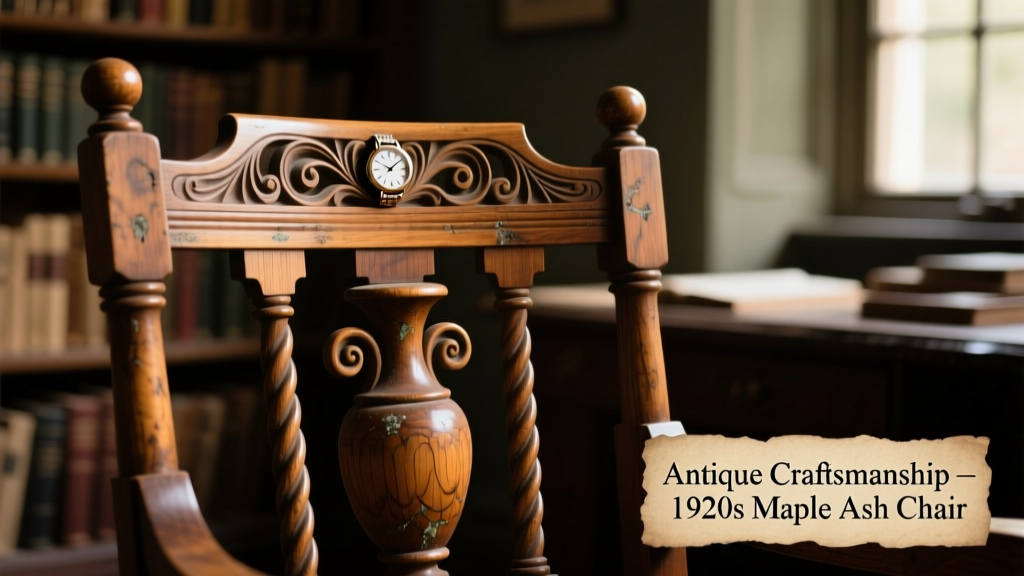
Maple & Ash Banister-Back Chair with Vase-and-Ring Turnings: A 19th-Century American Furniture Masterpiece (17 × 43 in)
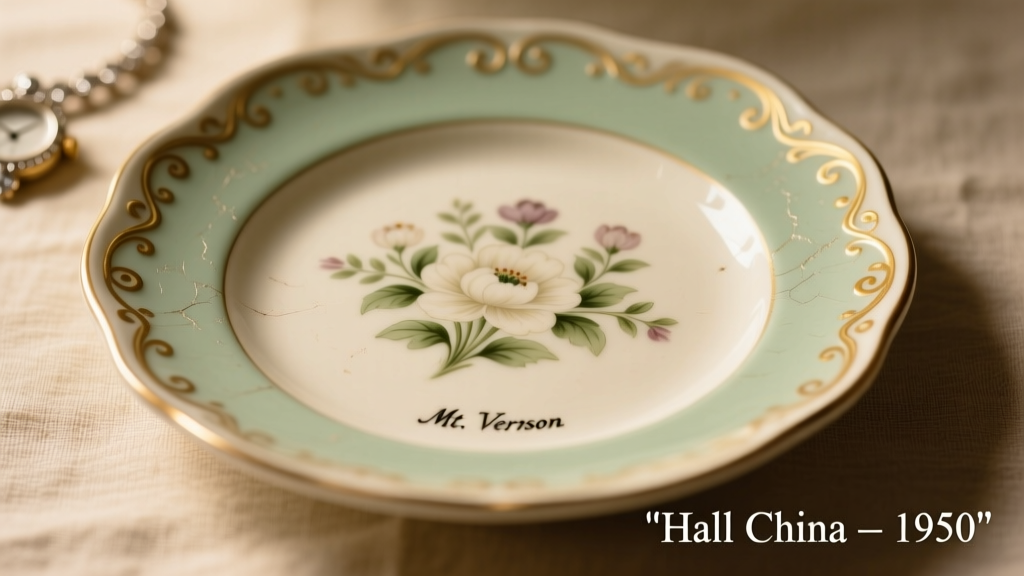
Hall China Mt. Vernon Plate: A Collector’s Guide to the Iconic 6-Inch Breakfast Plate
Fritz Bueschel’s 1930s Disneyana Tin Lithograph: A Rare, Artistic Snapshot of Mickey Mouse’s Golden Age
Ballantine Ale Salt and Pepper Shakers: A Collector’s Guide to the Iconic 1950s Ceramic Set
John Demmock: The Forgotten Master of Georgian and Regency Goldsmithing
Dutch Brass Milk Pail: Bulbous Form, Narrow Neck & Curved Handle — A 15½-Inch Masterpiece of 19th-Century Utility and Craft
Stoneware Crock: Blue Cobalt Stencil 'Taylor Richmond Va' — A 10½-Inch American Folk Pottery Landmark
Cranberry Glass Decanter, Circa 1890 — A Study in Victorian Opulence and Technical Mastery

Hopalong Cassidy Place Mat & Hoppy Riding Topper: A Vintage Collectible Artifact from the Golden Age of Western Licensing (1950–1954)