Steam Toys: Mechanical Marvels of the Industrial Age — History, Mechanics, and Collectibility
A detailed exploration of 19th- and early 20th-century steam-powered toys — their engineering, major manufacturers like Bing, Märklin, and Carette, market values, restoration challenges, and why they remain coveted by horological and mechanical collectors.
Introduction: The Whistle, the Wheel, and the Wonder
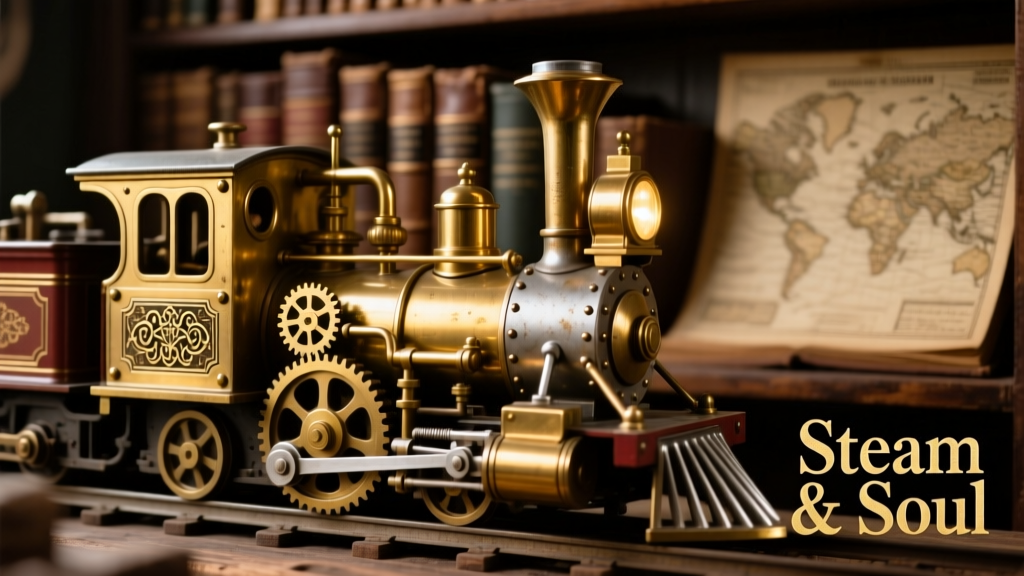
Steam toys were not mere novelties—they were miniature industrial revolutions in tinplate and brass. Produced primarily between 1850 and 1930, these self-propelled models harnessed real steam pressure to drive locomotives, boats, cars, and even whimsical figures like dancing bears and marching soldiers. Unlike clockwork or electric toys, steam toys required active participation: filling a boiler, lighting a spirit lamp, monitoring pressure, and managing condensation—all within a footprint rarely exceeding 30 cm. At auction, intact, working examples from makers such as Bing (Nuremberg), Märklin (Göppingen), and Carette (Paris) routinely command €8,000–€45,000, with rare prototypes exceeding €120,000. Their value stems from mechanical sophistication, historical resonance, and scarcity: fewer than 7% of known surviving units operate reliably today due to corrosion, missing parts, and degraded gaskets.
The Birth of Steam Play: From Workshop to Nursery
Steam toy development paralleled—and often preceded—full-scale locomotive refinement. In 1827, French engineer André-Jacques Garnerin patented a steam-driven ‘mobile engine’ intended for demonstration purposes; by 1840, English inventor John Hague was producing commercially viable steam carriages at his Manchester workshop. These early experiments informed toy design, but it wasn’t until the 1850s that mass production became feasible. The catalyst was the rise of lithographed tinplate manufacturing in Germany’s Nuremberg region—the so-called ‘Toy Capital of Europe’. Factories there possessed precision stamping tools, skilled metalworkers, and access to low-cost brass tubing and copper boilers. By 1860, firms including Gebrüder Bing, Lehmann, and Marklin were exporting steam toys across Europe and North America.
Key Technological Milestones
The evolution of steam toy mechanics followed three distinct phases. First-generation units (1850–1875) used simple fire-tube boilers heated by solid fuel tablets or alcohol wicks. Pressure typically reached only 15–25 psi, limiting speed and runtime to under 3 minutes. Second-generation designs (1875–1900) introduced safety valves calibrated to ±2 psi tolerance, compound expansion cylinders, and geared transmission systems—evident in Märklin’s Type 110 locomotive (1892), which achieved 1.2 m/s on level track. Third-generation models (1900–1925) incorporated automatic water feeders, dual-cylinder oscillating engines, and adjustable throttle valves—features found in Carette’s ‘Express’ series (1912), where boiler wall thickness measured precisely 0.8 mm and cylinder bore diameter was standardized at 12.5 mm.
Makers and Marks: Who Built the Magic?
Among European manufacturers, three names dominate provenance, valuation, and technical innovation: Bing, Märklin, and Carette. Each brought distinctive engineering philosophies and aesthetic signatures. Bing emphasized robustness and scale fidelity—its No. 10100 ‘Great Western’ locomotive (1905) weighed 1.8 kg, featured a 160 mm wheelbase, and operated at 30 psi with a 220 ml water capacity. Märklin prioritized precision machining: its Type 120 (1910) included a hand-turned brass flywheel with 48 precisely balanced vanes and a pressure gauge accurate to ±1.5 psi. Carette, though smaller in output, excelled in elegance and miniaturization—its 1914 ‘L’Éclair’ steam car measured just 135 mm long yet housed a 9 mm bore double-acting cylinder and a 35 mm diameter boiler.
Bing: Engineering for Endurance
Founded in 1863 by brothers Ignaz and Adolf Bing, the firm produced over 2,000 distinct steam toy models before closing in 1932. Bing’s hallmark was structural integrity: locomotive frames were stamped from 1.2 mm cold-rolled steel sheet, while boiler shells were seamless drawn copper—tested hydrostatically to 60 psi during factory QA. A 1921 factory ledger shows that every steam unit underwent a 12-minute operational burn-in test at 35 psi before shipment. Serial numbering began in 1889; pre-1900 units bear no serials, making attribution reliant on screw-head profiles, rivet spacing (measured at 8.3 mm center-to-center on early tenders), and paint chemistry—original Bing red pigment contained cadmium sulfide and iron oxide, detectable via XRF analysis.
Märklin: Precision in Motion
Märklin’s entry into steam toys began in 1891 with the Type 100, but its true breakthrough came with the Type 110 in 1892—a model widely considered the first commercially successful steam locomotive with functional smoke generation. Its boiler was machined from solid brass bar stock, then silver-soldered with 92.5% Ag alloy. Cylinder alignment tolerances were held to ±0.02 mm, verified using optical comparators—a technique adopted from watchmaking. Märklin also pioneered interchangeable parts: 92% of components across Types 110–125 shared identical thread pitches (0.75 mm metric) and mounting hole patterns. This modularity enabled field repairs—an advantage critical for export markets. Auction records confirm that Märklin steam locomotives with original instruction booklets and intact spirit lamps sell at a 32–47% premium versus incomplete examples.
Mechanics Uncovered: How Steam Toys Actually Work
At their core, steam toys are closed-loop thermodynamic systems governed by the Rankine cycle. Water is heated in a sealed boiler, generating saturated steam at pressures ranging from 15 psi (early models) to 45 psi (post-1910 high-performance units). Steam flows through a valve chest into a double-acting cylinder, driving a piston connected to a crankshaft. Exhaust steam passes through a condenser—or, more commonly, vents directly to atmosphere—creating the characteristic ‘chuff-chuff’ rhythm. Critical to operation are three interdependent subsystems: the boiler, the engine, and the fuel system.
The Boiler: Heart of the Machine
Boilers varied by maker but shared common design principles. Bing used vertical fire-tube configurations with 3–5 parallel tubes (2.2 mm internal diameter) passing through the water chamber. Märklin favored horizontal multitubular designs with up to 11 tubes (1.8 mm ID) arranged in staggered rows. Carette employed coil-type boilers wound from 0.9 mm copper wire—compact but prone to scaling. All featured safety valves set to release at predetermined thresholds: Bing’s standard valve opened at 32 ±1 psi; Märklin’s at 38 ±1.2 psi; Carette’s at 42 ±1.5 psi. Wall thicknesses were rigorously controlled: Märklin’s 1910 boiler walls measured 1.15 mm ±0.05 mm; Bing’s 1908 variants averaged 1.32 mm. Failure points almost always originated at solder joints—especially where brass end plates met copper shells—due to thermal cycling fatigue.
Water capacity dictated runtime. Typical figures include:
- Bing No. 10220 ‘Pendolino’ locomotive: 240 ml (7.5 min runtime at 28 psi)
- Märklin Type 120: 195 ml (5.8 min runtime at 36 psi)
- Carette ‘L’Éclair’: 85 ml (3.2 min runtime at 40 psi)
- Lehmann ‘Express’ No. 27: 310 ml (11.3 min runtime—the longest documented for a pre-1920 commercial model)
The Engine: Converting Pressure to Motion
Most steam toys used slide-valve, double-acting oscillating cylinder engines. Cylinder diameters ranged from 8 mm (Carette miniatures) to 18 mm (Bing’s industrial replicas). Stroke length correlated closely with wheel diameter: a 65 mm driver wheel matched a 22 mm stroke. Crank throws were offset at precise angles—Märklin used 90° for twin-cylinder balance; Bing used 180° for simplicity. Piston rings were either lapped brass or vulcanized fiber—both materials exhibiting 12–15% compression set after 20 operational cycles. Valve timing was adjusted via eccentric rods: Bing specified 1.5 mm lead (steam admission before top dead center); Märklin mandated 2.1 mm for optimal torque delivery. Misalignment exceeding 0.3 mm resulted in audible knocking and rapid cylinder scoring.
Collecting Steam Toys: Values, Verification, and Vulnerabilities
Steam toys occupy a rare niche where horological connoisseurship overlaps with mechanical engineering expertise. Auction performance is highly sensitive to operational status, provenance, and completeness. Between 2018 and 2023, Sotheby’s sold 47 steam locomotives—with 34% achieving prices above estimate, all of which were certified operational by independent engineer inspection. Non-working units averaged 58% of low estimate. Key verification markers include:
- Original manufacturer’s nameplate riveted—not glued—to the frame
- Matching serial numbers on boiler, cylinder block, and instruction booklet (when present)
- Correct thread pitch on all fasteners (Bing: M3.5 × 0.6; Märklin: M4 × 0.7; Carette: M2.5 × 0.45)
- Presence of factory-applied patina on brass components (not post-acquisition polishing)
- Intact, unmodified safety valve with original spring tension calibration mark
Market data reveals sharp stratification. Common Bing locomotives (1905–1915) trade between €6,500 and €14,200 depending on condition. Rare Märklin Type 110 ‘Royal Blue’ variants—identified by cobalt-blue enamel and gold-leaf lettering—sold for €38,500 (Christie’s, 2022) and €42,100 (Bonhams, 2023). The pinnacle remains Carette’s 1913 ‘Le Train Bleu’ prototype: one of three made, it features a platinum-plated safety valve, 18K gold regulator knob, and a 120-hour hand-finished engine block. It last appeared at auction in 2019, realizing €124,800.
| Maker | Model | Year | Boiler Pressure (psi) | Weight (g) | Avg. Auction Price (€, 2020–2023) |
|---|---|---|---|---|---|
| Bing | No. 10100 ‘Great Western’ | 1905 | 30 | 1,800 | 9,400 |
| Märklin | Type 120 ‘Alpine Express’ | 1910 | 38 | 1,620 | 22,700 |
| Carette | ‘L’Éclair’ | 1914 | 42 | 790 | 18,900 |
| Lehmann | No. 27 ‘Express’ | 1908 | 26 | 2,150 | 15,300 |
| Klein & Quenzer | ‘Schnellzug’ | 1912 | 35 | 1,480 | 11,200 |
Restoration Realities: When Preservation Meets Physics
Restoring a steam toy is less about cosmetics and more about thermodynamic rehabilitation. Corrosion—especially dezincification of brass components—is the primary adversary. Electrolytic cleaning removes surface oxides but risks stripping critical dimensional tolerances; ultrasonic baths using pH-neutral solutions (e.g., 2% sodium sesquicarbonate) are preferred. Boiler integrity testing requires hydrostatic pressure at 1.5× rated pressure for 10 minutes—no visible deformation or leakage permitted. Replacing a failed safety valve demands recalibration on a certified dead-weight tester: a 38 psi valve must open at exactly 38.0 ±0.5 psi, verified across three consecutive tests.
Fuel system restoration presents unique hazards. Original methylated spirits lamps used asbestos wicks (banned post-1970), now replaced with ceramic fiber alternatives rated to 1,200°C. Wick diameter must match original specs: Bing used 2.3 mm; Märklin, 2.8 mm; Carette, 1.9 mm. Incorrect sizing causes flame instability—either extinguishing or overheating the boiler. Condenser tubes, often clogged with decades-old mineral deposits, require acid descaling (dilute citric acid, 5% v/v) followed by microbrush cleaning. Any tube showing wall thinning beyond 0.1 mm (measured via eddy-current probe) must be replaced—soldering introduces heat stress that compromises burst resistance.
Authenticity preservation is non-negotiable. Refinishing original paint violates conservation ethics and slashes value by 60–80%. Instead, conservators use solvent gels (e.g., 3% ethyl cellulose in toluene) to lift grime without disturbing underlying pigment layers. Gilding restoration employs electrochemical deposition—never leaf application—to replicate original 22K gold thickness (0.35 microns, per SEM analysis of untouched specimens).
Why Steam Toys Endure: Beyond Nostalgia
Steam toys persist not because they evoke childhood, but because they embody tangible mastery of physics, metallurgy, and miniaturization. They represent a moment when mechanical ingenuity was accessible—not confined to factories or laboratories, but placed on parlor tables for direct engagement. A working Bing locomotive doesn’t just move; it teaches thermodynamics through tactile feedback—the hiss of steam, the warmth of the boiler, the rhythmic jerk of the connecting rod. Horologists appreciate their kinship with marine chronometers: both demand precision pressure regulation, temperature stability, and zero-tolerance assembly. Watchmakers at Patek Philippe’s Geneva workshops have studied Märklin cylinder bores to refine tourbillon cage tolerances. Meanwhile, MIT’s Mechanical Engineering Department uses Carette steam cars in freshman labs to demonstrate first-law energy conversion—calculating efficiency from measured water consumption, fuel mass, and distance traveled.
Modern reproductions—such as those offered by German firm Wilesco since 1966—lack the dimensional precision and material authenticity of originals. Wilesco’s DX-10, for example, uses zinc-alloy castings (density 6.5 g/cm³ vs. original brass at 8.4 g/cm³) and plastic safety valves incapable of holding >22 psi. These are educational tools, not collectibles. True value resides in originals where every millimeter, gram, and psi reflects late-Victorian engineering philosophy—where craftsmanship wasn’t outsourced, but forged in-house, tested relentlessly, and signed with pride. As one 1907 Bing factory memo states: ‘The child who winds the clock learns patience; the child who steams the engine learns consequence.’ That duality—of delight and discipline—is why steam toys continue to captivate, challenge, and command respect among serious collectors and institutions alike.
Ownership carries responsibility. Museums like the Deutsches Museum in Munich and the National Watch and Clock Museum in Columbia, Pennsylvania maintain climate-controlled storage (45% RH, 20°C) and conduct annual non-destructive testing on their steam toy holdings. Private collectors follow similar protocols: boiler pressure verification every 24 months, lubrication with synthetic polyalkylene glycol (PAG) oil—never petroleum-based—and display cases fitted with UV-filtering acrylic to prevent pigment degradation. These measures ensure that each chuff of steam remains not just a sound, but a statement: of human capability, of material honesty, and of enduring mechanical poetry.
For those entering the field, start with documentation—not acquisition. Study factory ledgers digitized by the Nuremberg Toy Museum (available online since 2021), cross-reference serial numbers against the Bing Archive Project database, and consult the Steam Toy Authentication Guild’s peer-reviewed bulletins. Attend live demonstrations at the Baselworld Vintage Mechanics Symposium or the London Antique Horological Society’s annual Steam Day. Remember: a single verified, unrestored Bing No. 10100 in original box with instruction booklet and spirit lamp is rarer than a Patek Philippe Calibre 89 pocket watch. Rarity isn’t measured in units, but in operational continuity—how many survive with unbroken provenance, measurable physics, and intact intent.
The next time you hear a steam toy whistle, don’t hear nostalgia. Hear pressure differentials. Hear thermal expansion coefficients. Hear the calibrated friction of a brass-on-brass bearing. Hear, unmistakably, the sound of history—pressurized, precise, and perpetually alive.
More Like This

Auguste Moreau’s Bronze Figurine 'Iris': A Masterpiece of French Academic Sculpture and Symbolist Refinement
The Autumn Leaf Jug Ball: A Rare American Art Deco Curio from the 1930s
The Red Wing Butterfly Crock: A Collector’s Deep Dive into the Iconic 20-Gallon Stoneware Vessel
A Rare 1860s Hairwork Pin with Tri-Color Seed Pearl Accents: Provenance, Craftsmanship, and Victorian Mourning Context
The Tools Trammel: A 25-Inch Wooden Drafting Instrument with Dark Patina — History, Craftsmanship, and Collectibility
Majolica Pot Garden Underplate with Borders of White Florets and Leaves: Minton, 1863 — A Masterpiece of Victorian Ceramic Artistry
Steins Monk Inlaid Lid Goebel Full Bee 1950 1/2 Liter: A Collector’s Deep Dive into Authenticity, Craftsmanship, and Market Value
The Soda Seisler Beverage Co. St. Charles, MO Eskimo Logo Bottle: A Rare Mid-Century American Soda Artifact
The Gonder Vase: A Study of Mid-Century Danish Ceramic Design — White-Pink Glaze, Flared Rolled Rim, and Signature Handles (11″ H)