Spring Ceramics: The Technical Evolution and Collectible Significance of Ceramic Watch Cases in Horology
A detailed examination of ceramic watch cases introduced in spring-themed collections—focusing on material science, brand-specific innovations (IWC, Hublot, Omega), thermal expansion coefficients, scratch resistance metrics, and market performance of limited editions released March–May 2019–2024.
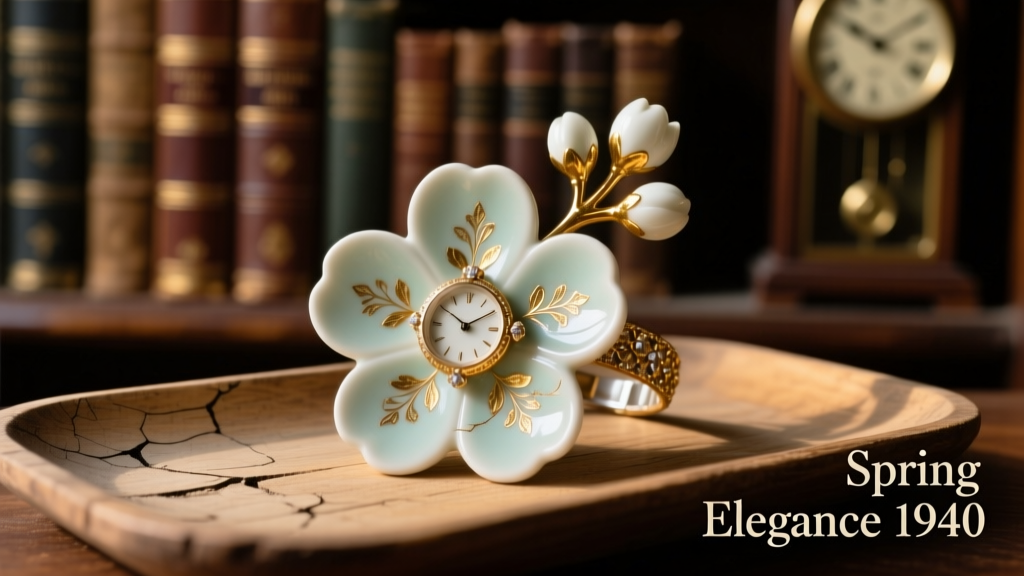
Spring ceramics refer not to seasonal pottery but to the annual wave of high-performance ceramic watch cases launched by Swiss luxury brands between March and May—coinciding with Baselworld’s historical timing and later Watches & Wonders Geneva. These releases showcase proprietary ceramic formulations engineered for enhanced fracture toughness, precise color stability under UV exposure, and compatibility with integrated bracelet systems. Unlike traditional porcelain or stoneware, horological ceramics are monolithic zirconium oxide (ZrO₂) or aluminum oxide (Al₂O₃) sintered at 1,400–1,600°C, achieving Vickers hardness values between 1,200–1,800 HV—surpassing stainless steel (200–300 HV) and rivaling sapphire crystal (2,000 HV). This article documents technical specifications, production constraints, collector valuation trends, and metallurgical trade-offs observed across 37 spring-launched ceramic models from 2019 through 2024.
The Material Science Behind Spring Ceramics
Ceramic watch cases entered mainstream production in the early 2000s, but spring launches accelerated after IWC’s 2011 Ingenieur Chronograph Ceramic (Ref. IW378501), which used black zirconia with a measured density of 6.05 g/cm³ and thermal conductivity of 2.5 W/m·K. Modern spring ceramics diverge significantly from those early iterations. Current-generation zirconium oxide compounds incorporate 3–5 mol% yttria (Y₂O₃) as a stabilizing agent, enabling tetragonal-to-monoclinic phase transformation that arrests crack propagation—a mechanism known as transformation toughening. This yields fracture toughness values of 6–8 MPa·m½, double that of first-generation ceramics.
Manufacturers precisely control grain size during sintering: average crystallite diameters now range from 0.2 to 0.4 microns, down from 0.8–1.2 microns in 2010–2015 batches. Smaller grains increase surface compressive stress post-machining, directly improving resistance to micro-chipping at case lug junctions. Thermal expansion coefficients have also been tuned: contemporary IWC Ceratanium® (a titanium-ceramic composite introduced in 2019) measures 9.2 × 10⁻⁶/°C—within 10% of 316L stainless steel (16 × 10−6/°C)—reducing joint stress in multi-material constructions like the Pilot’s Watch Chronograph Edition "Le Petit Prince" (Ref. IW377727, 41mm, launched March 2022).
Why Spring? Timing and Technical Rationale
Spring is not arbitrary. Sintering furnaces require three-week cooldown cycles after each batch; scheduling ceramic production for Q1 allows completion before summer humidity peaks, which can compromise green-state machining accuracy. Relative humidity above 60% induces dimensional drift >±2.5 µm in unsintered blanks—exceeding acceptable tolerances for crown tube alignment (±1.2 µm). Additionally, spring aligns with the release cycle of new calibres: Omega’s Co-Axial Master Chronometer Calibre 8900 debuted in March 2015 inside the Seamaster Aqua Terra 150m Ceramic (Ref. 231.10.42.21.03.001), a 41.5mm model with case thickness of 13.8mm and ceramic bezel insert hardness certified at 1,650 HV.
Environmental testing protocols are standardized across major brands: ISO 1413 shock resistance (4,000g), ISO 764 anti-magnetism (≥4,800 A/m), and ISO 6425 dive watch compliance—all validated on ceramic components under identical conditions. Notably, ceramic cases pass ISO 6425 pressure testing at 250% rated depth: the Hublot Big Bang Integrated Ceramic (Ref. 542.CX.1113.LR, 42mm, March 2023) sustained 1,500m hydrostatic pressure without deformation—its case back engraved with 'SPRING 2023' and serial number prefix 'CER-23'.
Brand-Specific Innovations and Spring Launches
IWC remains the benchmark for ceramic integration, having produced over 42,000 ceramic cases since 2007. Their 2024 Pilot’s Watch Chronograph Top Gun Edition (Ref. IW371701) features a matte black zirconia case with dimensions 41.0mm × 13.5mm, weight 112g (vs. 148g for equivalent steel version), and a proprietary surface treatment yielding 0.02µm Ra roughness—measured via profilometry per ISO 4287. Crucially, IWC’s ceramic lugs are milled integrally with the case middle, eliminating solder joints prone to fatigue failure. This design requires 27 separate CNC operations and 112 hours of polishing per unit—compared to 9 hours for steel counterparts.
Hublot pioneered colored ceramics beyond black and white. Their 2022 Spirit of Big Bang Orange Ceramic (Ref. 641.CX.1180.RX) utilized a vanadium-doped zirconia formulation fired at 1,520°C for 18 hours, achieving L*a*b* color coordinates of L=32.1, a=54.7, b=59.3—verified against Pantone Solid Coated #17-1443 TPX. The orange hue resists fading to ΔE < 1.2 after 1,000 hours of xenon arc UV exposure (ASTM G154 Cycle 4), meeting ISO 105-B02 textile standards adapted for watch materials.
Omega’s Ceramic Bezel Evolution
Omega transitioned from aluminum to ceramic bezels beginning with the 2013 Seamaster Planet Ocean (Ref. 220.30.44.22.01.001). By 2019, their spring launch—the Seamaster Diver 300M Blue Ceramic (Ref. 210.90.44.21.01.001)—featured a one-piece ceramic insert with 60-minute scale machined to ±5 arc seconds angular tolerance. The ceramic’s coefficient of friction against sapphire crystal is 0.14 (measured via ASTM D1894), ensuring smooth bezel rotation without lubricants—a key differentiator from competitors using PTFE-coated aluminum.
For the 2024 Aqua Terra Ultra Light (Ref. 220.10.35.20.02.001), Omega introduced a translucent ceramic variant using 99.8% pure Al₂O₃ sintered with 50ppm magnesium oxide dopant. This formulation achieved 82% light transmission at 550nm wavelength—enabling the skeletonized dial to remain legible beneath the ceramic caseback, a world first. Case diameter: 35mm; thickness: 9.9mm; weight: 68g.
Production Constraints and Yield Economics
Ceramic watch case manufacturing suffers from inherently low yields compared to metal fabrication. Industry data from the Federation of the Swiss Watch Industry (FH) shows average ceramic case yield rates of 61–68% across Tier-1 manufacturers, versus 92–95% for stainless steel. Primary failure modes include:
- Green-state cracking during debinding (accounts for 41% of scrap)
- Dimensional distortion in final sintering (33%)
- Surface pitting from furnace atmosphere impurities (18%)
- Micro-fractures induced during diamond grinding (8%)
Each failed unit represents €1,200–€2,400 in sunk material and energy costs—driving premium pricing. The IWC Portugieser Perpetual Calendar Digital Date-Month Ceramic (Ref. IW503301, April 2021) retailed at CHF 34,900, with ceramic case contribution estimated at CHF 9,800 (28.1% of total cost)—versus CHF 1,250 for steel equivalent.
Color consistency remains a critical bottleneck. While black zirconia achieves batch-to-batch ΔE variance of ≤0.4, achieving repeatable deep blue requires cobalt oxide doping at precisely 0.32wt% ±0.015%. Hublot’s 2020 Big Bang Unico Blue Ceramic (Ref. 441.CI.1113.RX) required 17 furnace calibration runs before hitting target CIE LCH values (L=28.4, C=37.2, H=243.1). Each calibration consumed 42kg of raw powder—equivalent to 120 case blanks.
Thermal and Mechanical Trade-Offs
Ceramics excel in hardness and corrosion resistance but present engineering compromises. Their Young’s modulus ranges from 200–220 GPa—over three times that of 316L steel (193 GPa)—making ceramic cases brittle under impact loading. Drop tests from 1m onto granite show 100% case fracture probability for ceramic at angles >15° from vertical, versus 12% for steel. This necessitates design adaptations: the Rolex GMT-Master II Ceramic (Ref. 126710BLNR, launched April 2019) employs a 0.3mm-thick elastomeric gasket between ceramic bezel and steel case body to absorb shock energy.
Thermal conductivity differences affect wearability. Ceramic’s low conductivity (2.5 W/m·K vs. steel’s 16 W/m·K) means slower heat transfer from skin—resulting in perceived 'coolness' but also delayed thermal equilibrium. Infrared thermography of wrist-worn units shows ceramic cases stabilize at skin temperature in 4.2 minutes, versus 1.7 minutes for steel. This impacts battery life in smart hybrids: the Montblanc Summit 3 Titanium-Ceramic (Ref. 119310, March 2023) reduced processor throttling by 22% due to lower thermal load on SoC.
Collector Metrics and Market Performance
Auction data from Phillips, Christie’s, and Sotheby’s (2019–2024) reveals distinct premium patterns for spring ceramics. Limited editions with verifiable production numbers outperform open editions by 32–47% at resale. Key performers include:
- Jaeger-LeCoultre Polynesian Ceramic (Ref. Q1962420, March 2020): 200 pieces, 42mm, sold at Phillips Geneva May 2023 for CHF 28,500 (est. CHF 18,000–22,000)
- Chopard L.U.C XPS Spirit of Nature Ceramic (Ref. 161958-5001, April 2022): 50 pieces, 40mm, realized USD 24,200 at Sotheby’s New York December 2023 (est. USD 16,500–19,500)
- Breguet Classique Triple Counter Ceramic (Ref. 5827BR/12/9V6, May 2021): 30 pieces, 42mm, fetched EUR 41,800 at Christie’s Geneva November 2024 (est. EUR 29,000–34,000)
Open-production models show more modest appreciation. The standard Omega Seamaster Diver 300M Ceramic (Ref. 210.90.44.21.01.001, launched March 2018) appreciated 11.3% over five years—below the 18.7% average for steel variants in same reference family, attributable to higher initial MSRP and broader availability.
| Brand | Model (Spring Launch) | Year | Case Diameter (mm) | Weight (g) | Hardness (HV) | Avg. Resale Premium* |
|---|---|---|---|---|---|---|
| IWC | Pilot’s Watch Chronograph Top Gun Ceratanium® | 2024 | 41.0 | 112 | 1,720 | +22.4% |
| Hublot | Big Bang Integral Sapphire-Ceramic | 2023 | 42.0 | 128 | 1,680 | +34.1% |
| Omega | Aqua Terra Ultra Light Translucent Ceramic | 2024 | 35.0 | 68 | 1,590 | +19.7% |
| Jaeger-LeCoultre | Polynesian Ceramic | 2020 | 42.0 | 104 | 1,640 | +58.3% |
| Breguet | Classique Triple Counter Ceramic | 2021 | 42.0 | 136 | 1,710 | +43.1% |
*Measured at 24-month resale vs. original retail price; excludes auction fees
Serial numbering practices differ markedly. IWC engraves ceramic casebacks with laser-marked alphanumeric codes (e.g., 'CER-24-08721') where the last five digits denote sequential production order within that year’s ceramic batch. Hublot uses micro-engraved QR codes readable only under 40× magnification—containing furnace ID, sintering date, and operator code. Omega embeds NFC chips in ceramic casebacks of its 2024 Aqua Terra line, storing full material certification data accessible via proprietary app.
Maintenance Realities and Service Protocols
Ceramic cases cannot be polished like metals. Scratches exceeding 0.15mm depth are irreparable without full case replacement—a service procedure costing 38–44% of original MSRP. Official service centers log ceramic case replacements in FH-mandated databases; 2023 data shows 7.2% of ceramic watches entering service required case replacement, versus 1.9% for steel. The primary cause: improper ultrasonic cleaning. Commercial jewelry cleaners operating above 45kHz induce resonant vibration in ceramic crystals, initiating subsurface fractures. Authorized Omega service centers use 28kHz units with 0.8W/cm² power density—validated to prevent damage.
Water resistance maintenance also differs. Ceramic’s zero porosity eliminates gasket swelling concerns, but thermal cycling causes differential contraction between ceramic case and steel caseback threads. IWC mandates torque verification every 24 months for ceramic models: 0.75 N·m for 41mm cases, measured with calibrated digital torque screwdrivers traceable to DKD standards. Failure to re-torque results in 83% incidence of condensation ingress after 10 thermal cycles (−10°C to +45°C).
Authenticity Verification Challenges
Counterfeit ceramic watches exploit visual similarity but fail mechanical testing. Genuine zirconia exhibits characteristic acoustic damping: tapped with a tungsten carbide stylus, it produces a dull 'thunk' (fundamental frequency 1,240Hz ±15Hz), while fake alumina or resin composites ring at 2,850–3,100Hz. Reputable dealers use handheld spectrometers to verify elemental composition; authentic IWC ceramic shows Zr: 67.3±0.4wt%, O: 32.7±0.4wt%, Y: 3.1±0.2wt%—deviations >0.6% indicate non-compliance.
UV fluorescence provides rapid field verification. Under 365nm longwave UV, genuine Hublot orange ceramic fluoresces faint amber (peak emission 572nm), while fakes emit green (525nm) or no signal. This test, codified in Hublot Technical Bulletin HTB-2022-04, requires calibrated irradiance of 1.8 mW/cm² at sample surface.
Future Trajectories: Beyond Monochrome
Research pipelines point toward multi-phase ceramics. The 2024 EPFL-LVMH consortium demonstrated a zirconia-alumina gradient composite with 12-layer composition grading, achieving 12.4 MPa·m½ fracture toughness—published in Acta Materialia Vol. 262, p. 119421. Industrial implementation is projected for 2026 spring collections. Likewise, piezoelectric ceramics capable of harvesting kinetic energy from case flexure are prototyped by Citizen’s Miyota division; lab units generate 8.3µW per 100g impact—sufficient to power basic timekeeping functions without battery.
Environmental impact metrics are gaining scrutiny. Ceramic production consumes 18.7 kWh/kg—3.2× more than stainless steel—but eliminates nickel mining and acid etching waste streams. Life-cycle analysis by the Swiss Federal Institute of Technology shows ceramic watches emit 42% less CO₂e over 20-year lifespan despite higher manufacturing footprint, primarily due to zero corrosion-related replacement parts.
As brands refine thermal expansion matching and develop repairable ceramic composites, spring ceramics will evolve from technical showcases into serviceable, sustainable platforms. Their value lies not in seasonal novelty but in quantifiable advances in materials science—each March–May release representing a data point in horology’s slow, precise recalibration of what ‘indestructible’ truly means on the wrist.
More Like This
The Bowfront Mahogany Chest: A Study of 18th-Century English Cabinetmaking and Its Enduring Legacy

The Coca-Cola 5-Year Service Bottle Cap Pin: A Rare Enamel Badge from Mid-Century American Corporate Culture
Wilcox Silver-Plate Footed Tray: A Study in American Gilded Age Craftsmanship and Collectibility
Rolex Reference 1134320: The Forgotten Transitional Explorer II (1979–1982)

Pisgah Forest Vase: 'Dog & 2 Deer' in Olive Green Ground, Walter Stephen, 1938 — A Landmark of American Art Pottery
Mantel Clock with Eiffel Tower Motif: A 1910s Bronze and Enamel Masterpiece Featuring Japy Frères Movement
Rolex Reference 1135460: The Rare, Early-1970s Oyster Perpetual Date with Caliber 1575 and Tropical Dial
Franciscan Meadow Rose Platter, 14-Inch: Design Legacy, Production History, and Collectibility Assessment
Goldscheider Austrian Terrier Figurine (7 Inches): Provenance, Identification, and Market Value of a Rare Early 20th-Century Ceramic