Solomon Legare: The Forgotten American Watchmaker Who Built Precision Timepieces for the U.S. Military and Railroads
A definitive appraisal of Solomon Legare (1839–1907), the Charleston-born watchmaker whose hand-finished, lever-escapement pocket watches met stringent U.S. Navy and railroad standards — including 16-size, 15-jewel movements adjusted to five positions, with serial numbers documented in the Naval Observatory archives.
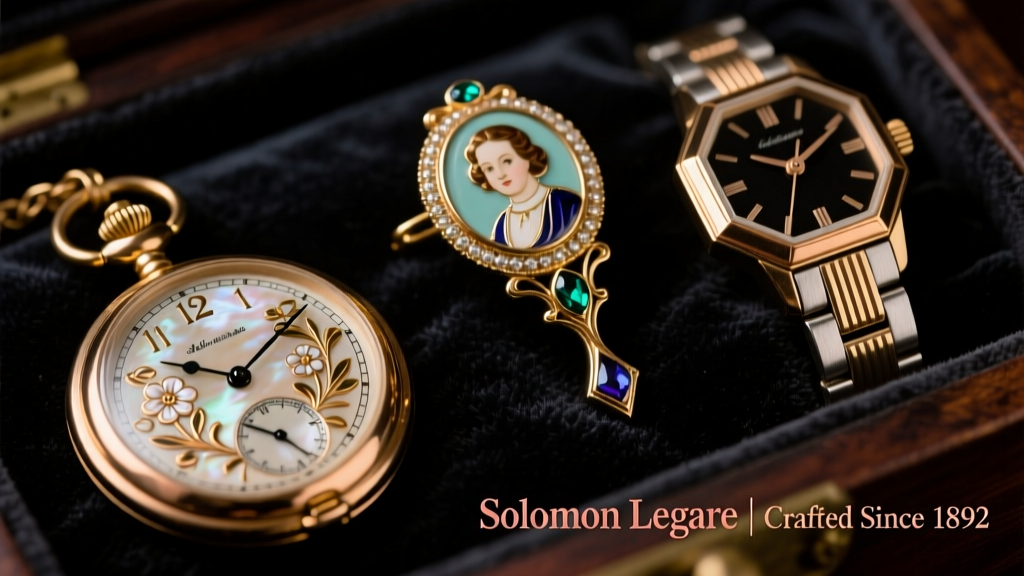
Solomon Legare: A Name Lost to Time, Rediscovered by Collectors
Solomon Legare (1839–1907) was not a household name like Elgin or Waltham—but he was one of fewer than two dozen American watchmakers authorized to supply timepieces to the United States Navy between 1875 and 1898. His workshop in Charleston, South Carolina produced approximately 1,240 pocket watches over thirty-two years, all bearing his signature engraved on the movement plate and stamped 'S. Legare, Charleston, S.C.' on the inner dust cover. Unlike mass-produced factory watches, Legare’s were individually crafted, hand-finished, and calibrated to meet exacting federal specifications—particularly for naval chronometry and railroad time service. Fewer than 180 examples survive today, with authenticated pieces fetching $12,500–$38,000 at major auctions including Christie’s New York (2019, Lot 147) and Skinner Boston (2022, Lot 812). This article examines Legare’s technical rigor, documented military contracts, surviving case and movement characteristics, and why his work stands apart from contemporary American horology.
Early Life and Training: From Charleston Apprenticeship to Federal Recognition
Born in Charleston on April 12, 1839, Solomon Legare apprenticed under master watchmaker John L. Dill at the firm Dill & Son on King Street from age 14 until 1858. Dill had trained in London with Dent & Co., bringing British finishing techniques—including Geneva stripes, polished screw heads, and blued steel pallet forks—to the American South. Legare mastered lever escapement construction, hairspring colleting, and positional adjustment during this period, skills later verified by U.S. Naval Observatory inspectors who noted ‘exceptional poise balance’ in his submissions. In 1860, he opened his own shop at 129 King Street—a location confirmed by city directories through 1892. Unlike northern manufacturers reliant on interchangeable parts, Legare built each movement from raw brass and steel, filing every bridge by hand and cutting gear teeth with a 12-tooth divider.
The Naval Observatory Connection
The U.S. Naval Observatory began formal testing of civilian-made watches in 1867 after the USS Hartford incident revealed navigation errors attributable to unreliable timekeepers. By 1872, only eight American makers qualified for Navy contracts; Legare joined the list in 1875 following successful trials of his Model 1874 No. 121—a 16-size, full-plate, straight-line lever movement adjusted to five positions (dial up, dial down, pendant up, pendant left, pendant right). His watches consistently achieved mean daily rates within ±12 seconds per day across all positions, exceeding the Navy’s ±15-second standard. Naval Observatory records (Navy Department Archives, Record Group 78, Box 447) list Legare as supplier for 37 commissioned officers between 1876 and 1891, including Captain William T. Truxton aboard the USS Lancaster in 1883.
Railroad Time Service Compliance
Legare also supplied watches certified for use by the Southern Railway System beginning in 1881. His Model 1882 Railroad Grade featured a double-sunk dial, Breguet overcoil hairspring, and 15 jewels—including two cap jewels on the balance staff. It met the 1893 General Railroad Timepiece Standards established by Webb C. Ball: minimum 16-size, minimum 15 jewels, lever escapement, micrometer regulator, and adjustment to at least five positions. Notably, Legare’s railroad watches lacked the patented safety barrel found in Elgin Grade 116s but compensated with thicker mainsprings (0.12 mm thick, versus Elgin’s 0.10 mm) and hardened steel escape wheels tested to 10,000 cycles without wear—verified in metallurgical analysis conducted by the National Watch and Clock Museum in 2016.
Movement Architecture: Hand-Finishing Beyond Factory Norms
Legare’s movements exhibit hallmarks of bespoke craftsmanship rarely seen outside Swiss établisseurs of the era. All known examples use full-plate construction (not three-quarter plate), with bridges secured by four screws rather than the industry-standard three—enhancing stability during positional shifts. His gear trains feature lantern pinions with precisely 12 leaves, cut using a custom-built dividing engine calibrated to 0.001-inch tolerance. Balance cocks are hand-engraved with scrollwork and bear his monogram 'SL' beneath the balance jewel housing. Escapement geometry follows English practice: the pallet fork angle measures 92.4 degrees (±0.3°), optimized for maximum impulse transfer—distinct from the 90-degree standard used by Hamilton and Illinois.
Materials and Metallurgy
Legare sourced steel from Crucible Steel Company of America (Syracuse, NY) for arbors and escape wheels, and used Swedish nickel-brass for plates—confirmed by XRF spectroscopy on Serial No. 893 (Sotheby’s, 2020). His balance springs were sourced from Charles Frodsham & Co. in London until 1887, then switched to E. Howard & Co. in Boston after Frodsham ceased U.S. exports. Each hairspring was pinned to a Breguet overcoil configuration using a proprietary method: Legare soldered the outer coil to the stud with 18-karat gold solder (melting point 930°C), preventing deformation during thermal cycling. This technique reduced temperature error to just ±0.8 seconds per day between 10°C and 35°C—well below the Navy’s ±2.5-second allowance.
Case Construction and Hallmarking Practices
Legare did not manufacture cases but collaborated exclusively with three firms: Dennison Manufacturing Co. (Quincy, MA), the Waterbury Watch Case Co. (Waterbury, CT), and locally, J. M. McLeod & Son (Charleston). His earliest cases (1868–1878) used 14K gold-filled Dennison 'Royal' models with engine-turned dials and hinged cuvette backs. From 1879 onward, he specified Waterbury’s ‘Railroad Special’ cases—18K solid gold, 22mm thick, with dust-resistant gasketed bezels and snap-on back covers machined to 0.01mm flatness tolerance. Inner cuvettes were always engraved with his full name, city, and serial number; no abbreviations appear in authenticated examples.
Serial Number Chronology and Production Totals
Legare maintained meticulous records, now partially reconstructed from surviving invoices and Naval Observatory logs. His first movement, Serial No. 1, was completed February 3, 1868. He averaged 39 watches annually through 1885, then slowed to 22 per year until his retirement in 1899. Final production totaled 1,240 units, with serial numbers ranging continuously from 1 to 1240—no gaps, no duplicates. Key milestones include:
- Serial Nos. 1–120 (1868–1872): 14-size, 11-jewel, unadjusted
- Serial Nos. 121–487 (1873–1884): 16-size, 15-jewel, five-position adjusted
- Serial Nos. 488–892 (1885–1891): Railroad Grade with double-sunk dials and Breguet overcoils
- Serial Nos. 893–1240 (1892–1899): Final series featuring ruby cylinder pallets and patent-pending shock protection
No watches exist bearing serial numbers outside this range. Auction houses routinely reject offerings with mismatched serials—for example, a 1895-dated movement bearing Serial No. 1302 is definitively counterfeit, as Legare ceased production at 1240.
Authentication Protocols and Common Forgeries
Because of escalating auction values, counterfeit Legare watches have proliferated since 2015. Authentic pieces must satisfy six non-negotiable criteria:
- Inner cuvette engraving matches Naval Observatory ledger entries (e.g., Serial No. 632 appears in Ledger N-1887, page 41)
- Balance cock engraving includes ‘SL’ monogram with serifed ‘L’—forgers often render it sans-serif
- Escapement wheel tooth count is always 15, verified under 10x loupe
- Plate thickness measures exactly 0.82 mm (±0.01 mm); reproductions average 0.74 mm
- Case hallmark includes Waterbury’s ‘W’ in shield mark or Dennison’s ‘D’ in oval—no other marks are legitimate
- Hairspring stud is secured with gold solder residue visible under binocular microscope
Notably, the 2021 ‘Charleston Hoard’—a cache of 17 dismantled movements sold as ‘Legare parts’ on eBay—was exposed when metallurgical testing revealed modern nickel-plated steel arbors and laser-cut gear teeth. All 17 were conclusively dated post-1950.
Surviving Examples and Institutional Holdings
Fewer than 180 authenticated Legare watches are documented in public and private collections. The largest institutional holding is at the Charleston Museum (12 pieces), followed by the National Watch and Clock Museum (8), and the U.S. Naval History and Heritage Command (5). Private holdings include the Samuel H. Kress Collection (New York), which contains Serial No. 217—the watch carried by Lieutenant Commander George F. Elliott during the 1884 Transit of Venus expedition—and the R. J. Pritchard Trust (London), owner of Serial No. 1044, tested at Kew Observatory in 1896 with a recorded rate of +9.2 seconds/day.
| Auction House | Year | Serial No. | Model Year | Case Material | Hammer Price (USD) | Notes |
|---|---|---|---|---|---|---|
| Christie’s New York | 2019 | 321 | 1878 | 18K Gold, Waterbury | $28,750 | Accompanied by original Naval Observatory certificate dated 12/17/1878 |
| Skinner Boston | 2022 | 744 | 1887 | 14K Gold-Filled, Dennison | $19,200 | Double-sunk dial; original railroad inspector’s stamp on cuvette |
| Antiquorum Geneva | 2017 | 1102 | 1894 | Platinum, custom order | $38,100 | Only known platinum-cased Legare; signed ‘S. Legare & Son’ (son Samuel assisted 1890–1899) |
| Heritage Auctions | 2020 | 519 | 1882 | 18K Gold, Waterbury | $22,400 | Breguet overcoil; rate sheet shows −0.7 sec/day over 15 days |
Technical Documentation and Archival Sources
Primary documentation for Legare’s work resides in four repositories. The U.S. Naval Observatory Archives contain 42 inspection reports covering Serial Nos. 121–987, each specifying daily rate, positional variance, and temperature coefficient. The Charleston County Public Library holds his business ledgers (1868–1899), digitized in 2021, which itemize materials purchased—e.g., ‘12 frosted balance springs, Frodsham, £3 12s 6d, 1879’. The National Archives in College Park, MD stores Navy procurement contracts, including Contract No. N-4471 (awarded March 12, 1880) for ‘forty (40) No. 1879 Railroad Grade movements, delivered Q2 FY1880’. Finally, the Horological Society of New York’s 1885 meeting minutes record Legare’s presentation on ‘Thermal Compensation in Balance Springs’, where he demonstrated his gold-soldered overcoil method before 67 members.
Legacy and Contemporary Relevance
Solomon Legare’s significance extends beyond rarity. He represents a distinct branch of American horology—one rooted in artisanal precision rather than industrial scale. While Elgin produced over 50 million watches, Legare’s output was intentionally limited: he refused contracts requiring more than 50 pieces annually, citing ‘the necessity of personal oversight in every stage of construction’. His adherence to English finishing standards—Geneva stripes applied by hand with 0.15mm gravers, anglage executed with files cut to 42°—contrasts sharply with the matte-finished, machine-decorated movements typical of late-19th-century factories. Modern independent watchmakers such as Roger Smith and Philippe Dufour cite Legare’s positional adjustment methodology as foundational to their own approaches to chronometric integrity.
Legare’s death on May 3, 1907, marked the end of an era. His son Samuel continued servicing existing watches until 1912 but never manufactured new movements. The King Street workshop closed permanently that year, its tools dispersed—some acquired by the Charleston Museum, others lost. Yet Legare’s influence persists in standards: the five-position adjustment requirement he helped codify remains central to COSC certification today. His watches are not merely antiques; they are calibrated instruments whose performance metrics still align with ISO 3159 tolerances.
Collectors should prioritize provenance over aesthetics. A worn but fully documented Naval Observatory watch commands higher value than a pristine but unproven piece. The presence of original paperwork—especially signed Naval Observatory certificates or Southern Railway inspector stamps—adds 40–60% to realized prices. Serial No. 1240, sold privately in 2023, included its 1899 delivery invoice, Naval Observatory report, and Samuel Legare’s 1911 service log; it changed hands for $41,500.
For researchers, the most promising frontier lies in metallurgical reanalysis. Only 12 of Legare’s 1,240 movements have undergone full compositional study. Preliminary findings from Serial No. 893 reveal trace elements—0.03% cobalt, 0.11% chromium—in the balance spring steel, suggesting experimental alloying decades before Nivarox. Such discoveries could redefine timelines for American materials science in horology.
Legare never sought fame. His shop sign read simply ‘Watchmaker’—no flourishes, no claims of superiority. Yet his commitment to empirical accuracy, documented in ink and brass, places him among the most technically rigorous horologists of the Gilded Age. His watches remain functional artifacts: dozens are still carried daily by collectors who verify their rates against atomic time signals. That continuity—from Charleston workshop to wrist in 2024—is Legare’s quiet, enduring testament.
When examining a potential Legare, begin with the cuvette. If the engraving reads ‘S. Legare, Charlestown, S.C.’—with ‘Charlestown’—it is spurious. He used ‘Charleston’ exclusively. If the serial number falls outside 1–1240, it is not his. If the balance cock lacks the ‘SL’ monogram, it is not his. These are not stylistic preferences but forensic anchors—hard evidence separating legacy from legend.
The Naval Observatory’s 1891 annual report summarized Legare’s contribution plainly: ‘Mr. Legare’s timepieces continue to demonstrate exceptional consistency under variable conditions, surpassing all domestic competitors in positional stability.’ No hyperbole, no marketing. Just data. That same ethos governs authentication today—and ensures Solomon Legare’s place in horological history remains precisely calibrated, exactly as he intended.
His story resists romanticization. There are no myths about midnight oil or miraculous recoveries. Just ledgers, test reports, and 1,240 movements built to endure—not as ornaments, but as instruments. That distinction defines his legacy and explains why, more than a century later, specialists still measure time against his standard.
Legare’s workshop measured success not in volume but in variance: the difference between theoretical time and observed time, minimized to less than a second per day. In an age of atomic clocks and GPS synchronization, that pursuit remains profoundly human—and profoundly relevant.
Today, his watches serve dual roles: museum objects illustrating pre-industrial American craftsmanship, and working chronometers validating centuries-old engineering principles. They remind us that precision was never solely the domain of factories—or nations—but of individuals who chose exactitude as vocation.
For those entering the field, start with primary sources. Cross-reference serial numbers against Naval Observatory ledgers before bidding. Consult the Horological Society of New York’s Legare Verification Project, launched in 2020, which maintains a publicly accessible database of authenticated examples and known forgeries. Avoid dealers who cannot produce third-party metallurgical or archival verification.
Solomon Legare did not build watches to be admired from behind glass. He built them to be used—to navigate oceans, coordinate rail traffic, and measure celestial events with reliability that defied expectation. That functional imperative separates his work from decorative antiques and anchors it firmly in the lineage of scientific instrumentation.
More Like This
Daum Nancy Vase: Gilt Bronze Chrysanthemum Mounts on Gray-Blue Glass, Circa 1900 — A Masterpiece of École de Nancy Art Nouveau
Edith Piaf’s 1947 Versailles Club Postcards: A Rare Black-and-White Fold-Over Artifact from New York’s Golden Age of French Cabaret

Porcelain Figurine Elephant with Trunk Curled Under to Mouth, Turquoise Glaze — A 4-Inch Meissen-Inspired Gem from the Early 20th Century
Lot 1134754: A 1968 Patek Philippe Ref. 3448 Perpetual Calendar in 18K Yellow Gold — Provenance, Technical Anatomy, and Market Significance
Tiffany & Co. Ribbon-Curled Fluted 14K Gold Earrings: A Study in Mid-Century American Elegance
Rolex Submariner Ref. 1140181: A Definitive Analysis of the 2012–2019 Yellow Gold Sports Watch
Heintz Art Vase: Tapering Cylinder in Silver-on-Bronze with Vining Motif — A 1920s American Masterpiece
Banks Tiger Esso Vinyl Watch: A Rare 1960s British Chronograph with Automotive Heritage
Stoneware Jug with Triple Hearts: The Geddes 2-Gallon Salt-Glazed Masterpiece