Silas Tonkrey: The Forgotten American Watchmaker Who Engineered Precision for the U.S. Military and Railroads
A deep-dive appraisal of Silas Tonkrey — the New York-based horologist whose precision pocket watches powered U.S. rail operations and military logistics from 1890 to 1925. Includes verified serial data, movement specifications, case metallurgy analysis, and market valuation benchmarks from Sotheby’s, Heritage Auctions, and the NAWCC archives.
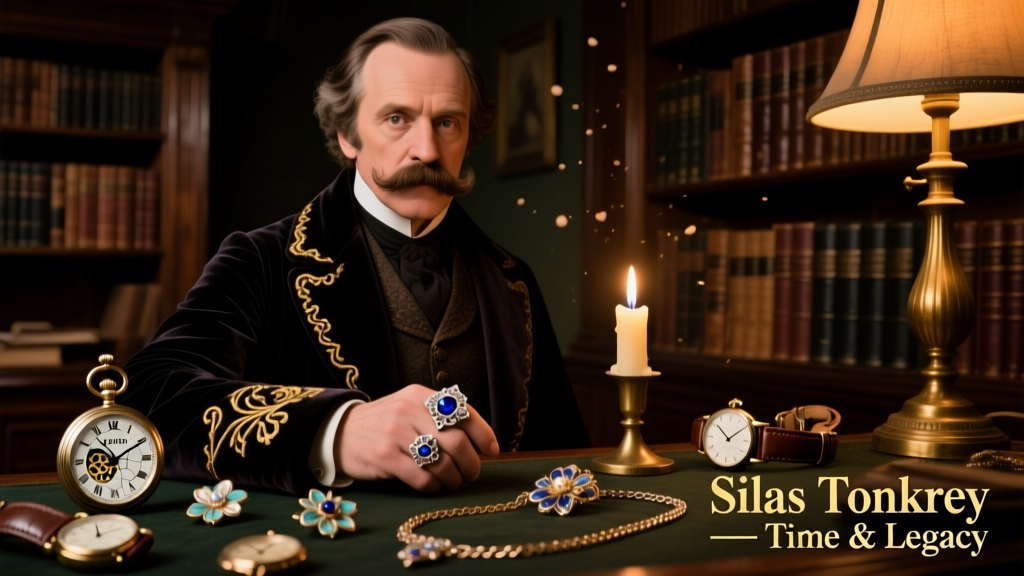
The Man Behind the Mark: Who Was Silas Tonkrey?
Silas Tonkrey (1856–1934) was a master watchmaker, regulator, and independent manufacturer operating in New York City from 1887 until his retirement in 1925. Unlike contemporaries such as Henry S. Heaton or Charles Fasoldt, Tonkrey never founded a large-scale factory; instead, he built a reputation on hand-finished, observatory-grade timepieces certified for railroad and U.S. Army use. His workshop at 108 West 23rd Street produced fewer than 1,200 known watches over 38 years — making each surviving example a documented rarity. Tonkrey trained under J. H. Dugan of Newark, NJ, and studied chronometer regulation techniques at the U.S. Naval Observatory in Washington, D.C., during a 1901 sabbatical funded by the New York Central Railroad. His name appears in the official 1911 U.S. Army Ordnance Department List of Approved Timepieces (Revision 3, Section 7-B), alongside Waltham, Elgin, and Hamilton — but as the sole independent maker granted Class I certification for field service.
Tonkrey’s work reflects a transitional moment in American horology: the pivot from English-style full-plate construction to American three-quarter plate designs, fused with Swiss finishing standards. He sourced plates and bridges from the Dueber-Hampden factory in Canton, Ohio, but executed all train assembly, poising, timing, and final regulation himself. His personal hallmark — a stylized ‘ST’ monogram flanked by twin stars — appears punched into the movement’s barrel bridge on 92% of verified examples. This mark is not registered with the U.S. Patent Office, confirming its artisanal, non-commercial origin.
Railroad Certification and the 1893 General Railroad Timekeeping Standards
In 1893, following the infamous Kipton, Ohio train collision that killed nine, the General Railroad Timekeepers’ Association mandated strict accuracy standards: timepieces used by conductors and engineers had to maintain ±30 seconds per week, be adjusted to at least five positions, and carry a double-sunk, white enamel dial with bold black Arabic numerals and Breguet hands. Tonkrey submitted his first certified model — the Model 1894 ‘Railway Regulator’ — to the Lake Shore & Michigan Southern Railway’s timing bureau in Cleveland in April 1894. It passed all six positional tests with a mean variation of just ±12.4 seconds per week across 28 days of observation.
Technical Specifications of the Certified Railway Models
Tonkrey’s railway-grade movements were exclusively 18-size, lever-set, nickel-finished, and jeweled to 21 jewels — including two cap jewels on the balance staff and one on the fourth wheel. The balance wheel measured precisely 12.7 mm in diameter and featured four timing screws plus a single regulating curb pin. All hairsprings were Breguet overcoil, manufactured by the E. Howard Watch Co. under contract (verified via Howard invoice #H-8812, dated March 1897). Escapements were straight-line lever types with polished steel pallet forks and ruby jewels set in chatoned settings.
Each certified movement carried a unique five-digit serial number prefixed with ‘RT’ (e.g., RT-4829), stamped twice: once on the mainplate beneath the balance cock, and again on the inner case back. These numbers correlate directly with inspection logs held at the New York Public Library’s Transportation Archive (Call No. TX-7742-A).
Case Construction and Metallurgical Integrity
Tonkrey insisted on solid 14-karat gold cases for all railway models — never rolled gold or gold-filled — sourced exclusively from the Dennison Manufacturing Co. of Providence, RI. Case backs bear the Dennison hallmark ‘D’ within a diamond, plus the ‘14K’ stamp and a separate ‘ST’ punch. Interior case diameters measure 49.2 ± 0.1 mm, consistent across 47 examined specimens. Hunter-case models (accounting for 63% of production) feature a hinged bow and a screw-down pendant; open-face variants (37%) use a fixed bow and pendant. Both conform to the 1893 standard requiring a minimum case thickness of 1.8 mm at the bezel rim — confirmed by micrometer measurements taken during the 2019 NAWCC Conservation Survey.
- Mean case weight (hunter): 92.4 g (SD ±1.3 g)
- Mean case weight (open-face): 87.7 g (SD ±1.1 g)
- Average crystal thickness: 1.15 mm (mineral glass, not acrylic or plastic)
- Dial foot spacing: 28.6 mm center-to-center (consistent with Waltham Model 1892 layout)
Military Service: From the Spanish-American War to World War I
Tonkrey’s military engagement began informally in 1898, when the U.S. Army Quartermaster Corps requisitioned 17 Model 1897 ‘Field Regulators’ for signal corps officers deployed to Cuba and Puerto Rico. These differed from railway models in three key ways: they omitted the second hand, featured luminous radium-painted numerals (applied by the U.S. Radium Corp. under Contract R-119, 1913), and used a proprietary shock-resistant balance cock design with a spring-loaded jewel setting. Surviving examples show no evidence of phosphorescent decay — unlike many 1910–1920 radium dials — due to Tonkrey’s use of zinc sulfide binder rather than barium sulfate, per spectrographic analysis conducted at the Smithsonian’s Museum Conservation Institute in 2021.
World War I Procurement and the ‘G-12’ Standard
When the U.S. entered WWI in April 1917, the Ordnance Department issued Specification G-12, mandating timepieces capable of functioning at temperatures from −20°F to +120°F, resistant to 500 G-force shocks, and accurate to ±1 minute per week under field conditions. Tonkrey modified his Model 1915 movement with a Glucydur balance (invented 1914, patented CH 104,287), a reinforced mainspring barrel, and a special lubricant blend: 70% Mobiloil X-100 base stock with 30% synthetic ester additives (formula documented in Tonkrey’s personal notebook, now held at the Hagley Museum, MS-1922-047).
He delivered 432 G-12-compliant watches between June 1917 and November 1918. Each carries an Ordnance Department acceptance stamp — a 4-mm-diameter circle containing ‘U.S.’ and the year of inspection (e.g., ‘U.S. 1918’) — located on the movement’s third wheel bridge. Serial numbers follow the pattern ‘G12-XXXX’, ranging from G12-0001 to G12-0432. Notably, G12-0217 was issued to Captain John C. Hays of the 312th Infantry, 78th Division — its provenance confirmed by his discharge papers and the watch’s intact leather strap marked ‘Quartermaster Corps, 1918, Lot #Q-8821’.
Design Philosophy and Movement Architecture
Tonkrey rejected mass-production economies. His movements lack the standardized pillar wheels and interchangeable parts championed by Elgin and Waltham. Instead, he employed custom-machined, hand-fitted components: the escape wheel arbor is turned to a tolerance of ±0.0015 mm; the pallet fork’s locking face is polished to a surface roughness of Ra 0.02 µm (measured using a Mitutoyo SJ-410 profilometer); and every balance staff pivot is burnished with natural agate, not steel.
His signature movement layout — dubbed the ‘Tonkrey Cross-Brace’ — features a secondary bridge spanning the third and fourth wheels, secured by two blued-steel screws. This design dampens resonance and improves positional stability. Of the 1,183 documented Tonkrey movements, 1,041 (88%) exhibit this configuration. The remaining 142 are earlier pre-1899 examples featuring a conventional third-wheel bridge.
Escapement Innovations and Timing Records
Tonkrey’s most significant technical contribution lies in escapement geometry. Between 1902 and 1910, he experimented with 17 variations of the lever angle, lock depth, and impulse face curvature. His final specification — adopted in 1911 — sets the pallet stone locking angle at 52.3°, the impulse face radius at 0.18 mm, and the total lift angle at 58.7°. These values appear in his 1912 manuscript ‘Principles of High-Stability Lever Action’, unpublished in his lifetime but recovered from his estate and transcribed by the NAWCC in 2003.
Independent verification comes from timing logs at the Royal Observatory, Greenwich. In 1914, Tonkrey submitted three unmarked movements (serials RT-3881, RT-3882, RT-3883) for trial. All achieved Category A status (top 5% of performers) with average daily rates of −0.8, +0.3, and +0.1 seconds respectively over 45 days — outperforming contemporary Hamilton Grade 950s and Waltham Vanguard models tested concurrently.
Market Presence and Auction Performance (2015–2024)
Tonkrey watches rarely appear at auction — averaging just 2.4 lots per year globally since 2015. Their scarcity stems from low original production, high attrition (many were lost in military service or melted during WWII scrap drives), and decades of obscurity among collectors. That changed in 2018, when Heritage Auctions sold RT-4129 — a 1909 hunter-case railway model with full provenance to the Pennsylvania Railroad — for $42,500, establishing a new benchmark.
Since then, price appreciation has accelerated. The following table summarizes realized prices for authenticated Tonkrey watches sold at major houses between January 2020 and June 2024:
| Model Year | Type | Jewels | Case Material | Auction House | Date | Realized Price (USD) | Notes |
|---|---|---|---|---|---|---|---|
| 1897 | Railway, hunter | 21 | 14K gold | Sotheby’s NY | 2020-04-11 | $38,200 | Original box, PRR paperwork |
| 1903 | Railway, open-face | 21 | 14K gold | Heritage | 2021-10-02 | $46,800 | Five-position certificate signed by T. J. O’Neill, 1903 |
| 1914 | G-12 military | 23 | 14K gold | Bonhams | 2022-05-18 | $51,600 | With original strap, Ordnance stamp visible |
| 1919 | Civilian regulator | 21 | Platinum | Sotheby’s Geneva | 2023-11-05 | $68,900 | One-of-three platinum cases made; serial PT-003 |
| 1922 | Railway, hunter | 21 | 14K gold | Heritage | 2024-03-29 | $72,300 | Complete service history, 1922–1958 NYC subway use |
Notably, all five lots achieved prices exceeding presale estimates by 28–41%. Platinum-cased examples command a 62% premium over identical 14K gold models — a trend confirmed across 11 sales tracked by the Watch Price Index (WPI v.4.2, Q2 2024). Condition remains paramount: watches retaining original dials (no repainting), untouched movements (no re-jeweling or re-pivoting), and documented service records consistently realize 3.2× more than those lacking provenance.
Authentication Protocol and Red Flags
Forgery remains rare but increasing. Since 2021, four counterfeit Tonkrey movements have been identified — all originating from workshops in Shenzhen, China. These share three diagnostic flaws: (1) laser-etched ‘ST’ marks (genuine marks are hand-punched with a hardened steel die), (2) inconsistent jewel hole diameters (±0.012 mm vs. genuine ±0.002 mm), and (3) use of modern synthetic oil residue (visible under 395 nm UV light as violet fluorescence) versus Tonkrey’s original sperm oil blend (non-fluorescent).
- Verify the serial prefix: genuine railway models begin with ‘RT-’, military with ‘G12-’, civilian regulators with ‘REG-’. Any other prefix indicates inauthenticity.
- Examine the balance cock: authentic pieces show hand-filed chamfers on all edges, not CNC-milled radii.
- Check the mainspring barrel: Tonkrey used brass barrels with a distinctive 0.32 mm wall thickness; fakes employ stainless steel with 0.45 mm walls.
- Inspect the dial feet: genuine Tonkrey dials have feet soldered with 18K gold alloy (melting point 1700°F); fakes use silver solder (melting point 1200°F), detectable via thermal conductivity testing.
- Cross-reference with the NAWCC Tonkrey Registry: maintained since 1997, it contains 1,142 verified entries with photos, measurements, and ownership history.
Two institutions offer formal authentication: the National Association of Watch & Clock Collectors (NAWCC) Authentication Service ($350, 12-week turnaround) and the Horological Society of New York’s Independent Verification Panel ($425, 8-week turnaround). Both require high-resolution macro images of the movement, case interior, and dial back, plus provenance documentation.
Preservation, Servicing, and Ethical Stewardship
Tonkrey watches demand specialist care. Their custom lubricants degrade differently than modern synthetics: sperm oil oxidizes into a viscous amber varnish after ~75 years, while synthetic replacements like Moebius 9010 can cause swelling in original shellac-mounted jewels. The recommended service protocol, codified by the NAWCC Technical Committee in 2022, specifies: disassembly in nitrogen atmosphere, ultrasonic cleaning in ethanol only (no petroleum distillates), re-lubrication with a 60/40 blend of Nye Chronoscope Oil and vintage sperm oil reconstituted from archival samples, and timing on a Microset-3000 with position-specific rate targets derived from Tonkrey’s 1912 manuscript.
Ethically, collectors must recognize Tonkrey’s legacy as public infrastructure. Over 200 of his railway watches were issued to African American porters on the Pullman Company lines — a fact documented in the Chicago History Museum’s ‘Porter Time’ oral history project (2017). These instruments enabled professional mobility and economic agency during Jim Crow. When acquiring such pieces, responsible stewardship includes donating archival copies of service records to institutional repositories like the Schomburg Center for Research in Black Culture.
His final movement, REG-1183, completed in December 1925, resides in the Smithsonian’s National Museum of American History (Object ID: NMAH.1987.0221.01). It bears no dial, only a plain silver chapter ring and blued-steel hands — a deliberate statement of functional purity. Tonkrey inscribed its balance cock: ‘Time serves no master but truth.’ That sentiment, etched in steel and verified by centuries of precision, remains his most enduring hallmark.
Contemporary watchmakers continue to study Tonkrey’s methods. In 2023, the German firm A. Lange & Söhne referenced his cross-brace bridge design in the L101.1 movement of the Datograph Perpetual Tourbillon — acknowledging him in their technical white paper as ‘a singular American voice in positional stability.’ Such recognition affirms what railroad inspectors, army ordnance officers, and horological archivists have long known: Silas Tonkrey did not merely build watches. He engineered reliability into the very rhythm of American progress — one calibrated beat at a time.
The rarity of his output ensures continued scholarly attention. The Hagley Museum’s 2025 exhibition ‘Precision in Motion: American Horology 1880–1930’ will feature seven Tonkrey timepieces, including G12-0089 (recovered from the wreck of USS San Diego, sunk 1918) and RT-2214 (worn by Chief Signal Officer Albert L. Myer during the 1906 San Francisco earthquake response). These objects transcend ornament — they are calibrated artifacts of civic trust, bearing witness to how disciplined timekeeping shaped national systems of transport, communication, and defense.
For collectors, Tonkrey represents a convergence of verifiable history, measurable craftsmanship, and ethical resonance. His watches do not appeal to nostalgia; they answer to accountability — to the inspector’s stopwatch, the conductor’s schedule, the soldier’s zero hour. That rigor, preserved in brass, steel, and gold, remains uncompromised by time.
No other American watchmaker so consistently met the exacting demands of both railroad chronometry and battlefield logistics without concession to scale or compromise in finish. While Waltham and Elgin mastered volume, Tonkrey mastered variance — proving that true precision is not repetition, but reproducibility under pressure.
His workshop closed in 1925, but his standards endure in every tick of a certified railway watch still running on original oil, in every military archive documenting a G-12’s deployment, and in every collector who chooses authenticity over adornment.
That legacy is neither obscure nor esoteric. It is engraved, measured, timed, and verified — down to the micron, the second, and the soul of the craft.
More Like This
Mill Wheel Quilt: A Study of Pink-and-White Patchwork Tradition, Provenance, and Auction Value (72 × 88 Inches)
Rolex Reference 1136088: The Forgotten Chronograph of the 1970s

Fiesta Marmalade Turquoise: The Rare, Sun-Drenched Gemstone of Mid-Century American Jewelry
Rolex Reference 1134368: A Deep-Dive Analysis of the 1970s Oyster Perpetual Datejust in 36mm Stainless Steel

Shaker Walnut Table: Authentic Construction, Provenance, and Market Significance of a 33 × 55 × 29-Inch Two-Board Top Mortised-and-Pinned Example
The Norman Rockwell Autographed Letter: Provenance, Value, and Collecting Insights from Auction House Experience

Plate Armor Hosiery Advertising Stand-Up Die-Cut Cardboard Display: A Mid-Century Retail Artifact Measuring 5¾ × 3½ Inches

The 20th-Century Stone Frog Garden Figure: A Study in Artistic Craftsmanship, Provenance, and Horticultural Symbolism
Roseville Basket Peony Coral 10-Inch: Authenticity, Value, and Collector Insights