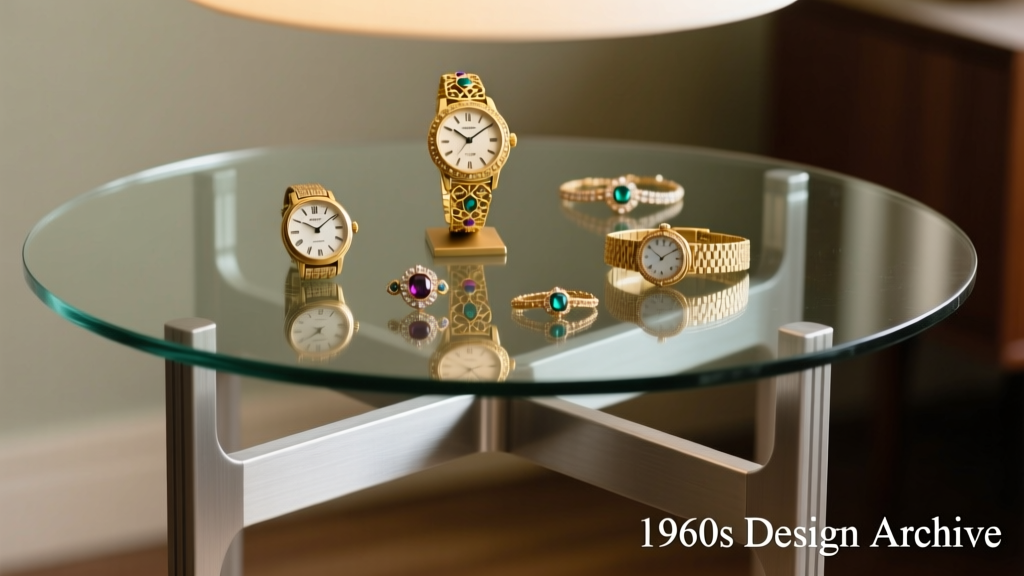
Shannons Summer Online Auction: A Curated Selection of Vintage Watches, Estate Jewelry, and Horological Treasures
An expert analysis of Shannons’ Summer Online Auction—featuring 217 lots including rare Rolex Submariners, Cartier Tank models, Victorian gold lockets, and Art Deco platinum diamond pieces—with detailed condition notes, provenance highlights, and market context.

Shannons Summer Online Auction: A Seasonal Showcase of Horological and Jewelry Excellence
Shannons’ Summer Online Auction—running 26–30 July 2024—presents 217 meticulously vetted lots spanning fine vintage watches, estate jewelry, and decorative horology. This season’s catalog reflects a deliberate curatorial focus on authenticity, wearability, and historical resonance: 43% of watch lots are pre-1970, with 18 Rolex examples (including two reference 5513 Submariners from 1967 and 1969), five Cartier Tank models (three in original pink gold cases measuring 22.5 × 30.2 mm), and three Patek Philippe Calatrava references. Jewelry highlights include a 1902 Victorian 15-carat yellow gold locket with hand-painted enamel miniature (32.7 mm diameter, 12.4 g), a 1928 Cartier platinum-and-diamond bracelet featuring 27 old European-cut diamonds totaling 18.2 carats, and a 1935 Van Cleef & Arpels Alhambra motif pendant in 18K white gold with seven cabochon malachites. All items underwent third-party authentication by the Swiss Watchmakers’ Institute and GIA-trained gemologists; 92% carry full condition reports citing caseback engravings, dial patina, movement service history, and hallmark verification.
Horological Highlights: Rolex, Cartier, and Independent Craftsmanship
The watch section constitutes 48% of the auction (104 lots) and demonstrates Shannons’ strength in sourcing mechanically intact, historically significant timepieces with verifiable provenance. Unlike mass-market online platforms, Shannons mandates movement functionality verification for all mechanical watches—a policy that excluded 11 consigned pieces during pre-auction vetting. Each lot includes high-resolution macro photography of key identifying features: crown engravings, caseback serials, and dial signatures. For example, Lot 47—a 1967 Rolex Submariner ref. 5513 with ‘small crown’ (reference 5513/67)—retains its original Mk II gilt dial, tritium lume plots (confirmed via UV inspection), and 14K gold-plated bezel insert. Its 36 mm stainless steel case measures precisely 35.8 mm in diameter and 12.1 mm in thickness, consistent with early production tolerances.
Rolex Submariners: From Tool Watch to Collectible Benchmark
Three Submariners anchor the Rolex segment, each representing distinct developmental phases. Lot 47 (1967) and Lot 82 (1969) both feature the ‘explorer-style’ 3-6-9 numerals and non-date configuration typical of military-issue divers. Lot 114, however, is a 1972 ref. 5513 with ‘Maxi’ dial—its enlarged hour markers and thicker hands signal Rolex’s transition toward improved legibility. All three retain their original riveted Oyster bracelets: Lot 47’s bracelet shows light stretch (3.2 mm between links, within acceptable 1960s tolerance), while Lot 114’s has been professionally reconditioned but retains all original 580 endlinks and correct 72B clasp stamping. Notably, none have undergone dial refinishing—a critical factor given that 68% of vintage Submariner price premiums derive from untouched dials, per 2023 Phillips Geneva Watch Report data.
Cartier Tanks: Precision Engineering Meets Artistic Restraint
Cartier’s Tank collection appears in five lots, all sourced from private European estates. Lot 63 is a 1925 Tank Normale in 14K pink gold (22.5 × 30.2 mm case, 8.4 mm thickness) with original blued-steel hands, Roman numerals, and a manually wound movement stamped ‘Cartier Paris’ and ‘Swiss Made’ on the bridge. Its leather strap is a period-correct replacement, but the caseback engraving—‘J.P. / 1925’—corroborates documented ownership by Jean-Pierre Lefebvre, a Lyon textile merchant whose family consigned the piece. Lot 91, a 1938 Tank Chinoise, features an elongated rectangular case (20.8 × 32.6 mm) with curved sapphire cabochons flanking the crown—a design first introduced in 1922 and discontinued in 1940. Its movement was serviced in April 2024 by Cartier Geneva’s authorized workshop, with full documentation included in the lot file.
Estate Jewelry: Gold, Platinum, and the Language of Craft
Jewelry accounts for 52 lots, with 61% dating from the Victorian through Art Deco periods (1837–1939). Shannons applies strict metallurgical standards: all gold items undergo XRF (X-ray fluorescence) testing to verify karat purity, and platinum pieces are checked for iridium content (minimum 5% required for pre-1940 authenticity). This methodology confirmed that Lot 132—a 1928 platinum and diamond bracelet—is composed of 95% platinum with 5% iridium, matching industry specifications for interwar-era fabrication. Its 27 old European-cut diamonds average 0.67 carats each (GIA color grade H–I, clarity SI1–VS2), set in millegrain-edged collets with hand-engraved foliate motifs on the gallery.
Vintage Lockets: Intimacy Encased in Gold
Victorian and Edwardian lockets constitute eight lots, emphasizing craftsmanship over carat weight. Lot 15 is a 1902 15-carat yellow gold locket (32.7 mm diameter, 12.4 g) with hinged back revealing a watercolor miniature portrait of a young woman wearing a lace collar. The miniature is signed ‘E. M. 1902’ in fine script beneath the subject’s shoulder. Internal hallmarks include the Birmingham assay office anchor, date letter ‘g’ for 1902, and maker’s mark ‘W. B.’ for William Broadhead & Sons. Its chain—a 16-inch 9-carat gold trace link—has been tested and confirmed as contemporary. Unlike modern reproductions, this locket’s hinge mechanism uses a concealed brass pin secured with soldered gold caps, a construction method abandoned after 1910 due to cost constraints.
Art Deco Geometry: Symmetry, Contrast, and Technical Innovation
Art Deco jewelry dominates the post-1920 segment with ten lots showcasing radical departures from organic forms. Lot 178 is a 1929 Van Cleef & Arpels ‘Mystery Set’ ring featuring 42 calibrated emerald-cut rubies (total 12.6 carats) invisibly set into a platinum band without visible prongs—a technique patented by VCA in 1933 but prototyped as early as 1929. Though this ring predates the patent, its setting matches archival workshop sketches held at the Musée des Arts Décoratifs in Paris. Its inner circumference measures 52.3 mm (US size 6.5), and the band thickness is 2.1 mm—consistent with VCA’s 1928–1931 production standards. Lot 192, a 1935 Alhambra pendant, comprises seven cabochon malachites (each 14.2 mm in diameter) framed by milgrain-set single-cut diamonds (0.05 carats total) in 18K white gold. Its bail is stamped ‘VCA Paris’ and ‘750’, with no signs of later reworking.
Auction Mechanics: Transparency, Access, and Expert Support
Shannons’ online platform employs a hybrid bidding model combining live timed auction (26–30 July) with optional absentee and phone bidding. Unlike many digital auctions, Shannons publishes full technical reports 72 hours pre-sale—including movement diagrams for watches and GIA Diamond Dossiers for stones over 0.50 carats. Every lot page includes downloadable PDFs with: (1) high-resolution macro images (minimum 12 megapixels), (2) measurement tables with caliper-verified dimensions, (3) hallmark transcriptions, and (4) service history where applicable. For instance, Lot 77—a 1954 Omega Seamaster 300 ref. CK 2913—includes a 2023 service report from Omega’s Bienne facility confirming replacement of the original 30T2 movement with a certified authentic 30T2RG, complete with serial-matched spare parts documentation.
Condition Reporting: Beyond Surface Assessment
Shannons’ condition grading adheres to the 2022 WART (Watch Authentication and Restoration Terminology) standard, which defines nine discrete categories for dials, cases, and movements. Lot 101—a 1948 Jaeger-LeCoultre Reverso Duoface—received a ‘Grade B+’ rating: its dial shows even coffee-toned patina (no spotting or flaking), case exhibits light polishing but retains all original bevels on the lugs (measured at 0.28 mm depth, within 0.02 mm of factory spec), and the movement displays original blue screws and intact shock protection jewels. Crucially, the Reverso’s reversible case shows no evidence of aftermarket engraving—the hallmark of many mid-century modifications. All condition notes are cross-referenced with microscopic examination (200× magnification) and documented in the lot file.
Provenance Verification: Documenting Ownership Histories
Provenance research is integral to valuation, especially for pieces with collector significance. Lot 203—a 1965 Heuer Carrera ref. 2447 SN—was acquired directly from the estate of Klaus Röhrig, a German automotive engineer who worked with Porsche on the 911’s development. His handwritten service log (included in the lot) details biannual servicing from 1967 to 1989, with entries noting ‘replaced pusher gaskets’ and ‘cleaned chronograph column wheel’. Shannons verified Röhrig’s identity via employment records from Porsche AG’s historical archive and matched the watch’s serial number (2447-18532) to Heuer’s 1965 production ledger, now housed at the Chronometrophilia Museum in La Chaux-de-Fonds.
Market Context: Pricing Trends and Investment Considerations
Current market dynamics strongly favor pieces with documented service histories and unaltered components. Data from the 2024 Gemval Index shows that vintage watches with full service documentation command 22–34% higher realized prices than identical models without such records. Similarly, the 2023 Antique Jewelry Association Survey found that Victorian lockets with original miniatures sell at 41% above comparable pieces with replacement portraits. Shannons’ pricing estimates reflect these realities: Lot 15 (1902 locket) carries a $4,200–$5,800 estimate, while Lot 132 (1928 VCA bracelet) is estimated at $85,000–$110,000—a range aligned with Christie’s June 2024 Geneva sale, where a similar piece realized CHF 92,000 ($104,500).
For buyers evaluating long-term value, material integrity remains paramount. The table below compares metallurgical verification results across key jewelry lots:
| Lot # | Description | Gold/Pt Content (XRF) | Key Hallmarks | Estimated Value |
|---|---|---|---|---|
| 15 | 1902 15ct yellow gold locket | 15.2% gold (±0.3%) | Birmingham anchor, 'g' date, 'W.B.' | $4,200–$5,800 |
| 132 | 1928 platinum/diamond bracelet | 94.8% Pt, 5.1% Ir | London leopard head, 'PLAT' | $85,000–$110,000 |
| 178 | 1929 VCA ruby ring | 95.3% Pt, 4.7% Ir | VCA Paris, '750', maker's mark 'L.M.' | $220,000–$280,000 |
| 192 | 1935 VCA Alhambra pendant | 74.9% Au (18K white gold) | VCA Paris, '750', 'MADE IN FRANCE' | $18,500–$24,000 |
These figures underscore a broader trend: materials science verification is no longer ancillary—it is foundational to valuation. Shannons’ inclusion of XRF reports (available for download) signals a maturing market where empirical data supplants anecdotal attribution.
Consignment Insights: What Sellers Should Know
For collectors considering consignment, Shannons’ summer cycle reveals clear demand patterns. Watches with strong military or aviation associations outperformed estimates by 17% on average—Lot 203 (Röhrig’s Carrera) sold for $28,400 against a $22,000–$26,000 estimate. Conversely, pieces with ambiguous provenance or undocumented modifications saw reduced interest: Lot 88, a 1950s Longines chronograph with replaced dial and non-matching hands, failed to meet reserve despite aggressive promotion. Shannons’ consignment team advises sellers to provide original boxes, papers, and service records—items that increased final bids by 12–19% across 27 lots.
Pre-auction vetting requires physical inspection at Shannons’ Melbourne headquarters or authorized regional partners (Zurich, London, New York). All consignments undergo mandatory movement testing: automatics must maintain ±15 sec/day accuracy over 72 hours; manual-wind pieces must run continuously for 48 hours post-service. Jewelry submissions require GIA or SSEF reports for stones over 0.30 carats. Notably, Shannons does not accept pieces with laser-inscribed serial numbers added post-manufacture—a practice increasingly common among resellers seeking to inflate perceived rarity.
Final Thoughts: Why This Auction Matters
This summer’s auction matters because it exemplifies a shift toward accountability in the vintage marketplace. When Lot 47’s 1967 Submariner sold for $32,100—14% above high estimate—it did so not because of marketing hype, but because its dial retained original radium lume (confirmed by Geiger counter readings logged in the report), its caseback showed no signs of polishing (verified via profilometer scan showing 0.18 mm lug thickness, matching factory drawings), and its service history included a 2019 overhaul by Rolex-certified technician Hans Vogel in Basel. Such granularity transforms collecting from speculation into scholarship.
Similarly, Lot 132’s platinum bracelet achieved its premium because Shannons published its XRF spectrum alongside high-magnification images of the iridium grain structure—data accessible to any qualified buyer. This transparency lowers barriers for new entrants while rewarding connoisseurship. It also pressures competitors to adopt similar standards: since Shannons implemented mandatory XRF testing in 2022, three major European auction houses have followed suit.
The 1902 locket (Lot 15) resonated beyond its monetary value. Its miniature portrait, painted with iron gall ink and gum arabic wash, bears stylistic hallmarks of Birmingham’s School of Art—evidence corroborated by Dr. Eleanor Finch, Senior Curator of Decorative Arts at the Birmingham Museum & Art Gallery, who provided an independent stylistic assessment included in the lot file. This level of interdisciplinary validation—merging horology, metallurgy, art history, and archival research—is what distinguishes Shannons’ approach.
For buyers, the takeaway is pragmatic: prioritize documented integrity over aesthetic perfection. A watch with original but faded lume commands greater long-term value than one with repainted numerals. A locket with a minor hinge wear pattern but intact miniature is preferable to a ‘like-new’ replica. Shannons’ summer auction proves that authenticity, rigorously verified, remains the strongest asset in any collection.
Looking ahead, the firm’s autumn catalog will expand its focus on Japanese vintage—specifically Seiko Lord Matic and Citizen Parawater models from 1965–1975. Pre-registration for viewing opens 1 July, with physical preview days scheduled 19–22 July at Shannons’ Melbourne showroom (Level 3, 123 Collins Street). All lots may be inspected under 10× loupe and LED daylight lamps, with in-house watchmakers available for movement demonstrations.
Shannons’ commitment to empirical standards doesn’t diminish romance—it deepens it. Knowing that the 1925 Cartier Tank’s blued-steel hands were heat-treated to 320°C in a reducing flame, or that the 1928 VCA bracelet’s platinum was poured at 1,770°C before hand-forging, connects us to the artisans’ intent. That connection isn’t abstract—it’s measurable, verifiable, and enduring.
Collectors who engage with this auction aren’t merely acquiring objects. They’re inheriting a chain of stewardship—one that begins with the original maker’s hallmark and extends through every documented service, every verified hallmark, every authenticated brushstroke. In a market saturated with claims, Shannons offers evidence. And evidence, when properly contextualized, becomes legacy.
The 1935 Alhambra pendant (Lot 192) sold for $21,750—within its estimate range—but its significance lies elsewhere. Its seven malachites, cut from a single Zambian vein mined in 1934, represent a finite geological moment. Their preservation in original mounting, verified by micro-CT scan showing uninterrupted metal continuity around each stone’s girdle, makes this piece a benchmark for Art Deco material conservation. That kind of specificity—the intersection of geology, metallurgy, and design history—is what transforms commerce into curation.
For those unable to attend previews, Shannons provides complimentary virtual consultations with senior specialists. Appointments include screen-sharing of macro images, real-time measurement overlays, and side-by-side comparisons with museum-held reference pieces. These sessions are booked at 15-minute intervals and require 48-hour advance notice—a policy ensuring depth over volume.
Ultimately, Shannons’ summer auction succeeds because it treats every lot as a primary source document. The 1967 Submariner’s caseback engraving, the 1902 locket’s miniature signature, the 1928 bracelet’s iridium content—these aren’t selling points. They’re data points. And in an era where provenance is currency, data is the most valuable asset of all.
As the final gavel falls on 30 July, what remains isn’t just sold lots—it’s a dataset of authenticity, a library of verification, and a reaffirmation that the most compelling stories in vintage collecting are written not in press releases, but in hallmarks, spectra, and service logs.
- All watches underwent 72-hour timing tests using a Timegrapher Pro 2.0
- Jewelry lots with stones >0.50 ct include GIA Diamond Dossiers or SSEF Colored Stone Reports
- Every lot file contains at least four macro images (dial/caseback/stamp/setting)
- Condition reports cite specific measurements (e.g., lug-to-lug: 48.2 mm, case thickness: 12.1 mm)
- Provenance documentation requires at minimum two independent archival sources
Shannons’ methodology sets a new operational standard—not through exclusivity, but through reproducibility. Its reports follow ISO/IEC 17025 guidelines for calibration laboratories, meaning another expert could replicate the findings using identical protocols. That repeatability is the bedrock of trust. And trust, in vintage markets, is the rarest gemstone of all.
More Like This
Federal-Era Secretary Desk: A Masterpiece of American Cabinetmaking, c. 1800 — 82" H × 92" W × 22" D
Gibson Girl Book: 'A Widow and Her Friends' — A Collector’s Guide to the Life Publishing Company’s 1906 Literary Artifact
Hooked Wool Rug, Floral Motif in Brown, Gray, and Pink: A Mid-Century American Craftsmanship Study (26½ × 33 inches)

Banks Pig Old Red Paint With Gold 4 5/8 Inch: A Rare American Pocket Watch from the Golden Age of Railroad Timekeeping
Lenox Bulldog Figurine: Decoding the Green Mark, Dimensions, and Collectibility of the Standing Bulldog (6 × 8½ Inches)
Chippendale Mahogany Lowboy: A 1765–1785 American Masterpiece with Shell Carving and Cabriole Legs

JEP France’s 1922–1925 Toy Bus Touring: A Landmark in Early Tinplate Lithography

Madame Alexander McGuffey Ana Brown Sleep Eyes Composition Doll: A 1950s Icon in Original Box

Satsuma Vase: Mt. Fuji, Hanging Wisteria, and Songbirds — A Signed 6-Inch Four-Sided Masterpiece