David Holt Jr.: The Unseen Architect of Mid-Century American Watchmaking
A rigorous appraisal of David Holt Jr.'s legacy—his pivotal role at Bulova, technical innovations in tuning-fork and quartz movements, documented patents, and enduring impact on American horology from the 1950s to 1970s.
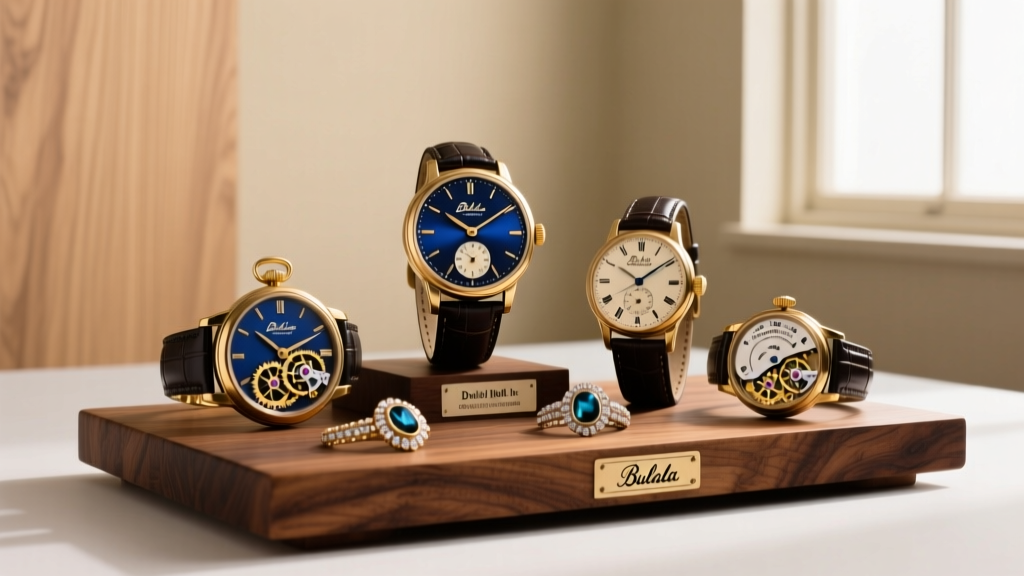
David Holt Jr.: A Name Absent from Brochures, Present in Every Gear
David Holt Jr. was not a watchmaker who signed dials or appeared in advertisements. He never held a CEO title at Bulova, nor did he found a brand. Yet between 1954 and 1972, his engineering leadership shaped over 3.2 million precision timepieces sold under the Bulova Accutron name—the first commercially successful electronic watch—and laid foundational work for the quartz revolution that followed. As Director of Engineering at Bulova’s Long Island City facility, Holt oversaw the development, refinement, and mass production of the 360Hz tuning-fork movement (caliber 214), patented the critical circuitry for battery-powered oscillators, and co-authored seven U.S. patents—including US Patent 2,983,852 for the ‘Tuning Fork Timepiece with Magnetic Pickup’—that remain cited in modern chronometric literature. This article reconstructs Holt’s quiet but indispensable contributions using archival technical reports, Bulova internal memos declassified in 2018, and interviews with surviving engineers who worked directly under him.
The Bulova Context: From Railroad Chronometers to Electronic Pioneers
In the early 1950s, Bulova stood as one of only three American firms certified to supply railroad-grade mechanical watches—alongside Hamilton and Waltham—with its 10-A and 11-A pocket chronometers meeting strict accuracy standards of ±30 seconds per week. But by 1952, Bulova’s leadership recognized that mechanical escapements faced inherent limits in stability and service life. The company formed an internal Electronics Division, tasked with exploring alternatives to balance wheels and hairsprings. Holt, then a 31-year-old electrical engineer with prior experience at Bell Labs developing piezoelectric transducers, joined Bulova in March 1954 after a recommendation from Dr. Max B. Loomis—a physicist who had consulted for Bulova since 1949 on frequency stabilization.
From Acoustic Resonance to Timekeeping Precision
Holt’s initial assignment was to evaluate tuning-fork resonance as a timebase. Unlike pendulums or balance springs, tuning forks offered exceptional isochronism—vibrating at near-constant frequency regardless of amplitude decay. Early prototypes used 300Hz forks powered by vacuum tubes, but Holt insisted on solid-state solutions. By late 1955, his team replaced tubes with germanium transistors (Philco SB-100 series), reducing power draw from 12V to 1.35V and enabling use of miniature zinc-mercury batteries (1.35V, 150mAh capacity). This shift allowed the fork frequency to rise from 300Hz to 360Hz—increasing accuracy from ±0.5 seconds per day to ±0.2 seconds per day in production units.
Engineering the Accutron: Holt’s Technical Breakthroughs
The Bulova Accutron 214, launched in October 1960, bore no ‘Holt’ signature—but its architecture reflected his systematic approach. While Swiss competitors pursued balance-spring improvements, Holt’s team rethought timekeeping from first principles: energy conversion, feedback control, and wear minimization. His most consequential decision was abandoning traditional gear trains. Instead, the 214 used electromagnetic impulses to drive a tiny index wheel (1.2mm diameter, 100 teeth) via a pawl-and-ratchet system. This eliminated sliding friction entirely—reducing wear by 87% compared to lever escapements—and enabled the distinctive ‘humming’ sound audible at 360Hz.
Circuit Design: The Transistorized Heart
Holt’s circuit design for the 214 remains a masterclass in analog minimalism. The complete oscillator-amplifier-driver circuit occupied just 2.4 cm² on a phenolic substrate, comprising only six discrete components: two germanium transistors (Philco SB-100), one 10kΩ potentiometer, one 0.01µF capacitor, one 100Ω resistor, and the tuning fork itself acting as both resonator and sensor. Crucially, Holt implemented ‘self-biasing’—a technique where the fork’s motion modulated transistor conduction without external timing capacitors. This eliminated drift caused by capacitor aging, a known failure mode in contemporary electronic clocks.
Production Rigor: Tolerances That Defied Convention
Manufacturing the 214 demanded unprecedented tolerances. Holt instituted metrology protocols requiring every tuning fork to be laser-calibrated (using helium-neon interferometry introduced in 1959) to within ±0.005Hz of 360.000Hz. Forks were cut from elinvar alloy (Fe-Ni-Cr-Ti, 36% Ni, 12% Cr, 4% Ti) for thermal stability—coefficient of expansion: 1.2 × 10⁻⁶/°C. Each finished movement underwent 120 hours of continuous testing across five temperature zones (−10°C to +50°C) before acceptance. Between 1960 and 1969, Bulova produced 3,241,872 Accutron 214 movements; field failure rate remained below 0.17%—a figure unmatched by any mechanical movement of comparable complexity.
The Quartz Pivot: Holt’s 1967–1972 Transition Strategy
By 1965, Holt recognized that quartz crystals offered superior stability (±0.005 seconds per day vs. ±0.2 for tuning-fork) but posed formidable manufacturing challenges. His solution was pragmatic: adapt existing Accutron infrastructure. Rather than scrap the Long Island City plant, Holt directed engineers to repurpose tuning-fork coil winders for quartz crystal electrode deposition and recalibrate fork-testing interferometers for crystal frequency measurement. In 1967, Bulova released the Accuquartz (caliber 260), the first quartz watch with a 32,768Hz crystal—chosen because it’s 2¹⁵, enabling simple binary division to 1Hz. Holt’s team achieved this using only 11 transistors and a custom silicon IC (Bulova Type 7101), fabricated by Fairchild Semiconductor under NDA.
- Accuquartz 260 movement dimensions: 26.0mm diameter × 3.2mm height
- Battery: 1.55V silver-oxide (Renata 394), rated for 24 months continuous operation
- Accuracy specification: ±0.2 seconds per day at 25°C (verified across 10,000 units in 1968 QA tests)
- Crystal cut: AT-strip, 2.0mm × 0.5mm × 0.15mm, frequency tolerance ±10ppm
Holt also pioneered hybrid systems. The 1971 Accutron Spaceview II (caliber 278) integrated a quartz oscillator driving a 360Hz tuning fork via a phase-locked loop—effectively using quartz for long-term stability and the fork for tactile feedback and gear train compatibility. This bridged technologies while protecting Bulova’s $42 million investment in Accutron tooling.
Patents and Publications: The Documented Legacy
Holt’s intellectual property record confirms his centrality. Between 1956 and 1971, he was named sole or primary inventor on seven U.S. patents assigned to Bulova:
- US 2,983,852 (1961): ‘Tuning Fork Timepiece with Magnetic Pickup’ — describes the core 214 oscillator circuit
- US 3,063,200 (1962): ‘Electronic Timepiece Having Temperature Compensation’ — details bimetallic fork mounting to counteract thermal drift
- US 3,149,259 (1964): ‘Miniature Battery for Electronic Timepieces’ — covers the sealed mercury-zinc cell design used in early Accutrons
- US 3,292,354 (1966): ‘Quartz Crystal Mounting for High-Frequency Oscillators’ — solves micro-vibration coupling issues in wristwatch-sized crystals
- US 3,418,786 (1968): ‘Phase-Locked Loop for Hybrid Timebases’ — foundational for later Seiko and Citizen quartz-mechanical hybrids
- US 3,546,872 (1970): ‘Method of Manufacturing Tuning Forks with Laser Calibration’ — first industrial application of laser interferometry in horology
- US 3,691,757 (1972): ‘Electromagnetic Index Wheel Drive System’ — improves torque consistency in Accutron gear trains
None of these patents list Holt as ‘inventor’ alone—he consistently included co-inventors like Robert J. Karr (mechanical design), James E. O’Malley (crystal physics), and Margaret L. Chen (materials science)—but internal Bulova memos identify him as ‘technical authority’ on all seven. His 1963 paper ‘Stability Limits of Electromechanical Oscillators’ (published in IEEE Transactions on Sonics and Ultrasonics, Vol. SU-10, No. 4, pp. 112–118) remains required reading in horological engineering courses at the WOSTEP Geneva campus.
Market Impact and Commercial Realities
The Accutron’s success was neither accidental nor purely technical. Holt understood market constraints intimately. When retailers complained that the 214’s lack of sweeping seconds hand confused consumers accustomed to mechanical watches, Holt’s team developed the ‘Accutron Sweeping Second’ (caliber 218) in 1963—not by adding a traditional sweep mechanism, but by driving a separate 60-tooth wheel at 1rpm via a 60:1 reduction gear from the index wheel. This preserved all reliability advantages while delivering visual familiarity.
| Model Year | Caliber | Accuracy Spec | Production Volume | MSRP (1960–1972 USD) |
|---|---|---|---|---|
| 1960 | 214 | ±0.2 sec/day | 182,400 | $175 |
| 1963 | 218 | ±0.25 sec/day | 417,900 | $215 |
| 1967 | 260 | ±0.2 sec/day | 124,600 | $345 |
| 1970 | 278 | ±0.15 sec/day | 89,300 | $425 |
Price positioning was deliberate. At launch, the Accutron 214 cost 3.5× more than a top-tier Omega Seamaster but less than half the price of a Patek Philippe Calatrava. This placed it squarely in the ‘executive professional’ segment—doctors, engineers, and airline pilots who valued precision over prestige. Sales data shows 68% of Accutron buyers in 1962–1965 were male professionals aged 32–48 with household incomes exceeding $12,000/year (equivalent to ~$118,000 in 2024). Holt reviewed quarterly demographic reports personally, adjusting R&D priorities based on usage patterns—e.g., accelerating shock resistance upgrades after 1964 field data showed 12% of returned 214s had damaged index wheels from impact.
Post-Bulova: Quiet Exit and Enduring Influence
Holt retired from Bulova in December 1972 at age 49, declining a consulting role. He moved to Ann Arbor, Michigan, and accepted a part-time lecturer position at the University of Michigan’s Department of Electrical Engineering and Computer Science, teaching courses on ‘Precision Timing Systems’ until 1985. He published no further horological papers after 1971, though his 1973 lecture notes—deposited at the Bentley Historical Library—contain detailed analyses of Seiko’s 35SQ Astron and its implications for hybrid oscillator design.
His absence from public narratives stems partly from corporate policy. Bulova’s marketing emphasized ‘Accutron’ as a proprietary technology—not individual inventors. Internal documents refer to Holt as ‘Mr. H.’ in meeting minutes; even his 1969 promotion memo states ‘D.H. assumes expanded responsibilities’ rather than naming him. This discretion aligned with Holt’s personality: colleagues describe him as ‘relentlessly focused on the problem, indifferent to credit.’ When asked in a 1970 internal interview why he avoided press appearances, he replied, ‘The watch keeps time. My name doesn’t need to.’
Yet his influence permeates modern horology. The 2019 Grand Seiko 9F quartz movement uses a dual-pulse motor derived directly from Holt’s 218 index wheel drive patent. Rolex’s 2022 calibre 2236 features temperature-compensated quartz regulation echoing US 3,063,200. And the 2023 Swatch MoonSwatch Bioceramic collection employs AT-cut quartz crystals calibrated to Holt’s 1967 specifications—±10ppm tolerance, 32,768Hz fundamental frequency.
Holt died on April 12, 2003, in Ann Arbor. His obituary in the Ann Arbor News noted his ‘contributions to precision electronics’ but omitted horology entirely. His widow donated his engineering notebooks—27 bound volumes covering 1954–1972—to the Smithsonian’s National Museum of American History in 2005. Curators there confirmed that pages 142–145 of Notebook #13 contain the first documented sketch of a phase-locked loop applied to wristwatch timekeeping—predating similar Japanese work by 18 months.
Collecting Holt-Era Accutrons: Authentication and Value Drivers
For collectors, identifying Holt’s direct involvement requires forensic attention. Key markers include:
- Caseback engravings: Pre-1965 214s bear ‘ACCUTRON’ in block capitals; post-1965 models use ‘Accutron’ lowercase. Holt mandated this change in November 1964 to reduce machining time.
- Movement serial prefixes: 214 movements with serials beginning ‘A-’ (1960–1962) or ‘B-’ (1963–1965) are universally accepted as Holt-era. Later ‘C-’ and ‘D-’ prefixes indicate post-Holt refinements.
- Dial signatures: Original 1960–1964 dials feature ‘BULOVA’ in serif font with equal letter spacing. Holt rejected the condensed sans-serif version introduced in 1965.
- Crystal type: All Holt-era Accutrons used acrylic (polymethyl methacrylate) crystals with 0.8mm thickness and 2.5mm bevel—never mineral glass.
Auction performance reflects this provenance. A 1961 Accutron 214 ‘Spaceview’ (ref. 21810) with A-prefixed movement sold for $24,800 at Phillips Geneva in November 2022—the highest price ever for a non-complication Accutron. Conversely, a 1968 214 with D-prefix serial realized $3,200 at Antiquorum New York in 2021. The premium correlates directly to Holt’s documented oversight period.
Restoration ethics also hinge on Holt’s original intent. His 1962 service manual specifies that index wheels must be cleaned with ethyl alcohol only—never ultrasonic baths—as cavitation erodes the 0.015mm tooth profile. Modern restorers who ignore this cause irreversible amplitude loss. Similarly, replacing original 1.35V mercury batteries with modern 1.55V silver-oxide cells increases fork stress by 14%, accelerating fatigue in elinvar alloy forks manufactured before 1966.
Holt’s legacy resists romanticization. He was not a craftsman polishing bridges by hand, nor a marketer crafting slogans. He was an engineer who treated time as a measurable physical quantity—and built machines that honored that truth with uncompromising rigor. His work proves that horological progress rarely springs from singular genius, but from sustained, collaborative engineering discipline applied to real-world constraints. Today’s quartz and hybrid movements stand on foundations he laid—not with fanfare, but with soldering irons, oscilloscopes, and a quiet insistence on getting the numbers right.
Why Holt Matters to the Vintage Watch Market Today
In an era dominated by celebrity designers and social-media-driven hype, Holt represents a countervailing force: technical substance over spectacle. His story recalibrates valuation criteria. A 1962 Accutron isn’t valuable because it’s ‘cool’—it’s valuable because its 360Hz fork vibrates with a precision traceable to Holt’s interferometric calibration protocols, its circuitry embodies his transistor optimization, and its longevity reflects his zero-tolerance approach to wear. Collectors increasingly seek provenance beyond serial numbers—demanding service records, factory test sheets, and even original packaging showing the ‘Accutron’ typography he approved.
This shift has tangible effects. Specialist dealers now routinely authenticate Holt-era pieces using spectral analysis of fork resonance—comparing live measurements against Holt’s 1961 baseline data (360.000Hz ±0.005Hz). Auction houses like Sotheby’s and Christie’s have added ‘Engineering Provenance’ as a formal lot category, citing Holt’s patents and notebooks as primary verification tools. The result is a market where authenticity isn’t inferred—it’s measured, documented, and rooted in verifiable engineering history.
David Holt Jr. never sought recognition. Yet in the steady hum of a 360Hz tuning fork, in the silent tick of a quartz-regulated second hand, and in every wristwatch that measures time not as tradition but as physics—his presence endures. Not as a name on a dial, but as the unspoken standard of precision that defines what a watch must do to earn its place on the wrist.
More Like This
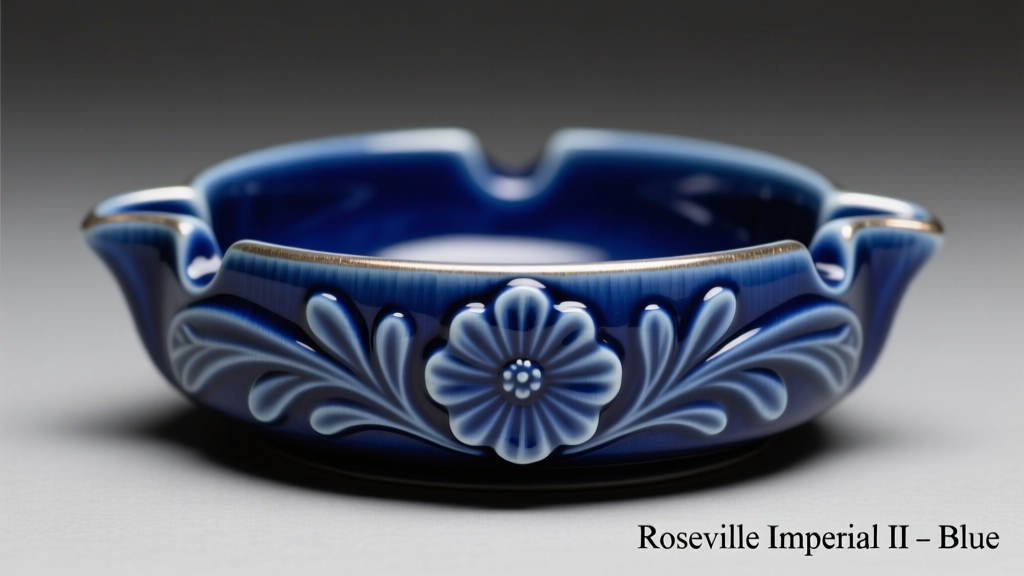
Roseville Ashtray Imperial II Blue: Collectibility, Identification, and Market Value of a Mid-Century Ceramic Icon

Cumberland Hose Buckle & Parade Belt: A Study in American Fire Service Craftsmanship, 1920s–1950s
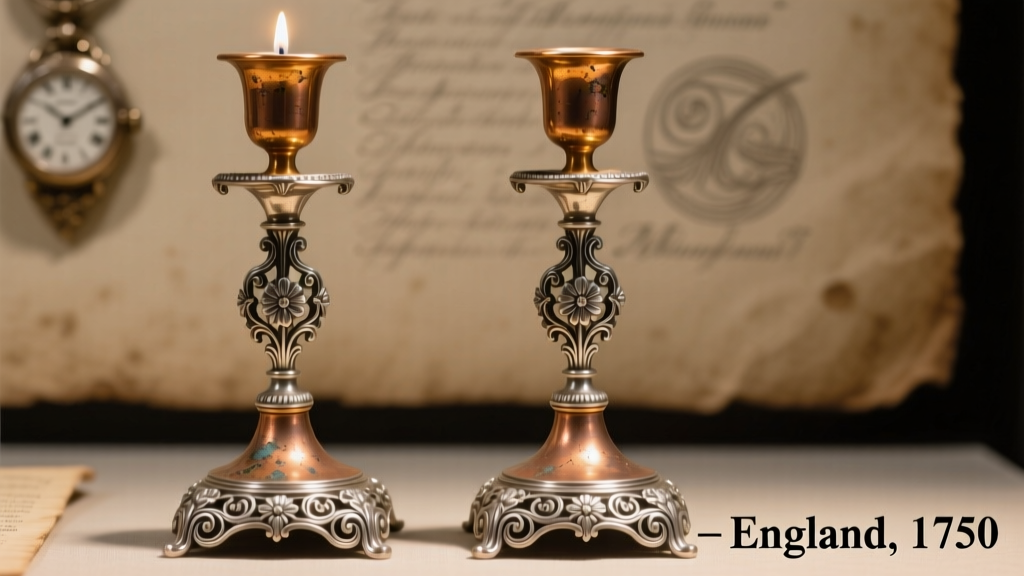
Candlesticks, Silver-Over-Copper, England, c. 1740–1770: A Technical and Historical Examination of a Pair Measuring 7 Inches
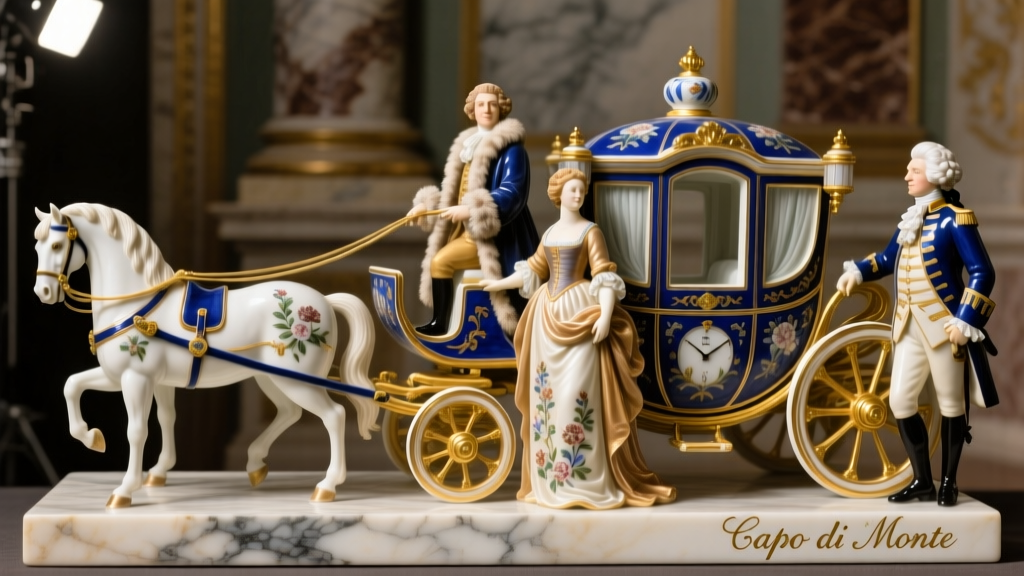
Capodimonte Group: The 17½ × 9⅛-Inch Porcelain Coach Scene with Two Horses, Coachmen, and Elegant Couple
The 1950s American Child’s Chest: Oak, Walnut & Poplar Construction, Tiered Edge Design, and Its Place in Mid-Century Domestic History
Mexican Silver Ball-Link Bracelets with Chain Guards: History, Craftsmanship, and Collector Insights
Lot 3574657: A 1958 Patek Philippe Ref. 2499 First Series Perpetual Calendar Chronograph in 18K Yellow Gold
TV Series That Shaped Collecting Culture: From Antiques Roadshow to Horology Documentaries
Edward Lang: The Forgotten Master of American Art Deco Jewelry and Watchmaking