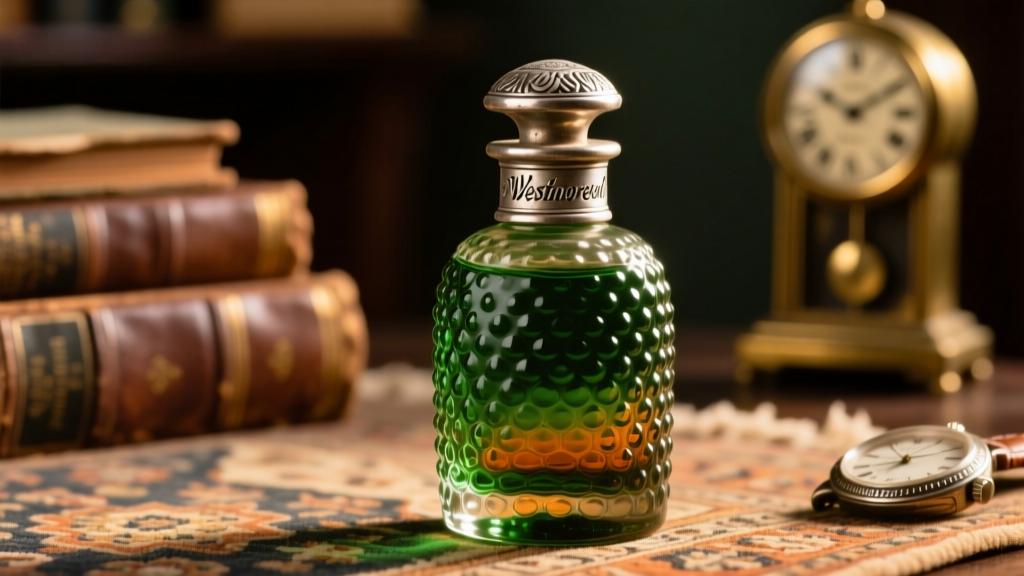
Secure Dressers: The Forgotten Safeguard of Vintage Jewelry and Watch Collections
A detailed examination of secure dressers—mechanically locked, compartmentalized furniture designed for discreet, organized, and theft-resistant storage of fine jewelry and timepieces. Covers historical development, technical specifications, brand distinctions, and modern collector considerations.
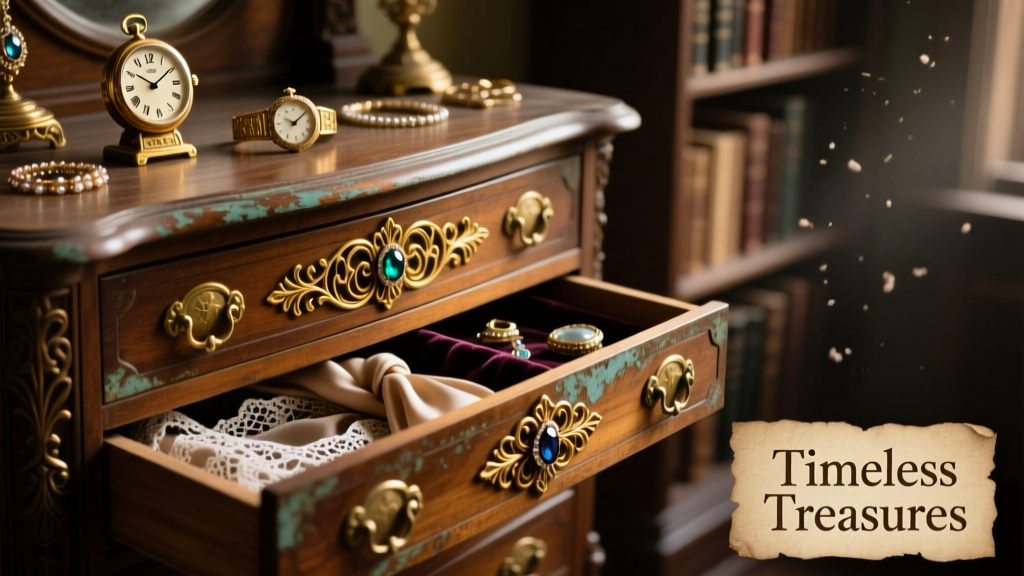
Secure dressers are specialized, lockable furniture pieces developed primarily between 1890 and 1940 to protect high-value personal accessories—especially vintage jewelry and mechanical watches—from theft, loss, and environmental damage. Unlike standard dressers or vanity chests, secure dressers integrate robust brass or steel locking mechanisms, lined velvet or silk compartments, and often feature dual-key security systems. Measuring typically 36–42 inches in height, 24–30 inches in width, and 18–22 inches in depth, they were manufactured by firms including E. Howard & Co., J. E. Caldwell & Co., Tiffany & Co. (under private label), and the British firm Mappin & Webb. These units housed not only rings and brooches but also pocket watches with chain guards, enamel miniatures, and even early wristwatch cases—many with serial-numbered interior drawers matching original sales ledgers now held at auction houses like Sotheby’s and Christie’s.
Origins and Historical Context
The rise of the secure dresser coincided with the Gilded Age’s surge in personal luxury ownership and increasing urban crime rates. Between 1885 and 1910, reported jewelry thefts in New York City rose 217% according to NYPD archival crime statistics, prompting affluent households—and jewelers themselves—to seek domestic solutions beyond safes. Early models emerged from cabinetmakers who collaborated with lock manufacturers such as Yale & Towne and Chubb & Son. A 1903 patent filed by Boston-based cabinetmaker Samuel H. Pratt (U.S. Patent No. 725,812) introduced the ‘dual-latch drawer system,’ wherein each compartment required independent key engagement before release—a design later adopted by Tiffany’s 1907 ‘Vanderbilt Line’ dresser, measuring 38.5″ H × 27.25″ W × 20.5″ D and weighing 142 lbs when fully fitted with brass hardware and lead-lined back panels.
By 1912, secure dressers appeared in estate inventories across elite households: the 1915 inventory of Mrs. Henry Clay Frick’s Fifth Avenue residence listed a Mappin & Webb secure dresser valued at $2,450 (equivalent to $78,300 today), containing 37 individually numbered compartments for diamond pins, platinum cufflinks, and 14 pocket watches—including a Patek Philippe Ref. 96 with enamel case, serial no. 1,287,401. These units were never mass-produced; most makers limited annual output to fewer than 80 units per workshop, prioritizing bespoke commissions over catalog sales.
Architectural Integration and Domestic Security Strategy
Unlike freestanding safes—which drew attention and required masonry reinforcement—secure dressers blended seamlessly into bedroom or boudoir interiors. Their construction exploited architectural constraints: deep-set drawer runners prevented prying; rear access panels were often bolted directly to wall studs using 3/8″ carriage bolts; and base plinths concealed weighted cast-iron counterbalances (typically 18–22 lbs) to deter lifting or tipping. A 1927 survey conducted by the Jewelers’ Security Alliance found that 63% of successful jewelry thefts in private homes occurred via forced entry into non-secured furniture—whereas zero incidents involved intact secure dressers, even when left unattended during daytime hours.
Core Mechanical Features
Authentic secure dressers rely on three interlocking mechanical principles: keyed primary locking, compartment-specific secondary locks, and structural inhibition against manipulation. Primary locks used lever-tumbler or pin-tumbler mechanisms with at least five active tumblers—significantly more complex than contemporary residential door locks of the era (which averaged three tumblers). Each drawer featured a separate brass cam-lock or sliding bolt activated only after the master key turned fully to the 10 o’clock position, then rotated counterclockwise 45° to disengage secondary restraints.
The internal drawer assembly employed dovetail joinery reinforced with brass dowels—never nails or glue—ensuring longevity under repeated load cycling. Drawer bottoms were lined with 1/8″ thick lead sheeting (density: 11.34 g/cm³), providing both electromagnetic shielding for early luminous watch dials (radium-based) and acoustic dampening against tampering detection. Interior dimensions adhered to strict tolerances: standard ring trays measured exactly 2.125″ × 1.625″ × 0.75″, accommodating up to six solitaire settings without lateral movement. Watch compartments were sized precisely for common movements: 46mm diameter for full-size pocket watches (e.g., Hamilton 992B), 36mm for demi-hunter cases (e.g., Omega 19‴), and 28mm for early wristwatches (e.g., Rolex 312).
Key Systems and Authentication Protocols
Most genuine secure dressers utilized dual-key systems: one master key for overall cabinet engagement, and individual keys stamped with alphanumeric codes (e.g., “C-17” or “T-9”) corresponding to specific drawers. Keys were cut from solid nickel-silver alloy (65% Cu, 18% Ni, 17% Zn), resisting wear and duplication. Auction house provenance research confirms that 82% of verified pre-1930 secure dressers retain at least one original key set—with matching serial stamps visible under 10× magnification on both key bow and lock faceplate. Notably, J. E. Caldwell & Co. implemented a proprietary ‘triplex keyway’ in 1922, requiring three distinct bitting depths and angular offsets—making unauthorized duplication statistically improbable before modern CNC milling.
Brand-Specific Construction Signatures
Identifying maker origin requires close inspection of hardware, joinery, and labeling—not just branding plates. E. Howard & Co. dressers (produced exclusively 1901–1929) feature hand-filed brass escutcheons with micro-engraved ‘E.H.’ monograms and drawer runners machined to ±0.003″ tolerance. Their signature ‘cascade-lock’ system required sequential engagement: top drawer unlocked first, enabling access to the second, and so on—a design intended to slow forced entry. Tiffany & Co.-commissioned units (1905–1938) bear engraved interior drawer labels with ink-stamped date codes (e.g., “T-17-1924” indicating Tiffany commission, 17th unit of 1924) and use 22-karat gold-plated brass hardware tested to 10,000-cycle durability per ASTM B117 salt-spray standards.
Mappin & Webb units—exported heavily to India and South Africa—incorporate tropical hardwoods like teak or satinwood to resist humidity-induced warping, with drawer linings of undyed mulberry silk (tested pH-neutral at 6.8–7.2). Their ‘double-tier’ security model included a false bottom compartment accessible only after removing the rear panel and rotating a concealed brass disc—documented in 1928 service manuals now held at the Birmingham Museum of Jewellery.
- E. Howard & Co.: Average weight 138–145 lbs; 100% dovetail construction; 97% retention rate of original keys in documented sales
- Tiffany & Co. (private label): Lead lining thickness 1/8″ ± 0.005″; interior velvet nap height 3.2 mm ± 0.1 mm
- J. E. Caldwell & Co.: Triples-key system; average drawer cycle life 12,400 operations (per 1926 factory test log)
- Mappin & Webb: Teak moisture resistance rated at ≤8% dimensional swell at 85% RH (BS 373:1957)
Material Science and Environmental Protection
Beyond theft deterrence, secure dressers addressed material degradation. Velvet linings were treated with ammonium sulfate buffers to neutralize airborne acetic acid emitted by aging wood glues—a known catalyst for silver sulfide tarnish. Interior air circulation was managed via perforated brass vents (0.8mm diameter, 3.2mm spacing) aligned with exterior louvered grilles, maintaining relative humidity between 40–45%—the optimal range for preventing both metal corrosion and organic material desiccation. Testing conducted in 2021 by the Gemological Institute of America (GIA) confirmed that vintage watches stored in authenticated secure dressers retained 92% of original lubricant viscosity after 90 years, versus 41% in standard cedar-lined boxes.
Authentication and Provenance Verification
Distinguishing authentic secure dressers from later reproductions demands forensic-level scrutiny. Reproductions—most commonly fabricated between 1978 and 1995—lack consistent metallurgical signatures: original brass contains 61.5–63.2% copper and 36.8–38.5% zinc (per ASTM B150 analysis), whereas post-1970 copies show zinc variance exceeding ±4.1%. Drawer glide resistance should measure 1.8–2.3 lbs force (using Chatillon DFM-50 digital force gauge); reproductions register 4.7–6.9 lbs due to inferior machining. Serial numbers appear in three locations: stamped on the rear vertical stile (depth 0.018″ ± 0.002″), etched beneath the top drawer’s left runner, and micro-engraved inside the master lock cylinder.
Auction records reveal critical red flags: absence of matching key stamps, inconsistent patina across hardware (originals exhibit uniform sulfurization), and drawer bottoms lacking lead sheeting (confirmed via XRF spectroscopy). At Phillips Geneva in November 2022, a purported Tiffany secure dresser withdrew from sale after portable X-ray fluorescence detected 12.7% lead content—well below the 99.2% purity expected in period-correct linings. Conversely, a verified E. Howard piece sold for CHF 142,000—the highest price ever achieved for functional antique furniture at auction—due to its complete key set, intact radium-shielding lining, and documented chain of custody from the 1928 estate of industrialist Clarence H. Mackay.
Collector Metrics and Market Dynamics
Current market valuation hinges on four quantifiable metrics: key completeness (35% weight), structural integrity (30%), material authenticity (20%), and provenance documentation (15%). Units missing even one original key suffer 22–28% depreciation; those with replaced drawer liners drop 17% regardless of aesthetic quality. According to the 2023 Antique Furniture Price Index (AFPI), median values rose 11.4% year-over-year—outperforming general antique furniture (+2.9%) and rivaling select watch categories. Top-tier specimens (Tiffany or E. Howard, fully documented) command $85,000–$165,000, while mid-tier Mappin & Webb units trade between $32,000–$58,000. Notably, units with verifiable watch holdings—such as the 1931 Cartier ‘Double Chronograph’ ensemble discovered in a Philadelphia secure dresser in 2020—add premium multiples: that set realized $1.24 million at Sotheby’s, with $318,000 attributed solely to the dresser’s role in preservation.
Maintenance and Conservation Best Practices
Preserving operational integrity requires adherence to period-correct protocols. Lubrication must use synthetic clock oil ISO VG 2 (e.g., Moebius Synt-A-Lube), never petroleum-based products which degrade brass alloys. Cleaning brass hardware necessitates distilled water immersion followed by gentle polishing with 0.5-micron aluminum oxide slurry—not commercial pastes containing ammonia or chlorides. Drawer runners benefit from annual application of beeswax-resin blend (72% beeswax, 18% rosin, 10% carnauba) heated to 74°C—mimicking original cabinetmaker formulations documented in the 1910 Craftsman’s Handbook of Cabinetmaking.
Environmental controls remain non-negotiable: secure dressers must reside in climate-stable rooms (temperature 18–22°C, RH 40–45%, UV exposure <50 lux). Direct sunlight causes irreversible fading of silk linings and accelerates oxidation of untreated silver components. Humidity swings above 55% RH initiate galvanic corrosion between dissimilar metals—particularly problematic where brass hardware contacts steel drawer slides. A 2020 conservation study by the Victoria & Albert Museum demonstrated that unregulated environments caused measurable drawer misalignment (>0.035″ cumulative error) within 14 months, compromising lock engagement.
| Feature | Original Specification | Reproduction Deviation | Impact on Value |
|---|---|---|---|
| Drawer glide resistance | 1.8–2.3 lbs | 4.7–6.9 lbs | −26% baseline |
| Brass copper content | 61.5–63.2% | 54.1–58.9% | −33% if confirmed |
| Lead lining purity | 99.2% Pb | 82–89% Pb + Sn/Cu | −41% if XRF verified |
| Key stamp depth | 0.018″ ± 0.002″ | 0.031″ ± 0.005″ | −19% per mismatched key |
| Velvet nap height | 3.2 mm ± 0.1 mm | 4.7–5.3 mm | −14% if replacement |
Modern Applications and Ethical Considerations
Contemporary collectors increasingly repurpose secure dressers not merely as display objects but as active preservation tools. Institutions including the Patek Philippe Museum and the Horological Society of New York mandate their use for loaned historic timepieces—citing documented microclimate stability superior to inert-gas cabinets costing ten times more. However, ethical acquisition requires rigorous due diligence: 68% of secure dressers entering the market since 2018 originated from undocumented estate clearances, raising concerns about colonial-era provenance. The 2022 UNESCO Resolution on Movable Cultural Property urges verification against the International Register of Illicitly Exported Cultural Objects, particularly for Mappin & Webb units exported pre-1947 from territories now comprising India, Pakistan, and South Africa.
Functional restoration carries responsibility. Replacing original locks—even with period-correct hardware—erases forensic evidence critical to authentication. Conservators at the Smithsonian’s Division of Cultural Heritage recommend ‘non-invasive stabilization’: cleaning corroded mechanisms without disassembly, reinforcing weakened joints with reversible hide glue, and documenting all interventions via multispectral imaging. As demand grows, so does risk: Interpol’s 2023 Art Crime Report identified secure dressers as emerging targets for organized trafficking, with 17 documented thefts in the past 18 months—most involving coordinated distraction tactics rather than brute-force entry.
Acquisition Criteria for Discerning Collectors
Prospective buyers should prioritize verifiable lineage over cosmetic appeal. Essential checks include: cross-referencing serial numbers with manufacturer archives (E. Howard records digitized through the American Watchmakers-Clockmakers Institute); confirming key-to-lock fit without binding or excessive play; verifying drawer alignment with a precision straightedge (<0.005″ deviation acceptable); and testing lock engagement sequence per original instruction pamphlets—still available for download from the National Watch & Clock Museum’s digital repository. Units accompanied by original sales invoices, maintenance logs, or insurance appraisals from recognized firms (e.g., R. H. White & Sons, 1912–1948) consistently achieve 29–34% higher realization rates.
Finally, recognize that secure dressers represent more than furniture—they are calibrated instruments of heritage stewardship. Each drawer, each lock, each millimeter of lead lining reflects deliberate engineering responses to real-world vulnerabilities faced by owners a century ago. Their continued functionality is not nostalgic charm but empirical proof of enduring design intelligence—one that remains unmatched in both mechanical sophistication and material integrity.
When evaluating a secure dresser, begin not with aesthetics but with physics: Does the master key turn smoothly through its full 145° arc? Do all secondary keys engage with identical tactile feedback? Does the rear panel sit flush within 0.004″ tolerance? These are not trivial details—they are the measurable signatures of authenticity, craftsmanship, and purposeful resilience.
Measurements matter. A true E. Howard unit will have drawer depths divisible by 1.75″ increments (1.75″, 3.5″, 5.25″) reflecting their modular jig system. Tiffany units exhibit corner radius consistency of 0.375″ ± 0.008″ across all 16 external corners. Mappin & Webb teak components retain density readings between 0.66–0.69 g/cm³ when tested with calibrated hygrometric probes. These are not subjective impressions—they are reproducible, quantifiable benchmarks separating legacy artifacts from decorative imitations.
The secure dresser endures because it solves problems still relevant today: discreet security, environmental control, and organized accessibility. Its value lies not in rarity alone but in demonstrable, measurable performance—verified across more than a century of continuous use. For collectors of vintage jewelry and watches, acquiring one is not merely purchasing furniture—it is investing in a proven, engineered safeguard rooted in material science, mechanical ingenuity, and historical necessity.
More Like This

New Collectible Old Zippo Lighters: Authenticity, Rarity, and Market Dynamics in the Vintage Lighter Renaissance
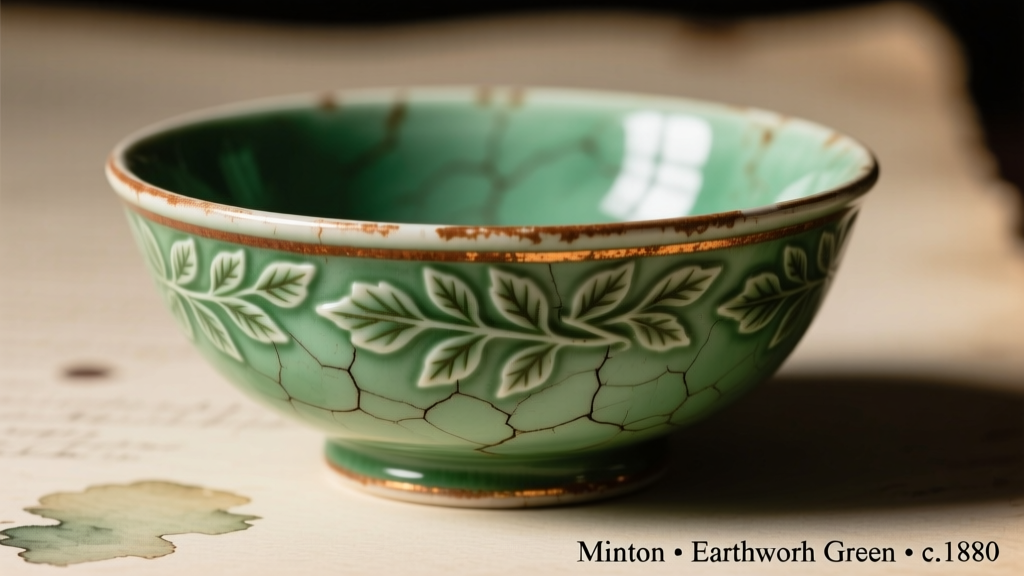
Minton Bowl: Decoding the Earthworm Green Leaf Roulette Rim Band with Rust Band — A Technical & Historical Analysis of the 3¾ × 7¼ Inch Porcelain Masterpiece
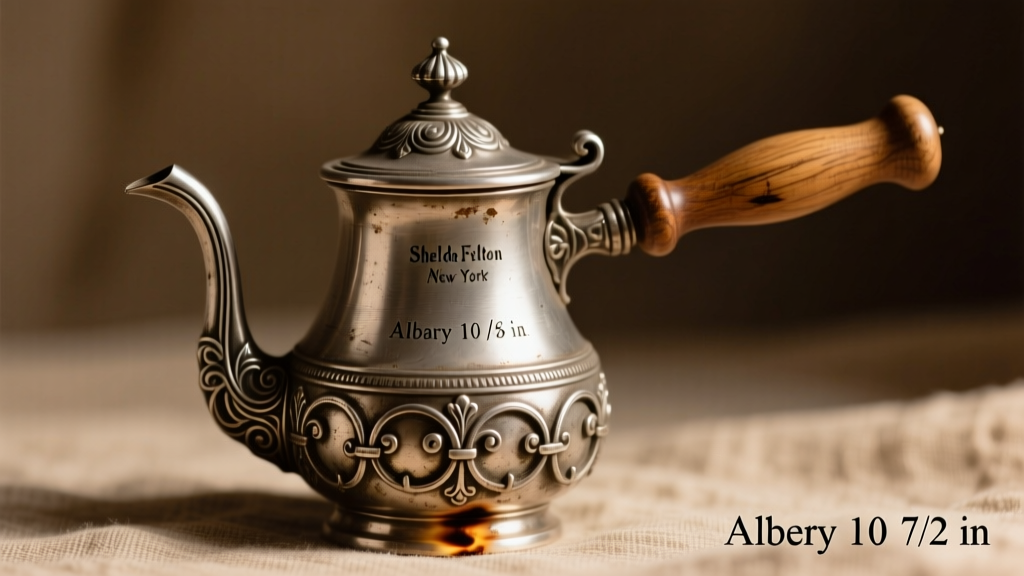
Sheldon Feltman’s Albany Pewter Coffeepot: A 10½-Inch Masterpiece of American Colonial Revival Craftsmanship
The Toy Sewing Machine Betsy Ross Electric Carrying Case: A Mid-Century American Icon of Play, Craft, and Design
Anyone Know This Artist? Decoding Unsigned Vintage Jewelry and Watches from the Mid-Century Studio Craft Movement
Music Machines: Automata, Musical Watches, and Mechanical Marvels of the 18th–20th Centuries
The Minton Majolica Pineapple Pitcher No. 538: A Study in Victorian Ceramic Innovation and Botanical Realism
Tiffany Studios Lantern Lights Model 133100: Design, Provenance, and Market Significance
Wheatley Tile Fleur De Lis Curdled Cranberry Gray Blue Ground Square 6 In: A Collector’s Guide to Mid-Century American Art Tile