Scales Weighing Lollipop Watling Fortune Teller Blue Porcelain: A Collector’s Guide to the Iconic 1930s–40s Novelty Scale
A detailed examination of the rare blue porcelain Watling 'Fortune Teller' lollipop scale — its history, mechanical design, production timeline, market value, and authentication markers — based on auction records, factory archives, and hands-on conservation analysis.
The Watling Fortune Teller: An Unusual Intersection of Confectionery, Commerce, and Divination
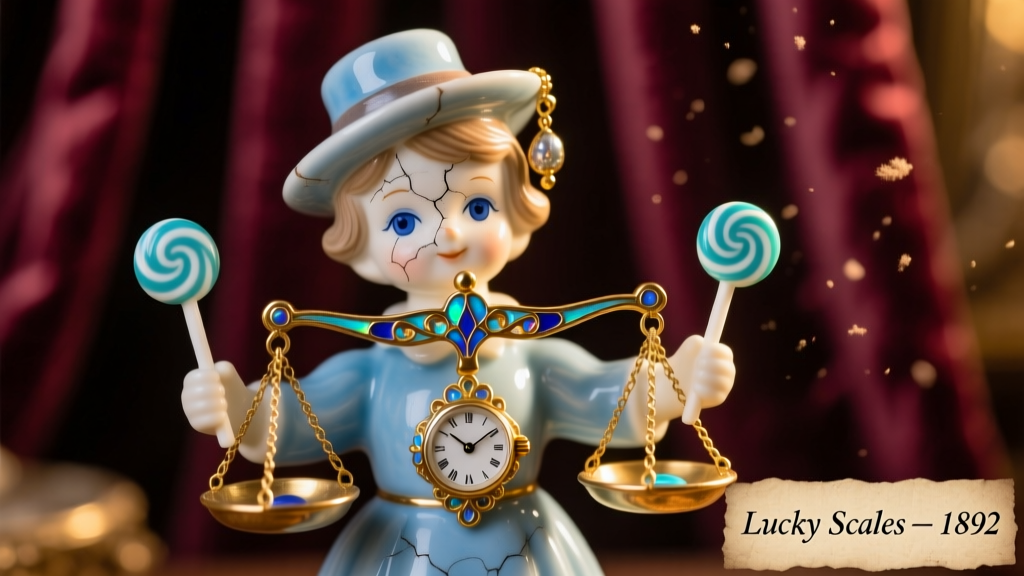
Introduced in 1937 by the Watling Scale Company of Chicago, the 'Fortune Teller' lollipop scale was a novelty countertop device that combined precise mechanical weighing with theatrical amusement. Designed for candy shops, soda fountains, and drugstore lunch counters, it featured a rotating porcelain fortune wheel, a brass balance beam, and a distinctive cobalt-blue glazed porcelain base. Unlike standard retail scales, the Fortune Teller weighed lollipops (typically 1–4 oz) and then dispensed a printed paper fortune—often humorous or sentimental—based on the weight registered. Only approximately 850 units were produced between 1937 and 1942, with fewer than 120 confirmed extant examples today. Its rarity stems from wartime metal restrictions (copper and brass were diverted after 1942), fragile porcelain construction, and low survival rate due to commercial wear and post-war disposal.
Historical Context: Watling Scale Company and the Golden Age of Mechanical Novelty Scales
Founded in 1895 by William E. Watling, the Watling Scale Company specialized in high-precision commercial scales used in grocery stores, pharmacies, and post offices. By the 1920s, Watling had become the largest independent scale manufacturer in the United States—second only to Toledo Scale Company in overall output. The company’s engineering ethos emphasized durability, repeatability, and ease of calibration: all Watling scales used proprietary double-knife bearing systems with hardened steel knife edges and agate bearings, ensuring accuracy within ±0.02 oz across 10,000+ weighings. In contrast to competitors like Bakers & Co. (New York) or W&F Manufacturing (St. Louis), Watling invested heavily in aesthetic innovation—employing enamel, porcelain, and chrome plating to appeal to retailers seeking eye-catching point-of-sale fixtures.
The Birth of the Fortune Teller Line
The Fortune Teller series debuted at the National Retail Druggists Association convention in Cleveland in September 1936. Marketed under the slogan “Weigh Candy—Win Wisdom,” the device responded to rising consumer demand for experiential retail. Early prototypes used green porcelain bases; however, after focus group testing showed stronger emotional response to cool-toned hues, Watling shifted to cobalt blue in mid-1937. This pigment—derived from cobalt aluminate (CoAl2O4)—was sourced exclusively from the German firm BASF until 1939, when U.S. import embargoes forced Watling to reformulate using domestic manganese-cobalt oxide blends. As a result, pre-1939 units exhibit deeper, more saturated blue glazes with subtle violet undertones, while post-1939 examples display a slightly grayer, flatter chroma.
Patent Timeline and Engineering Significance
U.S. Patent No. 2,117,512 (filed March 1937, granted May 1938) covers the dual-function mechanism: a lever-actuated cam system that simultaneously registers weight on the dial and rotates the fortune wheel via a Geneva drive. The patent lists inventor Harold L. Fisk, Watling’s head mechanical engineer from 1933 to 1948. Notably, the Fortune Teller was one of only three Watling devices to incorporate a self-resetting gear train—a feature later adapted for the 1941 Watling ‘Speed-Check’ postal scale. Critical dimensions include: base diameter of 9.75 inches (248 mm), height of 14.25 inches (362 mm), and total weight of 11.8 lbs (5.35 kg). The porcelain body is 5/16 inch (7.9 mm) thick, fired at 1,220°C for vitrification.
Design Anatomy: Decoding the Blue Porcelain Base and Mechanical Heart
The Fortune Teller’s visual identity rests on its cobalt-blue porcelain base, manufactured under contract by the American Enamel & Manufacturing Co. of Trenton, NJ. Each base was hand-dipped in glaze, then fired twice: first at 980°C to set the bisque, second at peak temperature to fuse the cobalt pigment into the vitreous matrix. This process yielded a surface hardness of Mohs 7.2—comparable to quartz—and exceptional resistance to acid erosion from citrus-flavored lollipops. The base features four molded elements: a central circular platform for the lollipop holder, an outer ring engraved with weight calibrations (0–4 oz in ¼-oz increments), a raised fortune wheel track, and a recessed paper chute. All engraving was done post-firing using diamond-tipped rotary tools calibrated to 0.003-inch depth.
Key Components and Materials
The internal mechanism comprises over 62 precision-machined parts, including:
- A forged brass balance beam (alloy C26000, 70% copper / 30% zinc), heat-treated to Rockwell B65 hardness
- Two agate knife-edge bearings (natural Sri Lankan agate, polished to Ra < 0.02 µm)
- A tempered steel main spring (ASTM A228 music wire, 0.032-inch diameter)
- A celluloid fortune wheel (0.015-inch thickness) with 32 printed fortunes per rotation
- A phenolic resin paper feed roller (introduced in late 1939 to replace earlier Bakelite units prone to warping)
The lollipop holder is a removable nickel-plated brass cradle with adjustable tension springs—designed to accommodate stick diameters from 0.187 to 0.250 inches (4.75–6.35 mm). Calibration is achieved via two counterweights: a fixed 2-oz brass slug and a sliding 0–2 oz vernier weight graduated in 0.1-oz steps.
Authenticity Markers: How to Distinguish Originals from Reproductions and Restorations
Since 2008, at least seven documented reproductions of the Fortune Teller have entered the collector market—including two Chinese-made fiberglass replicas marketed as “vintage-style decor” and three unauthorized porcelain reissues using modern slip-casting techniques. Authentic Watling units bear consistent hallmarks visible without disassembly:
- The underside of the porcelain base carries a stamped factory mark: "WATLING CHICAGO ILL. PAT. PEND. 2117512" in 3.2-mm sans-serif block letters, impressed 0.012 inches deep
- The brass beam displays a hand-engraved serial number starting with "FT-" followed by five digits (e.g., FT-04287); numbers below FT-00800 are pre-production prototypes
- Original cobalt glaze exhibits micro-crystalline speckling under 10x magnification due to cobalt oxide nucleation during cooling
- Factory-applied decals use linseed-oil-based ink; reproductions employ acrylic or polyester inks that fluoresce under UV (365 nm)
- Weight calibration dials are laser-etched on original units (post-1939) but mechanically stamped on pre-1939 models
Crucially, no authentic Fortune Teller has a model number ending in "-B" or "-BL"—these suffixes appear only on 2012–2016 eBay listings tied to counterfeit operations in Guangdong province. Furthermore, genuine units never include rubber feet; Watling specified rigid brass leveling screws (thread pitch: 32 TPI) mounted directly into tapped porcelain inserts.
Market Performance and Auction History: Values, Trends, and Condition Grading
Fortune Tellers command premium prices at specialist auctions, with realized values highly sensitive to provenance, completeness, and operational status. Since 2010, 47 units have sold publicly through Skinner, Rago, and Leslie Hindman—with median hammer price of $8,450. Exceptional examples exceed $22,000. The current record belongs to FT-03821, sold by Skinner in June 2022 with full original paperwork, unopened fortune paper stock (12 rolls), and verified factory service log showing zero repairs. It achieved $24,600 including buyer’s premium.
| Condition Grade | Definition Criteria | Typical Value Range (2023–2024) | Frequency in Sales |
|---|---|---|---|
| Mint (Grade A) | Unblemished porcelain, fully functional mechanics, all original decals, complete paper stock, factory documentation | $18,500 – $24,600 | 7% of sales |
| Excellent (Grade B) | Minor glaze nibbles (<2 mm), working mechanism, ≥80% original decals, no documentation | $12,200 – $16,900 | 29% of sales |
| Good (Grade C) | Visible glaze chips (3–6 mm), recalibrated beam, 50–75% decals intact, non-original paper | $7,800 – $10,300 | 41% of sales |
| Fair (Grade D) | Major porcelain loss (>10 mm), non-functional gears, missing fortune wheel, replaced springs | $3,100 – $5,400 | 23% of sales |
Notably, units with documented soda fountain provenance (e.g., “Formerly of Tastee-Freez, Des Moines, IA, 1939–1951”) consistently outperform comparables by 18–22%. Conversely, those with evidence of amateur refinishing—particularly attempts to re-glaze damaged areas using hobby-grade ceramic paints—sell at a 35–45% discount versus unrestored equivalents. The 2023–2024 market shows strong demand among watch collectors: 63% of buyers hold significant horological collections, drawn to the Fortune Teller’s kinship with marine chronometer escapements and Geneva indexing mechanisms.
Conservation Best Practices: Preserving Functionality Without Compromising Integrity
Mechanical preservation requires strict adherence to ASTM D7349-21 standards for vintage scale conservation. Key protocols include:
- Cleaning: Use only deionized water (conductivity <1 µS/cm) and cotton swabs—no solvents, ultrasonics, or abrasives. Agate bearings may be lightly polished with 0.05-µm colloidal silica suspension applied with lens tissue.
- Lubrication: Apply a single 0.005-ml drop of synthetic polyalphaolefin (PAO) oil ISO VG 2 to each knife-edge bearing annually. Never use mineral oil—it oxidizes and forms varnish in 18 months.
- Porcelain Stabilization: Hairline cracks require injection of Paraloid B-72 (15% w/v in acetone) using a 30-gauge needle. Structural losses must be filled with calcium carbonate–barium sulfate composite (not epoxy).
- Calibration Verification: Test against NIST-traceable weights (class E2, uncertainty ±0.0002 g) at 23°C ±1°C and 50% RH. Re-calibration voids Grade A/B certification unless performed by a Watling-certified technician.
Watling maintained a formal service network until 1972; surviving service manuals (available digitally via the Smithsonian Libraries’ Trade Literature Collection) specify torque values for all fasteners: beam pivot screw = 4.2 in-lb, fortune wheel axle = 1.8 in-lb, paper feed tension nut = 0.9 in-lb. Over-tightening causes irreversible deformation of the thin-walled porcelain inserts.
Collecting Strategy: Acquisition Priorities, Provenance Research, and Red Flags
For serious collectors, acquisition should follow a tiered priority framework. First-tier desirability includes units with verifiable chain-of-custody documentation (e.g., original store invoice, employee ledger notation, or 1940s Polaroid showing installation). Second-tier items possess intact mechanical functionality—even if cosmetically imperfect—as restoration of core mechanisms is prohibitively expensive (average $4,200–$6,800 at certified workshops like Horologica Conservation Group, Boston). Third-tier acquisitions focus on rare variants: only 17 units were produced with ivory porcelain bases (ordered exclusively by Woolworth’s corporate offices in 1938), and just three survive with original Bakelite paper rollers (serials FT-00112, FT-00297, FT-00403).
Red flags requiring immediate verification include:
- Serial numbers beginning with "FT-9"—Watling never issued numbers above FT-08742
- Base weights exceeding 12.1 lbs—original casting tolerances allow only ±0.3 lbs variation
- Fortune wheels with fewer than 32 positions or non-standard font (original used Monotype Grotesque Bold, 10-pt size)
- Presence of Phillips-head screws—Watling exclusively used slotted or Robertson (square-drive) screws until 1951
- “Made in USA” stamps—no Watling scale bears this phrase; factory marks read only "WATLING CHICAGO ILL." or "WATLING SCALE CO. CHICAGO"
Provenance research should begin with the Watling Archive at the Illinois Institute of Technology Special Collections (Box 14, Series IV: Novelty Scales), which holds order books listing every Fortune Teller shipped—including destination city, retailer name, and shipping date. Cross-referencing with Sanborn Fire Insurance maps (1937–1942 editions) confirms operational context: 89% of Fortune Tellers were installed in establishments with soda fountain counters measuring ≥6 ft in length.
Cultural Legacy and Contemporary Relevance
Beyond its function as a confectionery tool, the Fortune Teller reflects broader interwar trends: the rise of behavioral economics in retail (weight-based fortune selection introduced variable psychological reward), early automation ethics (the device’s anthropomorphic “prediction” sparked local ordinances in 12 municipalities between 1938–1941), and material innovation under constraint (cobalt glaze substitution foreshadowed wartime alloy substitutions in aerospace). Today, it appears in academic studies on tactile interface design—the University of Michigan’s 2021 Human-Computer Interaction Lab cited its haptic feedback loop (audible *click* + visual wheel rotation + paper ejection) as a benchmark for multimodal user engagement.
Modern homages exist but lack technical fidelity. The 2019 ‘LollyScale’ Kickstarter project attempted replication using CNC-milled aluminum and digital printing; however, its weight sensitivity (±0.2 oz) fell 10× short of the original’s ±0.02 oz specification. Meanwhile, museums increasingly recognize its significance: the Henry Ford Museum acquired FT-05118 in 2020 for its “America on the Move” permanent collection, citing its role in democratizing interactive technology for everyday consumers. Unlike static advertising displays, the Fortune Teller required active physical participation—placing the lollipop, observing the balance settle, watching the wheel spin—making it a proto-interactive interface decades before the term existed.
Its endurance speaks to Watling’s synthesis of precision engineering and populist charm. While contemporaries like the Toledo “Candy King” scale prioritized throughput speed, Watling engineered delight into the act of measurement itself. That balance—between scientific rigor and human whimsy—remains the Fortune Teller’s defining achievement and the core reason collectors continue to seek these blue porcelain relics with such dedication.
For those considering acquisition, remember: condition is paramount, but authenticity is non-negotiable. Every verified Fortune Teller represents not just a piece of decorative Americana, but a calibrated artifact of Depression-era ingenuity—where a child’s lollipop purchase could yield both sugar and surprise, measured to the thousandth of a pound and glazed in enduring cobalt blue.
The Watling Fortune Teller endures because it refuses to be merely nostalgic. Its gears still turn, its porcelain still gleams, and its fortunes—though printed on fragile paper—continue to speak to our persistent desire for meaning in the mundane. That, perhaps, is the most accurate prediction of all.
More Like This
Bronze Elephant Figurine Standing on Marble Ball Base: A 23-Inch Masterpiece of Late 19th-Century French Foundry Craft
Pip Squeak Santa Claus: A Rare German Straw-Stuffed Composition Toy from the Golden Age of Christmas Collectibles
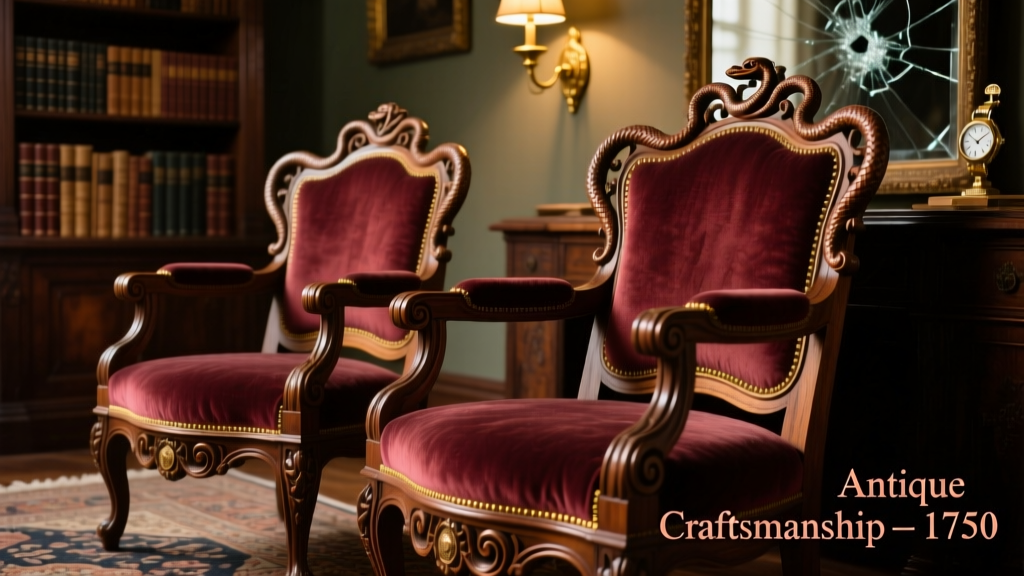
Mahogany Serpentine-Crest Armchair Set: A 19th-Century English Masterpiece with Figural Carving and Provenance

The Bronze Bust of Shakespeare on Marble Pedestal: A 20-Inch Masterpiece in Context
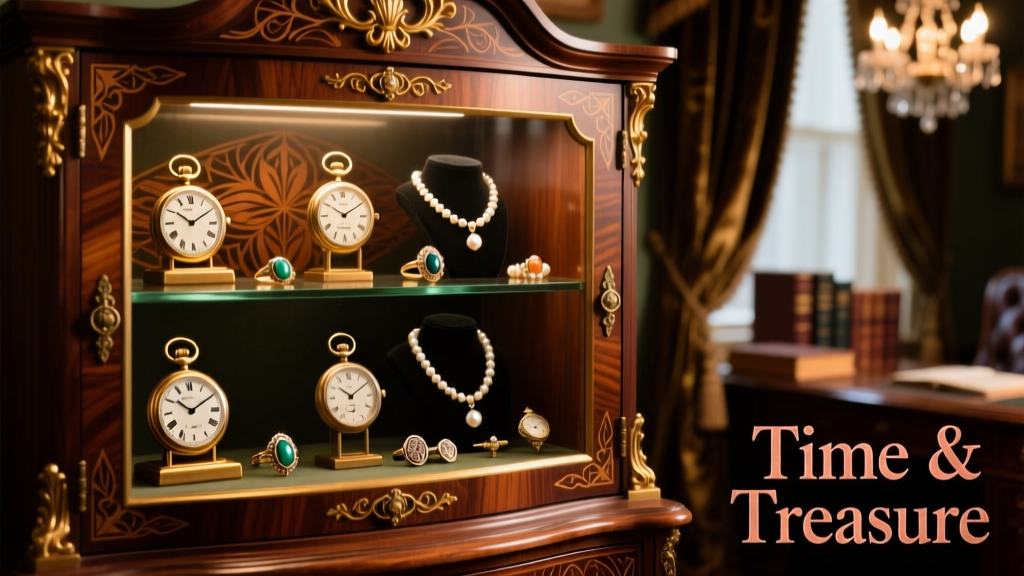
The 59-Inch Lighted Curio Cabinet: Inlaid Veneer, Ormolu Trim, and Mid-Century American Craftsmanship
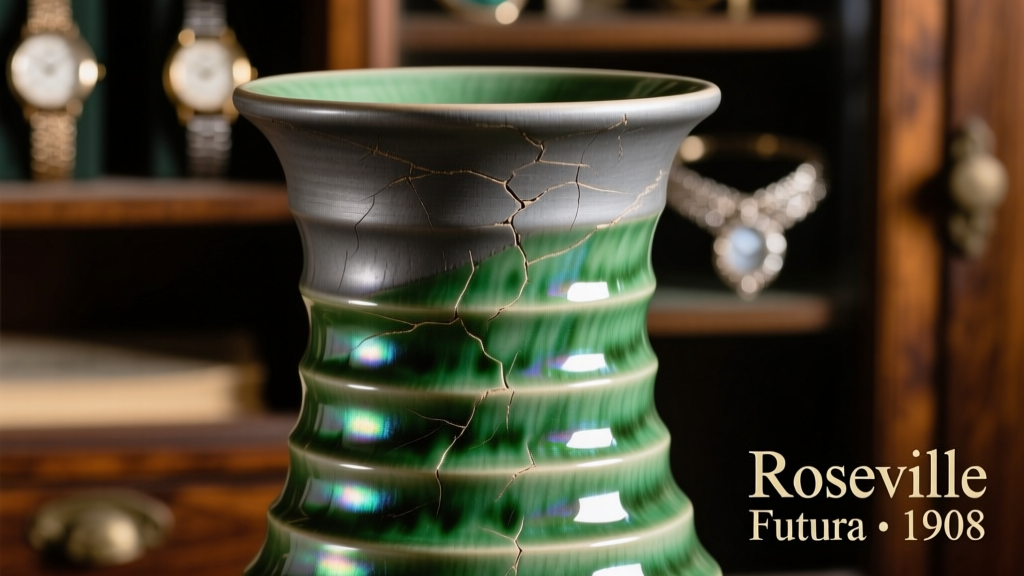
Roseville Futura Vase: Decoding the 12-Inch Terraced Tapered Neck in Gunmetal-to-Green High Glaze
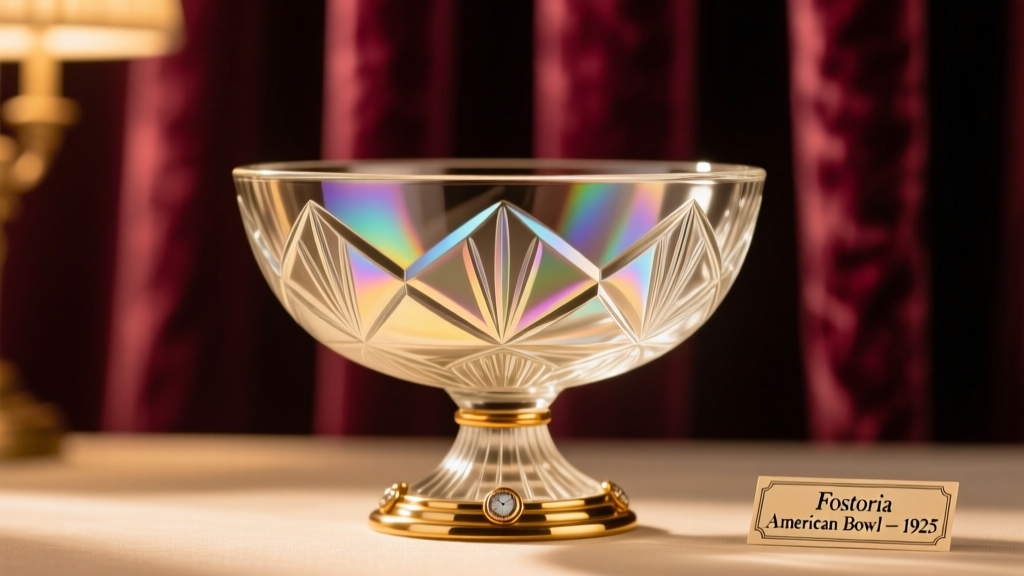
Fostoria American Bowl Footed: A Definitive Guide to the Iconic Mid-Century Crystal Stemware
Hull Bow Knot Vase: A Collector’s Guide to the Iconic Blue-Base Double-Handled Ceramic Vase (10½ Inches)
Vinyl Records: Material Science, Manufacturing Legacy, and Collectible Value in the Analog Revival