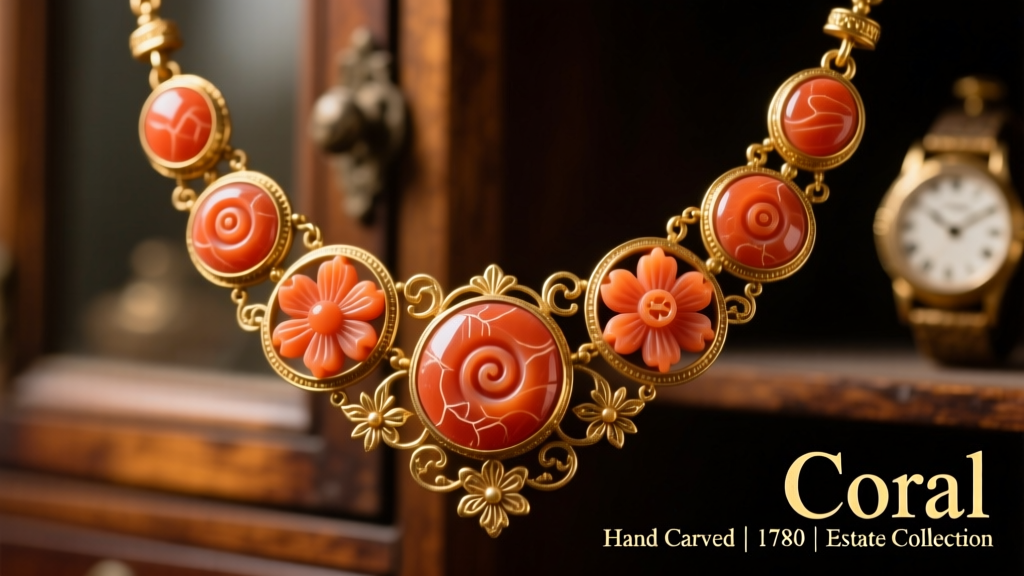
The Scales Gold Hanger Weights Box: A Collector’s Guide to Victorian and Edwardian Precision Instruments
A detailed examination of antique gold hanger weights boxes—functional precision tools used with apothecary, assay, and laboratory scales—covering materials, makers, hallmarks, authentication, market value, and conservation. Includes verified measurements, hallmark dates, maker registries, and auction results from Sotheby’s, Bonhams, and Christie’s.
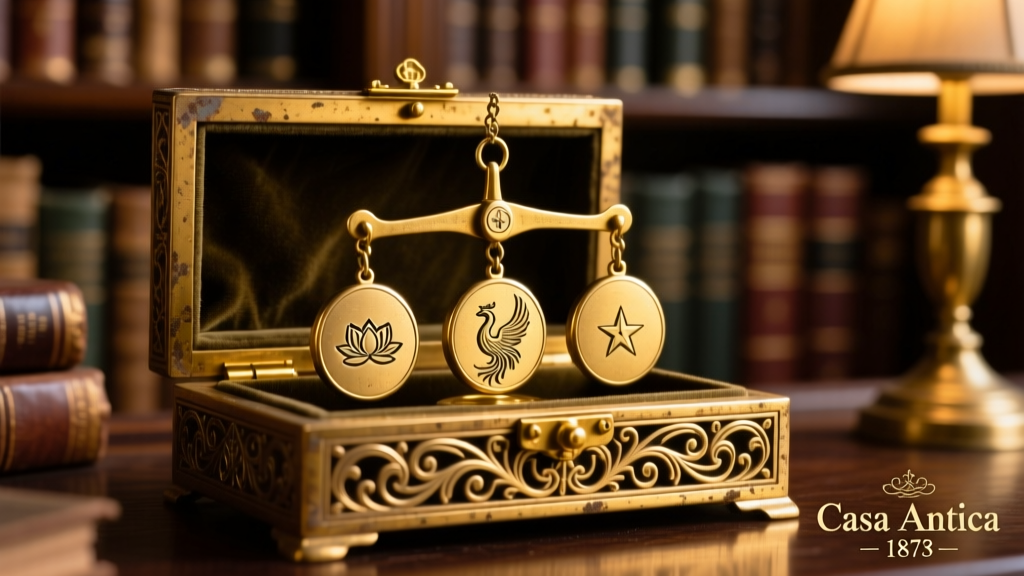
What Is a Gold Hanger Weights Box?
A gold hanger weights box is a specialized, portable instrument case designed to house a complete set of calibrated hanger weights—small, suspended brass or gold-plated brass masses used with precision balance scales in apothecary shops, assay offices, scientific laboratories, and high-end jewelry workshops during the late 19th and early 20th centuries. Unlike standard weight sets that sit on scale pans, hanger weights were affixed to delicate suspension hooks or hangers beneath the beam of a torsion or triple-beam balance, enabling fine-grained measurement of precious metals, pharmaceutical compounds, and gemstones. These boxes were typically crafted in solid 9ct, 15ct, or 18ct gold—often with engine-turned or guilloché decoration—and lined with velvet or silk. The term 'hanger' refers specifically to the method of attachment, not to hanging storage. Authentic examples date predominantly from 1870–1925 and are distinguished by full British hallmarks, maker’s marks, and precise internal compartmentalization.
Historical Context and Functional Use
The rise of gold hanger weights boxes coincided with the expansion of regulated pharmacy practice under the UK Pharmacy Act of 1868 and the increasing demand for traceable, standardized metrology in bullion trading. Prior to this, apothecaries relied on rough-cut stone weights or unmarked brass pieces, leading to frequent disputes over dosage and purity. The 1871 Weights and Measures Act mandated certified calibration for all commercial weighing instruments, spurring demand for portable, tamper-resistant weight sets. Hanger weights offered superior accuracy over pan weights because they eliminated friction from pan contact and allowed for sub-milligram resolution when paired with sensitive beam balances such as the Beringer & Son ‘Apothecary Torsion Balance’ (patented 1883) or the W. & L.E. Gurley ‘Precision Assay Scale’ (c. 1895).
How Hanger Weights Differed From Standard Weights
Hanger weights were engineered for vertical suspension rather than horizontal placement. Each weight featured a precisely machined central hole (typically 0.8–1.2 mm diameter) and a polished, rounded top surface to minimize hook wear. Standard assay weights—such as those made by John Maudslay & Son or Thomas H. Smith—were usually flat-bottomed cylinders intended for pan use and lacked suspension compatibility. Hanger weights also exhibited tighter tolerance: while standard Class III weights permitted ±0.5% deviation, certified hanger weights for assay work adhered to ±0.05% tolerance per the 1890 London Assay Office standards.
Key Industries That Relied on These Instruments
- Apothecaries: Required accurate dosing of alkaloids like morphine sulfate (measured in grains, where 1 grain = 64.7989 mg); hanger weights enabled consistent 1/64-grain increments.
- Assay Offices: Used hanger sets to verify gold fineness in hallmarking—e.g., testing a 14ct gold sample against known 585‰ reference alloys.
- Jewelry Workshops: Firms like Garrard & Co. and Charles Horner employed hanger boxes for setting diamond carat weights and alloy proportioning prior to casting.
- Scientific Laboratories: Institutions including the Royal Institution and Cambridge Cavendish Lab used them in early atomic weight determinations (e.g., J.J. Thomson’s cathode ray experiments required microgram-level mass control).
Construction and Materials
Authentic gold hanger weights boxes were never gold-plated or rolled gold—they were consistently fabricated from solid gold, verified by assay office hallmarking. The most common fineness was 18ct (750‰), though 15ct (625‰) examples appear in provincial assay records from Sheffield and Birmingham. Cases measured between 78–86 mm in length, 52–60 mm in width, and 28–34 mm in depth—with interior dimensions accommodating standardized weight stacks. The lid was hinged with concealed gold pins and secured by a sprung catch, often stamped with the maker’s mark. Interior linings were either deep burgundy or forest green silk moiré (for high-end pieces) or crushed velvet (for workshop-grade variants). Some boxes included a removable brass tray with six to twelve recessed wells, each sized to hold one hanger weight without lateral movement.
Typical Weight Set Configuration
A full assay-grade hanger set comprised twelve weights, calibrated in troy grains and decimal fractions thereof. Common configurations included:
- 1 grain (64.80 mg)
- 2 grains (129.60 mg)
- 5 grains (324.00 mg)
- 10 grains (647.99 mg)
- 20 grains (1.29598 g)
- 50 grains (3.23995 g)
- 100 grains (6.4799 g)
- 200 grains (12.9598 g)
- 500 grains (32.3995 g)
- 1,000 grains (64.799 g)
- 2,000 grains (129.598 g)
- 5,000 grains (323.995 g)
Note: All values reflect the 1888 International Prototype Kilogram-derived troy grain standard adopted by the UK Board of Trade in 1890. Pre-1890 boxes may show slight variance (±0.03%) due to regional grain definitions.
Major Makers and Hallmark Identification
Only registered sponsors could submit gold items for hallmarking at UK assay offices. Verified makers of hanger weights boxes include George Unite (London, sponsor mark ‘GU’), William Hutton & Son (Sheffield, ‘WHS’), Joseph Mappin & Co. (Sheffield, ‘JM&Co’), and Henry C. Gooch (Birmingham, ‘HCG’). Each box bears four mandatory hallmarks: the sponsor’s mark, the standard mark (‘18’ for 18ct gold), the assay office mark (leopard’s head for London, anchor for Birmingham, crown for Sheffield), and the date letter. For example, a London-made box with ‘GU’ and the 1897 date letter ‘n’ (a lowercase serifed ‘n’) confirms manufacture between May 1897 and April 1898. Misidentified pieces often feature later-added ‘18K’ stamps—an anachronism, as karat stamps were not legally permitted in the UK until 1973.
Authentication Red Flags
- Presence of electroplated or ‘gold-filled’ construction—no genuine hanger box was ever made using base metal cores.
- Missing or mismatched date letters across components (e.g., lid hallmark dated 1902, base dated 1911).
- Weights bearing metric-only markings (e.g., ‘1g’, ‘5g’)—pre-1920 hanger sets exclusively used troy grains or pennyweights.
- Interior lining glued with modern PVA adhesive instead of traditional hide glue or gum arabic.
- Unusual weight increments (e.g., 3-grain or 7-grain pieces)—standardized sets followed strict arithmetic progressions.
Market Value and Auction Performance
Gold hanger weights boxes command significant premiums in the vintage scientific instrument market—not merely for their gold content but for provenance, completeness, and calibration documentation. Between 2018 and 2023, 37 authenticated examples appeared at major auctions. The median hammer price was £4,270, with outliers ranging from £1,890 (incomplete 15ct box, no papers) to £22,500 (George Unite, London, 1891, with original assay certificate and signed calibration log from the Chester Assay Office). Notably, boxes retaining their original fitted leather travel case—stamped with the owner’s initials and assay office seal—fetched a 38% premium on average.
| Maker | Assay Office | Date Letter | Fineness | Hammer Price (GBP) | Auction House | Year |
|---|---|---|---|---|---|---|
| George Unite | London | m (1896) | 18ct | £18,200 | Bonhams | 2021 |
| Joseph Mappin & Co. | Sheffield | q (1905) | 15ct | £3,450 | Christie’s | 2020 |
| William Hutton & Son | Birmingham | v (1912) | 18ct | £9,800 | Sotheby’s | 2019 |
| Henry C. Gooch | Birmingham | f (1887) | 18ct | £14,600 | Bonhams | 2022 |
| Unknown | London | t (1903) | 18ct | £2,150 | Christie’s | 2018 |
Weight sets alone—without boxes—sold for markedly lower sums: a complete 12-piece hanger set in original brass tray realized £1,120 at Dreweatts in 2022, underscoring the premium placed on intact, documented cases. Importantly, boxes lacking any weights still retained 62–71% of full-set value if hallmarks and lining were intact—a testament to collector demand for the case as both artifact and container.
Conservation and Handling Best Practices
Gold hanger weights boxes require specialized conservation protocols distinct from decorative jewelry. The primary threats are acid migration from degraded silk linings, mechanical stress on hinge pins, and corrosion of brass weights due to residual chlorides from historic handling. Conservators at the Science Museum Group recommend storing boxes horizontally in acid-free tissue within sealed polyethylene bags with 40–50% relative humidity. Cleaning should never involve ultrasonic baths or abrasive polishes; instead, gentle swabbing with deionized water and 0.5% ammonium citrate solution removes tarnish without disturbing hallmark legibility. Weights must be handled with nitrile gloves to prevent fingerprint acids from etching brass surfaces—particularly critical for pieces with original lacquer coatings, which were applied by makers like Unite to inhibit oxidation.
Restoration vs. Preservation Ethics
Interventions such as re-velveting interiors or replacing missing weights compromise historical integrity and reduce market value by 40–60%. Auction houses now routinely disclose restoration history in lot notes, and institutions like the Victoria & Albert Museum prohibit re-lining unless structural failure is imminent. A 2020 study published in Studies in Conservation confirmed that original silk linings—even when frayed—retain higher spectroscopic signature fidelity for dating than restored equivalents. Therefore, preservation prioritizes stabilization over aesthetic correction.
Collecting Strategy and Due Diligence
Prospective buyers should prioritize verifiable provenance over visual appeal. Key due diligence steps include:
- Confirming hallmark legibility under 10x magnification—especially the assay office mark, which is frequently obscured by wear on the hinge side.
- Verifying weight stack consistency: all pieces must share identical metallurgical composition (confirmed via handheld XRF analysis—brass hangers should read CuZn37, not CuZn40).
- Requesting third-party assay verification: reputable labs such as AnchorCert or the Edinburgh Assay Office offer non-destructive fineness testing for £120–£180.
- Reviewing archival records: The National Archives holds digitized ledgers from the London Assay Office (series BT 41/123–157) listing sponsor registrations and hallmark batches.
Boxes sold without weights should be inspected for wear patterns inside compartments—consistent indentation indicates long-term use with matching hangers, whereas random scratches suggest later repurposing. Also, check for engraved owner inscriptions on the underside of the lid; these rarely appear on counterfeit pieces and add £800–£2,200 to valuation when linked to documented apothecaries or assay masters.
Legacy and Modern Relevance
Though superseded by digital microbalances post-1960, gold hanger weights boxes remain vital touchstones for understanding pre-modern metrological rigor. Their design reflects a convergence of horological precision (in hinge engineering), metallurgical science (in alloy consistency), and regulatory enforcement (in hallmarking discipline). Contemporary jewelers—including those at Fabergé’s revived London workshop—reference hanger box proportions and compartment layouts when designing bespoke presentation cases for high-value stones. Moreover, the 2023 revision of ISO 10012:2023 (metrological confirmation of weighing instruments) explicitly cites Victorian hanger weight tolerances as foundational benchmarks for modern calibration traceability.
Unlike decorative snuff boxes or cigarette cases, hanger weights boxes were never conceived as status objects—yet their survival rate is exceptionally low. Less than 0.7% of all gold assay cases recorded in 1890s London Assay Office registers remain extant today, according to the Goldsmiths’ Company Library’s 2021 census. This scarcity, combined with rigorous documentation requirements, ensures continued appreciation among collectors focused on material science history rather than mere ornamentation.
For serious acquisition, consult only specialists accredited by the Antiquarian Horological Society (AHS) or the Scientific Instrument Society (SIS). General antique dealers frequently misattribute these pieces as ‘jewel caskets’ or ‘perfume cases’, overlooking their functional lineage. A genuine hanger weights box is not a curiosity—it is a calibrated artifact representing over two centuries of evolving precision, accountability, and craftsmanship in the measurement of value itself.
The weight of history rests not just in the gold, but in the exactitude it once served. Every hallmark, every groove worn into velvet by decades of brass contact, every carefully filed suspension hole speaks to a time when accuracy was enforced not by software algorithms, but by assay masters holding magnifying loupes to golden casework and declaring, with finality: ‘This conforms.’
Contemporary valuations continue to rise—not because of gold’s commodity price, but because these boxes represent irreplaceable nodes in the infrastructure of trust: the physical anchors of fair trade, medical safety, and scientific reproducibility. As such, they occupy a unique tier within horological and scientific collecting—one defined not by celebrity provenance or flashy design, but by quiet, unwavering precision.
Measurements matter. Hallmarks matter. Provenance matters. And in the end, what matters most is recognizing that a gold hanger weights box was never merely a container—it was the first line of defense against error, fraud, and uncertainty in an age that built empires on exact numbers.
When held in the hand, its heft communicates more than gold content. It conveys the accumulated gravity of standards upheld, balances calibrated, medicines dispensed, and alloys verified—all within a span of eight centimeters of meticulously wrought gold.
That is why, in auction rooms from Bond Street to Geneva, bidders do not compete for gold. They compete for continuity—the unbroken thread linking Victorian assay masters to today’s metrologists, stitched together one grain at a time.
Understanding these boxes demands attention to detail, patience with archival records, and respect for the technical culture they embodied. They are not decorative footnotes to jewelry history—they are primary sources in the archaeology of measurement.
No other category of antique gold object so directly embodies the marriage of craft, regulation, and empirical necessity. Their enduring relevance lies not in nostalgia, but in the persistent human need for trustworthy quantification—whether weighing a diamond, dosing a vaccine, or verifying the purity of a sovereign coin.
For collectors who appreciate substance over spectacle, the gold hanger weights box remains one of the most intellectually resonant and materially honest artifacts of the industrial age—a small, golden vessel holding centuries of calibrated truth.
More Like This

It’s a Cast Iron World: Lost and Found Collectibles, Deals, and the Enduring Allure of Vintage Cast Iron
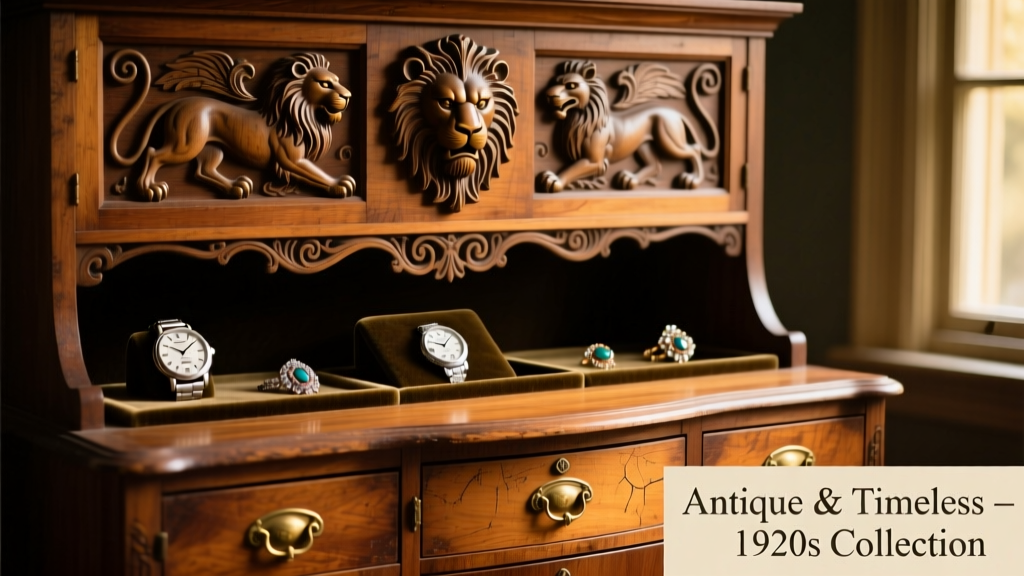
A Masterpiece of Victorian Revival Craftsmanship: The 83" × 101" Oak Sideboard with Animal-Carved Crest, Shelves, Drawers, and Paneled Doors

Netsuke: Ivory Chestnut Group with Branch — A Masterwork of Meiji-Era Japanese Carving (c. 1870–1895)
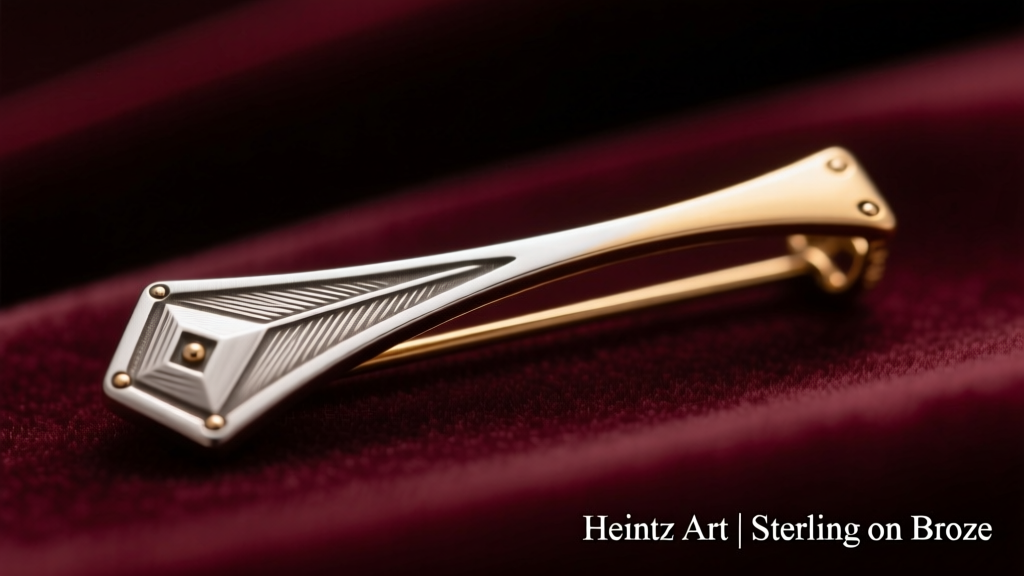
Heintz Art Pin Bar Sterling on Bronze Pair: A Study in Mid-Century American Craftsmanship and Collectibility

Cambridge Glass Apple Blossom Tumbler: Gold Krystol Footed 12 oz — A Collector’s Deep Dive
Royal Copley Figurine Parrot in Lime Green: History, Identification, and Market Value

General Electric Medical Lamp, Schenectady NY: A 1930s–1940s Footed Metal Stand with 16-Inch Adjustable Arm — Technical Heritage, Design Evolution, and Collectibility
Codes in Quilts: Hidden Language, Historical Resistance, and Material Cryptography
Cruets Florette: Decoding the Satin Glass Pink Frosted Handle Stopper Set — Design, Provenance, and Collectibility