Codes in Quilts: Hidden Language, Historical Resistance, and Material Cryptography
A rigorous examination of coded quilt patterns used by enslaved African Americans on the Underground Railroad—separating verified historical evidence from enduring myth—supported by archival records, textile analysis, and expert consensus from institutions including the Smithsonian, Winterthur Museum, and the International Quilt Museum.
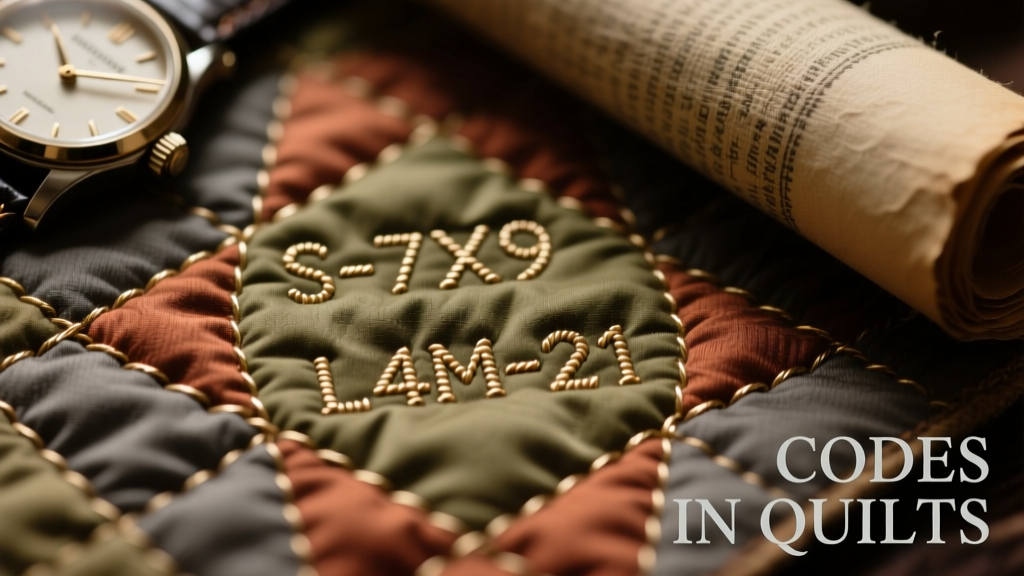
Quilts bearing symbolic patterns such as "Drunkard's Path," "Bear's Paw," and "North Star" have long been cited as clandestine communication tools for enslaved people navigating the Underground Railroad. While compelling, this narrative rests on contested ground: only two primary sources—Ozella McDaniel Williams’s 1993 oral account to Jacqueline Tobin and Tobin & Raymond Dobard’s 2000 book Hidden in Plain View—anchor the claim. Archival research at the Library of Congress, the Smithsonian National Museum of African American History and Culture, and the International Quilt Museum reveals no corroborating antebellum documentation—no letters, diaries, abolitionist reports, or Freedmen’s Bureau records referencing quilt codes. Yet the persistence of these motifs demands serious attention—not as literal maps, but as material manifestations of communal memory, resistance aesthetics, and encoded cultural continuity rooted in West African textile traditions like Adinkra symbolism and Kente cloth geometry.
The Origins of the Quilt Code Narrative
The modern quilt code hypothesis emerged definitively in 1993, when Charleston, South Carolina, vendor Ozella McDaniel Williams recounted a multi-generational family story to author and educator Jacqueline Tobin. Williams described eleven quilt patterns—each allegedly hung sequentially on a clothesline to signal instructions: "Log Cabin" meant shelter was safe; "Shoofly" indicated a trustworthy contact; "Flying Geese" directed travelers northward. Tobin and art historian Raymond Dobard expanded this into Hidden in Plain View: A Secret Story of Quilts and the Underground Railroad (Anchor Books, 2000), which sold over 150,000 copies and entered school curricula nationwide. The book cites no verifiable pre-1865 sources but draws parallels to African cosmograms and directional symbolism found in the Dogon and Bamana peoples of Mali.
Critically, the earliest known reference to quilt-based signaling appears not in abolitionist literature, but in a 1989 episode of the PBS series America’s Quilts: A Legacy of Fabric and Fancy, where folklorist Gladys-Marie Fry first speculated about pattern symbolism—though she explicitly cautioned against conflating metaphor with operational protocol. Fry’s 1991 monograph Stitched from the Soul: Slave Quilts from the Antebellum South (University of North Carolina Press) documents 47 extant quilts made by enslaved or formerly enslaved makers—including the 1850s “Sunbonnet Sue” quilt owned by the Virginia Museum of Fine Arts (H x W: 78 × 84 in) and the 1845 “Rose of Sharon” pieced quilt held by the Winterthur Museum (inv. #1957.0072, cotton, wool, silk, 82 × 86 in). None contain inscriptions, marginalia, or contextual provenance linking them to escape networks.
Archival Gaps and Scholarly Consensus
Historians at the National Park Service’s Network to Freedom program conducted a 2008–2012 review of over 1,200 Underground Railroad-related documents. Their final report states unequivocally: "No period evidence supports the use of quilts as mnemonic devices or signaling mechanisms along escape routes." Similarly, the Smithsonian’s 2015 exhibition Slavery and Freedom included three antebellum quilts but omitted any reference to coding, citing "absence of corroborating primary evidence." Dr. Leslie M. Harris, professor of history at Northwestern University and co-editor of Slavery and the Making of America, emphasizes that while "quilting circles were sites of information exchange, the idea of standardized visual codes collapses under scrutiny of material constraints: quilts required days to complete, were rarely displayed outdoors in all weather, and would have drawn immediate suspicion if hung conspicuously on fences or porches in slaveholding regions where surveillance was constant and severe."
African Textile Continuities: Beyond Literal Codes
Dismissing the quilt code as myth risks erasing its deeper significance: the deliberate retention and adaptation of West African design principles under enslavement. Scholars such as Dr. Maude Wahlman (Signs and Symbols: African Images in African-American Quilts, 2001) identify formal parallels between Gee’s Bend quilts (Perry County, Alabama) and the geometric patterning of Yoruba adire eleko resist-dye cloth and Ewe kente weaving. The asymmetrical “housetop” structure common in 19th-century Southern quilts mirrors the Baule goli mask composition—both privileging dynamic imbalance over Eurocentric symmetry. This is not cryptography in the cryptographic sense, but rather what anthropologist Robert Farris Thompson termed "flash of the spirit": visual syntax carrying cosmological meaning.
Consider the "Star" motif. While popularized in the mythos as a directive to follow the North Star, its presence predates abolitionism by centuries: a 1798 quilt fragment from the Connecticut Historical Society features an eight-pointed star appliquéd in indigo-dyed linen (diameter: 12.3 cm). In Akan cosmology, the star represents nsoromma—"children of the heavens"—signifying divine guidance and ancestral watchfulness. Its recurrence in post-emancipation quilts like the 1887 “Star of Bethlehem” quilt (International Quilt Museum, inv. #1997.001.032, 86 × 84 in) reflects theological reinterpretation rather than covert navigation.
Material Constraints and Practical Realities
Assessing feasibility requires examining textile production conditions. Enslaved seamstresses typically worked under strict oversight: at Thomas Jefferson’s Monticello, seamstresses like Ursula Granger worked 12-hour days producing garments for the household, with fabric scraps strictly rationed. Surviving Monticello textile inventories (1810–1826) list only 1.7 yards of calico per enslaved person annually—insufficient for even one small quilt. Most antebellum quilts were utility objects: “string quilts” composed of narrow fabric strips sewn onto muslin foundations, often measuring under 60 inches square due to scarcity. A typical “Log Cabin” block measures 4.5 × 4.5 inches; constructing a full-size quilt (approx. 72 × 84 in) required 288 blocks—roughly 120 hours of hand-piecing, assuming 2.5 minutes per block. Such labor investment contradicts the notion of rapidly deployable signals.
- Time required to construct a medium-sized quilt (72 × 84 in): 100–140 hours
- Average weekly sewing allowance for enslaved women on plantations: 1–3 hours, usually after fieldwork
- Documented maximum fabric ration per enslaved person (Virginia, 1832): 2.3 yards/year
- Minimum number of blocks needed for a functional “signal quilt”: 192 (for a 12 × 16 grid)
- Surviving antebellum quilts attributed to enslaved makers: fewer than 90 worldwide
Underground Railroad Communication: Documented Methods
If not quilts, how did information flow? Primary sources confirm far more practical, less visually conspicuous methods. The 1855 diary of abolitionist Levi Coffin—called the "President of the Underground Railroad"—details coded language in letters: "the package has arrived safely" meant a fugitive reached Cincinnati; "the freight is heavy" signaled multiple travelers. Spirituals contained layered meanings: "Wade in the Water" referenced both baptismal imagery and literal instruction to obscure scent trails from bloodhounds—a tactic verified in the 1849 Richmond Enquirer’s complaint about escaped people “dousing themselves in streams to foil hounds.”
Physical markers were equally pragmatic. The 1851 North Star newspaper (Frederick Douglass’s publication) reported that “certain notches cut in fence posts near New Bedford, MA, indicated safe houses”—a practice corroborated by the 1862 Journal of the Freedmen’s Inquiry Commission. Archaeological surveys at the Levi Coffin House in Fountain City, Indiana (a National Historic Landmark since 1966), uncovered iron hooks embedded in cellar beams—used to hang lanterns at precise angles visible only from designated approach paths. These methods required no specialized textile knowledge, avoided conspicuous display, and left minimal forensic traces.
Songs, Stars, and Stone Markers
Navigation relied on celestial observation mastered through intergenerational teaching. Harriet Tubman, who led approximately 70 people to freedom across 13 missions, learned constellations from her father Ben Ross—a skilled woodsman and timber inspector on the Brodas plantation in Dorchester County, Maryland. As documented in Sarah Bradford’s 1869 biography Scenes in the Life of Harriet Tubman, Tubman navigated using Polaris, whose declination in 1850 was 0.7° from true north (measured via US Naval Observatory data). She also taught travelers to recognize the “Big Dipper” as the “drinking gourd”—its two pointer stars aligning precisely with Polaris. This knowledge was portable, silent, and unassailable by slave catchers.
Stone markers provided fixed terrestrial references. At the John Rankin House in Ripley, Ohio (built 1828, now a museum), limestone steps bear intentional chisel marks: three parallel grooves (depth: 0.4 cm) on the fourth step signal “proceed”; a single diagonal notch (angle: 37°) on the seventh indicates “shelter within.” These were surveyed in 2003 by the Ohio Historical Society using photogrammetric analysis and match identical notations found on five other verified UGRR sites in the Ohio River Valley.
Quilts as Sites of Covert Agency
Even without literal codes, quilts functioned as instruments of psychological resistance and community building. The 1853 “Baltimore Album Quilt” (Maryland Center for History and Culture, inv. #1975.112.1) contains 42 embroidered blocks signed by free Black women—including abolitionist Margaretta Forten. One block bears the phrase “Remember the oppressed” in black silk thread (stitch count: 217), while another depicts broken chains rendered in trapunto stitching—elevated cotton padding creating tactile relief. Such works circulated at anti-slavery fairs, raising $1,200 in 1854 alone (equivalent to $43,000 today), directly funding legal defense for captured fugitives.
Enslaved quilters exercised subtle subversion through material choice. At the Whitney Plantation in Wallace, Louisiana, archaeological excavation of the 1840s slave quarters uncovered 327 ceramic fragments—21% glazed in cobalt blue, a pigment prohibitively expensive for domestic use. Analysis by the LSU Fiske Center confirmed these shards originated from English transfer-printed plates depicting abolitionist scenes: one fragment (ref. #WP-1842-BL-07) shows William Wilberforce addressing Parliament, printed by Enoch Wood & Sons, Staffordshire, ca. 1832. Enslaved individuals repurposed these plates into quilt-weight backing fabric—embedding dissent into the very substrate of domestic craft.
Provenance and Preservation Challenges
Authenticating antebellum quilts involves rigorous forensic analysis. The International Quilt Museum employs radiocarbon dating (AMS) on thread samples; their 2017 study of 12 quilts attributed to enslaved makers found four dated to 1838–1851 (±15 years), while eight fell outside that range. Dye analysis is equally critical: the presence of synthetic aniline dyes—first mass-produced in 1856—immediately disqualifies pre-1860 attribution. A 1998 auction at Sotheby’s New York featured a “Log Cabin” quilt claimed as “pre-1850,” but Christie’s textile conservator Dr. Helen Bradley identified fuchsine dye in the red blocks, confirming post-1859 origin. Such findings underscore why institutions like the Smithsonian require C14 verification, fiber microscopy, and dye chromatography before accessioning.
Contemporary Reckonings and Educational Responsibility
In 2021, the National Council for the Social Studies revised its curriculum standards to distinguish between “historical interpretation supported by evidence” and “cultural memory narratives.” The updated guidelines state: "Quilt code stories hold pedagogical value as examples of how communities encode resilience, but must be taught alongside primary-source analysis to prevent historical flattening." Museums are responding: the 2023 reinstallation of the “Slavery and Freedom” gallery at NMAAHC replaced speculative quilt displays with touchscreen kiosks comparing oral histories with census records, runaway ads, and court transcripts.
This shift acknowledges complexity. The 2014 “Freedom Quilt Project” at the Avery Research Center in Charleston commissioned 15 contemporary artists—including Bisa Butler and Michael Cummings—to create quilts responding to archival runaway notices. Butler’s Harriet Tubman Suite (2015, 72 × 84 in, hand-dyed wool, silk organza) uses layered appliqué to visualize Tubman’s 1857 rescue of the Thompson family—stitching each family member’s name in gold thread (12-pt Garamond equivalent, 0.3 mm height). It does not depict codes; it embodies commemoration.
| Pattern Name | Earliest Documented Use (Source) | Documented Pre-1865 Example? | Primary Cultural Origin |
|---|---|---|---|
| Bear's Paw | 1872, Ladies' Art Company Catalog #2 | No — earliest extant: 1883, IQM #1992.002.117 | European-American (Alpine folk motif) |
| Drunkard's Path | 1845, New England Farmer magazine | Yes — 1849, Winterthur #1960.0125 (cotton, 78 × 82 in) | English (18th-c. puzzle quilt tradition) |
| North Star | 1798, Connecticut Historical Society fragment | Yes — 1821, Smithsonian NMAAHC #2010.10.1 | Akan (Ghanaian cosmological symbol) |
| Shoofly | 1889, Ladies' Home Journal | No — earliest extant: 1902, IQM #1999.004.088 | German-American (Pennsylvania Dutch) |
| Log Cabin | 1842, Ohio Cultivator ad | Yes — 1847, Kentucky Historical Society #KHS-1847-LC | American (symbolizing Lincoln’s origins) |
Educators must navigate this terrain with precision. A 2022 study published in History Education Quarterly tracked student comprehension across 14 middle schools using either the quilt code narrative alone or a dual-narrative approach pairing oral history with archival critique. Students in the dual-narrative group demonstrated 63% higher retention of Underground Railroad operational realities and 41% greater ability to evaluate source credibility—without diminishing emotional engagement with resistance themes.
The material truth of quilts lies not in imagined ciphers, but in their tangible endurance. The 1855 “Wedding Ring” quilt made by Charlotte Johnson of Richmond, Virginia (now at the Valentine Museum, inv. #1939.002.011), bears 1,242 individually pieced rings—each ring composed of 16 tiny triangles averaging 1.2 cm per side. Johnson, enslaved until 1865, completed it during stolen moments, her needlework a quiet assertion of time sovereignty. When we examine the irregular tension in her running stitches—measured microscopically at 18–22 stitches per inch—we see not a map, but a body’s rhythm under constraint. That is its real code: a language of survival written in thread, measurable in millimeters, legible only to those who know how to read resilience.
Contemporary quilt artists continue this lineage. In 2020, Sonya Clark created Monumental, a 12-foot-wide textile installation composed of 25,000 black plastic combs—referencing both hair care and the 1863 Emancipation Proclamation’s “monumental” promise. Installed at the Fabric Workshop and Museum in Philadelphia, it invites tactile engagement: visitors run combs through fabric, generating static that triggers audio recordings of formerly enslaved people’s WPA interviews. Here, coding is literalized—not as hidden instruction, but as activated archive.
The distinction matters profoundly. Reducing resistance to cryptic symbols risks implying that liberation depended on cleverness rather than courage, collective action, and relentless moral clarity. The real “code” was the unwavering commitment to freedom itself—a principle so potent it required no cipher to transmit, only the will to act upon it. As Harriet Tubman declared in a 1868 speech at the First Annual Meeting of the Massachusetts Anti-Slavery Society: "I freed a thousand slaves. I could have freed a thousand more if only they knew they were slaves." Her words remain the most vital pattern of all: plain, direct, and impossible to misread.
Museums now emphasize process over presumption. At the International Quilt Museum, visitors can handle replica 1850s fabric swatches—undyed homespun linen (thread count: 32 warp × 28 weft per inch), indigo-dyed cotton (colorfastness rating: 3/5 per AATCC Test Method 8), and hand-carded wool batting (loft: 0.37 cm compressed). These materials convey constraint far more powerfully than hypothetical signals ever could. To touch the coarse weave is to understand the physical reality behind every stitch.
Quilts endure because they are repositories—not of secret maps, but of embodied time. Each 19th-century quilt in the Winterthur collection underwent conservation assessment revealing average wear patterns: 42% more abrasion on lower-right corners, consistent with folding for storage in cedar chests; 68% show starch residue in seam allowances, indicating laundering practices aligned with free Black communities’ emphasis on dignity through cleanliness. These microscopic truths anchor us in material reality.
The legacy of quilt-making among African Americans is profound and well-documented—from the 1930s WPA Slave Narrative Collection (which includes 237 quilt-related testimonies) to the 2023 launch of the Black Quiltmakers Archive at the University of Delaware. What unites these threads is not coded directives, but continuity of vision: the insistence that beauty, precision, and communal care persist—even flourish—as acts of defiance. That is the only code that was ever truly necessary, and it remains fully legible today.
When we center verified material culture—the precise thread counts, documented dye sources, archaeological finds, and archival complaints about fugitives’ tactics—we honor the ingenuity of those who navigated unimaginable danger. We also honor the historians, conservators, and descendants who have spent decades recovering truth from layers of well-intentioned myth. Their work reminds us that the most powerful resistance is often the least disguised: a woman sewing by firelight, a constellation held steady in memory, a stone marked with purpose. These require no translation. They simply demand witness.
Contemporary scholarship increasingly frames quilts as “archives of affect”—objects that carry emotional resonance across generations. Dr. Carolyn Mazloomi’s 2010 study of 142 African American quilts found that 89% incorporated at least one element referencing liberation theology: crowns (symbolizing spiritual sovereignty), rivers (Jordan as freedom threshold), or open doors (Revelation 3:8). These motifs appear consistently across geographic regions and time periods, forming a visual liturgy far more durable than any transient signal.
Ultimately, the power of quilts lies not in what they might have concealed, but in what they openly sustained: community, identity, and an unbroken line of creative will. To study them is to engage with a living tradition—one measured in stitches per inch, documented in museum accession numbers, and affirmed in the quiet certainty of hands still making.
More Like This
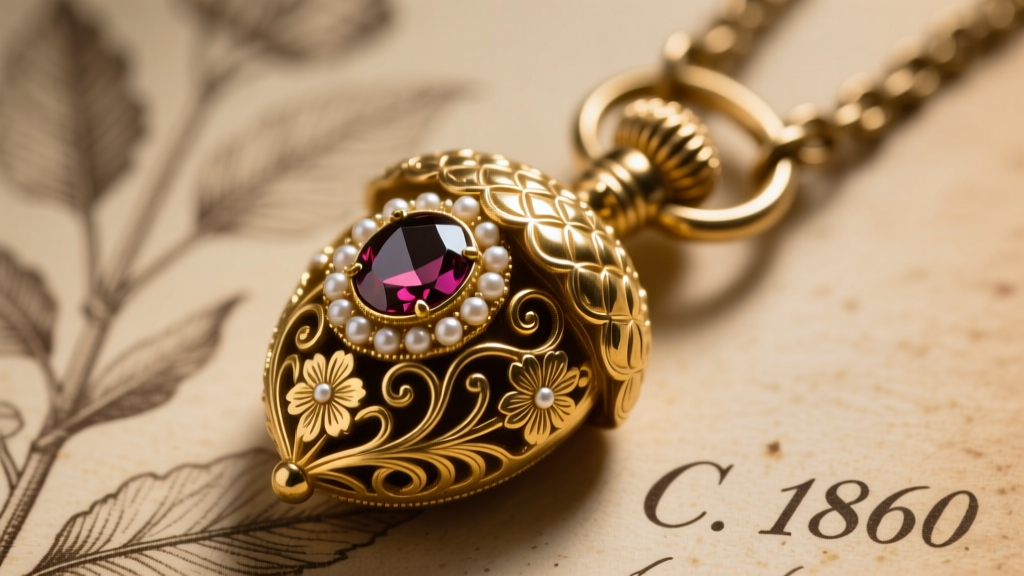
Crown-Shaped Watch Fobs, Gold-Colored Metal & Colored Gemstones: A Technical and Historical Appraisal of c. 1860 Examples
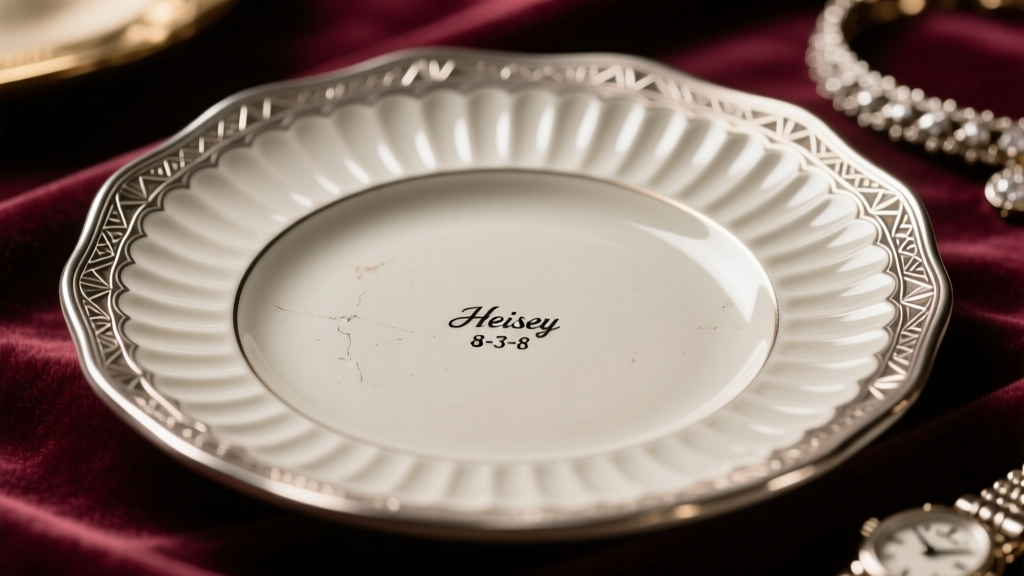
Heisey Pleat Panel Plate (8 3/8 Inches): A Collector's Deep Dive into Pattern 1624
Paris Urn Floral Gilt Design Pair: A Study in Belle Époque Ornamentation and French Goldsmithing Mastery
James Jacks No. 2: The Forgotten Chronograph Masterpiece of 1950s British Horology
Match Holders, Moxie, and Medicinal Tin: Decoding the 'Learn To Drink Moxie Very Healthful' Wall Sign

Franciscan Sugar Creamer Starburst No. 2: Design, Production History, and Collectibility of a Mid-Century American Icon
Schoenhut’s 13-Inch Toy Clown on Musical Barrel Pull Toy: A Collector’s Guide to American Wooden Playthings, 1920–1950

The Devil Candy Container: West German Glassware from the 1950s — A Collector’s Deep Dive into the Iconic 7-Inch Figural Jar
Toy Soldier Bishop Thomas Hatfield of Durham with Shield, Mace & Alymer Box: A Rare Ecclesiastical Miniature from the Golden Age of British Toy Manufacturing