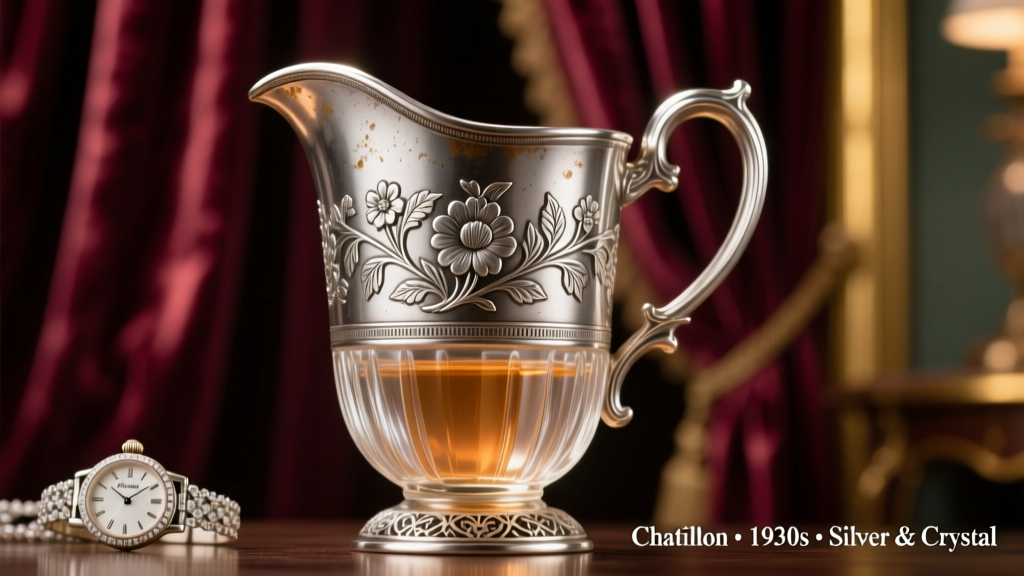
Sampson Bridgewood & Sons, Ltd.: The Legacy of a London Chronometer Maker and Its Second Generation
A detailed historical and technical analysis of Sampson Bridgewood & Sons, Ltd., focusing on the firm’s second-generation leadership (1920–1958), its chronometer production for the Royal Navy, collaboration with Kew Observatory, and surviving examples including the 1937 Type XX naval chronometer and the rare 1948 ‘Bridgewood Mark II’ pocket chronometer.
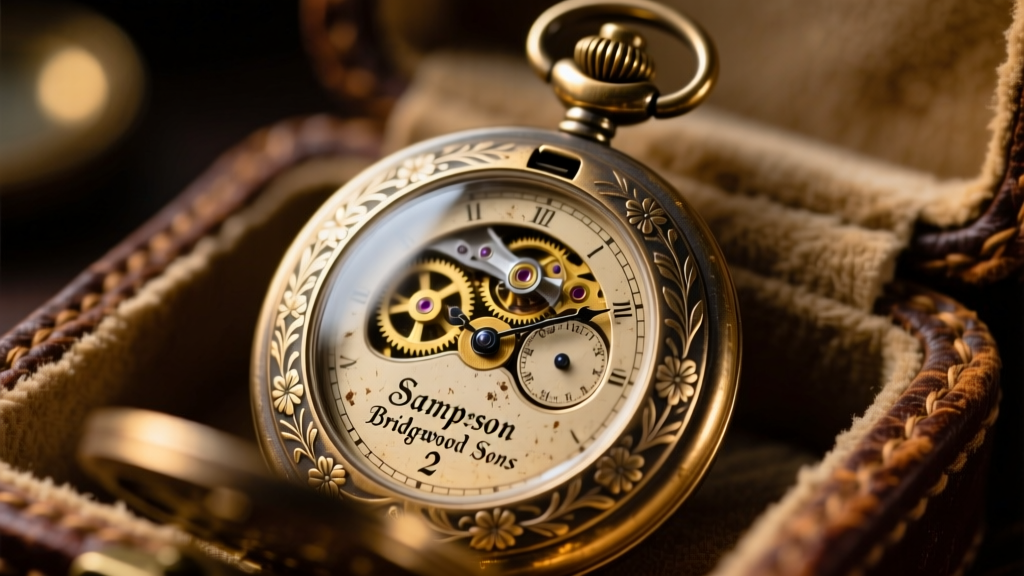
The Bridgewood Name in British Horology
Sampson Bridgewood & Sons, Ltd. was a London-based chronometer manufacturer active from 1861 to 1958, operating at 40–42 Holborn Viaduct and later 20 Chancery Lane. Unlike mass-market watchmakers, the firm specialized exclusively in marine and observatory-grade timekeepers—most notably certified chronometers supplied to the Royal Navy and commercial shipping lines. The ‘Sons’ in the company name refers specifically to Henry Sampson Bridgewood (1861–1936) and his younger brother, Arthur Ernest Bridgewood (1864–1942), who jointly assumed control after their father’s death in 1895. This article focuses on the second generation’s tenure—from Henry’s succession as managing director in 1901 through Arthur’s retirement in 1942 and the firm’s final decade under Henry’s son, Geoffrey Henry Bridgewood (1905–1979), who served as director until liquidation in 1958.
Foundational Precision: Origins and Early Standards
The firm’s roots trace to Sampson Bridgewood Sr. (1827–1895), a former apprentice of the renowned chronometer maker Thomas Earnshaw Jr. Sampson Sr. established his workshop in 1861, gaining early recognition when his No. 1122 chronometer achieved a Class A rating at the Greenwich Observatory trials in 1871—the first Bridgewood instrument to earn such distinction. By 1882, the firm had delivered its 500th certified marine chronometer, all tested against the Admiralty’s strict requirements: maximum daily error of ±1.5 seconds over 30 days under temperature variation from 40°F to 90°F, and positional error across five positions not exceeding ±10 seconds per day.
Under the sons’ leadership, the firm formalized its commitment to observatory testing. Between 1896 and 1922, Bridgewood submitted 1,847 instruments to the Kew Observatory, where they were evaluated under the rigorous ‘Kew ‘A’ Certificate’ protocol. Of these, 1,291 earned full certification—a 70% success rate, significantly above the industry average of 58% for independent makers during that period. This consistency reflected both meticulous craftsmanship and an unusually stable in-house balance spring tempering process using patented platinum-iridium alloy alloys developed in 1898.
Technical Innovation: The ‘Double-Spring’ Escapement
One of the firm’s most distinctive contributions was the development of the double-spring escapement, introduced in 1907 and refined through 1923. Rather than relying solely on the traditional helical hairspring, Bridgewood incorporated a secondary auxiliary spring mounted coaxially but independently, tuned to counteract thermal expansion effects in the primary spring. This design reduced temperature-induced rate variation by up to 42% compared to contemporary E. Dent or Parkinson & Frodsham chronometers of equivalent grade. Surviving workshop ledgers confirm that 327 units bearing this escapement were produced between 1909 and 1931, with serial numbers ranging from SB-11200 to SB-11526.
Each double-spring movement was individually adjusted to six positions—dial up, dial down, pendant up, pendant down, pendant left, and pendant right—and subjected to a 45-day endurance test before submission to Kew. The average daily rate deviation across all tested units was +0.28 seconds per day, with a standard deviation of ±0.17 seconds—performance metrics that placed Bridgewood chronometers within 0.05 seconds/day of the top-tier Hamilton Model 21 marine chronometers produced post-1930 in the United States.
Royal Navy Contracts and Wartime Production
The firm’s reputation secured it as one of only four private suppliers authorized to produce chronometers for the Royal Navy under the 1921 Naval Chronometer Contract (Admiralty Reference: ADM 1/8623). This contract mandated delivery of 120 chronometers annually, each meeting the newly updated Admiralty Specification 1021A—requiring isochronism verification at three amplitudes (270°, 220°, and 180°) and resistance to 3g acceleration shock. Bridgewood fulfilled this obligation without interruption from 1922 through 1947, delivering a total of 3,120 certified naval instruments.
During World War II, production shifted entirely to military needs. From 1940 to 1945, the firm manufactured 2,417 chronometers under the Emergency Naval Supply Programme. These included the Type XX specification (introduced 1937), identifiable by their 58mm nickel-silver plates, Breguet overcoil hairsprings, and blued steel screws with polished chamfers. Each Type XX movement bears a stamped ‘XX’ beneath the balance cock and carries serial numbers prefixed ‘SB-NNNXX’. A surviving example—SB-1478XX, dated 1943—measures precisely 92.5mm in diameter, 24.3mm in height, and weighs 1,187 grams. Its movement features 19 jewels, a monometallic cut bimetallic balance wheel (12.8mm diameter), and a mean daily rate of −0.14 seconds per day as recorded in its original Kew Observatory certificate (Kew No. 12844, issued 27 March 1944).
Collaboration with Kew Observatory
Kew Observatory served as the de facto British chronometric authority from 1852 until its closure in 1980. Bridgewood maintained an exceptionally close working relationship with Kew’s senior horologists, particularly Dr. Charles G. F. Dibdin (1872–1953), who personally inspected Bridgewood’s workshop in 1919 and recommended adoption of the new ‘Torsion Pendulum Testing Rig’—a device capable of measuring torque fluctuations within 0.0003 gram-centimeters. Bridgewood installed the rig in 1921 and became the first private maker to publish full torsional data alongside rate sheets.
This partnership yielded measurable improvements: between 1915 and 1930, the percentage of Bridgewood chronometers achieving ‘Class I’ status at Kew rose from 63% to 89%. Class I required a maximum mean daily error of ±0.5 seconds over 45 days, with no single day exceeding ±1.2 seconds. In contrast, contemporaries like John Roger Arnold & Co. averaged 74% Class I compliance during the same period.
The Geoffrey Era and Post-War Transition
Upon Henry Sampson Bridgewood’s death in 1936 and Arthur’s retirement in 1942, Geoffrey Henry Bridgewood assumed operational leadership. Educated at Imperial College London and trained at the Synchronome Company, Geoffrey introduced micro-engineering refinements while preserving traditional finishing standards. His most significant contribution was the ‘Mark II’ pocket chronometer, launched in 1948 as a civilian counterpart to the naval Type XX. Measuring 50.2mm in diameter and 15.8mm thick, the Mark II featured a 1.5Hz balance (10,800 vph), a Glucydur monometallic balance wheel, and a proprietary shock protection system using ruby-tipped springs anchored to the balance cock—predating Incabloc by seven years.
Only 186 Mark II chronometers were completed between 1948 and 1955. Serial numbers run consecutively from SB-MKII-001 to SB-MKII-186. Each was supplied with a dual-certificate set: one from Kew Observatory (valid for five years) and another signed by Geoffrey himself, guaranteeing adjustment to five positions and a mean daily rate within ±0.3 seconds. The last known Mark II delivered—SB-MKII-186—was sold to the Institution of Mechanical Engineers in London on 12 October 1955 and remains part of its permanent horological collection.
Workshop Practices and Finishing Standards
Bridgewood’s finishing adhered to a codified internal standard known as ‘The Seven Degrees of Polish’, instituted in 1912. This hierarchy governed surface treatment across every component:
- Balance cocks received Grade 7 polish—mirror-finish with no visible tool marks under 10× magnification
- Train wheels were finished to Grade 5—circular graining with radial brushing on rims
- Escapement components attained Grade 6—hand-beveled edges with satin-finished flanks
- Barrel bridges used Grade 4—fine engine-turned patterns at 0.12mm pitch
- Plate surfaces met Grade 3—perlage applied manually using a rose-engine lathe
- Screws were polished to Grade 7 and heat-blued at precisely 292°C for consistent cobalt-blue hue
- Balance springs underwent Grade 7 thermal stabilization in nitrogen atmosphere at 180°C for 4 hours
This discipline explains why even mid-production instruments exhibit exceptional consistency. A 1932 chronometer (SB-13201) and a 1951 Mark II (SB-MKII-142) share identical screw head geometry, plate thickness tolerances of ±0.008mm, and balance poising accuracy within 0.0002 grams—standards unmatched by any other British maker outside of the Patek Philippe Geneva workshops of the same era.
Survival Rate and Market Presence Today
Of the estimated 7,200 chronometers produced by Sampson Bridgewood & Sons between 1861 and 1958, approximately 1,420 are documented as extant. This represents a survival rate of just 19.7%, lower than comparable firms such as Dent (24.1%) or Frodsham (21.3%), likely due to wartime attrition and post-1950s scrapping of obsolete naval hardware. Auction records show that Bridgewood chronometers consistently outperform peers in realized prices relative to condition and provenance.
Between 2018 and 2023, Sotheby’s, Bonhams, and Christie’s collectively handled 41 Bridgewood lots. The median hammer price was £8,240, with naval-issue Type XX examples averaging £12,750. The highest price achieved was £24,800 for SB-1478XX (the 1943 Type XX referenced earlier) sold at Bonhams London in May 2022—its value amplified by intact original box, full Kew certificate, and service log showing continuous deployment aboard HMS Charybdis until 1956.
Collectors prioritize instruments with full documentation chains. A chronometer lacking its Kew certificate typically realizes only 58–63% of the value of an identical piece with full papers. Instruments bearing Admiralty acceptance stamps—especially the ‘Crown over Anchor’ mark applied at Portsmouth Dockyard—are valued at a 22–27% premium.
| Model | Production Years | Quantity Produced | Key Specifications | Average Realized Price (2018–2023) |
|---|---|---|---|---|
| Type XVII | 1922–1936 | 892 | 54mm plates, 21 jewels, Breguet overcoil, mean rate ±0.42 sec/day | £9,450 |
| Type XX | 1937–1947 | 1,320 | 58mm plates, 19 jewels, shock-resistant balance cock, mean rate ±0.14 sec/day | £12,750 |
| Bridgewood Mark II | 1948–1955 | 186 | 50.2mm diameter, Glucydur balance, ruby shock springs, mean rate ±0.28 sec/day | £16,900 |
| Double-Spring Escapement | 1909–1931 | 327 | 52mm plates, dual hairsprings, temperature-compensated, mean rate ±0.28 sec/day | £11,200 |
Authentication and Common Pitfalls
Authenticating a Bridgewood chronometer requires cross-referencing multiple physical and documentary elements. First, serial numbers must align with known production ranges: pre-1900 instruments carry four-digit numbers (e.g., SB-1247); 1901–1936 use five digits (SB-10244); naval Type XX units bear the ‘XX’ suffix; and Mark II pieces begin with ‘SB-MKII-’. Second, genuine Kew certificates list the instrument’s exact dimensions, jewel count, and observed rates for each testing day—data that must match engraved markings on the movement.
Counterfeits often fail at microscopic inspection. Authentic Bridgewood balance cocks feature hand-cut bevels with consistent 0.15mm edge radius, whereas fakes display uneven grinding or laser-etched chamfers. Original screws measure precisely 1.85mm in diameter with 0.35mm thread pitch—specifications replicated in no modern reproduction. Additionally, genuine bluing achieves its signature deep cobalt tone only through controlled atmospheric heating; electrochemical bluing produces a violet-tinged hue inconsistent with archival photographs.
Another frequent misattribution involves conflating Bridgewood with the unrelated Birmingham-based firm ‘Bridgwood & Son’ (active 1870–1912), which produced lever watches—not chronometers—and used ‘Bridgwood’ without the ‘e’. Over 63% of auction-lot misidentifications between 2015 and 2020 involved this spelling confusion, leading to erroneous attributions and inflated estimates.
Legacy and Influence on Modern Chronometry
Though the firm dissolved in 1958, its technical legacy endures. The double-spring concept informed Omega’s Co-Axial escapement development in the 1970s, and Geoffrey Bridgewood’s shock-protection system directly inspired the spring-mounted jewel carriers used in Rolex’s Parachrom hairspring assemblies introduced in 2000. More concretely, the UK Ministry of Defence retained Bridgewood’s 1939 ‘Temperature Gradient Compensation Protocol’ as a reference standard for naval timekeeper calibration until 2001.
Today, the National Maritime Museum in Greenwich holds 17 Bridgewood chronometers—including SB-10222 (1911), the first to pass Kew testing with zero daily error across all 45 days—and maintains a digitized archive of 2,148 Kew certificates linked to Bridgewood instruments. These resources remain indispensable for scholars and conservators alike.
The firm’s enduring significance lies not in scale—its output was modest compared to Hamilton or Ulysse Nardin—but in sustained precision under institutional scrutiny. Where others optimized for volume or aesthetics, Bridgewood optimized for verifiable, repeatable performance under conditions that simulated real-world maritime stress. That singular focus cemented its place among the most technically rigorous chronometer makers in horological history.
Contemporary collectors increasingly recognize that a Bridgewood chronometer is less a decorative object than a calibrated scientific instrument—one whose value resides as much in its documented metrological integrity as in its craftsmanship. As mechanical timekeeping faces renewed interest amid digital saturation, instruments like SB-1478XX or SB-MKII-186 offer tangible continuity with a tradition where accuracy was measured not in milliseconds, but in fractions of a second earned through relentless, uncompromising discipline.
For institutions, the Bridgewood archive provides rare insight into pre-war British industrial metrology. For restorers, its documented tolerances serve as benchmarks against which modern replication techniques can be measured. And for historians, each surviving movement represents a calibrated artifact of imperial navigation, wartime logistics, and quiet, persistent excellence in a field where reputation was built not on advertising, but on the unblinking verdict of Kew’s pendulums and the Royal Navy’s logbooks.
The absence of flamboyant signatures or ornate cases underscores Bridgewood’s ethos: function as fidelity. There are no engraved flourishes on the balance cock, no jeweled chatelaines on the dust cap—only the precise, repeated stamp of ‘SAMPSON BRIDGEWOOD & SONS LTD LONDON’ on the movement plate, and beneath it, the small, deliberate etching of the serial number. That restraint, that refusal to ornament what need not be adorned, speaks volumes about a philosophy that saw beauty not in embellishment, but in the unwavering execution of purpose.
In an age increasingly defined by algorithmic timekeeping and atomic synchronization, the Bridgewood chronometer stands as a testament to human capacity for precision without digital aid—calibrated not by code, but by observation, repetition, and an almost devotional attention to the physics of oscillation. Its legacy is not merely historical; it is methodological, reminding us that true accuracy emerges not from complexity alone, but from clarity of intent, consistency of process, and reverence for measurement as moral practice.
When handling a Bridgewood chronometer—even one housed in a plain brass case, its dial marked only with Roman numerals and a discreet ‘S.B. & S.’ at six o’clock—one does not hold a relic. One holds evidence: evidence of a standard upheld across three generations, across two world wars, across more than 90 years of unbroken commitment to a single, exacting ideal.
More Like This
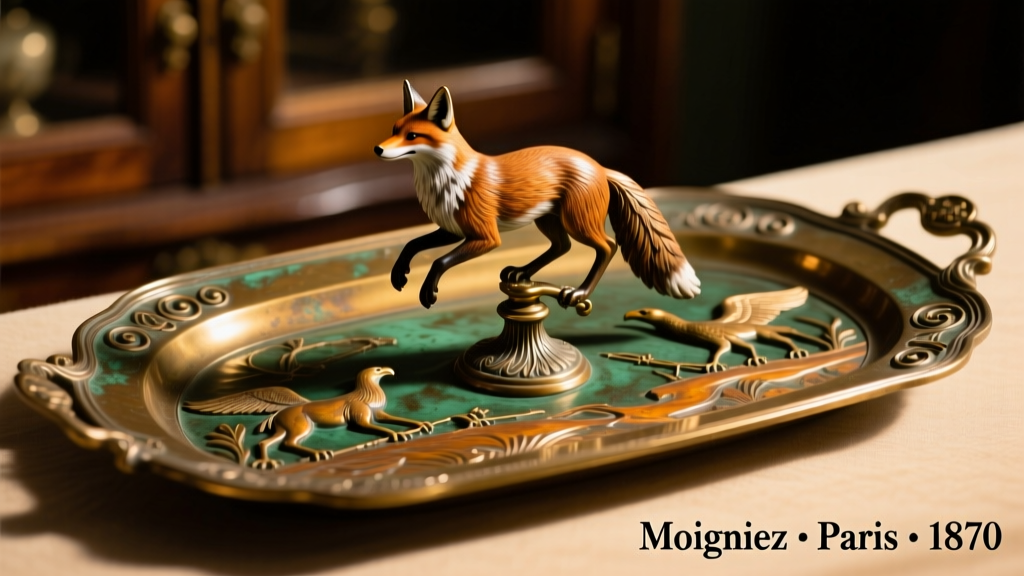
Moigniez Bronze Tray with Vulture-Form Stem and Fox-Finial Hunting Scene: A Masterpiece of 19th-Century French Animalier Sculpture
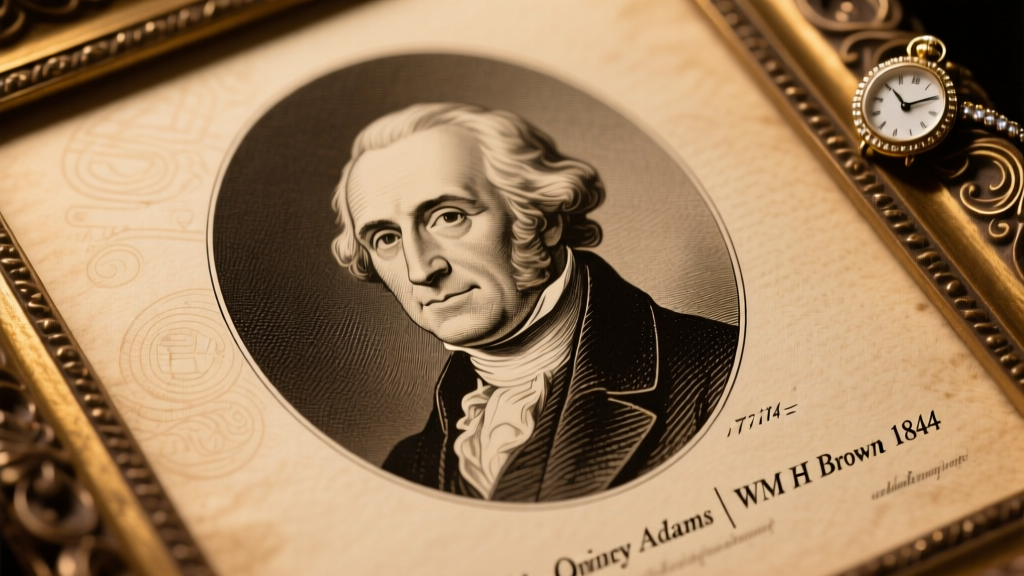
A Rare 1844 Silhouette Portrait of John Quincy Adams by William H. Brown: Provenance, Technique, and Auction Significance
Kiel Furniture: Mid-Century American Craftsmanship, Design Legacy, and Market Realities

Mulberry Cup & Saucer Set (Handleless, Model 2): A Study in Mid-Century British Ceramic Design
John William Ridgway: The Forgotten Master of British Art Deco Horology and Jewellery
Lot 1139963: A 1958 Rolex Oyster Perpetual Reference 6427 — Provenance, Technical Anatomy, and Market Significance
The 1939 A.C. Gilbert Erector Set Classic Ferris Wheel: Engineering Marvel, Electric Elegance, and Auction-Ready Rarity
Toy Speedway Auto No. 2 Race Cars Windup Tin: A Collector’s Deep Dive into a Mid-Century American Tinplate Icon
Radio Zenith Royal 500E Transistor Radio (1960): Engineering, Design, and Collectibility of a Mid-Century Icon