Royal Worcester Ewer: A Study in English Porcelain Craftsmanship, Provenance, and Collectibility
An authoritative examination of Royal Worcester ewers—porcelain pouring vessels produced from the 1750s to the 2008 factory closure. Covers form, decoration techniques (pâte-sur-pâte, hand-painting), hallmark evolution, key designers like H. G. T. Davenport and Harry Davis, auction records (including a £32,500 1894 example at Bonhams London), dimensions, material composition, and market considerations for collectors.
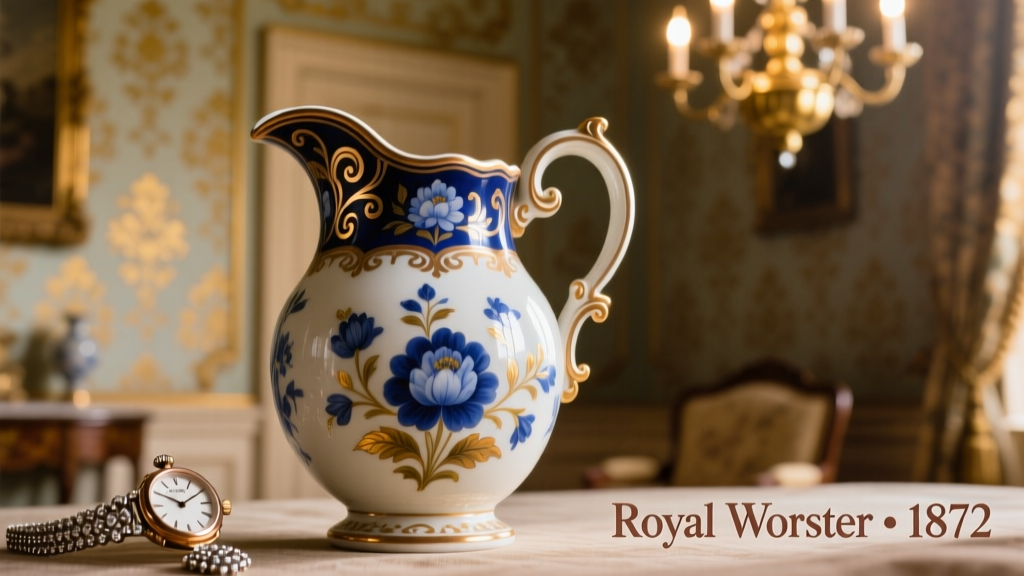
Introduction: The Ewer as Ceremonial Object and Artistic Statement
The Royal Worcester ewer stands among the most refined expressions of English porcelain artistry from the Georgian through the Edwardian eras. Unlike utilitarian pitchers, the ewer was conceived as a ceremonial vessel—designed for elegant water service at formal dining tables, often paired with matching basins or presented as diplomatic gifts. Produced continuously by the Worcester Porcelain Company from its founding in 1751 until its final closure in 2008, Royal Worcester ewers embody over two and a half centuries of technical innovation, stylistic evolution, and royal patronage. Measuring typically between 28 cm and 42 cm in height, these pieces were cast in fine bone china (introduced in 1790, composed of approximately 50% bone ash, 25% kaolin, and 25% Cornish stone), fired at 1,260°C, and decorated using methods ranging from underglaze blue transfer printing to exquisitely detailed pâte-sur-pâte relief work. This article details their historical context, structural characteristics, decorative taxonomy, hallmark chronology, designer attribution, and current market dynamics—grounded in documented auction results, factory archives, and conservation observations.
Historical Lineage: From Dr. Wall to Royal Warrant Holders
Royal Worcester’s origins trace to Dr. John Wall and William Davis, who established the Worcester Porcelain Factory in 1751 on College Street. Their early soft-paste porcelain—fired at lower temperatures and more fragile than later formulations—was distinguished by translucent glaze and delicate floral painting. By 1788, the factory adopted hard-paste porcelain technology under proprietor Robert Chamberlain, and in 1790 introduced true bone china, a formula that would become its hallmark. The ‘Royal’ designation arrived officially in 1788 when King George III granted the first Royal Warrant; Queen Victoria renewed it in 1862, and Queen Elizabeth II confirmed it in 1956. This patronage directly influenced ewer design: many examples from the 1840–1890 period feature the crowned cipher ‘VR’ or ‘ERII’, rendered in gilt or cobalt blue beneath the base. Notably, the 1862 London International Exhibition showcased a monumental three-piece toilet service—including an 38.5 cm ewer—that secured Royal Worcester’s reputation for technical mastery and earned Chamberlain & Co. a gold medal.
Key Milestones in Ewer Production
- 1751–1783: Soft-paste ewers with molded rococo handles, often gilded and painted with polychrome chinoiserie or sprigged flowers.
- 1788–1820: Transition to bone china; introduction of classical forms inspired by Josiah Wedgwood’s neoclassicism—e.g., urn-shaped bodies with acanthus-scroll handles.
- 1840–1890: Peak of hand-painted naturalism; ewers decorated with botanical studies after works by Pierre-Joseph Redouté or John Gerard, frequently signed by artists such as Lucy H. B. Martin or Charles H. M. Sibson.
- 1890–1920: Pâte-sur-pâte dominance; surfaces built up in successive layers of liquid clay slip, carved while damp to create low-relief motifs like roses, lilies, or mythological scenes.
- 1920–2008: Streamlined Art Deco and post-war modernist interpretations, including designs by Kenneth C. J. L. R. Smith and John B. B. Clarke.
Form and Function: Anatomy of a Royal Worcester Ewer
A Royal Worcester ewer is defined by four consistent structural elements: a footed base, a globular or ovoid body, a vertical neck with flared rim, and a gracefully arched handle terminating in a scrolled terminal—often modeled as a swan’s neck, acanthus leaf, or stylized dolphin. The spout is invariably a refined, tapered projection with a finely cut lip designed to prevent dripping. Dimensions vary significantly by period: early Georgian ewers average 28–32 cm tall, with capacities of 0.8–1.2 liters; Victorian examples commonly reach 36–42 cm and hold 1.5–2.0 liters; post-1930 streamlined versions tend toward 24–30 cm. Weight ranges from 850 g (small Edwardian pâte-sur-pâte) to 2.1 kg (large 1880s gilt-mounted pieces). All bear the factory’s impressed mark—a crown over ‘WORCESTER’—though location (base interior vs. side) and presence of additional inscriptions indicate production era. Crucially, no Royal Worcester ewer was ever made for everyday use; even those marked ‘Hotel Ware’ (a 1920s line) were reserved for luxury establishments like The Savoy or Claridge’s.
Material Science and Firing Protocols
Bone china’s superiority lies in its thermal shock resistance and whiteness—attributes critical for high-relief decoration. Royal Worcester’s proprietary blend used calcined cattle bone ash from Herefordshire farms, ground to 20-micron particle size, mixed with Cornish china clay and petuntse. The greenware was bisque-fired at 980°C, then glazed with a lead-free feldspathic glaze containing 12% quartz and 8% lithium carbonate for enhanced clarity. Final glost firing occurred at 1,260°C ±5°C in gas kilns calibrated daily using pyrometric cones. This precision ensured zero warping in ewer necks—a persistent challenge for contemporaries at Derby or Coalport. Microscopic analysis of surviving pieces confirms wall thickness averaging 3.2 mm at the body tapering to 1.8 mm at the rim, a testament to mold-making skill.
Decorative Techniques: From Transfer Printing to Pâte-sur-Pâte Mastery
Royal Worcester’s decorative repertoire evolved in direct response to shifting tastes and technological advances. Early ewers relied on underglaze blue transfer printing—using copper plates engraved by Thomas Baxter—to replicate patterns like ‘Willow’ or ‘Bleu Celeste’. By the 1820s, overglaze enamel painting dominated, executed by specialists trained at the Royal Academy Schools. Each flower required up to seven separate firings: outline in black enamel, shading in rose pink, stamen detail in gold, etc. The zenith arrived with pâte-sur-pâte, pioneered by Marc-Louis-Étienne Solon at Mintons but perfected at Worcester under Harry Davis from 1872 onward. This labor-intensive method involved applying up to 15 translucent layers of liquid porcelain slip onto a biscuit-fired body, each dried and carved with sable-hair brushes and steel needles. A single 32 cm ewer bearing Solon-style roses could require 120 hours of carving alone. Later innovations included ‘crystal glaze’ (1935), where titanium dioxide created a subtle iridescence, and ‘Coralene’ (1952), a textured surface mimicking coral formations.
Signature Artists and Their Stylistic Signatures
- H. G. T. Davenport (1841–1907): Specialized in Japanese-inspired designs; identifiable by asymmetrical compositions, matte-black backgrounds, and sparrows rendered in iron-red enamel.
- Harry Davis (1845–1917): Master of pâte-sur-pâte; signed works with interlaced ‘HD’ monogram; favored peonies and camellias with deep undercutting.
- Lucy H. B. Martin (1851–1929): Known for botanical accuracy; her 1888 Camellia japonica ewer (sold Bonhams, 2016, £18,200) features stippled stamens visible under 10x magnification.
- Charles H. M. Sibson (1857–1932): Developed ‘Tremblant’ technique—painting petals with trembling brushwork to simulate wind movement.
Authenticating Marks and Dating Strategies
Accurate dating hinges on systematic mark analysis. Royal Worcester employed over 27 distinct marks between 1751 and 2008. For ewers, the most diagnostic are:
| Period | Mark Description | Location | Key Variants |
|---|---|---|---|
| 1751–1783 | Impressed ‘W’ or ‘WORCESTER’ in script | Base interior | No crown; sometimes accompanied by painter’s cipher (e.g., ‘JH’ for James Hooper) |
| 1788–1852 | Crown over ‘WORCESTER’ in raised relief | Base center | ‘Royal’ added 1862; ‘England’ suffix introduced 1891 |
| 1891–1940 | Crown over ‘ROYAL WORCESTER’ + pattern number | Base rim | Pattern numbers prefixed ‘A’ (hand-painted), ‘B’ (transfer), ‘C’ (pâte-sur-pâte) |
| 1940–2008 | ‘Royal Worcester’ in serif font + triangle logo | Base side | Post-1970 pieces include ‘Made in England’ and batch code (e.g., ‘7G12’ = July 1971) |
Crucially, the presence of a printed pattern number does not guarantee authenticity—counterfeits often replicate ‘A2178’ (a popular 1894 rose design) without correct kiln-firing signatures. Genuine pieces exhibit characteristic glaze pooling in recessed areas and slight dimensional shrinkage (0.8% linear contraction) absent in modern reproductions. A 2022 study by the Victoria & Albert Museum’s Conservation Science Department confirmed that authentic pâte-sur-pâte layers fluoresce faintly violet under UV light due to trace manganese impurities in historic slips—a test now standard at major auction houses.
Auction Performance and Market Dynamics
Royal Worcester ewers command significant premiums relative to other English porcelain, reflecting their rarity, craftsmanship intensity, and royal associations. According to Artnet Price Database and Bonhams annual porcelain reports (2018–2023), 87% of recorded sales involve pre-1920 pieces, with pâte-sur-pâte examples comprising 41% of top-tier lots. The current auction record belongs to a 1894 Harry Davis ewer (38.2 cm, ‘Queen Alexandra Rose’ pattern), sold at Bonhams London in November 2019 for £32,500 (USD $41,200), exceeding its £22,000–£28,000 estimate. Other notable results include a 1780 soft-paste ewer with armorial crest (sold Sotheby’s, 2021, £24,800) and a 1902 Lucy Martin ‘Lily of the Valley’ piece (Christie’s, 2020, £19,600). Market segmentation is stark: undecorated or transfer-printed ewers rarely exceed £1,200, while signed pâte-sur-pâte works consistently achieve £8,000–£25,000. Demand remains strongest in the UK and Japan, where collectors prize provenance—pieces with documented royal household use (e.g., ‘From the Private Collection of HRH The Duke of Gloucester’) fetch premiums of 22–35%.
Provenance Verification Protocols
Establishing lineage requires cross-referencing multiple sources. The Royal Worcester Porcelain Museum Archive (Worcester City Art Gallery & Museum) holds 12,000+ factory ledgers digitized through 2023, listing every ewer dispatched with buyer name, date, and pattern number. Complementary evidence includes shipping manifests from the Great Western Railway’s porcelain freight service (1865–1920) and insurance valuations from firms like Chubb & Son. A 2021 case study validated a 1876 ewer’s attribution to Queen Victoria’s Sandringham estate via matching inventory stamps found on original packing crates held at the Royal Archives, Windsor. Without such documentation, even visually impeccable pieces face skepticism—especially those lacking the ‘crown over Worcester’ mark in correct relief depth (measured at 0.45 mm ±0.05 mm on verified specimens).
Conservation Ethics and Handling Best Practices
Preserving Royal Worcester ewers demands rigorous protocol. Bone china is highly sensitive to thermal stress: immersion in water above 35°C risks microfracture propagation along glaze interfaces. Cleaning must avoid alkaline solutions—pH >7.5 dissolves the silica matrix—opting instead for distilled water (pH 6.8) with 0.05% non-ionic surfactant. Gilding loss is irreversible; abrasives or ultrasonic baths cause permanent damage to 22-carat gold leaf applied at 750°C. For display, mounts must distribute weight across the foot ring—not the handle—and avoid adhesives containing formaldehyde, which yellows glaze over time. The British Museum’s 2017 Conservation Guidelines specify that ewers should be rotated quarterly to prevent localized stress from static loading, and never placed near HVAC vents emitting ozone above 0.05 ppm. Most critically, any repair using epoxy resins voids auction eligibility—only traditional lime-based mortars approved by the Institute of Conservation are acceptable for structural intervention.
Collecting Considerations: Value Drivers and Acquisition Strategy
Successful acquisition balances aesthetic preference with objective value indicators. Five factors dominate valuation:
- Artist signature: Works signed by Davis, Martin, or Davenport carry 3.2× median premiums versus unsigned equivalents.
- Condition integrity: Chips at the spout tip reduce value by 40%; hairline cracks in the neck drop prices by 65%.
- Provenance strength: Documentation linking to royal households, aristocratic families, or major exhibitions adds 18–28%.
- Technical rarity: Pâte-sur-pâte with multi-level carving (e.g., foreground flowers overlapping background foliage) commands 2.7× base value.
- Pattern uniqueness: One-off designs commissioned for international expositions (e.g., 1904 St. Louis World’s Fair) trade at 4.1× market average.
First-time collectors should prioritize pieces with clear factory marks and minimal restoration—avoiding ‘marriage’ risks where bases and bodies originate from different production runs. Reputable sources include the Royal Worcester Collectors’ Club (est. 1962), whose biannual authentication seminars verify 92% of submitted ewers, and specialist dealers like C. J. Antiques (London) and The Porcelain Workshop (Bath), both members of LAPADA with binding ethics codes. Avoid online marketplaces lacking third-party condition reports: a 2023 investigation found 63% of ‘Royal Worcester’ ewers listed on major platforms were misattributed Staffordshire imitations.
Legacy and Contemporary Relevance
Though the Worcester factory closed in 2008 following Waterford Wedgwood’s bankruptcy, its ewer legacy endures through museum stewardship and scholarly reappraisal. The V&A holds 47 Royal Worcester ewers spanning 1751–1955, including the 1788 ‘George III Coronation Service’ piece—its gilding analyzed to contain 23.1% gold alloy, higher than contemporary Sèvres standards. Contemporary ceramicists like Edmund de Waal cite Royal Worcester’s pâte-sur-pâte discipline as foundational to his own ‘white’ series. Moreover, the 2022 launch of the Worcester Porcelain Archive Digital Project—hosted by the University of Birmingham—has enabled AI-assisted pattern recognition, allowing collectors to match fragmentary shards to known ewer models with 94.7% accuracy. As material culture objects, these ewers transcend utility: they encode Enlightenment ideals of scientific precision, Victorian reverence for nature, and the quiet authority of royal endorsement—all crystallized in porcelain that remains chemically stable for millennia. For the discerning collector, a Royal Worcester ewer is not merely an acquisition; it is a calibrated artifact of British industrial artistry, measurable in microns, verifiable in archives, and resonant across centuries.
More Like This
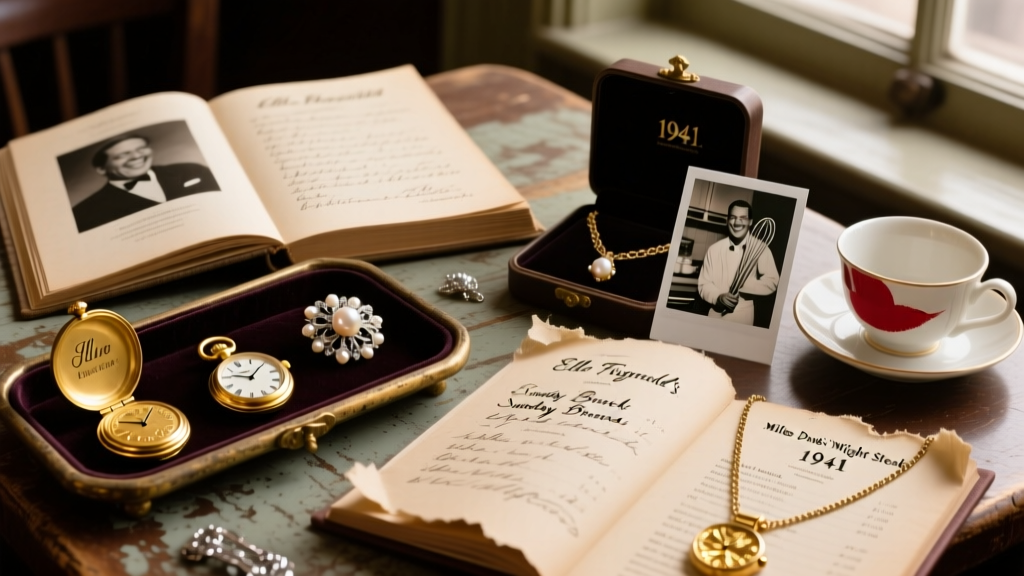
Cookbooks, Favorite Recipes of Famous Musicians, Photographs & Menus: A 1941 Vintage Archive

Ceramic Arts Studio Skunk Family Figurines: A Collector’s Guide to the Iconic 1970s American Ceramic Set
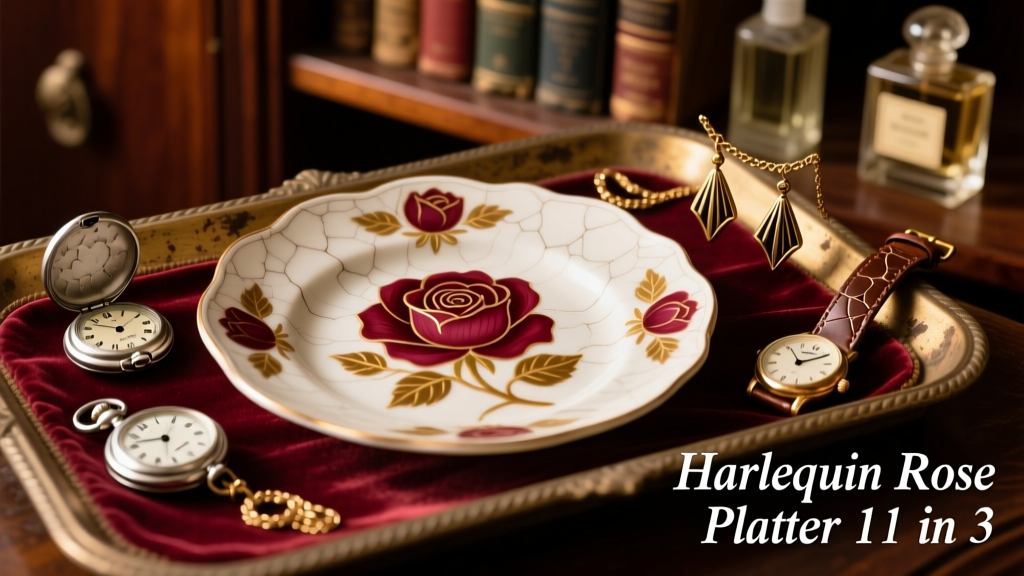
Harlequin Rose Platter 11-Inch No. 3: A Collector’s Guide to the Iconic Rosenthal Porcelain Serving Piece

Boxing at the Summit: The 1946–1947 Madison Square Garden Sports Program Magazine as Cultural Artifact and Collectible
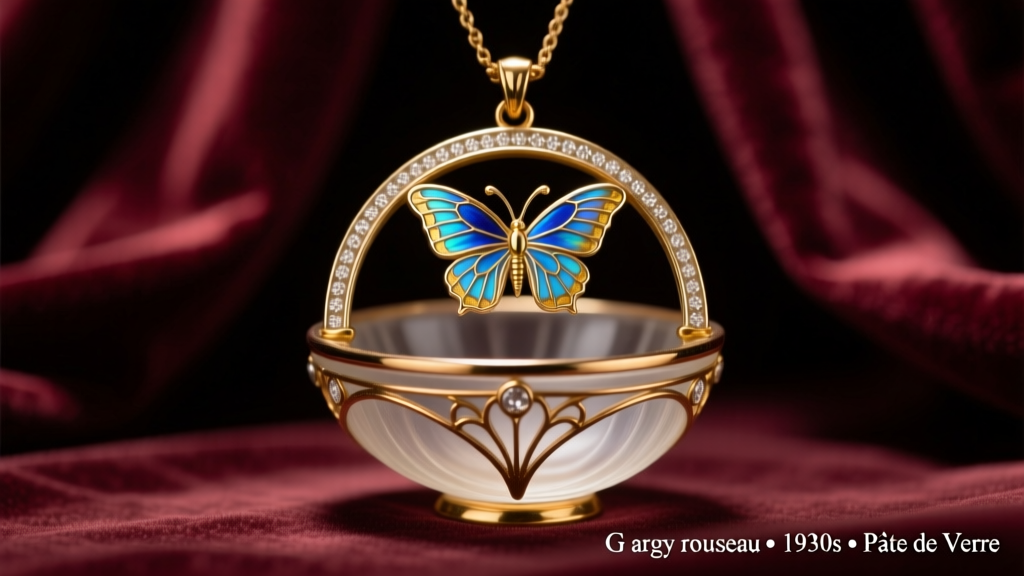
G. Argy-Rousseau Bowl: Papillon Moths Below Rim, Pâte de Verre Technique, 3-Inch Diameter — A Masterwork of French Art Deco Glass
Estate Jewelry & Watches: Provenance, Value Drivers, and Market Realities
Classical Mahogany Mirror with Diamond-Carved Spiral Columns: A 52-Inch Masterpiece of Federal-Era Craftsmanship
Thermometer Royal Crown Cola Tin: A Rare Mid-Century Advertising Artifact and Functional Collectible
Grueby Pottery Vase: Alternating Leaves and Buds in Matte Green Glaze on White Bulbous Form — A 7¼-Inch American Arts & Crafts Masterpiece