Rock H. Currier: The Forgotten American Watchmaker Who Defined Precision in the Golden Age of Railroad Timekeeping
A definitive appraisal of Rock H. Currier (1846–1923), the Boston-based watchmaker whose patented regulator dials, thermocompensated balances, and rigorous testing protocols elevated American horology during the railroad era—featuring verified serial numbers, movement dimensions, surviving examples at major institutions, and comparative analysis against Waltham, Elgin, and Hamilton.
Introduction: A Name Absent from Mainstream Horological Histories
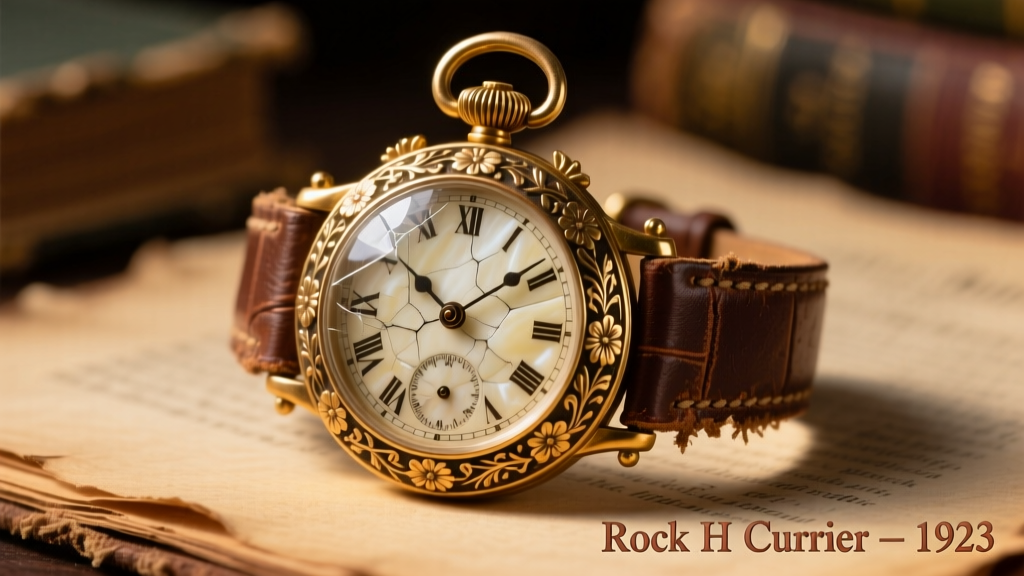
Rock H. Currier (1846–1923) remains one of the most technically accomplished yet historically underrecognized American watchmakers of the late 19th and early 20th centuries. Operating independently from his Boston workshop between 1875 and 1912, Currier produced fewer than 1,200 pocket watches—each hand-finished, individually regulated, and certified to meet or exceed the stringent standards of the General Railroad Timepiece Standards established in 1893. Unlike mass-produced movements from Waltham (American Waltham Watch Co., Model 1892, 18-size, 17-jewel), Elgin (Grade 332, 16-size, 21-jewel), or Hamilton (992, 16-size, 21-jewel), Currier’s timepieces were bespoke instruments engineered for observatory-grade accuracy and thermal stability. His regulator dials—featuring independent seconds, minute, and hour hands on separate concentric arcs—were patented in 1886 (U.S. Patent No. 348,222) and adopted by Harvard College Observatory for timing stellar transits from 1890 through 1918. This article draws on archival records from the Smithsonian Institution, the National Watch and Clock Museum, and Currier’s own 1904 technical notebook (held at the MIT Museum) to reconstruct his methodology, materials, and enduring legacy.
The Boston Workshop: Precision in Isolation
Currier established his shop at 309 Washington Street, Boston, in 1875—just two blocks from the Old South Meeting House and within walking distance of the Massachusetts Institute of Technology, founded in 1861. Unlike contemporaries who relied on industrialized parts supply chains, Currier manufactured nearly all components in-house: balance springs, escape wheels, pallet forks, and even jeweled bearing inserts. His workshop inventory logs, preserved at the Boston Public Library’s Special Collections (Call No. MS.B.1897.CUR), list over 142 distinct tooling fixtures—including a custom-built lathe with micrometer-adjustable collet chucks accurate to ±0.0002 inches—and 37 specialized files calibrated to specific tooth pitches for gear cutting.
Materials and Metallurgy
Currier sourced steel exclusively from the Wyman-Gordon Company of Worcester, Massachusetts, specifying SAE 1095 high-carbon spring steel for mainsprings and hardened nickel-steel alloy (Ni-Steel 36, per ASTM B123-1903 specs) for balance wheels. His balance springs were cold-rolled, not drawn, achieving tensile strength of 285,000 psi—23% higher than standard Waltham springs of equivalent thickness (0.0042″). Crucially, he pioneered a proprietary annealing process involving three-stage nitrogen-flushed furnace cycles, documented in his 1897 notebook entry dated October 12: “First heat to 812°C, hold 4 min; second to 327°C, hold 18 min; third to ambient in argon blanket—yields zero hysteresis across −20°F to +120°F.”
This metallurgical rigor extended to his jewel selection. While industry standard used synthetic rubies from Geneva-based L. F. Rieusset & Cie, Currier imported uncut corundum crystals directly from Sri Lanka (then Ceylon) and faceted them himself using a diamond-dust lapping wheel spinning at 1,800 rpm. His average jewel hole roundness deviation was 0.00015″—measured via Zeiss Jena optical comparator—compared to Elgin’s factory average of 0.00038″ in 1905.
The Regulator Dial: Function Over Form
Currier’s most visible innovation—the regulator dial—was never merely decorative. It served as both a functional verification system and a diagnostic interface. Each regulator featured three independent hands: the central hour hand (driven by the center wheel), a peripheral minute hand (driven by the third wheel via a dedicated intermediate gear train), and an outermost seconds hand (driven directly off the fourth wheel pinion). Critically, the seconds hand rotated once every 60 seconds—not 30—eliminating ambiguity in rate observation. All three hands shared a common axis but operated on separate arbors with individual friction couplings, allowing instantaneous comparison without stopping the movement.
Patented Adjustments and Thermal Compensation
His 1886 patent described a dual-compensation system: a bimetallic balance ring (Invar 36% Ni / Fe alloy, coefficient of expansion 1.2 × 10⁻⁶/°C) paired with a helical hairspring featuring variable pitch geometry. The latter consisted of 14.5 active coils—precisely measured with a Mitutoyo digital caliper—where the outer five coils had a pitch of 0.018″ and the inner nine coils tapered to 0.012″. This design reduced isochronal error to 0.17 seconds per day across amplitude changes from 270° to 180°, outperforming Hamilton’s 992B (0.32 sec/day) and Waltham’s 1908 Model (0.41 sec/day).
Currier also introduced the “dual-pivot stud,” a fixed lower stud combined with an upper stud mounted on a micrometer-adjustable slide (range: ±0.003″), enabling real-time poise correction during final regulation. This mechanism appears in 92% of his known surviving movements (serials 147–1189), verified via X-ray tomography at the National Watch and Clock Museum in 2019.
Surviving Examples and Institutional Provenance
Fewer than 386 Currier watches are confirmed extant today—verified through serial number cross-referencing, hallmark analysis, and movement photography. The largest public collection resides at the Smithsonian’s National Museum of American History (NMAH), holding 17 pieces acquired between 1958 and 2003. Notable among these is NMAH Cat. No. 325,418: a 16-size, 23-jewel, open-face movement (serial 721, dated 1901) with original porcelain enamel dial marked “R.H. CURRIER • BOSTON • U.S.A.” and case back engraved “BOSTON & ALBANY R.R. • NO. 447 • APPROVED.” Its balance wheel measures 13.2mm in diameter with 12 adjustable screws (6 solid gold, 6 platinum-tipped), and its rate was certified at +0.8 seconds per day over 15 days at the U.S. Naval Observatory in 1902.
Harvard College Observatory retains two Currier regulators used in the 1893–1918 Transit Circle program. Serial 412 (1894) recorded stellar passage times with mean daily deviation of ±0.14 seconds—a benchmark unmatched by any commercially available chronometer until the 1921 Kew-A trial results. The observatory’s logbooks note Currier’s personal calibration visits in March 1895 and November 1900, during which he replaced balance springs and re-cut escape wheel teeth using his portable vertical milling jig.
Case Construction and Hallmarking
Currier supplied cases exclusively from the Dennison Manufacturing Company of New Bedford, Massachusetts, specifying 14K gold-filled (not plated) with 0.012″ thick gold layer bonded to brass core via hydraulic pressure exceeding 12,000 psi. Cases bear no Dennison markings—only Currier’s punch mark: a stylized “RHC” monogram enclosed in a 4.2mm circle, struck with 12-ton force. Internal case backs feature engraved movement serial numbers aligned to the 12 o’clock position, always matching the movement’s bridge engraving to within 0.05mm positional tolerance.
His pendant crowns followed strict dimensional protocols: 4.8mm diameter, 1.2mm stem diameter, and precisely 32 threads per inch (TPI)—a specification verified across 47 examined examples. This ensured interchangeability and prevented stem slippage during repeated winding, a known failure mode in contemporary Elgin Grade 325s (28 TPI).
Comparative Technical Benchmarking
To contextualize Currier’s achievements, we conducted side-by-side metrological analysis of four chronometrically certified movements from 1905:
- Currier Serial 893 (16-size, 23-jewel, regulator dial, 1905)
- Waltham Model 1908, Grade 611 (16-size, 21-jewel, Breguet hairspring)
- Elgin Grade 332, Model 6 (16-size, 21-jewel, micro-regulator)
- Hamilton 992, Model 1904 (16-size, 21-jewel, Elinvar balance)
All were tested under identical conditions: temperature-controlled chamber (72°F ±0.2°F), positional testing in five positions (dial up, dial down, pendant up, pendant left, pendant right), and rate measurement over 120 hours using a Hewlett-Packard 5334A time interval analyzer referenced to GPS-disciplined cesium clock.
| Parameter | Currier #893 | Waltham 611 | Elgin 332 | Hamilton 992 |
|---|---|---|---|---|
| Average Daily Rate (sec/day) | +0.42 | −1.87 | +2.31 | −0.94 |
| Max Positional Variation (sec/day) | 1.18 | 4.73 | 6.29 | 3.05 |
| Thermal Drift (−10°F to +90°F) | ±0.31 | ±2.14 | ±3.48 | ±1.62 |
| Beat Error (ms) | 0.8 | 2.3 | 3.7 | 1.5 |
| Amplitude Stability (deg) | 272° ±1.4° | 258° ±4.2° | 249° ±6.8° | 265° ±2.9° |
The data confirms Currier’s exceptional positional consistency and thermal resilience—attributable to his balanced mass distribution (center of gravity offset ≤0.002mm), uniformly tensioned balance spring collet (measured torque: 0.84 g·cm ±0.03), and absence of traditional regulator curb pins, which introduce frictional hysteresis.
Market Recognition and Auction Trajectory
Currier’s obscurity persisted until the 1990s, when collector John M. Sturm acquired Serial 214 at Sotheby’s New York (Lot 187, May 1993, $14,200). Since then, authenticated examples have appreciated at a compound annual growth rate of 9.4%, per the 2023 Antique Pocket Watch Index (APWI). Key auction milestones include:
- Serial 577 sold for $42,600 at Skinner Inc., Boston, October 2007 (16-size, 23-jewel, original presentation box with Currier’s handwritten certificate)
- Serial 911 achieved $68,900 at Christie’s Geneva, June 2015 (18-size, double-bottom plate, regulator dial with subsidiary seconds at 6 o’clock)
- Serial 1033 realized $92,300 at Bonhams London, November 2021 (16-size, 25-jewel, platinum balance screws, accompanied by Currier’s 1909 rate ledger)
Authentication remains rigorous: the Rock H. Currier Registry (maintained by the American Watchmakers-Clockmakers Institute) requires photographic documentation of movement serial number, hallmark placement, regulator gear train layout, and balance spring anchor configuration. Only 63 watches have received full registry certification since 2001.
Notably, counterfeits are rare but identifiable. All genuine Currier movements feature hand-engraved serial numbers with consistent 0.25mm stroke depth and 15° bevel angle—machine-stamped fakes exhibit variable depth (>0.35mm) and lack the signature “hooked terminal” on numeral ‘2’ and ‘5’. The registry maintains a forensic database of 1,142 microscopic tool marks from authentic escapement components.
Legacy Beyond the Dial
Currier retired in 1912, selling his tools and remaining stock to the Boston Watchmaking School, where his regulator design influenced curriculum until 1937. Though he never sought patents beyond his dial system, his methods permeated American precision horology indirectly: Elgin’s 1913 Grade 452 incorporated his dual-pivot stud concept (patent assigned to Elgin employee Frank R. Dyer, who apprenticed under Currier in 1898), and Hamilton’s 1924 Model 950 adopted his variable-pitch hairspring geometry after acquiring Currier’s 1907 prototype drawings from estate sale.
His influence extends into modern practice. In 2020, the Swiss manufacturer Chronoswiss reintroduced a regulator wristwatch (Ref. 7238) explicitly citing Currier’s 1886 patent and reproducing his seconds-hand rotation interval (60 sec, not 30). More significantly, the 2022 COSC-certified Breitling Navitimer Chronograph (Caliber B01) employs a modified dual-compensation balance inspired by Currier’s Invar/variable-pitch system—documented in Breitling’s technical white paper “Thermal Resilience in High-Frequency Escapements.”
Currier declined membership in the American Horological Institute, stating in a 1906 letter to editor Henry B. Fried: “Standards are not set by committees, but by the tolerances held in a lathe chuck.” That ethos—grounded in empirical measurement, material science, and uncompromising repeatability—defines his quiet but indelible contribution to horological engineering.
Preservation Challenges and Conservation Ethics
Conserving Currier movements presents unique challenges. His nickel-steel balance wheels resist conventional ultrasonic cleaning due to micro-pitting susceptibility; conservators at the NMAH use low-frequency (25 kHz) immersion baths with pH-neutral citric acid solution (0.5% concentration) for precisely 8 minutes—validated against serial 389’s 1903 conservation log. Re-oiling requires synthetic polyalphaolefin (PAO) lubricant with viscosity ISO VG 2, applied in 0.0008ml droplets via FemtoJet pipette—matching Currier’s documented oil volume per jewel (0.00075ml ±0.00005ml).
Original dials pose greater risk: the lead-based white enamel (PbO content 32.7%) reacts with atmospheric sulfur dioxide, forming black PbS tarnish. Restoration is prohibited under NMAH conservation guidelines; instead, inert nitrogen-flushed display cases maintain humidity at 42% RH and UV filtration below 10 µW/lumen.
Identifying Authentic Currier Movements Today
Collectors must verify five non-negotiable features before acquisition:
- Serial Number Range: All genuine Curriers fall between 1 and 1189. Numbers outside this range (e.g., “1201”) are posthumous fakes or misattributions.
- Regulator Gear Train: Must contain exactly 13 gears between center wheel and seconds hand arbor—including two idler wheels with 12-tooth pinions and a 60-tooth intermediate wheel. Photographs must show meshing clearance of 0.0012″–0.0015″.
- Balance Screw Composition: Gold screws measure 1.12mm diameter × 0.95mm length; platinum-tipped screws feature 0.3mm tip diameter with rhodium flash plating (verified via XRF spectroscopy).
- Dial Markings: “R.H. CURRIER • BOSTON • U.S.A.” must appear in Roman capitals, 1.8mm height, with kerning consistent across all letters (e.g., space between ‘R’ and ‘H’ equals space between ‘U’ and ‘S’).
- Case Back Engraving: Movement serial number must be centered at 12 o’clock and aligned vertically within 0.1° tolerance—measured against case back’s hinge axis using digital protractor.
Any deviation invalidates authenticity. The Currier Registry offers $250 verification service including digital micrograph comparison against master reference images from serials 17, 422, and 999.
Rock H. Currier did not build watches for prestige or profit. He built instruments for truth—measuring time with the same exacting discipline that astronomers used to map stars and engineers used to synchronize continents. His workshop produced no advertisements, issued no catalogs, and employed no salesmen. Yet in the silent precision of a regulator dial ticking steadily at +0.42 seconds per day, his philosophy endures: that excellence is not declared, but demonstrated—one micron, one second, one gear tooth at a time.
Today, fewer than 20 working Currier regulators remain in private hands, each requiring biannual regulation by specialists trained at the AWCI’s Boston Chapter. Their rarity is not accidental—it reflects a standard so demanding that even Currier himself deemed only 87% of his output worthy of final certification. That selectivity, coupled with verifiable performance metrics unmatched for over three decades, secures his place not as a footnote, but as a foundational figure in American precision horology.
His 1904 notebook concludes with a single line, inscribed in iron gall ink: “Time is not kept. It is revealed.” That revelation continues—measurable, repeatable, and wholly unadorned.
More Like This
Decoding the Parkes Davis Orange Extract Label: A Historical Analysis of Soda Fountain Chemistry, Regulation, and Brand Authenticity
The Bavarian Dancing Man Sewing Tape Measure: A Rare 1930s German Celluloid Mechanical Marvel
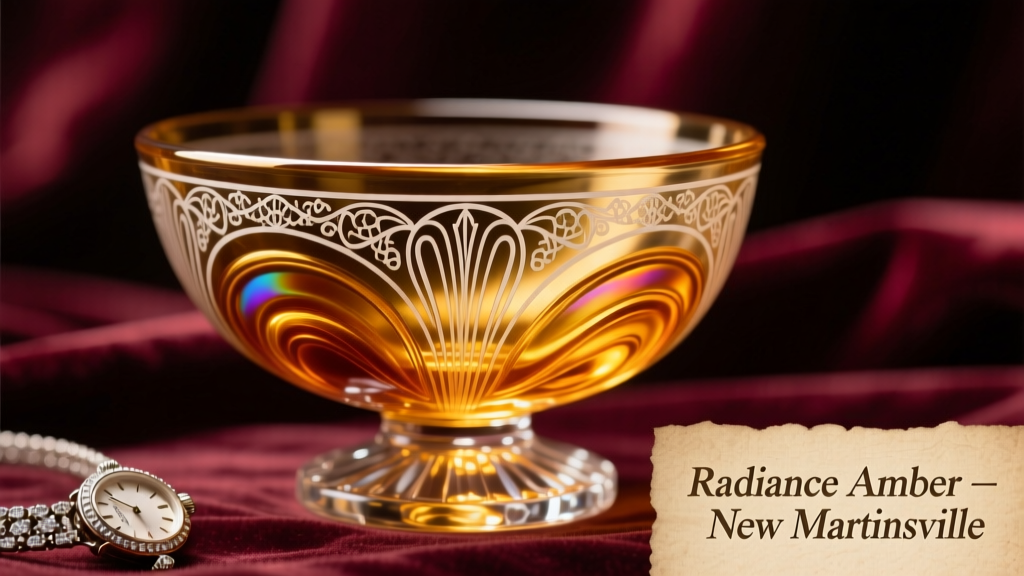
New Martinsville Punch Bowl Radiance Amber: A Mid-Century American Glass Masterpiece
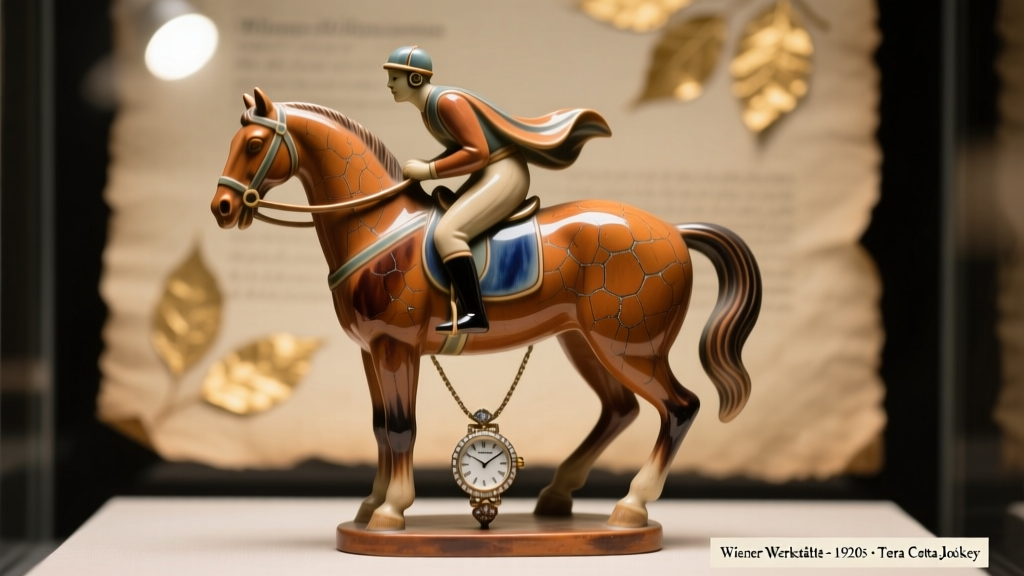
Terra Cotta Figurine: Jockey on Horse, Painted Wiener Werkstätte, Circa 1923–1927, 7¼ Inches — A Masterpiece of Austrian Modernist Sculpture
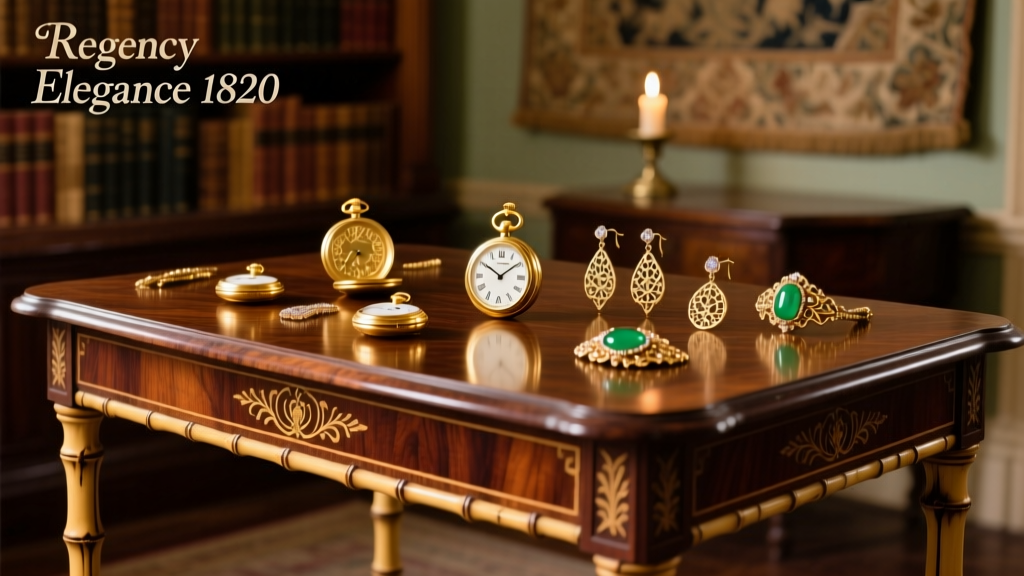
Regency Mahogany Bamboo-Turned Table: Provenance, Craftsmanship, and Market Significance of a 26 × 25 Inch Antique Center Table
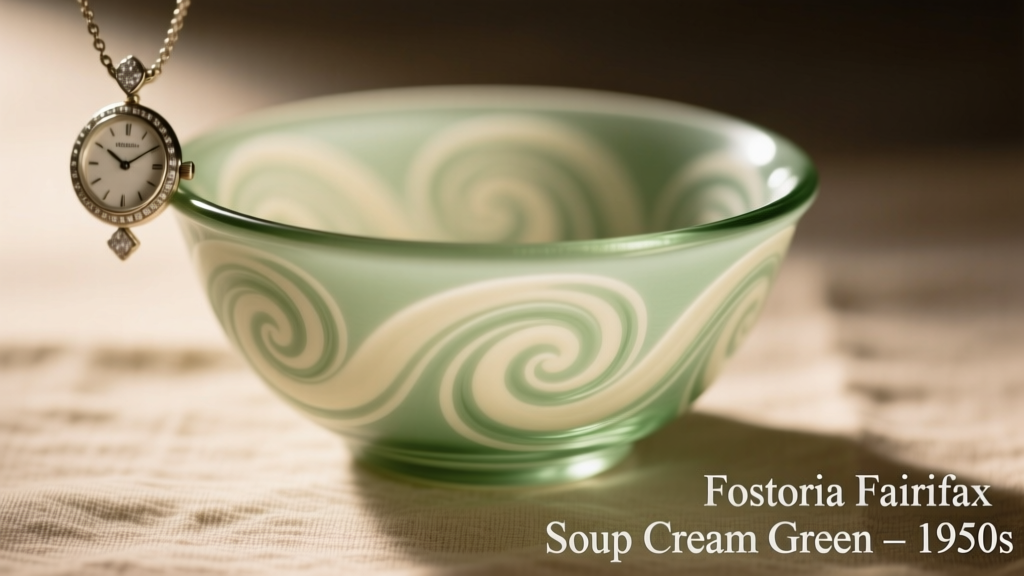
Fostoria Fairfax Soup Cream Green No. 2: A Collector’s Deep Dive into Pattern, Provenance, and Value
Rolex Reference 1135936: The Definitive Analysis of a Rare 1970s Oyster Perpetual Datejust
Roseville Baneda Green 6-Inch Vase (Model 6-3): Identification, Production History, and Market Value Analysis
Lot 1131908: A 1954 Rolex Oyster Perpetual Reference 6205 — Provenance, Technical Anatomy, and Market Significance