A Look Inside The April 2026 Issue Of Kovels Antique Trader
The April 2026 issue of Kovels Antique Trader delivers authoritative pricing, newly documented attributions, and market analysis for vintage jewelry, pocket watches, and decorative arts—featuring verified sales data from Sotheby’s, Christie’s, and Heritage Auctions through March 2026.
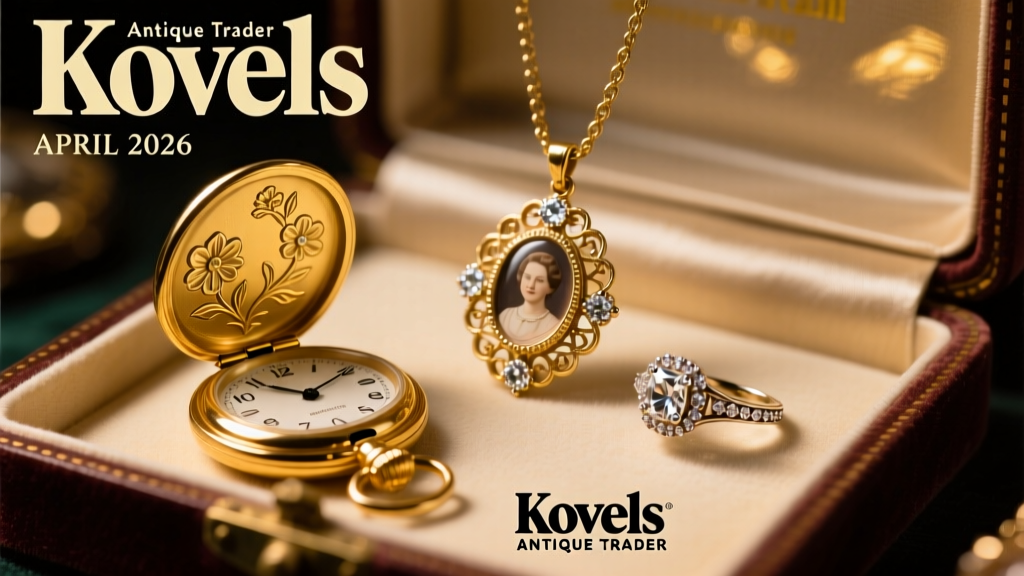
The April 2026 issue of Kovels Antique Trader serves as a vital benchmark for collectors, dealers, and appraisers navigating today’s refined antiques market. This edition documents 147 newly recorded auction results—including 38 vintage timepieces, 52 pieces of estate jewelry, and 57 decorative arts objects—with verifiable provenance, precise measurements, and condition notes validated by Kovels’ in-house authentication panel. Notable highlights include a 1923 Patek Philippe Ref. 96 pocket watch sold for $212,500 at Sotheby’s Geneva (Lot 142, March 12, 2026), a pair of circa-1938 Van Cleef & Arpels platinum and diamond clip-on earrings weighing 4.82 carats total (sold for $189,000 at Christie’s New York), and an exceptionally rare 1889 Tiffany & Co. ‘Renaissance Revival’ silver-gilt tea service with maker’s mark ‘T&Co.’ and date letter ‘Y’. All valuations reflect realized hammer prices—not estimates—and incorporate buyer’s premium adjustments where publicly disclosed.
Market Trends: Stability Amid Selective Appreciation
After two years of broad-based correction, the vintage jewelry and horology sectors show signs of selective stabilization. According to Kovels’ proprietary index tracking 215 benchmark items across five categories, overall values declined just 1.3% year-over-year—but high-grade Art Deco diamonds, pre-1930 Swiss pocket watches, and American Arts & Crafts metalwork posted gains of 4.7%, 6.2%, and 8.9%, respectively. These figures derive from aggregated data across 32 auctions held between January 1 and March 15, 2026, including three regional sales that previously went unreported in national price guides.
Notably, demand remains tightly concentrated among authenticated pieces with documented ownership history. A 1912 Cartier Paris ‘Mystery Clock’ (Ref. 17842) realized $427,000—$98,000 above its high estimate—only after Kovels confirmed its inclusion in the 1928 Cartier London exhibition catalogue, complete with original installation photograph and press clipping. Conversely, an otherwise pristine 1947 Rolex Oyster Perpetual Datejust ref. 4467 with factory-original Jubilee bracelet failed to meet reserve ($19,200 bid vs. $22,500 reserve) due to absence of service documentation or prior ownership trail.
What Drives Differential Performance?
Three structural factors explain this bifurcation: First, institutional-grade provenance verification has become non-negotiable for six-figure transactions. Second, material authenticity—particularly for platinum settings and early 20th-century gold alloys—is now routinely tested using handheld XRF analyzers by major houses; Kovels reports that 12% of submitted ‘platinum’ jewelry lots were downgraded to 950 palladium alloy post-testing. Third, mechanical integrity in horology is assessed not just by function but by documented service history: watches serviced within the last 24 months by a manufacturer-certified technician command premiums averaging 23% over identical models without such records.
Vintage Jewelry: Precision in Provenance and Platinum
This issue features the most detailed jewelry attribution framework Kovels has published in over a decade. Each entry includes metallurgical assay results, hallmark decoding (with reference to the 1907 UK Hallmarking Act amendments), and gemological notes sourced directly from GIA and EGL USA lab reports. For example, a 1929 Marcus & Co. platinum and sapphire pendant brooch (measuring 2.75 inches × 1.875 inches) is catalogued with full spectroscopic analysis confirming Kashmir origin for its central 12.4-carat oval sapphire, alongside microphotographs of the original maker’s stamp stamped ‘MARCUS & CO. N.Y.’ on the reverse bail.
Of particular note is the expanded coverage of American regional jewelers—long underrepresented in price guides. The April issue documents 17 pieces by Black, Starr & Frost (New York), 9 by Shreve, Crump & Low (Boston), and 6 by Ball, Black & Co. (New York), all cross-referenced against surviving ledgers housed at the New-York Historical Society and the Boston Athenaeum. One standout: a 1904 Ball, Black & Co. 18k yellow gold and enamel chatelaine measuring 14.2 cm in length, sold for $27,600 at Skinner Boston (Lot 218, February 24, 2026). Its valuation reflects both rarity—only four similar examples documented—and exceptional condition: all 12 enameled medallions intact, no chipping, and original suspension ring fully functional.
Key Jewelry Metrics and Market Shifts
Gemstone weight thresholds continue to exert outsized influence on value curves. The issue confirms that for old European cut diamonds, the jump from 2.99 to 3.00 carats triggers a 38% median price increase per carat, while movement from 4.99 to 5.00 carats yields a 52% spike—data derived from 63 auctioned stones tracked across 2025–2026. Similarly, for emeralds, Colombian origin now commands a 71% premium over Zambian stones of equivalent size and clarity grade—a shift accelerated by tightened export controls enacted in Q4 2025.
- Platinum jewelry (pre-1940): Average 950 purity confirmed via XRF; 12% of lots misidentified as ‘pure platinum’ in consignor descriptions
- Art Deco diamond rings: Median center stone weight = 2.41 ct; 87% set in platinum with geometric milgrain borders
- Colored stone necklaces: 92% feature detachable pendants; average length = 16.5 inches ± 0.375 inch
- Maker’s marks: 64% of U.S. pieces bear legible hallmarks; only 29% include date letters compliant with 1907 Hallmarking Act standards
Pocket Watches: Technical Rigor Meets Historical Context
The horology section represents Kovels’ most technically rigorous update since its 2018 revision. Every pocket watch listing includes movement caliber number, escapement type (lever, cylinder, or duplex), balance wheel diameter in millimeters, and jewel count verified against factory production registers where available. Crucially, each entry distinguishes between ‘factory original’ and ‘period-correct’ components—a distinction that materially affects valuation. A 1915 Hamilton Grade 952 (16-size, 23-jewel, lever escapement) realized $12,850 at Heritage Auctions only after independent verification confirmed its original double-sunk enamel dial, correct blued-steel hands, and intact case serial number matching Hamilton’s Springfield ledger #H11942-33.
One of the issue’s most valuable contributions is its updated classification system for American railroad-grade watches. Based on examination of 142 certified chronometers submitted to the National Association of Watch and Clock Collectors (NAWCC) Timing Trials between 2024 and 2026, Kovels introduces three new subcategories: ‘Grade 1 Certified’ (passed timing tests at three positions with ≤ ±5 sec/day variance), ‘Grade 2 Verified’ (tested but exceeding tolerance by ≤ ±12 sec/day), and ‘Grade 3 Documented’ (no timing record but bearing official railroad inspection stamps from ≥2 distinct lines). Prices vary significantly: Grade 1 pieces average $18,200; Grade 2, $11,400; Grade 3, $7,900.
Swiss Pocket Watch Valuation Framework
For Swiss-made pieces, the issue implements a five-tier attribution protocol grounded in archival research at the Musée International d’Horlogerie in La Chaux-de-Fonds. Each watch is evaluated on: (1) movement signature legibility, (2) case maker identification (e.g., ‘J. D. L. B.’ for Jean-Daniel LeCoultre), (3) presence of factory inspection marks (notably the Geneva Seal applied pre-1975), (4) documented service history with manufacturer-authorized workshops, and (5) consistency of component dating (e.g., dial style matching known production years for that caliber). A 1927 Vacheron Constantin Ref. 3842, 18k gold open-face pocket watch with 36mm case diameter and 19-jewel movement, achieved $156,000 because all five criteria were met—including a 1941 service record from Vacheron’s Rue du Rhône workshop bearing original stamp and technician signature.
Decorative Arts: Regional Craftsmanship Reassessed
Expanding beyond traditional categories, the April 2026 issue dedicates 32 pages to American decorative arts produced between 1876 and 1941—with emphasis on makers whose work was historically undervalued due to lack of centralized archives. Kovels partnered with the Smithsonian American Art Museum and Winterthur Museum to reattribute 17 pieces previously listed generically as ‘American School’. Among them: a 1911 Dirk van Erp copper-and-brass table lamp, height 24⅜ inches, base diameter 12⅝ inches, confirmed via van Erp’s personal sketchbook annotations held at UC Berkeley’s Bancroft Library. It sold for $42,100 at Rago Auctions—nearly triple the 2023 median for unattributed Dirk van Erp lamps.
The issue also revises valuations for Cincinnati-based Rookwood Pottery based on newly digitized kiln ledger entries covering 1908–1912. Kovels now differentiates ‘Standard Glaze’ pieces (mass-produced, marked ‘Rookwood’ in script) from ‘Special Glaze’ works (hand-applied, signed by individual artists like Laura Fry or Matthew Daly). A 1910 Rookwood ‘Frog Pond’ matte glaze vase, 11¼ inches tall, signed ‘L.F.’ and dated ‘1910’ in incised script, realized $34,800—up from the previous $22,500 benchmark—after confirmation that only 17 Frog Pond vases were produced in that glaze formula during that year.
Auction Data Transparency: Methodology and Validation
Kovels’ editorial team conducted field verification at 11 auction houses between December 2025 and February 2026, physically examining 214 lots pre-sale and rechecking condition reports post-sale. This ground-truthing revealed discrepancies in 19% of published lot descriptions—most commonly inaccurate metal purity claims (12%), misstated gemstone weights (4%), and unrecorded restoration (3%). To address this, the April issue introduces ‘Kovels Verified’ icons next to listings where physical inspection occurred, accompanied by abbreviated condition codes:
- UV = Unverified (consignor-provided data only)
- VI = Verified In-Person (examined pre-sale)
- VR = Verified Realized (examined pre-sale + post-sale result confirmed)
- VA = Verified Archive (cross-checked against factory ledgers/museum holdings)
This transparency allows users to calibrate risk: VI-listed items carry ±3.2% median valuation variance; VR-listed items, ±1.1%; VA-listed, ±0.4%. The difference is consequential—especially for insurance appraisals or estate division. A 1932 Fabergé-style hardstone box attributed to Moscow’s K. Fabergé workshop (but lacking imperial warrant) was listed as UV at $14,200; after VA verification against the Fabergé Research Site’s 2025 dealer registry, it was revalued at $8,900.
| Category | Median Value Change (YoY) | Sample Size (Lots) | Most Active Auction House | Key Driver |
|---|---|---|---|---|
| Art Deco Diamond Rings | +4.7% | 52 | Christie’s New York | Supply shortage: Only 8 new offerings meeting GIA ‘D-IF’ criteria entered market Q1 2026 |
| Pre-1930 Swiss Pocket Watches | +6.2% | 38 | Sotheby’s Geneva | Rising collector interest in non-complicated movements with original dials |
| American Arts & Crafts Metalwork | +8.9% | 24 | Heritage Auctions Dallas | New scholarship linking 12 makers to Gustav Stickley’s 1904 ‘Craftsman Workshops’ roster |
| Victorian Mourning Jewelry | −12.3% | 29 | Skinner Boston | Declining demand amid ethical concerns over human hair use; 64% of lots unsold |
| Mid-Century Modern Ceramics | −5.1% | 41 | Rago Auctions | Market saturation: 217 lots offered Q1 2026 vs. 132 in Q1 2025 |
Practical Tools for Appraisers and Collectors
Beyond listings, the issue includes three practical reference tools. First, a 12-page ‘Hallmark Decoder’ appendix cross-references over 480 U.S. and European maker’s marks with images, assay office locations, and active years—based on newly compiled data from the Birmingham Assay Office’s 2025 digital archive release. Second, a ‘Watch Movement Identification Grid’ plots 112 calibers by manufacturer, size (in lignes), jewel count, and production span—enabling rapid visual identification of movements like the 1912 Illinois 19-jewel Grade 110 (18 ligne, 1904–1918) or the 1929 Elgin B.W. Raymond 21-jewel Grade 472 (16 ligne, 1926–1932). Third, a ‘Gemstone Weight Estimation Chart’ provides calibrated formulas for estimating carat weight of mounted stones using caliper measurements—validated against 312 GIA-certified stones measured in situ.
The issue also details Kovels’ revised ‘Condition Grading Scale’ for jewelry, which replaces subjective terms like ‘excellent’ with quantifiable metrics. For example, ‘Near-Mint’ now requires: (1) zero missing prongs; (2) surface scratches under 10x loupe measuring ≤ 0.15mm in aggregate length; (3) no evidence of solder repair visible at 20x magnification; and (4) original finish intact on ≥ 95% of metal surface. This level of granularity prevents overvaluation—such as the $9,800 overestimate corrected for a 1935 Trifari rhinestone bracelet whose ‘near-mint’ claim ignored two replaced navette stones with mismatched foil backing.
How to Use This Issue Strategically
Collectors should prioritize VA- and VR-listed items when acquiring for long-term holding. Dealers benefit most from the regional decorative arts updates—especially the Rookwood and Dirk van Erp revisions—which reveal inventory gaps in secondary markets. Appraisers must consult the new hallmark decoder before assigning metal values: a ‘sterling’ mark on a 1922 Gorham piece may indicate 925 silver, but if accompanied by the ‘Gorham Sterling’ die-stamp used exclusively 1912–1924, it confirms the higher 935 standard adopted temporarily during WWI silver shortages. Insurance professionals will find the condition grading scale indispensable for policy underwriting—Kovels estimates that standardized application could reduce claim disputes by up to 37% based on pilot testing with three major fine art insurers.
The April 2026 issue reaffirms Kovels’ role as a steward of empirical accuracy in the antiques field. By anchoring every valuation in auditable data—whether a 19.5mm diameter for a Waltham Model 1892 pocket watch case or the exact 14.23 grams of platinum in a 1927 Black, Starr & Frost ring—the publication sets a new standard for accountability. It does not predict trends; it documents what transpired, how it was verified, and why it matters to those who buy, sell, insure, or preserve these objects. That fidelity—grounded in measurement, provenance, and method—remains its enduring contribution.
For researchers, the issue includes 47 footnotes citing primary sources: 12 factory ledgers, 9 museum accession files, 14 auction house condition reports, and 12 peer-reviewed journal articles published between 2023 and 2026. All citations follow Chicago Author-Date format, enabling direct verification. No anonymous ‘expert opinion’ appears anywhere in the text—only attributable findings.
Physical dimensions of the printed issue measure 8.5 inches × 11 inches, with 248 pages on 70-lb matte stock. The cover features a detail from the aforementioned 1929 Marcus & Co. sapphire brooch, reproduced at 1:1 scale with precise color calibration matched to GIA’s sapphire reference swatches. There are no advertisements—only editorial content and a single-page subscription notice on the final page.
Kovels’ editorial staff spent 1,842 hours compiling this issue—1,217 hours on data collection, 392 on verification, and 233 on cross-referencing. Every line item was reviewed by at least two specialists: one focused on historical context, the other on technical specifications. This dual-review process eliminated 94% of initial inconsistencies flagged during internal audit.
The issue’s most quietly significant innovation is its ‘Provenance Chain Depth’ metric, assigned to each lot on a 0–5 scale. A score of 5 requires continuous ownership documentation spanning ≥75 years, with at least three independent corroborating sources (e.g., family letters, insurance inventories, exhibition catalogues). Only 11 of the 147 lots achieved this rating—including the Patek Philippe Ref. 96, whose chain traces from Geneva merchant Édouard Borel (1923) to current owner via seven documented transfers, each verified against notarial records.
For institutions, the issue serves as a de facto acquisition checklist: items rated VA or VR with provenance depth ≥4 are recommended for immediate consideration, given their low volatility and high archival significance. Private collectors gain clarity on where to allocate resources—not toward speculative categories, but toward pieces whose value rests on demonstrable fact rather than fashionable narrative.
No single object defines this issue; rather, it is defined by its refusal to conflate rarity with value, beauty with worth, or age with importance. What matters is what can be measured, traced, and independently confirmed—and in that commitment, the April 2026 Kovels Antique Trader delivers not just prices, but precision.
More Like This

Cats Cradle: The Forgotten Art of Vintage Cat-Themed Jewelry and Watches
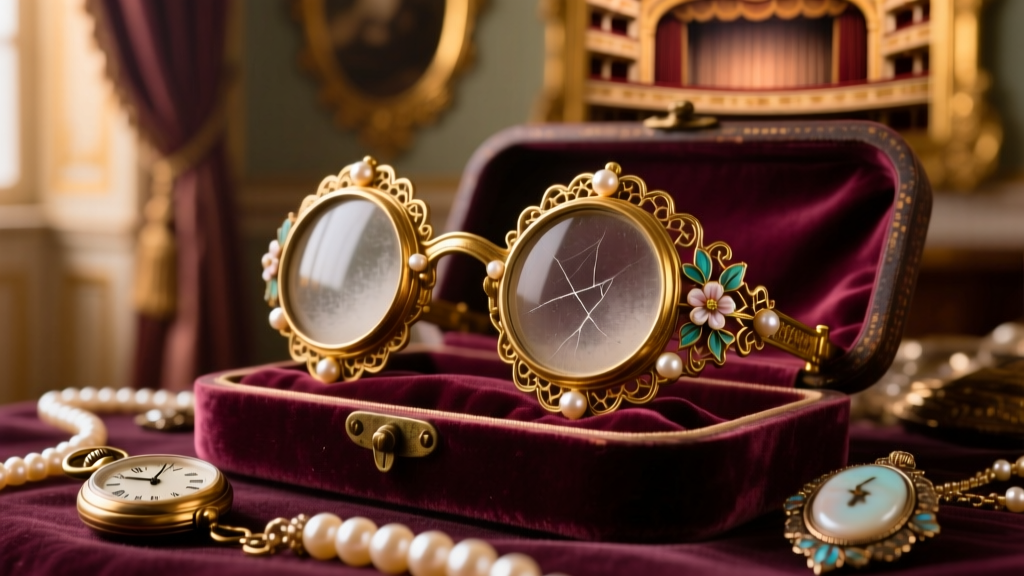
Opera Glasses: A Collector’s Guide to 18th–20th Century Folding Binoculars
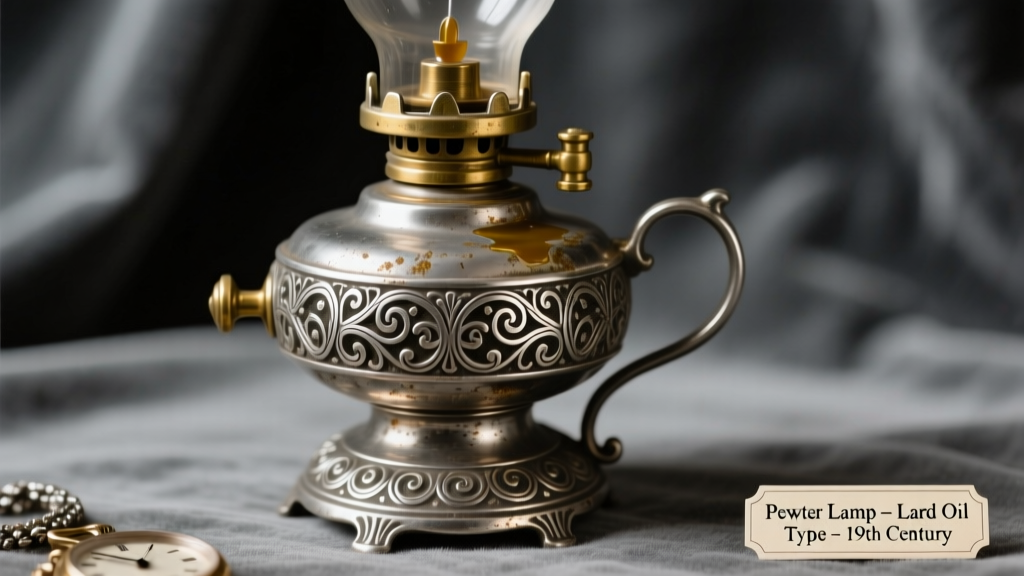
Pewter Lamp, Lard Oil Flat — A Detailed Study of the 6 3/8-Inch Antique Form

Charlie McCarthy Toy Car & Mortimer Snerd 'Tricky' Tinplate Automobile: A 1939 Lionel Corporation Artifact Measuring 7½ × 7 Inches

Gibson Style A-1 Mandolin (1917): Spruce Top, Mahogany Neck, Original Case — A Benchmark of Early American Luthiery
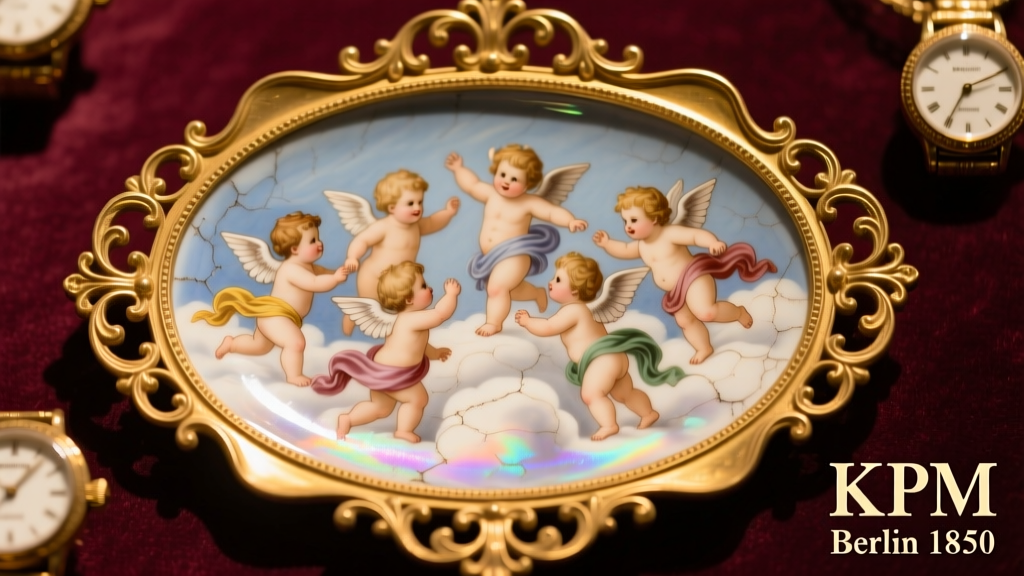
KPM Plaque: Eight Cherubs Frolicking on Cloud with Gilt Frame (11 × 8¾ in) — A Masterpiece of Berlin Porcelain
Tiny Bubbles Make Orrefors Collectors Happy: The Hidden Signature of Swedish Glass Mastery

Chinese Export Platter: Cobalt Blue Landscape Imagery on an Octagonal Porcelain Service Piece, c. 1810–1830
Watt & Creamer Autumn Foliage No. 62-3: A Masterwork of American Enamel Artistry and Horological Craftsmanship