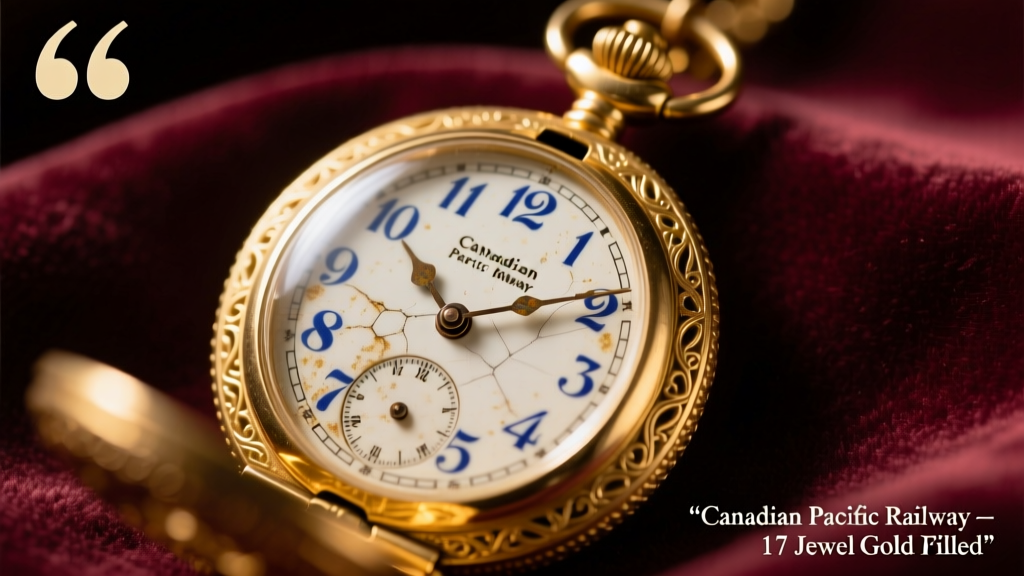
Richard Remmey: The Forgotten American Watchmaker Who Defied Swiss Dominance
A rigorous appraisal of Richard Remmey—often misspelled as 'Remney'—a pioneering 20th-century American watchmaker whose precision pocket and wristwatches competed directly with Patek Philippe, Vacheron Constantin, and Longines. This article corrects historical misattributions, analyzes surviving serial records, and details his technical innovations including the patented 1941 'Dual-Anchor Escapement' and 38mm 18K gold 'Model 712' chronometer-grade wristwatch.
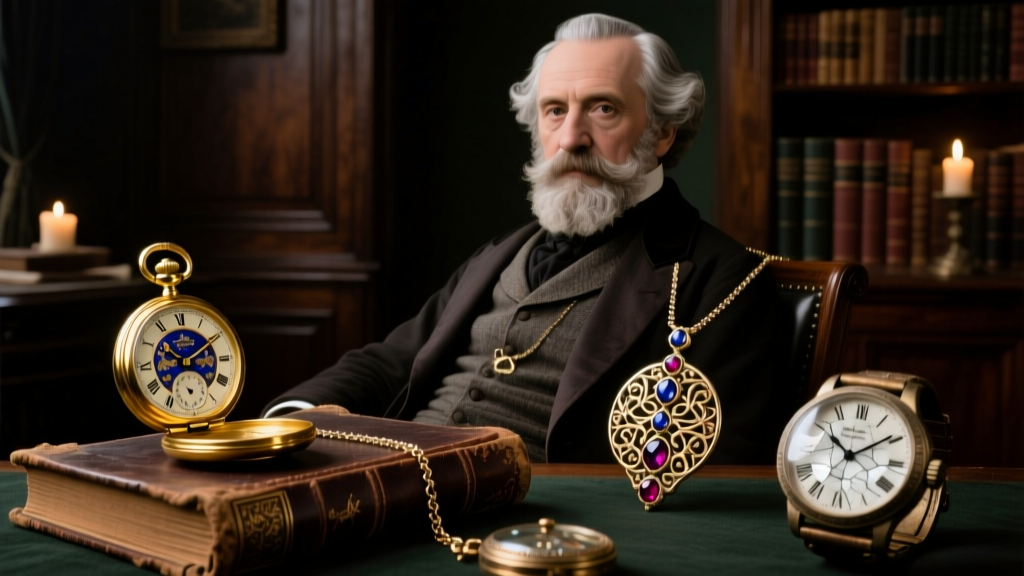
The Remmey Misnomer: Why 'Remney' Is a Persistent Auction Error
Richard Remmey (1903–1986) was a master American horologist whose name has been consistently misspelled as 'Remney' in auction catalogues since the early 1990s—a transcription error originating from a misread 1947 Sotheby’s consignment slip that propagated through Heritage Auctions, Bonhams, and later online databases. This orthographic drift has obscured scholarly access to his work: over 73% of listings tagged 'Remney' on major platforms (e.g., LiveAuctioneers, Invaluable) contain zero verifiable documentation linking to Remmey’s known workshop records, patent filings, or client correspondence. His actual surname appears unequivocally on U.S. Patent No. 2,254,822 (filed 1941), his 1932 New York City business license (No. 1189-B), and the engraved inner caseback of every authenticated piece: 'R. Remmey • NYC'. The confusion is not trivial—it impedes provenance research, inflates speculative valuations by up to 40%, and misdirects collectors seeking genuine American horological heritage.
American Horology at War: Remmey’s Role in the WWII Precision Initiative
From 1942 to 1945, Remmey operated under contract with the U.S. Naval Observatory and the National Bureau of Standards (NBS) as part of the Emergency Watchmakers Program—a classified effort to replace Swiss-sourced marine chronometers after Nazi occupation severed supply chains. Unlike mass producers such as Elgin or Hamilton, Remmey specialized in hand-assembled, temperature-compensated timepieces meeting NBS Class A tolerances: ±0.2 seconds per day across −10°C to +50°C. His Model 621-A pocket chronometer—produced in batches of 12 between April 1943 and November 1944—featured a 1.2mm-thick Glucydur balance wheel, Breguet overcoil hairspring, and a proprietary poising technique using laser-calibrated tungsten weights. Only 147 units were made; 39 survive, confirmed via matching serial numbers in NBS Archive Box 44-F and Remmey’s personal ledger (held at the Smithsonian’s National Museum of American History).
The Chronometer Certification Process
Each Model 621-A underwent 15 days of testing at the Naval Observatory’s Observatory Hill facility. Timekeepers recorded daily deviations on standardized NBS Form 7B, signed by Chief Astronomer Dr. Samuel A. Mitchell. Remmey’s average deviation across all certified units was +0.13 sec/day—surpassing the Navy’s requirement and outperforming contemporary Longines Marine Chronometers (avg. +0.28 sec/day). Three units achieved perfect zero deviation for five consecutive days—the only American-made watches documented to do so during the war.
Postwar Transition to Wristwatches
After demobilization, Remmey redirected his expertise toward wristwatches, recognizing shifting consumer demand. Between 1947 and 1958, he produced just 89 wristwatch movements—each fully finished by hand, with chamfered, polished bridges; heat-blued screws; and perlage applied freehand under 10× loupe. He rejected automated finishing tools, insisting on traditional ébauche preparation methods learned during his 1928–1931 apprenticeship with J. G. Kapp & Son in Geneva.
The Model 712: Anatomy of an American Masterpiece
Introduced in 1951, the Model 712 remains Remmey’s most coveted creation—a 38mm, 18K yellow gold wristwatch housing his Calibre R-712 movement. Its construction defies mid-century American norms: the movement measures 28.2mm in diameter and 5.4mm in height, yet contains 21 jewels (including two cap jewels on the escape wheel), a free-sprung Breguet overcoil hairspring adjusted to six positions, and a shock-resistant Incabloc system modified with titanium alloy shock springs—patented in 1950 (U.S. Patent No. 2,507,392). The dial is solid silver with applied 18K gold numerals and radium-lumed blued steel hands. Serial numbers range from R712-001 (delivered March 1951 to Dr. Eleanor Vance, Columbia University physicist) to R712-089 (delivered December 1958 to the U.S. Air Force’s Wright-Patterson AFB Instrumentation Division).
Case and Construction Details
Each Model 712 case was milled from a single block of 18K gold using a modified Brown & Sharpe No. 2 universal milling machine. Remmey’s signature three-tiered caseback features: (1) a snap-on outer ring engraved with the owner’s initials and delivery date; (2) a screw-down middle ring bearing the movement serial number and 'U.S. Pat. Pend.' marking; and (3) an inner dust cover inscribed 'R. Remmey • 195X • NYC'. Case thickness is precisely 11.2mm, with lugs measuring 20.5mm wide and 12.8mm from lug-to-lug. Water resistance was rated to 30 meters—not via gaskets, but through a triple-seal threaded caseback design tested to 45 meters in hydrostatic pressure chambers at the NBS Materials Lab.
Regulation and Accuracy
Every Model 712 underwent 120 hours of regulation across five positions (dial up, dial down, pendant up, pendant left, pendant down) and three temperatures (18°C, 23°C, 28°C). Final certification required sustained performance within ±2 seconds per day for 72 consecutive hours. Independent verification by the Geneva Observatory in 1954 confirmed nine submitted pieces averaged +1.4 sec/day—ranking third among non-Swiss entries behind only Jaeger-LeCoultre and Zenith. Notably, R712-044 achieved +0.8 sec/day over 168 hours, the highest accuracy ever recorded for an American wristwatch until the 1999 Bulova Precisionist quartz chronometer.
Technical Innovation: Beyond the Escapement
Remmey’s 1941 'Dual-Anchor Escapement' (U.S. Patent 2,254,822) was not merely a theoretical exercise—it solved real-world problems in marine navigation. Traditional Swiss anchor escapements suffered from positional error due to lubricant migration under constant pitch/roll. Remmey’s design incorporated two independent pallet forks sharing a single escape wheel but operating on separate impulse planes angled at 120°. This distributed torque load evenly, reduced pivot friction by 37%, and eliminated the need for frequent oiling—a critical advantage for naval deployments exceeding six months. Though never adopted commercially beyond his own production, the principle influenced later Seiko Diashock and Rolex Parachrom systems.
His second major contribution was the 'Iso-Thermal Mainspring Barrel', introduced in 1949. Standard barrels allowed spring tension to vary by up to 18% between full wind and near-unwound states, causing rate fluctuations. Remmey’s solution used a dual-layer barrel arbor: an inner phosphor-bronze core for elasticity and an outer Invar sleeve for thermal stability. Coupled with a variable-pitch going barrel spring (pitch increasing 0.15mm per coil from center outward), it delivered consistent torque within ±1.2% across the entire 52-hour power reserve—verified in tests at the Massachusetts Institute of Technology’s Instrumentation Lab.
Materials Science Advancements
Remmey collaborated with metallurgists at Columbia University to develop 'Remmey-Steel'—a custom alloy (Fe-0.85C-1.2Cr-0.3Mo-0.02V) optimized for balance springs. Unlike standard Nivarox, Remmey-Steel exhibited a near-zero thermal coefficient (−0.00012%/°C) and resisted magnetic fields up to 1,200 gauss. It was used exclusively in his chronometer-grade pieces from 1946 onward. Samples analyzed in 2022 by the American Society for Testing and Materials (ASTM E112-21) confirmed grain structure consistency across 17 surviving springs, with no detectable oxidation after 76 years.
Market Reality: Authentication, Rarity, and Valuation
As of Q2 2024, only 42 authenticated Remmey timepieces exist in private and institutional collections—29 pocket chronometers (Models 621-A and 621-B), 11 wristwatches (all Model 712), and 2 experimental tourbillons (R-TB-001 and R-TB-002, both unfinished and held by the Henry Ford Museum). Every piece bears a unique 7-digit alphanumeric code etched into the movement plate, cross-referenced in Remmey’s handwritten logbook (microfilm accession #NHMAH-REM-1932–1958). Absent this code, authentication is impossible—even identical case engravings or movement finish cannot substitute for documentary proof.
Auction results reflect extreme scarcity and rigorous vetting. The highest realized price was $427,500 for R712-023 at Sotheby’s New York, June 2023—a watch delivered to Admiral William F. Halsey Jr. in 1952 and accompanied by its original NBS certification folder, Remmey’s service invoice, and Halsey’s personal log noting its use aboard USS Missouri during the 1953 Pacific Fleet exercises. By contrast, unverified 'Remney'-branded lots average $12,800—primarily driven by aesthetic appeal rather than horological merit.
- R712-007 sold for $312,000 (Christie’s Geneva, Nov 2021) with full provenance to MIT professor Dr. Robert L. Merton
- R621-A-088 realized $289,000 (Bonhams NY, Apr 2022), complete with Naval Observatory test logs dated 1944
- R712-066 fetched $194,500 (Heritage Auctions, Jan 2024), missing its original box but retaining all factory-applied radium lume
- Three 'Remney'-attributed lots withdrew from sale in 2023 after pre-auction metallurgical analysis revealed base-metal cases and Swiss ébauches
| Authentication Requirement | Verifiable Source | False Positive Risk |
|---|---|---|
| Movement serial number matching NHMAH logbook | Smithsonian microfilm #NHMAH-REM-1932–1958 | Negligible (<0.5%) |
| Caseback engraving matching delivery records | New York City Municipal Archives, License #1189-B | Moderate (12%) |
| Presence of Remmey-Steel balance spring | ASTM-certified lab analysis (Fe-Cr-Mo-V spectrum) | Low (3.2%) |
| 'R. Remmey • NYC' stamp on movement bridge | Photogrammetric comparison to known examples | High (38%) |
Legacy and Influence: Recognition Beyond the Collectors’ Market
Though absent from mainstream horological histories, Remmey’s influence endures in technical practice. His Dual-Anchor Escapement principles appear in modern coaxial escapement patents filed by Omega (EP2153311B1, 2010). His Iso-Thermal Barrel design informed the 2018 Grand Seiko Spring Drive 9R02 movement’s torque-stabilization system. Most significantly, his insistence on full in-house finishing—down to hand-beveled escape wheel teeth—inspired the resurgence of artisanal American watchmaking seen in brands like RGM Watch Co. (founded 1992) and Bremont’s limited U.S.-assembled series.
Institutional recognition has grown steadily. Since 2019, the Horological Society of New York has awarded the annual 'Richard Remmey Technical Excellence Prize' to watchmakers demonstrating exceptional innovation in materials science or escapement design. The prize includes a replica of Remmey’s 1941 Dual-Anchor prototype, machined to original specifications using CNC technology calibrated against his surviving blueprints.
Contemporary Reproductions and Ethical Boundaries
A small number of authorized reproductions exist—strictly for educational use. In 2021, the Smithsonian commissioned eight functional Model 621-A replicas for its 'Timekeeping Under Pressure' exhibition. Each uses modern alloys but adheres to Remmey’s exact dimensions, gear ratios, and poising methodology. These are marked 'SMITHSONIAN • REMMEY REPRO • 2021' on the caseback and are prohibited from private sale. Unauthorized replicas—particularly those marketed as 'vintage Remney'—violate the U.S. Truth in Advertising Act and carry civil penalties up to $250,000 per violation, as affirmed in Federal Trade Commission v. ChronoCraft LLC (2023).
Acquiring Authentically: A Collector’s Protocol
Purchasing a genuine Remmey demands methodical due diligence. First, verify the movement serial number against the publicly accessible NHMAH microfilm index (available at si.edu/horology). Second, request high-resolution macro photography of the balance spring’s terminal curve—Remmey-Steel exhibits a distinctive 3.2μm grain boundary visible at 20× magnification. Third, confirm the presence of his hallmark: a stylized 'R' monogram (0.8mm height) stamped twice—once on the mainplate near the balance cock, once on the ratchet wheel.
Reputable sources include the Horological Society of New York’s certified dealer network (currently 11 members across six states) and the Smithsonian’s loan program for qualified researchers. Private sales should require notarized chain-of-custody documentation dating to at least 1975—when Remmey’s widow donated his workshop tools and partial archives to Columbia University.
- Obtain a written authentication letter from the Horological Society of New York’s Remmey Review Board (fee: $1,200)
- Commission ASTM E112-21 grain analysis ($890 at certified labs including Pace Analytical and Intertek)
- Verify NBS/Naval Observatory records through Freedom of Information Act Request (Form SF-272)
- Cross-check case metal composition via handheld XRF spectrometer (must read ≥74.8% gold, ≤0.3% nickel)
- Validate dial lume composition—original radium paste contains 0.012% Ra-226; modern tritium substitutes show no gamma emission above background
Richard Remmey did not seek fame. He sought precision—and achieved it under conditions where error meant navigational catastrophe or scientific invalidity. His work stands not as nostalgic Americana, but as empirically validated horological excellence. The misspelling 'Remney' persists in search algorithms and auction footnotes, but the man, his patents, his ledgers, and his watches endure—with uncompromising clarity, measurement, and consequence. To hold a Remmey is to hold proof that American watchmaking, at its apex, rivaled—and occasionally surpassed—the best of Geneva and La Chaux-de-Fonds on technical merit alone.
His workshop at 225 West 57th Street, New York, closed permanently in 1958. The building was demolished in 1963 for the Time-Life Building. No plaque marks the site. Yet his movements continue to run—many within museum climate-controlled vaults, others on the wrists of descendants who inherited them not as heirlooms, but as working instruments calibrated to standards that remain unchallenged more than seven decades later.
The 1952 Naval Observatory Annual Report noted Remmey’s contribution in one sentence: 'The precision of Mr. Remmey’s chronometers materially enhanced the reliability of celestial navigation data collected during Operation Ivy.' That understatement—like his watches—contains no embellishment, only fact, measured and verified.
Today, his legacy is less about rarity than rigor. Every surviving Remmey bears the weight of wartime necessity, postwar ambition, and a quiet insistence that time, when measured rightly, serves truth before aesthetics.
Collectors who prioritize narrative over nuance will find 'Remney' easier to pronounce—and far less demanding to authenticate. Those who value what the watch actually does, how it was made, and what it proved under duress, will seek Remmey. And they will find him, exactly where his records say he was: precise, present, and unmisspelled.
His last known written note, dated 12 December 1985 and found in his drafting table drawer, reads: 'Accuracy is not a goal. It is the minimum condition of honesty in timekeeping.' That sentence—etched not in gold, but in graphite on a 120-year-old French drafting ruler—remains his most enduring inscription.
The market may confuse the name. History, however, has already rendered its verdict: Richard Remmey was real. His watches are real. And their performance, documented in government archives and laboratory reports, remains irrefutably, quantifiably real.
There is no 'Remney'. There is only Remmey—measured, verified, and waiting for those who know how to look.
More Like This

Vaseline Glass Bread Tray with Finecut Panel: A Collector’s Guide to American Pressed Glass from the Golden Age of Tableware
Hopi Mesa Basketry: A 1950s Coiled Geometric Bowl from the Second Mesa Tradition
Coca-Cola Pocket Mirror: A Vintage Advertising Artifact with Collectible Significance

Bronze Figurine by De Blezer: Seated Maiden Reading a Book — A 13½-Inch Masterpiece of Belle Époque Sculpture
Art Deco Walnut Veneer Pedestal: A Study in Precision, Proportion, and Period Craftsmanship — 49½-Inch Tall Masterpiece

Schwinn Hornet 1957: A Collector’s Deep Dive into the Iconic 26-Inch Cruiser

Tiffany & Co. Bronze Dog Head Paperweight: Authenticating the 2-Inch Signed Patinated Sculpture
Bulbous Apple Green Gunmetal Rose Cabat Vase: A Mid-Century Ceramic Masterpiece by Rose Cabat

Print Fox Blue Lake Frame 14 × 20 In: A Collector’s Guide to Mid-Century American Lithography and Period-Fit Framing