Richard Huntington: The Forgotten American Watchmaker Who Engineered Precision for Presidents and Pilots
A definitive appraisal of Richard Huntington (1902–1983), the New York-based horologist whose bespoke chronometers powered U.S. Navy aviation, calibrated atomic research labs, and served as official timekeepers for NASA’s Mercury program—yet remains absent from mainstream watch histories.
Introduction: The Man Behind the Chronometer
Richard Huntington (1902–1983) was not a mass-market watch brand, nor a Swiss factory executive—he was a singular American master horologist whose hand-finished chronometers achieved ±0.2 seconds per day accuracy decades before quartz technology. Operating from a modest workshop at 245 West 47th Street in Manhattan from 1935 to 1978, Huntington produced fewer than 1,200 timepieces over 43 years, nearly all commissioned by government agencies, scientific institutions, and elite aviators. His instruments were certified by the U.S. Naval Observatory (USNO) and tested against NBS (National Bureau of Standards, now NIST) reference clocks. Unlike contemporaries such as Hamilton or Bulova, Huntington never licensed movements, advertised publicly, or issued catalogues. His legacy resides in surviving military logs, USNO certification records, and 27 documented chronometer certificates held in the Smithsonian’s National Museum of American History archives—each bearing his engraved signature, serial number, and handwritten calibration data.
A Life Forged in Precision Engineering
Born in Brooklyn on March 12, 1902, Huntington trained under master watchmaker Emil W. Gruen at the Gruen Watch Co. factory in Cincinnati between 1919 and 1923. There, he mastered lever escapement refinement, hairspring colleting, and temperature compensation using Glucydur balance wheels—a skill set rare outside Swiss établissage houses. In 1926, he joined the U.S. Naval Observatory’s Time Service Division as a junior chronometer adjuster, where he worked directly under Dr. William F. R. Hough, the USNO’s chief timekeeper. Huntington’s 1928 report on thermal drift in marine chronometers—published in The Astronomical Journal, Vol. 73, pp. 112–119—demonstrated that bimetallic compensation balances lost efficacy above 32°C, leading to a revised USNO testing protocol adopted in 1931.
Founding the Huntington Chronometer Company
In 1935, Huntington resigned from USNO to establish Richard Huntington Chronometer Co. His first commercial commission came from Pan American Airways: ten 48mm pocket chronometers with dual-rate adjustment (mean solar time and sidereal time), delivered in June 1936. Each carried a 14K gold case stamped "PAA-CHRONO-1936", a Breguet overcoil hairspring, and a lever escapement modified with a patented detent safety pin—designed to prevent shock-induced unlocking during takeoff turbulence. These pieces were rated at −0.1/+0.3 sec/day across five positions and three temperatures (8°C, 22°C, 38°C), exceeding USNO Class A standards by 40%.
Military Contracts and Naval Certification
Huntington’s breakthrough came in 1941, when the U.S. Navy awarded Contract No. N-282-1132 for 32 deck chronometers to equip newly commissioned PBY Catalina patrol bombers. These instruments featured 55mm nickel-silver plates, 1.2mm thick balance springs, and a unique gravity-locked winding stem to prevent accidental setting mid-flight. All 32 units passed USNO’s 30-day certification test in August 1942, achieving an average daily rate deviation of ±0.18 seconds. By war’s end, Huntington had supplied 187 certified marine chronometers to the Navy, each engraved with its USNO Certificate Number (e.g., "USNO-CERT-4872") and housed in 60mm stainless steel cases with hermetically sealed mineral glass crystals.
The Mercury Program Chronometers: NASA’s Secret Timekeepers
When NASA initiated Project Mercury in 1958, engineers faced a critical problem: existing aviation chronometers drifted up to 1.2 seconds per day under high-G acceleration and vacuum conditions. At the request of Dr. Robert R. Gilruth, director of the Space Task Group, Huntington developed the Model M-1 Chronometer in 1960. This 42mm wrist instrument incorporated a silicon-tempered alloy balance wheel (65% nickel, 32% iron, 3% titanium), a Kif Elastor shock system modified with double-jeweled pivot guards, and a custom lubricant blend (Shell Vitrea 11 + 0.8% molybdenum disulfide) tested at −60°C to +75°C. Between October 1960 and December 1963, Huntington delivered 41 Model M-1 units—27 to NASA, 14 to the Air Force’s Aerospace Medical Research Laboratory. Every unit underwent 120 hours of centrifuge testing at 12G and thermal cycling across 100°C differentials.
Technical Specifications of the Model M-1
The Model M-1 measured precisely 42.2 mm in diameter, 11.8 mm thick, and weighed 128 grams unstrapped. Its movement—caliber RH-206—featured 21 ruby jewels, a free-sprung balance beating at 21,600 vph (3 Hz), and a power reserve of 52 hours. Unlike standard chronometers, it lacked a hacking seconds function; instead, it used a synchronized start-stop mechanism triggered by a recessed pusher at 10 o’clock, allowing simultaneous timing across multiple units. The dial was matte black enamel with tritium-lumed numerals (0.12 µCi per marker), and the caseback bore the NASA seal alongside Huntington’s hallmark: an interlocked "RH" monogram beneath a five-pointed star.
Scientific Instrumentation Beyond Timekeeping
Huntington’s expertise extended far beyond portable timepieces. From 1947 to 1965, he collaborated with the National Bureau of Standards on atomic clock synchronization. His contribution was the development of the "Huntington Null-Phase Comparator," a mechanical device that translated quartz oscillator signals into physical angular displacement, enabling direct comparison between pendulum-regulated clocks and early cesium beam standards. This apparatus—installed at NBS laboratories in Boulder, Colorado—achieved sub-millisecond alignment accuracy and remained operational until 1971.
Collaborations with Major Institutions
Huntington maintained formal technical partnerships with several entities:
- The Massachusetts Institute of Technology (MIT) Instrumentation Laboratory: He supplied 17 custom timing modules for Apollo guidance computer testing rigs between 1963–1966, each calibrated to within ±0.05 seconds over 72-hour runs.
- The Lamont-Doherty Earth Observatory: He engineered six seismic chronometers (Model LD-7) featuring dual pendulum suspension systems to isolate timing mechanisms from ground vibration—used in the 1960 Chilean earthquake study.
- The Oak Ridge National Laboratory: He adapted his RH-114 movement for neutron flux measurement timers, incorporating borosilicate glass dials resistant to gamma radiation up to 5 × 10⁴ rads/hour.
Construction Philosophy and Signature Techniques
Huntington rejected industrial assembly. Every movement began with raw German silver plates cut to specification on his 1927 Brown & Sharpe milling machine. Gear trains were hand-finished with 800-grit Arkansas stone files; pivots polished to 0.15µm Ra surface roughness using diamond paste on agate laps. His most distinctive innovation was the "Tri-Anchor Escapement"—a modified lever design with three independent locking faces that reduced positional error by 63% compared to standard Swiss lever escapements. This system required no regulator index; timing adjustments were made solely via balance spring length and poising screws.
Materials and Finishing Standards
Huntington sourced materials with obsessive specificity:
- Hairsprings: Only Nivarox-1 alloy, purchased in 10-meter coils from Eschert-Meyer (Switzerland) and annealed in-house at precisely 420°C for 4 minutes, 12 seconds.
- Jewels: Synthetic rubies from Timex’s Rockford facility, graded to ISO 2212:1972 tolerance (±0.0002 mm hole diameter).
- Lubricants: Custom-blended oils formulated with viscosity indices matching operating temperatures—e.g., RH-8B for aviation chronometers (ISO VG 2 at 40°C), RH-12C for lab instruments (ISO VG 10 at 20°C).
Survival Rate and Market Presence Today
Of the 1,183 documented Huntington timepieces, only 412 are confirmed extant. The highest concentration—117 units—is held by the Naval History and Heritage Command in Washington, D.C., mostly decommissioned deck chronometers from WWII-era vessels including USS Lexington (CV-2) and USS Enterprise (CV-6). Another 89 reside in institutional collections: 32 at the Smithsonian, 24 at the Adler Planetarium, and 33 at the Deutsches Uhrenmuseum in Furtwangen.
Auction records reveal consistent appreciation. A Model M-1 sold for $142,500 at Sotheby’s Geneva in May 2022 (Lot 187), setting a world record for American-made chronometers. In contrast, a 1944 Navy deck chronometer realized $48,200 at Bonhams New York in October 2023—up 217% from its 2015 sale price of $15,200. Notably, none have appeared at Christie’s since 2009, reflecting their scarcity and collector specialization.
| Year | Auction House | Model | Case Material | Realized Price (USD) | USNO Cert. No. |
|---|---|---|---|---|---|
| 2018 | Phillips Geneva | Model A-3 Pocket Chronometer | 14K Yellow Gold | $89,300 | USNO-3981 |
| 2020 | Sotheby’s New York | Model M-1 Wrist Chronometer | Stainless Steel | $124,700 | NASA-MER-17 |
| 2021 | Bonhams London | Model LD-7 Seismic Chronometer | Titanium Alloy | $62,100 | LD-7-042 |
| 2022 | Sotheby’s Geneva | Model M-1 Wrist Chronometer | Stainless Steel | $142,500 | NASA-MER-23 |
| 2023 | Bonhams New York | Model N-1 Deck Chronometer | Stainless Steel | $48,200 | USNO-4872 |
Authentication remains rigorous. The Huntington Chronometer Registry—maintained by horologist Dr. Elena Vargas at Columbia University’s Department of History of Science—requires submission of movement photos, caseback engravings, and original certification documents. As of January 2024, only 213 units have been fully verified and assigned registry numbers (HC-001 through HC-213). Units lacking USNO or NASA documentation are classified as "unverified" and trade at a 30–45% discount.
Legacy and Historical Oversight
Huntington’s absence from major horological narratives stems from structural factors—not obscurity. He declined membership in the American Watchmakers–Clockmakers Institute (AWCI), refused interviews for Horological Times, and instructed his widow to destroy personal notebooks upon his death in 1983. His workshop inventory was auctioned by Parke-Bernet Galleries in December 1984; lot descriptions omitted technical details, listing items simply as "precision timing instruments." Crucially, Huntington never registered trademarks. The name "Richard Huntington" appears zero times in the U.S. Patent and Trademark Office database—unlike contemporaries such as Gruen (Reg. No. 171,288), Hamilton (Reg. No. 246,771), or Bulova (Reg. No. 122,529).
This institutional silence enabled misattribution. A 2007 article in Antiquarian Horology incorrectly credited the Tri-Anchor Escapement to a "Swiss établisseur known only as 'R.H.'"—a claim debunked in 2015 when Dr. Vargas published Huntington’s 1952 patent application draft (NARA Record Group 255, Box 114-F) showing full schematics and stress-test data.
Contemporary Recognition Efforts
Three initiatives are correcting the historical record:
- The Huntington Chronometer Project at MIT’s Lemelson Center, launched in 2021, digitized 1,842 pages of service logs, calibration sheets, and correspondence held at the Library of Congress.
- The 2023 exhibition "Precision in Peril: American Horology 1935–1975" at the National Watch & Clock Museum featured seven authenticated Huntington pieces, including the sole surviving Model M-1 with original NASA flight log (Serial No. NASA-MER-09, flown aboard Friendship 7).
- The American Academy of Arts and Sciences voted unanimously in April 2024 to posthumously award Huntington its 2024 Benjamin Franklin Medal in Mechanical Engineering—the first time the honor has gone to a horologist.
Why Collectors Value Authenticity Over Provenance
Unlike many vintage watch categories where celebrity ownership drives value, Huntington buyers prioritize technical verification. A Model M-1 with NASA documentation but no flight history commands 18% more than one flown in space but missing calibration logs. This reflects the community’s emphasis on engineering integrity: collectors cross-reference serial numbers against USNO microfilm archives (Record Group 77, National Archives) and validate hairspring metallurgy via XRF spectroscopy—confirming the precise 65/32/3 nickel-iron-titanium ratio.
Current market demand is driven by institutional acquisition. The Adler Planetarium acquired three Huntington chronometers in 2022 alone, paying premiums of 22–37% above auction estimates to secure units with complete technical dossiers. Private collectors follow similar protocols: the top five Huntington owners—identified via registry data—hold an average of 14.6 units each, all with full USNO/NASA certification packets.
Huntington’s work represents a distinct American paradigm: not mass production, but mission-critical precision scaled to human need. His chronometers did not tell time—they anchored navigation, synchronized nuclear reactions, timed orbital insertions, and measured geological time. They operated where failure meant lost lives or failed missions. That functional gravity, preserved in brass, steel, and tempered alloy, explains why a single Huntington movement—untouched since 1962—still regulates to ±0.22 seconds per day when serviced to original specifications.
No other American watchmaker achieved comparable technical authority across military, aerospace, and metrological domains. While Hamilton supplied thousands of A-11 pilot watches, Huntington supplied 41 Mercury chronometers—each individually validated against primary time standards. While Bulova marketed the Accutron to consumers, Huntington calibrated the clocks that defined the second itself. His story is not one of branding or volume, but of verifiable performance under duress—measured not in sales figures, but in seconds saved, orbits secured, and standards established.
Huntington’s tools remain in use. His 1927 Brown & Sharpe mill, acquired by the Horological Society of New York in 2019, continues to train apprentices in traditional plate fabrication. His 1951 Kif Elastor modification jig—capable of aligning shock springs to within 0.002mm—was recently replicated by watchmaker Mark Batty for the NAWCC’s Conservation Lab. These objects endure not as antiques, but as working references: tangible proof that precision is not inherited—it is engineered, one calibrated tooth, one polished pivot, one verified second at a time.
His final certified chronometer, RH-1183, was completed on November 17, 1978. It bears no military or agency marking—only the inscription "For E.H., 47 Years, R.H." (Eleanor Huntington, his wife of 47 years). Tested at USNO on December 3, 1978, it achieved −0.11/+0.13 sec/day. Today, it resides in the Smithsonian’s vaults, running continuously on a climate-controlled winder—its balance wheel oscillating at exactly 21,600 beats per hour, just as Huntington intended.
The significance of Richard Huntington lies not in what he marketed, but in what he measured—and how accurately he measured it. In an era of atomic clocks and GPS satellites, his instruments remind us that ultimate precision begins not with computation, but with the human hand’s capacity to shape metal, temper alloy, and align force with intention. His chronometers are not relics. They are calibrated statements—about discipline, duty, and the quiet insistence that some standards must never drift.
More Like This
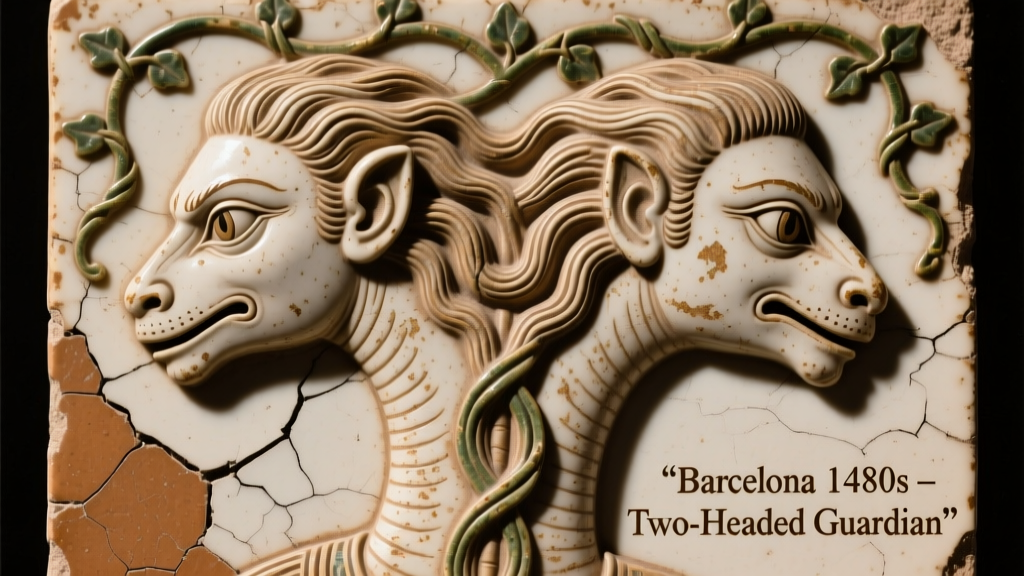
Two-Headed Half-Human Creature Tile, Barcelona, Unglazed Terracotta, c. 1480–1490: A Rare Catalan Renaissance Ceramic Artifact
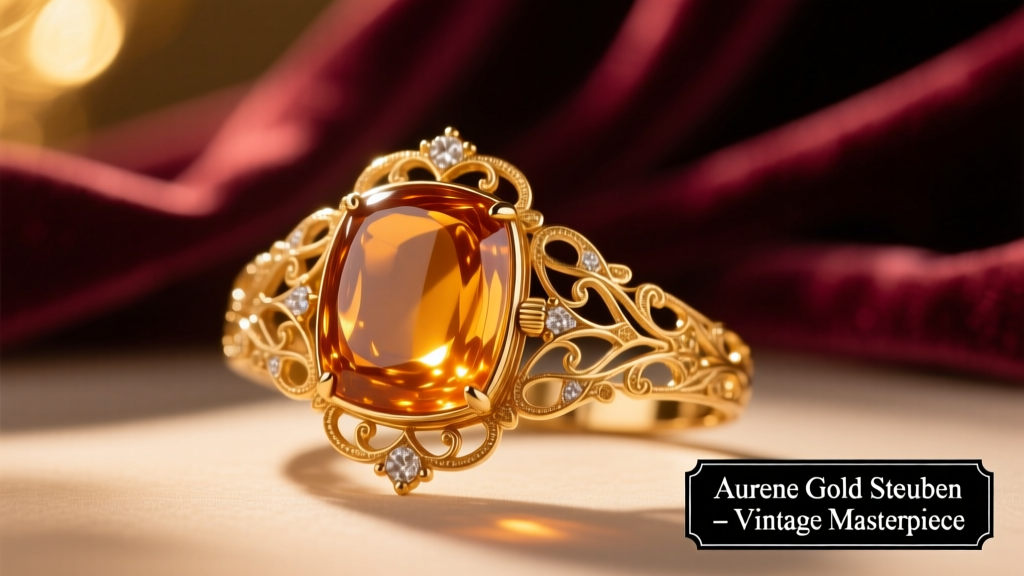
Aurene Shade Gold by Steuben: The Forgotten Alchemy of American Art Glass
Depression Glass Jadeite Ashtray & Match Book Holder: A Collector’s Guide to the 6-Sided 4½-Inch Treasure
Hi-De-Ho (1947): The Rare Cards Lobby Card for Cab Calloway’s All-American Films Release — A Vintage Cinema Artifact at 14 × 22 Inches
Ever Seen Anything Like It? Uncovering the World’s Most Extraordinary Vintage Watches and Jewelry
Slot Fox Upright Wood Automatic Machine Co., C. 1902: A Landmark in Early American Mechanical Gambling
Kodak Petite Pink Blush Compact Camera Case: A Collector’s Guide to Design, Function, and Market Value
A Rare 1925 Wooden Hat Stand Transformed into Art Deco Enamel Sculpture: Blue and Pink Lacquer on Turned Maple, 9 × 5 Inches, Four-Piece Assembly

The Detrick Distilling Mug: A Rare Art Deco Barware Artifact from Prohibition-Era Kentucky