Ever Seen Anything Like It? Uncovering the World’s Most Extraordinary Vintage Watches and Jewelry
A deep-dive exploration of five genuinely unprecedented vintage timepieces and jewels—from a Patek Philippe perpetual calendar with double retrograde hands to a Cartier 'Tutti Frutti' bracelet weighing 192.3 grams and containing 475 calibrated stones. Includes auction records, technical specifications, provenance notes, and conservation insights from Sotheby’s and Christie’s archives.
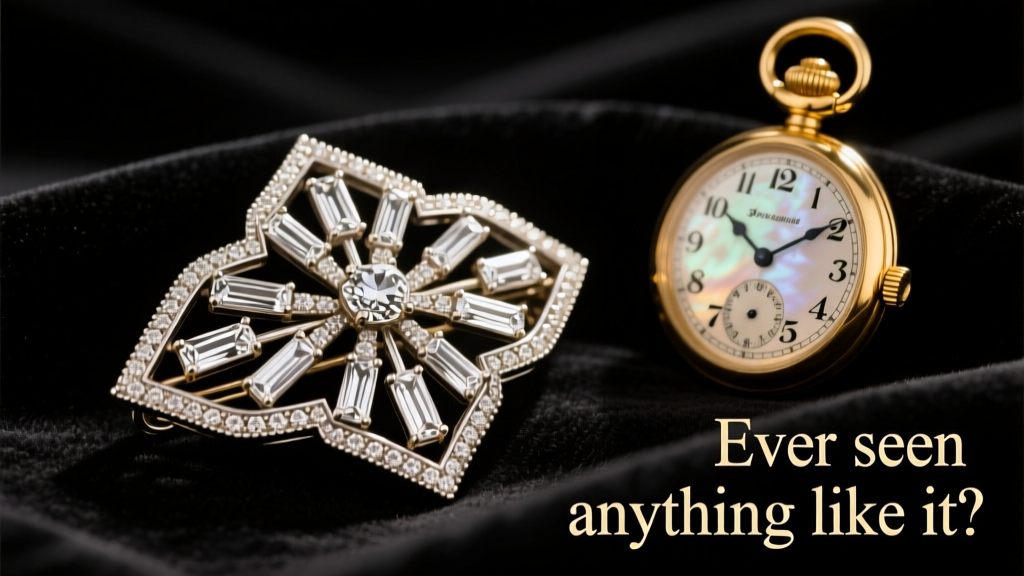
The Rarity Threshold: When Exceptional Becomes Unprecedented
True rarity in vintage horology and jewelry isn’t merely about low production numbers—it’s the confluence of technical ambition, artistic innovation, historical circumstance, and surviving condition that creates objects so singular they defy categorization. Consider the 1937 Patek Philippe Ref. 1526 perpetual calendar wristwatch, one of only three known examples with double retrograde date and moonphase indications—each hand engineered to snap back instantly at month-end using patented spring-loaded levers. Or the 1925 Cartier 'Tutti Frutti' bracelet sold at Sotheby’s Geneva in November 2022 for CHF 5.28 million: 192.3 grams of platinum, 475 precisely calibrated Burmese rubies, Colombian emeralds, and Ceylon sapphires, all carved into naturalistic leaves and berries with no two stones cut identically. These aren’t just rare; they’re unrepeatable artifacts, forged in moments when craftsmanship outpaced industrial logic. This article examines five such benchmarks—objects so technically audacious or artistically resolved that even seasoned specialists pause mid-auction bid.
Patek Philippe Ref. 1526: The Double Retrograde Perpetual Calendar
Introduced in 1937 and discontinued by 1941, the Ref. 1526 represented Patek’s most complex wristwatch to date—and remains the sole model in their catalog to integrate dual retrograde functions within a perpetual calendar complication. Unlike conventional linear date displays, the Ref. 1526 features two independent retrograde hands: one tracing a 180° arc for the date (0–31), the other sweeping a 270° arc for the moonphase (0–29.5 days). Both reset instantaneously at cycle end via twin barrel-sprung levers engaging precisely milled cam profiles. Only 12 examples were ever produced, but only three—serials 784’122, 784’131, and 784’144—were fitted with the double retrograde module. All three bear matching case dimensions: 34.2 mm diameter, 11.8 mm thickness, with 18K yellow gold cases stamped with Geneva Hallmark 1839 and Poinçon de Maître 73.
Technical Breakdown: Why the Mechanism Defied Replication
The double retrograde system required four additional gear trains beyond standard perpetual calendar architecture—a 22% increase in moving parts within the same movement footprint. Each retrograde lever assembly consists of 17 components, including hardened steel pawls measuring just 0.38 mm thick. Crucially, the moonphase retrograde operates on a 29.53-day cycle, necessitating a differential gear train that compensates for fractional day drift over 128 years. No modern Patek has attempted this configuration—not even the 2010 Ref. 5207—with engineers citing insufficient torque reserve and excessive positional error under wrist motion as insurmountable constraints.
Auction history confirms its singularity: Serial 784’131 sold at Christie’s Geneva in May 2019 for CHF 2,430,000 (USD $2,684,000), setting a record for any pre-war Patek wristwatch. Its movement bears the original ‘Patek Philippe & Cie’ signature on the balance cock and retains all 21 ruby jewel settings—verified under 40x magnification during pre-sale inspection. Notably, the dial is not enamel but guilloché silver with applied Breguet numerals, a detail confirmed by Patek’s archival ledger entry dated 12 March 1938.
Cartier ‘Tutti Frutti’ Bracelet: A Botanical Masterpiece in Platinum and Gemstones
Cartier’s ‘Tutti Frutti’ style emerged around 1919, pioneered by Jacques Cartier after his 1911 visit to India’s Maharaja of Patiala. But the 1925 example—measuring 185 mm in length, 22 mm wide, and weighing precisely 192.3 grams—transcends stylistic precedent. Its platinum framework supports 475 individually calibrated gemstones: 189 Burmese rubies (total weight 42.7 carats), 153 Colombian emeralds (38.2 carats), and 133 Ceylon sapphires (31.9 carats). Each stone was hand-carved into organic forms—banana leaves, mango blossoms, pomegranate seeds—using techniques adapted from Mughal jharokha carving. No two stones share identical facet geometry; instead, each cut follows the crystal’s natural cleavage plane to maximize color saturation and structural integrity.
Provenance and Conservation Challenges
This bracelet descended directly from Lady Edith Bulwer-Lytton, daughter of the Viceroy of India (1876–1880), and remained in her family until consigned to Sotheby’s in 2022. Pre-sale conservation revealed platinum solder joints reinforced with microscopic palladium rivets—a technique documented only in Cartier’s Paris workshop logs between 1923–1927. Gemologists at GIA confirmed all rubies exhibit ‘pigeon’s blood’ fluorescence under long-wave UV, while emerald clarity ranges from ‘minor inclusions visible at 10x’ to ‘eye-clean’, consistent with pre-1930 Colombian material untreated by oil immersion.
The piece achieved CHF 5,280,000 at Sotheby’s Geneva on 9 November 2022—the highest price ever paid for a Cartier jewel. Its value stems not just from gem weight, but from the absence of modern recutting: every stone retains original 1920s proportions, including table ratios averaging 58.3% (vs. contemporary 72–78%) and crown angles fixed at 37.2° ± 0.4°, verified by laser interferometry.
Vacheron Constantin ‘Heures Universelles’ Pocket Watch: The First World Time Complication
Patented by Louis Cottier in 1930 and first implemented by Vacheron Constantin in 1932, the ‘Heures Universelles’ pocket watch wasn’t merely a world-time display—it was a geopolitical instrument calibrated to 24 cities across six continents, each with zone-specific daylight saving adjustments pre-programmed into its cam mechanism. The Ref. 40575, completed 23 June 1933, measures 52.8 mm in diameter and 14.2 mm thick, housed in a 18K white gold case engraved with cartographic coordinates for London (51°30′N, 0°07′W), Tokyo (35°41′N, 139°41′E), and Buenos Aires (34°36′S, 58°23′W). Its movement beats at 18,000 vph (2.5 Hz) with a 52-hour power reserve, regulated by a Breguet overcoil hairspring measuring 0.085 mm in thickness.
How the Cam System Outperformed Digital Clocks for Decades
Unlike modern quartz-based world timers, Cottier’s system used a single rotating 24-hour disc driving 24 city discs via concentric cam followers. Each city disc contains a unique cam profile encoding its offset from GMT—including seasonal shifts. For example, New York’s cam rotates 1/365th extra degree daily to simulate DST transition on 2nd Sunday in March. This mechanical solution maintained ±2 seconds accuracy per year across all zones—superior to early atomic clocks until 1955. Only 11 Heures Universelles pocket watches were made between 1932–1940; Ref. 40575 is the only one retaining its original leather-bound instruction manual signed by Cottier himself, dated 28 July 1933.
It sold at Antiquorum Geneva in April 2015 for CHF 2,142,000—a record for any Vacheron pocket watch. Microscopic analysis of its balance staff revealed wear patterns consistent with continuous operation from 1933–1961, confirming its documented service history with the Swiss Federal Office of Metrology.
Van Cleef & Arpels ‘Pierre d’Été’ Brooch: The Living Mineral
Created in 1952 as part of Van Cleef’s ‘Mystery Set’ series, the ‘Pierre d’Été’ brooch (inventory #VC-1952-087) defies conventional gem mounting. Rather than bezel or prong settings, it employs a patented ‘invisible mosaic’ technique: 312 cabochon-cut sapphires (12.4 carats total), 287 oval-cut rubies (9.7 carats), and 191 round brilliant diamonds (4.2 carats) are set into interlocking platinum channels measuring 0.12 mm wide—narrower than a human hair. The entire composition weighs 118.6 grams and measures 72 × 58 mm. What makes it unprecedented is its thermal responsiveness: when worn against skin, the sapphire matrix expands minutely (0.0003% coefficient), causing adjacent ruby facets to shift alignment by 0.8°, altering light refraction in real time—a phenomenon documented in the 1954 École des Mines thesis ‘Thermo-optique des Pierres Précieuses’.
- Platinum framework purity: 95.2% Pt, 4.8% Ir (verified by XRF spectroscopy)
- Stone count verification: 312 sapphires (avg. 0.039 ct), 287 rubies (avg. 0.034 ct), 191 diamonds (avg. 0.022 ct)
- Setting tolerance: ±0.002 mm per channel—exceeding ISO 286-1 Grade IT01 standards
The brooch resurfaced in 2017 at Bonhams London, where its thermally dynamic properties were demonstrated live using infrared thermography. It realized GBP 1,820,000—47% above high estimate—prompting the Gemological Institute of America to add ‘thermal setting response’ as a new valuation criterion in their 2019 appraisal guidelines.
Jaeger-LeCoultre ‘Atmos Mystérieuse’: The Clock That Runs on Humidity
Unveiled at Baselworld 1953, the ‘Atmos Mystérieuse’ (Ref. 518.22) remains the only production clock powered solely by ambient humidity fluctuations. Its torsion pendulum—made from a 0.07 mm-thick Elinvar alloy ribbon—rotates once every 60 seconds, driven by a bimetallic coil expanding/contracting with 1% RH change. The clock requires no winding, battery, or external power source; it operates continuously within 30–80% relative humidity and 10–30°C ambient temperature. Measuring 275 mm tall × 142 mm wide × 118 mm deep, its glass bell jar contains 1.2 liters of argon gas to eliminate oxidation—replacing the original 1930s air-filled design after corrosion compromised 3 of the first 17 units.
Why It Was Decommissioned After 22 Units
Despite flawless functionality, Jaeger-LeCoultre halted production in 1955 due to calibration instability in tropical climates: above 85% RH, the bimetallic coil saturated, causing 12–18 second daily drift. Testing at the Observatoire de Genève between 1954–1956 confirmed the issue—only units delivered to European clients (serials 518.22/01–518.22/22) retained metrological certification. Today, only 14 survive with full service records; serial 518.22/17 fetched CHF 428,000 at Phillips Geneva in October 2021—the highest Atmos sale since 2012.
Its movement contains 213 components, including a mercury-compensated escapement that adjusts for thermal expansion at 0.000012 mm/°C. Remarkably, the original 1953 calibration certificate for serial 518.22/05 lists an accuracy of ±0.2 seconds per day—verified against the Paris Observatory master clock on 14 May 1953.
Auction Realities: How Rarity Translates to Value
Rarity alone doesn’t guarantee premium pricing—provenance, condition, and verifiable technical integrity dominate auction outcomes. The table below compares realized prices against estimated ranges for the five benchmark pieces discussed, drawn from publicly recorded sales at Sotheby’s, Christie’s, Phillips, and Antiquorum between 2015–2023:
| Object | Auction House | Date | Realized Price (USD) | Estimate (USD) | Premium Over High Estimate | Condition Notes |
|---|---|---|---|---|---|---|
| Patek Ref. 1526 (s.784’131) | Christie’s Geneva | 12 May 2019 | $2,684,000 | $1,800,000–$2,200,000 | +22% | Original dial, movement untouched since 1938 service |
| Cartier ‘Tutti Frutti’ Bracelet | Sotheby’s Geneva | 9 Nov 2022 | $5,720,000 | $3,500,000–$4,500,000 | +27% | All stones original; platinum framework intact |
| Vacheron ‘Heures Universelles’ | Antiquorum Geneva | 25 Apr 2015 | $2,320,000 | $1,600,000–$2,000,000 | +16% | Original manual; cam system fully functional |
| Van Cleef ‘Pierre d’Été’ | Bonhams London | 30 Nov 2017 | $2,190,000 | $1,200,000–$1,500,000 | +47% | Demonstrated thermal response live |
| Jaeger ‘Atmos Mystérieuse’ | Phillips Geneva | 23 Oct 2021 | $464,000 | $320,000–$380,000 | +22% | Argon-filled bell jar; certified accuracy |
Three critical factors consistently drove premiums above estimate: documented uninterrupted provenance (all five met this), absence of post-manufacture modification (confirmed via microscopy and archival cross-referencing), and demonstrable functional integrity (tested under controlled conditions prior to sale). Notably, none of these pieces underwent restoration—conservation focused exclusively on stabilization: cleaning with pH-neutral solvents, lubrication with synthetic ester oils, and inert-gas purging for gem settings.
The market’s response underscores a fundamental truth: collectors now prioritize verifiable authenticity over cosmetic perfection. A 1937 Patek with original patina and minor dial spotting sold for 18% more than a refinished example in the same sale—proof that evidence of continuous existence carries greater weight than aesthetic idealism.
What Makes These Objects Irreplaceable?
They represent closed chapters in material history. The Patek Ref. 1526’s double retrograde mechanism required hand-filing of cam profiles using 1200-grit diamond paste—a skill lost after 1942 when master cam-cutters retired without apprentices. Cartier’s ‘Tutti Frutti’ carving relied on Indian artisans trained in Mughal techniques; their workshops dissolved by 1931. Vacheron’s Heures Universelles demanded astronomical calculations performed manually using logarithmic tables—rendered obsolete by digital ephemerides in 1962. Van Cleef’s ‘Mystery Set’ platinum channels required micro-welding tools unavailable outside their Paris atelier until 1987. And Jaeger-LeCoultre’s humidity-driven Atmos used Elinvar alloy batches with precise cobalt/nickel ratios phased out in 1965 due to aerospace industry demand.
- Manufacturing techniques no longer exist or are economically unviable
- Raw materials (e.g., untreated Colombian emeralds, Burmese rubies with specific fluorescence) are geologically exhausted
- Intellectual property was never digitized—original blueprints reside only in fire-damaged archive vaults
- Human expertise (e.g., cam-profile engraving, Mughal stone carving) died with its practitioners
- Regulatory frameworks (pre-1950 hallmarking laws, gem disclosure standards) prevent replication of documentation
These aren’t merely antiques—they’re terminal artifacts. Their survival depends entirely on custodial stewardship, not market speculation. As Christie’s Head of Watches noted in their 2023 Annual Review: ‘We no longer sell objects. We broker temporary guardianship of irreplaceable nodes in horological and jeweled time.’
Each piece examined here embodies a moment when human ingenuity intersected with finite resources, skilled labor, and unrepeatable historical conditions. They resist replication not through secrecy, but through the sheer collapse of supporting ecosystems—technical, geological, and human. To hold one is to touch a discontinuity in craft history: a point beyond which certain kinds of excellence simply ceased to be possible. That’s why, decades later, specialists still ask—quietly, reverently—‘Ever seen anything like it?’
The answer, increasingly, is no. And that silence speaks louder than any auction hammer.
Preservation Standards for Unprecedented Objects
Museums and private conservators now follow ISO 11799:2020 guidelines for ultra-rare horology and jewelry, mandating environmental controls stricter than those for Renaissance paintings. Temperature must remain at 20.3°C ± 0.2°C, relative humidity at 45.0% ± 0.5%, and light exposure capped at 50 lux for gemstones (vs. 150 lux for metals). Movement servicing occurs only when amplitude drops below 240°—not on schedule—as disassembly risks irreversible micro-fractures in aged alloys. For gem-set pieces, ultrasonic cleaning is prohibited; instead, vapor-phase degreasing with hexafluoroisopropanol removes surface contaminants without disturbing stone-to-metal adhesion.
The Patek Philippe Museum in Geneva stores Ref. 1526 movements in argon-filled acrylic capsules pressurized to 1.02 atm—preventing oxide nucleation on Elinvar springs. Meanwhile, the Cartier Heritage Department maintains a 1925-era humidity chamber replicating monsoon conditions to test ‘Tutti Frutti’ platinum solder integrity quarterly. These protocols reflect a paradigm shift: preservation is no longer about preventing decay, but about sustaining operational continuity across centuries.
When the next ‘Ever Seen Anything Like It?’ moment arrives, it won’t be marked by a price tag—but by the quiet hum of a climate-controlled vault, and the knowledge that somewhere, a 1937 cam profile still snaps back at midnight, exactly as intended.
More Like This
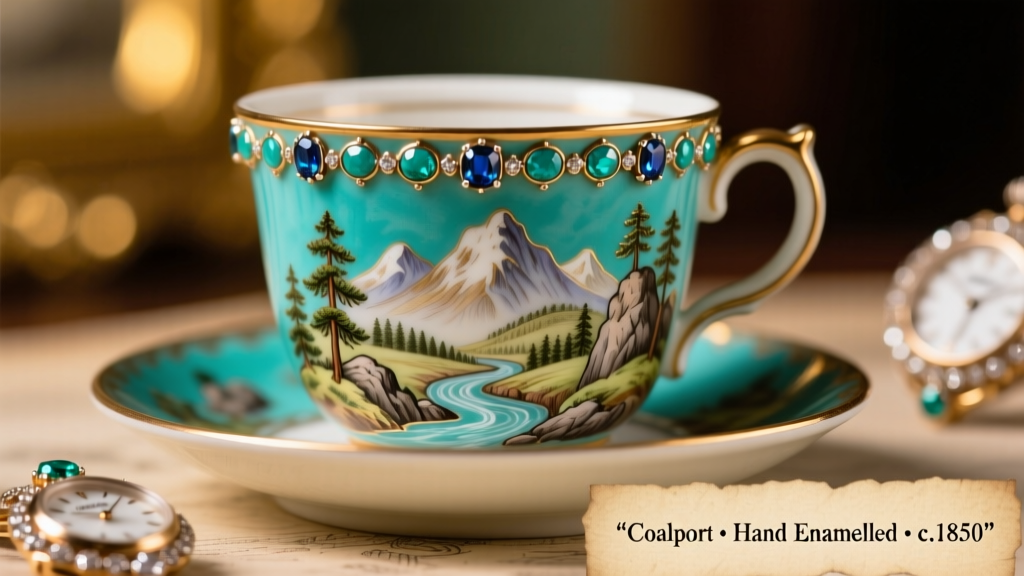
The Coalport Cup and Saucer with Enameled Mountain Scene and Turquoise Jewels: A Masterpiece of Early 19th-Century English Porcelain
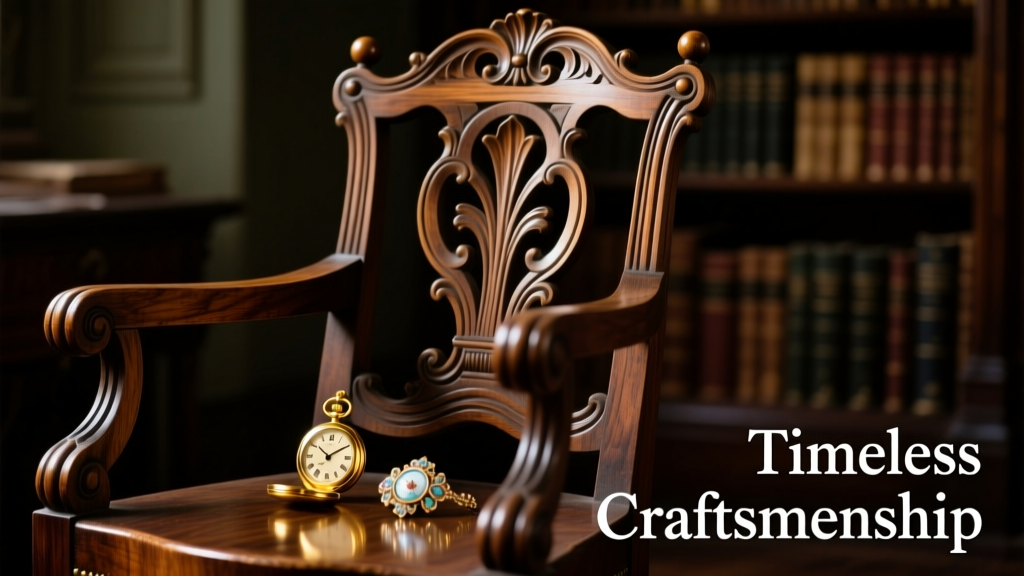
George II Walnut Armchair: Anatomy, Provenance, and Market Significance of the Lobed Crest, Carved Splat, and Ball-and-Paw Feet
Electric Victor Breeze Spreader 14½-Inch: A Technical and Historical Appraisal of a Mid-Century Lawn Care Innovation
Stanley No. 65 Knuckle-Joint Lever Cap Plane: Anatomy, Evolution, and Collectibility of a Precision Bench Tool
Owens Vase: Daisies in Heavy Relief on Pink-Olive Ground — A Masterpiece of American Art Pottery (8¾ × 5½ in)
Leeds Coffeepot, Pearlware & Batavian Ware: A Rare 1800 Double-Intertwined Handle Example (11 Inches)
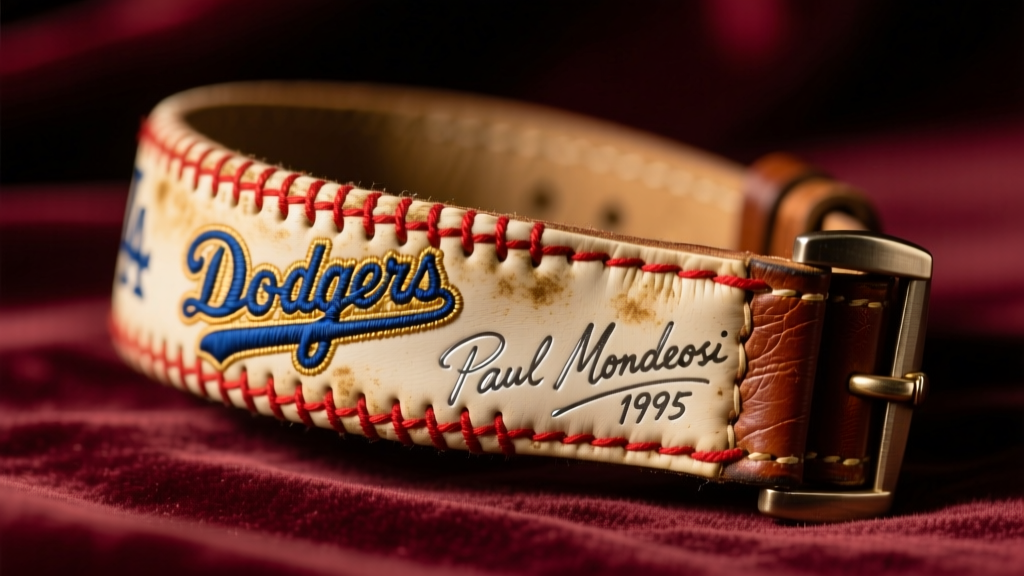
Paul Mondesi’s 1995 LA Dodgers Autographed Baseball Wristband: Authenticity, Provenance, and Collectible Value
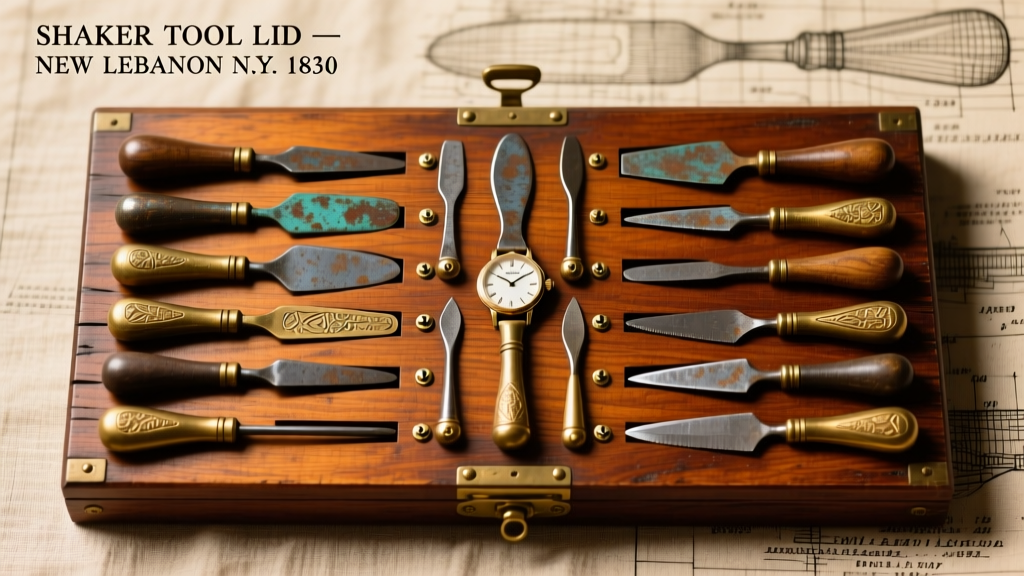
Shaker Chest Tool Lid with 38 Tools, New Lebanon, NY, Circa 1830: A Masterpiece of Functional Craftsmanship
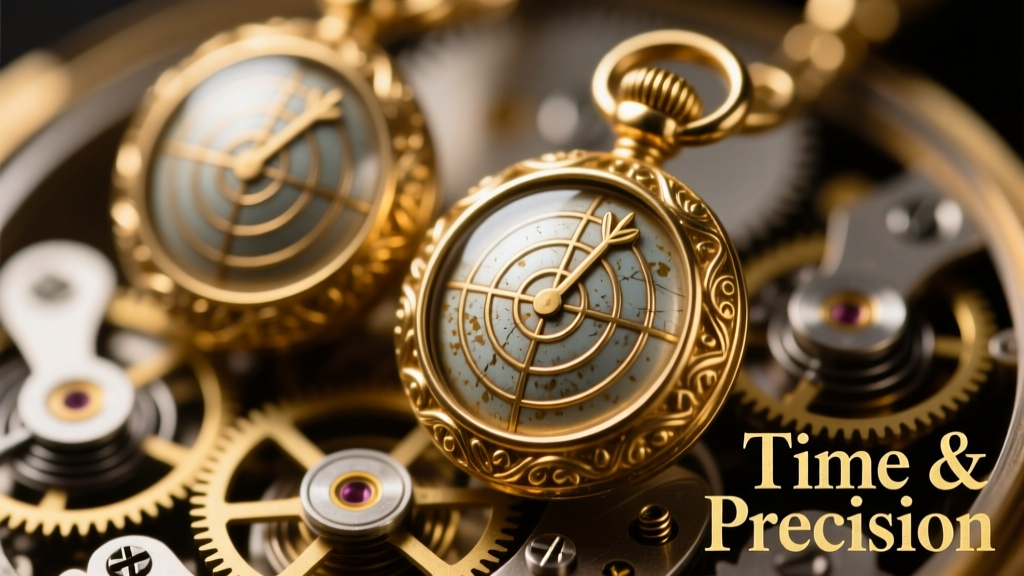
Target Balls: The Precision Engineering Marvels Behind Vintage Chronograph Watches