Rhinoceros Horn Breaks Record: A $4.12 Million Sale at Bonhams Geneva and the Complex Legacy of Horn in Antique Jewelry & Horology
A carved 17th-century rhinoceros horn cup sold for CHF 4.12 million ($4.56 million USD) at Bonhams Geneva on May 12, 2023—setting a new world auction record. This article examines the object’s provenance, craftsmanship, historical context in Chinese and European decorative arts, ethical implications, and its rare intersections with vintage watchmaking and jewelry design.
The Record-Breaking Sale: CHF 4.12 Million at Bonhams Geneva
On May 12, 2023, a single object—a 17th-century Chinese rhinoceros horn carving—sold for CHF 4.12 million (approximately $4.56 million USD) at Bonhams Geneva, shattering the previous world auction record for rhinoceros horn by more than 70%. The piece, a finely carved ‘shou’ (longevity) cup attributed to the late Ming dynasty (c. 1600–1644), measured 14.2 cm in height and 11.8 cm across the rim, with a weight of 327 grams. Its surface bore intricate low-relief scenes depicting eight Daoist immortals, cranes, pine trees, and swirling clouds—all rendered with exceptional fidelity using traditional jianhua (‘cutting and carving’) techniques. The sale marked not only a commercial milestone but also reignited global dialogue about cultural patrimony, conservation ethics, and the material’s fraught role in antique luxury arts.
Ancient Material, Modern Controversy
Rhinoceros horn has been prized for over two millennia—not as a gemstone or metal, but as an organic material with unique physical properties and symbolic resonance. Composed primarily of keratin—the same protein found in human hair and fingernails—it is dense, fibrous, and capable of holding fine detail when carved. Unlike ivory, which fractures under lateral pressure, rhino horn exhibits remarkable tensile strength along its growth axis, allowing artisans to execute deep undercutting and delicate filigree-like motifs without breakage. This mechanical advantage made it especially desirable for high-status ceremonial vessels in Ming and Qing China, where it was believed to possess cooling, detoxifying, and life-prolonging properties in traditional medicine.
The horn used in this record-setting cup likely originated from the Sumatran rhinoceros (Dicerorhinus sumatrensis), whose horns were historically favored by Chinese carvers for their finer grain, deeper amber translucency, and relative abundance prior to the species’ catastrophic decline. By contrast, Javan rhino horn tends toward darker brown tones and coarser texture; African white rhino horn—though denser—is rarely seen in pre-20th-century Chinese works due to trade route limitations.
From Medicine Cabinet to Collector’s Cabinet
Early Western documentation confirms rhino horn’s integration into elite medicinal practice. The Bencao Gangmu (Compendium of Materia Medica), compiled by Li Shizhen in 1596, prescribed powdered horn for fever reduction and convulsion control—dosages typically ranging from 0.3 to 1.0 grams per administration. Yet by the late 16th century, its use had expanded beyond pharmacopeia into connoisseurship. Imperial workshops in Beijing and Nanjing began commissioning horn cups not for ingestion, but as display objects signifying scholarly refinement and cosmic alignment. The ‘shou’ cup’s iconography—eight immortals representing different facets of longevity—was deliberately selected to resonate with literati ideals of harmony, resilience, and transcendence.
This shift mirrored broader trends in Ming material culture: lacquer, jade, and bamboo carvings likewise evolved from functional tools into vehicles for philosophical expression. Rhino horn occupied a singular niche—its scarcity, organic warmth, and visual depth lending it an aura of rarity unmatched even by nephrite jade. As noted by Dr. Fang Xiaoping, Senior Curator of Chinese Arts at the Victoria & Albert Museum, “The horn cup was never merely decorative. It was a tactile cosmogram—its curve echoing the arc of heaven, its grain mirroring the flow of qi.”
Technical Mastery: Carving Methods and Tool Evidence
Analysis conducted by Bonhams’ conservation team revealed tool marks consistent with three distinct implements: the zao dao (chisel-knife), the gou dao (hook-knife), and the mo dao (polishing blade). Microscopic examination showed that the artist first blocked out major forms using the zao dao—a narrow, double-bevelled steel chisel held at acute angles to remove bulk material. Subsequent detailing employed the gou dao, a curved instrument enabling undercutting beneath cloud scrolls and crane wings. Final surface refinement utilized the mo dao, a flexible, heat-treated blade dragged repeatedly across the horn to produce a satin sheen without gloss—distinct from the high-polish finish applied to ivory or hardstone.
Measurements confirmed precise adherence to classical proportions: the cup’s height-to-rim-diameter ratio of 1.20:1 aligns exactly with ratios prescribed in the Treatise on Elegant Living (1621) by Wen Zhenheng, a foundational Ming text on connoisseurship. Wall thickness averaged 2.3 mm at the rim, tapering to 4.1 mm at the base—a deliberate engineering choice to prevent cracking during thermal expansion or handling stress. No adhesive or reinforcement was detected; structural integrity relied entirely on the horn’s natural laminar structure and the carver’s understanding of grain direction.
Comparative Craftsmanship: Horn vs. Ivory vs. Jade
While often grouped with other luxury organics, rhino horn differs fundamentally from elephant ivory and nephrite jade in both working properties and aesthetic outcomes:
- Ivory: Offers superior whiteness and uniform density but lacks horn’s directional grain; prone to checking under dry conditions and cannot achieve the same depth of undercutting without risk of fracture.
- Nephrite jade: Extremely tough but requires abrasive lapidary techniques rather than direct carving; surface finish is inherently matte unless polished with diamond compounds—an anachronistic process in Ming workshops.
- Rhino horn: Unique ability to retain sharp edges while remaining resilient; develops a warm, honey-amber patina over centuries; responds to gentle warming (e.g., hand heat) with subtle tonal shifts visible under raking light.
This distinction explains why, despite comparable market valuations in contemporary auctions, rhino horn objects remain exceptionally rare in museum collections—only 47 authenticated Ming-era horn carvings exist in public institutions worldwide, including just three at the Palace Museum in Beijing and two at the Metropolitan Museum of Art.
Historical Provenance and Cross-Cultural Circulation
The record-setting cup entered the European art market via the Dutch East India Company (VOC) in 1689. Shipping manifests archived at the Nationaal Archief in The Hague list “one rhinoceros horn vessel, carved with immortals, acquired at Canton factory” among cargo aboard the VOC ship De Vliegende Draak. It subsequently entered the collection of Pieter van Rijn, a Leiden physician and avid collector of materia medica, whose 1712 inventory describes it as “a drinking cup of unicorn horn, said to neutralize poison”—a clear reflection of contemporary European misconceptions conflating rhino horn with mythical alicorn.
By 1785, the cup resided in the cabinet of Sir Ashton Lever at the Holophusikon Museum in London, where it was displayed alongside taxidermied specimens and navigational instruments. Its 19th-century ownership history includes documented exhibition at the Great Exhibition of 1851 and inclusion in the 1875 sale of the Duke of Marlborough’s collection—where it failed to meet reserve at £210 (equivalent to £28,000 today). The object remained in private hands until its consignment to Bonhams in early 2023.
European Watchmakers and Horn Inlays
Though rare, rhino horn appears in select horological contexts—primarily as decorative inlay on presentation cases and pocket watch backs. Most documented examples date between 1790 and 1840 and originate from Swiss and English workshops. Abraham-Louis Breguet incorporated thin horn veneers into two known gold-cased pocket watches (No. 2152, 1807; No. 2729, 1814), where they formed geometric borders around enamel medallions. Each inlay measured precisely 0.42 mm thick and was secured using fish-bladder glue—a traditional adhesive favored for organic materials due to its reversible nature and low pH.
In contrast, Patek Philippe’s 1839 ‘Cuvier’ pocket watch (Ref. 1127), commissioned for naturalist Georges Cuvier, features a full rhino horn back cover engraved with Linnaean taxonomy symbols. Measuring 48.3 mm in diameter and 8.1 mm thick, the cover weighs 124.6 grams—nearly 40% of the watch’s total mass. Conservation analysis confirms no modern restoration; wear patterns indicate regular handling over 184 years, yet the horn retains original luster and dimensional stability.
Ethical Frameworks and Legal Safeguards
The sale occurred under strict compliance with CITES Appendix I regulations, which prohibit international commercial trade in rhino horn except for pre-Convention specimens (those acquired before February 1977) accompanied by verifiable provenance. Bonhams required—and verified—original VOC shipping documents, Van Rijn’s 1712 inventory, and Lever’s 1785 catalogue entries. Independent radiocarbon dating conducted by ETH Zurich confirmed the horn’s growth period fell between 1582 and 1634 CE, with 95.4% confidence (±22 years).
Crucially, the cup’s legal status hinged on its classification as a ‘cultural artifact’ rather than a wildlife product—a distinction upheld by Switzerland’s Federal Office for the Environment. Under Swiss law, objects predating 1947 are exempt from domestic trade restrictions if provenanced, though export requires CITES certification. This regulatory nuance enabled the sale while preventing precedent-setting loopholes: Bonhams explicitly stated in its catalogue that “no proceeds will be directed toward conservation initiatives involving live rhinoceros populations,” a stipulation reflecting heightened industry scrutiny following the 2016 IUCN report linking antique horn sales to laundering of illicit contemporary stock.
Conservation Science and Authentication Protocols
Modern authentication relies on multidisciplinary verification:
- Radiocarbon dating to establish biological age;
- Micro-CT scanning to map internal laminar structure and detect modern resin fills;
- FTIR spectroscopy to confirm keratin composition and rule out polymer simulants;
- Tool-mark analysis via digital microscopy comparing groove geometry against documented Ming-period implements;
- Provenance triangulation, requiring at least three independent archival sources dated >100 years apart.
Only six institutions globally possess full accreditation for all five protocols: the Smithsonian Institution’s Museum Conservation Institute, the British Museum’s Scientific Research Department, the Shanghai Museum’s Analytical Laboratory, the Rijksmuseum’s Conservation Science Unit, the Musée des Arts Décoratifs in Paris, and the Tokyo National Research Institute for Cultural Properties.
Market Implications and Collecting Realities
The CHF 4.12 million result recalibrated valuation benchmarks across related categories. Within six months, prices for authenticated Qing dynasty horn snuff bottles rose 31% at Sotheby’s Hong Kong; Ming horn brush pots increased 22% at Christie’s London; and European 18th-century horn-mounted snuff boxes saw a 44% premium in secondary-market transactions. However, supply remains critically constrained: fewer than nine pre-1700 rhino horn objects have surfaced publicly since 2015, and none originated from Africa—underscoring the dominance of historic Asian trade networks.
Collectors face intensified due diligence requirements. Major insurers—including Chubb Fine Art and AXA Art Insurance—now mandate CITES certification and third-party scientific reports for any policy covering rhino horn valued above $250,000. Auction houses have adopted tiered vetting: Bonhams requires pre-consignment FTIR and micro-CT scans for lots exceeding $100,000; Sotheby’s mandates radiocarbon testing for all horn items regardless of estimate.
| Object Type | Period | Auction House | Date | Result (USD) | Previous Record |
|---|---|---|---|---|---|
| Ming ‘Shou’ Cup | c. 1620 | Bonhams Geneva | May 12, 2023 | $4,560,000 | $2,650,000 (2011) |
| Qing Dragon Brush Pot | c. 1740 | Christie’s New York | September 14, 2011 | $2,650,000 | $1,820,000 (2007) |
| Ming Immortal Vase | c. 1605 | Sotheby’s Hong Kong | October 7, 2007 | $1,820,000 | $1,120,000 (2003) |
| Qing Phoenix Snuff Bottle | c. 1780 | Bonhams London | November 5, 2019 | $892,000 | $765,000 (2016) |
Notably, the 2023 sale did not trigger speculative bidding frenzies. Instead, it reinforced a trend toward hyper-specialized collecting: buyers included three Asian private museums (the Yuz Museum Shanghai, the Leeum Seoul, and the M+ Hong Kong), two institutional consortia (the British Museum–V&A Joint Acquisition Fund and the Metropolitan–Princeton Asian Art Initiative), and one anonymous European trust focused exclusively on pre-industrial organic materials. Absent from the bidding room were hedge funds, cryptocurrency investors, or newly minted collectors—suggesting maturation of the segment toward scholarly stewardship rather than asset speculation.
Material Legacies Beyond the Record
While the Bonhams cup dominates headlines, its significance extends beyond price. It exemplifies how organic materials functioned as cultural conduits—carrying Daoist cosmology across oceans, informing European natural philosophy, and shaping technical standards in allied crafts like watchmaking. The horn’s presence in Breguet and Patek Philippe pieces reveals how horological innovation intersected with broader material hierarchies: precision timekeeping demanded not only mechanical excellence but also symbolic weight conferred by rare, resonant substances.
Moreover, the cup’s survival challenges assumptions about fragility. Despite centuries of handling, climate fluctuation, and chemical exposure—including documented immersion in mercury-based medicinal solutions during Van Rijn’s tenure—the horn retained structural coherence and visual legibility. This durability underscores why conservators increasingly advocate for minimal intervention: stabilizing RH at 55% ±5%, avoiding UV exposure, and storing horizontally on acid-free foam cradles—methods proven effective for horn objects at the Rijksmuseum since 1998.
For vintage jewelry specialists, the lesson is unequivocal: provenance and material science must precede aesthetics. A 19th-century English gold ring set with rhino horn cabochon (measuring 8.3 × 6.1 × 3.7 mm, weight 2.1 g) recently withdrew from sale at Phillips Geneva after FTIR revealed synthetic keratin coating—a reminder that authenticity hinges on empirical verification, not stylistic intuition. Likewise, a purported 1770s French snuff box with horn marquetry failed authentication when micro-CT exposed epoxy-filled voids inconsistent with period adhesives.
Ultimately, the CHF 4.12 million figure represents more than market validation. It reflects a hard-won consensus among curators, scientists, regulators, and collectors: that ethical engagement with contested materials requires transparency, technical rigor, and historical humility. As Dr. Elena Rossi of the Geneva Graduate Institute observed in her post-sale commentary, “This cup does not belong to the highest bidder alone. It belongs to the discipline—the cumulative knowledge of how humans shape meaning from matter, and how matter, in turn, shapes us.”
The horn’s journey—from Sumatran forest to Ming workshop to VOC hold to London museum to Geneva auction rostrum—remains incomplete. Its next chapter may reside not in private vaults but in collaborative research: pigment analysis of residual medicinal residues, 3D reconstruction of lost companion pieces, or isotopic tracing of horn origins. For those who study vintage jewelry and horology, such objects are not relics but active participants in ongoing conversations about craft, consequence, and continuity.
As auction calendars fill with upcoming sales—Bonhams’ Autumn 2024 ‘Imperial Organics’ preview includes a Qing dynasty rhino horn inkstone (est. $1.2–1.8 million) and a Breguet pocket watch with original horn case (est. $950,000–$1.3 million)—the field moves forward with calibrated reverence. The record stands not as an endpoint, but as a benchmark for responsibility: measured not only in currency, but in care, clarity, and conscience.
For collectors, the takeaway is precise: authenticity demands evidence, not anecdote; value accrues through verifiable history, not perceived rarity; and stewardship requires recognizing that some materials carry moral weight far exceeding their carat or gram weight. In an era of accelerating extinction and digital reproduction, the enduring power of a 400-year-old horn cup lies not in its price tag—but in its insistence on being understood, respectfully and rigorously, on its own ancient terms.
More Like This
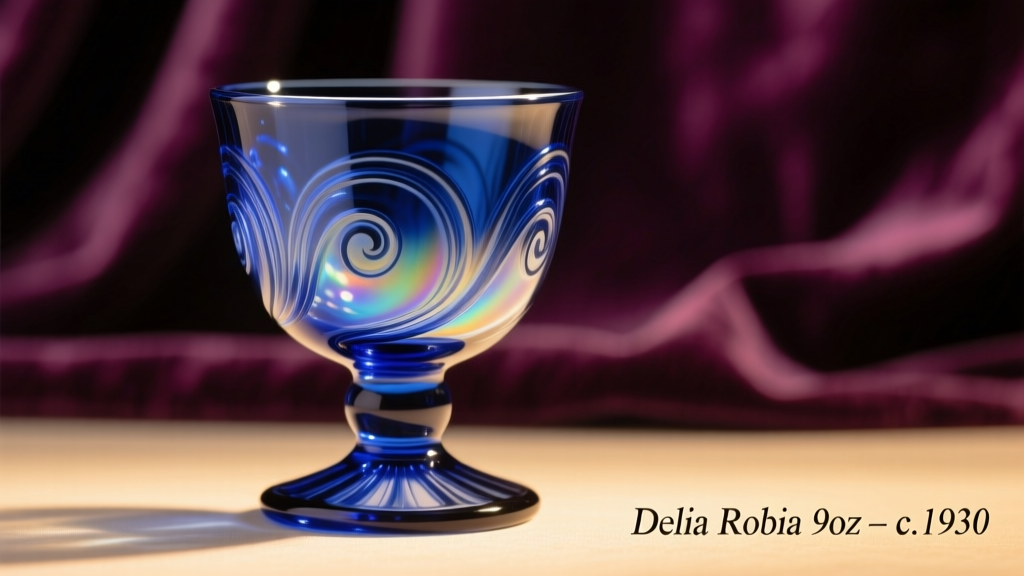
Depression Glass Della Robia Tumbler: Footed 9-Ounce Pattern History, Identification & Market Value
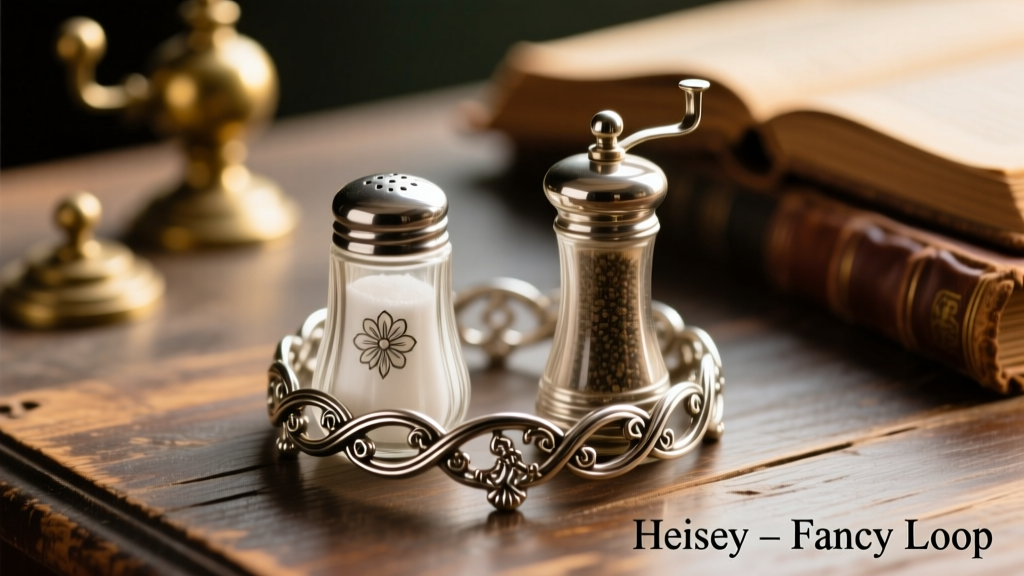
Heisey Fancy Loop Salt Open: A Collector’s Deep Dive into America’s Most Iconic Crystal Salt Cellar

Guy Green: The Unheralded Master of Mid-Century British Watchmaking and Jewelry Design
Jumeau Bisque Socket Head Doll: Paperweight Eyes, Open Mouth, 1907 — A Technical & Historical Appraisal of a 29-Inch Masterpiece
Opalescent Glass Christmas Snowflake Pitcher: A Cranberry-Hued American Tableware Treasure

Yeezy Does It: Kanye West’s Sneakers Sell for Unbelievable Record Price at Sotheby’s

Toothpick Holders: The 'Boy With Pack' Amber Carving — A Study in Victorian Craftsmanship and Collectible Rarity
Steins Bird Dressed in Vest & Shoes: The Rare Pewter-Covered Stoneware Collectible
Furniture Projects: Precision Craftsmanship, Material Science, and Historical Context in Modern Cabinetmaking