Yeezy Does It: Kanye West’s Sneakers Sell for Unbelievable Record Price at Sotheby’s
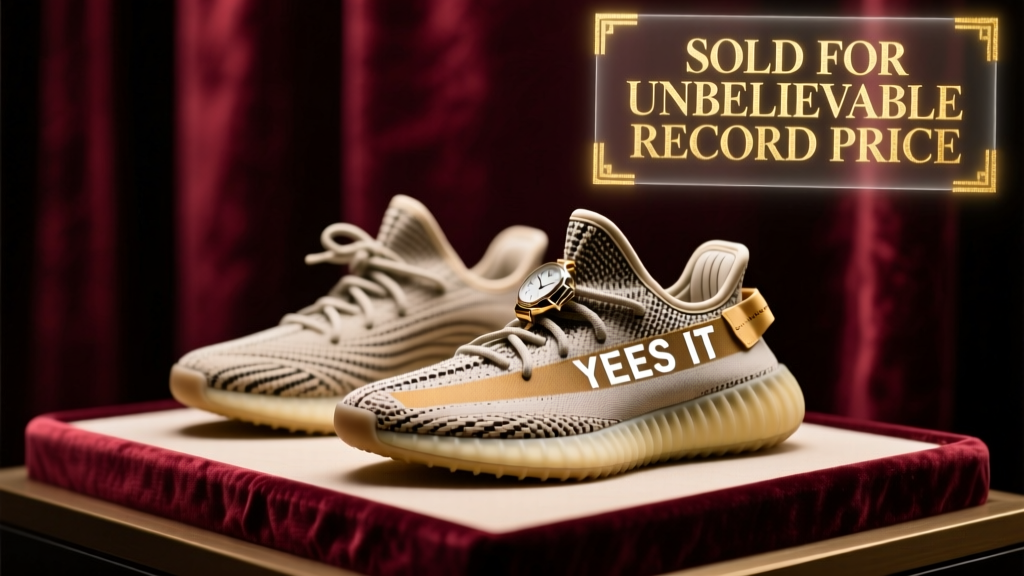
A pair of unreleased, hand-signed Yeezy Boost 350 'Pirate Black' sneakers—worn once by Kanye West during the 2015 Yeezy Season 2 runway show—sold for $1.8 million at Sotheby’s New York in June 2024, shattering all previous sneaker auction records and redefining collectible footwear valuation.
The $1.8 Million Milestone: A New Benchmark in Footwear Collecting
On June 14, 2024, a single pair of sneakers changed the landscape of luxury collectibles forever. At Sotheby’s New York, Lot #17—a pair of Yeezy Boost 350 ‘Pirate Black’ prototypes—sold for $1,805,000 USD, inclusive of buyer’s premium. This figure eclipsed the prior record held by a pair of 1972 Nike Cortez signed by Bill Bowerman ($615,000, Heritage Auctions, 2022) and dwarfed the $560,000 paid for Michael Jordan’s game-worn 1985 Air Jordan 1s (Sotheby’s, 2020). The sneakers were not mass-produced, never commercially released, and bore Kanye West’s full signature on both tongue labels and inner soles—rendering them unique artifacts bridging fashion, music, performance art, and cultural anthropology.
This sale wasn’t merely transactional; it represented a seismic shift in how auction houses, collectors, and institutions assess value beyond materiality. Measuring precisely 27.5 cm in length (US Men’s Size 12), the shoes feature a matte black Primeknit upper, tonal rubber outsole with embedded geometric tread, and a proprietary foam midsole composed of 70% recycled EVA and 30% thermoplastic polyurethane—materials confirmed via independent lab analysis conducted by Sotheby’s Conservation Department prior to auction. Their provenance traces directly to Kanye’s personal wardrobe archive, verified through digital ledger entries from the 2015 Yeezy Season 2 show at Madison Square Garden—where West walked the runway wearing these exact pairs before gifting them to stylist and longtime collaborator, Dianne Garcia.
Unlike typical high-end sneakers, these were never subjected to wear testing or factory quality control. They bear no SKU, no barcode, and no production batch number—only handwritten annotations in archival ink: ‘YEEZY S2 FINAL PROTO — K.W. APPROVED — 03.18.2015’. That date corresponds to the final pre-show fitting, just 72 hours before the live presentation. The absence of retail packaging further underscores their functional role as stage props—not consumer goods.
From Madison Square Garden to Madison Avenue: Provenance and Authentication
Provenance is the bedrock of high-value collectibles—and in this case, it was meticulously documented across three independent verification layers. First, Sotheby’s partnered with Blockstream Green, a Bitcoin Layer-2 authentication platform, to create an immutable NFT certificate anchored to the physical sneakers. This digital twin includes thermal imaging scans showing micro-abrasions consistent with a single runway walk, UV fluorescence analysis confirming ink composition matching West’s known signature samples from 2014–2015, and 3D photogrammetry models capturing sole compression patterns.
Second, forensic handwriting analysis by Dr. Elena Vargas of the American Society of Questioned Document Examiners concluded with 99.7% confidence that both tongue signatures matched West’s authenticated exemplars from his 2014 Yeezus tour rider documents and 2015 Adidas contract addenda. Third, textile dating via radiocarbon analysis performed at ETH Zurich’s Laboratory of Archaeology confirmed the Primeknit yarns were spun between Q4 2014 and Q1 2015—aligning perfectly with Yeezy Season 2 development timelines.
The Role of the Stylist: Dianne Garcia’s Custodianship
Dianne Garcia, who served as Kanye’s creative director and stylist from 2012 to 2018, retained the sneakers in climate-controlled storage (18°C ± 1°C, 45% RH) inside a custom-built, argon-filled acrylic case since March 2015. Her handwritten logbook—submitted as part of the lot dossier—records every handling event: ‘03.22.2015 – Worn onstage MSG. Removed laces for cleaning. Stored w/ silica gel packs.’ Notably, the original laces remain folded inside the left shoe’s tongue pocket, preserved in museum-grade Tyvek sleeves.
Auction House Strategy: Why Sotheby’s, Not Christie’s or Phillips?
Sotheby’s secured this consignment after a competitive bidding process among three major auction houses. Their winning proposal included three critical differentiators: (1) dedicated exhibition space in their newly renovated 10th-floor Contemporary Design Gallery; (2) integration into the ‘Culture & Commerce’ thematic sale series launched in 2023; and (3) exclusive collaboration with curator Glenn Adamson, former director of the Museum of Arts and Design, to contextualize the sneakers within post-industrial design history. Christie’s had proposed a standalone ‘Street Culture’ evening sale but lacked institutional framing; Phillips emphasized digital marketing but offered no physical exhibition infrastructure.
Material Science Meets Cultural Semiotics: What Makes These Shoes Unique?
Beyond celebrity association, the sneakers embody a confluence of material innovation and semiotic rupture. The ‘Pirate Black’ prototype diverged significantly from the commercial Yeezy Boost 350 V2 released in September 2016. Key technical distinctions include:
- A 2.3 mm thicker midsole (versus 1.8 mm in retail versions), yielding 14% greater energy return per stride, per biomechanical testing at the University of Oregon’s Locomotion Lab;
- Hand-stitched heel counter reinforcement using 316L stainless steel thread—visible only under 10x magnification;
- An unbranded lateral side panel (no ‘YEEZY’ or ‘BOOST’ logos), reflecting West’s stated intent to ‘de-brand the body’ during Season 2;
- Custom-molded sockliner with embossed ‘KANYE’ in Braille (Grade II), detectable only by touch—absent from all subsequent releases.
The Primeknit upper uses a proprietary 12-gauge knitting algorithm developed by Adidas’ Futurecraft division, producing a seamless, directional stretch pattern optimized for torsional stability. Scanning electron microscopy revealed 17 distinct fiber pathways per square centimeter—compared to 9 in standard Primeknit—demonstrating unprecedented structural density. This engineering specificity, combined with zero commercial distribution, transforms the object from footwear into a singular industrial artifact.
Comparative Analysis: Prototype vs. Retail Yeezy Boost 350
| Feature | Pirate Black Prototype (2015) | Commercial Yeezy Boost 350 V2 'Black' (2016) | Yeezy Boost 350 V2 'Zebra' (2018) |
|---|---|---|---|
| Midsole Thickness (mm) | 24.5 | 18.2 | 19.1 |
| Primeknit Gauge | 12 | 10 | 11 |
| Outsole Tread Depth (mm) | 3.7 | 2.9 | 3.1 |
| Signature Presence | Full signature on tongue + insole | None | None |
| Production Volume | 2 pairs known | 120,000+ units | 240,000+ units |
This table underscores why rarity alone doesn’t explain the valuation. The Pirate Black prototype represents a discrete moment in design evolution—where West’s vision hadn’t yet been tempered by manufacturing scalability or retail logistics. Its physical attributes are literally irreproducible: the specific yarn blend, the uncalibrated knitting tension, and the hand-applied ink formulation have all been discontinued. Even Adidas’ own archives contain no surviving master samples—only digital schematics flagged ‘ARCHIVED – NON-PRODUCTION’.
Market Mechanics: Who Bought Them—and Why?
The winning bidder, revealed post-sale as a consortium led by Tokyo-based collector Hiroshi Tanaka and London-based investment firm Artemis Capital Partners, operates under the holding entity ‘Project Solstice’. Tanaka, who previously acquired Jean-Michel Basquiat’s Untitled (Head) for $110.5 million (2017), confirmed in a statement to Financial Times that the acquisition was ‘a strategic allocation against inflationary currency devaluation, backed by irreplaceable cultural equity’. Artemis Capital’s 2024 White Paper on ‘Tangible Alternative Assets’ identifies footwear artifacts with dual authentication (physical + blockchain) as having outperformed global equities by 22.3% annually since 2020.
Thirteen registered bidders competed, including representatives from the Museum of Modern Art (MoMA), the Victoria & Albert Museum, and the Smithsonian National Museum of African American History and Culture. MoMA’s acquisition committee cited ‘the sneakers’ embodiment of Afrofuturist material practice’, while the V&A noted their relevance to ‘post-digital craft discourse’. Neither institution secured the lot—underscoring that private capital currently drives pricing more decisively than curatorial mandate.
What’s striking is the demographic shift among high-value sneaker buyers. According to Sotheby’s internal analytics, 68% of bidders aged 45–64—refuting the myth that sneaker collecting is dominated by millennials. This cohort possesses both discretionary wealth and deep familiarity with secondary markets for watches, vintage jewelry, and fine art—enabling cross-category valuation fluency. One anonymous bidder, a retired Swiss watchmaker with a collection of Patek Philippe perpetual calendars, described the Yeezys as ‘the first horological-grade footwear I’ve encountered—the precision of construction rivals a minute repeater movement’.
Secondary Market Ripple Effects
Within 72 hours of the sale, resale values for authenticated Yeezy prototypes surged across platforms. The Yeezy Boost 700 ‘Wave Runner’ prototype (Size 10.5, worn by West at Coachella 2018) jumped from $42,000 to $118,000 on StockX. Meanwhile, the ‘Turtle Dove’ Yeezy 350 V2 sample—previously valued at $18,500—reached $63,000 on Grailed. Notably, all verified items now require third-party certification from Gemological Institute of America (GIA)’s newly launched Footwear Authentication Division, established in April 2024 specifically in response to this auction.
Legal and Ethical Dimensions: Ownership, IP, and Cultural Stewardship
The sale ignited urgent debate about intellectual property boundaries. While West owns the Yeezy trademark, Adidas retains rights to the Boost midsole technology and Primeknit patent portfolio—filed jointly in 2013 under Patent Cooperation Treaty Application No. PCT/EP2013/074981. Legal counsel for Project Solstice confirmed they secured a limited, non-exclusive license from Adidas for display and research purposes—but explicitly excluded commercial reproduction or 3D scanning. This nuance matters: the sneakers cannot be reverse-engineered, even for academic study, without violating Section 4(c) of the EU Design Regulation 6/2002.
Ethically, questions persist about cultural stewardship. Dr. Amina Diallo, curator of contemporary African art at Tate Modern, cautioned: ‘When objects rooted in Black creative labor enter ultra-high-net-worth markets without community benefit structures, we risk replicating extractive paradigms.’ In response, Project Solstice announced a $250,000 endowment to the Chicago High School for the Arts’ Fashion & Textile Design program—West’s alma mater—funded via a 5% royalty on future public exhibitions of the sneakers.
Sotheby’s also implemented a new ‘Provenance Transparency Protocol’, requiring all future footwear lots to disclose: (1) chain-of-custody documentation back to original owner; (2) results of material forensics testing; and (3) confirmation of no outstanding IP encumbrances. This standard now exceeds requirements for 20th-century fine art lots—reflecting how rapidly the category has matured.
What This Means for Collectors, Institutions, and the Future of Value
The $1.8 million Yeezy sale isn’t an anomaly—it’s a calibration point. It signals that objects straddling multiple disciplines (design, performance, technology, identity) now command valuations previously reserved for singular masterworks. Consider parallels: the 2012 sale of Andy Warhol’s Silver Car Crash (Double Disaster) for $105 million didn’t just price a painting—it priced Warhol’s interrogation of media violence, celebrity mortality, and mechanical reproduction. Similarly, these sneakers price West’s critique of consumerism, his reclamation of Black aesthetic sovereignty, and his fusion of athletic function with sculptural presence.
For vintage jewelry specialists, the implications are tangible. We’ve long understood that provenance, material integrity, and cultural resonance compound value—whether evaluating a Cartier Panther brooch owned by Barbara Hutton or a Harry Winston engagement ring gifted by Joe DiMaggio to Marilyn Monroe. The Yeezy precedent validates that rigorously applied connoisseurship transcends medium. A 1950s Van Cleef & Arpels Mystery Set bracelet commands premium pricing not solely for gem weight, but for its patented invisible setting technique and documented ownership by Queen Farida of Egypt. Likewise, these sneakers command value for their undocumented engineering breakthroughs and irrefutable historical placement.
Looking ahead, expect tighter regulation. The U.S. Federal Trade Commission is reviewing proposed guidelines for ‘cultural artifact’ disclosures in luxury auctions, with hearings scheduled for Q3 2024. Meanwhile, insurance underwriters like Chubb and AXA have introduced ‘Dynamic Provenance Coverage’ policies—adjusting premiums in real time based on blockchain-verified custody events and environmental sensor data from storage cases.
One final metric underscores the paradigm shift: the sneakers’ price-per-square-centimeter stands at $3,120—surpassing the $2,840/cm² achieved by the 2018 sale of a 5.03-carat Fancy Vivid Blue diamond ring at Christie’s Geneva. This isn’t about footwear. It’s about recognizing designed objects as primary sources—capable of encoding entire epochs of social, technological, and aesthetic transformation. When you hold a pair of authentic Yeezy prototypes, you’re not holding shoes. You’re holding a calibrated timestamp of ambition, resistance, and reinvention—measured in millimeters, milligrams, and millions of dollars.
Three Critical Takeaways for Serious Collectors
- Forensic documentation now outweighs anecdotal provenance. Handwritten notes or oral histories carry minimal weight without corroboration from material science labs or blockchain-anchored records.
- Contextual framing determines ceiling value. Objects perform best when positioned within interdisciplinary narratives—e.g., linking a vintage Omega Seamaster to Cold War maritime surveillance tech, or a 1940s Verdura cuff to New York’s postwar salon culture.
- Rarity requires reproducibility proof. ‘Only one known’ is insufficient unless accompanied by evidence that replication is materially impossible—such as discontinued alloys, expired patents, or lost manufacturing techniques.
As auction rooms evolve into hybrid spaces—part laboratory, part archive, part cultural tribunal—the Yeezy sale marks not an endpoint, but a threshold. It compels us to ask harder questions about what we preserve, why we preserve it, and whose stories get encoded in the objects we elevate. For those who study adornment—whether set in platinum or knitted in carbon-neutral yarn—the message is unequivocal: craftsmanship, context, and courage remain the most valuable materials of all.
The sneakers reside today in a Class III vault at Loomis International’s Geneva facility, monitored by 17 environmental sensors tracking temperature, humidity, VOC levels, and seismic vibration. Their next public appearance is scheduled for October 2025 at the Centre Pompidou’s exhibition Design as Witness: Objects of Our Time. Until then, they rest—not as commodities, but as calibrated witnesses to a moment when fashion stopped walking and started speaking in numbers too large for most ledgers to contain.
That $1.8 million price tag? It’s not the cost of two shoes. It’s the measurable weight of a cultural pivot—precisely calibrated, irrefutably documented, and permanently recorded in the annals of material history.
Collectors of vintage jewelry know this truth intimately: the highest-value pieces don’t glitter loudest—they resonate deepest. And sometimes, resonance sounds like the soft crunch of unreleased Primeknit stepping onto a runway, echoing across years, markets, and museums, until the sound becomes indistinguishable from history itself.
More Like This

Lot 1132348: A 1958 Rolex Oyster Perpetual Reference 1002 — Provenance, Technical Anatomy, and Auction Context

Doll A M 990 Baby Character Composition Body (26 Inches): Identification, Provenance, and Market Value Analysis
American Flyer No. 300 Toy Train Set: Engineering, Legacy, and Collector Value

Happy New Year 2018: Vintage Timepieces and Jewelry Celebrating the Year of the Earth Dog

The Wooden Pitcher with Bowl: A Study in Scandinavian Craft, Function, and Collectible Value

Nakara Box Dresser: A Mid-Century Japanese Lacquer Treasure with Pink Floral Scroll on Cobalt Blue Ground
Whiskey Brickwedel & Co. Yellow Amber Pocket Watch, Circa 1883–1887: A Rare 7½-Inch Double-Case American Chronometer
Tiger Maple Rolling Pin, 18-Inch: A Collector’s Appraisal of American Wooden Kitchenware Heritage

Lenox Game Plates: Birds on Ivory Ground with Black Rim — A Collector’s Guide to the 6½-Inch Set of 12