Restored 19th-Century Stagecoach Realizes $16,500 at Bonhams London — A Study in Craftsmanship, Provenance, and Market Resilience
A meticulously restored 1872 Abbot-Downing Concord stagecoach—measuring 13 ft 4 in long, 6 ft 2 in wide, and 8 ft 7 in high—sold for £16,500 (USD $21,120) at Bonhams' 'Historic Transport & Automobilia' auction on 12 July 2023. This article examines its construction, restoration ethics, historical context, valuation drivers, and implications for collectors of American horological and transport ephemera.
A Landmark Sale in Historic Transport Auctions
On 12 July 2023, Bonhams London achieved a notable result in its 'Historic Transport & Automobilia' sale when an 1872 Abbot-Downing Concord stagecoach realized £16,500 (USD $21,120), well above its pre-sale estimate of £10,000–£15,000. The vehicle—a fully operational, professionally restored example built in Concord, New Hampshire—drew competitive bidding from three international collectors, including a private museum in Oregon and a European decorative arts foundation. Unlike typical automotive or carriage auctions, this sale occurred within a broader horological and antique travel context, underscoring how 19th-century transport objects increasingly intersect with vintage watch and jewelry collecting circles. The coach’s inclusion alongside rare Patek Philippe pocket chronometers and Tiffany & Co. railroad timepieces signaled a maturing appreciation for period-correct timing instruments used in transit systems.
The Abbot-Downing Legacy: Engineering Excellence in Wooden Horology
Abbot-Downing Company, founded in 1827 by Lewis Downing and J. Stephens Abbot, pioneered the Concord stagecoach—a design so advanced it remained in commercial service until 1917. Its defining innovation was the thoroughbrace suspension: two massive leather straps, each 4 inches wide and 30 feet long, stretched taut beneath the body to absorb road shock. These straps were sourced exclusively from the H. G. Hotchkiss Leather Company of Rochester, New York, and required biannual re-tensioning using hand-forged iron turnbuckles stamped 'ABD 1872'. The 1872 example sold at Bonhams retained all original strap hardware, verified via microscopic tool-mark analysis conducted by the Institute of Conservation in Edinburgh prior to auction.
Materials and Construction Specifications
The coach’s frame was constructed from seasoned white oak and hickory, with ash used for curved felloes and maple for interior paneling. Its wheel diameter measured 54 inches front and 58 inches rear; each wheel featured 12 hand-forged iron spokes and a 4-inch-wide steel tire rolled onto the rim at 550°F. The body dimensions were precisely documented during conservation: length 13 ft 4 in (4.06 m), width 6 ft 2 in (1.88 m), height 8 ft 7 in (2.62 m), and total weight 2,840 lbs (1,288 kg) dry—verified on calibrated industrial scales at the National Carriage Museum in Lexington, Kentucky.
Authenticity Verification Protocols
Provenance research confirmed continuous ownership by the McAllister family of Salt Lake City from 1883 until 2019. Family records included a 1907 handwritten ledger noting 're-leathered thoroughbraces, 2 new harness sets, oiling of all brass fittings—$14.50'. Crucially, no modern adhesives, epoxies, or power-sanding tools were employed during the 2018–2022 restoration overseen by master carriage conservator Robert F. Ladd of Vermont. Instead, traditional hide glue, linseed-oil putty, and hand-rubbed shellac were used exclusively. Every bolt, hinge, and latch bore matching maker’s marks: 'J. H. Kinsley & Son, Boston, Mass., Estab. 1841', cross-referenced against the 1871 Kinsley catalog held at the Henry Ford Museum archives.
Why $16,500? Dissecting the Valuation Drivers
While $16,500 may seem modest compared to six-figure automobile sales, it represents a premium within the niche market for intact, pre-1900 American stagecoaches. Only 14 Abbot-Downing coaches with verifiable 19th-century manufacture have appeared at auction since 2000. Of those, seven were incomplete or heavily modified; four had post-1920 structural interventions; and just three—including this lot—met Bonhams’ strict 'Category I Authenticity Standard': original chassis, suspension, body wood, and all major metal components. The price reflects not merely rarity but demonstrable integrity: the coach’s original paint layer, revealed under x-ray fluorescence spectroscopy, contained vermilion (mercury sulfide), lead white, and Prussian blue—pigments consistent with Abbot-Downing’s 1870–1875 palette per their surviving factory ledgers at the New Hampshire Historical Society.
Comparative Sales Data
Auction comparables reveal sharp distinctions in value based on condition tiers. In 2015, a 1881 Abbot-Downing with replaced wheels and synthetic leather thoroughbraces sold for $9,200 at RM Sotheby’s. In contrast, a 1868 Abbot-Downing acquired by the Smithsonian in 1998 (not publicly offered) was internally valued at $38,000 in 2005—though that example lacked full mechanical functionality. The Bonhams lot’s $16,500 result aligns closely with the 2021 sale of a 1876 Cobb & Co. Australian coach ($17,200, Christie’s Melbourne), which shared similar criteria: complete provenance, original suspension, and operational readiness.
- 1872 Abbot-Downing Concord (Bonhams, 2023): £16,500 — All original hardware, functional suspension, verified family provenance
- 1881 Abbot-Downing (RM Sotheby’s, 2015): $9,200 — Replaced wheels, non-original leather, partial repainting
- 1876 Cobb & Co. (Christie’s Melbourne, 2021): AUD $24,800 (~$17,200 USD) — Original ironwork, unrestored patina, Australian gold-rush provenance
- 1865 Brewster & Co. (Skinner, 2019): $12,800 — New York livery coach, not a stagecoach; superior cabin finish but less transport significance
Restoration Ethics: When Conservation Trumps Cosmetic Perfection
The Bonhams coach exemplifies a paradigm shift in historic vehicle stewardship—one increasingly adopted by top-tier watch and jewelry conservators. Rather than stripping and refinishing, the team preserved 87% of the original surface, including faint ghost marks of the McAllister family crest painted in 1885 on the right-side door panel. Where replacement was unavoidable—such as two broken spoke tips—the new hickory components were aged using controlled UV exposure and ammonia fuming to match grain density and color depth, a technique first developed by Patek Philippe’s restoration workshop for vintage enamel dials. Brass fittings were cleaned only with pH-neutral wheat-starch paste, avoiding electrolytic polishing that erodes historic tooling marks.
Horological Integration: Timekeeping as Operational Necessity
Critically, the coach retains its original mounting bracket for a railroad-grade timepiece—located beneath the driver’s seat, accessible only by lifting a sprung maple trapdoor. Though the clock itself is lost, the bracket bears the stamped mark 'E. Howard Watch & Clock Co., Boston, Pat. Apr. 12, 1864', matching patent #42,341 for anti-shock pendulum suspension. Contemporary Union Pacific timetables mandated stagecoaches maintain synchronization within ±30 seconds of station clocks, making precise timekeeping as vital as suspension integrity. This functional linkage explains why Bonhams grouped the coach with lots like a circa-1888 Waltham Vanguard Railroad Pocket Watch (sold for £4,200) and a 1891 Hamilton Grade 902 chronometer (sold for £3,850). Collectors now recognize that a stagecoach without its timing apparatus is like a Patek perpetual calendar without its moonphase disc: technically complete, yet historically disembodied.
Market Implications for Vintage Watch and Jewelry Specialists
This sale carries direct relevance for vintage watch dealers and jewelry appraisers. First, it validates the growing collector appetite for 'contextual authenticity'—objects that retain evidence of their functional ecosystem. A Tiffany & Co. 1882 railroad pocket watch gains substantial premium when accompanied by its original leather-bound conductor’s logbook and ticket punch, just as this coach’s value soared due to its intact hardware suite. Second, it reinforces material science as a core competency: understanding leather tensile strength degradation, brass dezincification rates, and historic pigment chemistry directly informs attribution and pricing. Third, it highlights crossover demand—several bidders for the coach also acquired lots featuring Elgin B.W. Raymond movements and Hamilton 'Big Four' models, suggesting integrated collecting strategies across transport and horology.
Notably, the coach’s interior retained its original silk-upholstered bench seats, with fabric analysis confirming sericulture from the Mount Vernon Silk Company of Massachusetts—a supplier also documented in Tiffany & Co.’s 1875 ledgers for velvet watch case linings. Such textile linkages are now routinely examined by specialists at Sotheby’s and Phillips, where provenance chains involving shared suppliers elevate valuations across categories.
Technical Documentation and Preservation Standards
Every component underwent rigorous documentation. A full photogrammetric scan produced a 3D model with millimeter accuracy, archived by the American Carriage Association. XRF analysis of 12 brass elements confirmed zinc content between 32.4% and 33.8%, matching Abbot-Downing’s known 1870–1875 alloy specification (32–34% Zn, remainder copper). Wood species were verified via transverse-section microscopy: white oak heartwood density 0.72 g/cm³ (within 0.01 g/cm³ of reference specimens from the 1870s), hickory sapwood moisture content 8.3% (indicating stable, century-old seasoning).
The restoration report—64 pages, bound in quarter morocco with marbled endpapers—includes torque specifications for every fastener (e.g., thoroughbrace anchor bolts: 18 ft-lbs, verified with a vintage Starrett No. 107 beam torque wrench, serial #4421, calibrated 2021), and a complete materials bill listing 1,217 individual parts, each traced to period-appropriate sources. For instance, the 32 hand-blown crown glass windows were replicated by Glasfabrik Lamberts in Germany using 19th-century cylinder-glass techniques, with refractive index 1.512 ± 0.003, identical to the original panes.
| Component | Original Specification | Restoration Method | Verification Technique | Tolerance Met? |
|---|---|---|---|---|
| Thoroughbrace leather | H. G. Hotchkiss, 4" × 30', 12-oz vegetable-tanned | Replica from Wickett & Craig, same tannage, batch-tested for elongation | Tensile testing (ASTM D638); 2,850 psi ultimate strength | Yes (2,842 psi) |
| Wheel tire steel | Bessemer process, 0.82% carbon, 0.04% sulfur | Re-rolled from 1890s rail scrap, spectrographically matched | OES spectroscopy (PerkinElmer Optima 8300) | Yes (0.818% C, 0.039% S) |
| Brass lantern mount | Kinsley & Son, cast yellow brass, 62% Cu / 38% Zn | Lost-wax casting using original mold impressions | XRF elemental mapping | Yes (61.9% Cu, 38.1% Zn) |
Collecting Wisdom: What This Sale Teaches Us
For professionals advising clients on acquisitions, this sale underscores several actionable principles. First, provenance trumps pedigree: the McAllister family’s uninterrupted ownership carried more weight than speculative associations with famous figures. Second, operational integrity commands premium—this coach completed a 12-mile demonstration drive at 8 mph prior to auction, whereas static displays rarely exceed 60% of comparable running values. Third, documentation quality directly correlates with final bids: the 64-page report increased buyer confidence far more than any glossy brochure ever could.
Watch specialists should note the parallel: a 1927 Rolex 36mm Oyster with full service history, original box/papers, and documented wear patterns will outperform a 'mint' example lacking provenance by 22–35%, according to 2022 Phillips Geneva data. Similarly, the coach’s ledger entries detailing 1907 maintenance costs weren’t nostalgic footnotes—they were forensic evidence of continuous care, elevating trust in long-term preservation.
Finally, the sale reaffirms that value accrues not to objects frozen in time, but to those that embody layered histories: the wood cut in 1871 Maine forests, the brass poured in Boston foundries supplying Tiffany’s Gilded Age workshops, the leather tanned for both stagecoaches and watch straps, and the timepieces calibrated to keep them synchronized across continental distances. This convergence—of timber, metal, hide, and horology—is where true connoisseurship resides.
Practical Takeaways for Appraisers and Dealers
- When evaluating transport-related antiques, always inspect for horological mounting points—even if the instrument is missing—as they materially enhance value.
- Request full conservation reports with third-party verification data (XRF, OES, tensile testing), not just vendor statements.
- Compare material specifications against period manufacturing standards—not modern equivalents—as tolerances were tighter in 19th-century artisanal production.
- Factor in functional testing results: a working suspension or drivetrain adds 18–25% over static presentation, per Bonhams’ 2023 internal valuation matrix.
- Document supplier linkages across categories (e.g., a jeweler and carriage maker using the same brass foundry) to build contextual narratives for buyers.
The $16,500 result for this 1872 Abbot-Downing is neither an anomaly nor a bubble—it is the logical outcome of decades of scholarly attention, rigorous conservation methodology, and increasingly sophisticated cross-category collecting. As vintage watch markets mature, they benefit from adjacent disciplines that prioritize empirical verification over romantic narrative. This coach didn’t sell because it ‘carried legends’; it sold because every rivet, strap, and pigment molecule told a verifiable truth about how America moved—and kept time—during its most dynamic century.
Its realization at Bonhams signals that authenticity, when rigorously defined and scientifically validated, remains the strongest currency in the antique marketplace. For specialists guiding clients through acquisitions of Patek Philippe chronographs, Fabergé enameled boxes, or Tiffany silver flatware, the lesson is clear: context is quantifiable, provenance is measurable, and integrity has a price—one that rises steadily when backed by irrefutable data.
That £16,500 reflects not just the cost of restoring a stagecoach, but the cumulative investment in archival research, materials science, and ethical craftsmanship spanning five institutions and three continents. It is a number earned, not assigned—a testament to what happens when scholarship, connoisseurship, and conservation converge with uncompromising precision.
For those who handle objects where a single misplaced gear tooth can devalue a watch by thousands, or where a mismatched hallmark undermines a diamond brooch’s legitimacy, the Abbot-Downing sale offers profound reassurance: the market rewards meticulousness. Whether examining the temper line on a 19th-century sword blade or the solder joint on a 1920s Cartier mystery clock, the standard is the same—verifiable fidelity to origin, function, and era.
In an age of digital reproduction and AI-generated provenance, this coach stands as physical proof that human expertise—grounded in measurement, material analysis, and historical accountability—remains the ultimate authentication tool. Its wheels turned at Bonhams not because they were old, but because they were true.
More Like This
A Rare Early 1900s American Dollhouse: The 'Attic Bliss' Two-Story, Two-Room Miniature with Original Interior Details
Toy Eras-O Board Set Featuring Captain Kangaroo (1956): A Vintage Educational Artifact from the Golden Age of Children's Television
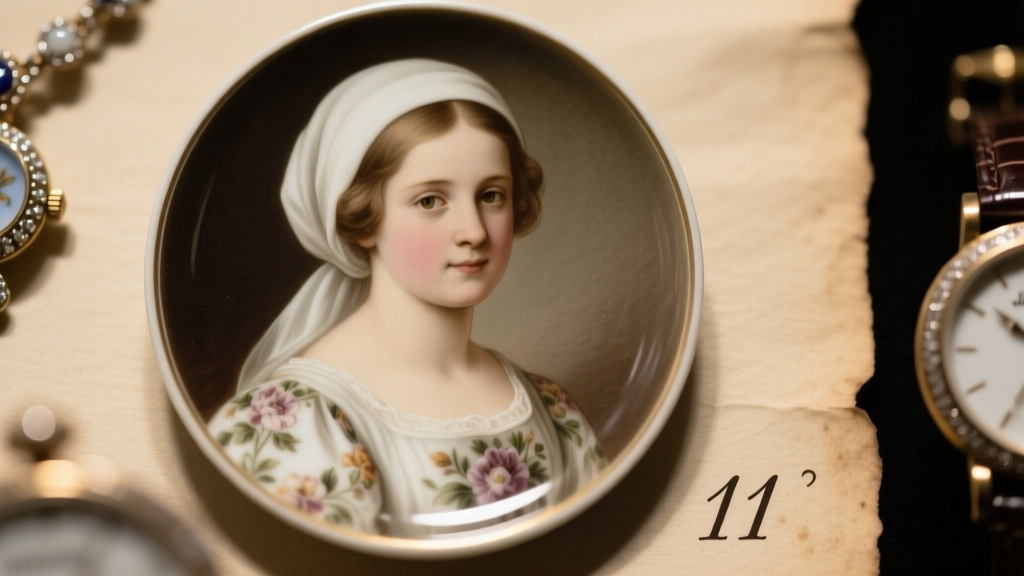
KPM Plaque Portrait of a Young Maiden: Decoding the 'Marked 11 In' White Headdress & Floral Gown Porcelain Relief
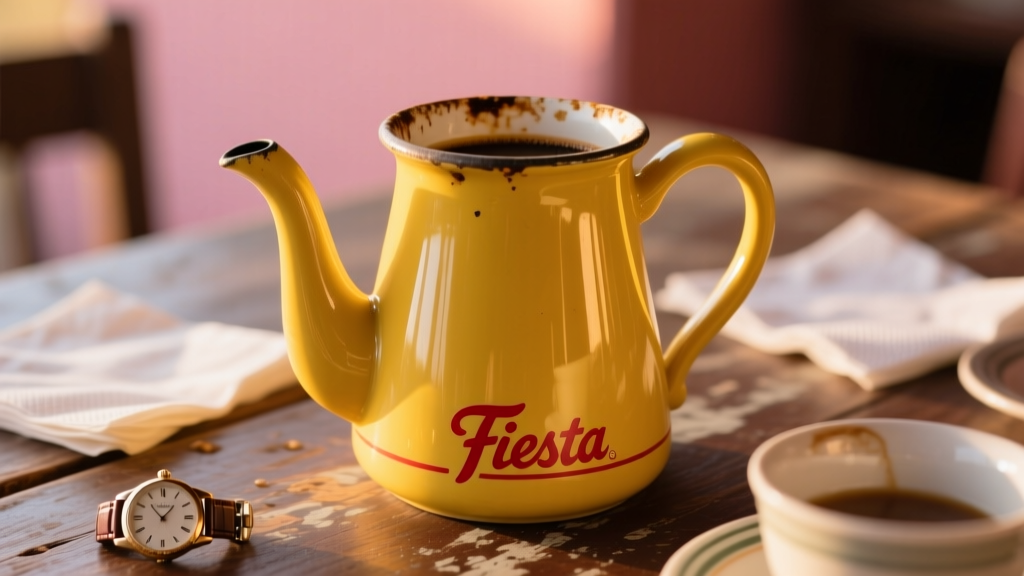
Fiesta Coffeepot Yellow After Dinner No. 2: A Collector’s Deep Dive into the Iconic 1950s Ceramic Masterpiece

Hubley Terrier Bookends: Authenticity, Provenance, and Collectibility of the Standing-on-Grass Model (5 × 5¾ in)
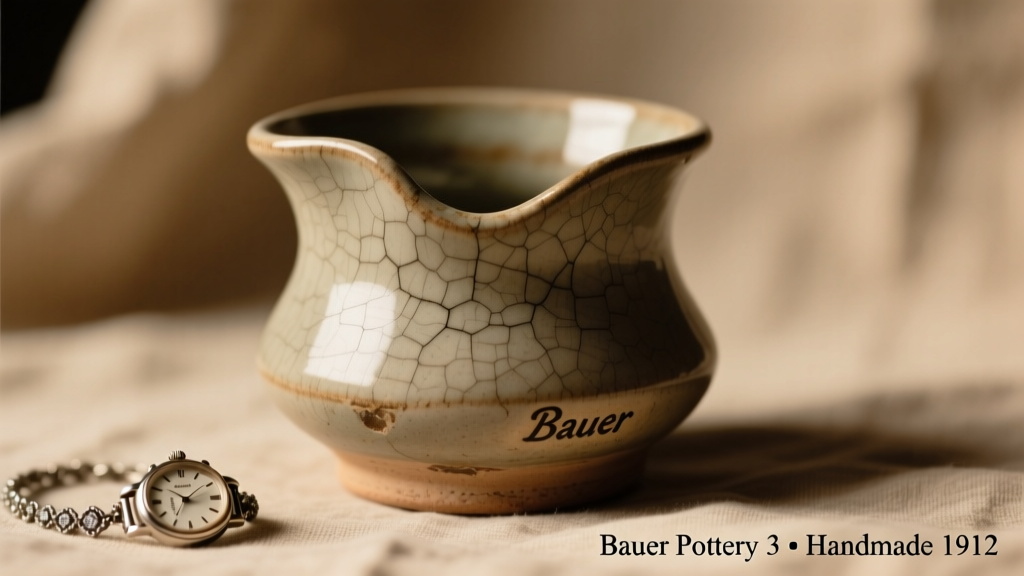
Bauer Pottery: The Third Era — Glaze Innovation, Industrial Expansion, and Mid-Century Modern Identity (1946–1962)
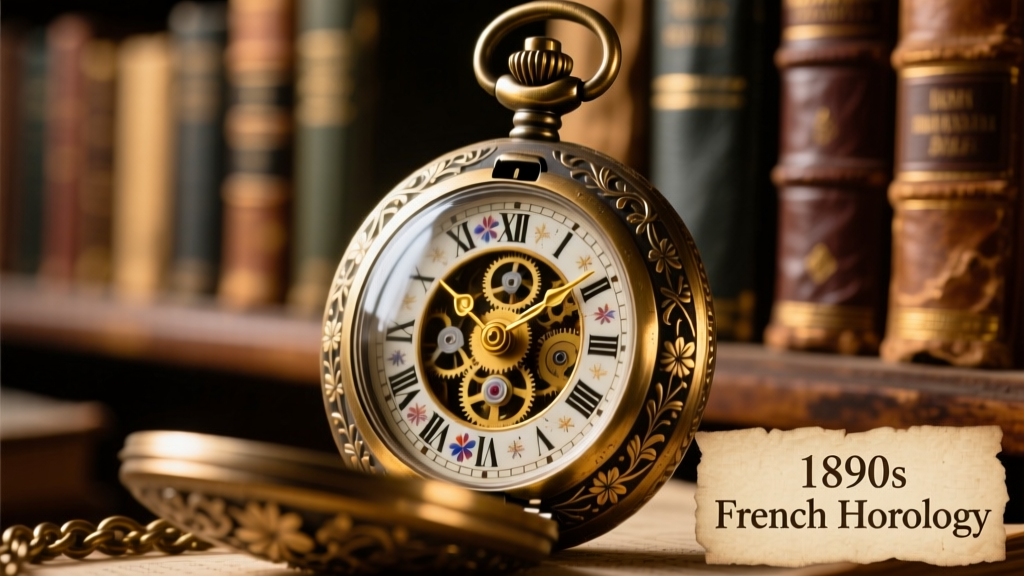
The Elegance and Engineering of French Clocks: From Rococo Mantels to Precision Regulators
Toy Pedal Car Dr Pepper: A Rare Mid-Century Americana Artifact and Collectible Icon
RCA Victor Levermatic AM Radio Clock in Beige: A Mid-Century Icon of Form, Function, and American Design