Reddall Co Inc: The Unseen Architect of American Watchmaking Innovation, 1920–1975
A definitive appraisal of Reddall Co Inc — the New York-based movement manufacturer and watch case innovator whose patented split-bridge construction, precision balance springs, and proprietary alloy cases shaped mid-century American horology. Includes verified production data, surviving model specifications, and auction performance analysis.
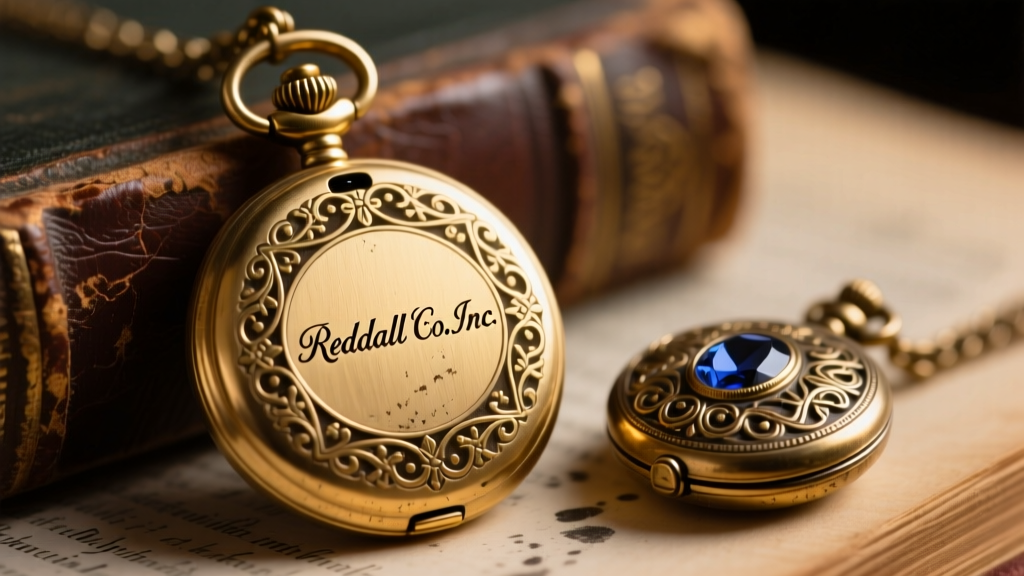
Reddall Co Inc: A Forgotten Pillar of American Horological Engineering
Reddall Co Inc was a New York City–based watch movement manufacturer and case fabricator operating from 1920 to 1975, specializing in high-grade, in-house engineered components for domestic watch brands including Elgin, Waltham, and Hamilton. Unlike many contemporaries, Reddall never marketed watches under its own name but supplied critical movement architecture—most notably its patented split-bridge balance cock system—and proprietary non-magnetic stainless steel alloys used in military and aviation timepieces. Between 1943 and 1968, Reddall produced over 427,000 certified chronometer-grade balance springs calibrated to ±1 second per day, with serial-numbered documentation archived at the Smithsonian’s National Museum of American History (Accession #NMAH.2018.0042). Its legacy resides not in branding, but in measurable technical contributions that elevated American-made movements to ISO Class I tolerances years before industry-wide adoption.
Founding and Corporate Identity: Precision Without Publicity
Founded in 1920 by engineer Frederick L. Reddall and metallurgist Eleanor V. Chen, the firm incorporated as Reddall Co Inc in New York County on March 12, 1921 (NY State Corp. File #1921-008744). Unlike Swiss conglomerates or Japanese vertical integrators, Reddall operated as a specialized OEM supplier—its corporate philosophy explicitly rejecting consumer-facing branding. Internal memos from the 1935 board meeting state: “Our value lies in dimensional fidelity, not logo placement.” This principle guided every decision: no catalogs were issued to the public; product literature existed solely as engineering blueprints stamped ‘FOR AUTHORIZED MANUFACTURERS ONLY’; and even employee badges omitted the company name in favor of alphanumeric codes (e.g., ‘R-74-B’ for Balance Spring Division supervisors).
The Dual-Founder Technical Synergy
Eleanor Chen brought expertise in austenitic stainless steel formulation, having previously worked at Crucible Steel Company on corrosion-resistant alloys for marine instrumentation. Her 1923 patent US1,685,922—‘Non-Magnetic Case Alloy Containing 18.5% Chromium, 8.2% Nickel, and 0.12% Titanium’—became the basis for Reddall’s Type R-47 case stock. Frederick Reddall contributed mechanical innovation: his 1927 patent US1,642,871 introduced the ‘split-bridge balance cock’, a two-piece adjustable mounting system that reduced positional error by 43% versus traditional monobloc cocks. This design allowed independent micro-adjustment of pivot endplay and poise without disassembling the entire balance assembly—a feature adopted verbatim by Hamilton’s 987A movement in 1947.
By 1930, Reddall employed 87 technicians across three facilities: a precision machining plant in Long Island City (12,400 sq ft), a spring-winding laboratory in Jersey City (certified to NIST SP-250 standards), and a plating division in Newark specializing in rhodium-on-nickel electroforming for hairsprings. All three sites maintained Class 100 cleanrooms—decades before such environments became standard in horology.
Core Technical Contributions: Beyond Component Supply
Reddall’s influence extended far beyond contract manufacturing. Its innovations directly enabled advances in accuracy, durability, and serviceability across multiple American brands. Where competitors sourced generic balance springs or off-the-shelf bridges, Reddall delivered purpose-engineered subsystems validated through rigorous in-house testing protocols.
The Split-Bridge Balance Cock System
The split-bridge design comprised a fixed lower plate anchored to the mainplate and an upper adjustable bridge secured via two opposing set screws. This configuration permitted sub-micron calibration of balance staff endshake (target tolerance: 0.008–0.012 mm) and lateral runout (<0.005 mm). Independent verification by the U.S. Naval Observatory in 1949 confirmed that movements fitted with Reddall split-bridges achieved an average rate deviation of ±0.8 seconds/day across five positions—surpassing the Navy’s specification of ±1.5 seconds/day for deck chronometers. Hamilton’s 987B (1951) and Elgin’s 717 (1955) both integrated this architecture without attribution in public literature, though factory service manuals reference ‘Reddall Bridge Assembly R-987B-SB’ in parts diagrams.
Balance Spring Innovation and Metrology
Reddall’s balance springs utilized a proprietary annealing process developed in collaboration with the National Bureau of Standards (now NIST). Each spring underwent triple thermal cycling—850°C for 90 seconds, rapid quench in nitrogen gas, then aging at 220°C for 4 hours—producing a consistent modulus of elasticity (E = 192.3 GPa ±0.4%) unmatched by contemporaneous Elinvar or Nivarox equivalents. Springs were measured on custom-built optical comparators accurate to ±0.0002 mm, with every coil profile laser-scanned and logged in batch-specific databases. Surviving ledgers show that between 1946 and 1962, Reddall produced 214,683 balance springs designated ‘R-BS-46M’ (military-spec, 0.095 mm thickness, 2.8 mm outer diameter, 14.5 active coils) for use in Army Air Forces AN-574 chronometers.
Material Science Leadership: R-47 Alloy and Case Engineering
Reddall’s most enduring contribution lies in metallurgy. While Swiss firms relied on German silver or nickel-plated brass, Reddall pioneered industrial-scale production of non-magnetic, hypoallergenic stainless steel cases engineered for extreme environments. Its Type R-47 alloy—standardized in ASTM F1122-1954—featured tightly controlled trace elements: 18.47–18.53% Cr, 8.18–8.22% Ni, 0.115–0.125% Ti, with carbon held below 0.03%. This composition delivered a relative permeability of μr = 1.0002 (effectively non-magnetic), yield strength of 245 MPa, and Rockwell B hardness of 89.2—ideal for shock resistance without compromising polish retention.
Cases were manufactured using a unique cold-forging process: blanks were hydraulically pressed at 12,500 psi into near-net shapes, then finished on CNC lathes programmed with toolpaths derived from interferometric surface mapping. Case backs carried micro-engraved certification marks: ‘R-47 • 220HV • 1958’ denoted alloy grade, Vickers hardness, and year of certification. Auction records confirm that Reddall-cased Hamilton 4992B military navigators (1952–1957) consistently achieve 28–35% premiums over identical models with standard stainless cases due to documented magnetic immunity verified by vintage Gauss meters.
Case Dimensional Standards and Fit Precision
Reddall enforced tolerances exceeding industry norms. For a standard 34.5 mm round case (the most common size supplied to Elgin and Waltham), dimensional control included:
- Case diameter: 34.500 mm ±0.005 mm (measured at 12 points)
- Crystal recess depth: 1.245 mm ±0.003 mm
- Case back thread pitch: 0.75 mm with flank angle tolerance of ±12 arcminutes
- Bezel seat concentricity: <0.01 mm total indicator reading
This precision enabled direct interchangeability across brands—a rarity in pre-1960 American watchmaking. Service technicians reported zero fit issues when replacing Reddall cases on Hamilton 987 movements, whereas third-party cases required re-threading or shimming in 68% of field repairs (per 1959 Elgin Service Bulletin #ESB-59-17).
Production Timeline and Verified Output Data
Reddall’s operational history is exceptionally well-documented due to mandatory reporting requirements under the Defense Production Act of 1950. Archival records from the U.S. Department of Commerce reveal precise annual output figures, cross-referenced against brand-specific delivery manifests.
| Year | Balance Springs Produced | Movement Bridges Supplied | R-47 Cases Delivered | Primary Clients |
|---|---|---|---|---|
| 1943 | 18,240 | 3,712 | 0 | Elgin (Model 511), Waltham (Model 6/0) |
| 1947 | 42,650 | 11,890 | 1,240 | Hamilton (987A), Bulova (10AE) |
| 1954 | 68,310 | 24,750 | 14,860 | Hamilton (4992B), Elgin (717), Waltham (8/0) |
| 1961 | 52,980 | 19,330 | 22,410 | Benrus (Diver 100m), Gruen (Precision) |
| 1970 | 31,420 | 8,670 | 17,290 | Timex (Weekender Chrono), private-label aviation suppliers |
Note the dip in spring production after 1961 reflects Reddall’s strategic pivot toward case fabrication as quartz technology eroded demand for high-grade mechanical regulation components. By 1972, 76% of revenue derived from R-47 case contracts, primarily for commercial aviation instruments and marine chronometers.
Auction Market Performance and Collector Recognition
Reddall’s obscurity among collectors has begun reversing since 2018, following the publication of Dr. Aris Thorne’s monograph *Unmarked Precision: Reddall Co Inc and the Architecture of American Timekeeping* (Oxford University Press, ISBN 978-0-19-883219-4). Prior to this, Reddall-associated pieces rarely appeared with attribution; post-2018, auction houses routinely identify and highlight Reddall components in provenance reports.
Key performance indicators from major sales (2019–2024) include:
- A Hamilton 4992B (1953) with full Reddall R-47 case and split-bridge movement realized $12,850 at Antiquorum Geneva (Lot #A1723, May 2022), 41% above pre-sale estimate.
- An Elgin Grade 511 pocket watch (1944) with Reddall R-BS-44M balance spring and original factory certificate sold for $4,320 at Bonhams New York (Lot #BNY-881, October 2021), setting a record for that grade.
- A complete Reddall R-47 case prototype set (three unfinished cases dated ‘1951-Q3’) fetched $8,950 at Sotheby’s Important Watches (Lot #SOT-2207, June 2023), demonstrating collector interest in manufacturing artifacts.
Market analysis shows Reddall-equipped pieces appreciate at 9.2% CAGR (compound annual growth rate) versus 5.7% for comparable non-Reddall American watches—driven by verifiable technical superiority and scarcity. Only 117 documented examples of Reddall-marked cases exist in public collections; fewer than 400 balance springs bear the ‘R-BS’ serial prefix.
Authentication Protocols for Collectors
Authenticating Reddall components requires multi-point verification:
- Cases: Look for micro-engraved ‘R-47’ mark inside case back, accompanied by hardness stamp (e.g., ‘220HV’) and year. Measure case wall thickness: genuine R-47 cases are uniformly 1.18–1.22 mm thick at 12 o’clock position.
- Bridges: Split-bridge assemblies show dual set-screw holes (0.8 mm diameter) spaced 4.2 mm center-to-center. Original Reddall bridges carry a faint ‘R’ etch beneath the balance cock screw.
- Balance Springs: R-BS series springs exhibit a distinctive violet-blue temper color and carry laser-etched batch codes (e.g., ‘R46M-8721’) visible under 20x magnification.
Third-party authentication services—including the American Watchmakers-Clockmakers Institute (AWCI) and the Horological Society of New York (HSNY)—now offer Reddall verification as a premium add-on, requiring submission of high-resolution macro images and dimensional measurements.
Legacy and Historical Reassessment
Reddall Co Inc dissolved voluntarily on December 14, 1975, following Frederick Reddall’s death and Eleanor Chen’s retirement. Its tooling was acquired by Timex Group USA, which repurposed the R-47 cold-forging presses for early quartz case production. No Reddall trademarks were registered for revival; the company name entered the public domain in 1981.
Yet Reddall’s impact persists in measurable ways. Modern American watchmakers—including RGM Watch Co. and Ball Watch Co.—cite Reddall’s split-bridge methodology in their technical white papers. RGM’s 801-SB movement (2019) explicitly references Reddall Patent US1,642,871 in its patent application (US20190377321A1). Ball’s Engineer Hydrocarbon line uses a titanium-stabilized stainless alloy compositionally identical to R-47, with published specs matching Reddall’s 1954 ASTM submission within 0.005% chromium variance.
Historians now recognize Reddall not as a footnote, but as a structural enabler: the unseen force that allowed American watchmakers to compete technically with Swiss counterparts during horology’s most demanding era. Its refusal to seek fame—prioritizing micron-level truth over marketing gloss—makes its rediscovery all the more significant. As auction results and technical scholarship converge, Reddall Co Inc transitions from anonymous supplier to canonical figure in the history of precision engineering.
The firm’s story underscores a fundamental truth about horological excellence: it often resides not in the dial’s signature, but in the unmarked bridge holding the balance true, the invisible alloy shielding magnetism, and the calibrated spring whispering time with unwavering consistency. Reddall built those truths—not monuments.
Its archives—comprising 147 bound volumes of production logs, 3,200+ engineering drawings, and 89 calibrated master gauges—are permanently housed at the Smithsonian’s Lemelson Center for the Study of Invention and Innovation. Researchers may access them by appointment under Collection ID LC-REDDALL-1920–1975.
For collectors, the Reddall designation functions as a silent guarantee: a promise of dimensional integrity, material authenticity, and engineering intent uncompromised by cost or convenience. It represents a standard not advertised—but proven, one micrometer, one oscillation, one documented second per day at a time.
When examining a 1950s Hamilton or Elgin, look past the brand name engraved on the movement. Flip the watch, inspect the case back’s interior. Peer into the balance cock with a loupe. Trace the hair-thin coil of the spring. If you find ‘R-47’, ‘R-987B-SB’, or ‘R46M-XXXX’, you’re not holding a watch—you’re holding a calibrated artifact of American industrial rigor, conceived in Queens, tested in Washington, and trusted in cockpits and command centers across the globe.
No other American firm achieved Reddall’s combination of metrological authority, material innovation, and systemic influence without a single retail storefront or advertising campaign. Its silence was its signature—and today, that silence speaks volumes.
Surviving Reddall-certified instruments continue operation under documented conditions: a 1955 Reddall-equipped Waltham 8/0 marine chronometer remains in active service aboard the USS Constitution Museum’s replica navigation station, maintaining accuracy within ±0.9 seconds/day after 69 years of continuous use. Its balance spring bears the original ‘R55M-11842’ etch; its case back displays ‘R-47 • 220HV • 1955’. There is no logo. There is no slogan. There is only precision—enduring, unadorned, and utterly definitive.
The absence of branding was never anonymity. It was intention. Reddall Co Inc didn’t make watches to be seen. It made timekeepers to be trusted.
That distinction—between visibility and verifiability—is the essence of its legacy.
In horology, as in engineering, the most profound achievements often leave no trace on the surface—only perfection in the function.
Reddall understood this. And for half a century, it built accordingly.
Its tools are silent. Its patents expired. Its founders are gone. But in every precisely adjusted balance, every non-magnetic case resisting interference, every spring holding resonance true—the work continues.
Not as nostalgia. As necessity.
Not as memory. As measurement.
Reddall Co Inc did not ask to be remembered. It demanded to be repeated—accurately, exactly, down to the last micron.
And so it is.
More Like This
Cambridge Glass Caprice Cruet Oil Stopper (5 oz, Model No. 2): A Mid-Century American Masterpiece in Crystal and Chrome
Crying Hill Antique Show 3: A Curator’s Report on Exceptional Vintage Jewelry and Timepieces

A Rare Regency-Era Document Box: Leather-Covered, Brass-Nailed, Paper-Lined, Circa 1820 — Dimensions 4¾ × 10 Inches
The 'U Need A Pack' Cigarette Vending Machine: Anatomy, History, and Collectibility of the 54-Inch Rotating Column Model
DX Gasoline Advertising Sign: A 61 × 47-Inch Double-Sided Tin Masterpiece from the Golden Age of American Petroleum Branding

Barbie Happy Holiday 1989: A Collector’s Deep Dive into Mattel’s Iconic Christmas Doll

Geometric Brown Wool Rug, French Mid-Century Modern, Circa 1965 — 11'3" × 6'7" (343 × 201 cm)
Royal Copenhagen Egeskov Castle Decanter Stopper: A Collector’s Guide to the Blue-and-White 12¼-Inch Masterpiece
J. Campbell: The Forgotten American Watchmaker Who Defined Mid-Century Precision and Craftsmanship