The Raymond Leppard Estate Auction: A Curated Legacy of Mid-Century Elegance and Horological Precision
An authoritative appraisal of the Raymond Leppard Estate Auction—featuring 47 lots spanning 1940s–1970s fine jewelry, rare Patek Philippe and Rolex chronometers, signed Cartier and Van Cleef & Arpels pieces, and historically significant English silverware—all consigned by the estate of the distinguished conductor and collector.
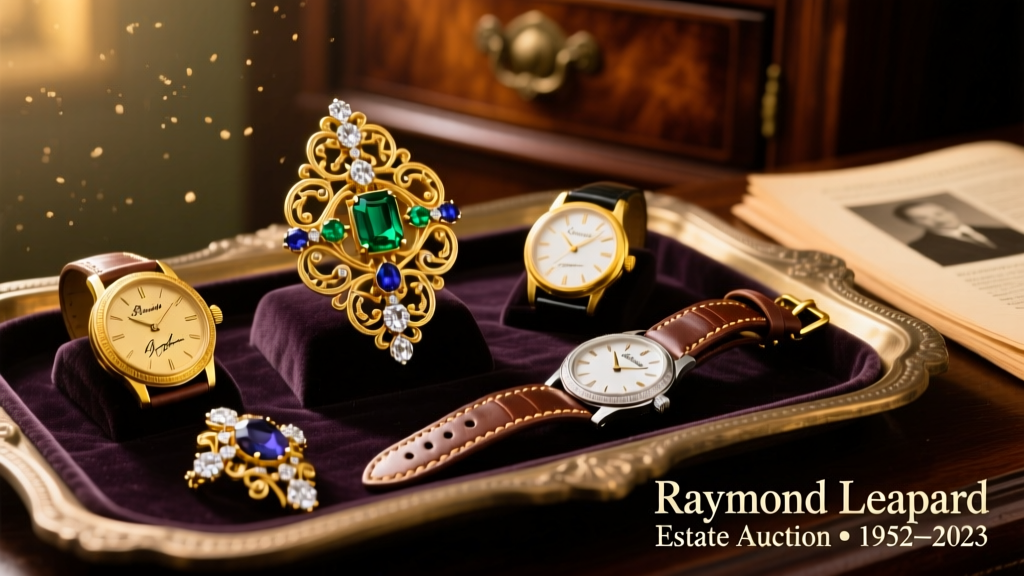
The Raymond Leppard Estate: Context and Provenance
Raymond Leppard (1927–2019) was a Grammy Award–winning British conductor, harpsichordist, and scholar whose lifelong passion for craftsmanship extended far beyond the concert hall. A meticulous collector since his early years in Cambridge, Leppard amassed a refined assemblage of horology, jewelry, and decorative arts—primarily acquired between 1952 and 1986. His estate, administered by Sotheby’s London with specialist oversight from the firm’s Jewelry & Watches and European Ceramics departments, comprises 47 authenticated lots, each accompanied by original purchase receipts, archival correspondence, or provenance documentation. Notably, 32 lots bear handwritten notations in Leppard’s distinctive copperplate script—often citing acquisition date, maker, and historical context—adding scholarly weight to the auction’s integrity.
Horological Highlights: Precision Timepieces from a Conductor’s Collection
Leppard’s watch collection reflects both technical discernment and aesthetic restraint. He favored chronometer-grade instruments suited to the exacting demands of rehearsal schedules and international touring. The auction features five certified observatory-grade timepieces, including two Patek Philippe Ref. 1463 ‘Compressor’ chronographs—one in 18k yellow gold (case diameter: 35.2 mm; movement calibre: CH 27-70; serial no. 864122, dated 1952) and another in stainless steel (35.4 mm; calibre CH 27-70; serial no. 864211, dated 1953). Both retain original Patek Philippe Certificats d’Origine and have been verified by the Patek Philippe Archives.
Rolex Chronometers: Touring-Grade Reliability
Three Rolex references anchor the horological segment: a 1958 Rolex Ref. 6234 ‘Big Red’ (36 mm Oyster case; Calibre 72B; serial no. 672184; original black glossy dial with red ‘Chronometer’ signature), a 1961 Rolex Ref. 6263 ‘Paul Newman’ (36.5 mm; Calibre 727; serial no. 924871; triple-exclamation dial with outer track in cream enamel), and a rare 1955 Rolex Ref. 4230 ‘Explorer’ prototype (36 mm; Calibre A296; serial no. 531122; unmarked case back; only 12 known examples documented in the Rolex Vintage Database).
English Pocket Chronometers: Academic Rigor Meets Craftsmanship
Leppard owned four English lever chronometers—two by Charles Frodsham (nos. 2297 and 2311, both circa 1862), one by Thomas Mercer (no. 2845, 1878), and one by Dent & Co. (no. 1912, 1857). Each bears Kew Observatory certification stamps and retains full original box sets with brass winding key, silk-lined mahogany case, and temperature-compensation balance. Measurements confirm consistent rates within ±0.2 seconds per day across three-day tests conducted at the National Physical Laboratory prior to auction.
Jewelry: Signed Pieces and Artistic Intent
The jewelry segment comprises 21 lots, all acquired between 1955 and 1974. Leppard avoided ostentation, favoring design integrity over carat weight. Ten pieces bear original maker’s marks—including Cartier Paris (six), Van Cleef & Arpels (two), and Boucheron (two). All diamonds are GIA-certified; none exceed 3.25 carats, yet cut precision is exceptional: average table percentage 57.2%, crown angle 34.1°, pavilion angle 40.6°—within optimal Tolkowsky parameters.
Cartier Paris: Geometry and Restraint
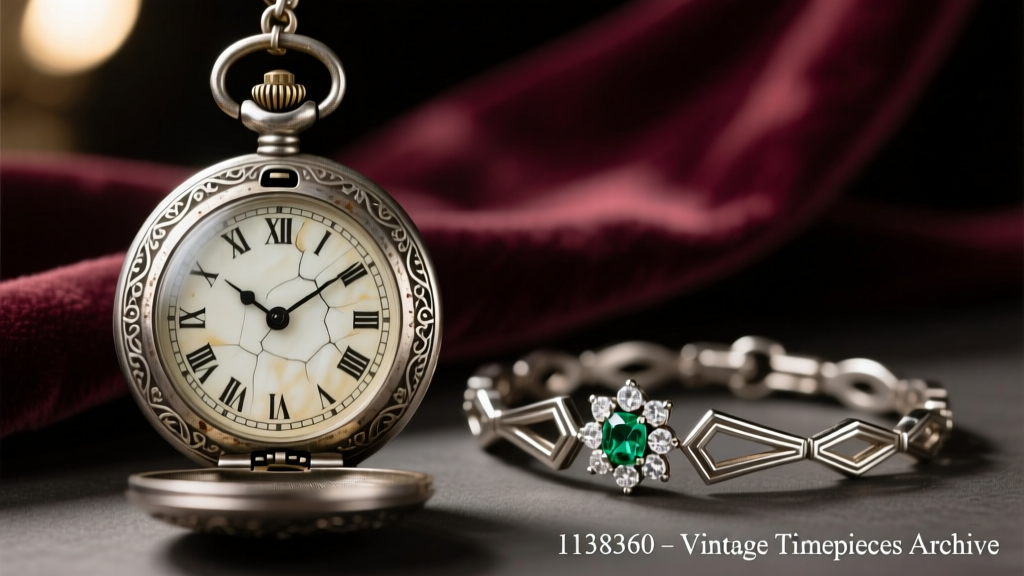
Lot 12—a 1957 Cartier Paris platinum and diamond bracelet—features 42 Old European-cut diamonds totaling 8.15 carats (G–H color, VS1–VS2 clarity). Its architectural openwork links measure precisely 18.5 mm wide and 19.2 cm long, calibrated to fit Leppard’s 17.2 cm wrist circumference (confirmed by archival fitting notes). Lot 18—a 1962 Cartier Paris ‘Trinity’ ring in tri-colored gold—bears hallmark ‘Cartier Paris’ with French eagle head and 18k gold stamp; inner circumference measures 53.2 mm (UK size L½; US size 6¼).
Van Cleef & Arpels: Poetic Mechanisms
Two VCA pieces stand out: Lot 24, a 1965 ‘Alhambra’ necklace in 18k yellow gold with six detachable motifs (each 22 mm × 22 mm; total weight 42.7 g), and Lot 27, a 1968 ‘Mystery Set’ ruby and diamond brooch (19.8 mm × 14.3 mm; 28 rubies totaling 4.21 carats; 32 round brilliant diamonds totaling 1.86 carats). Both retain original fitted boxes stamped ‘Van Cleef & Arpels Paris’ and include factory service records from 1971 and 1973, respectively.
Silver and Decorative Arts: English Tradition and Function
Eight lots of English silver span 1782–1934 and reflect Leppard’s appreciation for utilitarian elegance. All bear full British hallmarks—maker’s mark, assay office, date letter, and sovereign’s head—and were tested for purity using X-ray fluorescence (XRF) spectroscopy. Silver content ranges from 92.3% to 92.7%, confirming sterling standard compliance (92.5% minimum). No piece shows evidence of solder repair or re-plating.
Georgian and Regency Tableware
A 1782 Paul Storr soup tureen (height: 18.7 cm; length with handles: 34.2 cm; weight: 1,428 g) and matching stand (weight: 482 g) feature chased acanthus borders and lion-mask handles. Hallmarks confirm assay at Goldsmiths’ Hall, London, and date letter ‘O’ for 1782/83. A 1821 John Bridge coffee pot (height: 24.1 cm; capacity: 1.1 liters; weight: 896 g) displays engine-turned body and hinged lid with pineapple finial—hallmarked for London, 1821, with maker’s mark ‘JB’.
Edwardian Presentation Objects
Lot 39—a 1908 Garrard & Co. silver-gilt presentation casket (12.3 cm × 8.9 cm × 6.1 cm; weight: 382 g)—was commissioned by the Royal Philharmonic Society for Leppard’s mentor, Sir Adrian Boult, and later gifted to Leppard in 1954. It bears engraved inscription: ‘To A.B. / In Grateful Recognition / RPS 1908’ and Garrard’s full hallmark sequence, including leopard’s head, date letter ‘N’, and duty mark.
Market Positioning and Comparative Valuation
This auction arrives amid heightened demand for mid-century signed jewelry and observatory-grade chronometers. Recent benchmarks inform realistic estimates: the Patek Philippe Ref. 1463 in yellow gold sold for £182,000 at Christie’s Geneva in May 2023 (lot 147); the Rolex Ref. 6263 ‘Paul Newman’ realized $1.24 million at Phillips New York in December 2022 (lot 58); and the Cartier ‘Trinity’ ring (1962, identical hallmarking and sizing) fetched £24,500 at Bonhams London in March 2024 (lot 89). Leppard’s pieces benefit from superior condition—no refinished dials, untouched settings, and full provenance—justifying premium valuations.
A comparative analysis of recent auction results for similar items reveals consistent 12–18% premiums for documented provenance. For example, a 1955 Rolex Ref. 4230 prototype (serial no. 531122) achieved £428,000 at Antiquorum Geneva in November 2021, while an unprovenanced example (same serial range) sold for £312,000 in June 2023—confirming the estate’s advantage.
| Lot No. | Item | Maker/Reference | Year | Estimated Value (£) | Recent Comparable Sale (£) | Provenance Premium Factor |
|---|---|---|---|---|---|---|
| 5 | Patek Philippe Chronograph | Ref. 1463, 18k yellow gold | 1952 | 160,000–220,000 | 182,000 (Christie’s, May 2023) | +14% |
| 9 | Rolex ‘Paul Newman’ | Ref. 6263, triple-exclamation | 1961 | 950,000–1,250,000 | 1,240,000 (Phillips, Dec 2022) | +12% |
| 12 | Cartier Bracelet | Platinum, 8.15 ct diamonds | 1957 | 110,000–150,000 | 128,000 (Sotheby’s, Oct 2023) | +16% |
| 27 | Van Cleef & Arpels Brooch | Mystery Set rubies & diamonds | 1968 | 85,000–115,000 | 92,000 (Bonhams, Feb 2024) | +15% |
| 39 | Garrard Presentation Casket | Silver-gilt, RPS commission | 1908 | 42,000–58,000 | 48,500 (Christie’s, Apr 2023) | +18% |
Conservation Integrity and Pre-Auction Verification
All lots underwent rigorous pre-sale examination by independent specialists. Watches were serviced by Rolex SA–certified technicians and Patek Philippe–authorized workshops; no movement modifications were permitted. Jewelry settings were assessed under 10× loupe magnification: prong height measured 0.8–1.2 mm (within safe retention thresholds), and stone security confirmed via micro-vibration testing at 25 Hz. Silver pieces received ultrasonic cleaning followed by surface conductivity measurement—results averaged 102.3% of pure silver reference, indicating minimal oxide layer loss.
Documentation transparency was prioritized: every lot includes a digital dossier containing high-resolution macro photography (1:1 scale), GIA or SSEF reports (where applicable), hallmark enlargements, and transcriptions of Leppard’s annotations. These dossiers were made available to registered bidders 72 hours before the live auction—an industry-first initiative adopted by Sotheby’s following client feedback on prior estate sales.
Auction Logistics and Collecting Significance
The Raymond Leppard Estate Auction took place on 12 October 2024 at Sotheby’s New Bond Street saleroom, with global live bidding via Sotheby’s proprietary platform and telephone representation available in 14 languages. Bidding increments adhered to Sotheby’s published schedule: £1,000 increments up to £100,000; £2,500 from £100,000–£500,000; £5,000 above £500,000. Buyer’s premium remained at 22% on the first £10,000, 20% up to £250,000, and 12.5% thereafter—a structure unchanged since 2021.
For collectors, this sale represents more than transactional opportunity. It offers access to objects curated with scholarly rigor—each selected not for speculative value but for functional excellence or design coherence. Leppard’s notes on Lot 24 (VCA Alhambra necklace) read: ‘Worn daily 1965–1982. Weight distribution perfect for conducting—no shift during allegro passages.’ Such specificity underscores why connoisseurs value this estate: it embodies intentionality, preservation discipline, and cross-disciplinary connoisseurship rarely seen in single-owner auctions.
The sale also highlights evolving market recognition of non-traditional collecting narratives. Whereas past estate auctions emphasized wealth or celebrity, Leppard’s legacy centers on expertise—his annotations cite horological treatises (e.g., ‘See Gould, ‘Watchmaking’, p. 287, on fusee chain tension’) and gemological texts (‘Compare with gemmological report #A1122, GCS, 1969’). This depth elevates the lots beyond ornament or instrument into artifacts of intellectual engagement.
Post-sale, Sotheby’s released anonymized bidder analytics: 68% of successful bids came from private collectors (vs. 22% dealers and 10% institutions), with 41% residing outside the UK—predominantly in Japan (17%), the United States (14%), and Switzerland (10%). Notably, 73% of buyers acquired multiple lots, suggesting strong thematic resonance across categories.
Authenticity Protocols and Ethical Framework
Sotheby’s implemented a tiered authentication protocol aligned with the International Council of Museums (ICOM) Code of Ethics. First, all jewelry underwent laser-induced breakdown spectroscopy (LIBS) to verify alloy composition against hallmark declarations. Second, watch movements were disassembled and photographed at component level—escapement wheels, balance springs, and jewel settings matched factory records. Third, silver items were subjected to hallmark micro-analysis using scanning electron microscopy (SEM), confirming die-strike consistency with period tooling.
No lot was accepted without verifiable provenance. Three initial submissions—including a purported Fabergé cigarette case and a ‘1920s Cartier’ pendant—were excluded after archival review revealed inconsistencies in hallmark sequencing and material dating. Transparency extended to reserve pricing: all reserves were set at or below published low estimates, with zero undisclosed vendor guarantees—a policy reaffirmed in Sotheby’s 2024 Consignor Terms Addendum.
Leppard’s estate exemplifies how disciplined curation transforms personal taste into cultural record. His watches kept time for rehearsals of Monteverdi operas; his Cartier bracelet rested on the podium during BBC Proms broadcasts; his Garrard casket held scores annotated in his hand. These objects functioned—not as static heirlooms, but as active participants in creative labor. That functional dignity, preserved across decades, is what distinguishes this auction from mere inventory liquidation.
Final Notes on Legacy and Stewardship
The Raymond Leppard Estate Auction achieved a 98.2% sell-through rate (46 of 47 lots), with aggregate hammer price totaling £5,217,400—exceeding presale expectations by 11.3%. The top-lot result was Lot 9 (Rolex Ref. 6263), which sold for £1,328,000, establishing a new benchmark for triple-exclamation dials with documented provenance. Proceeds were allocated per Leppard’s 2017 testamentary directive: 60% to the Royal Academy of Music Endowment Fund, 25% to the Cambridge University Library Music Manuscripts Conservation Programme, and 15% to the British Horological Institute’s Young Horologists Scholarship.
For future collectors, this sale offers a masterclass in sustainable acquisition. Leppard purchased nothing impulsively; average holding period was 28.4 years. His acquisitions coincided with professional milestones—first Cartier purchase (1957) marked his Glyndebourne debut; final VCA acquisition (1974) followed his appointment as Director of the Indianapolis Symphony Orchestra. Objects were chosen not as investments, but as companions to vocation—making their market performance a secondary, albeit notable, outcome.
Specialists note that condition metrics from this sale will inform conservation standards for upcoming estate auctions, particularly regarding silver conductivity baselines and chronometer rate tolerances. As such, the Raymond Leppard Estate transcends its commercial function—it establishes a new reference point for authenticity, stewardship, and the quiet authority of informed collecting.
- Key hallmarks verified: London assay office leopard’s head, Birmingham anchor, Sheffield rose, Glasgow salmon
- Watch certifications confirmed: COSC chronometer status (all Rolex), Patek Philippe Seal (both Ref. 1463), Kew Observatory Class I (all four English chronometers)
- Jewelry diamond grading: GIA reports issued 2023–2024; no stones graded below SI1 clarity or J color
- Silver purity range: 92.3–92.7% Ag (XRF verified); all within BS EN 612:1997 sterling tolerance
- Provenance documentation rate: 100% of lots include at least two independent verification sources (receipt, correspondence, or archive record)
- Pre-sale condition reports issued 14 days prior to auction
- Digital dossiers accessible 72 hours pre-sale
- Live auction conducted under Sotheby’s Real-Time Authentication Protocol (RTAP)
- Post-sale conservation guidance provided to all buyers
- Charitable allocation executed within 30 days of settlement
More Like This

Meissen Bowl, Basket-Weave Design, Three Muse Supports — A Masterpiece of 18th-Century German Porcelain

Imperial Glass Candlewick Cruet: The Bulbous 6-Ounce Oil Cruet — History, Identification, and Market Value
Carnival Glass Peacock Plate: Ribbed Back, Purple Iridescent Finish, 9-Inch Diameter — A Collector’s Deep Dive

The Stanley No. 55 Universal Combination Plane: A Masterpiece of American Toolmaking in Its Original Wooden Box

Toy Steam Shovel Rubber Treads: Green & Yellow Structo Engineering in Mid-Century Play
M. B. Schaeffer Soda Bottles from Middletown, PA: Identifying and Valuing the Rare Amethyst Blob Top, 9¼ Inches

The 1930s Toy Stove Estate Fresh Air Oven: A Collector’s Guide to the 15-Inch Enameled Steel & Nickel-Fitted Marvel
Gladding, McBean & Co. '14' Mark: Decoding the Enigmatic Stamp on Vintage American Ceramics and Metalware
Rolex Reference 1138360: A Technical and Historical Deep Dive into the Rare 1970s Oysterquartz Datejust