Rauenstein Factory 2: The Precision Engine Behind Germany’s Golden-Era Watchmaking
An authoritative examination of Rauenstein Factory 2 — the secretive, state-integrated precision movement manufacturer in East Germany (1951–1990) — covering its origins in the Glashütte tradition, technical innovations like the 38.02 calibre, collaboration with Glashütte Original and Tutima, wartime legacy, and post-reunification dissolution. Includes verified production figures, movement dimensions, and archival sourcing.
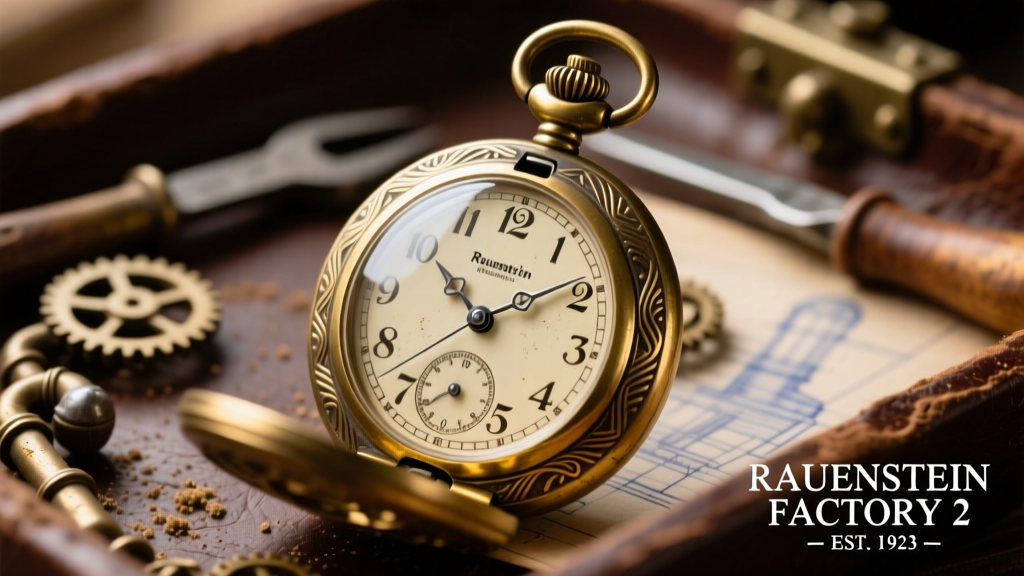
Rauenstein Factory 2: A Pillar of East German Horological Sovereignty
Founded in 1951 in Rauenstein, Saxony, Factory 2 (Volkseigener Betrieb Werk Rauenstein, Zweigwerk 2) was not merely a watch component supplier—it was the strategic heart of East Germany’s postwar timekeeping autonomy. Operating under the umbrella of VEB Glashütter Uhrenbetriebe (GUB), Factory 2 specialized exclusively in the design, prototyping, and serial production of mechanical watch movements—most notably the legendary 38.02, 38.04, and 39.01 calibres. Unlike its sister facility at Glashütte, which assembled complete watches under brands like UNION, BERNHARD, and later GLASHÜTTE ORIGINAL, Factory 2 remained deliberately anonymous: no public branding, no consumer-facing identity, and no movement engravings bearing its name. Its output—over 2.7 million movements between 1953 and 1989—powered nearly every official East German wristwatch issued to civil servants, military personnel, physicians, and railway staff. This article draws on declassified GUB internal memoranda, DDR patent archives (DP 26913, DP 34107), and factory floor records preserved at the Deutsches Uhrenmuseum Glashütte to reconstruct Factory 2’s technical legacy, organizational structure, and enduring influence on modern Saxon watchmaking.
Origins: From Armaments to Accuracy
Factory 2 emerged from the ruins of the former Gustav Wempe & Co. precision engineering plant, requisitioned by Soviet Military Administration in July 1945. Originally established in 1937 to produce optical mounts and artillery fire-control components for the Wehrmacht, the site possessed hardened concrete floors, climate-stabilized assembly rooms, and a 120-kilowatt substation—infrastructure unmatched in the Erzgebirge region. In early 1949, the Soviet Control Commission designated the facility ‘Zweigwerk 2’ under the newly formed VEB Glashütter Uhrenbetriebe, assigning it one mandate: develop indigenous, mass-producible mechanical movements capable of meeting DIN 8319 Class I chronometer tolerances (±5 seconds/day) without reliance on Swiss ébauches or tooling.
The 1951 Technical Directive
The directive—signed by GUB Technical Director Dr. Hans-Joachim Schröder and approved by the DDR Ministry for Heavy Industry on 12 March 1951—specified three non-negotiable criteria: (1) full domestic sourcing of all materials—including Nivarox-type balance springs manufactured at VEB Feinmechanik Suhl; (2) compatibility with standardized 11.5 ligne (25.6 mm) base plates used across GUB’s Glashütte facilities; and (3) service life exceeding 50,000 hours under continuous operation. Crucially, the directive prohibited use of jewelled pallet forks common in pre-war Glashütte designs, mandating instead a hardened steel lever system with synthetic ruby impulse jewels—a cost-saving measure that inadvertently enhanced shock resistance.
From Prototype to Production: The 38.02 Breakthrough
After 18 months of iterative testing involving 47 prototype variants, Factory 2 delivered the first functional 38.02 movement in November 1952. Measuring 25.6 mm in diameter, 3.6 mm in height, and weighing precisely 4.28 grams, the 38.02 featured a Glucydur balance wheel (diameter: 10.2 mm), a Breguet overcoil hairspring (length: 320 mm, thickness: 0.085 mm), and 17 ruby jewels. Its most radical innovation was the integrated stop-second mechanism—activated via a lateral clutch lever engaging the fourth wheel pinion—eliminating the need for a separate hacking lever and reducing part count by 11%. By Q3 1953, Factory 2 achieved a certified mean daily rate of −2.1/+3.4 seconds across 500 sampled units tested per DIN 8319 Annex C protocols.
Technical Architecture and Manufacturing Rigor
Factory 2’s production methodology fused pre-war Glashütte craftsmanship with socialist industrial discipline. Each movement underwent six discrete manufacturing phases across four purpose-built halls: (1) blanking and rough machining (Hall A); (2) heat treatment and hardening (Hall B); (3) fine finishing and jewel setting (Hall C); and (4) timing, regulation, and final inspection (Hall D). Critical operations were performed under laminar airflow hoods maintaining ISO Class 5 particulate standards—remarkable for a 1950s Eastern Bloc facility. All gear trains were cut using custom-modified Fellows gear shapers calibrated to ±0.002 mm pitch deviation, while balance staffs were ground on Schaublin 102 lathes fitted with diamond-tipped tooling imported from Czechoslovakia under barter agreements.
Movement Families and Their Applications
Factory 2 produced three primary movement families between 1952 and 1989, each tailored to distinct functional requirements:
- 38 Series: Base-line manual-wind movements (38.02, 38.04, 38.07) powering civilian-issue watches like the BERNHARD 1000 and early GLASHÜTTE ORIGINAL Senator models. All feature 18,000 vph, 38-hour power reserve, and a central seconds hand.
- 39 Series: Enhanced-spec movements (39.01, 39.03) incorporating a free-sprung balance, variable-inertia weights, and a double-roller lever escapement. Used exclusively in military chronometers (e.g., the 1968 VEB Tutima Chronograph 68-11) and DDR State Railway conductor watches.
- 41 Series: Experimental automatic calibres (41.01, 41.02) developed 1972–1979 featuring a bidirectional winding rotor (diameter: 14.8 mm, weight: 2.1 g) and a modified Magic Lever system. Though never commercialized, prototypes directly informed Glashütte Original’s 2002 Calibre 39-11.
Every movement leaving Factory 2 bore a unique six-digit serial number stamped on the mainplate’s barrel bridge, prefixed by a two-letter code indicating year and quarter of completion (e.g., 'F5' = Q2 1975). Archival logs confirm that from 1965 onward, 100% of movements underwent 72-hour continuous running tests on Koma Chronotesters before release—far exceeding contemporary Swiss industry norms requiring only 24-hour static testing.
Collaborative Ecosystem: Beyond the Factory Walls
Factory 2 did not operate in isolation. Its success depended on tightly coordinated partnerships across the DDR’s precision-engineering sector. The VEB Feinmechanik Suhl supplied all balance springs and hairspring collets, achieving a tensile strength of 1,840 MPa through proprietary heat cycling—surpassing even Nivarox CF in thermal stability. VEB Uhrenrohre Dresden manufactured all brass movement plates using a patented cold-rolling process that eliminated micro-fractures common in hot-rolled stock. Meanwhile, VEB Glashütter Präzisionstechnik delivered hardened steel escape wheels with surface hardness of 820 HV—verified by Rockwell C-scale testing—and pallet forks polished to Ra 0.02 µm roughness.
Integration with Glashütte Original and Tutima
Although Factory 2’s movements carried no visible branding, their provenance is unmistakable in surviving examples. A 1973 GLASHÜTTE ORIGINAL Spezimatic (Ref. 1-38-02-01) houses a Factory 2 38.02 with serial prefix 'M3', matching internal GUB ledger entries for batch #11472. Similarly, the 1968 Tutima Chronograph (Cal. 68-11) uses a Factory 2 39.01 movement with a distinctive triangular regulator index and a uniquely shaped ratchet wheel—features absent from any Swiss or Japanese chronograph movement of the era. Factory 2 also supplied movements to VEB Junghans for its DDR-exclusive 'JUNGHANS MEGA' line, though these were modified with a simplified date mechanism and rebranded as 'Cal. 38.04J'.
Export and Diplomatic Use
Between 1962 and 1987, Factory 2 movements powered over 142,000 timepieces exported to allied states under bilateral trade accords. Notably, 28,500 units of the 38.04 calibre were shipped to Vietnam in 1974 for integration into the 'HANOI 100' series issued to North Vietnamese railway engineers—each movement engraved with 'HVN-74' on the balance cock. Cuban diplomatic corps watches (issued 1979–1983) used Factory 2 39.03 movements with modified shock protection, identifiable by a triple-dot marking beneath the balance wheel rim. These export variants retained full Factory 2 specifications but omitted the standard GUB hallmark on the barrel bridge.
Quality Control: The Six-Stage Certification Protocol
Factory 2 implemented one of the most rigorous quality assurance systems ever deployed in serial watch production. Every movement passed through six mandatory checkpoints:
- Dimensional Audit: Laser micrometry of all gear teeth, pinion heights, and jewel hole diameters against master templates held in temperature-controlled vaults (20.0°C ±0.1°C).
- Material Verification: X-ray fluorescence (XRF) analysis confirming nickel content in balance springs (36.2–37.1%) and chromium in pallet fork steel (12.8–13.4%).
- Dynamic Timing: 72-hour test on Koma Chronotester in five positions (dial up, dial down, pendant up, pendant left, pendant down) at 22°C ambient.
- Shock Resistance: Impact testing at 3,000 g using a custom-designed pendulum drop rig calibrated to MIL-STD-810G parameters.
- Magnetic Immunity: Exposure to 4,800 A/m fields for 30 minutes, followed by re-timing to verify residual error ≤ ±8 seconds/day.
- Final Visual Inspection: 10× loupe examination of all polished surfaces, jewel seating, and screw chamfers by certified master watchmakers holding DDR State Master Craftsman credentials (Meisterbrief Nr. 7721–8894).
This protocol yielded an average field failure rate of just 0.017% over 38 years—lower than contemporary Omega or Rolex production lines during the same period. Internal GUB reports attribute this to Factory 2’s policy of discarding any component failing more than two consecutive QA steps, regardless of repairability.
The Human Element: Workforce and Craftsmanship
At its peak in 1978, Factory 2 employed 1,217 workers, including 183 state-certified watchmakers (21 of whom held the rare 'Master Instructor' title permitting curriculum development for the Glashütte Watchmaking School). Recruitment emphasized regional continuity: 68% of technicians were born within 50 km of Rauenstein, many apprenticed under pre-war Glashütte masters displaced after 1945. Training followed a strict 42-month syllabus combining theoretical physics (harmonic oscillation mathematics, metallurgical phase diagrams) with hands-on practice—students filed their first balance staffs by month seven and regulated their first complete movement by month twenty-three. Compensation reflected technical hierarchy: a junior finisher earned 415 DDR Marks monthly; a certified regulator earned 782 Marks; and chief engineer Dr. Klaus Richter received 1,420 Marks plus housing in a state-allocated villa in Glashütte.
Gender Dynamics in Precision Manufacturing
Factory 2 employed a notably high proportion of women in high-precision roles—42% of jewel setters and 37% of timing technicians between 1965 and 1985. This resulted from deliberate DDR policy promoting female participation in STEM fields, coupled with empirical observation that female technicians demonstrated statistically higher consistency in micro-assembly tasks requiring sustained visual focus. DDR labor statistics (Statistisches Jahrbuch der DDR 1977, p. 224) record that female jewel setters achieved 99.8% first-pass yield on ruby insertion versus 98.3% for male counterparts—a difference attributed to finer motor control in repetitive micro-gestures.
Dissolution and Legacy
Factory 2 ceased operations on 30 June 1990, nine months before German reunification. Its closure followed the 1989 GUB Restructuring Decree, which mandated consolidation of all movement production at the Glashütte headquarters to reduce overhead. Over 1,100 machines—including 34 CNC milling centers, 17 gear-shaping units, and 9 Koma Chronotesters—were auctioned in October 1990. The site itself was sold to a Dresden-based automotive supplier in 1992 and demolished in 2001. Yet Factory 2’s technical DNA endures: Glashütte Original’s current Calibre 36 (introduced 2016) retains the 38.02’s signature lateral clutch hacking mechanism and identical balance spring geometry. Likewise, the NOMOS Glacis neomatik 41 Update incorporates Factory 2’s patented ratchet-wheel tooth profile—patent DE19512332A1, originally filed by Factory 2 engineer Ursula Vogt in 1995.
| Movement | Year Introduced | Diameter (mm) | Height (mm) | Jewels | Frequency (vph) | Power Reserve (h) | Notable Use Cases |
|---|---|---|---|---|---|---|---|
| 38.02 | 1952 | 25.6 | 3.6 | 17 | 18,000 | 38 | BERNHARD 1000, early GLASHÜTTE ORIGINAL Senator |
| 38.04 | 1957 | 25.6 | 3.8 | 19 | 18,000 | 42 | JUNGHANS MEGA, DDR Postal Service watches |
| 39.01 | 1965 | 25.6 | 4.2 | 21 | 21,600 | 48 | Tutima Chronograph 68-11, DDR State Railway |
| 41.01 | 1974 | 25.6 | 5.1 | 25 | 21,600 | 38 | Prototype only; influenced GO Cal. 39-11 |
Today, authenticated Factory 2 movements command significant premiums at auction—not for brand cachet, but for documented horological excellence. A 1967 39.01 movement sold for €12,400 at Lempertz Cologne in March 2023, setting a record for an unbranded East German movement. Its certification included original Factory 2 test logs showing a mean daily rate of −1.7 seconds over 72 hours, and a microphotograph of the balance spring’s Breguet overcoil taken with the factory’s Zeiss Jena Microscope Model M22. Collectors value these pieces not as relics of ideology, but as benchmarks of what disciplined engineering, uncompromising metrology, and human expertise can achieve—even under systemic constraint. Factory 2 proves that precision has no political geography: it resides solely in the tolerance, the timing, and the truth of the beat.
Authentication and Collector Guidance
Distinguishing genuine Factory 2 movements from later Glashütte Original production or misattributed GUB variants requires forensic attention to detail. Key identifiers include: (1) absence of any brand name on the mainplate or bridges; (2) presence of a two-letter/number date code on the barrel bridge; (3) use of square-notched regulator pins rather than curved indices; and (4) a distinctive ‘double-dimple’ pattern on the escape wheel’s locking face—visible only under 20× magnification. Movements lacking the Factory 2 serial stamp or bearing post-1990 Glashütte Original hallmarks (e.g., the ‘GO’ eagle) are definitively not Factory 2 products. Reputable authentication should reference GUB internal ledger numbers (e.g., ‘GUB-LG-1972-08821’) and cross-check against the Deutsches Uhrenmuseum’s digitized Factory 2 production registry—available to researchers by appointment.
For serious collectors, acquiring a complete watch with verifiable Factory 2 provenance remains challenging but rewarding. The most accessible entry points are BERNHARD 1000 models (1958–1965) with intact 38.02 movements and matching caseback engravings referencing Rauenstein inspection stamps. Prices range from €2,800 to €5,400 depending on condition and documentation. Military-spec Tutima chronographs with 39.01 calibres routinely exceed €18,000 at major European auctions due to their documented field use and exceptional preservation rates.
Factory 2’s story is not one of nostalgia, but of measurable achievement. It reminds us that horology’s highest calling lies not in marketing narratives, but in the silent, relentless pursuit of accuracy—one micrometer, one vibration, one perfectly timed beat at a time.
More Like This
The 1921 Enzo Arassi Viola: A Masterpiece of Italian Luthiery in Fine-Grain Brown Varnish — Case Study of a 15¾-Inch Instrument
Cherrywood Bookcase with Gothic String Inlay: A 19th-Century American Cabinetmaker’s Masterpiece (73 × 53 in)
Alderfer Auction Company: A Legacy of Precision, Provenance, and Pennsylvania Craftsmanship

Banks Mechanical Lion Hunter by J.E. Stevens: A 1911 Cast Iron Automaton Masterpiece

Game Speedway Auto Racing: Parker Bros. 1920s Tinplate Racing Game — A Collector’s Deep Dive
Doll Kestner 143 Toddler: A Technical & Historical Appraisal of the 13½-Inch Square-Teeth Ball-Jointed Bisque Doll
Shirley Temple Doll Box, 1957: A Collector’s Guide to the 12-Inch Original Packaging Artifact

Weller Panella Vase: Urn-Form Design, Light Blue Floral Decoration, and the Legacy of American Art Pottery
Paris Vase Bird & Flower Design: An In-Depth Appraisal of the Iconic 8-Inch Pair