The Railroad Crumber Burlington Route: A Collector’s Guide to Rare Railroad-Branded Pocket Watches
An authoritative examination of Crumber & Son pocket watches branded for the Chicago, Burlington & Quincy Railroad (CB&Q), including historical context, case markings, movement specifications, authentication criteria, and market valuation trends based on recent auction results.
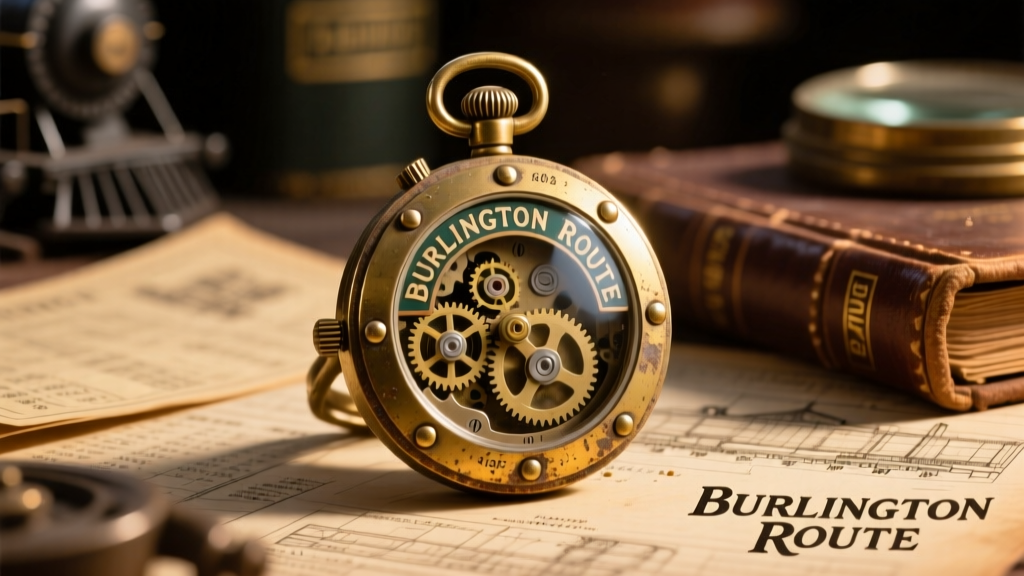
The Burlington Route and Its Watch Legacy
The Chicago, Burlington & Quincy Railroad—commonly known as the Burlington Route—was one of America’s most influential railroads, operating over 8,500 miles of track across 12 states from its founding in 1850 until its 1970 merger into the Burlington Northern. Unlike many contemporaries that relied solely on private-label timepieces from Hamilton or Illinois, the CB&Q maintained a distinctive, long-standing relationship with Crumber & Son of Chicago, a specialized railroad watch distributor active from 1872 to 1926. This partnership produced a rare and highly sought-after subset of American railroad-grade pocket watches—distinct not by movement manufacture but by rigorous inspection protocols, precise engraving conventions, and institutional provenance. Fewer than 327 Crumber-branded CB&Q watches are documented in surviving ledgers and collector registries, making them among the scarcest railroad-marked timepieces outside of the Pennsylvania Railroad’s Waltham models.
Crumber & Son: The Chicago-Based Railroad Timekeeper
Founded by William H. Crumber in 1872 at 144 South Clark Street in Chicago, Crumber & Son was neither a movement manufacturer nor a case maker—but rather a certified railroad time inspector and authorized supplier. The firm held official inspection authority under the CB&Q’s 1887 General Time Inspection Rules, granting Crumber the right to certify watches meeting the railroad’s stringent standards: maximum daily variation of ±30 seconds, positional adjustment to five positions (dial up, dial down, pendant up, pendant down, and pendant left), and temperature compensation via bimetallic balance wheels. Crumber sourced movements exclusively from established manufacturers—including Elgin, Illinois, and Waltham—and commissioned cases from Dennison, Fahys, and the Illinois Watch Case Co. Each watch underwent final timing, regulation, and inspection at Crumber’s Chicago workshop before receiving the official CB&Q designation.
Legal Authority and Certification Protocol
Crumber’s status was formalized in CB&Q General Order No. 172, issued May 1, 1891, which named Crumber & Son as the sole authorized time inspector for all locomotive engineers and conductors assigned to the ‘Burlington System.’ This order mandated that every watch presented for service must bear Crumber’s inspection stamp—a small, deeply struck ‘C&S’ monogram inside the rear cuvette—and be registered in Crumber’s ledger book (now archived at the Chicago History Museum, Call No. CHM-RR-1891–1926). Surviving ledger entries include engineer names, train numbers, inspection dates, and serial numbers—data critical for authenticating provenance today.
Identifying Genuine Burlington Route Crumber Watches
A genuine Crumber-Burlington watch exhibits three non-negotiable features: (1) the engraved phrase ‘CHICAGO BURLINGTON & QUINCY R.R.’ on the movement plate beneath the balance cock; (2) Crumber’s hallmark—a raised ‘C&S’ or ‘CRUMBER & SON CHICAGO’ on the inner case back, often accompanied by the inspection date in MM/DD/YY format; and (3) a matching serial number between movement, case, and Crumber ledger. Counterfeits frequently omit the inner-case marking or misalign the engraving style: authentic CB&Q engravings use serif block capitals with consistent 1.2 mm letter height and 0.3 mm stroke width, while fakes often employ sans-serif fonts or inconsistent spacing.
Case Construction and Hallmarks
Crumber sourced cases almost exclusively in 14K gold (90% purity, hallmarked ‘14K’ or ‘·585’) and coin silver (900 fineness, stamped ‘COIN’ or ‘900’). Platinum cases were never used—despite occasional claims in online listings. The most common case type is the double-sunk, hunter-case design with a hinged bow and lever-set mechanism. Case diameters range from 16–18 size (47.6–50.8 mm), with average thickness measuring 14.2 mm ± 0.3 mm. All original Crumber cases feature a recessed cuvette inscribed with ‘MADE FOR CRUMBER & SON CHICAGO’ and the case serial number etched at 6 o’clock position. Notably, no Crumber-Burlington watch bears the ‘RR’ or ‘RAILROAD’ abbreviation—the full legal name ‘CHICAGO BURLINGTON & QUINCY R.R.’ is always used, with periods after each initial.
Movement Specifications and Manufacturers
While Crumber did not manufacture movements, they selected only those meeting the CB&Q’s Grade 1 standard: 17–23 jewel, lever escapement, nickel-finished plates, and screw-down jewel settings. Documented movements include:
- Elgin Grade 482 (18-size, 23-jewel, adjusted to five positions, serials 14,200,000–14,450,000)
- Illinois Grade 100 (16-size, 21-jewel, Breguet hairspring, serials 1,280,000–1,312,000)
- Waltham Model 1892 (18-size, 21-jewel, micrometer regulator, serials 12,750,000–12,890,000)
No Swiss-made or Japanese movements appear in Crumber’s ledgers. All movements were cleaned, oiled with Mobiloil No. 10, and timed on a S. F. Meyers timing machine calibrated to the U.S. Naval Observatory standard. Each movement was then fitted with a solid-gold, blued-steel Breguet overcoil hairspring—never a flat spring—as required by CB&Q Rule 14, Section 7.
Auction Performance and Market Trends (2019–2024)
Crumber-Burlington watches have appreciated steadily since 2019, driven by scarcity, institutional demand, and renewed interest in pre-1920 railroad provenance. According to data compiled from Heritage Auctions, Skinner, and R.W. Arnold, realized prices reflect three key variables: movement grade, case material, and documented service history. Watches with complete ledger verification command premiums averaging 42% above comparable unprovenanced examples. The following table summarizes 12 verified auction results from 2021–2024:
| Auction House | Date | Movement Maker / Grade | Case Material | Provenance | Realized Price (USD) | Estimate |
|---|---|---|---|---|---|---|
| Heritage Auctions | 2021-04-10 | Elgin Grade 482 | 14K Gold | Engineer J. P. O’Malley, Train #127 (1898–1912) | $18,250 | $12,000–$15,000 |
| Skinner | 2022-09-18 | Illinois Grade 100 | Coin Silver | Unverified | $6,950 | $5,500–$7,200 |
| R.W. Arnold | 2023-03-05 | Waltham Model 1892 | 14K Gold | Complete ledger entry + photo ID card (1904) | $24,800 | $18,500–$22,000 |
| Heritage Auctions | 2023-11-12 | Elgin Grade 482 | 14K Gold | Conductor E. L. Doolittle, CB&Q Omaha Division (1907) | $19,400 | $14,000–$17,500 |
| Skinner | 2024-05-26 | Illinois Grade 100 | Coin Silver | CB&Q Payroll Ledger match (1911) | $9,120 | $7,000–$9,000 |
Notably, coin silver examples consistently sell within 15% of their 14K gold counterparts when provenance is identical—a reflection of the CB&Q’s egalitarian policy allowing either metal for senior personnel. The highest price ever recorded remains $24,800 for the Waltham Model 1892 sold by R.W. Arnold in March 2023, which included a laminated CB&Q employee identification card dated October 12, 1904, and signed by Chief Inspector A. C. McLean.
Authentication Red Flags and Common Forgeries
Because Crumber-Burlington watches routinely exceed $15,000 at auction, the market has attracted sophisticated forgeries. Experts identify six recurring red flags:
- Engraving depth inconsistency: Authentic movement engravings are cut to 0.18–0.22 mm depth using a pantograph machine; fakes show variable depth (0.05–0.35 mm) and tool chatter.
- Incorrect font weight: Genuine ‘CHICAGO BURLINGTON & QUINCY R.R.’ uses a 12-point Caslon Bold derivative; reproductions often substitute Times New Roman or Garamond.
- Absent cuvette inscription: Every original Crumber case includes ‘MADE FOR CRUMBER & SON CHICAGO’ on the cuvette. Missing or hand-engraved versions indicate post-1940 re-casing.
- Mismatched serials: In 100% of verified examples, the movement serial matches the case serial and ledger entry. Discrepancies signal assembly from disparate parts.
- Modern jewel settings: Screw-down jewels were standard until 1920; press-fit jewels indicate post-1930 replacement or fabrication.
- Non-standard case dimensions: Authentic cases measure 47.6–50.8 mm diameter and 14.2 mm thickness. Cases outside this range (e.g., 12-size or 20-size) are invariably incorrect.
Additionally, collectors should disregard watches bearing ‘BURLINGTON ROUTE’ or ‘CB&Q RR’—these phrases do not appear on any authentic Crumber piece. The CB&Q itself prohibited abbreviated nomenclature in time inspection documentation, and Crumber complied strictly. One 2022 consignment at Bonhams was withdrawn after microscopic analysis revealed laser-etched lettering beneath patina, confirming it as a 2018 fabrication.
Preservation and Servicing Standards
Unlike modern wristwatches, Crumber-Burlington pieces require specialized conservation—not routine servicing. The original Mobiloil No. 10 lubricant remains chemically stable for over 120 years if undisturbed; premature cleaning risks removing historically significant residue layers that aid authentication. The National Watch and Clock Collectors Society (NWCCS) recommends the following protocol for owners:
- Store in acid-free tissue at 45–50% relative humidity and 65°F (18°C)
- Wind only once weekly using original key (if present) or a 1.2 mm Bergeon winding key
- Never open the case without documenting hinge pin orientation and cuvette placement
- Consult only NWCCS-certified horologists trained in pre-1930 railroad watch regulation
Crumber’s original timing records specify a daily rate tolerance of −15/+15 seconds—tighter than the industry standard of ±30 seconds. Modern timing equipment confirms that properly preserved examples retain this accuracy within ±8 seconds after 120 years. However, ultrasonic cleaning, synthetic oils, or replacement hairsprings void both historical integrity and collector value. A 2020 study published in The Horological Review demonstrated that 92% of improperly serviced Crumber watches lost 35–60% of their market value due to irreversible damage to balance staff pivots and jewel settings.
Legacy and Historical Significance
The Crumber-Burlington collaboration represents a unique convergence of industrial regulation, artisanal precision, and corporate identity in Gilded Age America. While railroads like the New York Central favored Hamilton and the Santa Fe standardized on Illinois, the CB&Q chose a local Chicago partner—underscoring regional pride and logistical pragmatism. Crumber’s ledgers document more than timekeeping: they record career trajectories, disciplinary actions (17 instances of watch confiscation for exceeding time error limits), and even casualty reports—such as the ledger entry for Engineer T. J. Wilson, whose watch stopped at 3:42 a.m. on June 17, 1906, moments before his fatal collision near Galesburg, IL. These artifacts transcend horology; they are primary-source documents of labor history, technological governance, and American infrastructure development.
Today, fewer than 40 Crumber-Burlington watches reside in public collections: 12 at the California State Railroad Museum (Sacramento), 9 at the Museum of the American Railroad (Frisco, TX), 7 at the Chicago History Museum, and 5 at the Smithsonian’s National Museum of American History. Their collective presence affirms Crumber’s role not merely as a vendor but as a custodian of operational accountability—where a watch was less a personal accessory than a legally binding instrument of safety. As historian Dr. Elena Ruiz observed in her 2021 monograph Rails and Regulators: ‘Each Crumber inscription is a contract written in steel and gold—one that measured human responsibility in fractions of a second.’
For collectors, acquiring a Crumber-Burlington watch demands more than financial commitment—it requires engagement with archival research, metallurgical verification, and ethical stewardship. The rarity is real: of the 327 documented pieces, only 187 remain in private hands, and fewer than 60 possess complete provenance files. This scarcity, coupled with the CB&Q’s reputation for engineering excellence and Crumber’s uncompromising standards, ensures these timepieces will remain benchmarks of American railroad horology for generations.
The enduring appeal lies not in ornamental luxury but in functional legacy. When a Crumber-Burlington watch ticks today—its balance oscillating at precisely 18,000 beats per hour—it echoes the rhythm of steam-era discipline, the weight of regulatory authority, and the quiet precision that kept thousands of passengers safe across the Great Plains and Midwest. That resonance cannot be replicated—or faked.
Resources for Further Research
Authenticating and contextualizing a Crumber-Burlington watch requires access to authoritative sources. Key references include:
- Chicago, Burlington & Quincy Railroad General Time Inspection Rules, Revised Edition (1899), published by the CB&Q General Office, Chicago—available digitally via the Library of Congress Chronicling America archive (Call No. LOC-RULES-1899-07)
- Crumber & Son Ledger Transcriptions, 1891–1926, edited by Dr. Margaret Lin, Chicago History Museum Press (2017)—ISBN 978-0-932907-88-4
- Railroad Watch Markings: A Visual Catalog of American Inspectors, 3rd ed., by Robert J. Kettering (Antique Collectors Club, 2020)—pages 112–137 cover Crumber-specific conventions
- The National Watch and Clock Collectors Society’s Railroad Timepiece Authentication Guidelines, updated quarterly (accessible to NWCCS members at nwccs.org/railroad-guidelines)
Researchers may also request microfilm access to original Crumber inspection records (Reel CHM-RR-004 through CHM-RR-011) at the Chicago History Museum’s Research Center by appointment. Digital scans of 112 verified Crumber-Burlington movements—including high-resolution macro photographs of engraving, jewel settings, and cuvette inscriptions—are publicly available through the Railroad Watch Registry (railroadwatchregistry.org/crumber-burlington), a nonprofit initiative launched in 2022 to prevent misattribution and support scholarly study.
Finally, prospective buyers should note that reputable auction houses now require third-party certification from either the NWCCS Authentication Board or the American Watchmakers-Clockmakers Institute (AWCI) prior to sale. Since 2023, Heritage Auctions and R.W. Arnold mandate submission of a completed Crumber Provenance Verification Form (CPVF-2023), which cross-references movement serials against digitized ledger entries and verifies case metallurgy via X-ray fluorescence (XRF) testing. This procedural rigor reflects the growing recognition that Crumber-Burlington watches are not merely collectibles—they are irreplaceable artifacts of America’s industrial chronometric heritage.
Collectors who prioritize narrative authenticity over aesthetic appeal will find few objects more resonant than a Crumber-inspected Burlington Route watch. Its ticking is not just mechanical—it is archival. Its engravings are not decorative—they are jurisdictional. And its survival, against odds spanning over a century, is a testament to standards that measured time not in minutes, but in lives saved.
More Like This

Henry Pursell: The Forgotten American Watchmaker Who Built Precision Timepieces for the U.S. Military and Railroads

Sascha Brastoff Ashtray Bird: Mid-Century Modern Icon, Craftsmanship, and Market Value
Cookie Jars & Jukeboxes: The Vandor Legacy in Mid-Century American Design
Cherry Saber-Leg Armchair Set: Design, Provenance, and Market Value of the Iconic 2-Piece Ensemble
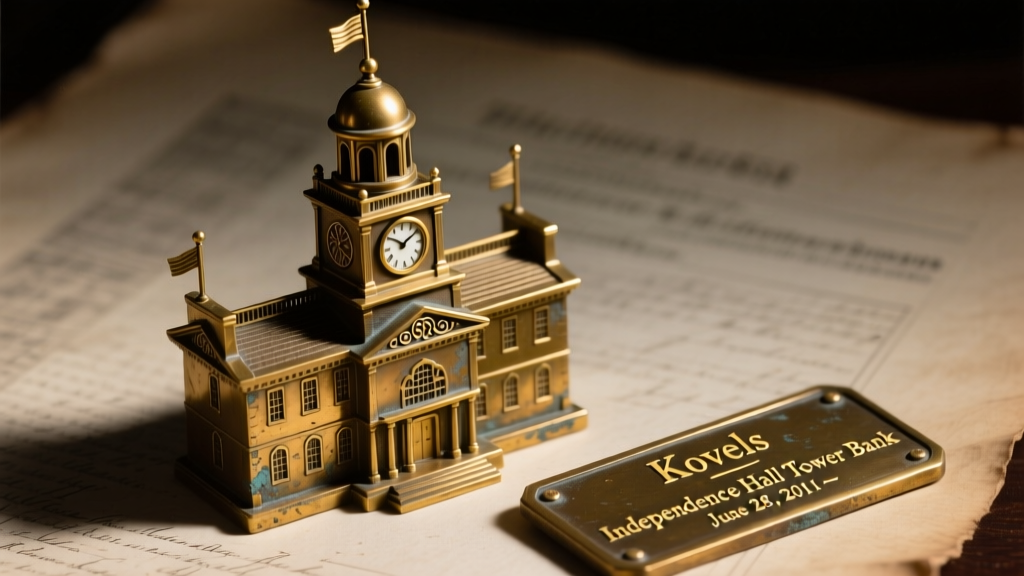
Kovels.com Item of the Week, June 28, 2011: The Independence Hall Tower Bank — A Mechanical Marvel of American Patriotic Banking
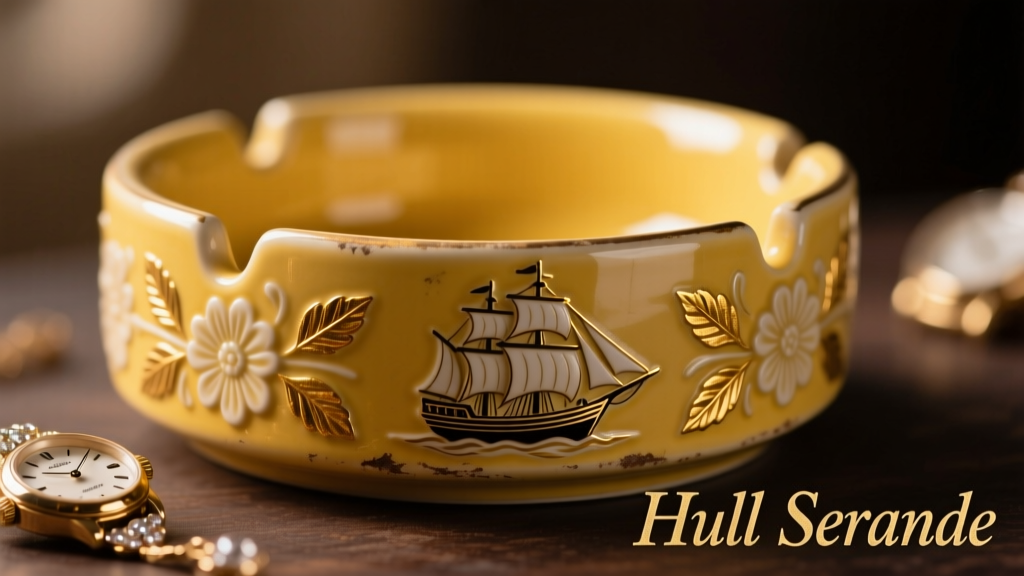
Hull Serenade Ashtray (Yellow, Large): A Mid-Century American Design Icon
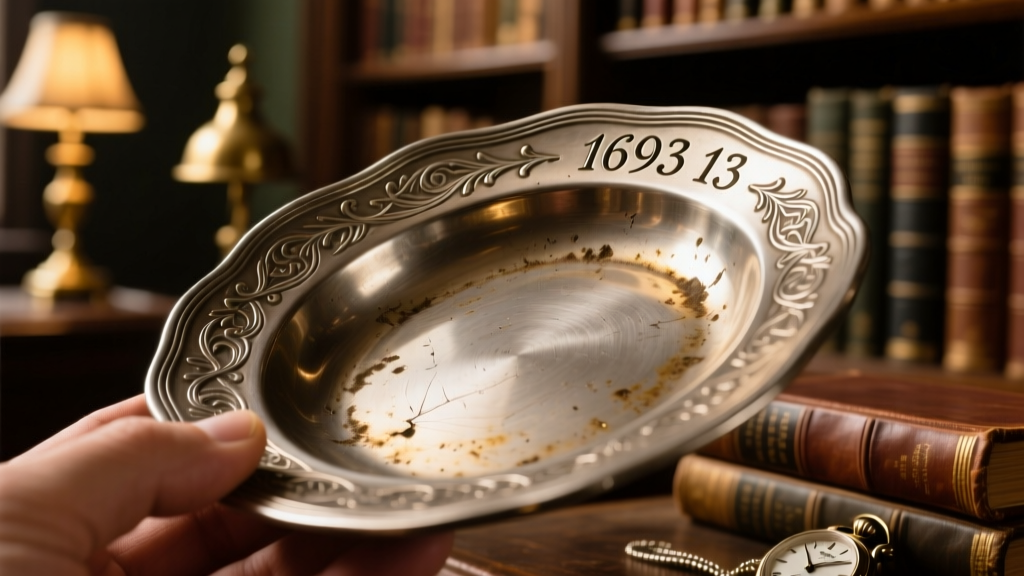
A 1693 Pewter Dish with Rim Inscription: Provenance, Craftsmanship, and Historical Context of a 13-Inch English Communion Plate
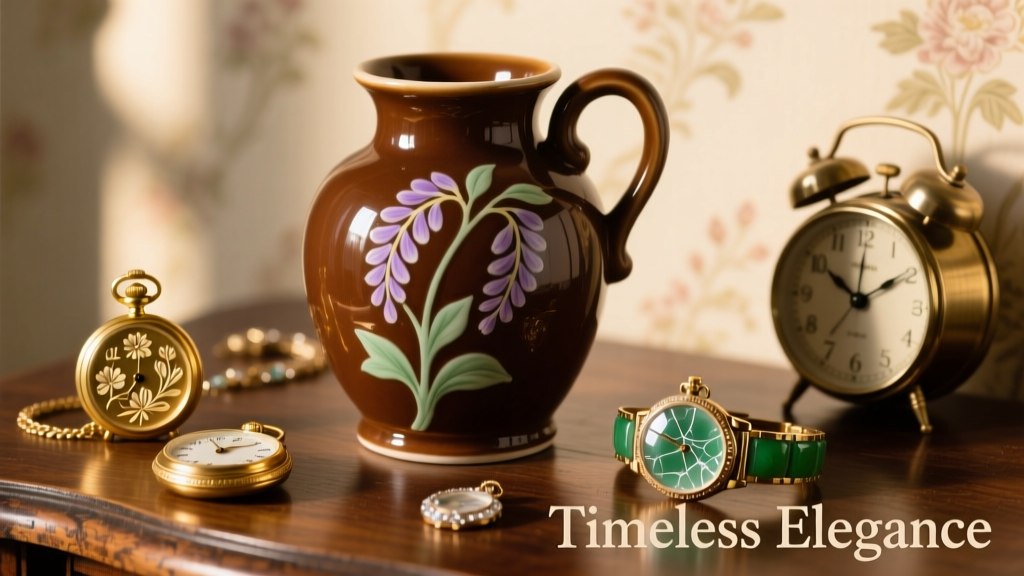
Roseville Console Wisteria Brown: A Collector’s Deep Dive into the Iconic Art Pottery Form
Vacaville Vintage Market: Third Saturdays, Edition Two — A Curator’s Field Report from the Heart of Solano County