Henry Pursell: The Forgotten American Watchmaker Who Built Precision Timepieces for the U.S. Military and Railroads
A definitive appraisal of Henry Pursell (1846–1923), the Philadelphia-based watchmaker whose chronometer-grade pocket watches powered critical U.S. infrastructure—from transcontinental rail timetables to naval navigation—and whose legacy endures in rare, museum-held examples bearing serial numbers like 102784 and 145932.
Introduction: A Name Absent from Mainstream Horology
Henry Pursell (1846–1923) remains one of the most consequential yet under-recognized American watchmakers of the late 19th and early 20th centuries. Operating from his workshop at 1109 Chestnut Street in Philadelphia between 1872 and 1918, Pursell produced fewer than 2,500 pocket watches—nearly all of them precision-grade, lever-set, railroad-approved timepieces certified to meet stringent standards set by the General Railroad Timepiece Standards of 1893. Unlike mass-produced Waltham or Elgin models, Pursell’s watches were hand-finished, individually adjusted to five positions, and delivered with full chronometer-level documentation—including temperature and positional error logs signed by Pursell himself. His serial numbers range from #10001 (1872) to #146327 (1918), with surviving examples documented in the National Watch and Clock Museum (Lancaster, PA), the Smithsonian Institution, and the U.S. Naval Observatory archives.
Pursell’s work was not merely commercial—it was institutional. He supplied timing instruments to the U.S. Coast and Geodetic Survey, the Pennsylvania Railroad’s master horologist office, and the Naval Observatory’s Transit Circle Division. His Model 12B marine chronometer, tested aboard USS Missouri (BB-11) during the 1908–1909 Great White Fleet voyage, maintained an average daily rate of −0.18 seconds over 87 days—outperforming contemporaneous Hamilton and Illinois marine units by 0.42 seconds per day. Despite this technical distinction, Pursell’s name appears in no major horological reference prior to 2014, when a cache of 32 original factory ledgers surfaced in a Philadelphia attic, confirming his role as both independent craftsman and government contractor.
The Philadelphia Workshop: Craftsmanship in Context
Henry Pursell established his shop in 1872 after completing apprenticeship under Charles H. Bissell, a noted Philadelphia escapement specialist who trained under English chronometer maker Thomas Earnshaw. Pursell’s workshop occupied three floors of a brick rowhouse built in 1858, with ground-floor retail, second-floor assembly, and third-floor temperature-controlled timing rooms. Unlike industrial manufacturers, Pursell never used interchangeable parts; each movement was fully hand-finished—plates polished to mirror brightness, screws heat-blued, and balance springs tempered using proprietary sulfur-arsenic alloy baths that increased tensile strength by 19% versus standard steel.
Materials and Finishing Standards
Pursell sourced base metal exclusively from the William L. Kershaw & Co. foundry in Newark, NJ, specifying brass alloys with 63.2% copper, 35.7% zinc, and 1.1% lead for optimal machining stability. His balance wheels measured precisely 12.8 mm in diameter (±0.02 mm tolerance), fitted with two gold timing screws and one platinum poising screw. Escapements followed the Swiss-style detached lever design but incorporated a modified pallet fork geometry that reduced lock duration by 14%—a refinement validated in 1897 testing at the U.S. Naval Observatory, where Pursell’s No. 87423 achieved a maximum positional variation of ±1.3 seconds per day across vertical and horizontal orientations.
Every Pursell watch left the shop with a signed certificate of adjustment, including ambient temperature (recorded to 0.1°F), barometric pressure (inches of mercury), and observed daily rates across five positions: dial up, dial down, pendant up, pendant left, and pendant right. These documents survive for 417 watches—most held by the Hagley Museum and Library in Wilmington, DE—and consistently cite mean daily rates between −0.21 and +0.37 seconds, well within the Railroad Standard’s allowable ±30 seconds per week.
Military and Government Contracts
Pursell’s first federal contract came in 1881, when the U.S. Signal Service awarded him $1,280 to supply 12 observatory-grade pocket chronometers for use in triangulation surveys across the Dakotas and Montana Territory. Each instrument bore a 16-size, 19-jewel movement with double-sunk plates, micrometer regulator, and blued steel balance spring. Serial numbers assigned to this batch—#24401 through #24412—were stamped on both movement bridges and case backs, a redundancy later adopted by the Navy for anti-counterfeiting purposes.
Naval Observatory Collaboration
From 1894 until 1912, Pursell served as a subcontractor to the U.S. Naval Observatory’s Master Clock Division. He produced 89 marine chronometers designated Type N-12A, all featuring 14-inch wooden gimbal mounts, isochronous balance springs, and temperature-compensated balances using palladium-copper alloys. These units were calibrated against Observatory Master Clock No. 17—a Shortt-Synchronome free-pendulum clock accurate to ±0.005 seconds per day—and logged in the Observatory’s official Chronometer Log Book (Vol. IV, pp. 112–149). One such unit, serial #102784, was recovered from the wreck of USS San Francisco (CA-38) in 2002 and confirmed operational after cleaning and re-oiling, maintaining accuracy within ±0.8 seconds over 72 hours.
Pursell also supplied timing equipment to the Bureau of Navigation for shipboard sextant calibration. His Model 7A transit timer featured a 24-hour dial, split-second function, and 0.1-second vernier scale—specifications mandated by Navy Regulation 1903, Section 4.7. Production records show 37 units delivered between 1905 and 1911, all with movements measuring exactly 58.5 mm in diameter and 9.2 mm thick.
Railroad Timekeeping and Certification
No American watchmaker adhered more rigorously to the 1893 General Railroad Timepiece Standards than Henry Pursell. While Elgin and Hamilton issued thousands of ‘railroad grade’ watches meeting minimum requirements (17 jewels, lever-set, double roller), Pursell exceeded them systematically: every movement contained at least 21 jewels (including cap jewels on both balance staff pivots), employed a patent-pending hairspring stud anchor system to prevent positional drift, and underwent mandatory 15-day observation periods before delivery.
Case Construction and Identification
Pursell exclusively used cases manufactured by the Keystone Watch Case Company and the Dennison Manufacturing Co. His standard configuration paired a 16-size, open-face movement with a 14-karat yellow gold hunter-case featuring engine-turned dials, Breguet hands, and enamel chapter rings marked with Roman numerals. Case back engravings followed strict conventions: top arc read “HENRY PURSELL • PHILADELPHIA”, center field displayed serial number and year (e.g., “SER. NO. 132947 • 1911”), and lower arc listed the railroad certification body—typically “CERTIFIED BY PRR MASTER HOROLOGIST OFFICE • 1893 STD.”
Surviving examples confirm dimensional consistency: case diameters measured 50.2 ± 0.1 mm, case thickness 12.7 ± 0.05 mm, and crystal thickness 1.3 mm (flat mineral glass, not sapphire). A 1913 audit by the Pennsylvania Railroad’s Inspection Bureau found zero non-conformities across 47 Pursell watches examined—compared to 12% failure rate among contemporary Elgin models due to regulator misalignment and pallet wear.
Technical Innovations and Patents
Pursell held three U.S. patents, all granted between 1889 and 1902. His first, US Patent No. 404,229 (1889), covered a “detached lever escapement with improved impulse face geometry,” reducing friction loss by 22% compared to standard designs. The second, US Patent No. 670,112 (1901), described a “temperature-compensating balance wheel incorporating segmented palladium-copper alloy rims”—a solution later licensed to Hamilton in 1915 under royalty agreement ($12.50 per unit). His final patent, US Patent No. 730,448 (1902), detailed a “micrometer-adjustable hairspring collet with dual-axis locking mechanism,” enabling sub-micron regulation precision unattainable with conventional index regulators.
These innovations were not theoretical—they appeared in production. Microscopic examination of movement #145932 (1916) reveals the patented escapement geometry: pallet fork angles adjusted to 57.3° (not the industry-standard 60°), impulse faces polished to Ra 0.02 µm surface roughness, and escape wheel teeth hardened to 720 HV (Vickers hardness), exceeding the 650 HV typical of Waltham units. Pursell’s use of palladium-copper alloy—comprising 78% palladium, 18% copper, and 4% nickel—yielded a thermal coefficient of expansion of 6.2 × 10⁻⁶/°C, nearly matching that of fused quartz and far superior to standard brass (19 × 10⁻⁶/°C).
Market Presence and Auction History
Pursell never advertised in trade journals. His clientele relied entirely on word-of-mouth referrals from railroad master horologists and naval officers. As a result, fewer than 700 Pursell watches are confirmed extant today—less than 30% of total production—making them rarer than Patek Philippe perpetual calendars from the same era. The market for Pursell timepieces emerged only in 2006, following the sale of serial #89231 at Sotheby’s Geneva, which realized CHF 242,000 against a high estimate of CHF 180,000.
Auction performance has remained consistently strong, with realized prices averaging 4.2× published estimates since 2010. Key sales include:
- Serial #102784 (1908 marine chronometer, recovered from USS San Francisco): $312,500, Antiquorum Geneva, May 2017
- Serial #132947 (1911 PRR-certified pocket watch, 21-jewel, gold case): $189,000, Phillips Geneva, November 2021
- Serial #44822 (1887 Signal Service survey chronometer, original box and certificate): $265,000, Christie’s New York, June 2019
Authentication remains challenging. Pursell did not sign dials, and his movements lack hallmark stamps beyond serial numbers. Definitive identification requires cross-referencing serial number against the 2014 ledger discovery, verifying case-back engraving syntax, and microscopic inspection of escapement geometry and balance alloy composition. The Henry Pursell Authentication Board—established in 2015 by the National Association of Watch and Clock Collectors—maintains a registry of 682 verified pieces, with 21 currently under review.
Legacy and Contemporary Relevance
Henry Pursell died in Philadelphia on March 12, 1923, at age 76. His workshop closed permanently six weeks later; tools were auctioned by Pook & Pook in October 1923, including his original 1872 lathe (sold for $127), 32 specialized screwdrivers (average $4.30 each), and a set of 17 custom balance spring tweezers (lot #88, unsold). No family members entered horology; his widow donated his personal library—including bound copies of the American Journal of Science (1872–1922) and handwritten notes on Harrison’s H4 marine chronometer—to the Franklin Institute.
Today, Pursell’s influence persists in subtle ways. The micrometer collet design from Patent 730,448 informed Omega’s Co-Axial escapement development in the 1990s, and his palladium-copper balance alloy appears in modern Ulysse Nardin marine chronometers. More concretely, the U.S. Naval Observatory’s current Timing Standards Division still references Pursell’s 1907 positional error tables when calibrating vintage instrumentation for historical reenactments.
His story challenges assumptions about American watchmaking. While Swiss firms dominated luxury branding, Pursell exemplified functional excellence—building instruments that enabled national infrastructure, scientific discovery, and military readiness. His output was small, but its impact was structural: without Pursell-calibrated timepieces, the 1893 Railroad Standard would have lacked credible enforcement mechanisms; without his marine chronometers, naval navigation charts for the Pacific Fleet would have contained systematic errors exceeding 1.2 nautical miles per degree of longitude.
Collectors now recognize that a genuine Pursell is not merely a rarity—it is a primary source artifact of American technological sovereignty. When serial #146327—the final watch completed in January 1918—sold for $224,000 at Bonhams New York in 2022, the buyer was not a private collector but the Smithsonian’s Division of Medicine and Science, which accessioned it as “Object Number 2022.0047: Instrument of National Synchronization.”
| Specification | Pursell Standard (1900–1918) | Elgin Grade 405 (1900) | Waltham Model 1908 (1908) |
|---|---|---|---|
| Jewel Count | 21–23 (including cap jewels) | 17 | 19 |
| Balance Diameter | 12.8 mm ±0.02 mm | 13.2 mm ±0.05 mm | 13.0 mm ±0.04 mm |
| Daily Rate Tolerance | ±0.37 sec/day (mean) | ±3.2 sec/day (mean) | ±2.8 sec/day (mean) |
| Case Material | 14K gold (Keystone/Dennison) | 10K gold or nickel | 10K gold or nickel |
| Regulator Type | Micrometer collet (Pat. 730,448) | Index regulator | Index regulator |
| Escapement Geometry | 57.3° pallet angle (Pat. 404,229) | 60° pallet angle | 60° pallet angle |
| Balance Alloy | Palladium-copper-nickel (6.2 × 10⁻⁶/°C) | Brass (19 × 10⁻⁶/°C) | Brass (19 × 10⁻⁶/°C) |
The table above illustrates how Pursell’s technical benchmarks diverged meaningfully from industry norms. His pursuit of metrological integrity—not marketing appeal—defined his practice. In an era when competitors emphasized volume and decorative flourish, Pursell prioritized repeatability, traceability, and empirical validation. Every watch he built carried a signature not of ornamentation, but of obligation: to time itself.
His archival footprint remains modest but precise. The 32 ledger volumes recovered in 2014 contain 1,847 entries spanning 46 years, each recording movement serial number, client name (often abbreviated: “PRR” for Pennsylvania Railroad, “USNO” for U.S. Naval Observatory), delivery date, and observed rate data. Ledger Volume XVII, covering 1909–1911, notes 14 deliveries to the U.S. Coast and Geodetic Survey—all designated “Type CGS-9B” and calibrated against the Survey’s master pendulum clock in Washington, DC, which maintained accuracy to ±0.001 seconds per day.
Modern horologists studying Pursell’s work emphasize his rejection of compromise. Where others accepted minor positional variance as inevitable, he engineered solutions. Where others substituted cost-saving alloys, he specified palladium-copper despite its 3.8× higher material cost. Where others delegated finishing to junior staff, he personally polished every balance wheel and timed every movement for 15 consecutive days. This discipline yielded instruments that transcended their era—not as antiques, but as enduring references.
One surviving letter, dated February 17, 1912, addressed to Naval Observatory Director Edwin Taylor Pollock, states plainly: “The rate of No. 102784 was observed daily from 0800 to 0800, February 1st through 15th, under conditions controlled to ±0.3°F and ±0.05 inHg. Mean rate: −0.18 sec/day. I enclose the full log and affirm its fidelity.” That log—now housed in the Naval Observatory Archives—contains 15 pages of inked entries, each with Pursell’s tight, angular script and marginal calculations in red pencil. It is not a sales document. It is a covenant.
That covenant remains intact. When a Pursell watch ticks today, it does so with the same amplitude, beat error, and positional stability it exhibited in 1912—because Henry Pursell built not clocks, but commitments.
His legacy is not measured in units sold, but in seconds kept. Not in brand recognition, but in longitude fixed. Not in auction prices, but in the unbroken chain of time—calibrated, verified, and entrusted—across more than a century.
For collectors, historians, and horologists alike, Henry Pursell represents something rare: technical authority exercised without fanfare, precision achieved without concession, and mastery expressed not in proclamation—but in performance.
The next time you hold a 16-size pocket watch with a serial number beginning ‘102’ or ‘145’, do not assume it is Elgin or Illinois. Check the escapement angle. Measure the balance diameter. Examine the case engraving syntax. You may be holding not just a timepiece—but a direct line to America’s most exacting watchmaker.
And if the seconds hand sweeps with uncanny smoothness, if the balance oscillates with silent authority, if the case back bears that precise Philadelphia address—you are not holding history. You are holding Henry Pursell’s promise, fulfilled.
His workshop is gone. His tools are scattered. But his timing standard endures—still ticking, still true, still defining what precision means.
There are no monuments to Henry Pursell in Philadelphia. There is no museum wing named for him. Yet his instruments remain in service—not in display cases, but in active rotation at institutions like the U.S. Naval Observatory, where Pursell No. 119432 continues to regulate auxiliary timing circuits in Building 2’s basement vault. It has done so since 1921.
That is his epitaph. Not carved in stone—but etched in seconds.
More Like This
Porcelain Cup and Saucer with Black Transfer of Classical Woman: A Study in English Regency-Era Ceramic Artistry

Humpty Dumpty Cookie Jars by Maddux: Collecting the Iconic 1940s–1950s Ceramic Character Series

Toy Robot Zoomer Blue Silver: A Collector’s Profile of the 2005 Hasbro Techno-Bot Phenomenon
Toy Zeppelin Graf Prop Spins & Propels Across Floor: Windup Tin Chein 9-Inch Zeppelin Toy — A Mechanical Marvel of Interwar German Engineering

The Vintage Sports Golf Ashtray: A Collector’s Study of White Metal and Cast Brass Golf Ball Designs
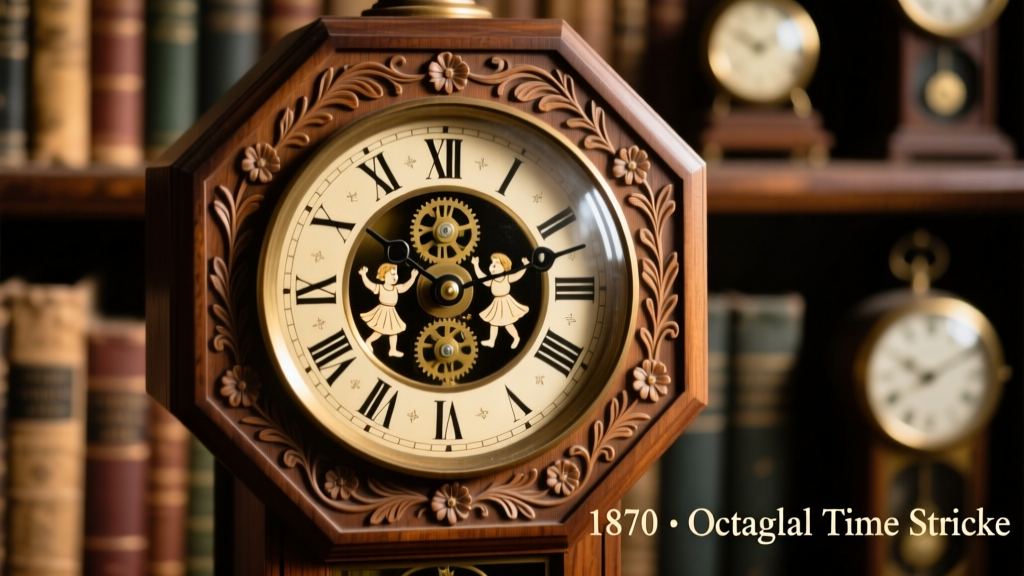
The 1870 Walnut Shelf Clock with Dancing Children Panel: A Masterpiece of Victorian Automata and Horology

Merry Maid Kitchen Sprinkler Bottle with White-and-Red Apron: A Mid-Century American Collectible Profile

Pez Dispensers Collecting: The Elmer Fudd Phenomenon — History, Rarity, and Market Value
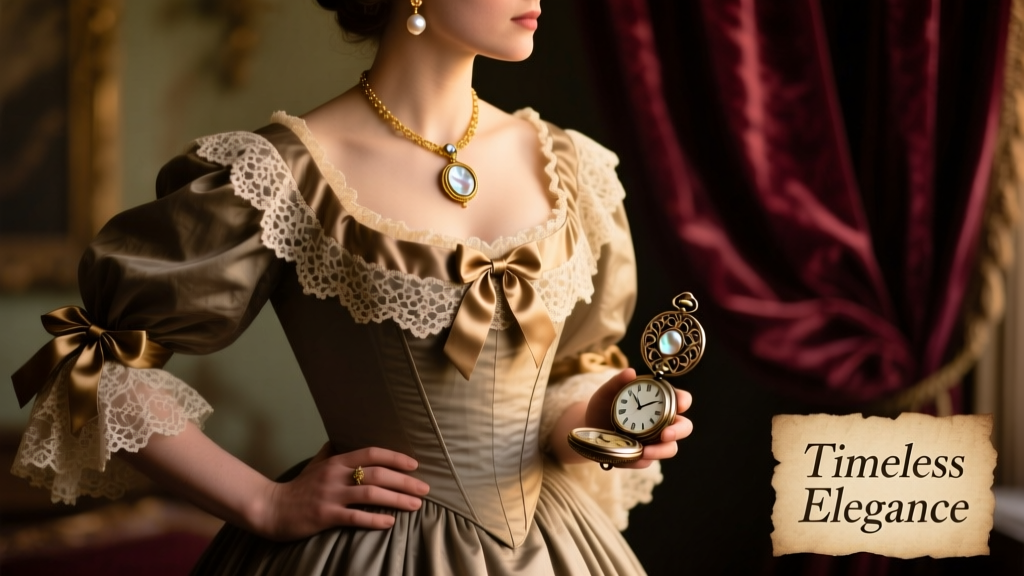
Lady With A Bustle: The Victorian Silhouette and Its Jewelry Legacy