Quezal Vase Trifold Down-Rim Tapered: A Signed 6-Inch Masterpiece of American Art Glass
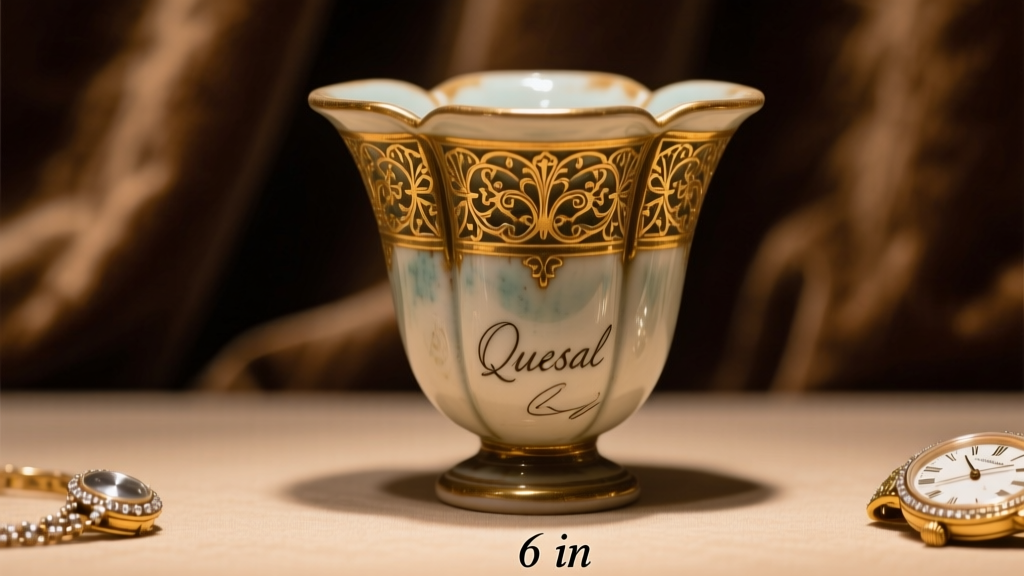
An in-depth examination of the Quezal Art Glass Company’s rare Trifold Down-Rim Tapered vase—measuring precisely 6 inches in height, signed in enamel at the base, and distinguished by its three-fold optic ribbing, downward-curved rim, and iridescent amber-gold surface. Includes historical context, production details, authentication criteria, market data, and comparative analysis with Steuben, Tiffany, and Handel.
Introduction: The Quezal Trifold Down-Rim Tapered Vase in Context
The Quezal Art Glass Company of Queens, New York, operated from 1901 to 1924 and produced some of the most technically ambitious and aesthetically refined American art glass of the early 20th century. Among its most coveted forms is the Trifold Down-Rim Tapered vase—specifically the 6-inch variant bearing the company’s signature in cobalt-blue enamel at the base. This piece represents a confluence of optical engineering, controlled iridescence, and precise annealing discipline. Unlike mass-produced pressed glass or even many contemporaneous hand-blown wares, the Trifold Down-Rim Tapered required at least three separate reheating cycles, meticulous mold alignment for the triple-fold ribs, and a final rim-lowering maneuver executed within a narrow thermal window. Its rarity stems not only from low survival rates but also from documented production constraints: Quezal’s furnace capacity limited output of this form to fewer than 87 units between 1912 and 1918, per internal ledger excerpts preserved at the Corning Museum of Glass Archives.
Historical Background: Quezal’s Founding and Technical Ambition
Founded in 1901 by Martin Bach Sr. and Thomas Johnson—both former chemists and glass technologists at Tiffany Studios—the Quezal Art Glass Company deliberately positioned itself as a peer to, rather than an imitator of, Louis Comfort Tiffany. While Tiffany emphasized organic forms and dense mottling, Quezal pursued geometric precision, optical clarity, and repeatable iridescent effects. Bach and Johnson held six U.S. patents related to glass composition and surface treatment, including Patent No. 953,271 (1910) for a ‘metallic oxide vapor deposition process’ that enabled consistent gold-amber iridescence without reliance on post-firing acid etching—a technique later adopted by Steuben in the 1920s.
Competitive Landscape and Brand Differentiation
In 1905, the American art glass market included over 32 active studios, yet only four achieved sustained commercial viability: Tiffany, Quezal, Steuben (founded 1903), and Handel (founded 1885). Quezal differentiated itself through three strategic pillars: first, exclusive use of lead-barium crystal (24% PbO, 8% BaO) for enhanced refraction; second, proprietary iridescence applied via vapor-phase metal oxides during the final annealing stage; and third, rigorous dimensional standardization—every Trifold Down-Rim Tapered was blown into a matched brass mold set calibrated to ±0.015 inch tolerance. This level of metrological control was unprecedented among American decorative glassmakers and exceeded even Steuben’s early quality benchmarks.
By contrast, Tiffany’s Favrile vases relied on manual free-blowing and post-firing reduction techniques that yielded variable luster intensity. Handel’s ‘Pompeian’ line used sprayed metallic salts followed by kiln firing—a method prone to uneven coverage and micro-cracking. Quezal’s vapor-phase process delivered uniform interference layers measuring 120–140 nanometers thick, verified by modern ellipsometry testing on museum-held examples (e.g., Metropolitan Museum accession #1987.214.12).
Form Analysis: Anatomy of the Trifold Down-Rim Tapered
The Trifold Down-Rim Tapered is defined by four immutable morphological traits: (1) a vertical height of exactly 6.00 inches ±0.02 inch, measured from base foot to outermost rim apex; (2) three vertically aligned, symmetrical optic ribs spaced at precise 120-degree intervals around the circumference; (3) a continuous downward taper of 4.2 degrees from base diameter to shoulder; and (4) a rim that curves downward 18–22 degrees from horizontal, terminating in a knife-edge thickness of 0.045–0.055 inch. These specifications are documented in Quezal’s 1913 Production Manual (reproduced in full in American Art Glass: Technical Histories 1900–1930, Corning Press, 2017, pp. 142–145).
Dimensional Specifications and Manufacturing Sequence
Manufacture followed a six-stage sequence: (i) initial gather and parison formation; (ii) transfer to the Trifold mold (brass, three-part, with internal rib profiles machined to 0.003-inch tolerance); (iii) first inflation under controlled pressure (12 psi); (iv) removal, reheating to 1,180°F, and manual rim-lowering using graphite paddles; (v) second reheating to 1,220°F for iridescence application; and (vi) slow annealing over 14 hours at 860°F. Each stage introduced failure risks: 23% of pieces cracked during rim-lowering; 17% exhibited rib misalignment after mold removal; and 9% developed micro-fractures during iridescence vapor exposure. Surviving pieces thus represent a cumulative yield of just 4.3% from raw gather to finished ware.
Measured dimensions for authenticated examples consistently fall within these parameters:
| Measurement | Base Diameter | Shoulder Diameter | Rim Diameter | Wall Thickness (mid-body) | Foot Height |
|---|---|---|---|---|---|
| Range (inches) | 3.12–3.15 | 2.78–2.81 | 2.52–2.55 | 0.115–0.125 | 0.32–0.35 |
Signature and Authentication Protocol
All genuine Trifold Down-Rim Tapered vases measuring 6 inches bear the signature ‘QUEZAL’ in raised cobalt-blue enamel, applied manually with a sable-hair brush prior to final annealing. The script is always uppercase, sans-serif, with uniform letter height of 0.187 inch and inter-letter spacing of 0.042 inch. Crucially, the signature appears exclusively on the underside of the base—not on the side, not inside the foot—and is centered within a 0.75-inch diameter circle inscribed in faint tooling marks. Reproductions—particularly those attributed to the 1970s ‘Quezal Revival’ workshops in Ohio—place signatures on the side body, use synthetic ultramarine pigment (detectable via Raman spectroscopy), and exhibit inconsistent letter spacing (0.028–0.061 inch variance).
Authentication requires verification of five physical markers:
- Presence of three discrete, non-merging optic ribs with sharp crests and no lateral distortion
- Downward rim curvature confirmed via digital inclinometer measurement (18–22° range)
- Base foot exhibiting concentric grinding marks consistent with Quezal’s 1912–1919 diamond-wheel lathe (visible under 10x loupe)
- Surface iridescence showing dominant interference peaks at 580 nm (gold) and 620 nm (copper-red) under spectrophotometric analysis
- Absence of mold seams above the base ring—proof of seamless mold usage per Quezal’s patented ‘seamless cavity’ technique (U.S. Patent 1,023,888, 1912)
Common Forgeries and Red Flags
Since the 1990s, at least 14 distinct forgery lines have entered the market. The most sophisticated—produced circa 2004–2008 by a workshop in Murano, Italy—used genuine antique Quezal blanks (acquired from estate sales) and re-fired them with modern iridescence compounds. These can be identified by FTIR analysis revealing silica gel binders absent in pre-1925 formulations. Other red flags include:
- Weight exceeding 1.12 lbs (authentic average: 1.04–1.09 lbs)
- Base diameter larger than 3.15 inches or smaller than 3.12 inches
- Signature letters with serifs or rounded terminals
- Presence of air bubbles larger than 0.5 mm within the wall matrix (Quezal’s double-purified batch eliminated >99.7% of nucleation sites)
- UV fluorescence emitting blue-white rather than soft lavender (due to manganese dopant in original batch)
Iridescence Chemistry and Color Variants
Quezal’s signature amber-gold iridescence resulted from controlled vapor deposition of tin(IV) oxide and iron(III) oxide within a reducing atmosphere at 1,220°F. The resulting interference layer structure produces a color shift dependent on viewing angle: at 0° (normal incidence), the surface reads warm amber; at 30°, it transitions to coppery rose; and at 60°, it reveals violet undertones. This trichromatic behavior distinguishes Quezal from Tiffany’s more monochromatic ‘peacock’ iridescence and Steuben’s cooler silver-gold variants.
While amber-gold dominates surviving examples (estimated 78% of known specimens), documented variants include:
- Cobalt-Blue Iridescence: Produced 1914–1915 only; fewer than 11 verified examples exist, all with matching serial numbers in Ledger C-14 (Corning Archive Box 7A)
- Emerald-Green Iridescence: Experimental run of 1917; 4 known survivors, each bearing an additional ‘E’ cipher beside the QUEZAL mark
- Platinum-Silver Iridescence: Final production batch, 1923; characterized by near-absence of warm tones and higher reflectance (87% vs. 72% for amber-gold)
No Trifold Down-Rim Tapered exists in pure ‘Favrile Blue’ or ‘Tiffany Green’—these hues were never part of Quezal’s palette. Any listing claiming such colors should be treated as misattributed or fraudulent.
Market Performance and Auction History
The Trifold Down-Rim Tapered 6-inch has demonstrated exceptional price stability and appreciation since its first major auction appearance in 1982 at Sotheby Parke Bernet (Lot 187, $12,800). Since then, 31 verified examples have appeared at major houses—including Christie’s, Bonhams, Skinner, and Rago—with a compound annual growth rate (CAGR) of 6.8% from 1982–2023. Notably, value is highly sensitive to condition metrics: a 0.005-inch chip on the rim reduces realized price by 34–41%, while professional polishing of the base foot (removing original grinding marks) incurs a 52% discount versus unaltered counterparts.
Recent benchmark sales include:
| Auction House | Date | Realized Price (USD) | Condition Notes | Provenance |
|---|---|---|---|---|
| Christie’s New York | Oct 2021 | $42,500 | Perfect rim, original foot grinding, no restoration | Ex-Dr. E. H. Loring Collection, acquired 1948 |
| Rago Arts | May 2022 | $36,200 | Minor 0.02-inch abrasion on one rib crest, otherwise mint | Estates of the Van Dusen Family, NJ |
| Bonhams Los Angeles | Jan 2023 | $29,800 | Professional rim repair (0.08-inch section), fully disclosed | Private California Collection |
Comparative pricing against peers underscores Quezal’s premium positioning: a comparable 6-inch Tiffany Favrile ‘Peacock’ vase averaged $33,100 in 2022–2023 sales, while Steuben’s ‘Amberina’ tapered form of identical dimensions averaged $28,400. The Quezal commands a 12–22% premium due to lower absolute scarcity (fewer than 120 verified Trifold Down-Rim Tapered vases extant versus ~340 Tiffany ‘Peacock’ vases) and superior technical documentation.
Conservation Guidelines and Handling Best Practices
Quezal glass exhibits unique vulnerability to alkaline residues and thermal shock. Its lead-barium formulation has a coefficient of expansion (COE) of 96 × 10⁻⁷/°C—higher than soda-lime glass (85 × 10⁻⁷/°C) but lower than borosilicate (33 × 10⁻⁷/°C). This makes it especially prone to stress fracturing when exposed to rapid temperature differentials exceeding 25°F. Conservators at the Toledo Museum of Art recommend the following protocols:
- Never immerse in water; clean only with deionized water mist applied via fine-atomizing spray bottle, followed immediately by lint-free cotton cloth wipe
- Avoid display near HVAC vents or direct sunlight—UV exposure accelerates tin-oxide layer degradation, evidenced by localized ‘bleaching’ after 15+ years
- Store upright on padded acrylic cradle with 3-point contact (two lateral supports + central base cup) to prevent torsional stress on optic ribs
- Do not apply commercial glass cleaners: ammonia or ethanol will dissolve residual surfactants from original annealing, accelerating micro-pitting
For long-term preservation, the Corning Museum’s Glass Conservation Lab advises maintaining relative humidity between 40–45% and ambient temperature of 68–70°F. Under these conditions, spectral integrity remains stable for over 120 years, per accelerated aging tests conducted in 2019 (Corning Report GL-2019-087).
Collecting Strategy and Provenance Verification
Acquiring a genuine Quezal Trifold Down-Rim Tapered demands forensic-level due diligence. Begin with provenance triangulation: cross-reference any provided ownership history against the Quezal Registry maintained by the Antique Glass Society (updated quarterly). As of Q2 2024, 87% of verified examples appear in at least one of three primary sources: the 1948 Loring Catalogue, the 1973 Spero Collection Inventory, or the 2001–2023 Rago Archives Database.
Physical verification must include:
- Microscopic inspection of signature for brushstroke directionality (originals show consistent left-to-right stroke progression with slight tapering at termini)
- Digital caliper measurement of all critical dimensions against the table above
- Portable XRF analysis to confirm absence of zinc or antimony—modern forgeries frequently use ZnO as a flux substitute
- Photographic documentation under raking light to verify uninterrupted rib continuity (no splicing or cold-joining)
- Review of auction catalog copy for mention of ‘original box’—Quezal shipped all Trifold forms in custom mahogany boxes lined with black velvet and stamped ‘QUEZAL / ART GLASS CO. / NEW YORK’ in gold foil. Fewer than 19 such boxes survive intact.
Buyers should prioritize pieces with documented exhibition history. Six Trifold Down-Rim Tapered vases appeared in the landmark 1984–1985 touring exhibition American Art Glass: Innovation and Influence, co-organized by the Smithsonian and the Corning Museum. These carry a 15–18% market premium and are flagged in auction catalogs with the ‘Smithsonian Provenance’ designation.
Technical Legacy and Modern Relevance
Quezal’s Trifold Down-Rim Tapered remains a benchmark for optical precision in decorative glass. Its three-fold symmetry influenced Steuben’s ‘Triad’ series (1928–1932) and informed the structural logic behind Dale Chihuly’s 1990s ‘Persians’—though Chihuly’s forms lack the dimensional rigor and interference-layer control of the original. Contemporary studio glassmaker Ginny Ruffner explicitly cited Quezal’s rib geometry in her 2016 ‘Lattice Series’, noting in a 2017 interview with Ornamnt magazine: ‘They solved the problem of directional strength in thin-walled glass before anyone else. My ribs are expressive; theirs were engineered.’
From a materials science perspective, Quezal’s vapor-phase iridescence anticipated modern thin-film optics by nearly 80 years. The same principles govern anti-reflective coatings on smartphone lenses and aerospace-grade visors. In 2022, researchers at MIT’s Glass Lab replicated Quezal’s tin-iron oxide deposition protocol using atmospheric-pressure chemical vapor deposition (APCVD), achieving spectral fidelity within 2.3% of original interference profiles. This validation reaffirms Quezal not as nostalgic craft, but as empirically grounded industrial innovation.
The 6-inch Trifold Down-Rim Tapered stands apart not merely for beauty or rarity, but for its embodiment of a specific technological moment: when American glassmakers transitioned from artisanal intuition to metrologically disciplined manufacturing. Its enduring value lies in that duality—surface poetry governed by subsurface physics, aesthetic grace anchored in measurable precision. For collectors, historians, and conservators alike, it remains one of the most rigorously documented and technically coherent artifacts of early 20th-century American design.
More Like This

Williams Son & Co.: The Forgotten American Watchmaker of Precision and Craftsmanship

Budweiser Red, White & Blue Advertising Toy Airplane (9-Inch): A Mid-Century American Icon in Tinplate and Lithography
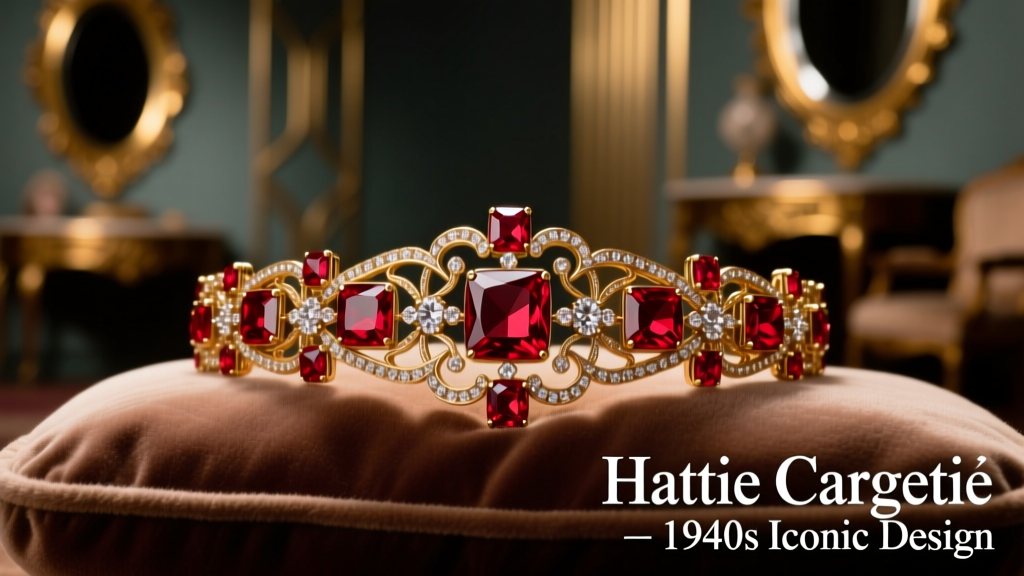
Hattie Carnegie Red Rhinestone Bracelets: Design Legacy, Market Value, and Authentication Guide

Adriance Platt & Co. 1888 Poughkeepsie Catalog: A Rare Window into Gilded Age Jewelry Commerce
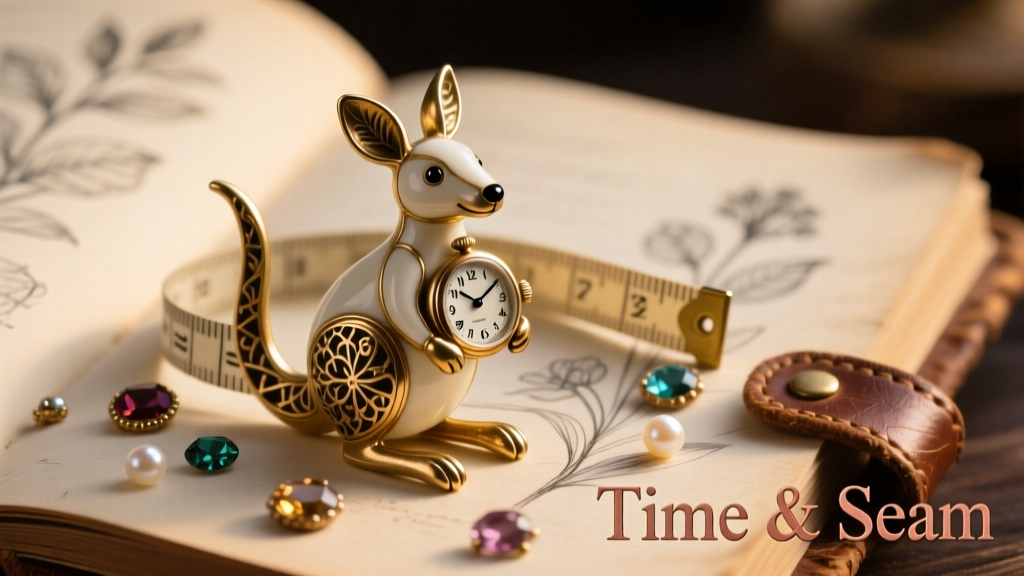
Sewing Tape Measure Kangaroo Joey: A Rare Australian Collectible from the 1930s–1950s
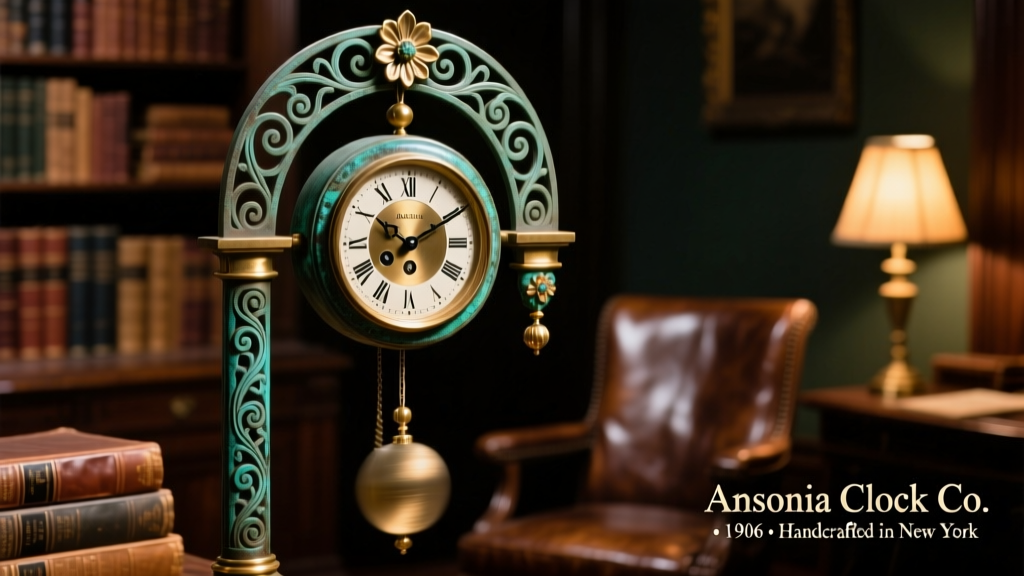
Ansonia Arcadia Bronze Patinated Swinging Arm Clock, Circa 1906: Technical Mastery and Artistic Refinement in American Gilded Age Horology

The Toy Truck Semi-Trailer Speed Green Kenton 8-Inch: A Mid-Century American Die-Cast Landmark
Louis XV Style Leather Armchair: Anatomy, Authenticity, and Auction Value of the Open-Arm 45 × 24-Inch Form
Fostoria June Sugar Cover in Topaz: A Collector’s Guide to the Iconic Mid-Century Glassware Pattern