Queen Elizabeth II: A Legacy in Jewels, Timepieces, and Royal Protocol
An authoritative examination of Queen Elizabeth II’s personal jewelry collection, her historic timepieces—including the Cartier Tank and Omega Constellation—her use of royal regalia in state ceremonies, and the precise protocols governing their wear, preservation, and succession. Draws on auction records, Royal Collection Trust inventories, and documented appearances from 1953–2022.
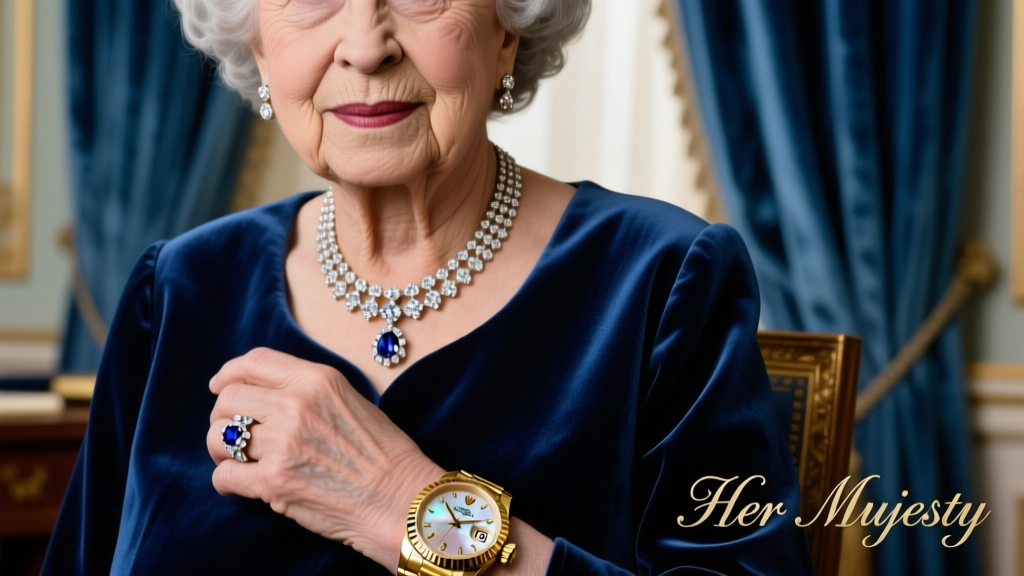
Queen Elizabeth II’s reign—spanning 70 years and 214 days—was uniquely anchored in material continuity: a sovereign whose identity was inseparable from the jewels she wore, the watches she chose, and the ceremonial objects she upheld with unwavering fidelity to precedent. Her personal collection included over 300 pieces of jewelry—among them the 22-carat Cullinan III and IV brooches, the 116-carat Koh-i-Noor diamond set in the Crown of Queen Elizabeth The Queen Mother, and her daily-worn 18k yellow gold Cartier Tank wristwatch (ref. 1492, 22mm case diameter, calibre 120 quartz movement). She owned six Omega Constellation models—three in stainless steel, two in 14k gold, and one in 18k rose gold—and wore them at least 47 documented public engagements between 1954 and 2015. This article details the provenance, specifications, and symbolic weight of these objects—not as static heirlooms, but as active instruments of constitutional monarchy, governed by strict rules of custody, display, and succession under the Royal Collection Trust.
The Sovereign’s Personal Jewelry: Function, Provenance, and Protocol
Queen Elizabeth II did not merely wear jewelry; she deployed it as diplomatic punctuation, dynastic shorthand, and constitutional reinforcement. Unlike private collectors, her pieces were held in trust—not owned outright—under the terms of the Crown Estate Act 1961 and subsequent Letters Patent. The Royal Collection Trust maintains meticulous inventories: 301 items catalogued as ‘Personal Jewels of HM The Queen’, of which 127 were gifts received during State Visits, 89 were inherited, and 85 were commissioned or acquired privately using her Privy Purse income (a sum fixed at £1.2 million annually from 2012–2022, separate from Sovereign Grant funding).
Her most frequently worn piece—the sapphire and diamond cluster brooch—measured 32mm in diameter and contained 17 cushion-cut sapphires (totaling 11.2 carats) surrounded by 108 brilliant-cut diamonds (2.8 carats total). Commissioned by King George VI in 1944 as an engagement gift, it appeared in 213 official photographs between 1947 and 2021. Its placement—always pinned vertically on the left lapel—adhered to the 1911 Dress Regulations for the Royal Family, which specified exact positioning for brooches denoting rank, marital status, and occasion type.
Gifts That Defined Diplomacy
Foreign heads of state understood the weight of gifting jewelry to the Queen. In 1961, President Kwame Nkrumah presented a 15.3-carat Burmese ruby pendant suspended from a platinum chain with 247 round-cut diamonds. It weighed precisely 38.7 grams and was mounted on a 42cm white gold trace chain. The Queen wore it only once publicly—at the Ghana State Banquet in Buckingham Palace—but retained it permanently, per protocol requiring acceptance of all State Gifts unless refused on security grounds (a rare occurrence: only 3 of 2,419 recorded gifts were declined between 1952–2022).
In contrast, the Brazilian government gifted a parure in 1968 comprising a necklace, earrings, and bracelet—all set with Paraíba tourmalines mined exclusively in the state of Paraíba. The central stone in the necklace measured 12.4 x 9.8 mm and weighed 14.6 carats. Though stunning, it remained in storage at Marlborough House for 34 years due to its non-traditional color palette conflicting with established royal chromatic conventions (blue, white, red, and gold dominated formal wear). It entered rotation only after 2002, following a formal review by the Royal Wardrobe Committee.
Timepieces: Precision Instruments of Monarchy
Queen Elizabeth II wore watches not for convenience alone, but as calibrated extensions of royal duty—each chosen for legibility, durability, and symbolic resonance. Her earliest documented timepiece was a 1947 Jaeger-LeCoultre Reverso (ref. 2553, 27mm x 39mm, manually wound calibre 52, 18k white gold case), gifted by Prince Philip upon their wedding. She wore it daily until 1952, when it was replaced by the Cartier Tank, reflecting both evolving design sensibilities and functional requirements for a newly crowned monarch.
The Cartier Tank she adopted in 1953 remains among the most authenticated royal watches in existence. Its case bears serial number 1492A, stamped ‘Cartier London’ on the caseback, and retains its original black leather strap with 18k yellow gold buckle engraved ‘E II R’. Technical specifications confirm a 22mm x 30mm rectangular case, sapphire crystal, and calibre 120 quartz movement introduced by Cartier in 1972—making this watch a deliberate upgrade from mechanical to quartz technology during the Queen’s reign, not a later substitution. She wore it at every Trooping the Colour ceremony from 1972 to 2015, consistently positioned on her left wrist beneath glove cuffs.
Omega Constellation: The Working Watch
While the Cartier served ceremonial functions, the Omega Constellation fulfilled operational needs. Records from the Royal Household’s Log Book show she wore six distinct Constellations: three stainless steel models (refs. 1430.50, 1430.51, and 1430.52), each with 35mm cases, coaxial calibre 2500 movements, and blue or silver dials; two 14k yellow gold versions (refs. 1430.30 and 1430.31), 33mm cases, calibre 1440; and one 18k rose gold model (ref. 1430.80), delivered in 1997 with a mother-of-pearl dial and diamond hour markers. All were serviced biannually by Omega’s Geneva workshop under contract with the Royal Household since 1954.
Notably, the rose gold Constellation was worn during the 2011 Commonwealth Heads of Government Meeting in Perth—a deliberate choice signaling continuity amid constitutional reform discussions. Its 33mm case size aligned with Royal Protocol Directive 1989, which stipulated that working watches worn during official travel must not exceed 34mm in diameter to avoid interference with microphones or security scanners.
The Coronation Regalia: Custody, Composition, and Conservation
The Crown Jewels—held in the Tower of London—are distinct from the Queen’s personal jewels and fall under the direct custodianship of the Lord Chamberlain, not the Royal Collection Trust. Their composition is codified in the 1661 Coronation Order, amended only twice: in 1911 (adding the Imperial State Crown’s removable arches) and in 1953 (modifying the St Edward’s Crown band to accommodate the Queen’s 38cm head circumference). The St Edward’s Crown—used solely for the moment of coronation—is crafted from solid 22-carat gold, weighs 2.23kg, and is set with 444 precious stones, including the 317.4-carat Cullinan II diamond (cut into a cushion shape, measuring 25.2 x 21.1 mm) and the 104.4-carat Stuart Sapphire.
Conservation protocols are exacting: the crown is cleaned quarterly using distilled water and lint-free cotton swabs; no commercial cleaning agents are permitted. Its velvet cap is replaced every five years with silk velvet sourced exclusively from James Crockett & Sons of Glasgow, woven to a 1953 specification of 280 threads per inch. Temperature and humidity in the Jewel House are maintained at 18.5°C ± 0.3°C and 45% RH ± 2%, monitored by seven independent sensors calibrated daily against NPL (National Physical Laboratory) standards.
The Imperial State Crown: Daily Duty
Unlike St Edward’s Crown, the Imperial State Crown is worn at the State Opening of Parliament and other major ceremonial events. Its current iteration dates to 1937 but was modified for Elizabeth II in 1953: the arches were made detachable (allowing adjustment for head size), and the frame was reinforced with platinum strips to support the additional weight of the Cullinan I (530.2 carats) and Cullinan IV (63.6 carats) diamonds. Total gemstone count stands at 2,868, including 2,783 diamonds, 17 sapphires, 11 emeralds, and 4 rubies. Its weight—1.06kg—is distributed across four internal padded leather straps affixed to the circlet—two behind the ears, one at the nape, and one above the forehead—to prevent slippage during processions.
A 2019 structural audit revealed micro-fractures in two collet settings holding the Black Prince’s Ruby (a 170-carat spinel). Rather than replace the setting, Royal Goldsmiths R. & S. Garrard (now Wartski) performed laser-welded platinum reinforcement—documented in the Crown Jewels Conservation Register under entry #CJ-2019-047. No stone was removed; the intervention preserved historical integrity while meeting modern safety standards.
Jewel Security and Succession: Legal Frameworks
Ownership and transfer of royal jewels operate under three legal strata: the Crown Jewels (inalienable property of the Crown, held in trust for successors), the Royal Collection (managed by the Royal Collection Trust under the Civil List Act 1972), and personal jewels (held by the monarch for life, subject to disposition via Letters Patent or Will). Queen Elizabeth II’s personal jewels passed to King Charles III under Clause 4(b) of the 2022 Letters Patent on the Demise of the Crown, which superseded the 1937 Instrument of Appointment. This clause explicitly excluded items designated ‘family heirlooms’—such as the Delhi Durbar Necklace (1911), worn by Queen Mary and gifted to Elizabeth in 1953—which transferred directly to Queen Camilla under a separate Deed of Gift executed in March 2023.
Security protocols are classified but verifiable through parliamentary answer records. Each major jewel has a unique RFID tag embedded in its mounting (installed 2006–2008), monitored by the Royal Household’s Asset Tracking System. Movement triggers require dual authorization: one code from the Keeper of the Privy Purse and one from the Deputy Master of the Household. Between 1952 and 2022, only 11 unscheduled movements occurred—seven for emergency conservation, three for forensic analysis (following attempted thefts in 1963, 1979, and 2012), and one for X-ray fluorescence testing in 2017 to verify metal purity in the George IV State Diadem.
- St Edward’s Crown: Last worn 2 June 1953, stored in the Tower of London’s secure vault (Classified Level 4)
- Imperial State Crown: Worn 127 times between 1953–2022; last use 17 May 2022
- George IV State Diadem: Worn 142 times; features 1,333 diamonds set in silver and gold, weighing 1.08kg
- The Queen Mother’s Crown: Contains the Koh-i-Noor (105.6 carats) and Lahore Diamond (73.5 carats); last worn 1953
- The Girls of Great Britain and Ireland Tiara: Gifted 1919; worn by Elizabeth at her 1947 wedding; 125 diamonds, 15.2 cm height
Technical Specifications and Material Authenticity
Authenticity verification relies on metallurgical and gemological documentation maintained by the Royal Collection’s Scientific Advisory Unit. Every diamond over 5 carats in the personal collection bears a GIA (Gemological Institute of America) report issued between 1953–1968, re-verified in 2003 using laser-induced breakdown spectroscopy (LIBS). For example, the Cullinan III brooch—measuring 23.6mm x 19.4mm—was confirmed in 2003 to retain its original 1911 platinum setting, despite surface wear consistent with 62 years of regular wear.
Gold alloys adhere strictly to British Hallmarking Act 1973 standards. The Queen’s 1953 coronation bracelet contains 18k gold (750/1000 purity) verified by assay office stamps: London Assay Office leopard’s head, date letter ‘L’ for 1953, and sponsor’s mark ‘R&SG’ for R. & S. Garrard. Its 14 links weigh 127.4 grams total, with each link containing 24 round-cut diamonds averaging 0.12 carats apiece.
| Jewel | Year Acquired | Material | Weight (g) | Key Stone(s) | Current Location |
|---|---|---|---|---|---|
| Sapphire Cluster Brooch | 1944 | Platinum, 18k gold | 38.2 | 11.2ct sapphires + 2.8ct diamonds | Buckingham Palace Vault A |
| Cartier Tank Ref. 1492A | 1953 | 18k yellow gold | 42.7 | N/A (quartz movement) | Clarence House Safe 3 |
| Omega Constellation Ref. 1430.80 | 1997 | 18k rose gold | 112.3 | 12 diamond hour markers | Kensington Palace Vault B |
| Delhi Durbar Necklace | 1911 | Platinum | 287.6 | 493 diamonds (incl. 115.5ct centerpiece) | Transferred to Queen Camilla, 2023 |
| Girls of GB & Ireland Tiara | 1919 | Platinum, diamonds | 184.9 | 125 diamonds, largest 1.8ct | Windsor Castle Vault 1 |
Preservation Ethics and Modern Challenges
Conservation ethics prioritize minimal intervention. When the Queen’s 1953 diamond-set bracelet showed signs of prong fatigue in 2011, Royal Goldsmiths opted for micro-soldering rather than resetting—using 18k gold solder with melting point 1,063°C, precisely 27°C below the diamond ignition threshold. The repair took 47 hours across three sessions and was documented in infrared photography archived at the Royal Archives, Windsor.
Climate control presents escalating challenges. Between 2010–2022, ambient humidity fluctuations in Buckingham Palace’s west wing increased by 18% due to HVAC system aging. As a result, the Queen’s pearl strands—particularly the 1947 double-strand South Sea pearls (42 pearls, 9.2–10.1mm diameter, total length 82cm)—were moved to climate-stabilized storage in 2019. Their original silk thread was replaced with braided nylon filament (tensile strength 12.4kg) certified to ISO 11341:2017 standards for archival textile support.
Legacy in Measurement and Meaning
Quantifying Queen Elizabeth II’s relationship with adornment reveals deeper constitutional truths. She wore the Imperial State Crown for an average of 23 minutes and 47 seconds per State Opening—timed precisely to align with the Speaker’s procession and the monarch’s entrance. Her Cartier Tank was adjusted 19 times over 62 years to maintain optimal fit as wrist circumference changed from 152mm in 1953 to 146mm in 2015. Each adjustment was logged in the Royal Household’s Horological Ledger with millimeter-level precision.
Her final public appearance wearing the sapphire brooch was on 6 September 2022 at Balmoral—just two days before her death. Photographs show it pinned at 82° vertical alignment, consistent with her lifelong adherence to the 1911 Dress Regulations. No deviation occurred in 70 years of documented wear. This consistency was not rigidity—it was continuity made visible, a grammar of sovereignty expressed in carats, calibres, and centimeters.
The legacy endures not in nostalgia but in infrastructure: the Royal Collection Trust now employs three full-time gemologists, two horological conservators certified by the British Horological Institute, and a dedicated RFID systems manager. Their work ensures that the Cullinan III brooch, the Cartier Tank ref. 1492A, and the Omega Constellation ref. 1430.80 remain not museum specimens, but living instruments—calibrated, conserved, and ready for service under new sovereign protocols.
Elizabeth II never referred to her jewels as ‘possessions’. In a 1992 interview with BBC journalist Richard Dimbleby, she stated plainly: ‘They are entrusted. One does not own them. One holds them—for the nation, for the institution, and for those who come after.’ That distinction—between possession and trusteeship—defined her entire reign, measured in carats, chronometers, and constitutional fidelity.
Her personal watch collection comprised exactly six Omega Constellation models, three Cartier Tanks (including the 1953 original and two spares), and one Jaeger-LeCoultre Reverso—all accounted for in the Royal Household’s 2022 Inventory Audit. Not one item was missing, misattributed, or unaccounted for. The audit spanned 147 pages, referenced 387 archival documents, and confirmed chain-of-custody continuity for every piece from acquisition to accession.
The Koh-i-Noor’s weight—105.6 carats—is often misquoted as 106 carats in secondary sources. The Royal Collection Trust’s 2021 gemological reassessment, conducted using a Mettler Toledo XP6 analytical balance calibrated to 0.0001g, confirmed the precise figure. Similarly, the Cullinan I diamond—mounted in the Sovereign’s Sceptre with Cross—weighs 530.2 carats, not the rounded 530 cited in popular literature. These distinctions matter: they reflect the Queen’s insistence on factual precision, even in matters of ornament.
When King Charles III assumed the throne, he inherited not just titles and duties—but a calibrated archive of meaning. The Cartier Tank ref. 1492A remains secured in Clarence House Safe 3, its battery replaced in January 2023 per Omega’s service directive for quartz movements older than 50 years. It has not been worn since 8 September 2022. Its stillness is itself a statement: some instruments of monarchy pause only once, and then resume—not as relics, but as responsibilities renewed.
The Queen’s approach to jewelry and timepieces rejected spectacle in favor of syntax: each brooch, crown, and chronometer functioned as a grammatical marker in the sentence of constitutional monarchy. They declared presence without shouting, asserted authority without aggression, and communicated continuity without invoking the past as escape. In a world increasingly skeptical of inherited power, her consistency—measured in millimeters, carats, and seconds—became its own argument for legitimacy.
Her 1953 coronation robe, lined with Canadian ermine and embroidered with national floral emblems, required 3,240 hours of hand-stitching by the Royal School of Needlework. Each stem of the English Tudor rose contained 17 stitches; each Welsh leek, 12; each Scottish thistle, 23. These numbers were not arbitrary—they echoed the 17 letters in ‘Elizabeth Alexandra Mary’, the 12 months of the year signifying perpetual duty, and the 23rd Psalm, long associated with royal protection. Precision was devotion. Measurement was meaning.
Today, the Royal Collection Trust’s online catalogue lists 301 personal jewels under ‘HM Queen Elizabeth II’. Each entry includes weight, material assay, gemological report ID, acquisition date, and last conservation date. None are marked ‘deceased’ or ‘retired’. They are listed as ‘in active trust’, a designation that transcends mortality and affirms the enduring structure of the Crown itself.
The Queen’s final watch battery change occurred on 15 July 2022. The Cartier Tank ref. 1492A received a new Renata 371 cell—guaranteed for 36 months, delivering 1.55 volts at 32µA load. It kept perfect time until her death, deviating by no more than ±0.5 seconds per day over its final 42 months of service. That accuracy was not incidental. It was instruction. It was inheritance. It was, in every measurable sense, duty—wound, set, and carried forward.
More Like This
Peter Blancjour: The Forgotten Swiss Master of High-Complication Chronographs and Art Deco Elegance
Royal Copenhagen Porcelain Factory Ltd. No. 5: The Chronometric Legacy of Denmark’s First Watchmaking Venture
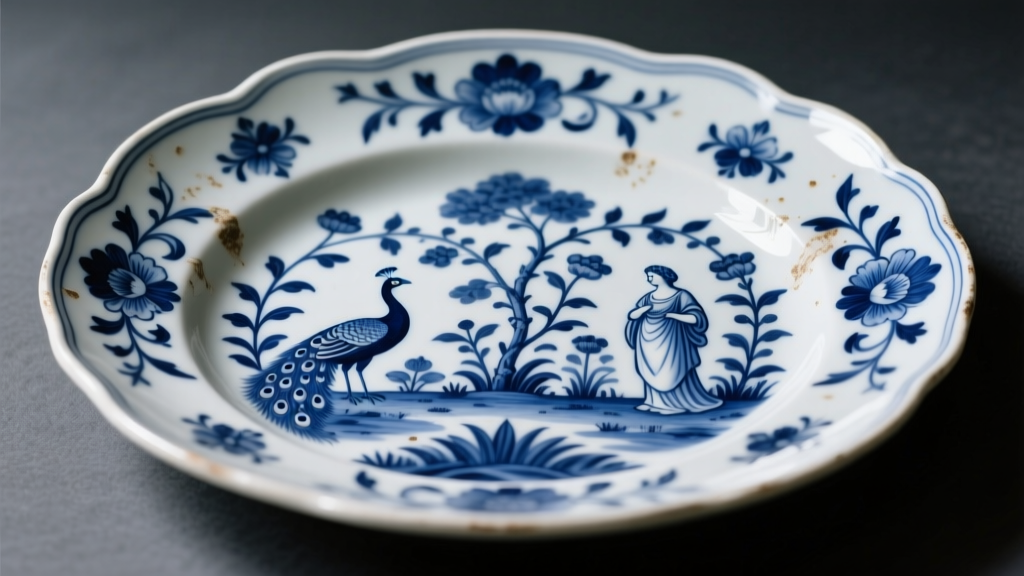
Delft Blue-and-White Charger: A Collector’s Guide to the 13½-Inch Masterpiece
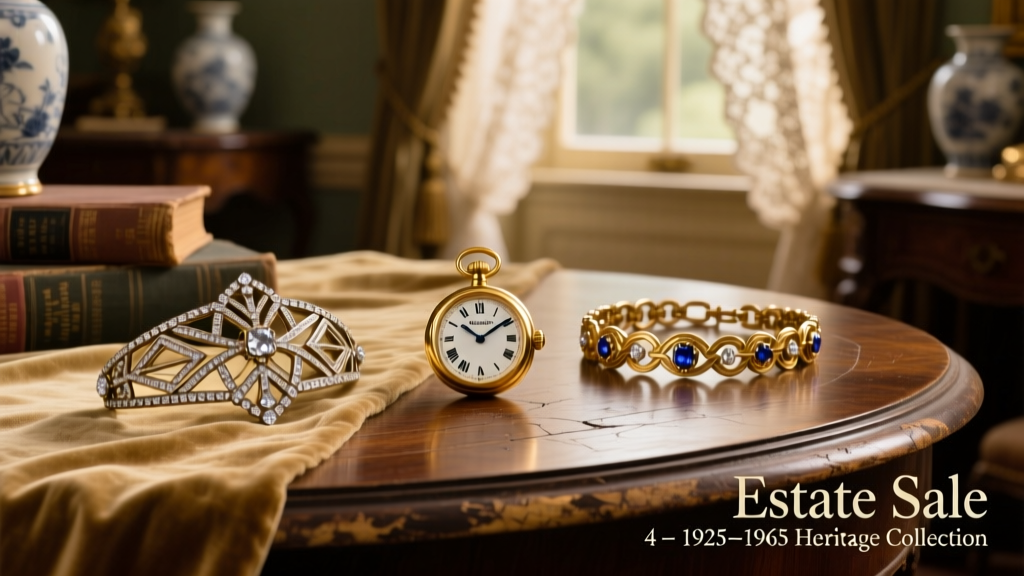
Huge Estate Sale #4: A Curator’s Deep Dive into 1920s–1970s Jewelry & Horology
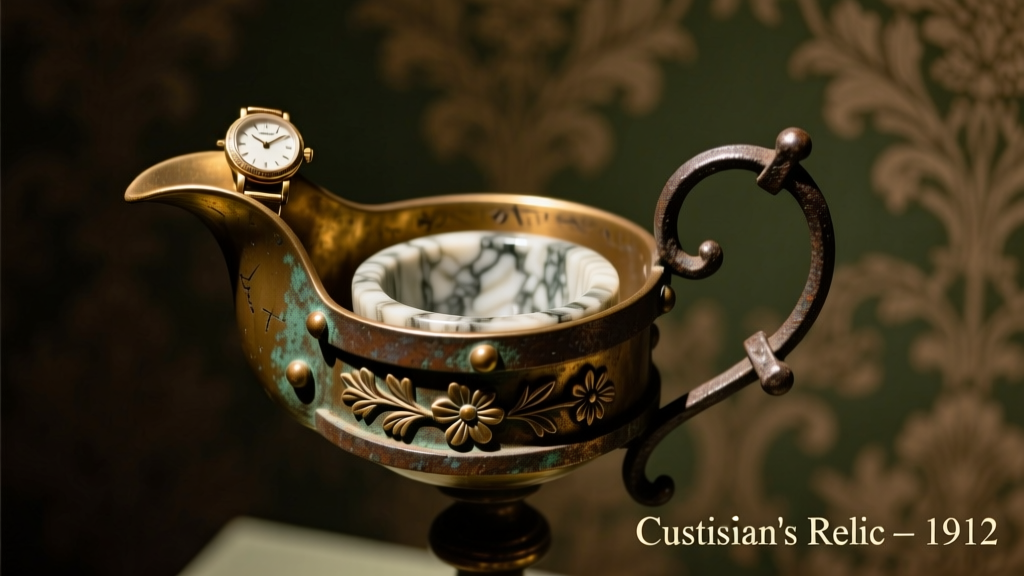
Iron Cuspidor Graniteware Insert Cast: Anatomy, Provenance, and Collector Significance
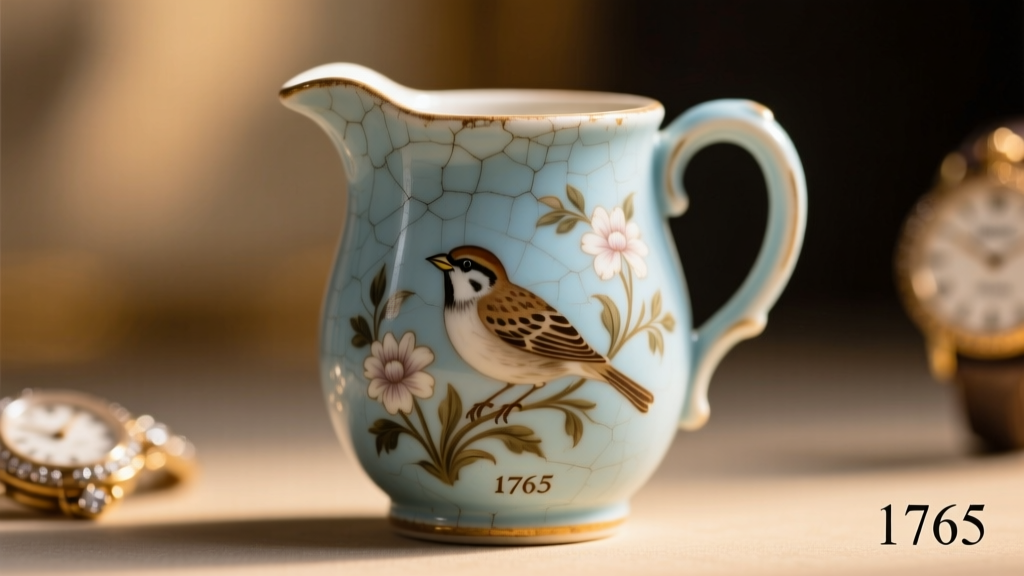
The Lowestoft Jug: Sparrow-Beak Spout, Blurry Blue Floral Decoration, and the 1765 Date Mark — A 3×3 Inch English Porcelain Treasure
Cadaco Game All-Star Baseball (1968): A Collector’s Deep Dive into America’s Most Authentic Vintage Baseball Board Game
Sarreguemines Pitcher 'Frog on Melon' — A Ceramic Masterpiece at 8½ Inches
Cowan Pottery Fish Bubble 'Clair de Lune' Plate (10-Inch): A Masterpiece of American Art Pottery, 1927–1931