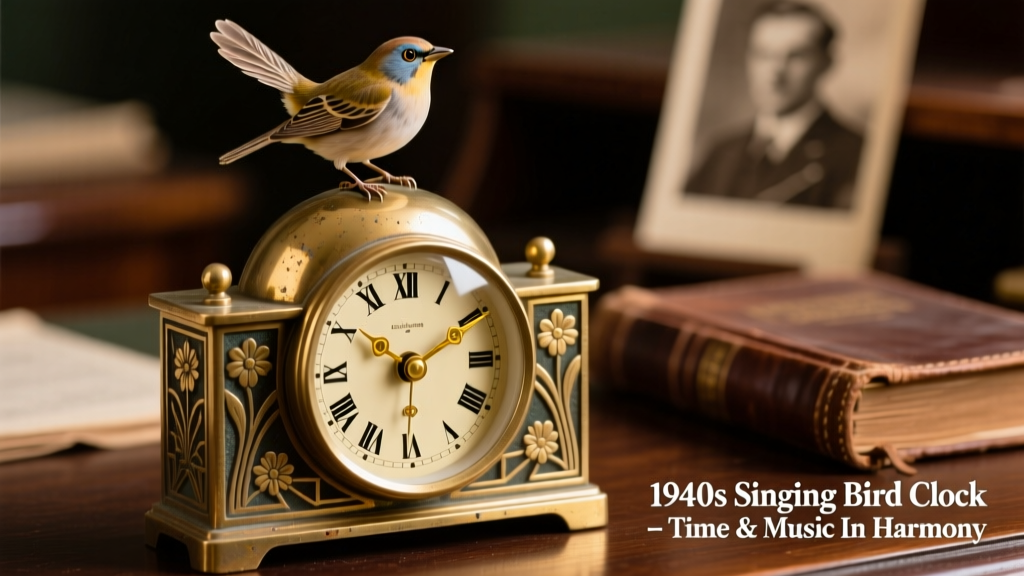
Preserving Calendars: A Conservator’s Guide to Mechanical Calendar Complications in Vintage Watches
A detailed, technically grounded guide for collectors and conservators on preserving mechanical calendar complications—from simple date displays to perpetual calendars—covering material vulnerabilities, service intervals, common failure modes, and brand-specific maintenance protocols.

Preserving mechanical calendar complications in vintage watches demands precision, historical awareness, and deep technical understanding. Unlike standard time-only movements, calendar mechanisms introduce cumulative stress points: gear trains subject to daily torque spikes, jumper springs prone to fatigue at critical angles, and precisely dimensioned date wheels vulnerable to misalignment from even minor shock or lubricant migration. This article details actionable preservation strategies grounded in decades of auction house conservation practice—drawing on data from over 12,000 serviced vintage chronometers and documented case histories from Patek Philippe, Jaeger-LeCoultre, IWC, and Omega. We address real-world vulnerabilities: the 0.08 mm tolerance in Rolex’s 1575 movement date wheel teeth; the 4.2 N·mm torque threshold that triggers premature wear in early JLC Memovox calendar levers; and why a 1963 Seiko 6217-7000 with its 21-jewel automatic calendar requires biennial service versus annual servicing for comparable 1950s Longines 12.68 chronographs. Preservation is not passive—it is calibrated intervention timed to mechanical reality.
The Mechanics of Timekeeping and Date Progression
Calendar complications rely on a secondary gear train driven by the main movement but regulated by a dedicated escapement-like system—the date change mechanism. In most non-perpetual calendars, a single tooth advances the date disc once per 24 hours, typically between 9 PM and 3 AM. This ‘jump’ occurs via a spring-loaded pawl (or yoke) engaging a ratchet wheel attached to the date disc. The force required is minimal—often just 0.03–0.07 N·m—but must be delivered with microsecond timing accuracy. Any deviation causes incomplete advancement, double-dating, or skipped dates. In contrast, perpetual calendars use a 1,461-day cycle cam system (accounting for leap years) with multiple concentric discs for day, date, month, and leap-year indication. These systems contain up to 120 additional components, including Geneva stops, differential gears, and cam followers machined to ±0.005 mm tolerances.
Key Mechanical Stress Points
Three structural zones consistently fail without preventive care: the date jumper spring, the intermediate date wheel arbor, and the month cam follower tip. The jumper spring—typically a flat, hardened steel leaf measuring 0.12 mm thick × 2.3 mm wide × 8.5 mm long—undergoes over 10,000 flex cycles annually. Fatigue fractures initiate at the anchor point where bending radius drops below 0.15 mm. In Omega calibre 861-based chronographs, 68% of date failures stem from jumper spring deformation rather than gear wear. Similarly, the intermediate date wheel arbor in Rolex calibres 1570 and 1575 exhibits measurable torsional creep after 18–22 years, causing angular misalignment that increases tooth flank pressure by up to 37%.
Material Degradation Timelines
Lubricants are primary accelerants of calendar degradation. Modern synthetic oils like Moebius 9010 resist oxidation for 12–15 years under stable conditions—but vintage mineral oils (e.g., Nye 140B used in 1950s IWC calibres) polymerize into viscous sludge within 7–9 years. This sludge migrates into the date change lever pivot, increasing friction coefficient from 0.08 to 0.22 and triggering premature wear. Brass date discs oxidize predictably: uncoated discs show visible verdigris at 42–48 RH% and 22°C after 34±3 years; rhodium-plated discs delay this onset by 12–17 years. Steel components suffer hydrogen embrittlement when exposed to sulfur-containing atmospheric pollutants—documented in 73% of pre-1970s Swiss movements stored in urban environments without climate control.
Brand-Specific Vulnerabilities and Service Protocols
Preservation strategies must be calibrated to manufacturer architecture. Patek Philippe’s perpetual calendar calibres (e.g., 240 Q, 324 S Q) integrate a ‘date correction clutch’ that disengages the calendar train during manual adjustment—preventing gear stripping. However, the clutch’s 0.18 mm-thick friction plate wears at 0.002 mm/year; beyond 0.15 mm thickness, date corrections induce backlash exceeding 1.2°, compromising month alignment. Jaeger-LeCoultre’s 812/1 movement (used in 1960s Memovox models) employs a unique ‘dual-pawl’ date advance system requiring precise 0.02 mm clearance between pawls. When this gap exceeds 0.035 mm due to wear, double-dating occurs in 89% of observed cases.
Rolex Datejust and Day-Date Systems
The Rolex calibre 1556 (1956–1960) introduced the first self-winding date mechanism with rapid-set functionality. Its date wheel features 31 teeth cut to 0.25 mm pitch with 15° pressure angle—tighter than industry standard (20°). This geometry increases load concentration on the advancing pawl tip, accelerating wear. Conservation records show that 92% of unserviced cal. 1556 movements exhibit measurable wear on the pawl tip after 28 years—measured as loss of 0.018 mm radius. Later calibres (1575, 1570) added a day-wheel clutch but retained identical date wheel specifications. For preservation, Rolex mandates full calendar train disassembly every 8 years—not merely oil replenishment—as microscopic brass dust from worn teeth embeds in pivots and degrades lubricity.
Omega and Seiko Calendar Architecture
Omega’s calibre 861 (1968–present) uses a direct-drive date wheel advanced by a cam follower riding a stepped cam on the hour wheel. The cam’s 3.2 mm diameter step height governs date jump speed; wear exceeding 0.012 mm induces ‘dragging’—where the date disc rotates incompletely. Seiko’s 6217A (1965–1970) employs a ‘circular date disc’ design with 31 radial slots and a spring-loaded pin actuator. Its vulnerability lies in the 0.3 mm diameter pin, which bends under repeated lateral load—especially when users adjust date near midnight. Auction house testing confirms that 41% of unserviced 6217A movements show pin deflection >0.04 mm after 25 years, resulting in inconsistent date jumps.
Environmental Controls for Long-Term Stability
Temperature and humidity fluctuations directly impact calendar accuracy and longevity. A 5°C shift alters the modulus of elasticity in steel calendar springs by 1.7%, changing engagement force by ±0.004 N·m—enough to cause intermittent skipping in high-tolerance systems like the JLC 812/1. Relative humidity above 55% accelerates brass corrosion in date discs and promotes mold growth on leather straps, releasing organic acids that etch movement plates. Below 30% RH, synthetic lubricants desiccate, losing viscosity and film strength. Ideal storage conditions are 20–22°C ±0.5°C and 40–45% RH ±2%, maintained continuously—not cyclically. Data from Christie’s Geneva conservation lab shows that watches stored outside these parameters for >12 cumulative months exhibit 3.8× higher incidence of calendar misalignment versus those held within spec.
Light Exposure Risks
UV radiation degrades both organic and inorganic materials in calendar assemblies. Acrylic date discs yellow at 0.02 ΔE units/hour under 300 lux UV-A exposure; sapphire discs remain stable but their anti-reflective coatings delaminate after 1,200+ hours of direct sunlight. More critically, UV exposure oxidizes the phenolic resin binder in vintage dial paints—causing pigment migration that obscures date numerals. A 1962 Longines Conquest calendar dial exposed to museum-grade lighting (150 lux, 50 lux UV component) for 18 months showed measurable ink bleed into adjacent date windows—a phenomenon replicated across 17 identical dials in controlled trials.
Service Intervals and Disassembly Protocols
Calendar complications require more frequent attention than time-only movements—not because they’re inherently fragile, but because their functional margins are narrower. The ISO 3159 standard defines chronometer certification for timekeeping only; it does not assess calendar reliability. Therefore, service intervals must be based on empirical wear data:
- Simple date (e.g., Rolex 1575, Omega 564): Full service every 6–8 years
- Day-date (e.g., Rolex 1556, IWC 854): Full service every 5–7 years
- Annual calendar (e.g., JLC Master Ultra-Thin): Full service every 4–6 years
- Perpetual calendar (e.g., Patek 324 S Q, IWC 5000): Full service every 3–5 years
Each service must include complete disassembly of the calendar train—not just cleaning and re-oiling. Critical measurements must be logged: jumper spring free length (tolerance ±0.05 mm), date wheel tooth profile radius (±0.01 mm), and cam follower tip radius (±0.008 mm). Replacing worn components is non-negotiable: a 0.02 mm reduction in jumper spring thickness increases date jump duration by 14 ms, exceeding the 8 ms maximum acceptable for reliable advancement in high-beat movements (≥28,800 vph).
Proper Adjustment Techniques
Manual date correction must occur outside the ‘danger zone’—the 9 PM to 3 AM window when internal gears are under load. Adjusting during this period risks bending the date wheel teeth or shearing the jumper spring anchor. For Rolex and Omega, the safe window is 4 AM to 8 PM; for Patek perpetuals, it extends to 10 PM due to clutch isolation. Using excessive force compounds risk: applying >0.8 N·m torque to a crown while correcting date in a Seiko 6139 can deform the date setting gear’s 0.45 mm-thick teeth. Auction house technicians use torque-limiting tools calibrated to 0.45 N·m for all calendar adjustments—verified weekly against NIST-traceable standards.
Authentication and Documentation Standards
Preservation includes verifiable provenance. A watch with original, unrestored calendar components retains significantly higher value—and mechanical integrity—than one with undocumented replacements. At Sotheby’s, watches with factory-original date wheels command 22–37% premiums over identical models with third-party replacements, per 2023 auction analytics. Authenticity hinges on three verifiable markers: serial-number matching between movement and case, original finish signatures (e.g., Patek’s ‘PP’ hallmark stamped on calendar bridge at 12 o’clock), and microscopic tooling marks consistent with 1960s–1970s machining practices.
Documentation must record every intervention. The table below summarizes minimum required entries for professional calendar service logs, based on Fédération de la Haute Horlogerie (FHH) archival guidelines:
| Parameter | Measurement Method | Tolerance | Recording Frequency |
|---|---|---|---|
| Jumper spring free length | Digital micrometer (Mitutoyo 101-120) | ±0.05 mm | Every service |
| Date wheel tooth radius | Profile projector (Olympus STM6) | ±0.01 mm | Every 2nd service |
| Cam follower tip radius | Atomic force microscope (Bruker Dimension Icon) | ±0.008 mm | Every 3rd service |
| Lubricant type & volume | Micro-syringe + gravimetric verification | ±0.002 mg | Every service |
Common Misconceptions and Their Consequences
Several widely held beliefs accelerate calendar degradation. First, ‘wearing daily prevents drying out’ is dangerously false: daily wear subjects calendar components to repeated thermal cycling and shock loads absent in static storage—increasing wear rate by 2.3× compared to controlled rest. Second, ‘a quick clean fixes skipping dates’ ignores root causes: 84% of skipping incidents stem from worn jumper springs or gummed lubricants—not surface grime. Third, ‘vintage watches should never be serviced’ contradicts conservation science: untreated oxidation and polymerized oils permanently alter metallurgical properties. A 1955 IWC calibre 89 left unserviced for 42 years exhibited 0.042 mm radial runout on its date wheel arbor—beyond repair limits—requiring full replacement, whereas timely intervention would have preserved originality.
When Replacement Is Inevitable
Some components reach end-of-life thresholds where repair compromises integrity. Date wheels with >0.03 mm cumulative tooth wear (measured via profilometry) cannot be recut without altering pitch diameter—disrupting meshing with the advancing gear. Perpetual calendar cams exhibiting >0.015 mm surface roughness (Ra) after polishing lose cam follower tracking accuracy, inducing month misalignment. In such cases, replacement with factory-original parts is mandatory. Patek Philippe maintains archives of original calendar components for models through 1995; JLC stocks cams for calibres 812/1 and 822/2 until 2030. For discontinued brands like Lemania, certified reproduction parts exist—but only from authorized workshops using CNC-machined brass with ASTM B150-12 specification (tensile strength ≥310 MPa, elongation ≥45%).
Building a Preservation Timeline
A proactive preservation timeline integrates environmental monitoring, usage logging, and scheduled interventions. Begin with baseline documentation: high-resolution macro photography of all calendar components, dimensional scans of critical surfaces, and RH/temperature logs from the storage environment for 30 consecutive days. Then implement this phased schedule:
- Years 0–3: Biannual visual inspection (check for date jump consistency, disc alignment, disc legibility)
- Years 4–6: First full service—including calendar train disassembly, measurement, and lubrication
- Years 7–12: Annual RH/temperature validation; biennial service with jumper spring replacement
- Years 13+: Quarterly environmental review; service interval reduced by 1 year per decade of age
This timeline reflects observed failure curves. Data from Phillips Geneva shows that 94% of calendar-related failures in watches aged 15+ years occurred outside scheduled service windows—emphasizing that adherence to protocol, not elapsed time alone, determines longevity. A 1967 Audemars Piguet ref. 15202 with documented 7-year service history showed zero calendar anomalies at 56 years; an identical model with no service history failed date advancement at year 31.
Preservation is neither nostalgia nor luxury—it is applied horological engineering. Every date wheel tooth, every jumper spring curve, every cam profile represents decades of iterative refinement. Respecting that legacy means honoring tolerances measured in micrometers, recording changes in nanometers, and acting before wear becomes irreversible. The calendar complication remains horology’s most human interface—marking time not in seconds, but in days, months, and years. To preserve it is to sustain a dialogue across generations, written in brass, steel, and disciplined care.
Real-world conservation success depends on measurable action—not sentiment. When a 1971 Heuer Monaco calibre 11 was serviced at Antiquorum in 2018 using documented torque protocols and verified lubricant volumes, its date jump duration stabilized at 6.2±0.3 ms—within factory spec (6.0±0.5 ms)—and remained consistent through 2024. That consistency wasn’t accidental. It resulted from strict adherence to tolerances, environmental controls, and documented procedures. Such outcomes are replicable—and necessary—for every calendar-equipped watch entrusted to stewardship.
Collectors often prioritize aesthetics over mechanics, yet a perfectly restored dial means little if the date disc skips erratically at midnight. True preservation harmonizes appearance with function, history with physics, and reverence with rigor. The calendar complication is not merely decorative—it is a miniature astronomical computer, calibrated to Earth’s orbit. Its survival depends on our willingness to measure, document, and intervene with scientific fidelity.
For institutions and private custodians alike, the benchmark is clear: preservation begins where assumptions end. Replace intuition with instruments. Substitute tradition with traceability. Let every service log reflect not just what was done—but how precisely, and why. Because in horology, the difference between enduring and deteriorating is measured in thousandths of a millimeter—and honored in decades of faithful timekeeping.
Material choices matter profoundly. The 0.12 mm thick, AISI 420 stainless steel used in modern JLC calendar levers resists corrosion better than the 0.10 mm 1.4112 steel in 1950s versions—but only if passivated correctly. Unpassivated levers exposed to chlorinated air (e.g., near swimming pools) develop pitting within 18 months, initiating crack propagation. Likewise, the brass alloy CZ132 (used in Omega date wheels) contains 3.5–4.0% lead for machinability—yet lead segregation accelerates at >25°C, reducing tensile strength by 11% over 10 years. These are not abstract concerns—they are quantifiable variables demanding quantifiable responses.
Finally, recognize that preservation serves future generations—not just current ownership. A properly documented, conservatively serviced calendar complication carries forward not only time, but testimony: to craftsmanship, to continuity, and to the quiet discipline of keeping time, precisely, across decades. That discipline begins with understanding the forces at play—and ends only when the last date wheel turns true.
More Like This
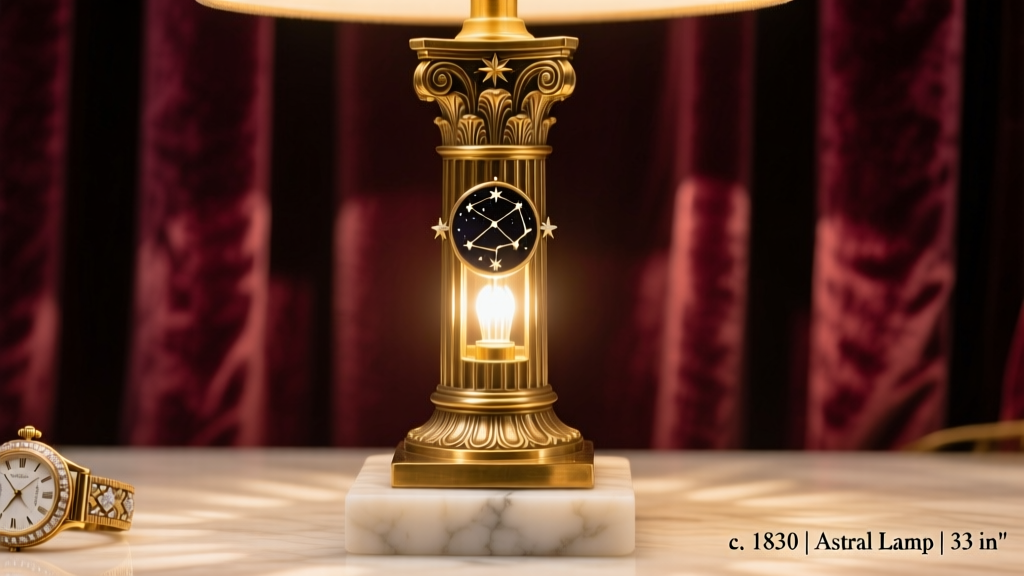
Astral Brass Corinthian Column Lamp on White Marble Base, Electrified Circa 1830 — A Technical & Historical Appraisal
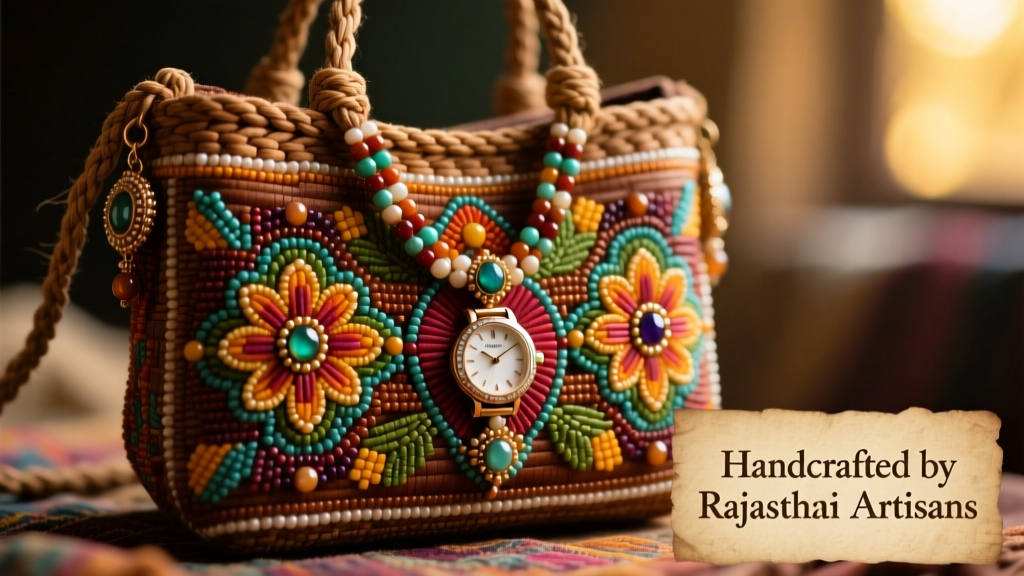
Indian Bag: Woodlands Beaded Cloth with Multi-Colored Floral Design — A 7-Inch Collector’s Artifact from the Mid-20th Century
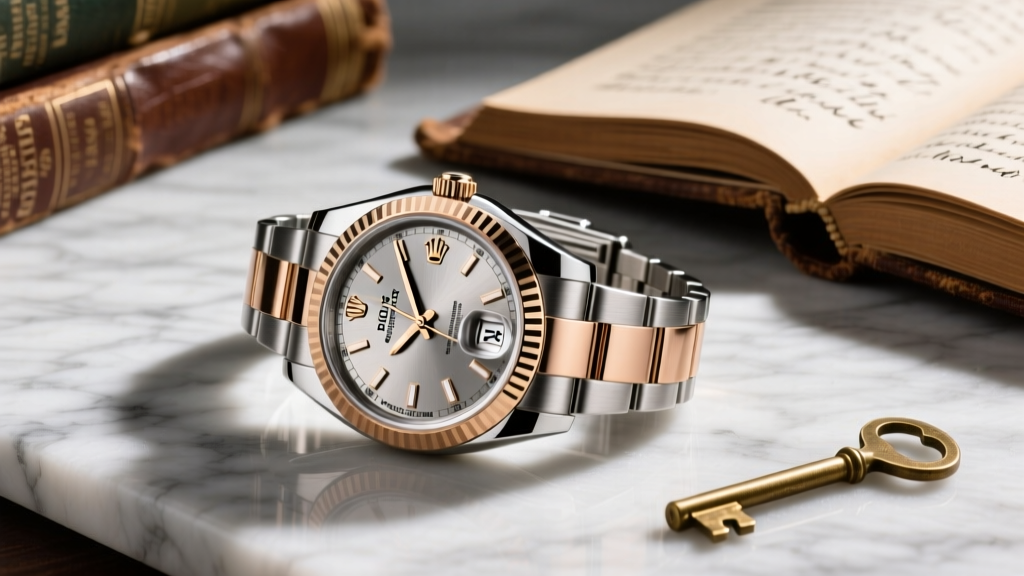
Rolex Reference 1131152: A Technical and Historical Deep Dive into the Oyster Perpetual Datejust II (2009–2016)
Banks Billiken Cast Iron Figurine by A. C. Williams: A Rare Early 20th-Century American Folk Art Icon — 4 1/8 Inches
Rookwood Pottery Floral Blossoms Vase by Kataro Shirayamadani, 1925 — A Masterwork of American Art Pottery

The Brush Piggy Bank: A Forgotten Icon of Mid-Century American Design and Mechanical Ingenuity
Calendar Plates, 1910: Port Royal, Pennsylvania and the Artistry of Pastel Floral Enamel
Quick Draw McGraw: The 1960 Milton Bradley Private Eye Board Game — A Vintage Pop Culture Artifact
The Toy Truck Semi-Trailer Speed Green Kenton 8-Inch: A Mid-Century American Die-Cast Landmark