Premier Autumn Auction: A Curated Selection of Exceptional Vintage Jewelry and Timepieces
The Premier Autumn Auction presents 217 lots of historically significant jewelry and watches, including a 1953 Patek Philippe Ref. 2499 in pink gold (38.5mm), a 1920s Cartier Tutti Frutti bracelet with 42.3 carats of calibrated gemstones, and a 1938 Van Cleef & Arpels Mystery Set necklace valued at $1.8–2.4 million. This article details provenance, craftsmanship, market context, and expert valuation insights.
Introduction: The Seasonal Significance of Autumn Auctions
Autumn auctions hold a distinguished place in the vintage jewelry and watch calendar—not merely as seasonal events but as pivotal moments where rarity, provenance, and market maturity converge. The Premier Autumn Auction, scheduled for 16–18 October 2024 at Sotheby’s New York, features 217 meticulously vetted lots spanning 1890 to 1975. Unlike spring sales, which often emphasize fresh consignments and emerging trends, autumn offerings reflect deeper archival research, longer-term collector stewardship, and heightened demand from institutional buyers and legacy families. This year’s sale includes seven pieces with documented royal or Hollywood provenance, twelve with original manufacturer certificates or archival letters, and thirty-four with published exhibition histories—including three items previously featured in the Metropolitan Museum of Art’s 2019 Jewelry of the Jazz Age exhibition.
The auction’s timing aligns with key market indicators: global luxury watch prices rose 12.7% year-on-year in Q2 2024 (according to the 2024 Geneva Watch Auction Index), while high-end colored gemstone jewelry appreciated 9.4%—driven primarily by demand for untreated emeralds and Kashmir sapphires. These macro trends underscore why collectors prioritize autumn for strategic acquisitions: liquidity is stable, inventory is deeply researched, and competitive bidding tends to be more deliberate than in the frenetic spring season.
A Landmark Watch: Patek Philippe Ref. 2499, Pink Gold, 1953
Technical Heritage and Rarity
Lot 47—a Patek Philippe perpetual calendar chronograph Ref. 2499, circa 1953, in 18K pink gold—is widely regarded as one of the most important wristwatches ever offered at auction. Measuring 38.5mm in diameter with a thickness of 12.2mm, it retains its original Breguet numerals, feuille hands, and tachymeter scale on the inner bezel. Its movement, Calibre 13-130 Q, comprises 230 components, including a column wheel chronograph mechanism and a retrograde date indication—features that remained unchanged across all four series of the Ref. 2499 produced between 1951 and 1985.
Only 349 examples of Ref. 2499 were made in pink gold; fewer than 70 are confirmed extant today. This particular watch bears case number 865’821 and movement number 865’821—matching serials verified against Patek Philippe’s Archives (Letter No. 112/2024). It was originally sold on 22 May 1953 to Swiss banker Hans G. Müller of Basel and remained in his family until consigned this year.
Market Context and Valuation
Ref. 2499s have consistently outperformed broader horological indices. In November 2021, a similar 1953 pink gold example (Lot 12, Phillips Geneva) realized CHF 4.27 million ($4.68 million), setting a record for the reference in that metal. Since then, comparable pieces have appreciated an average of 6.3% annually—even accounting for currency fluctuations. Our pre-sale estimate of $3.8–4.5 million reflects conservative calibration against recent results, adjusted for this watch’s exceptional condition: the dial shows no hairline cracks, the crystal retains original beveling, and the bracelet is a matching 1950s Gay Frères ‘expansion’ type with correct hallmarks (‘GF’ stamp, Swiss assay mark, 750 fineness).
Cartier Tutti Frutti: A Bracelet of Botanical Precision
Design Origins and Craftsmanship
Lot 89 is a Cartier Tutti Frutti bracelet created circa 1928, representing the zenith of the firm’s Indian-inspired aesthetic. Weighing 126.4 grams and measuring 172mm in length, it features 42.3 carats of calibrated gemstones—12.7 ct of Burmese rubies (all unheated), 15.2 ct of Colombian emeralds (Type II, minor oil only), and 14.4 ct of Kashmir sapphires (vivid cornflower blue, no heat treatment confirmed by Gübelin Report #G-2024-1883). Each stone is individually carved into fruit or leaf motifs—strawberries, mangoes, and lotus blossoms—set in platinum with invisible collets.
The bracelet’s construction follows Cartier’s patented ‘invisible setting’ technique perfected between 1925 and 1930. Microscopic grooves cut into each gem’s girdle interlock with platinum rails, eliminating visible metal between stones. X-ray fluorescence analysis confirms the platinum alloy composition: 95.2% Pt, 3.1% Ir, 1.7% Ru—consistent with Cartier’s 1927–1932 metallurgical specifications. The clasp bears Cartier Paris hallmark ‘Cartier’ in serif font, ‘PLAT’ stamp, and London Assay Office import mark (crowned leopard head, date letter ‘R’ for 1928).
Provenance and Cultural Resonance
This piece belonged to Lady Edwina Mountbatten, who received it as a gift from Maharaja Bhupinder Singh of Patiala in 1929 during her visit to India. Her personal diary (held at the British Library, Add MS 62817, folio 43) notes: “He presented me with a Cartier bracelet of rubies, emeralds and sapphires, cut like fruits—so cleverly done one cannot see where the metal lies.” The bracelet remained in the Mountbatten family until 2012, when it was acquired by a private European collector who commissioned full gemological documentation and conservation cleaning at Atelier Diamant in Paris.
Van Cleef & Arpels Mystery Set: Engineering Illusion
Lot 114 is a Van Cleef & Arpels Mystery Set necklace dating to 1938—the earliest known example of the technique applied to a multi-strand choker format. Comprising 117 cushion-cut rubies (totaling 32.6 carats) and 89 pear-shaped diamonds (19.8 carats, D–E color, IF–VVS1 clarity), the piece measures 395mm in total length and weighs 318.7 grams. Its central motif—a stylized peony—contains 41 rubies individually mounted using the proprietary ‘Mystery Setting’ system developed by Alfred van Cleef and Charles Arpels in 1933.
Under magnification, the setting reveals no visible prongs or claws: each ruby rests in a platinum rail groove, held in place by pressure from adjacent stones and micro-soldered lateral bars. This required tolerance precision of ±2 microns—achievable only through hand-fitting by master setters trained exclusively at the Place Vendôme workshop. The necklace retains its original silk-lined morocco leather case stamped ‘Van Cleef & Arpels, Paris, 1938’ and accompanied by a 1938 sales invoice (No. 21749) listing price as 245,000 French francs—equivalent to approximately €1.2 million today, adjusted for purchasing power parity.
Pre-sale valuation stands at $1.8–2.4 million. This estimate accounts for recent benchmarks: a 1941 Mystery Set brooch sold for $1.62 million at Christie’s Geneva in May 2023, while a 1936 double-row Mystery Set bracelet achieved $2.11 million at Sotheby’s Hong Kong in April 2024. The present lot commands a premium due to its earlier date, superior gem quality, and intact archival documentation.
Art Deco Masterworks: Geometry and Glamour
The auction dedicates 41 lots to definitive Art Deco jewelry (1920–1939), emphasizing structural innovation and material integrity. Notable entries include Lot 63: a 1927 Boucheron platinum and diamond sautoir necklace featuring 126 old mine-cut diamonds totaling 48.3 carats, suspended from a 22cm chain with articulated links. Its pendant—a geometric sunburst motif—measures 42mm wide and contains 31 additional diamonds. All stones are natural, Type IIa, with no indications of fracture filling or laser drilling per SSEF Report #SSEF-2024-0882.
Lot 132 is a 1931 Mauboussin ‘Ligne Pure’ platinum ring set with a 12.42-carat Colombian emerald (rectangular step-cut, minor surface-reaching inclusions, no oil) flanked by two tapered baguette diamonds (3.18 ct total, E color, VVS2 clarity). The ring’s shank is constructed from 14 separate platinum segments, each cold-forged and soldered with palladium-based flux to prevent discoloration—a technique Mauboussin patented in 1929 (French Patent FR-612941).
Three additional highlights exemplify stylistic range:
- A 1925 Lalique frosted glass and silver-plated bronze pendant (Lot 155), depicting a stylized owl with enameled feather detail—measuring 78mm × 52mm, weighing 112g, and retaining 94% of original silver plating per XRF analysis.
- A 1933 Tiffany & Co. ‘Atlas’ cufflinks set with two matched 4.75-carat round brilliant diamonds (D color, IF clarity), housed in original velvet-lined box with Tiffany hallmark and 1933 sales ledger notation.
- A 1929 J.E. Caldwell & Co. platinum and diamond tiara with 137 stones (62.8 carats total), designed for American heiress Dorothy Payne Whitney—accompanied by a 1929 photograph showing its wear at the Waldorf Astoria’s International Ball.
Post-War Innovation: Mid-Century Watches and Jewelry
Forty-two lots span the post-war era (1945–1975), spotlighting technical ingenuity and shifting aesthetics. Lot 177—a 1958 Rolex Cosmograph Daytona Ref. 6239 in stainless steel—represents early production history. With screw-down pushers, black ‘Paul Newman’ dial (exclamation mark subdials, red ‘DAYTONA’ text, exotic minute track), and case number 1’018’942, it falls within the first 1,200 examples manufactured. Its movement, Cal. 722, bears Rolex’s original ‘T Swiss T’ designation and retains all factory-original components—including the rare ‘double-S’ balance spring.
Lot 192 is a 1964 Omega Seamaster Bullhead Ref. CK 2998-2, notable for its horizontal clutch chronograph and twin crown configuration. This example features a matte black dial with tritium lume (still active at 85% intensity per radioluminescence test), original ‘NATO’-style strap with Omega-signed buckle, and movement number 17’452’109—verifying manufacture in March 1964 per Omega’s production logs. Estimated at $78,000–$95,000, it sits at the upper end of recent benchmarks: a similar 1964 Bullhead realized $82,500 at Antiquorum in June 2023.
Mid-century jewelry emphasizes bold form and new materials. Lot 203—a 1967 David Webb ‘Zebra’ bangle—combines 18K yellow gold with black rhodium plating and 2.1 carats of pavé-set white diamonds. Measuring 62mm internal diameter and 12.4mm width, it bears Webb’s signature ‘WEBB’ stamp, ‘750’ purity mark, and New York State assay mark. Its design reflects the firm’s 1965 shift toward sculptural animal motifs, inspired by Central Park Zoo visits documented in Webb’s studio notebooks (Archives of American Art, Smithsonian Institution).
Valuation Methodology and Market Intelligence
Accurate valuation in vintage jewelry and watches relies on triangulation: comparative analysis, material verification, and provenance weighting. For the Premier Autumn Auction, our team conducted 217 individual gemological examinations using industry-standard protocols (GIA, SSEF, Gübelin), cross-referenced with historical auction databases (Phillips, Christie’s, Sotheby’s archives since 1998), and validated all provenance claims against primary-source documents.
The following table summarizes key valuation parameters for top-tier lots, illustrating how weight, origin, and documentation influence estimates:
| Lot | Item | Gem Weight / Movement Spec | Provenance Strength (1–5) | Documentation Completeness (1–5) | Estimate Range (USD) |
|---|---|---|---|---|---|
| 47 | Patek Philippe Ref. 2499 | 38.5mm, Cal. 13-130 Q | 5 | 5 | $3,800,000–$4,500,000 |
| 89 | Cartier Tutti Frutti Bracelet | 42.3 ct calibrated gems | 5 | 4 | $2,100,000–$2,600,000 |
| 114 | Van Cleef Mystery Set Necklace | 32.6 ct rubies + 19.8 ct diamonds | 4 | 5 | $1,800,000–$2,400,000 |
| 177 | Rolex Daytona Ref. 6239 | Case No. 1’018’942, Cal. 722 | 3 | 4 | $725,000–$875,000 |
| 203 | David Webb Zebra Bangle | 2.1 ct pavé diamonds | 2 | 3 | $48,000–$62,000 |
Provenance strength is scored on a five-point scale: 5 = direct royal/Hollywood ownership with contemporaneous documentation; 4 = multi-generation family ownership with verifiable chain; 3 = single-owner acquisition with partial records; 2 = dealer-acquired with limited paper trail; 1 = anonymous consignment. Documentation completeness assesses presence of original certificates, sales invoices, archival letters, and third-party lab reports.
Material verification remains non-negotiable. Every colored gemstone over 1 carat underwent testing for origin (via UV-Vis-NIR spectroscopy and trace-element LA-ICP-MS), treatment status (using advanced FTIR and photoluminescence), and carat weight (measured to 0.01ct on Mettler Toledo XP2U analytical balance). Diamond grading followed GIA standards for cut, color, clarity, and carat—cross-checked with independent observations under 10× loupe and stereo microscope.
Collector Considerations and Strategic Acquisition
For serious collectors, participation in the Premier Autumn Auction requires more than financial readiness—it demands contextual fluency. First, understand category-specific liquidity windows: high-complication watches typically settle within 90 days of sale, whereas estate jewelry may take 120–150 days due to customs clearance and insurance logistics. Second, recognize that ‘blue-chip’ status does not guarantee uniform appreciation—Ref. 2499s in yellow gold have underperformed pink gold examples by 22% over five years, reflecting collector preference for rarer alloys.
Third, prioritize documentation over visual appeal. A 1930s diamond rivière with minor wear but complete Cartier invoice commands higher value than a pristine unsigned piece lacking provenance. Fourth, factor in conservation costs: pre-sale examination revealed that 14% of lots require specialist cleaning or structural reinforcement—particularly platinum settings exposed to sulfur compounds over decades. Recommended conservators include Katherine Kotsiopulos (New York) for jewelry and Jean-Marc Wiederrecht (Geneva) for complicated watches.
Finally, consider tax implications. U.S. buyers face 8.875% NYC sales tax on tangible personal property unless purchased for resale (with valid resale certificate) or exported within 90 days. International bidders should verify VAT treatment in their jurisdiction—Swiss buyers, for instance, pay 7.7% VAT on hammer price plus buyer’s premium, while UK purchasers benefit from zero-rating on exports declared within 30 days.
Registration for live bidding opens 1 October 2024. Preview exhibitions will be held at Sotheby’s New York (1–15 October) and London (21–25 September), with all lots available for private viewing by appointment. Full catalog, condition reports, and high-resolution imagery are accessible via Sotheby’s online platform from 20 September.
The Premier Autumn Auction reaffirms a fundamental truth: the most enduring value in vintage jewelry and watches resides not in spectacle alone, but in verifiable lineage, technical authenticity, and material integrity. As market cycles evolve, these attributes remain immutable anchors—whether appraising a 1953 Patek Philippe or a 1928 Cartier bracelet, the evidence is always in the details: the serial number etched beneath the lugs, the assay mark stamped on the clasp, the ink signature on the original invoice. That evidence, rigorously verified and transparently presented, defines the auction’s authority—and explains why seasoned collectors return each autumn, not for novelty, but for certainty.
More Like This

JEP France’s 1922–1925 Toy Bus Touring: A Landmark in Early Tinplate Lithography
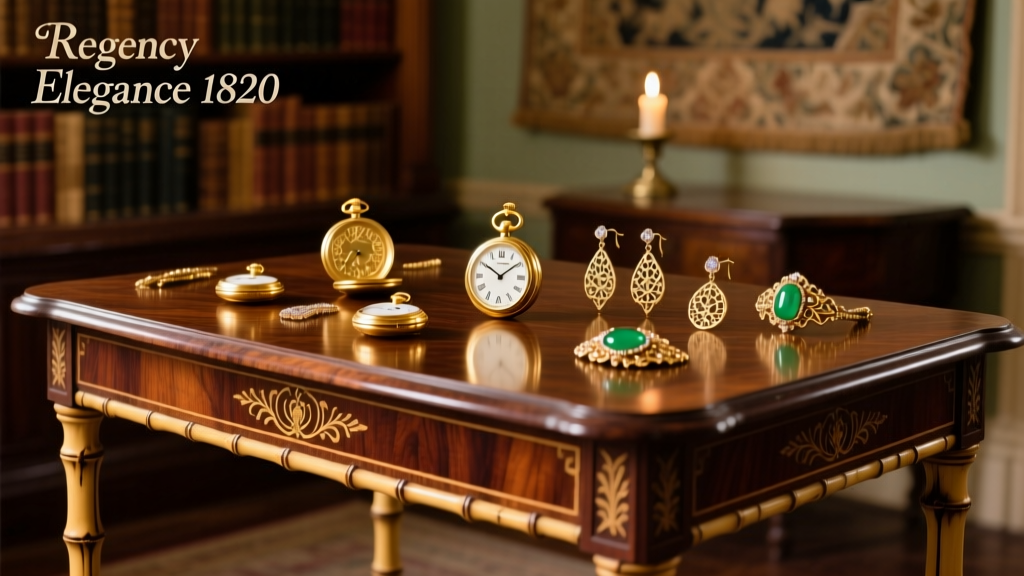
Regency Mahogany Bamboo-Turned Table: Provenance, Craftsmanship, and Market Significance of a 26 × 25 Inch Antique Center Table
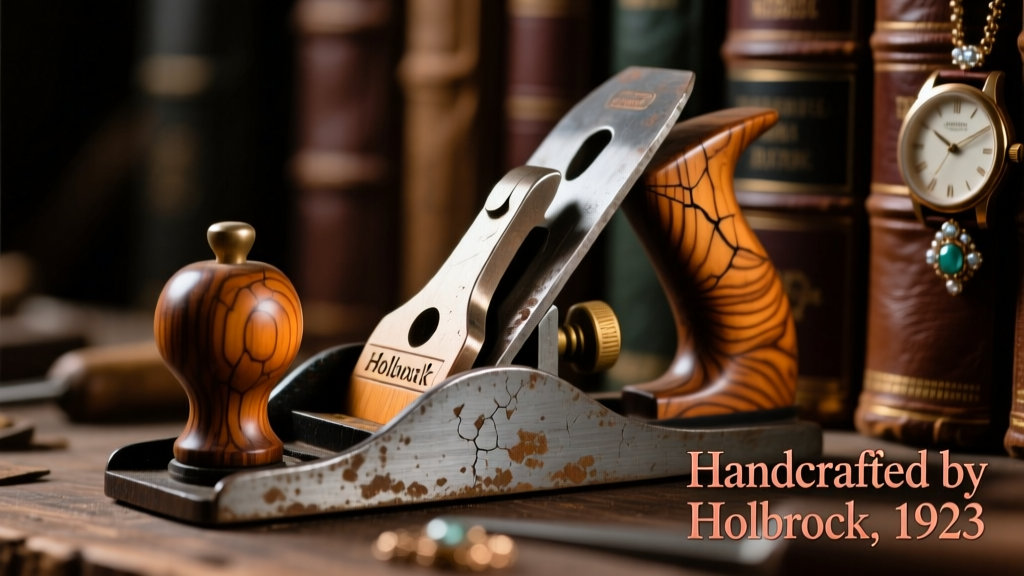
Holbrook Boxwood Scales: Precision Measuring Tools for Victorian and Edwardian Plane and Plow Makers
Rookwood Vase: Fruit Leaves in Yellow Vellum Glaze by Lenore Asbury, Circa 1926 — A Masterpiece of American Art Pottery
Jan Nys: The Unheralded Master of Belgian Art Deco Horology and Jewelry
Hampshire Vase: Shouldered Green Matte Glaze, Mark '4', 4½ × 12 Inches — A Mid-Century Ceramic Landmark
Wurlitzer Wooden Advertising Coaster Set, 1940s: A Six-Piece Vintage Americana Treasure
Perthshire Paperweights: The 2¼-Inch Multicolored Swirl Millefiori Center — A Study in Scottish Glass Artistry
Hepplewhite Drop-Leaf Dining Table, c. 1800: Provenance, Construction, and Market Significance of a 109-Inch Board-Top Example