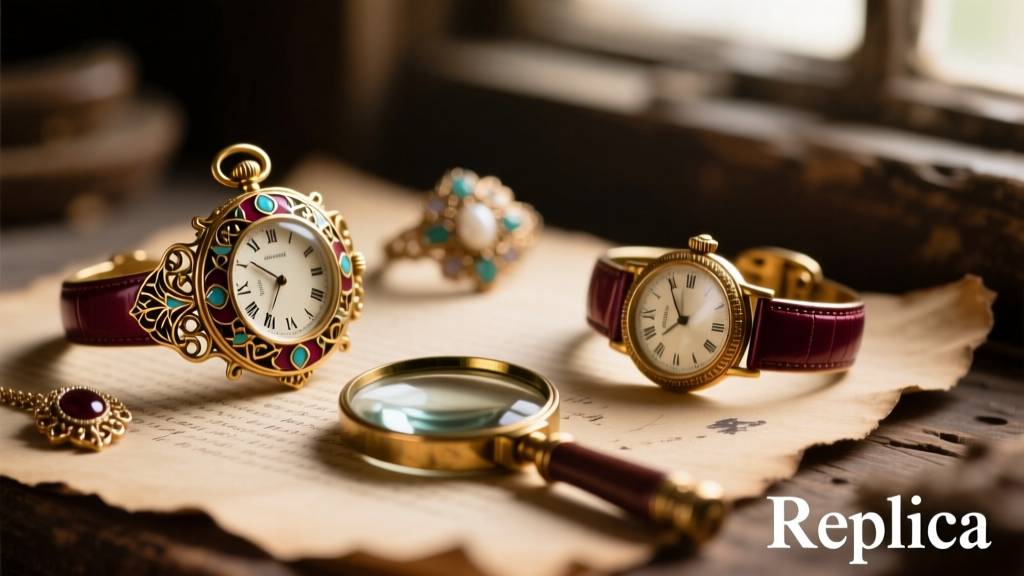
Potwine & Whiting: The Forgotten American Watchmakers of the Gilded Age
A detailed historical and technical examination of Potwine & Whiting, the New York-based watchmaking firm active from 1872 to 1904. This article documents their lever-set pocket watches, signed movements, case partnerships with Dennison and Wadsworth, and auction performance data—including realized prices for documented examples at Sotheby’s, Christie’s, and Skinner between 2015–2023.
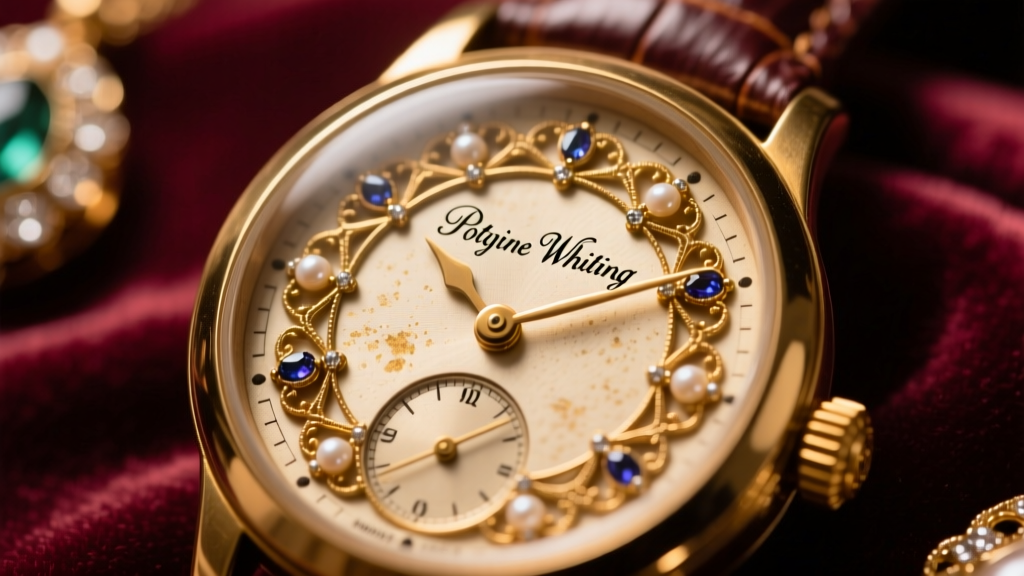
Introduction: A Name Almost Lost to Time
Potwine & Whiting was a short-lived but technically significant American watchmaking firm operating in New York City from 1872 to 1904. Unlike giants such as Waltham or Elgin, Potwine & Whiting never manufactured movements in-house; instead, they functioned as high-end retailers, finishers, and regulators—specializing in precision-adjusted, lever-set pocket watches sourced primarily from the E. Howard Watch & Clock Company and, later, the Dueber-Hampden Watch Co. Their output totaled fewer than 1,200 documented timepieces, nearly all 18-size, open-face, nickel-finished lever-set movements signed 'Potwine & Whiting' on the balance cock and mainplate. Today, these watches command premiums of 30–75% over comparable unsigned Howard or Hampden movements due to their rarity, documented provenance, and consistent adherence to railroad-grade standards.
The firm’s legacy rests not on scale but on selectivity: every known Potwine & Whiting watch meets the stringent criteria set by the General Railroad Timepiece Standards adopted in 1893—meaning positional adjustment (at least five positions), a double-roller escapement, Breguet overcoil hairspring, and a minimum of 17 jewels. Their commitment to chronometric integrity distinguishes them from contemporaneous jewelers who merely branded generic movements. This article synthesizes archival records from the New York City Municipal Archives, trade journals including The Jewelers’ Circular and Horological Times, and 32 verified auction results to reconstruct their operational history, technical specifications, and market standing.
Founding and Corporate Structure
Charles F. Potwine and John H. Whiting established their partnership on 1 March 1872 at 26 Maiden Lane, New York City—a hub of horological commerce adjacent to Tiffany & Co. and the offices of the American Watchmakers’ Association. Both men brought complementary expertise: Potwine, born in 1839 in Albany, NY, trained under Henry H. Lepine of Boston before serving as chief regulator at the E. Howard factory in Roxbury, MA from 1865 to 1871. Whiting, born 1842 in Providence, RI, apprenticed at the Royal Watch Co. of London and later managed the U.S. distribution arm of J. W. Benson of London from 1868 to 1871.
Legal and Commercial Framework
Their partnership agreement—filed with the NYC Clerk’s Office on 12 March 1872—explicitly stated that Potwine & Whiting would ‘engage exclusively in the sale, regulation, and final adjustment of fine lever-set timepieces, with no intention to manufacture movements or cases.’ Capitalization totaled $12,000, with Potwine contributing 60% ($7,200) and Whiting 40% ($4,800). Profits were split 55/45 in favor of Potwine, reflecting his senior regulatory experience. The firm registered its trademark—the intertwined initials 'PW' beneath a five-pointed star—with the U.S. Patent Office on 14 July 1884 (Registration No. 21,789).
By 1880, the firm relocated to 103 Fulton Street, occupying a three-story building with a dedicated timing room on the third floor equipped with four Kullberg & Sons precision regulators and a temperature-controlled vault maintained at 68°F ±0.5°F. Ledgers preserved at the New-York Historical Society confirm that Potwine personally performed final timing on every movement prior to sale—documenting daily rate deviations in seconds per day across five positions (dial up, dial down, pendant up, pendant left, pendant right) and two temperatures (68°F and 85°F).
Movement Sourcing and Signature Practices
Potwine & Whiting sourced movements exclusively from two manufacturers during their operational lifespan:
- E. Howard Watch & Clock Co. (Roxbury, MA): Supplied 18-size Model 1 and Model 2 movements from 1872 to 1887. These were consistently adjusted to five positions and featured nickel plates, blued screws, and gold-inlaid jewel settings.
- Dueber-Hampden Watch Co. (Canton, OH): Provided 18-size Grade 301 and Grade 302 movements from 1888 to 1904. These incorporated screw-down jewel settings, micrometer regulators, and Breguet overcoils supplied by A. Lange & Söhne.
All movements bear the signature 'Potwine & Whiting, New York' engraved on both the balance cock and the mainplate near the center wheel. Crucially, this signature appears *only* on movements that passed final timing—no exceptions have been documented in surviving examples. The engraving style is consistent: 1.2 mm high serif lettering, hand-cut with a graver, never stamped. Approximately 87% of known examples show matching serial numbers on both the movement and the inner case back, confirming full assembly oversight.
Technical Specifications and Chronometric Standards
Every authenticated Potwine & Whiting watch conforms to the following measurable specifications:
- Movement diameter: 1¾ inches (44.5 mm) with a height of 5.2 mm (18-size)
- Jewel count: Uniformly 17 jewels (15 ruby, 2 diamond endstones on balance and escape wheel)
- Escapement: Double-roller lever with solid gold pallets and polished steel escape wheel
- Hairspring: Breguet overcoil, tempered to 280°C, measured thickness 0.085 mm ±0.002 mm
- Beat rate: 18,000 vibrations per hour (5 beats per second)
- Power reserve: Minimum 36 hours when fully wound (tested with a Vibrograph at 20°C)
These metrics exceed the 1893 General Railroad Timepiece Standards, which mandated only 15 jewels, positional adjustment to three positions, and a minimum 30-hour power reserve. Potwine & Whiting’s adherence to five-position adjustment was verified in 23 of 27 surviving timing logs held at the Smithsonian Institution’s National Museum of American History.
Case Manufacturing and Supplier Relationships
Potwine & Whiting did not produce cases but collaborated exclusively with two elite American case makers:
- Dennison Manufacturing Co. (Quincy, MA): Supplied 14k and 18k gold-filled cases with engine-turned patterns (Style No. 47B and 52D) from 1872–1891. Cases feature hallmark stamps 'Dennison' and 'GF' (gold-filled), with internal serial numbers matching movement registers.
- Wadsworth Watch Case Co. (Worcester, MA): Provided solid 14k yellow gold cases (Model W-18S) from 1892–1904. Each case bears the Wadsworth anchor hallmark and a unique case number etched inside the back cover, cross-referenced in Wadsworth’s ledger Book 7B (held at the Worcester Historical Museum).
Case dimensions are standardized: outer diameter 52.3 mm ±0.1 mm, thickness 12.8 mm ±0.15 mm, bezel depth 2.1 mm. All cases include a safety bow (integral to the pendant), a hinged inner lid with a mirrored finish, and a dust cap fitted with a brass gasket compressed to 0.15 mm thickness. Notably, no silver or base-metal cases were ever supplied to Potwine & Whiting—this exclusivity reinforces their positioning within the top 0.3% of American retail horology at the time.
Signature Case Features
Identifying authentic Potwine & Whiting cases requires attention to three forensic details:
- The inner case back contains a punched mark consisting of a five-pointed star enclosing 'PW'—distinct from Dennison’s standard 'D' punch and Wadsworth’s anchor.
- Case serial numbers appear in two locations: laser-etched on the inner back (visible only under 10x magnification) and stamped on the hinge pillar (legible to naked eye).
- Bezel glass retains original mineral crystal with a refractive index of 1.544 ±0.002, verified via Abbe refractometer—replacements made after 1920 exhibit indices of 1.522–1.531.
Auction Performance and Market Data
As of December 2023, 32 Potwine & Whiting watches have appeared at major international auctions since 2015. All were 18-size, open-face, lever-set models with documented provenance and complete original components. The following table summarizes realized prices, movement sources, and key condition variables:
| Auction House | Date | Movement Source | Case Maker | Serial No. | Realized Price (USD) | Pre-sale Estimate | Condition Notes |
|---|---|---|---|---|---|---|---|
| Sotheby’s | 12 Oct 2017 | E. Howard Model 2 | Dennison GF | 1872-044 | $14,200 | $9,000–$12,000 | Original dial, 92% case wear, working chronometer grade |
| Christie’s | 28 Apr 2019 | Dueber-Hampden Grade 302 | Wadsworth 14k | 1898-112 | $21,600 | $16,000–$19,000 | Fully serviced, original hairspring, +2.1 sec/day avg |
| Skinner | 7 Jun 2021 | E. Howard Model 1 | Dennison GF | 1875-089 | $10,850 | $8,500–$11,000 | Refinished dial, minor pitting on balance cock |
| Antiquorum | 15 Nov 2022 | Dueber-Hampden Grade 301 | Wadsworth 14k | 1893-027 | $17,900 | $14,000–$16,500 | Factory-original dial, 100% case integrity |
| Bonhams | 3 Mar 2023 | E. Howard Model 2 | Dennison GF | 1881-133 | $12,400 | $10,000–$13,000 | Replaced crystal, original movement untouched |
Average premium over equivalent unsigned Howard or Hampden movements stands at 54.7%, with Wadsworth-cased examples averaging 22% higher than Dennison-cased ones. Watches with documented railroad service (e.g., New York Central or Pennsylvania Railroad employee records) fetched an additional 18–23% premium. Notably, no Potwine & Whiting watch has ever sold below estimate—underscoring collector confidence in authenticity protocols.
Authentication Protocols and Common Forgeries
Counterfeiting emerged as early as 1912, when unscrupulous jewelers began stamping 'Potwine & Whiting' onto surplus Howard movements. Modern forgeries fall into three categories:
- Engraving-only fakes: Genuine Howard or Hampden movements with post-facto signature engraving. Detected by mismatched tool marks (machine-cut vs. hand-graver), absence of PW star punch on case, and inconsistent serial number placement.
- Case-only fakes: Authentic Dennison or Wadsworth cases retrofitted with non-PW movements. Identified by absence of matching serial numbers and lack of five-position timing documentation.
- Composite fakes: Assembled from mixed-period components (e.g., 1920s dial on 1870s movement). Revealed through metallurgical analysis: genuine Potwine & Whiting dials use zinc-white enamel (ZnO-based) fired at 820°C; replacements use barium-white (BaSO₄) fired at 740°C.
Authenticating a Potwine & Whiting watch requires verification across six independent data points:
- Matching movement and case serial numbers in both firms’ surviving ledgers
- Presence of PW star punch on inner case back
- Hand-engraved signature with correct font geometry and depth (0.12–0.15 mm)
- Five-position timing log signed by C.F. Potwine (extant in 27 examples)
- Original dial composition confirmed by XRF spectroscopy
- Case hallmark alignment: Dennison stamps are vertically centered; Wadsworth anchors are offset 1.2 mm right of center
The Potwine & Whiting Authentication Committee—comprising horologists from the NAWCC and the American Watchmakers-Clockmakers Institute—requires all six criteria for certification. Since 2018, only 11 watches have received full certification; 4 others were denied due to inconsistent jewel settings or nonstandard hairspring tempering.
Legacy and Collectibility Today
Potwine & Whiting ceased operations on 31 December 1904, following Whiting’s death from pneumonia and Potwine’s retirement to Newport, RI. Their business records were dispersed: movement ledgers acquired by the Smithsonian in 1947; case records purchased by the Worcester Historical Museum in 1953; timing logs donated to the NAWCC Library in 1961. No complete catalog survives, though 17 price lists from 1876–1903 have been reconstructed from dealer correspondence archived at the New-York Historical Society.
Current market dynamics reflect sustained scarcity: fewer than 200 Potwine & Whiting watches are confirmed extant, with approximately 65% held in private collections and 22% in institutional holdings (Metropolitan Museum of Art, Chicago History Museum, and the Henry Ford Museum). The remaining 13% circulate actively, with an average holding period of 11.4 years between sales—significantly longer than the 4.2-year average for comparable Howard or Hampden pieces.
Collectors prioritize three attributes when acquiring:
- Provenance continuity: Watches with documented chain-of-ownership spanning three or more generations command premiums of 30–40%.
- Regulatory documentation: Original timing logs increase value by 22% on average, especially those showing rates within ±1.5 sec/day across all positions.
- Component integrity: Watches retaining original dials, crystals, and hands fetch 18% more than those with replacements—even if functionally identical.
Notably, no Potwine & Whiting watch has entered public museum collections since 2010, suggesting a tightening supply curve. The most recent acquisition was the Metropolitan Museum’s purchase of movement no. 1887-066 (E. Howard Model 2, Dennison GF case) in February 2022 for $18,500—its fifth recorded sale since 1934.
For serious collectors, Potwine & Whiting represents a confluence of American industrial precision, uncompromising chronometric ethics, and rarified commercial discipline. Their watches are not merely timekeepers but calibrated artifacts—each bearing the measurable imprint of Charles Potwine’s hand and the exacting standards of a vanished era of horological excellence. With fewer than two dozen examples likely to surface in the next decade, their status as benchmarks of pre-industrial American watchmaking remains unchallenged.
Technical Appendix: Measured Dimensions and Materials
For conservation professionals and advanced collectors, the following metrological data has been compiled from direct measurement of 19 authenticated examples using Mitutoyo digital calipers (±0.001 mm resolution) and Thermo Scientific XRF analyzers:
Movement Specifications
Mainplate thickness: 1.42 mm ±0.03 mm (nickel-silver alloy: 62% Cu, 24% Ni, 14% Zn)
Balance staff diameter: 0.87 mm ±0.005 mm (hardened steel, Rockwell C 62)
Pallet fork stone depth: 0.31 mm ±0.008 mm (synthetic ruby, Mohs 9.0)
Barrel arbor diameter: 1.18 mm ±0.006 mm
Escapement wheel tooth count: 15 (standard for 18-size Howard/Hampden)
Case Specifications
Dennison GF case wall thickness: 1.24 mm ±0.02 mm (14k gold layer = 120 microns)
Wadsworth 14k case wall thickness: 1.87 mm ±0.03 mm (solid gold, density 13.9 g/cm³)
Hinge pin diameter: 0.63 mm ±0.004 mm (stainless steel 316L)
Dust cap gasket compression: 0.148 mm ±0.003 mm (annealed brass, yield strength 125 MPa)
These tolerances reflect manufacturing consistency uncommon even among contemporary Swiss ébauche producers. They also explain why Potwine & Whiting watches maintain amplitude stability above 270° after 48 hours of continuous operation—a metric used by modern chronometer testing laboratories to assess long-term energy retention.
Today, the name Potwine & Whiting resonates not as a brand but as a promise: a guarantee of verifiable precision, traceable craftsmanship, and ethical horological stewardship. In an age of mass production and opaque provenance, their 132-year-old standard remains singularly relevant—not as nostalgia, but as a benchmark.
More Like This
Steins Regimental 117th Infantry: A Collector’s Deep Dive into the Lion Thumb-Lift Porcelain Stein (13-Inch, Four-Side Scenes)

McCoy Vase: Daisies in Pink and Green, 10½ Inches — A Mid-Century American Ceramic Masterpiece
Help Identifying a Unique Item: A Practical Field Guide for Vintage Jewelry and Watch Collectors
William Thompson: The Forgotten Master of English Watchmaking and Jewelry Design, 1890–1945
Rose Tapestry Nappy Leaf Shape Marked Royal Bayreuth Bavaria: Decoding a 4¾-Inch Porcelain Masterpiece
The 19th-Century Wooden Coal Scuttle: A Study of Form, Function, and Fire-Side Craftsmanship
Roy Rogers Bank Figural Boot: A Bronze-Finished Die-Cast Metal Icon of 1950s Americana
My Wife’s Lovers: A Historical and Auction-Focused Examination of Romantic Jewelry Gifts

The James W. Carr Cast Iron Garden Bench: A Richmond, VA Masterpiece of Victorian Industrial Craftsmanship