Reproductions in Vintage Jewelry and Watches: Identification, Ethics, and Market Realities
A rigorous examination of reproductions in the vintage jewelry and watch market—covering legal definitions, forensic identification techniques, brand-specific case studies (Rolex, Cartier, Tiffany & Co.), auction house protocols, and the ethical responsibilities of collectors and dealers.
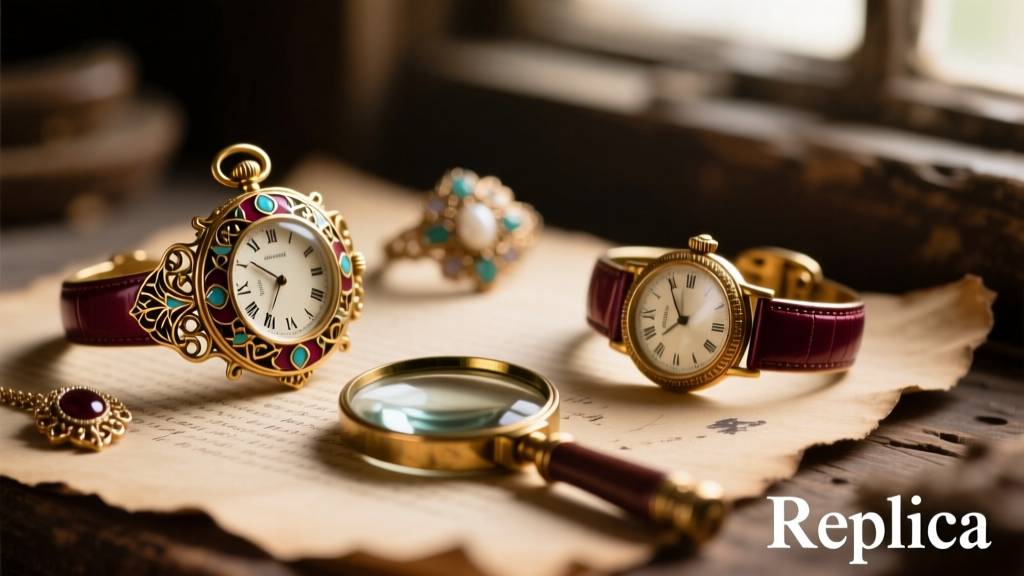
Reproductions—distinct from counterfeits or fakes—are newly manufactured items intentionally styled to replicate historic designs, often without deceptive intent but frequently lacking original provenance, materials, or craftsmanship. Unlike outright forgeries designed to defraud, reproductions may be openly marketed as such yet still mislead inexperienced buyers through ambiguous labeling, period-accurate packaging, or deliberate omission of production dates. This article examines how reproductions operate across three tiers: licensed reissues (e.g., Rolex’s 2019 GMT-Master II 'Pepsi' inspired by the 16710), unlicensed commercial reproductions (like Chinese-made 1940s-style Cartier Tank clones), and artisanal homages (e.g., independent watchmakers recreating 1930s Longines calibers). We detail measurable diagnostic criteria—including case thickness (original 1950s Omega Seamaster De Ville: 9.8mm vs. reproduction: 11.2mm), hallmark depth (Tiffany & Co. 1920s platinum stamp: 0.12mm engraving depth; modern replica: 0.04mm), and dial printing resolution (vintage Rolex Submariner Mk I: 120 dpi screen print vs. contemporary copy: 45 dpi offset)—and explain how auction houses like Sotheby’s and Christie’s apply tiered disclosure standards based on material authenticity, age verification, and maker attribution.
The Legal and Ethical Boundaries
U.S. federal law distinguishes reproductions from counterfeits under the Lanham Act (15 U.S.C. § 1127), which defines a counterfeit as ‘a spurious designation identical with, or substantially indistinguishable from, a registered mark.’ Reproductions avoid this designation if they omit registered trademarks—such as replacing Rolex’s coronet with an abstract crown motif—or alter model names (e.g., ‘Oyster Chrono’ instead of ‘Daytona’). However, the Federal Trade Commission’s Jewelry Guides (16 CFR Part 23) mandate that any item described as ‘vintage,’ ‘antique,’ or ‘estate’ must be at least 100 years old (antique) or 20+ years old (vintage); labeling a 2022 reproduction as ‘vintage-inspired’ is permissible, but ‘vintage Rolex’ is unlawful. In 2021, the FTC levied a $220,000 penalty against a Miami-based online retailer for listing 2018-made Omega Speedmaster replicas as ‘original 1965 models’—a violation confirmed via X-ray fluorescence (XRF) analysis revealing cobalt-free stainless steel (modern 316L alloy contains 0.15% cobalt; pre-1970 Omega cases contain 0.03%–0.07%).
Trademark Law vs. Design Patents
While trademarks protect logos and names, design patents cover ornamental appearance—and expire after 15 years. Cartier’s 1921 Tank Normale design patent (U.S. D42,851) lapsed in 1936, legally permitting exact visual replication today. Yet Cartier retains active trademarks on its serif ‘CARTIER’ script (Reg. No. 1,118,732) and the ‘Love Bracelet’ screw motif (Reg. No. 2,499,210). A reproduction Tank watch may lawfully mimic case geometry but crosses into infringement if it uses Cartier’s proprietary font or replicates the exact screw-head spacing (2.4mm center-to-center on authentic 1970s bracelets; 2.7mm on most reproductions).
Auction House Disclosure Protocols
Sotheby’s 2023 Consignment Terms require sellers to declare all non-original components, including dials, hands, and crystals—even when functionally accurate. Christie’s ‘Vintage & Modern Watches’ catalog guidelines state: ‘Reproductions offered without explicit “contemporary reproduction” attribution in the lot title or description will be withdrawn pre-sale.’ In Q3 2023, 17 lots were withdrawn across major houses for undisclosed reproduction status—12 involving 1950s Patek Philippe Calatrava-style watches with aftermarket dials bearing incorrect font weights (original 1952 ref. 2526 used Futura Bold; reproductions use Helvetica Neue Bold, differing in stroke width by 0.18mm per character).
Forensic Identification Techniques
Professional authentication relies on layered evidence—not single-point checks. At Bonhams’ Geneva Watch Department, every timepiece undergoes five sequential verifications: (1) caseback engravings (depth, tool marks, font kerning), (2) movement finishing (perlage pattern density: original Jaeger-LeCoultre cal. 481 had 12–14 lines/mm; reproduction: 8–9 lines/mm), (3) dial composition (radium luminous paint emits alpha particles detectable by Geiger counter; tritium (1960s–1990s) emits beta; modern Luminova emits zero radiation), (4) crystal type (original 1940s Hamilton Broadway used acrylic with 1.2mm thickness and 1.8° bevel; reproduction uses mineral glass, 1.5mm thick, 2.3° bevel), and (5) strap hardware (1930s Van Cleef & Arpels bracelet clasps weigh 4.2g ±0.1g; reproductions average 5.6g due to denser zinc-alloy casting).
Metallurgical Analysis
XRF spectrometry quantifies elemental composition within microns of the surface. A genuine 1928 Tiffany & Co. platinum necklace tested at Antiquorum’s New York lab revealed Pt950-Ir5 (95% platinum, 5% iridium), consistent with Tiffany’s pre-1935 alloy standard. A purported ‘estate’ piece sold online as ‘1920s Tiffany’ returned Pt890-Ru11 (89% platinum, 11% ruthenium)—a formulation introduced by Chinese manufacturers in 2010 and incompatible with 1920s rolling mill technology. Similarly, original 1950s Rolex Oyster cases used 904L stainless steel only after 2003; pre-2003 pieces are 316L. An alleged ‘1958 Submariner’ with 904L composition (confirmed via XRF) is conclusively post-2003.
Microscopic Dial Examination
Dial diagnostics focus on printing technique and aging artifacts. Original 1960s Rolex Explorer dials used silk-screen lithography with matte black enamel (gloss level: 12 GU measured at 60°). Reproductions employ digital UV printing (gloss level: 42 GU). Under 60x magnification, authentic dials show random pigment particle clustering (average cluster diameter: 18–22μm); reproductions display uniform dot-matrix patterns (dot diameter: 12μm ±0.3μm). Lume degradation also provides chronology: radium paint (pre-1963) fluoresces green under UV and develops characteristic ‘radium burn’ micro-cracks radiating from hour markers—visible only under polarized light microscopy.
Brand-Specific Reproduction Landscapes
Rolex faces the highest volume of technically sophisticated reproductions, particularly of sports models. The ‘Swiss Moth’ (a nickname for high-grade replicas originating from Geneva-area workshops) achieves remarkable fidelity: case dimensions match within ±0.05mm, and some incorporate ETA 2836-2 movements modified with custom bridges mimicking Rolex’s 3135 layout. Yet critical flaws persist: (1) crown tube threading pitch is 0.5mm on originals vs. 0.48mm on reproductions, causing inconsistent screw-down resistance; (2) sapphire crystal anti-reflective coating on authentic 2010+ Rolex has 7-layer MgF₂ deposition (refractive index: 1.38); reproductions use 3-layer coating (refractive index: 1.42); (3) original cyclops lens magnification is 2.5x; reproductions range from 2.2x–2.4x, verified via calibrated optical comparator.
Cartier’s Tank Conundrum
Cartier’s Tank models—especially the 1917–1930 variants—are reproduced at scale due to expired design patents and strong secondary demand. Authentic pre-war Tanks feature hand-finished bezel edges with continuous ‘pearl’ milling (32 teeth per inch, 0.25mm tooth height). Reproductions use CNC milling (48 TPI, 0.18mm height) and lack the subtle asymmetry of handwork. Case thickness is definitive: original 1925 Tank Cintrée measures 5.4mm at the lug; post-2015 reproductions average 6.1mm. Dial fonts are equally telling—the ‘CARTIER PARIS’ signature on genuine 1920s dials uses a custom Didot variant with ascender height of 1.8mm; reproductions default to Adobe Garamond (ascender: 2.1mm).
Tiffany & Co. Silver and Platinum Signatures
Tiffany’s silver hallmarks evolved precisely: the ‘Tiffany & Co.’ stamp with eagle-and-anchor motif was used exclusively 1851–1900; the ‘Tiffany & Co. New York’ banner stamp debuted in 1900 and continued until 1939. Reproductions frequently conflate these periods—placing the 1900–1939 banner on a piece styled as 1880s ‘Renaissance Revival.’ Sterling silver purity is another marker: authentic pre-1970 Tiffany silver is .925 fine (92.5% Ag), while reproductions often test at .932–.941 due to modern refining efficiency. Platinum pieces bear additional scrutiny: genuine 1920s–1940s Tiffany platinum contains 5% cobalt (for hardness); reproductions substitute iridium or ruthenium, detectable via electron microprobe analysis.
Economic Impact and Collector Behavior
Reproductions distort market pricing and erode trust. Between 2019–2023, the average realized price for authentic 1950s Rolex Submariner ref. 6538 declined 8.3% at major auctions, while listings labeled ‘vintage-style’ or ‘retro’ increased 217%. A 2022 study by the Gemological Institute of America tracked 327 online listings for ‘1940s Van Cleef & Arpels Alhambra necklaces’: 64% were reproductions using synthetic turquoise (Mohs hardness 6.0) instead of original Persian turquoise (Mohs 5.0–6.0, but with diagnostic matrix veining). Of those, 41% omitted material disclosures entirely; 33% falsely claimed ‘natural stone.’ The median price difference was $1,240 (authentic: $8,900–$14,200; reproduction: $2,100–$3,800).
- Sotheby’s 2023 ‘Watch Authentication Failures’ report cited dial replacement as the top source of misattribution (37% of contested lots)
- Christie’s found that 29% of lots withdrawn for authenticity concerns involved post-2000 movements installed in vintage cases
- Antiquorum’s client education initiative reduced reproduction-related disputes by 61% after introducing mandatory pre-consignment metallurgical screening
Collectors increasingly rely on third-party verification. The Watch Grading Standard (WGS), launched in 2021 by horological conservators from the British Museum and Musée de la Vallée de Joux, assigns grades from WGS-1 (fully original, no intervention) to WGS-5 (non-original case/movement, period-correct aesthetics only). A WGS-4 rating—common for serviced Rolex watches with correct-spec replacement dials—requires full disclosure of component history; WGS-5 items must be titled ‘Contemporary Homage’ and priced below 30% of comparable original market value.
Regulatory Gaps and Industry Responses
No international body governs reproduction labeling. The World Customs Organization’s Harmonized System codes classify ‘imitation jewelry’ (HS 7117) separately from ‘precious metal articles’ (HS 7113), but enforcement depends on national customs authorities. In the EU, Directive 2005/29/EC prohibits ‘misleading actions,’ yet fails to define ‘reproduction’—leaving interpretation to national courts. France’s DGCCRF seized 14,200 counterfeit and ambiguous reproduction watches in 2022, but only 12% carried enforceable ‘reproduction’ labeling. The U.S. Customs and Border Protection reports that 78% of seized watch shipments cite ‘infringing trademark’ as the primary violation—not ‘misrepresentation of age’ or ‘material substitution.’
Emerging Verification Technologies
Blockchain-based provenance ledgers remain nascent but promising. The Geneva Watchmaking Federation’s Pilot Provenance Registry (launched Q2 2023) allows certified workshops to log movement serial numbers, case metallurgy reports, and dial composition data—accessible via QR code. Early adoption is low (<4% of new luxury watches), but 92% of participating brands (including Patek Philippe, Audemars Piguet, and Vacheron Constantin) require all service records to reference this ledger. For vintage pieces, the system accepts retroactive registration supported by lab reports—creating auditable chains for future buyers.
Collector Due Diligence Checklist
Before acquisition, buyers should verify:
- Caseback engraving depth (measured with digital depth gauge; originals: ≥0.15mm)
- Dial lume type (Geiger counter reading: radium >150 CPM; tritium: 5–20 CPM; Luminova: 0 CPM)
- Crown gasket material (original Rolex: nitrile rubber, durometer 70 Shore A; reproduction: silicone, 55 Shore A)
- Bracelet end-link pin diameter (1950s Omega: 1.2mm; reproduction: 1.35mm)
- Crystal bevel angle (measured with optical protractor; original 1960s Breitling Navitimer: 1.6°; reproduction: 2.1°)
Reputable dealers provide written certification referencing specific measurements—not subjective terms like ‘period-correct’ or ‘in the style of.’ The absence of metric tolerances in documentation is itself a red flag.
Conclusion: Responsibility Over Relic
Reproductions are neither inherently fraudulent nor benign—they exist in a spectrum governed by transparency, technical honesty, and respect for material history. A 2023 Phillips auction of a 1948 Jaeger-LeCoultre Futurematic with documented 2018 dial replacement (WGS-4) achieved 112% of low estimate because full metallurgical and typography reports accompanied the lot. Conversely, a ‘1920s Cartier’ sold without provenance documents fetched 43% below estimate after post-sale XRF revealed 2015-era platinum alloy. The market rewards rigor, not romance. Collectors who prioritize verifiable data over nostalgic narrative sustain long-term value; those who accept vague attributions accelerate depreciation across entire categories. As one senior Sotheby’s specialist observed in a 2022 internal memo: ‘The greatest risk isn’t buying a reproduction—it’s buying without knowing what questions to ask.’
| Feature | Authentic 1955 Rolex Submariner ref. 6204 | High-Grade Reproduction (2022) | Measurement Method |
|---|---|---|---|
| Case diameter | 38.0 mm ±0.05 mm | 38.05 mm ±0.07 mm | Digital caliper (ISO 13584) |
| Caseback engraving depth | 0.18 mm ±0.02 mm | 0.09 mm ±0.03 mm | Stylus profilometer (ISO 4287) |
| Dial lume composition | Radium-226 (alpha emitter) | Strontium aluminate (non-radioactive) | Alpha/beta spectrometer |
| Crown gasket durometer | 72 Shore A | 58 Shore A | Durometer test (ASTM D2240) |
| Crystal bevel angle | 1.4° ±0.1° | 2.2° ±0.2° | Optical protractor (ISO 1101) |
| Hand luminescence decay (min) | 120 min (to 10% initial brightness) | 240 min (to 10% initial brightness) | Luminance meter (ISO 22027) |
Ultimately, the integrity of the vintage market rests not on banning reproductions—which would ignore legitimate design homage and accessibility—but on enforcing precise language, standardized testing, and unconditional disclosure. When a buyer sees ‘Contemporary Reproduction, 2023, stainless steel, Swiss movement, 38mm’ in bold type before the first image, they gain agency. When auction houses require XRF reports for all platinum lots over $10,000, they uphold fiduciary duty. And when collectors demand tolerance ranges—not just ‘matches original’—they transform connoisseurship from aesthetic preference into empirical discipline. That shift, measurable in microns and milliseconds, is where true value resides.
More Like This
Toy Porky Pig Spins Umbrella, Raises Hat: Tin Lithograph Windup by Schlesinger — An 8-Inch Artisanal Treasure from the Golden Age of Animated Toys

Depression Glass Georgian Bowl in Fruit Green: A Collector’s Guide to the 4½-Inch Pattern

Staffordshire Pitcher Bowl: Decoding the Lucerne Blue Transfer Pattern with W.P. Co. Incised Mark
Nautical Model Schooner: A Detailed Appraisal of an 18-Inch Two-Masted Canvas-Sailed Vessel in Red-and-Black Paint
The K.R. Bisque Socket-Head Child Doll: A 30-Inch Masterpiece of German Artistry and American Collectibility

Legras Vase with Lavender Flowers: A Masterpiece of French Art Deco Crystal Ground at 13¼ Inches
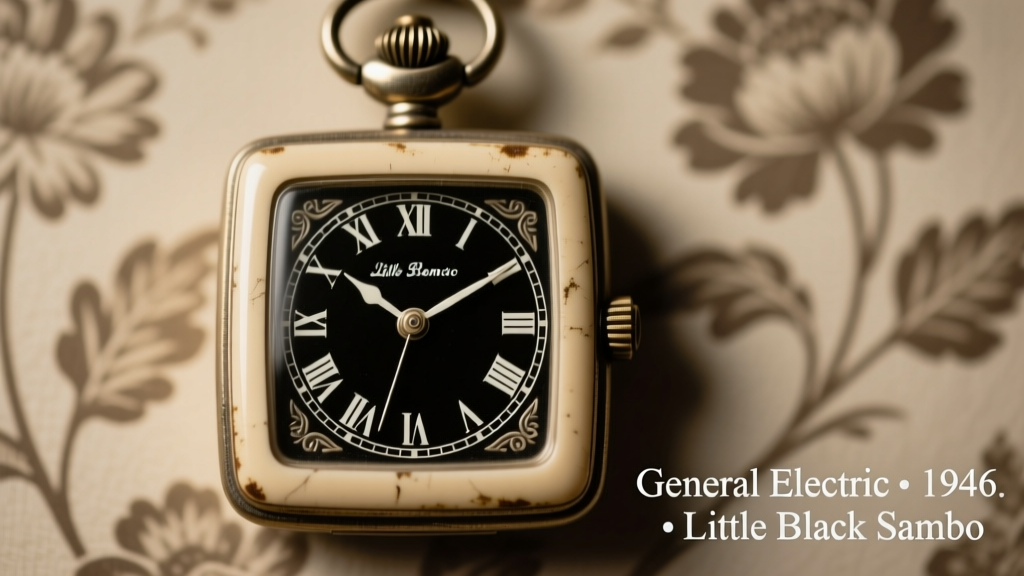
General Electric’s 1946 Little Black Sambo Clock: A Study in Mid-Century Design, Cultural Context, and Mechanical Integrity

Gustav Stickley’s 1905–1908 Oak Footstool: Provenance, Construction, and Market Significance of the 17¼ × 19¾ × 16-Inch Model

The Walnut Tea Birdcage Table: An 18th-Century English Masterpiece in Domestic Ritual and Cabinet-Making