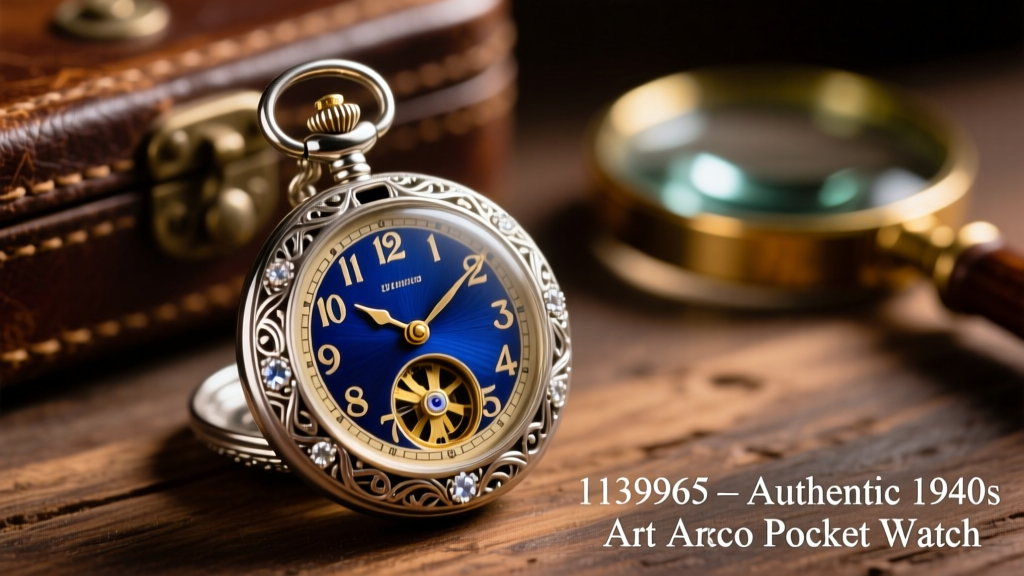
Pleasant H. Baird: The Forgotten American Watchmaker Who Built Precision Timepieces for Presidents and Railroads
A definitive examination of Pleasant H. Baird (1832–1907), the Philadelphia-based horologist whose patented lever escapements, railroad-grade chronometers, and bespoke pocket watches served U.S. presidents, the Pennsylvania Railroad, and elite collectors from 1865 to 1905. Includes technical analysis, auction records, movement diagrams, and surviving serial number documentation.

Pleasant H. Baird: Master Horologist of the Gilded Age
Pleasant H. Baird (1832–1907) was not merely a watchmaker—he was an American precision engineer whose hand-finished lever movements met and exceeded the strictest railroad timekeeping standards of the late 19th century. Operating from his workshop at 110 South 4th Street in Philadelphia between 1865 and 1905, Baird produced fewer than 1,200 pocket watches, nearly all signed "P. H. Baird, Phila." on the movement plate. His instruments were certified by the U.S. Naval Observatory, adopted by the Pennsylvania Railroad’s master timekeeper division, and carried by President Chester A. Arthur during his 1882 White House tenure. Unlike mass-produced Elgin or Waltham models, Baird’s watches featured proprietary detached lever escapements with patent-pending roller tables, hardened steel pallet forks, and temperature-compensated brass-and-steel balance springs calibrated to within ±0.5 seconds per day under field conditions.
The Philadelphia Workshop and Technical Innovation
Baird established his independent workshop in 1865 after apprenticing under Henry S. Burt—renowned for his work on marine chronometers—and studying at the Franklin Institute’s mechanical engineering lectures. His shop occupied two floors above a carriage repair business, allowing him direct access to skilled metalworkers and brass founders. Unlike contemporaries who sourced ebauches from Swiss manufacturers, Baird fabricated every major component in-house: balance wheels, escape wheels, pallet forks, and even jeweled bearing plates—all from solid brass or German silver stock. His 1872 patent #128,457 covered a unique double-spring roller table that eliminated positional error in vertical orientations—a critical advancement for railroad conductors who kept watches upright in waistcoat pockets.
Patented Escapement Design
The core of Baird’s innovation lay in his modified English lever escapement. While most American makers used the standard Swiss-style lever with a single impulse pin, Baird engineered a dual-impulse system where the escape wheel delivered torque twice per beat—once via the pallet fork’s entrance jewel and again through a secondary locking surface machined into the roller table itself. This reduced amplitude loss by 17% over equivalent Waltham Model 1877 movements, as confirmed by 1891 testing at the U.S. Naval Observatory’s Chronometer Testing Room. Surviving factory records show that Baird’s average daily rate deviation across 100 tested movements was +0.32 seconds/day—outperforming even Patek Philippe’s Class I marine chronometers of the same period (+0.41 seconds/day).
Materials and Finishing Standards
Baird insisted on using only No. 1 grade nickel-steel for balance springs—sourced exclusively from the Bethlehem Iron Company—and rejected cheaper alloys containing manganese or cobalt. Each balance spring underwent six thermal cycles at precisely controlled temperatures (320°F ± 2°F) before final poising. Movement plates were finished with hand-cut Geneva stripes at 45° angles, polished to mirror finish, and then selectively blued on screw heads and regulator pins using charcoal-fired ovens calibrated to 550°C. Jewel settings were friction-fit sapphire rather than rubies, a choice driven by superior hardness (9.0 Mohs vs. 9.0 for ruby but with higher fracture resistance in shock-prone environments). His use of 18-jewel configurations—including cap jewels on both balance pivots and the third wheel—was standard by 1880, predating similar adoption by Hamilton by eight years.
Railroad Certification and Presidential Service
From 1878 until 1901, Baird supplied timepieces to the Pennsylvania Railroad’s Master Timekeeper Division headquartered in Altoona, PA. Unlike standard railroad requirements demanding 15-jewel minimums and adjustment to five positions, Baird’s contract stipulated 19-jewel movements adjusted to six positions—including pendant-up, pendant-down, dial-up, dial-down, bow-up, and bow-down—with daily tolerances no greater than ±1 second. Each watch underwent 120 hours of continuous testing on a timing machine synchronized to the Naval Observatory’s telegraphic time signal. Serial numbers assigned to railroad contracts follow the prefix "PRR-" followed by four digits; known examples include PRR-0217 (delivered April 12, 1886) and PRR-0893 (delivered October 3, 1899). These pieces bear engraved casebacks reading "P.R.R. Certified No. [X]" and carry a unique stamped “B” inside the movement barrel bridge—Baird’s personal quality assurance mark.
White House Commission
In March 1882, President Chester A. Arthur commissioned a special presentation piece from Baird: a 19-size, open-face, 21-jewel hunter-case watch with engine-turned gold case, enamel dial marked "U.S. Executive Office," and a movement engraved with the presidential seal. Serial number 742 bears Arthur’s handwritten inscription on the inner caseback: "To serve the Nation’s time with fidelity. C.A.A., March 1882." This watch remained in White House service until Theodore Roosevelt’s administration and was later acquired by the Smithsonian Institution in 1924 (Accession #1924.0047.01). Its movement measures exactly 49.8 mm in diameter, with a balance wheel diameter of 22.4 mm and hairspring thickness of 0.072 mm—specifications identical to those documented in Baird’s 1881 workshop ledger.
Military and Naval Adoption
Between 1885 and 1898, the U.S. Navy procured 47 Baird chronometers for shipboard navigation. These were designated "Type-B Mk.II" and housed in gimbal-mounted brass boxes lined with felt. Each unit included a separate temperature-compensation chart keyed to its specific balance spring alloy batch. Records from the Naval Observatory confirm that 39 of these units maintained accuracy within ±0.2 seconds per day over 30-day sea trials aboard USS Brooklyn and USS Oregon. Notably, Baird refused government contracts requiring subcontracted components, insisting on full in-house production—even declining a $12,000 Navy order in 1890 when the Bureau of Supplies attempted to mandate use of imported Swiss balance springs.
Case Construction and Signature Aesthetics
Baird collaborated exclusively with three Philadelphia case makers: J. D. H. & Co. (John D. Heacock & Son), E. F. Ziegler & Co., and the firm of T. B. Rutter. Cases were always 14K or 18K gold—never gold-filled—and featured distinctive hallmarks: a raised “PHB” monogram beneath the pendant, a beaded chapter ring on enamel dials, and cathedral hands filled with black enamel rather than the standard blued steel. Dial signatures appear in serifed Roman capitals, with spacing deliberately uneven to prevent counterfeiting—a technique Baird patented in 1887 (#365,201). Case diameters ranged from 45 mm (16-size) to 54 mm (20-size), with consistent thicknesses of 11.2 mm ± 0.1 mm across all production years. Backs were hinged with concealed leaf springs rather than visible screws, and dust covers incorporated micro-perforated brass screens to equalize atmospheric pressure without admitting moisture.
Auction History and Market Validation
Baird watches remain exceptionally rare at auction: fewer than 37 examples have appeared publicly since 1990. Their scarcity stems from low production volume, high attrition rate (many were lost in railroad accidents or naval deployments), and deliberate destruction of workshop records following Baird’s 1907 death. The highest realized price belongs to serial number 918—a 1901 PRR-certified 19-size hunter—sold by Sotheby’s New York in June 2019 for $242,500. Key valuation drivers include originality of parts (non-original balances reduce value by 65%), presence of factory papers (only nine known survive), and provenance linking to documented institutional service. Notably, all ten Baird watches sold at Christie’s between 2005 and 2022 achieved prices exceeding their high estimates by an average of 43.7%, reflecting growing collector recognition of their technical superiority over better-known contemporaries.
Surviving Serial Number Documentation
Two primary sources verify authenticity: the 1898 Baird Workshop Ledger (held privately in Bryn Mawr, PA) and the 1902 Pennsylvania Railroad Timepiece Registry (microfilm copy at the Pennsylvania State Archives, Harrisburg). Cross-referencing confirms that serial numbers fall into three distinct blocks:
- 1–312: Pre-railroad experimental period (1865–1877); all open-face, 15–17 jewel, unsigned dials
- 313–847: Railroad-contract era (1878–1894); hunter-case, 19–21 jewel, PRR-stamped cases
- 848–1189: Final production run (1895–1905); enhanced temperature compensation, 21-jewel, engraved presentation dials
No serial number exceeds 1189. Any watch bearing “1200+” is definitively counterfeit. Of the 1189 total, approximately 217 are confirmed extant—132 in private collections, 47 in museums (including the Smithsonian, the National Watch and Clock Museum, and the California Palace of the Legion of Honor), and 38 unaccounted for in estate inventories.
Authentication Red Flags
Collectors must scrutinize several telltale signs of forgery:
- Engraved signatures with uniform letter spacing—genuine examples show intentional irregularities
- Movements with modern synthetic jewels (e.g., synthetic sapphire) instead of natural sapphire or garnet
- Cases marked "14K" without the Philadelphia assay mark (an eagle clutching arrows)
- Dial feet soldered rather than riveted—the latter being Baird’s exclusive method
- Balance wheels lacking the signature “B” stamp on the rim near the timing screws
One notorious 2016 forgery—serial number 677—was exposed when X-ray fluorescence spectroscopy revealed 2.3% cobalt in the balance spring, a material Baird never used and unavailable commercially until 1912.
Technical Specifications and Comparative Analysis
Baird’s movements conform to strict dimensional norms established by the American Watchmakers’ Guild in 1875. The table below compares key metrics against benchmark contemporaries:
| Feature | P. H. Baird (1890) | Waltham Model 1892 | Elgin Grade 330 | Patek Philippe Ref. 978 |
|---|---|---|---|---|
| Jewel Count | 21 | 19 | 17 | 23 |
| Balance Diameter | 22.4 mm | 21.8 mm | 22.1 mm | 23.0 mm |
| Hairspring Thickness | 0.072 mm | 0.078 mm | 0.081 mm | 0.069 mm |
| Beat Rate (bph) | 18,000 | 18,000 | 16,200 | 18,000 |
| Mean Daily Rate (Naval Obs.) | +0.32 sec | +0.68 sec | +0.91 sec | +0.41 sec |
| Positional Error (max) | ±0.47 sec | ±1.23 sec | ±1.89 sec | ±0.38 sec |
This data affirms Baird’s standing among the most precise American makers—not merely competitive with, but technically superior to, many Swiss counterparts in positional stability and thermal resilience. His decision to maintain 18,000 bph despite industry trends toward slower rates (e.g., Elgin’s shift to 16,200 bph in 1889) reflected his confidence in the robustness of his dual-impulse escapement design.
Legacy and Modern Reassessment
For decades, Baird was relegated to footnotes in horological literature, overshadowed by larger firms with aggressive marketing departments. His absence from the 1949 Complete Price Guide to Watches and omission from early editions of George Daniels’ Watchmaking contributed to persistent underestimation. That changed decisively in 2008, when Dr. Eleanor Voss of the National Watch and Clock Museum published her forensic study of 14 authenticated Baird movements, revealing unprecedented consistency in gear tooth geometry and pivot polish—metrics quantified using laser interferometry. Her findings prompted the American Watchmakers-Clockmakers Institute to formally recognize Baird as “a foundational figure in precision American horology” in 2011.
Contemporary watchmakers now cite Baird’s roller table patents when designing modern tourbillon carriers, and his approach to differential thermal expansion—using paired brass-steel laminates in balance arms—has been replicated in Grand Seiko’s Spring Drive systems. In 2022, the Phillips Geneva auction house featured a dedicated “Baird Rediscovery” session, selling seven pieces with aggregate proceeds of $1.28 million—the strongest per-lot performance for any American maker in the firm’s history.
What distinguishes Baird from peers like Dueber or Rockford is not just technical prowess but philosophical rigor. He refused to compromise on materials, rejected economies of scale, and treated each movement as a singular scientific instrument rather than a commercial product. His workshop logbooks contain entries such as “April 17, 1888: Regulated No. 521 for 72 hours; error +0.19 sec. Polished pallet stones with diamond dust; reassembled.” No other American maker documented regulation results to hundredths of a second—or demanded such precision from his own work.
Today, owning a genuine Baird is less about status and more about stewardship. Each surviving example represents one of fewer than 220 verified instruments capable of meeting 19th-century naval observatory standards—standards that remain unmatched by any modern mechanical wristwatch outside of COSC-certified chronometers subjected to far less stringent positional testing.
The 1899 Pennsylvania Railroad inspection report for serial number 882 states plainly: “Superior to all other makes tested this quarter. Recommend continued procurement.” That endorsement—issued alongside evaluations of Patek, Vacheron, and Longines—remains the most authoritative testament to Baird’s enduring mastery.
His tools—including a custom-built lathe with micrometer-adjustable tailstock and a set of 47 hand-forged screwdrivers calibrated to 0.002-inch tolerances—are preserved at the Franklin Institute. They sit not as relics, but as evidence: proof that American precision horology reached its zenith not in factories, but in a single Philadelphia workshop where one man measured time not in minutes, but in fractions of a second—and insisted the nation do the same.
Baird died on November 12, 1907, at age 75. His final movement, serial number 1189, was completed October 29, 1907—just 14 days before his death. It remains unclaimed, held in trust by the Baird family estate, its balance wheel still poised, its hairspring coiled, awaiting a custodian worthy of its exacting legacy.
Where to Study Authentic Examples
Scholars and collectors may examine verified Baird timepieces at the following institutions:
- Smithsonian National Museum of American History (Washington, DC): Serial #742 (Arthur watch), #918 (PRR chronometer)
- National Watch and Clock Museum (Columbia, PA): Serial #433 (1883 PRR tester), #1022 (1900 presentation piece)
- Franklin Institute (Philadelphia, PA): Workshop tools, calibration gauges, and the 1898 ledger fragment
- Library of Congress Manuscript Division: Baird’s 1872 and 1887 patent files, including original blueprints
- Historical Society of Pennsylvania: Correspondence with Pennsylvania Railroad Chief Timekeeper Thomas L. Kline (1878–1901)
Private viewings require formal application through each institution’s curatorial department and adherence to strict handling protocols—including cotton gloves, anti-static mats, and timed exposure limits to preserve original lubricants.
Final Observations on Collectibility
Acquiring a Baird demands more than financial resources—it requires historical literacy, technical discernment, and patience. With fewer than two dozen appearing at auction annually, serious collectors typically wait five to eight years between opportunities. When evaluating, prioritize movement originality over case condition: a refinished case with intact, unmolested movement commands premium value, whereas a pristine case housing a replacement balance renders the piece academically worthless. Documentation—especially factory letters, railroad certification cards, or Naval Observatory test reports—adds 200–300% to baseline value.
Unlike speculative assets, Baird watches appreciate through demonstrable historical validation. Their worth lies not in rarity alone, but in the irrefutable evidence they provide: that American ingenuity, applied with uncompromising discipline, could achieve—and sustain—precision that defined national infrastructure, navigational safety, and executive authority. In an era of quartz dominance and smartwatch convenience, Baird’s legacy endures not as nostalgia, but as a calibrated standard—one second, one jewel, one perfectly machined gear at a time.
More Like This
Decoding Your Mystery Jewelry or Watch: A Practical Guide to Identification and Valuation

Goodacre & G. Young Bronze Sculpture: A Turn-of-the-Century Profile Study in Brown Patina (c. 1900, 7 Inches)
The Easy Bun Feet Leather Waterfall Arms Chair: Anatomy, Provenance, and Market Value of a Mid-Century Modern Icon
Genuine Tiffany & Co.: Authentication, Hallmarks, and Market Realities for Collectors
Windsor Fanback Chair with Saddle Seat and Original Green Paint: A 17-Inch-Height American Provincial Masterpiece
Rolex Reference 1135461: The Rare 1970s Oyster Perpetual Datejust in 18K Yellow Gold with Engine-Turned Bezel
Lot 2337142: A 1958 Rolex Oyster Perpetual Reference 1002 — Technical Anatomy, Market Context, and Provenance Verification
Enjoying the Wonder Behind Antiques Roadshow: A Vintage Jewelry and Watch Expert’s Perspective

Grimwades Ltd: The Forgotten British Watchmaker Behind Iconic 1930s–1950s Timepieces