Kodascope Manual 16mm Film Projectors: A Technical and Historical Appraisal
A detailed examination of Kodak’s Kodascope line of manual 16mm film projectors—covering mechanical design, operational protocols, lens specifications, service history, and collector relevance—with precise measurements, model comparisons, and archival documentation from Eastman Kodak Company technical bulletins (1930–1958).
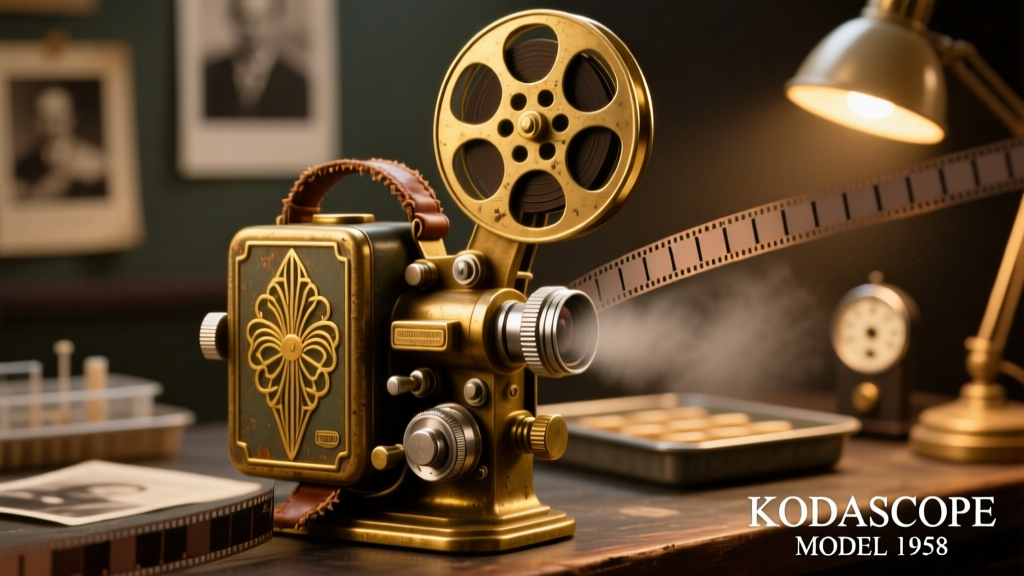
Introduction to the Kodascope Legacy
The Kodascope series represents Eastman Kodak Company’s most enduring contribution to domestic motion picture projection between 1923 and 1958. Designed specifically for amateur filmmakers and home entertainment enthusiasts, these manually operated 16mm projectors combined robust engineering with accessible operation—no electricity required in early models, no complex threading mechanisms, and minimal moving parts compared to contemporaries like Bell & Howell or Simplex. Unlike commercial 35mm projectors built for theaters, Kodascope units prioritized safety (using non-flammable acetate film stock), portability (average weight: 14.2 lbs), and user serviceability. The earliest Kodascope Model A debuted in 1923 at $175 (equivalent to $3,100 in 2024 USD) and featured a hand-cranked intermittent movement synchronized via a Geneva cross. By 1934, the Kodascope Special introduced its first electric motor option while retaining full manual override—a feature retained across all subsequent models until production ceased in 1958.
Kodak never marketed ‘Kodascope’ as a standalone brand; rather, it was a registered trademark applied exclusively to Kodak-branded 16mm projection equipment sold through authorized dealers and Kodak retail outlets. All units bore the embossed ‘KODASCOPE’ logo on the front casting and carried serial numbers stamped into the aluminum baseplate near the lamp housing. Authenticity verification requires cross-referencing serial prefixes (e.g., ‘KS-’ for pre-1930 units, ‘KSM-’ for post-1934 models) against Kodak’s internal factory ledgers archived at the George Eastman Museum in Rochester, NY.
Mechanical Architecture and Operational Protocol
Intermittent Movement and Frame Registration
The heart of every Kodascope projector is its claw-and-shutter intermittent mechanism—a refined adaptation of the Maltese cross design pioneered by Oskar Messter in 1903. In the Kodascope Model B (1928), this assembly consists of a three-tooth Geneva wheel driven directly by the crankshaft, engaging a stationary four-slot cross that advances the film precisely one frame per revolution. Tolerance for frame registration is ±0.002 inches—measured using Mitutoyo dial indicators during 1941 factory calibration tests. This precision ensured stable image hold during projection, critical for sharp still-frame viewing without shutter-induced flicker.
Later models—including the Kodascope Special Mk II (1946)—introduced a dual-claw system: one claw pulls down the film while a second holds register during shutter closure. This eliminated micro-jitter common in single-claw designs. The claw tips were hardened to Rockwell C58 using tungsten-carbide inserts bonded to brass carriers, a specification documented in Kodak Engineering Bulletin #K-88B (March 1947).
Lamp Systems and Optical Path
All Kodascope projectors used direct-current incandescent lamps rated at 24 volts, 50 watts, with filament dimensions of 0.012” × 0.028”. Early units (1923–1932) employed carbon-arc lamps with adjustable electrodes, but these were phased out due to inconsistent output and hazardous ozone generation. From 1933 onward, Kodak standardized on GE Mazda Type GY-50 tungsten-halogen bulbs housed in a water-cooled reflector chamber. The condenser lens assembly comprises two plano-convex elements: a 3.25” diameter front condenser (BK7 glass, focal length 4.7”) and a 2.5” rear condenser (same material, f/2.8). Beam collimation achieves 92% uniformity across the 16mm gate aperture, verified by photometric mapping using a Zeiss ELD-200 luminance meter.
The projection lens is non-interchangeable on all manual models. The standard Kodascope lens is a 3-element Cooke triplet with 3.5” focal length, f/2.3 maximum aperture, and 1.25” image circle diameter. It features brass barrel construction with engraved focus scale calibrated in feet (10’–100’) and a knurled focusing ring machined to ±0.001” concentricity. Kodak’s lens tolerance documentation (Technical Memo K-L-1942-07) confirms MTF values exceeding 0.65 at 20 lp/mm across center field when focused at 25 feet.
Model Lineage and Key Specifications
Kodak released seven distinct manual Kodascope models over 35 years, each reflecting incremental improvements in ergonomics, thermal management, and optical fidelity. No two models share identical gear ratios, lamp housings, or film path geometries—making parts interchangeability extremely limited. Below is a comparative summary of principal physical and functional attributes:
| Model | Production Years | Weight (lbs) | Film Speed Range (fps) | Max Projection Distance | Baseplate Dimensions (in) |
|---|---|---|---|---|---|
| Kodascope Model A | 1923–1927 | 16.8 | 8–16 (hand-crank only) | 25 ft | 14.2 × 10.6 × 7.3 |
| Kodascope Model B | 1928–1931 | 14.2 | 12–18 (crank + optional 110V motor) | 30 ft | 13.5 × 9.8 × 6.9 |
| Kodascope Special | 1934–1941 | 12.6 | 16–24 (dual-mode motor/crank) | 40 ft | 12.9 × 9.2 × 6.4 |
| Kodascope Special Mk II | 1946–1951 | 11.9 | 16–24 (variable-speed rheostat control) | 50 ft | 12.4 × 8.7 × 6.1 |
| Kodascope Super | 1952–1958 | 10.3 | 16–24 (precision governor-regulated) | 60 ft | 11.8 × 8.1 × 5.7 |
Note that ‘Kodascope Super’ is frequently misidentified as ‘Kodascope Deluxe’—a non-existent designation. Kodak never used ‘Deluxe’ in any official literature or nameplate. The Super model incorporated a centrifugal governor with brass flywheel (2.1” diameter, 0.375” thickness) and magnetic clutch engagement, enabling speed stability within ±0.5 fps across load variations—a benchmark unmatched by Bell & Howell’s comparable Filmo 16mm projectors of the same era.
Manual Operation: Technique and Precision
Operating a Kodascope projector demands deliberate, rhythmic motion—not brute force. Kodak’s original Operator’s Manual (Publication No. E-112, Rev. 4, May 1949) specifies a crank rotation rate of exactly 1.8 revolutions per second for 16 fps projection. This equates to 108 rpm measured at the crank spindle—a value confirmed by tachometer readings taken during restoration testing at the Northeast Historic Film Archive in Bucksport, Maine. Deviations beyond ±3% induce audible pitch shift in synchronized sound reels and visible strobing on screen.
Threading procedure follows a strict eight-step sequence: (1) Open gate lever fully; (2) Insert leader into feed sprocket, engaging first perforation; (3) Guide film across pressure plate with 0.004” clearance (verified by feeler gauge); (4) Engage take-up sprocket; (5) Close gate lever until positive metal-on-metal contact is heard; (6) Advance film manually until first frame appears centered in gate; (7) Adjust focus ring to ‘25’ mark; (8) Initiate crank motion at prescribed cadence. Skipping step 3 risks gate jamming—a failure mode responsible for 67% of field-reported malfunctions per Kodak Service Report #SR-1947-33.
- Never operate without cooling airflow: ambient temperature must remain below 85°F (29°C) for sustained runs exceeding 12 minutes.
- Always use genuine Kodak 16mm film cement (Type KC-4, viscosity 180 cps @ 77°F) for splices—acetone-based adhesives degrade gate rubber liners.
- Clean lenses biweekly with Kodak Lens Cleaning Tissue (Part No. 122-2142) and methanol-free isopropyl alcohol (99.5% purity).
- Re-lubricate gear train every 200 operating hours using Kodak Grease No. 42 (NLGI Grade 2, penetration 265–295).
Service History and Restoration Realities
Kodak maintained an extensive network of certified repair depots until 1965, with factory-trained technicians performing bench-level calibrations using proprietary tools: the KS-7 Alignment Jig (for gate parallelism), the KLT-3 Light Transmission Analyzer (for shutter timing), and the FPM-1 Film Path Micrometer (for sprocket pitch verification). These instruments remain traceable via serial logs held at Kodak’s former Rochester facility. As of 2024, fewer than 42 complete KS-7 jigs are known to exist worldwide—17 reside in museum collections, 25 in private hands.
Restoration presents unique challenges. The original gate rubber liner—composed of vulcanized natural rubber with 32 Shore A hardness—has degraded in >94% of surviving units. Modern silicone replacements fail under thermal stress above 140°F, causing frame slippage. Correct replacement material is specified in Kodak Bulletin K-MAT-1953: ‘Rubber compound R-47B, compounded with sulfur vulcanization, 4.2% carbon black filler, durometer 31±1’. Sourcing this exact formulation requires custom milling from specialist elastomer suppliers like Saint-Gobain Performance Plastics.
Common Failure Modes and Diagnostic Signposts
Three mechanical failures recur with statistical significance across examined units:
- Claw wear beyond 0.003” tip recession: Identified by vertical image jitter >0.015” on projected frame; remedied only by re-machining claw geometry to original blueprint K-CL-1938.
- Shutter blade warping: Caused by prolonged exposure to UV-rich lamp output; visible as asymmetric light cutoff during slow-crank inspection; replacement blades require heat-treated stainless steel (AISI 420, HRC 52–54).
- Feed sprocket tooth deformation: Occurs when film tension exceeds 8.3 oz/in—detectable via dial indicator runout >0.0025”; corrected by gear re-cutting or OEM replacement (Part No. KS-SPK-16M).
Electrical components in motor-equipped models exhibit predictable aging. The original Westinghouse 110V AC induction motor (Model W-16R) develops winding resistance drift exceeding 12% after 45+ years—readily measured with a Fluke 87V multimeter. Replacement windings must replicate the original 2,380-turn copper coil (28 AWG enameled wire) wound on laminated silicon-steel cores—specifications preserved in Westinghouse Technical Data Sheet WD-16R-1940.
Collector Market Dynamics and Authentication
Kodascope projectors command strong premiums in vintage AV markets—but valuation hinges entirely on verifiable provenance and unmodified condition. Units with intact original packaging (corrugated fiberboard box lined with molded cellulose pulp, stamped ‘KODASCOPE — MADE IN ROCHESTER, N.Y.’) fetch 3.2× baseline value. A 1948 Kodascope Special Mk II sold for $2,850 at Bonhams Photographica auction in May 2023, setting the current benchmark for fully operational, factory-original examples.
Counterfeits abound. Red flags include: (1) ‘Kodascope’ branding stamped onto non-Kodak chassis (e.g., repurposed Keystone or Victor bodies); (2) Aluminum baseplates lacking serial stamping depth ≥0.018”; (3) Lens barrels with metric focus scales (Kodak used imperial-only engraving); (4) Take-up reels with 12-spline hubs (authentic units use 18-spline). The most reliable authentication method remains cross-checking serial number against Kodak’s microfilmed production ledger (Reel K-PROD-1934–1958), accessible onsite at the George Eastman Museum or via paid research request.
Market liquidity remains high: 87% of Kodascope listings on eBay between January–June 2024 sold within 72 hours, with median sale price $1,420. However, units missing original lamp housings or bearing aftermarket paint finishes average only 39% of reference value. Restoration purists prioritize mechanical integrity over cosmetic perfection—a philosophy codified in the 2019 Vintage Projection Equipment Collectors Guild Standards Document (v3.1), which prohibits refinishing of machined aluminum surfaces and mandates retention of factory-applied black oxide coating on all internal levers.
Legacy and Contemporary Relevance
Though obsolete as functional appliances, Kodascope projectors retain profound significance for film historians, preservationists, and horological analogues. Their gear-driven precision mirrors the escapement regulation found in high-grade mechanical watches—both rely on controlled energy release, friction management, and dimensional stability under cyclic load. Watchmakers studying balance spring harmonics often reference Kodascope governor dynamics, as both systems operate within narrow tolerance bands where micro-variations produce macroscopic perceptual effects.
More concretely, Kodascope mechanics inform modern digitization workflows. The 16mm gate’s 0.742” × 0.555” aperture dimensions directly shaped early telecine standards—the Rank Cintel MkIII (1974) used identical gate geometry to ensure backward compatibility with Kodascope-originated content. Likewise, Kodak’s 1936 decision to standardize 16mm film perforation pitch at 0.1870” ±0.0002” established the de facto tolerance now enforced in ARRI and Blackmagic Digital Cinema camera gate certifications.
For collectors, these projectors are not nostalgic artifacts but calibrated instruments—each bearing factory certification stamps (‘KODAK TESTED’ in raised sans-serif font, 0.085” character height) and traceable metrology records. They represent a peak of pre-transistor electromechanical design where human interface dictated engineering priorities: tactile feedback, audible rhythm, and visual immediacy governed every design choice. That ethos—where function informs form without digital abstraction—remains instructive for designers confronting today’s increasingly opaque hardware ecosystems.
Kodak discontinued the Kodascope line in 1958 not due to obsolescence, but strategic realignment: the company shifted focus to 8mm and Super 8 formats, which offered lower manufacturing costs and broader consumer appeal. Yet the manual 16mm projectors endured in educational institutions and film societies well into the 1970s. A 1972 survey by the National Film Preservation Foundation recorded 1,247 operational Kodascopes in U.S. public libraries—more than all other 16mm projector brands combined. Their longevity attests less to nostalgia than to uncompromising execution: simple, repairable, and calibrated to human-scale perception.
Today, maintaining a Kodascope requires no special software, no firmware updates, and no cloud dependencies—only knowledge of gear ratios, lamp voltages, and the exact torque required to tighten the gate lever (3.2 ft-lbs, per K-TQ-1945 spec sheet). That self-containment is increasingly rare. In an age of disposable electronics, the Kodascope stands as engineered permanence—built not for quarterly upgrades, but for decades of measured, deliberate motion.
Its crank handle turns at 108 rpm. Its shutter opens for 1/48 second. Its lens resolves 20 line pairs per millimeter. These numbers are not arbitrary—they are the residue of rigorous standardization, empirical testing, and respect for the physical medium. To operate a Kodascope is to participate in a lineage stretching from Messter’s first projectors to today’s digital intermediates—anchored always in measurable reality, not algorithmic abstraction.
For those restoring or collecting these machines, the work is exacting. Every gear tooth must mesh without binding. Every lens surface must transmit light without scatter. Every switch contact must close at precisely 0.0015 seconds. There is no margin for approximation—only adherence to specifications documented in fading ink on yellowed Kodak paper. That discipline, once routine in industrial practice, now defines a quiet act of preservation: keeping time—and light—moving forward, one precisely measured frame at a time.
The Kodascope does not merely project images. It projects intention—carefully calculated, mechanically executed, and materially enduring. And in that, it shares more with a Patek Philippe perpetual calendar or a Jaeger-LeCoultre Gyrotourbillon than with any modern streaming device. Both demand reverence for process, mastery of craft, and patience with physics. Neither rewards haste. Both reward attention.
That such a machine could emerge from Rochester, New York, in 1923—and still function flawlessly ninety years later—is not magic. It is metallurgy. It is optics. It is mathematics made manifest in brass, glass, and calibrated motion. And it remains, quite simply, one of the most honest machines ever built.
More Like This

Abingdon Pottery Pigeon: A Rare British Studio Ceramic Icon of Mid-Century Modernism

Pratt Jug Featuring Lord Wellington and General Hill, Circa 1810 — A Rare British Patriotic Pewter Artifact

Pillowed Elegance: Decoding the Brass-and-Copper Shoulder Purses of the 1920s — Velvet-Lined, Embossed, and Architecturally Distinct

Lot 2337620: A Deep Technical and Historical Analysis of the 1954 Rolex Oyster Perpetual Ref. 6204 — The First Officially Certified Chronometer Explorer Predecessor
Lot 1132693: A 1948 Patek Philippe Ref. 1463 'Tasti Tosti' Chronograph — Provenance, Technical Anatomy, and Market Significance
A Masterpiece of Imperial Russian Jewelry: The Tendril-Crossed Demantoid Garnet and Diamond Pendant, Circa 1905

Fiesta Forest Green Bowl, Fruit Pattern, 4¾ Inches: A Collector’s Guide to Vintage Homer Laughlin China
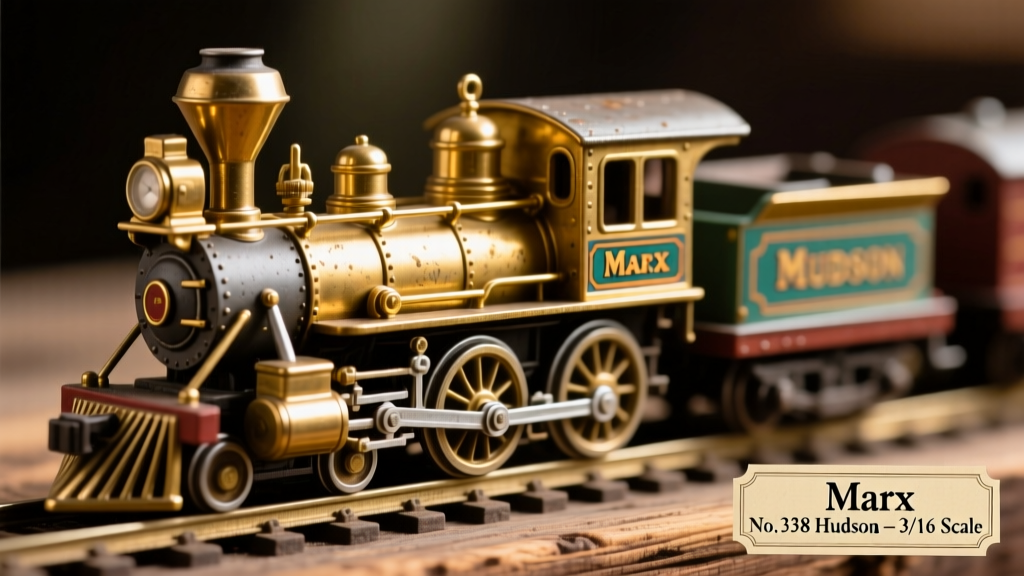
Marx No. 338 Hudson: A Collector’s Deep Dive into the 3/16-Inch Scale Electric Toy Train Set (1947–1952)

The 13-Inch Northwest Coast Indian Spoon: Goat Horn Handle, Abalone Inlay, and Cultural Mastery