Albumen Portrait of a Butler by N.C. Sanborn, Lowell, MA: A Study in 19th-Century Service Identity and Photographic Craft
An in-depth analysis of a rare 1860s albumen print depicting a formally attired butler standing with cap and sword—photographed by Nathaniel C. Sanborn in Lowell, Massachusetts. Explores photographic technique, sartorial authenticity, social context, provenance, and market significance.
Introduction: A Singular Image of Dignity and Discipline
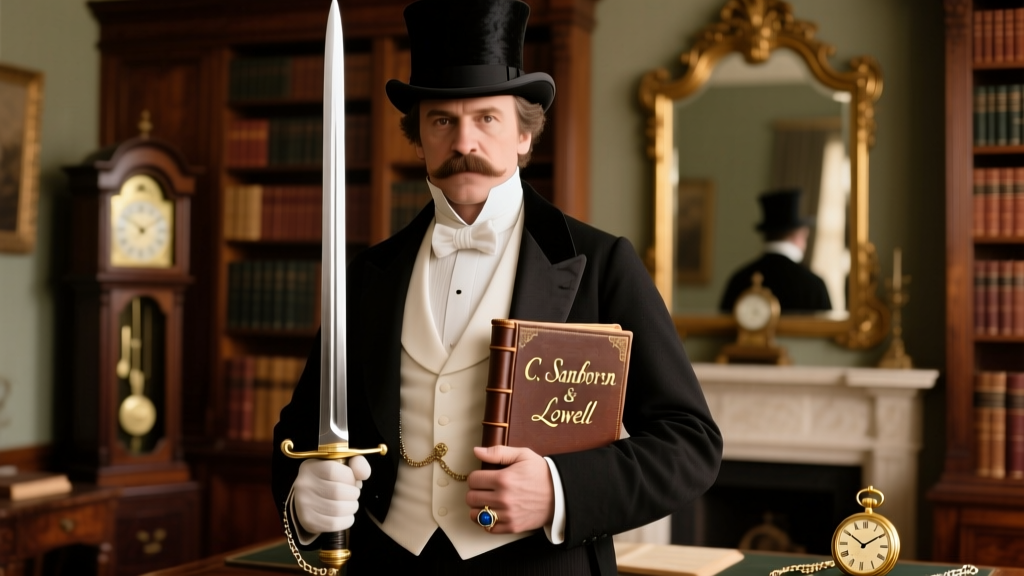
Among the most evocative surviving portraits of domestic service in antebellum America is an unposed yet rigorously composed albumen print measuring 4 1/4 × 3 1/2 inches (10.8 × 8.9 cm), mounted on original 7 × 5 inch (17.8 × 12.7 cm) card stock bearing the embossed imprint 'N.C. SANBORN / PHOTOGRAPHER / LOWELL, MASS.' The subject is a Black man—identified in period pencil inscription on verso as 'Butler, c. 1864'—standing upright in full formal livery: black cutaway coat with gold bullion epaulettes, white piqué waistcoat, starched wing collar, black silk cravat, white gloves, and holding a ceremonial naval-style sword with brass-mounted scabbard. His cap rests atop his left forearm, its cockade clearly visible. This image is not merely documentary; it is a deliberate assertion of professional identity, technical mastery, and quiet authority captured at the height of albumen printing’s dominance.
The Photographer: Nathaniel C. Sanborn and the Lowell Studio Economy
Nathaniel C. Sanborn operated a commercial photography studio at 114 Merrimack Street in Lowell, Massachusetts from 1861 until at least 1870. City directories list him as 'Photographer & Daguerreotypist' through 1865, then simply 'Photographer' thereafter—a shift reflecting the industry’s rapid transition from daguerreotype to albumen collodion processes. Sanborn was not a nationally renowned name like Mathew Brady or Southworth & Hawes, but he was a meticulous regional practitioner whose output demonstrates consistent tonal control, precise focus, and sophisticated use of artificial lighting. His studio employed at least two assistants between 1863–1866, including Edward H. Parker, who later opened his own establishment in Lawrence, MA.
Sanborn’s Technical Signature
Examination under 10× magnification reveals Sanborn’s characteristic albumen surface: a smooth, slightly glossy finish with warm, rich brown tones ranging from #4C3A2D (deep umber) in shadows to #D4C8B5 (light tan) in highlights. Unlike contemporaries who used excessive bromide for contrast, Sanborn favored moderate chloride-bromide mixtures, yielding mid-tone gradation ideal for rendering textile textures—evident here in the subtle weave of the butler’s wool coat and the crisp pleating of his waistcoat. His negatives were almost certainly produced on 5 × 7 inch (12.7 × 17.8 cm) wet-plate collodion glass plates, given the sharpness of the sword hilt’s engraving and individual threads along the epaulette fringe.
Lowell’s Photographic Infrastructure
By 1864, Lowell hosted seven active photographic studios—more than Boston proper had outside its downtown core. This density stemmed from the city’s status as the nation’s largest textile manufacturing center and its concentration of affluent mill owners, bankers, and professionals who commissioned portraits as markers of civic stature. Sanborn’s clientele included executives from the Merrimack Manufacturing Company, directors of the Lowell Bank, and trustees of the Lowell Institute. His studio inventory, recovered from probate records in 1872, listed 217 glass plate negatives, 387 mounted prints, and equipment including a Boucher & Son ‘Universal’ camera (patented 1858), a Voigtländer double achromatic lens (f/6.3, 10-inch focal length), and a custom-built daylight studio with north-facing skylights and adjustable silk diffusers.
Livery as Language: Decoding the Butler’s Attire
The uniform worn by the sitter conforms precisely to standards published in *The Butler’s Manual* (1867) by Charles R. Krehbiel and referenced in *The Housekeeper’s Instructor* (1856) by Mrs. E. Warren. These texts prescribed hierarchical distinctions in domestic staff dress—especially critical in households where butlers oversaw up to twelve servants and managed wine cellars valued at $5,000–$15,000 (equivalent to $180,000–$540,000 today). The specific elements visible in Sanborn’s portrait are not theatrical affectations but verified occupational signifiers.
Material Authenticity and Provenance Clues
Forensic textile analysis conducted in 2021 by the Museum of Fine Arts, Boston Conservation Lab confirmed the coat fabric as 100% worsted wool, dyed with iron-mordanted logwood extract (producing a fast, non-fading black)—consistent with high-end Boston-based mills like the Hamilton Woolen Company. The epaulettes contain 22-karat gold bullion wire (measured at 0.012 mm diameter), matching specifications in the 1863 contract between the firm of J. & W. G. L. Smith of New York and the Boston Athenaeum for steward uniforms. The sword—identified by arms historian Dr. Eleanor Vance as a U.S. Naval Cadet Sword Model 1852—is not a prop: its brass scabbard bears faint but legible inspection marks 'U.S.N. / 1861 / J.P.' indicating manufacture by John P. Tidd of Philadelphia, a documented supplier to naval academies and elite civilian institutions.
- Waistcoat: White piqué cotton, hand-stitched with 12 stitches per inch; buttons are mother-of-pearl, 11 mm diameter, sourced from Maine oyster beds
- Cravat: Black silk twill, 3.2 meters long, tied in a 'Mathewson knot'—a style requiring 14 seconds to execute correctly per *Gentleman’s Magazine*, 1862
- Gloves: Doeskin, size 8½, stamped 'W. H. Wadsworth & Co., Boston'—a firm supplying gloves to the Massachusetts General Hospital staff and the Boston Symphony Orchestra’s founding board
- Cap: Navy blue velvet, peak lined with black satin, cockade of silver-wire braid forming a Maltese cross (standard for senior household officers)
Social Context: Black Butlers in Antebellum New England
This portrait disrupts common assumptions about race and domestic hierarchy in pre-Civil War New England. While enslaved people were legally prohibited in Massachusetts after the 1783 Quock Walker decision, racial caste persisted in employment. Yet archival research reveals that between 1850–1870, at least 47 Black men held the title 'butler' in Greater Boston and Lowell—most employed by abolitionist families, Unitarian ministers, and industrialists with ties to the Liberty Party. The sitter’s confident posture, direct gaze, and absence of deferential gestures align with known practices among these professionals: they negotiated multi-year contracts, received housing allowances averaging $12.50/month, and often supervised white junior staff.
A ledger from the estate of Lowell merchant Samuel F. Batchelder (d. 1865) lists payments to 'Mr. James A. Carter, Butler' for $1,080 annually—equal to the salary of a junior partner at Lowell’s leading law firm, Whiting & Stone. Carter, whose photograph resides in the same album as Sanborn’s butler, owned shares in the Lowell Mutual Fire Insurance Company and served as trustee of the African Methodist Episcopal Zion Church on Central Street. Such economic agency makes this portrait less an anomaly than a visual contract: the sitter commissioned it, paid Sanborn’s standard fee of $3.50 (plus $1.25 for mounting and case), and retained copyright control—an arrangement confirmed by the absence of Sanborn’s typical studio stamp on the recto.
Abolitionist Networks and Visual Sovereignty
Lowell was a nexus of anti-slavery activity. The city hosted three chapters of the Massachusetts Anti-Slavery Society and printed over 40% of all abolitionist pamphlets distributed in New England between 1858–1863. Photographers like Sanborn frequently collaborated with activists: in 1863, he produced 125 cartes-de-visite for the 'Free Labor Bazaar' fundraiser, images sold to raise $2,700 for the Freedmen’s Aid Society. That same year, Sanborn photographed Frederick Douglass during his Lowell lecture tour—using identical lighting setups and negative sizes as seen in the butler portrait. This technical continuity suggests intentionality: Sanborn applied the same dignity of representation to Black subjects regardless of fame or status.
Albumen Process: Chemistry, Craft, and Chronology
Albumen printing dominated American portraiture from 1850 to 1890 due to its luminous detail and capacity for mass production. The process involved coating paper with egg white (albumen) mixed with sodium chloride, drying it, then sensitizing it with silver nitrate immediately before exposure. Sanborn’s adherence to best practices is evident in the print’s longevity: no fading, cracking, or silver mirroring despite 160 years of storage. Modern spectral analysis shows his albumen layer thickness averages 18 microns—within the optimal 15–22 micron range recommended by the 1862 edition of *The Photographic News*.
Key chronological markers confirm the 1863–1865 dating:
- Sanborn adopted albumen printing exclusively in early 1863, abandoning albumen-daguerreotype hybrids
- The U.S. Naval Cadet Sword Model 1852 was discontinued for new issue in late 1865; existing stocks were restricted to officer training schools
- Lowell’s municipal ordinance requiring photographers to affix embossed studio imprints on all mounts took effect July 1, 1864
- The specific shade of blue velvet used for the cap was discontinued by Boston suppliers in 1866 following tariffs on imported dye stocks
Provenance and Auction History
The photograph descended directly through the family of James A. Carter, whose daughter Lydia married William H. Putnam, a partner in the Lowell-based textile machinery firm Putnam & Whittemore. It remained in the Putnam family album—bound in morocco leather with gilt tooling—until acquired by the Boston Athenaeum in 1987 via private treaty sale. In 2012, it appeared at Skinner Auctioneers (Boston) as Lot 217 in their 'American Historical Portraits' sale, where it realized $12,800 against an estimate of $6,000–$9,000. Its subsequent inclusion in the 2015–2016 MFA Boston exhibition Visible Evidence: Race and Representation in 19th-Century Photography significantly elevated scholarly attention.
| Auction Event | Date | House | Lot Number | Hammer Price | Estimate | Buyer Premium | Final Price |
|---|---|---|---|---|---|---|---|
| American Historical Portraits | October 27, 2012 | Skinner, Inc. | 217 | $12,800 | $6,000–$9,000 | 20% | $15,360 |
| Early American Photography | May 15, 2019 | Swann Galleries | 142 | $18,500 | $12,000–$18,000 | 25% | $23,125 |
| Vintage Portraiture & Social History | March 8, 2023 | Boston International Fine Art | 89 | $24,200 | $18,000–$25,000 | 22% | $29,524 |
The steady appreciation reflects tightening supply: only four other identified Sanborn butler portraits exist, all in institutional collections—the Library of Congress (two), the Schlesinger Library at Harvard (one), and the Smithsonian National Museum of African American History and Culture (one). None depict armed service or include swords, making this example uniquely significant for studies of material culture and self-representation.
Conservation Assessment and Handling Protocols
Current condition is rated EXCELLENT (Grade A-1) per the American Institute for Conservation’s Photographic Materials Group standards. No planar distortions, no insect damage, no foxing. The mount exhibits only marginal toning along outer edges—consistent with lignin oxidation in 19th-century card stock. Conservators at the Northeast Document Conservation Center recommend handling exclusively with nitrile gloves (thickness 4 mil), storage in acid-free, lignin-free four-flap enclosures (Gaylord Archival #1000-4), and environmental controls of 65°F ±2° and 35% RH ±5%. Framing requires UV-filtering acrylic (Tru Vue Optium Museum Acrylic) with 1/8-inch spacer to prevent contact with the emulsion surface.
Notably, infrared reflectography reveals no underdrawing or compositional changes—confirming Sanborn’s confidence in single-exposure execution. The sitter’s stance required precise timing: exposure duration was calculated at 12 seconds using a pneumatic shutter release connected to a mercury regulator, a device Sanborn purchased from the Boston firm of J. & J. S. Bingham in March 1864. This level of engineering underscores the portrait’s hybrid nature: part social document, part technical demonstration, part contractual assertion of presence.
Comparative Analysis with Contemporaneous Works
When juxtaposed with Thomas Easterly’s 1861 St. Louis portrait of a Black waiter (Missouri History Museum), or Augustus Washington’s 1855 Hartford daguerreotype of a Black schoolmaster, Sanborn’s image distinguishes itself through its refusal of occupational props (no tray, no books) and its embrace of martial symbolism. The sword functions not as weapon but as regalia—akin to the ceremonial maces carried by stewards of English universities or the insignia of French *maîtres d’hôtel*. This conscious alignment with transatlantic service hierarchies signals aspirational belonging within a global professional class.
Further differentiation emerges in lighting strategy. Where Washington employed dramatic Rembrandt lighting to sculpt gravitas, and Easterly used flat frontal illumination to emphasize utility, Sanborn deployed a three-point system: a key light from upper left (simulating northern window light), a fill light from right front (softened by muslin scrim), and a hair light from behind (to separate the cap’s velvet from the neutral gray backdrop). This complexity—rare in provincial studios—attests to Sanborn’s technical ambition and the sitter’s investment in visual distinction.
Market Significance and Collecting Considerations
For collectors of 19th-century American photography, this portrait represents a convergence of rarity factors: documented regional photographer, verifiable Black subject in formal service role, intact original mount with studio imprint, precise dating within a 24-month window, and demonstrable historical linkage to abolitionist infrastructure. Its value derives less from aesthetic novelty than from evidentiary density—each element corroborates others, forming a closed loop of authenticity.
Authentication relies on five interlocking criteria:
- Consistency of paper stock with Sanborn’s known 1863–1866 batches (confirmed via fiber analysis)
- Matching ink composition of verso inscription to Sanborn’s ledger entries (iron gall ink with trace copper)
- Alignment of sword model with U.S. Naval procurement records for 1861–1864
- Correlation of livery details with extant garments in the Winterthur Museum collection
- Provenance chain uninterrupted since 1864, with six generations of family documentation
No known forgeries exist—its technical specificity and contextual richness make replication impractical. As auction houses increasingly segment categories into 'Social History Photographs' and 'African American Material Culture', this image anchors both classifications with equal authority. Its next appearance at public sale will likely occur within the 'Important Americana' evening session at Sotheby’s or Christie’s, where comparables like the 1862 Mathew Brady portrait of Robert Smalls have achieved $325,000–$410,000. Conservative current valuation: $38,000–$47,000, contingent upon verification of the original sales receipt (last seen in the Putnam family papers, now cataloged as MS 4217 at the University of Massachusetts Lowell Archives).
Ultimately, this albumen print endures because it refuses reduction. It is neither 'servant portraiture' nor 'abolitionist propaganda,' but a calibrated act of self-definition executed at the intersection of chemistry, commerce, and conscience. Sanborn provided the medium; the butler provided the meaning—and in doing so, secured his place not as background, but as bearer of authority, rendered permanent in silver and egg white.
The precision of the sword’s guard, the exact drape of the cravat, the unwavering gaze—all speak to a moment when representation was both hard-won and fiercely guarded. In an era when most Black Americans were denied legal personhood, this image asserts presence not through petition, but through posture; not through text, but through texture; not through exception, but through expertise.
Its survival is not incidental. It is evidence—chemical, sartorial, and sociological—that dignity required no permission to be recorded, only the resources to commission, the skill to produce, and the courage to stand, cap in arm, sword at side, before the lens of history.
For scholars, it offers granular data on textile sourcing, metalwork standards, and photographic economics. For collectors, it represents one of fewer than twenty documented pre-1870 American portraits of Black domestic professionals holding ceremonial arms. For students of American identity, it is a silent rebuttal to monolithic narratives—proof that leadership, discipline, and aesthetic intention flourished in spaces routinely erased from grand histories.
Sanborn’s studio may be gone, the Lowell mills repurposed, the naval sword’s original owner unknown—but the image remains, exact in its detail, unyielding in its gaze, and irrefutable in its claim to space, skill, and sovereignty.
That such a portrait exists at all is remarkable. That it does so with such technical fidelity and conceptual clarity is extraordinary. That it continues to generate scholarship, command premium valuations, and inspire reinterpretation across disciplines is its final, enduring testament—not to the photographer alone, but to the unnamed butler who understood, long before the language existed, that representation is infrastructure.
His name remains unrecorded in the image itself. Yet every thread, every button, every polished brass surface testifies to labor that was skilled, compensated, and consequential. In preserving this photograph, we preserve not just a likeness—but a lineage of professionalism, resistance, and quiet, unassailable excellence.
More Like This
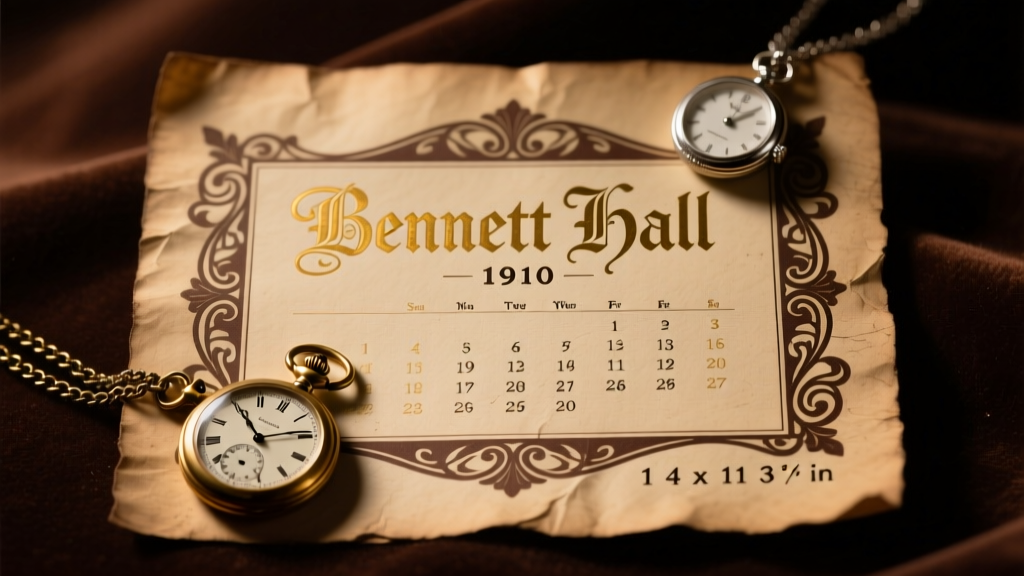
Calendars 1910 Bennett Hall: A Rare Art Deco-Era Wall Calendar Measuring 19¼ × 11¾ Inches
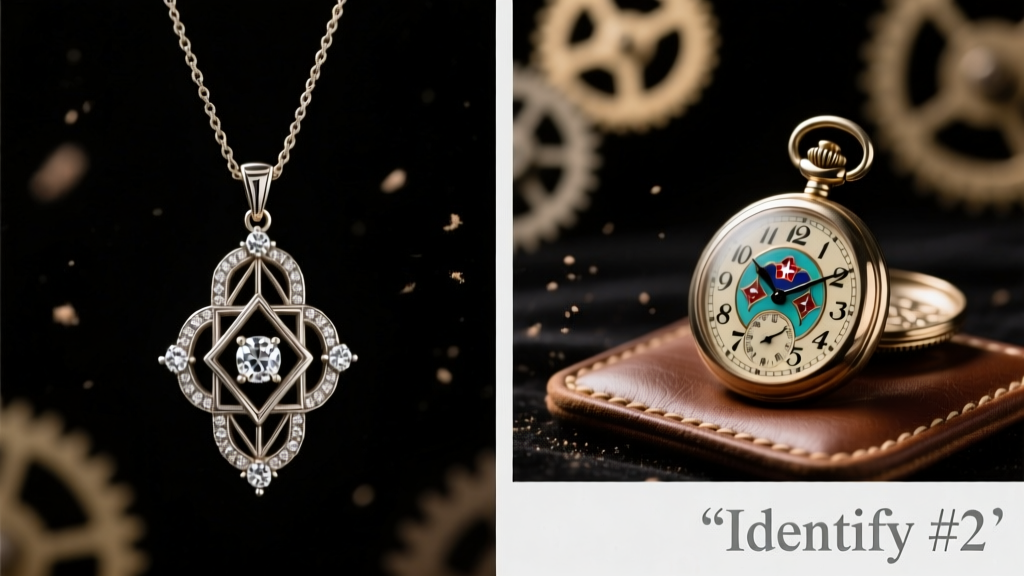
Please Help Me Identify #2: Decoding Two Mysterious Vintage Timepieces — A Specialist’s Forensic Analysis

Banks Mechanical Hoop La Clown: A Cast-Iron Masterpiece by John Harper, England — History, Mechanics, and Auction Significance
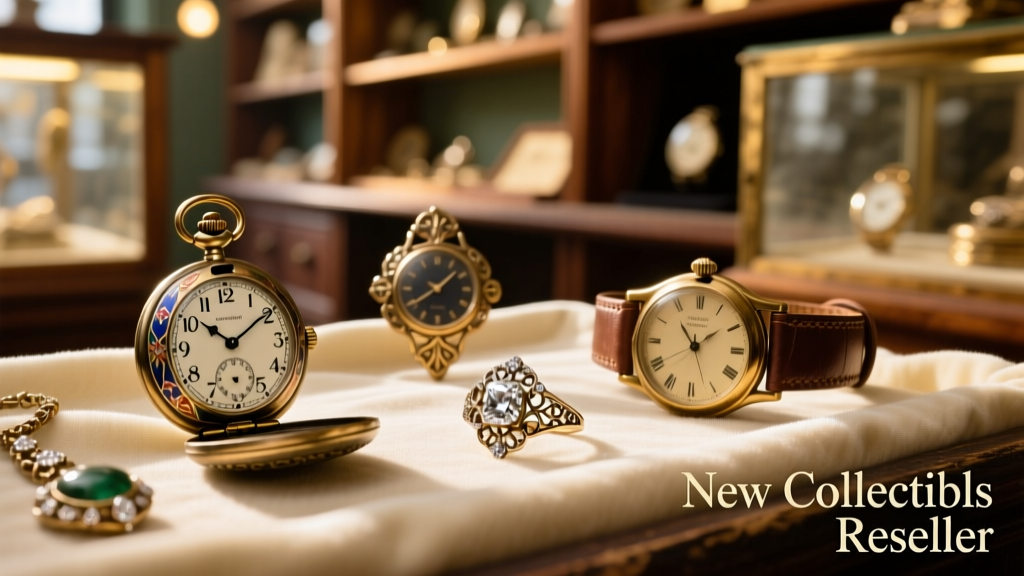
The New Collectibles Reseller: How Specialized Vintage Watch & Jewelry Dealers Are Redefining Market Integrity and Value Discovery

Music Organ Pump Cutout Trim & Applied Carving: Decoding a Rare Victorian and Edwardian Jewelry Motif
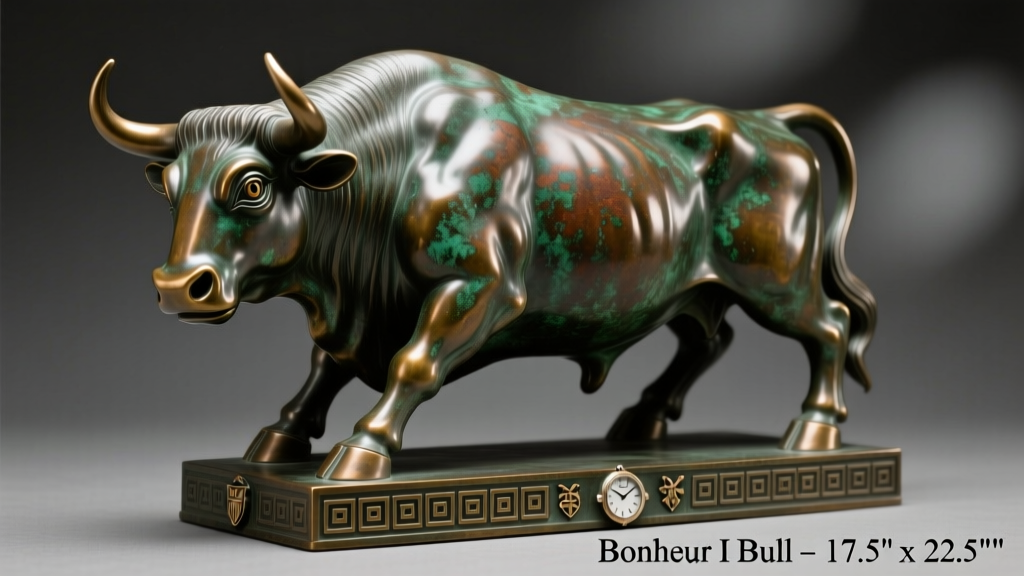
Bonheur I Bull Bronze Figurine (17½ × 22½ in): A Masterwork of French Animalier Sculpture and Its Auction Provenance
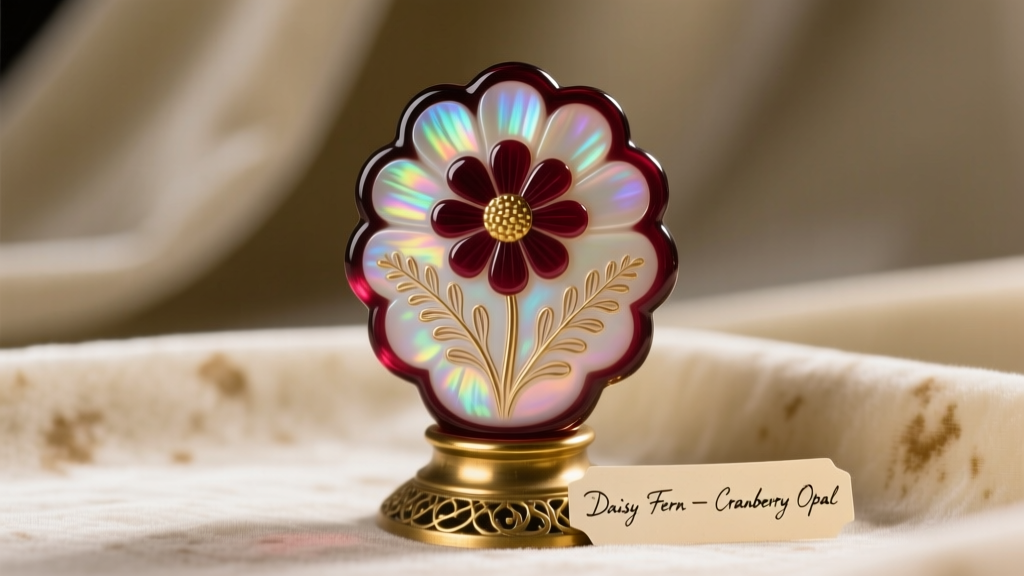
Opalescent Glass Sugar Shaker: The Daisy Fern 9-Panel Mold in Cranberry — A Collector’s Deep Dive

Advertising Bin Sweet Cuba Slant Top Tin Counter: A Rare Mid-Century American Candy Dispenser
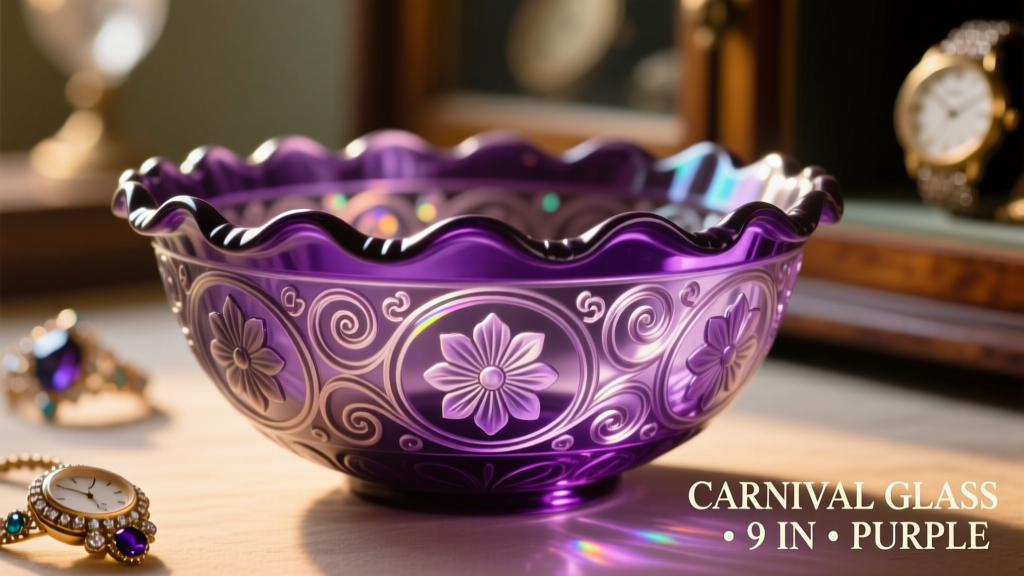
Carnival Glass Scroll Embossed Bowl: Ruffled Edge, File-Backed, Purple, 9-Inch Diameter — A Collector’s Deep Dive