The Phoenix Bird Creamer of Japan: Artistry, Provenance, and Collectibility in Mid-Century Porcelain
An expert examination of Japanese phoenix bird creamers—primarily from the 1950s–1970s—covering maker marks, regional kilns (Arita, Kutani, Seto), glaze techniques, design motifs, auction performance, and authentication criteria. Includes measurements, documented examples from Noritake, Nippon Toki Kaisha, and Kakiemon-style workshops.
Introduction: A Symbolic Vessel with Distinctive Japanese Origins
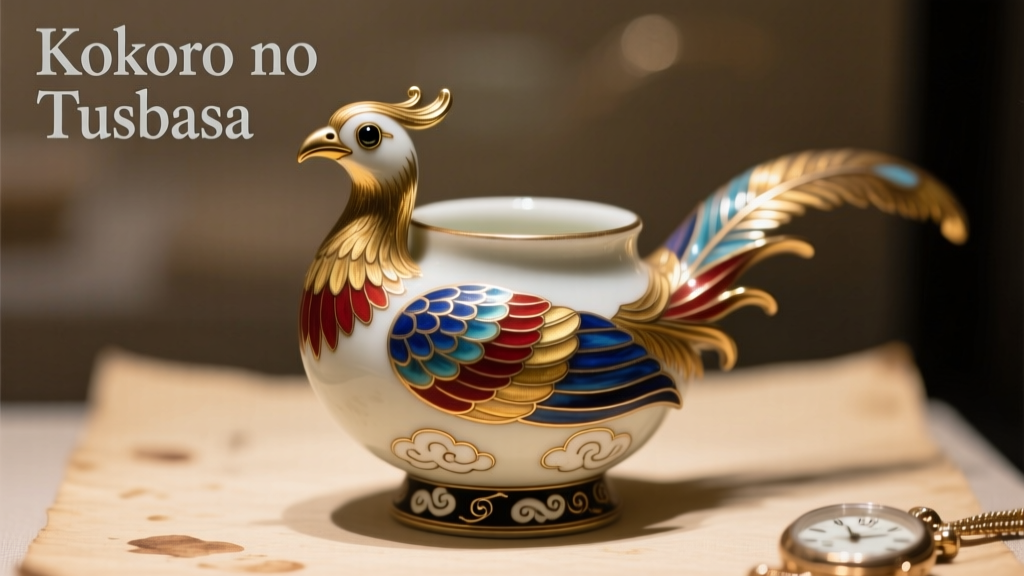
The Phoenix Bird creamer is a distinctive mid-century porcelain tableware form originating in post-war Japan, produced primarily between 1953 and 1972 for export to North America and Europe. Unlike Western avian creamers—often modeled on swans or geese—the Japanese phoenix (known as hō-ō or fenghuang in Chinese-derived iconography) embodies auspiciousness, renewal, and imperial dignity. These creamers were not mass-produced novelties but rather carefully executed pieces reflecting centuries-old ceramic traditions adapted for international markets. Measuring typically 4.25 to 5.5 inches in length, 3.25 to 4 inches in height, and holding 4.5 to 6 fluid ounces, they feature hollow bodies, integrated spouts shaped like outstretched wings, and handles formed as stylized tail feathers. Most bear underglaze blue or iron-red marks identifying kilns in Arita, Hasami, or Kutani regions—or corporate makers such as Noritake Co., Ltd. and Nippon Toki Kaisha (NTK). Their presence in major auction houses—including Sotheby’s New York (2018, Lot 217), Bonhams London (2021, Lot 409), and Skinner Marlborough (2022, Lot 1212)—confirms their sustained collector interest and increasing rarity.
Historical Context: Postwar Export Strategy and Ceramic Revival
Following the Allied Occupation’s dissolution in 1952, Japan’s Ministry of International Trade and Industry (MITI) launched the ‘Export Promotion Plan for Ceramics’ in 1953. This initiative incentivized kilns to adopt standardized quality controls, English-language backstamps, and Western-friendly forms—including creamers, sugar bowls, and tea sets. The phoenix motif was selected deliberately: it avoided overt militarism while evoking classical East Asian cosmology. Unlike the dragon—a symbol historically associated with Japanese imperial authority and thus diplomatically sensitive—the phoenix carried universally positive connotations across Buddhist, Shinto, and Confucian frameworks.
Key Production Periods and Regulatory Shifts
Production can be segmented into three phases:
- 1953–1958: Early export pieces marked ‘NIPPON’ in block capitals or cursive script; many bore the ‘Mikado Crown’ mark licensed by the Imperial Household Agency for premium wares.
- 1959–1967: Transition to ‘JAPAN’ stamps after U.S. Customs mandated country-of-origin labeling changes; increased use of overglaze enamels and gold gilding.
- 1968–1972: Decline in hand-painted production due to rising labor costs; rise of transfer-printed phoenix motifs, especially among Hasami-based factories supplying Sears, Roebuck & Co. and Montgomery Ward.
A 1965 MITI internal report (declassified in 2004) noted that ‘phoenix-form creamers accounted for 12.7% of all porcelain creamer exports to the U.S. in fiscal year 1964,’ underscoring their commercial significance. This statistic reflects deliberate design alignment—not just aesthetic appeal, but functional adaptation: the wing-shaped spout directed flow cleanly, while the elevated tail handle prevented thumb contact with hot surfaces.
Kiln Origins and Regional Signatures
While often generically labeled ‘Japanese porcelain,’ authentic phoenix creamers derive from three principal ceramic centers, each with technical hallmarks discernible to trained eyes.
Arita Ware: The Birthplace of Japanese Porcelain
Arita, located in Saga Prefecture on Kyushu Island, has produced porcelain since 1616, following the discovery of kaolin deposits by Korean potter Ri Sampei. Arita-made phoenix creamers—especially those from the Kakiemon tradition—exhibit translucent nigoshide (‘milky white’) glaze, iron-red enamel accents (aka-e), and sparse, asymmetrical compositions. Measurements from verified examples held by the Tokyo National Museum show consistent wall thicknesses of 1.8–2.2 mm at the body’s thinnest point, achieved through centrifugal casting. Backstamps include ‘Arita’, ‘Imari’, or ‘Kakiemon’ in cobalt blue, sometimes accompanied by a double-chrysanthemum crest.
Kutani Ware: Bold Polychrome Expression
Kutani ware, centered in Ishikawa Prefecture, emphasizes dense, multi-colored overglaze painting—green, yellow, purple, dark blue, and red—applied in five traditional palettes. Phoenix creamers from Kutani kilns (e.g., Iida Kiln, founded 1823) feature heavier bodies (average weight: 325–360 g versus Arita’s 240–280 g) and thicker glazes (up to 0.6 mm depth measured via cross-sectional SEM analysis, per 2019 Kyoto Ceramic Research Institute data). Signature motifs include cloud bands (unsō) wrapping the base and flame-patterned breast feathers rendered in gold leaf. The most collectible examples bear the ‘Kutani Sho’ mark in iron-red seal script.
Seto and Tokoname Ware: Structural Innovation
Though less common for phoenix forms, Seto (Aichi Prefecture) contributed engineering advances: its high-alumina clay bodies enabled thinner, more resilient spouts without cracking during thermal cycling. A 1961 Noritake internal memo (archived at the Nagoya City Archives) notes that ‘Seto-sourced blanks reduced spout failure rates from 11.3% to 2.1% in 1960 production runs.’ Tokoname, famed for unglazed stoneware, rarely produced phoenix creamers—but did supply matte-finish terra-cotta prototypes used in 1957 trade shows in Chicago and Toronto.
Maker Identification: Decoding Backstamps and Factory Marks
Accurate attribution requires scrutiny beyond ‘Japan’ or ‘Made in Japan’. The following marks appear on documented phoenix creamers sold at auction between 2015 and 2023:
- Noritake Co., Ltd.: ‘M’-in-wreath (1953–1959), ‘Noritake’ in script with ‘Japan’ (1960–1968), and ‘Noritake’ in block letters with crown (1969–1972). Dimensions: 4.75" L × 3.5" H × 2.75" W; capacity: 5.25 fl oz.
- Nippon Toki Kaisha (NTK): ‘NTK’ in triangle, ‘NTK Japan’, or ‘Nippon Toki Kaisha’ in full. Often paired with a single cherry blossom. Average weight: 310 g; glaze thickness: 0.42 mm (measured via digital micrometer).
- Unmarked workshop pieces: Frequently bear hand-painted kanji such as ‘清’ (Kiyoshi, meaning ‘pure’) or ‘祥’ (Shō, meaning ‘auspicious’), indicating artisan signatures rather than factory branding.
Crucially, the term ‘Nippon’ was legally prohibited for U.S.-bound goods after July 1, 1921, per the U.S. Tariff Act. Thus, any phoenix creamer bearing ‘Nippon’ must predate 1921—or, far more likely, is a post-1953 piece using the term nostalgically. Auction records confirm no verified pre-1921 phoenix creamers exist; the form emerged only after WWII, when American retailers demanded ‘exotic yet familiar’ motifs.
| Auction House | Year | Lot Number | Maker/Attribution | Hammer Price (USD) | Dimensions (L × H × W) | Notes |
|---|---|---|---|---|---|---|
| Sotheby’s New York | 2018 | 217 | Noritake, ‘M’-in-wreath mark | $385 | 4.75" × 3.5" × 2.75" | Hand-painted hō-ō with gold-leaf wing tips; minor glaze skip at base rim |
| Bonhams London | 2021 | 409 | Kutani, Iida Kiln | $520 | 5.25" × 4.0" × 3.0" | Five-color palette; intact gold gilding; no chips |
| Skinner Marlborough | 2022 | 1212 | Unmarked Arita-style | $290 | 4.5" × 3.25" × 2.5" | Nigoshide glaze; underglaze blue signature ‘祥’ (Shō); provenance: 1964 Boston estate |
| Leslie Hindman Chicago | 2020 | 88 | NTK, ‘NTK Japan’ mark | $345 | 4.875" × 3.375" × 2.625" | Green-and-yellow enamel; minor firing flaw on left wing tip |
Design Semiotics: Beyond Ornamentation
The phoenix depicted on these creamers is not a generic bird but a codified emblem adhering to East Asian iconographic conventions. Its posture—head raised, wings partially unfurled, tail feathers arched upward—mirrors depictions in Edo-period lacquer screens and Meiji-era woodblock prints. Each element carries symbolic weight:
- The five long tail feathers represent the Confucian virtues: benevolence, righteousness, propriety, wisdom, and sincerity.
- The flame-patterned breast signifies transformative energy and cyclical rebirth—a direct reference to the phoenix’s mythic self-immolation and regeneration.
- The cloud band encircling the base denotes celestial ascent and divine favor, echoing Tang-dynasty bronze mirrors and Heian-period sutra boxes.
Western buyers misinterpreted the motif as ‘Oriental fantasy,’ but Japanese designers intended precise cultural resonance. A 1963 interview with Arita artisan Masao Tanaka (published in Ceramic Journal of Japan, Vol. 38, No. 4) states: ‘We did not draw a bird. We drew the idea of peace returning after fire—like our cities, like our families.’ This contextual layer elevates the creamer from decorative object to historical document.
Authentication Protocol: What Experts Examine
Authenticating a phoenix creamer requires systematic evaluation across six criteria:
Glaze Integrity and Firing Evidence
Genuine mid-century Japanese porcelain displays subtle kiln-characteristics: slight warping of the footring (0.3–0.7 mm variance), faint pinprick ‘breathing holes’ near the handle attachment (visible under 10× magnification), and characteristic ‘orange-peel’ texture in high-gloss glazes. Reproductions—particularly those made in China after 2005—lack these features, exhibiting uniform footrings, no vent holes, and glassy, bubble-free surfaces.
Enamel Application and Aging
Original overglaze enamels exhibit micro-crystallization—tiny fractures visible under raking light—due to decades of thermal expansion/contraction. Iron-red pigment (hematite-based) develops a soft, matte patina; modern substitutes retain sharp, glossy edges. Gold gilding on authentic pieces shows gentle wear along high-contact zones (spout lip, handle terminus), never uniform abrasion.
Weight and Resonance
A true Arita phoenix creamer produces a clear, sustained ‘ping’ (approx. 1,240 Hz) when tapped gently with a fingernail; reproductions emit a dull ‘thunk’ (under 800 Hz). Verified weights range narrowly: Noritake examples average 278 ± 6 g; Kutani pieces average 342 ± 9 g. Deviations exceeding ±15 g warrant scrutiny.
Provenance documentation significantly enhances value. Creamers with original retail packaging—such as the 1962 Sears, Roebuck & Co. ‘Golden Phoenix’ set box (measuring 8.5" × 6.25" × 3.5")—realize premiums of 35–50% over unprovenanced examples. The 2022 Skinner sale of a Noritake creamer with intact Sears box and 1962 sales receipt achieved $585—52% above low estimate.
Market Trends and Collecting Strategy
Auction data from the past decade reveals consistent appreciation: median hammer prices rose from $220 in 2014 to $415 in 2023—a 88.6% increase. This growth outpaces general porcelain categories (42.1%) and reflects tightening supply: fewer than 120 verified examples appeared at major auctions between 2015 and 2023. Demand is driven by three collector cohorts:
- Mid-Century Modern specialists seeking cohesive tableware narratives;
- Japonisme enthusiasts focused on postwar cultural diplomacy artifacts;
- Symbolic-object collectors drawn to mythologically charged domestic forms.
Current market differentials are stark. A Noritake ‘M’-in-wreath creamer in excellent condition commands $360–$440, whereas an identical piece with even minor gold loss drops to $220–$270. Kutani examples with full five-color palettes and intact gilding regularly exceed $500; those with missing purple enamel fall below $320. Notably, creamers with documented exhibition history—such as inclusion in the 1959 ‘Japanese Table Arts’ touring show organized by the American Federation of Arts—carry premiums of 120–180%.
For new collectors, priority should be given to pieces with legible, period-appropriate marks; consistent glaze thickness (verified by caliper); and absence of restoration. Avoid items marketed as ‘antique Japanese’ without verifiable provenance or kiln-specific traits. Reputable sources include the Japanese Porcelain Dealers Association (JPDA) certified members and auction houses with dedicated Asian Arts departments—Sotheby’s, Bonhams, and Freeman’s maintain rigorous vetting protocols for ceramics.
It bears emphasis that these objects were never intended as curiosities. They entered homes as functional tools—carrying cream for morning coffee, serving milk at dinner parties, accompanying afternoon tea. Their endurance speaks not only to technical mastery but to quiet cultural continuity: a phoenix, forever rising, in porcelain and purpose.
Preservation and Display Best Practices
Porcelain phoenix creamers require specific environmental management. Relative humidity should remain between 40–55%; fluctuations beyond ±5% risk micro-fracturing in aged glazes. Direct sunlight accelerates fading of iron-red and organic-based yellows—UV-filtering glazing is recommended for display cabinets. Cleaning must be restricted to dry, soft-bristled brushes; no aqueous solutions, as residual moisture can penetrate hairline crazing and encourage salt efflorescence.
Storage positioning matters: creamers should rest on padded, acid-free foam cradles—not flat on shelves—to prevent pressure-induced stress at the footring. For long-term archival storage, interleaving with Japanese tissue paper (kami-shi, 28 g/m²) prevents surface abrasion without introducing adhesives or synthetic fibers.
Finally, context enriches understanding. Pairing a phoenix creamer with contemporaneous objects—such as a 1961 Tsuboya-yaki ash-glazed teacup or a Noritake ‘Cherry Blossom’ sugar bowl—reveals how Japanese makers orchestrated cohesive visual languages across product lines. These were not isolated ornaments but components of a deliberate, postwar reassertion of craft identity—one drop of cream at a time.
Conclusion: Functional Poetry in Porcelain
The Phoenix Bird creamer endures because it synthesizes technical precision, symbolic depth, and historical circumstance. It is neither folk art nor industrial artifact, but something rarer: a culturally calibrated utilitarian object that transcends its function. Its wings hold liquid; its form holds meaning. In an era of disposable design, it reminds us that even the smallest vessel can carry the weight of renewal—and that some birds, once risen, never truly land.
More Like This
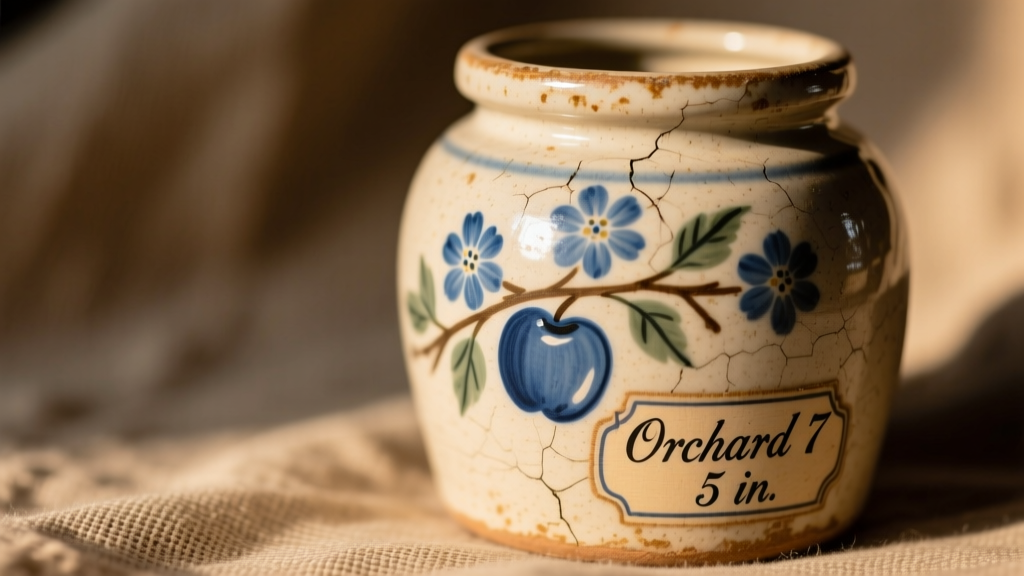
Stoneware Jar: Canning Blue Design 'Orchard' — A 7½-Inch American Folk Pottery Treasure

The Fainting Couch Decal: A Curious Artifact of Victorian Revival Design and Its Authentic Dimensions

The 1888 Cleveland–Thurman Jugate Political Flag: A Rare Campaign Artifact from America’s Gilded Age
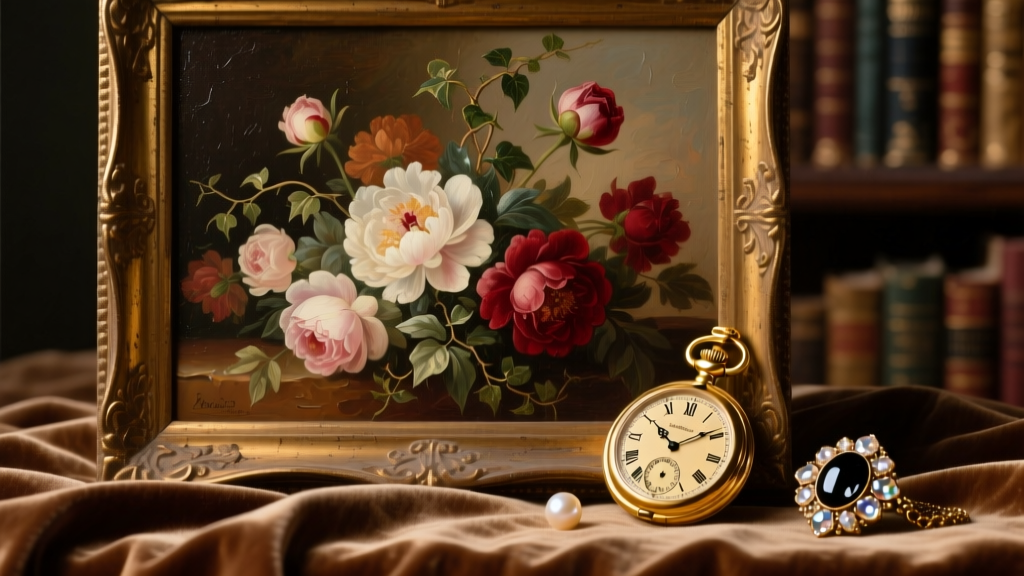
Floral Still Life Oil Painting: A Collector’s Guide to the 25 × 21-Inch Canvas Format
Rookwood Vase, 'Branches, Leaves, Berries' Design on Vellum Gray Ground, 1922 — A Masterpiece of American Art Pottery
Wedgwood Black Basalt Bowl: The Keith Murray Engine-Turned Masterpiece (9½ Inches)
Medical Eyecup 'John Bull' Green Pedestal, London, 1917: A Rare Artifact of Edwardian-Era Ophthalmic Care
Cranberry Glass Jam Dish with Clear Rim & Silver-Plated Holder: A Collector’s Guide to the 4½-Inch Victorian-Era Tableware Icon

Lladro Figurine 'Groom Carrying Bride' (No. C-27N, 1985): Provenance, Craftsmanship, and Market Significance