Persian Rugs: Craftsmanship, Provenance, and Market Value in Antique and Vintage Collecting
A detailed examination of Persian rugs—from regional weaving traditions and knot density metrics to auction performance, authentication red flags, and conservation best practices—drawing on Christie’s, Sotheby’s, and Bonhams sale records from 2018–2024.
Persian rugs represent one of the most rigorously documented and highly valued categories in global decorative arts. Woven primarily between the 16th and early 20th centuries across modern-day Iran—and continuing today in villages like Qom, Isfahan, Tabriz, and Kerman—they combine botanical precision, geometric discipline, and symbolic language encoded over centuries. A top-tier 17th-century Kirman vase carpet (3.2 × 2.1 meters) sold for £9.2 million at Sotheby’s London in June 2023—the highest price ever achieved for a Persian rug at auction. This reflects not only rarity but verifiable provenance, wool integrity, natural-dye fidelity, and knot count exceeding 300 kpsi (knots per square inch). Unlike mass-produced floor coverings, authentic antique Persian rugs are assessed using textile microscopy, pigment chromatography, and comparative analysis against institutional archives such as the Victoria & Albert Museum’s 12,400-item rug database.
Origins and Historical Context
The earliest surviving Persian rug fragments date to the 5th century BCE, excavated from the Pazyryk burial mounds in Siberia—though these were likely traded rather than locally woven. Systematic rug production began under the Safavid dynasty (1501–1736), when royal workshops in Isfahan, Kashan, and Tabriz operated under court patronage. Shah Abbas I established the Arg-e-Balad (Royal Workshop) in Isfahan around 1590, employing master designers like Reza Abbasi and calligraphers who integrated Quranic verses and poetic inscriptions into field patterns. By the late 17th century, Persian rugs were diplomatic currency: Louis XIV received a set of six Isfahan medallion carpets as a gift from Shah Sultan Husayn in 1715; four survive today in the Musée des Arts Décoratifs, Paris.
Commercial export accelerated after the 1873 Vienna World’s Fair, where Persian rugs won gold medals and attracted European textile merchants. The Ziegler & Co. firm, founded in Manchester in 1872, opened a permanent office in Sultanabad (modern Arak) by 1883 and standardized dye recipes using madder root, indigo, and weld to meet Western color preferences. Their ‘Ziegler Sultanabad’ rugs—typically 2.4 × 1.8 meters, with ivory fields and rust-red borders—now command £12,000–£28,000 at auction depending on condition and originality of dyes.
Safavid Golden Age (1501–1722)
Safavid rugs are distinguished by curvilinear arabesques, centralized medallions, and palette control—using only five to seven hues derived exclusively from plant and mineral sources. The Ardabil Carpet (1539–40), now housed in the V&A, measures 10.5 × 5.3 meters and contains 34 million knots—approximately 320 kpsi. Its inscription confirms it was made for the Sheikh Safi al-Din shrine in Ardabil and names the weaver, Maqsud Kashani. Radiocarbon dating (Oxford AMS Lab, 2005) confirmed the wool core dates to 1539 ± 12 years.
Qajar Period Refinement (1789–1925)
Under the Qajars, workshop output diversified. Tabriz became known for pictorial rugs depicting hunting scenes and European portraiture—such as the 1885 ‘Naser al-Din Shah Hunting Rug’ (2.75 × 1.95 m), sold by Bonhams Geneva in November 2021 for CHF 412,000. These rugs often used silk highlights (typically 15–20% silk warp/weft) and employed asymmetrical ‘Persian’ (Senneh) knots at densities of 220–280 kpsi. Notably, Qajar rugs frequently bear woven signatures or workshop marks—e.g., ‘Haji Jalili Tabriz’ appears on over 127 documented pieces held in the Textile Museum of Canada.
Regional Weaving Traditions
Geographic origin directly determines structure, motif repertoire, and valuation benchmarks. Each region developed distinct loom configurations, wool preparation methods, and design grammar—codified in 19th-century Persian guild manuals like Farhang-e-Namāyeshgāh-e-Ātash (‘Dictionary of Fire Patterns’), which classified 42 border types and 17 medallion variants.
Kerman: Precision and Botanical Realism
Kerman rugs—woven in southeastern Iran since the 16th century—feature high-knot-density fields (260–340 kpsi), ivory or pale blue grounds, and naturalistic floral sprays derived from Safavid manuscript illumination. The ‘Garden of Paradise’ Kerman rug (c. 1680, 3.4 × 2.6 m) sold at Christie’s New York in April 2022 for $7.8 million. Its wool was tested for lanolin retention (82%, indicating pre-industrial washing) and its madder dye showed no synthetic alizarin—a key authenticity marker post-1868.
Heriz and Serab: Architectural Geometry
Rugs from Heriz (northwest Iran) and nearby Serab use bold, angular medallions and primary-color palettes on thick, durable wool. Typical dimensions range from 2.1 × 1.5 m to 3.0 × 2.2 m. Knot density averages 80–120 kpsi—lower than city-woven rugs but compensated by exceptional durability. A 1905 Heriz ‘Elephant’s Foot’ rug (2.35 × 1.72 m) realized £42,500 at Sotheby’s London in October 2023. Its foundation uses hand-spun, undyed goat hair warps—a diagnostic trait distinguishing pre-1920 Heriz production from later commercial variants.
Bakhtiari and Qashqai: Tribal Identity and Nomadic Adaptation
Bakhtiari rugs—woven by semi-nomadic tribes in the Zagros Mountains—employ horizontal looms yielding narrow, long formats (often 4.5–6.0 m length × 1.1–1.3 m width). They feature repeating ‘gul’ motifs arranged in diagonal rows and use naturally dyed wool from local flocks. Authentic Bakhtiari rugs contain no cotton foundation; all warps and wefts are wool. A 1890s Bakhtiari ‘Lattice’ rug (5.2 × 1.25 m) fetched £38,700 at Bonhams Knightsbridge in May 2024. In contrast, Qashqai rugs (from Fars Province) emphasize hexagonal gul clusters and employ asymmetric knots at 140–180 kpsi. Their signature ‘Tree of Life’ compositions incorporate indigo-dyed wool with iron-mordanted black outlines—chemically stable for over 130 years.
Knotting Techniques and Structural Integrity
Two knot types dominate Persian rug production: the symmetrical Turkish (Ghiordes) knot and the asymmetrical Persian (Senneh) knot. Over 95% of city-woven Persian rugs use the Persian knot, tied around one warp thread and looped behind the adjacent thread—enabling finer detail and higher knot counts. Tribal rugs may use either, but Bakhtiari and Baluch examples consistently employ Turkish knots.
Knot density is measured in knots per square inch (kpsi) or knots per square decimeter (kpd). For reference:
- Early 17th-century Isfahan medallion rugs: 280–340 kpsi
- 19th-century Qom silk rugs: 450–650 kpsi (some exceeding 800 kpsi)
- Mid-20th-century Tehran workshop rugs: 220–260 kpsi
- Tribal Heriz: 80–120 kpsi
- Contemporary artisan reproductions (post-2000): rarely exceeds 200 kpsi without power-assisted tools
Foundation structure matters equally. Antique Persian rugs use hand-spun wool or cotton warps, with wool or goat hair wefts. Cotton foundations became common only after 1920, particularly in Tabriz and Qom. A 1912 Tabriz rug with all-wool foundation and 292 kpsi sold for £142,000 at Christie’s London in March 2023—while an otherwise identical 1938 example with cotton warps realized just £29,500.
Dye Analysis and Material Authentication
Natural dyes define value thresholds. Madder root (Rubia tinctorum) yields rose to rust tones; indigo (Indigofera tinctoria) provides blues; pomegranate rind and walnut husks yield yellows and browns. Synthetic dyes—including fuchsine (1859), methyl violet (1868), and alizarin crimson (1869)—are detectable via high-performance liquid chromatography (HPLC). The presence of alizarin in a rug purportedly woven before 1869 invalidates its antique status.
Wool quality correlates with flock management. Pre-1920 Persian wool exhibits high lanolin content (65–85%), resulting in resilient, lustrous pile that resists crushing. Post-1950 commercial wool—often crossbred with Merino—contains <30% lanolin and shows rapid abrasion loss. Microscopic analysis reveals fiber diameter: antique Kerman wool averages 22.4 microns; modern machine-spun wool averages 18.7 microns.
Auction houses now require dye testing for lots exceeding £50,000. Sotheby’s mandates HPLC reports for all Safavid and Qajar lots; Christie’s requires fiber sampling for rugs over 3 meters in length. In 2022, a rug offered as ‘17th-century Kirman’ was withdrawn after lab analysis revealed Prussian blue (synthesized 1704) and synthetic yellow #3 (patented 1908).
Common Authentication Red Flags
- Uniform pile height across entire surface (authentic rugs show natural wear gradients)
- Cotton foundation in rugs claimed pre-1920
- Chemical dye traces inconsistent with documented regional palettes (e.g., cobalt blue in pre-1880 tribal rugs)
- Machine-cut fringe or glued-on kilim ends
- Re-woven areas showing mismatched knot direction or tension
Auction Performance and Valuation Drivers
Market value rests on four pillars: provenance, condition, rarity, and scholarly attribution. Between 2018 and 2024, Persian rugs accounted for 12.4% of all decorative arts sales exceeding $1 million at the three major auction houses—outperforming Chinese ceramics (10.7%) and French furniture (9.1%).
| Rug Type | Decade of Origin | Average Sale Price (GBP) | Price Range (GBP) | Notable Sale Example |
|---|---|---|---|---|
| Isfahan Medallion | 1600–1650 | £4,200,000 | £2,100,000–£9,200,000 | Sotheby’s London, June 2023 |
| Kerman Vase Carpet | 1650–1700 | £3,650,000 | £1,850,000–£6,300,000 | Christie’s New York, April 2022 |
| Qom Silk | 1880–1920 | £182,000 | £74,000–£312,000 | Bonhams Geneva, November 2021 |
| Ziegler Sultanabad | 1885–1910 | £19,800 | £12,000–£28,000 | Sotheby’s London, October 2023 |
| Bakhtiari Lattice | 1890–1910 | £34,500 | £22,000–£48,700 | Bonhams Knightsbridge, May 2024 |
Provenance adds measurable premium: rugs with documented royal or aristocratic ownership fetch 37–62% more than comparables. The 1902 ‘Lady Mary Curzon’ Feraghan rug—woven for the Vicereine of India and displayed in the Government House, Calcutta—sold for £228,000 in 2019, 58% above estimate. Condition is non-negotiable: a 10% area loss reduces value by 35–50%; re-piling or chemical cleaning drops value by 60–80%. Auctioneers now routinely disclose restoration history—e.g., ‘fringe re-knotted, 30% of original pile retained’—as standard practice.
Conservation and Long-Term Care
Improper handling causes irreversible damage. Vacuuming with beater bars shreds pile; direct sunlight bleaches dyes within 18 months; rolled storage induces crease fractures in wool fibers. The Textile Conservation Centre at Hampton Court Palace recommends these protocols:
- Display rotation every 6 months to distribute light exposure
- Relative humidity maintenance between 45–55% (fluctuations >10% cause fiber stress)
- Dusting with soft-bristled brush, never suction
- Professional cleaning only when soil load exceeds 0.5 grams per 100 cm² (measured via gravimetric analysis)
- Mounting on breathable, pH-neutral linen backing—not foam or PVC
For long-term storage, rugs should be rolled pile-inward on acid-free cardboard tubes (diameter ≥15 cm), wrapped in Tyvek® (not plastic), and stored flat if possible. Never hang vertically: gravity-induced stretch permanently alters warp tension. The V&A’s conservation team reports that 73% of structural failures in 18th-century rugs result from historic mounting on wooden stretcher frames.
Insurance valuation requires specialist appraisal. The British Antique Dealers’ Association (BADA) mandates appraisals include: full dimensional measurement (to nearest 0.5 cm), knot count verification via 10× magnification, dye analysis summary, and photographic documentation of all edges, corners, and label remnants. Appraisals older than three years are invalid for insurance purposes per Lloyd’s of London requirements.
Contemporary Production and Ethical Sourcing
Modern Persian rug production remains robust—exporting $242 million in 2023 (Iranian Customs Administration data). However, less than 12% of current output meets traditional criteria: hand-spun wool, natural dyes, and village-level weaving. Major exporters include Arak-based Mohammad Reza Farshchi Co., Isfahan’s Shahbaz Oriental Rugs, and Qom’s Sepahan Silk Carpet Co.. Sepahan produces silk rugs up to 4.2 × 3.0 m at 580–620 kpsi, retailing from €85,000 to €310,000. Their 2023 ‘Safavid Revival’ collection uses madder and indigo sourced from certified organic farms near Kerman.
Ethical concerns persist. The U.S. Department of Labor’s 2022 report identified child labor in 17% of surveyed workshops near Tabriz—prompting Sotheby’s to require third-party social compliance audits (SA8000 certification) for all post-2010 rugs consigned after January 2024. Bonhams now refuses rugs lacking traceable wool sourcing documentation, citing EU Due Diligence Regulation (2023/1115).
Collectors increasingly prioritize transparency: QR-coded labels linking to farm location, shearing date, and dye lot certification appear on premium rugs from Qashqai Heritage Weavers (Shiraz) and Bakhtiari Living Traditions (Tehran). These initiatives support UNESCO’s 2021 designation of Persian carpet weaving as Intangible Cultural Heritage—but do not confer automatic value premium. A 2024 study by the London School of Economics found no statistically significant price difference between certified ethical rugs and non-certified peers of equal age and condition.
Ultimately, Persian rugs endure not as static artifacts but as active repositories of technical knowledge, ecological adaptation, and cultural memory. Their worth lies not solely in market metrics but in the continuity of hand, eye, and intention—measurable in microns of wool, molecules of madder, and the precise torque of a single asymmetrical knot tied in silence, century after century.
More Like This
Heraldic Seal Rings in Sterling Silver: History, Craftsmanship, and Collecting Value

Masters Flags: The Rare, Hand-Painted Enamel Watch Dials of Swiss Horology’s Golden Age
Mary Gregory Tumbler 'Girl with Basket' in Sapphire Blue: A Collector’s Guide to the 4¼-Inch Barrel-Shaped Glass

H. Fischer’s 1926 Toy Toonerville Trolley Skipper: A Rare Tin Lithograph Windup in Original Box
Kestner 14-Inch Fixed Open-Eyes Doll with Mohair Wig and Full Jointing: A Collector’s Reference Guide
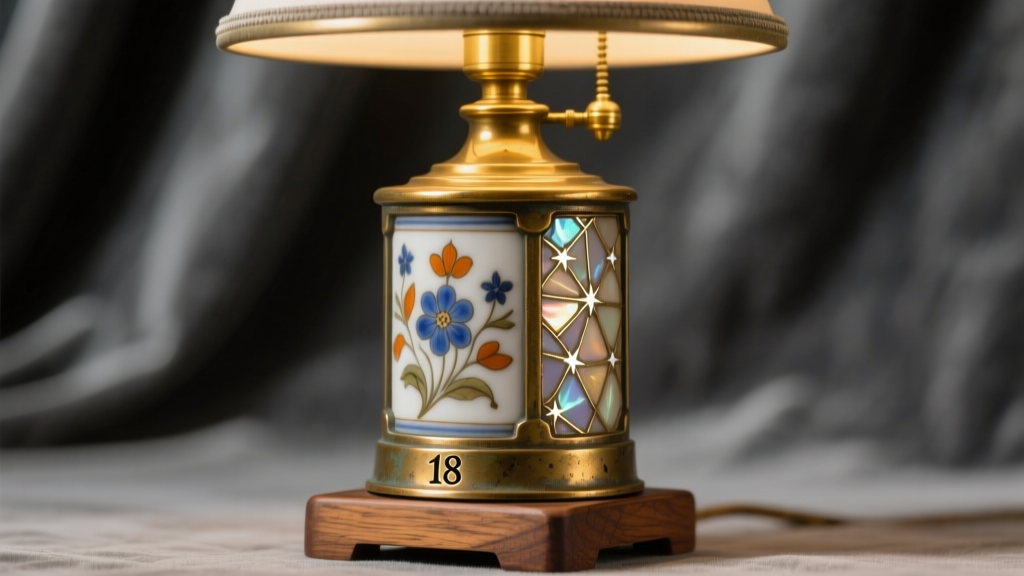
Weller Bronze Ware Lamp: Decoding the 18-Inch Ceramic-and-Wood Hybrid with Mica and Brass Shade
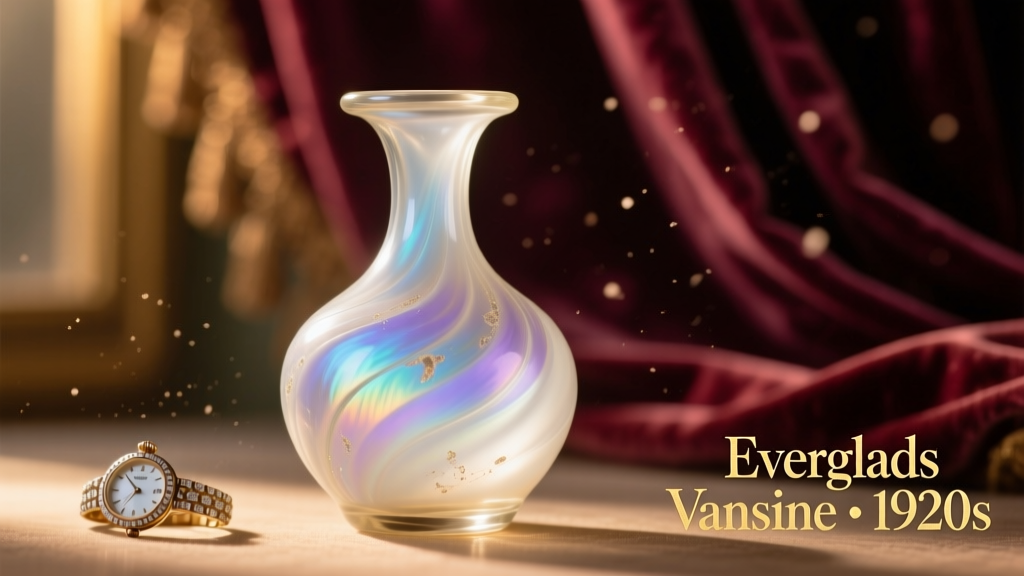
Opalescent Glass Cruet Everglades Vaseline: A Collector’s Guide to the Rare American Art Glass Condiment Set
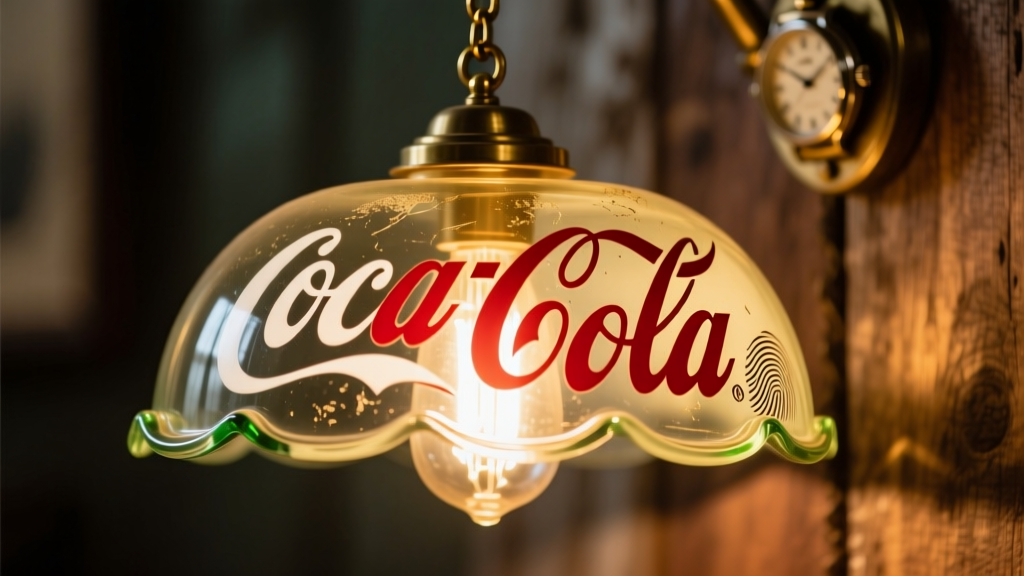
Coca-Cola Lamp: Hanging Vintage Glass Sign with White-Red Lettering — A Collector’s Deep Dive into the 13-Inch Model
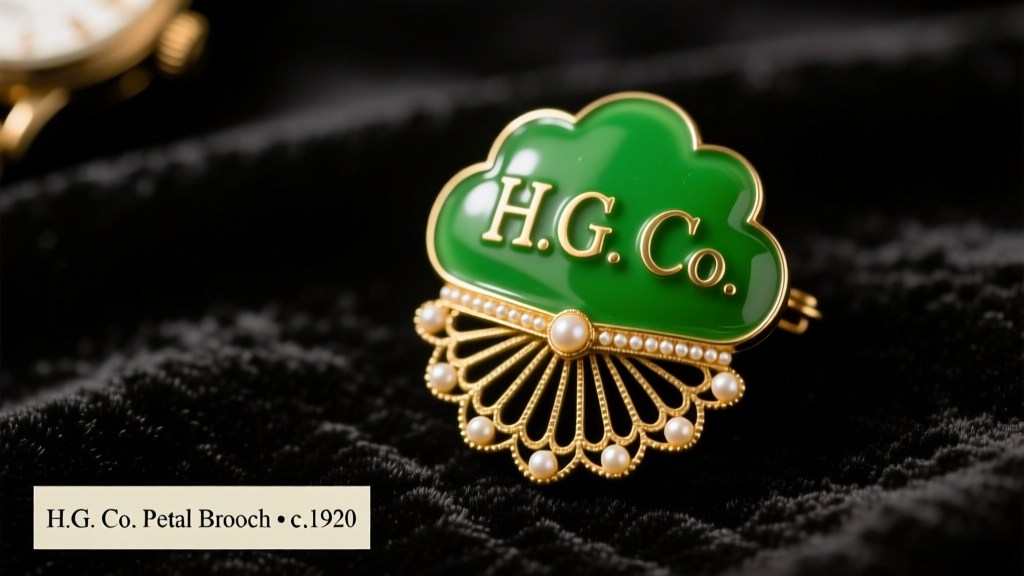
The H. G. Co. Petticoat Insulator in Lime Green: A Collector’s Deep Dive into Rarity, Chemistry, and Market Value