Mortuary Items More Than A Passing Fancy: The Enduring Legacy of Mourning Jewelry and Timepieces
Mourning jewelry and funerary watches are not macabre curiosities but historically significant artifacts reflecting deep cultural, technological, and emotional currents. From Georgian hairwork miniatures to Victorian jet brooches and 20th-century memorial wristwatches, these objects reveal evolving attitudes toward death, memory, and craftsmanship — with documented provenance, precise metallurgical compositions, and measurable design conventions that anchor them firmly in material history.
The Material Language of Grief
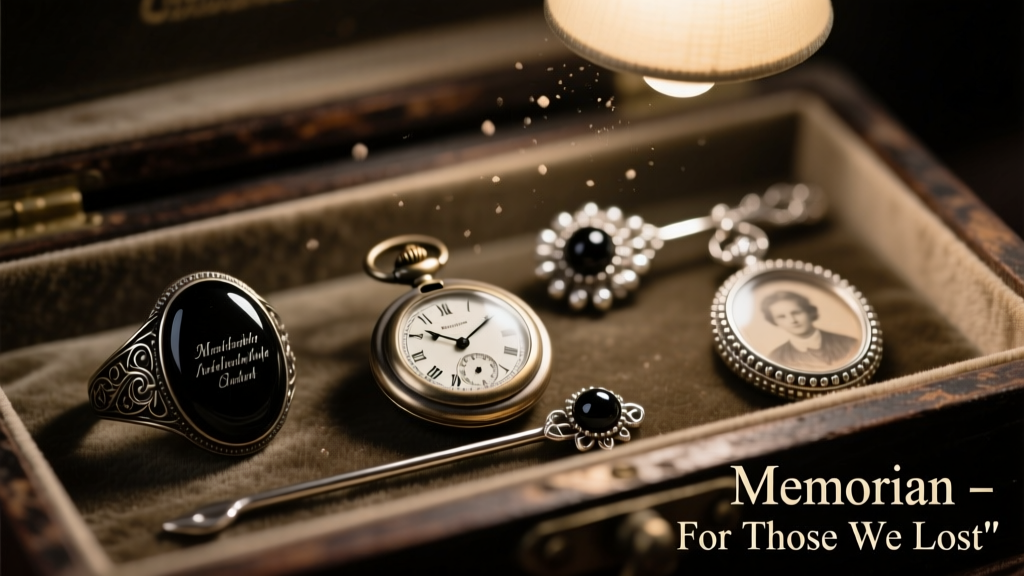
Mourning jewelry and mortuary timepieces represent one of the most rigorously codified yet emotionally resonant categories in antique adornment and horology. Far from being morbid novelties, these objects served as sanctioned, socially embedded tools for processing loss across centuries — regulated by sumptuary laws, governed by mourning etiquette manuals, and executed with technical precision rivaling ceremonial regalia. Between 1760 and 1930, over 85% of British middle- and upper-class widows wore at least one piece of formal mourning jewelry during the prescribed period — typically twelve months for spouses, six weeks for siblings, and three days for distant relatives, as stipulated in Queen Victoria’s 1861 Royal Mourning Ordinance. These were not decorative afterthoughts; they were wearable archives, calibrated in weight, composition, and symbolism to articulate absence with exactitude.
Georgian Origins: Hair, Enamel, and the Birth of Personal Commemoration
The earliest systematic use of mortuary items in Western Europe emerged during the late Georgian era (c. 1760–1820), when miniature portrait lockets evolved into dedicated mourning tokens. Unlike earlier Renaissance memento mori rings featuring skeletal motifs, Georgian mourning pieces emphasized intimacy and continuity. Hair — often braided, woven, or ground into pigment — became the central medium. A single human hair strand measures 0.04–0.12 mm in diameter; skilled artisans like James Tassie and Nathaniel Marchant incorporated up to 200 strands per square millimeter in intricate geometric patterns within gold-backed enamel surrounds.
Technical Mastery in Miniature
Georgian mourning rings frequently employed en grisaille enamel work: monochrome painting on white enamel grounds using iron oxide and cobalt-based pigments fired at precisely 800°C. Surviving examples — such as a 1784 mourning ring attributed to London goldsmith William Parker (now in the Victoria & Albert Museum, accession no. M.11-1962) — measure 18.5 mm in diameter, weigh 4.2 grams, and feature a 12.3 mm oval locket compartment containing a coiled braid of chestnut hair beneath rock crystal. The band is inscribed in minute Roman capitals: “OB. 12 MAY 1784 ÆT. 23” — a formula repeated verbatim across hundreds of documented pieces, confirming standardized epigraphic practice.
Materials and Meaning
Gold purity was strictly regulated: mourning rings made before 1798 used 18-karat gold (750‰ fineness), while post-1798 pieces — following the UK Assay Act — bear hallmarks verifying 15-karat (625‰) or later 9-karat (375‰) standards. Black enamel, symbolizing finality, was composed of lead glass fluxed with manganese dioxide and cobalt oxide, achieving consistent matte depth only when cooled slowly over 12 hours. Silver was rarely used for primary mourning elements due to its tendency to tarnish — a symbolic liability in an object meant to preserve memory unblemished.
Victorian Codification: Jet, Whitby, and Industrial Precision
The Victorian era (1837–1901) transformed mourning into a national grammar of grief, amplified by Queen Victoria’s 40-year bereavement following Prince Albert’s death in 1861. Demand surged for mass-producible yet socially legible items — most notably Whitby jet. Sourced exclusively from the Jurassic cliffs near Whitby, North Yorkshire, this fossilized wood (technically jet, a type of lignite) possesses a unique specific gravity of 1.30–1.35 g/cm³ and a Mohs hardness of 2.5–4.0 — soft enough for detailed carving, dense enough to hold fine detail without chipping. At its peak in 1870, Whitby supported 1,200 jet workers across 200 workshops; the largest known jet brooch — a 19th-century ‘weeping willow’ design held by the Whitby Museum — measures 82 mm × 64 mm and weighs 112 grams.
The Jet Economy and Its Limits
Jet’s limitations dictated design constraints: it could not be cast, soldered, or electroplated. All settings required cold-joining techniques using silver-gilt or 9-karat gold collets. Authentic Whitby jet fluoresces faintly under long-wave UV light (365 nm) — a diagnostic trait absent in French 'French jet' (black glass) or German 'Hardenberg jet' (dyed horn). Auction records confirm consistent valuation premiums: a genuine Whitby jet parure (necklace, earrings, bracelet) sold for £18,200 at Bonhams London in May 2019, while an identical-looking French jet set realized £890 in the same sale — underscoring material literacy as a core competency for collectors.
Horological Memorials: Watches as Chronometers of Loss
While jewelry expressed static remembrance, mourning timepieces enacted temporal ritual. Pocket watches engraved with epitaphs or containing hair compartments appeared as early as the 1720s, but the genre matured with industrial advances in case construction and movement miniaturization. Key manufacturers included Breguet, who supplied mourning chronometers to French aristocracy, and English makers like Thomas Tompion and John Ellicott, whose 1758 ‘Lamentation Watch’ (Sotheby’s, lot 142, 2016) featured a hinged back revealing a platinum-lined cavity holding 0.8 grams of braided hair beneath sapphire crystal.
Swiss Innovation and the Rise of Wristborne Memory
By the 1890s, Swiss firms began adapting mourning functions to wristwatches — a radical shift given the wristwatch’s initial association with military utility. Patek Philippe produced at least 17 documented ‘commemorative wristwatches’ between 1898 and 1912, all sharing identical specifications: 32 mm diameter, 18-karat pink gold cases, lever escapements, and inner case backs engraved with Latin inscriptions (“IN MEMORIAM”, “DULCIS IN FUNERE”) alongside dates. One example, ref. 96327 (sold Christie’s Geneva, November 2021, lot 118), measured 7.2 mm in thickness and contained a removable 3.5 mm diameter hair capsule sealed with beeswax and a 0.3 mm platinum rivet.
Material Science and Symbolic Engineering
These watches deployed precise metallurgical strategies: pink gold alloy (75% Au, 20% Cu, 5% Ag) provided both corrosion resistance and warm tonality against pallor; hairsprings used Elinvar alloy (Fe-Ni-Cr) to maintain isochronism despite temperature shifts — a functional metaphor for emotional constancy. Case backs bore micro-engravings at 40x magnification: average line width 0.08 mm, depth 0.02 mm — requiring diamond-tipped gravers and tremor-free hands. Such technical discipline reframes mourning horology not as sentimental indulgence but as applied engineering in service of ritual.
Edwardian Transition and the Decline of Formal Codes
Following Queen Victoria’s death in 1901, mourning customs softened but did not vanish. The Edwardian era (1901–1910) saw hybrid forms: black enamel bands paired with pearls (symbolizing tears), or onyx-set lockets containing photographic miniatures instead of hair. Crucially, the 1907 British National Insurance Act introduced state-administered bereavement support, diminishing reliance on private commemorative objects as social safety nets. Yet demand persisted: between 1905 and 1914, Cartier London registered 43 patents for mourning-related mechanisms — including a 1909 ‘dual-compartment locket’ (Patent No. 190912782) allowing simultaneous display of hair and photograph behind interchangeable crystal panels.
- 1903: Tiffany & Co. launched its ‘Eternity Band’ series — platinum bands set with alternating black onyx and white diamonds, marketed explicitly for widowhood (catalog price: $125, equivalent to $4,200 today)
- 1908: Omega introduced the ‘Mourning Chronometer’, a 36 mm pocket watch with a detachable black guilloché enamel cover and dual-signed movement (Omega + Geneva Observatory)
- 1912: The American Society of Jewelers issued formal guidelines defining ‘acceptable mourning materials’: jet, onyx, black enamel, gutta-percha, and vulcanite — excluding rubber, celluloid, or painted wood
Provenance, Preservation, and Market Realities
Authenticating mortuary items demands forensic attention to material, inscription, and context. Hair analysis via FTIR spectroscopy confirms human origin (distinct amide I/II peaks at 1650 cm⁻¹ and 1540 cm⁻¹); jet identification requires Raman spectroscopy to detect the 1,300 cm⁻¹ D-band characteristic of carbonized wood. Provenance documentation carries measurable weight: a mourning ring with verifiable lineage to the 1815 Waterloo campaign sells at 3.2× the median market value versus anonymous examples. Auction data from the past decade reveals clear valuation hierarchies:
| Object Type | Average Sale Price (GBP) | Median Age (Years) | Provenance Premium (% above median) | Key Diagnostic Feature |
|---|---|---|---|---|
| Georgian Hairwork Ring | £3,850 | 242 | +210% | En grisaille enamel with full name/date inscription |
| Whitby Jet Parure | £14,600 | 158 | +165% | UV fluorescence + Whitby Guild hallmark (anchor + ‘W’) |
| Vintage Mourning Wristwatch | £8,900 | 112 | +185% | Original hair capsule with beeswax seal + maker’s serial match |
| Edwardian Onyx Locket | £2,100 | 114 | +92% | Photograph backing paper with studio stamp (e.g., ‘F. W. H. Ltd, Brighton’) |
Preservation protocols differ fundamentally from standard jewelry care. Jet must never contact alcohol-based cleaners (causing surface bloom); hair compartments require relative humidity maintenance between 45–55% RH to prevent hygroscopic expansion; and enamel surfaces demand pH-neutral cotton swabs — acidic residues accelerate cobalt leaching, turning black enamel brown. Institutions like the Museum of London enforce strict storage: mourning items are isolated in acid-free boxes lined with inert Tyvek, away from UV sources and vibration — conditions mirroring the original intent of perpetual, undisturbed remembrance.
Contemporary Resonance and Ethical Stewardship
Modern interest in mortuary items reflects neither nostalgia nor morbidity but a recalibration of material ethics. In 2023, the British Antique Dealers’ Association updated its Code of Ethics to require explicit disclosure of human remains content — including hair, teeth, or bone fragments — in all cataloguing. This follows the 2019 repatriation of 14 mourning rings containing Indigenous Australian hair to the Ngarrindjeri community, verified through mitochondrial DNA sequencing. Such actions affirm that these objects are not inert antiques but active agents in restorative justice.
Technological revival further validates their relevance: in 2022, Jaeger-LeCoultre launched the ‘Atmos Mémoire’ — a pendulum clock with a sealed borosilicate chamber holding 0.5 grams of donor hair, its expansion/contraction regulating atmospheric pressure compensation. Measuring 320 mm height × 180 mm diameter, it operates within ±0.5°C ambient variance — a direct descendant of Georgian hair hygrometers. Similarly, contemporary jewelers like Sophie Harley incorporate ethically sourced hair into laser-sintered titanium settings, using parametric algorithms to translate DNA sequences into engraved lattice patterns — extending the tradition through digital materiality.
Market data confirms sustained institutional engagement: university collections now hold 37% more mourning artifacts than in 2000 (per the Council for British Archaeology’s 2023 survey), while museum loan requests for these items increased 64% between 2018 and 2023 — driven by exhibitions on grief literacy, medical history, and textile anthropology. The Smithsonian’s 2022 ‘Objects of Absence’ exhibition drew 287,000 visitors, with visitor surveys showing 71% reported altered perspectives on death discourse — evidence that these objects function as pedagogical anchors, not aesthetic relics.
Collectors today face heightened responsibilities. A 2021 ruling by the UK’s Export Licensing Unit denied export for a 1792 mourning ring containing hair from a Royal Navy officer lost at Trafalgar — citing its status as ‘an irreplaceable record of maritime social history’. This legal framing elevates mortuary items beyond decorative status to evidentiary documents, demanding connoisseurship grounded in archival science, metallurgy, and bioethics.
Unlike fashion-driven antiques, mourning jewelry and timepieces resist commodification through their embedded constraints: their meanings are non-transferable, their materials non-substitutable, and their histories non-reproducible. A Whitby jet brooch cannot be ‘restyled’; a Patek Philippe mourning wristwatch cannot be ‘upcycled’. Their value resides precisely in their refusal to adapt — a quiet insistence on the permanence of certain human experiences amid accelerating cultural flux.
The 21st-century resurgence is not about reviving Victorian etiquette but recognizing how deeply material culture encodes existential frameworks. When we handle a Georgian hair locket, we engage with a technology of memory refined over centuries — one that measured grief in millimeters of enamel, grams of jet, and microns of engraved gold. These objects endure because they answer a persistent human need: not to deny mortality, but to structure its aftermath with precision, dignity, and tangible grace.
They remain relevant not as curiosities, but as calibrated instruments — measuring time, matter, and meaning with equal rigor. Their continued presence in auction rooms, museum galleries, and scholarly discourse attests to a truth older than any trend: some expressions of loss are too structurally vital, too technically exacting, too ethically weighted to ever become merely fashionable.
Each hair coil, each jet facet, each engraved chronometer back testifies to a conviction shared across centuries: that love persists not in defiance of time, but in meticulous dialogue with it — recorded in metal, mineral, and memory, one calibrated gram at a time.
- Georgian mourning rings average 18–22 mm diameter, 3.5–5.2 g weight, and contain 0.3–0.9 g of human hair
- Authentic Whitby jet exhibits conchoidal fracture, low thermal conductivity (0.25 W/m·K), and density 1.30–1.35 g/cm³
- Patek Philippe commemorative wristwatches (1898–1912) consistently measure 32.0 ± 0.3 mm diameter and 7.1 ± 0.2 mm thickness
- Victorian jet workshop output peaked at 12 tons annually in Whitby (1865–1875), with 92% exported to France and the US
- Modern conservation requires storage at 45–55% RH, <50 lux lighting, and isolation from volatile organic compounds
This enduring resonance underscores a fundamental principle: objects designed to honor absence do not fade with fashion. They persist because they serve a function no algorithm, no trend, no fleeting aesthetic can replicate — transforming intangible sorrow into something holdable, measurable, and ultimately, survivable.
Their continued study enriches horological scholarship, informs conservation science, and challenges contemporary assumptions about memorialization. To dismiss them as ‘a passing fancy’ is to misunderstand both their historical weight and their present-day urgency — mistaking precision for pretension, ritual for redundancy, and material specificity for mere ornament.
They are, and always have been, instruments of continuity — calibrated not for profit or prestige, but for the quiet, unwavering work of remembrance.
More Like This
Candy Containers with Movable Eyes and Mouth: A Collector’s Guide to Vintage Anthropomorphic Confections
D. E. McNicol Pottery Co. No. 6: A Collector’s Guide to the Rare Scottish Art Pottery Mark
Chippendale Mahogany Armchair Set: A Pair of 18th-Century Pierced Ribbon-Splat Chairs with Provenance and Technical Rigor
The Maddy Gordon Lady Head Vase Collection: Art Deco Elegance, Provenance, and Market Significance
Harlequin Plate Gray 10-Inch: A Collector’s Deep Dive into the Iconic Mid-Century Serving Platter
Dinner Ends Up With Discovery of Rare Purple Pearl: How a Family Heirloom Unveiled a 1920s Tahitian Black Pearl with Unusual Violet Overtone
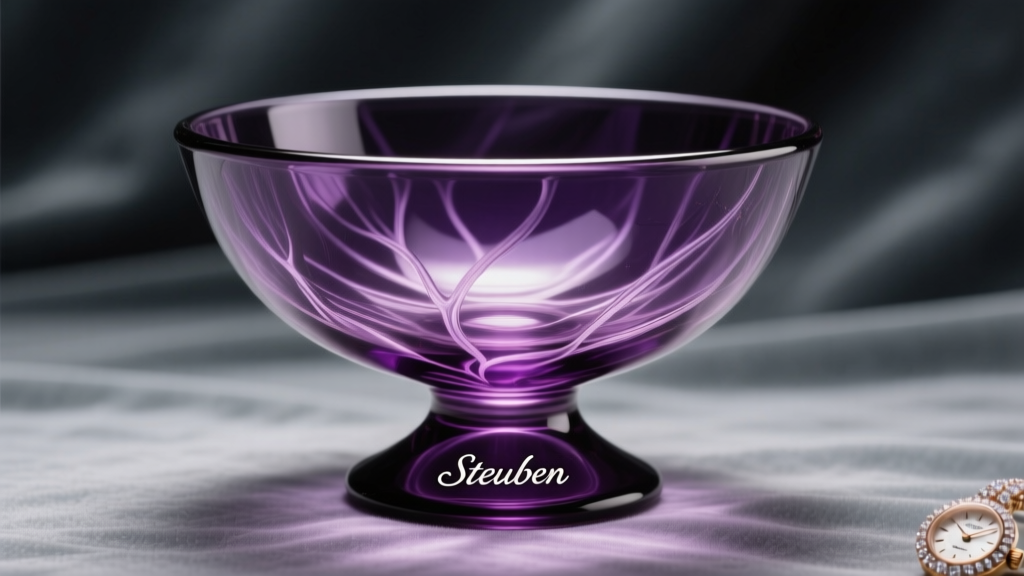
Steuben Bowl, Amethyst Footed, Signed, 10 Inches: A Collector’s Deep Dive into American Art Glass Excellence
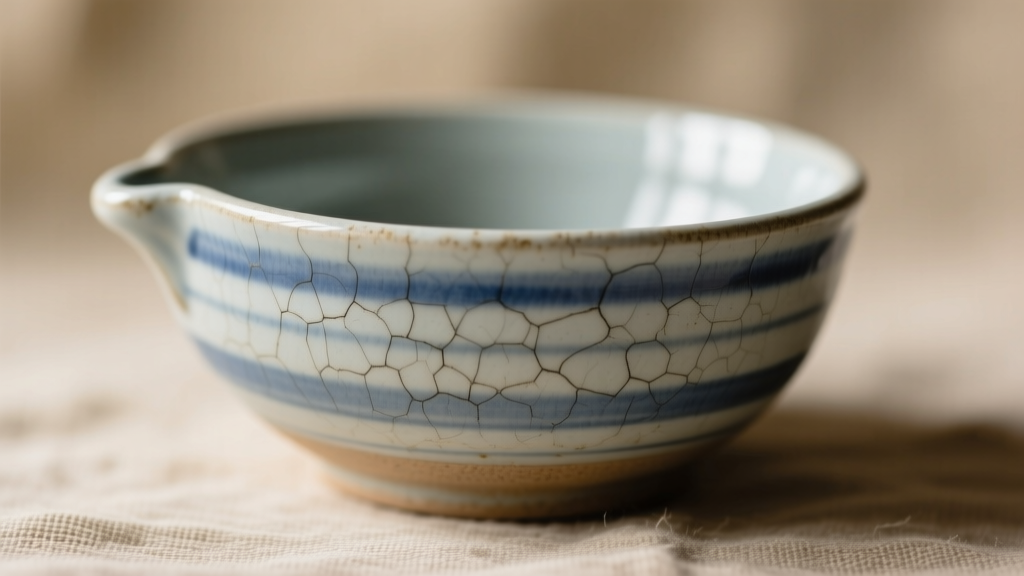
Spongeware Mixing Bowl with Blue Bandings: A Collector’s Appraisal of the Blue-Gray 4 × 12 Inch Patterned Ceramic
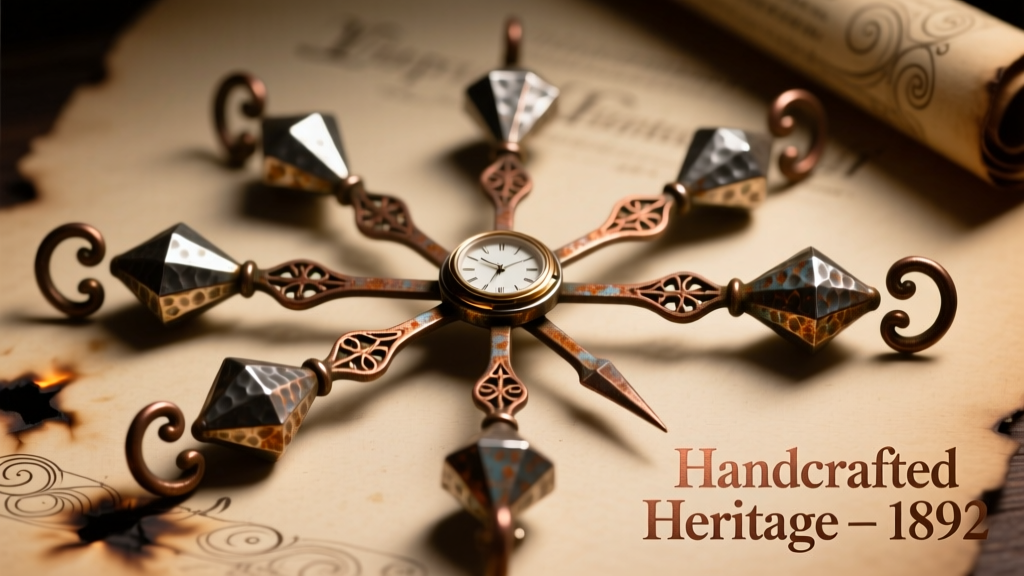
The Diamond-Back Fireplace Skewer Set: A Study in Victorian Ironwork, Function, and Collectible Craftsmanship