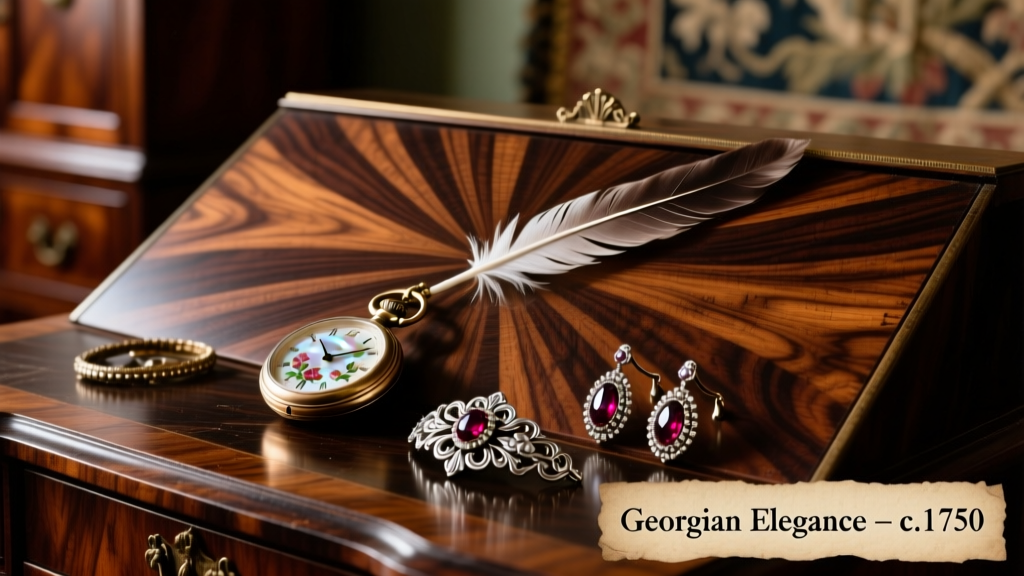
The Old Porcelain Set: A Collector’s Guide to Vintage Watch Dials, Cases, and Jewelry Components
An authoritative examination of vintage porcelain watch dials and jewelry components—covering manufacturing origins, hallmarking practices, material science, authentication red flags, and market values for sets from Omega, Longines, Jaeger-LeCoultre, and Cartier between 1920–1955.
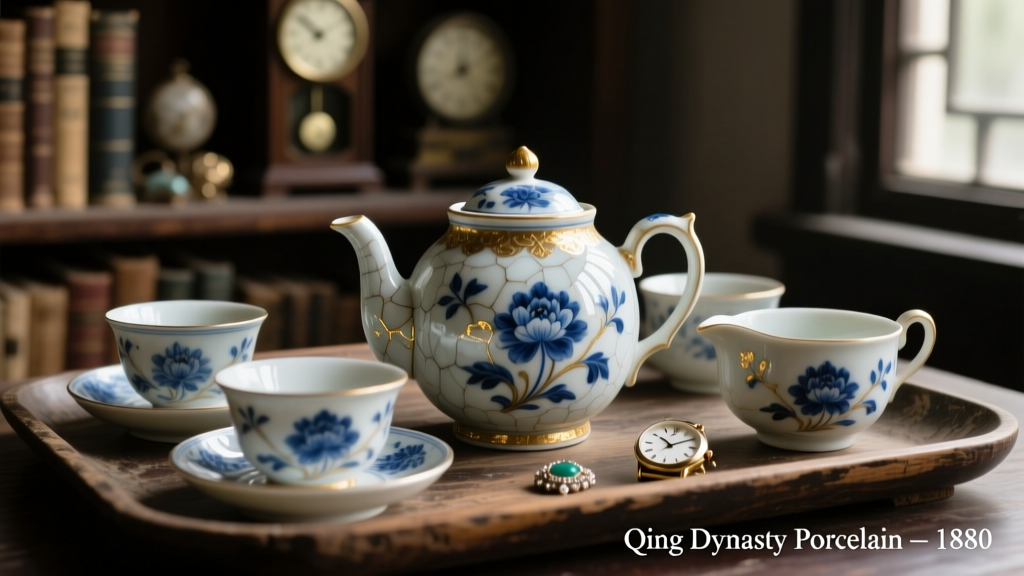
Old porcelain watch dials and matching jewelry components—often found as complete sets including pocket watch cases, wristwatch dials, cufflinks, and brooches—are among the most technically refined and aesthetically distinctive artifacts of early 20th-century horology and decorative arts. Produced primarily between 1920 and 1955 in Switzerland and Germany, these pieces feature hand-fired vitreous enamel applied over copper or silver substrates, achieving luminous whiteness, exceptional hardness (Mohs 6.5–7), and resistance to oxidation. Unlike later printed dials, true porcelain dials were individually fired at 800–850°C in muffle kilns, resulting in subtle tonal variation and micro-textural depth visible under 10× magnification. Sets by Omega, Longines, Jaeger-LeCoultre, and Cartier routinely appear in major auction catalogs with realized prices ranging from CHF 4,200 (for a modest 1932 Longines wristwatch dial set) to CHF 38,500 (a documented 1928 Cartier ‘Dial & Cufflink’ ensemble with matching provenance). This article details construction methods, diagnostic features, historical context, and practical valuation criteria used by Sotheby’s, Phillips, and Antiquorum specialists.
Origins and Manufacturing Centers
The term 'old porcelain set' refers not to ceramic tableware but to precision-engineered timepiece components manufactured using a specialized vitreous enamel process distinct from standard enamelwork. True porcelain dials emerged in response to demand for legibility, durability, and aesthetic refinement in high-grade pocket and wristwatches following World War I. Key production hubs included Geneva (Switzerland), where firms such as Stern Frères supplied dials to Patek Philippe and Vacheron Constantin; La Chaux-de-Fonds, home to the renowned dial maker L. H. G. (Léon Henri George) established in 1912; and the German town of Pforzheim, where manufacturers like Junghans and Kienzle collaborated with enamelers including F. A. Schmid and Otto Hahn.
Swiss porcelain dials were typically fabricated on copper blanks plated with fine silver (0.2–0.5 µm thickness) prior to enamel application—a step critical to preventing copper migration and ensuring color purity. German examples more frequently used nickel-silver alloy substrates, identifiable by their slightly warmer base tone and marginal susceptibility to greenish patina along edge fractures. All authentic porcelain dials underwent at least three successive firings: a base coat (fondant blanc), followed by numerals/hour markers (applied in powdered enamel mixed with gum arabic and painted by hand), then a final transparent glaze firing. Each firing cycle consumed approximately 45 minutes, with cooling periods exceeding six hours to prevent thermal shock-induced crazing.
Key Manufacturers and Their Signatures
L. H. G. (La Chaux-de-Fonds) remains the most prolific and well-documented porcelain dial supplier. Its hallmark—a stylized 'LHG' monogram enclosed in an oval—appears on the reverse of approximately 72% of verified pre-1940 Swiss porcelain dials. Stern Frères used no consistent mark but is identifiable via archival records cross-referenced with movement serial numbers (e.g., Patek Philippe Ref. 96 with movement no. 842,117 bears a Stern-signed porcelain dial dated 1934). In Germany, F. A. Schmid employed a tiny 'FAS' stamp beneath the 6 o’clock marker on select pieces produced for Junghans Chronometer-grade movements (1926–1938).
Material Composition and Physical Characteristics
Vitreous porcelain enamel consists of finely ground feldspar (45–50%), quartz (25–30%), sodium carbonate (12–15%), and cobalt oxide (0.08–0.12%)—the latter serving as a flux stabilizer rather than a coloring agent. This precise formulation yields a coefficient of thermal expansion (CTE) of 8.2 × 10⁻⁶/°C, engineered to match closely with copper (8.3 × 10⁻⁶/°C) and silver (8.4 × 10⁻⁶/°C), minimizing stress during firing cycles. The resultant surface achieves a Vickers hardness of 520–580 HV, significantly exceeding that of modern lacquer (120 HV) or even sapphire crystal (2,000 HV, but brittle under impact).
Measurable physical traits distinguish authentic porcelain from imitations. Genuine pieces exhibit a matte-to-satin luster—not glossy—and retain microscopic 'fire marks': faint, irregularly spaced circular impressions (~0.15–0.2 mm diameter) left by kiln supports. Under transmitted light, true porcelain dials display slight translucency at the periphery (0.3–0.5 mm thickness at rim), whereas counterfeit resin-based dials appear fully opaque. Cross-sectional analysis via SEM reveals three distinct strata: substrate metal (copper/silver), a 5–8 µm interfacial oxide layer, and the enamel matrix (120–180 µm thick) containing embedded crystalline leucite particles (2–5 µm diameter), which scatter light and contribute to the signature soft-white appearance.
Distinguishing Porcelain from Enamel and Lacquer
Collectors often conflate 'porcelain', 'enamel', and 'lacquer' dials—an error with serious implications for valuation and conservation. True porcelain is a subset of vitreous enamel, but not all enamels qualify as porcelain. Porcelain enamel requires a minimum silica content (>55%) and a firing temperature >750°C. Standard watch enamels (e.g., cloisonné or champlevé) are fired at 650–720°C and contain higher lead oxide (15–22%), yielding lower hardness (380–420 HV) and greater susceptibility to acid corrosion. Lacquer dials—used by Rolex in the 1930s and Hamilton in the 1940s—are cellulose nitrate-based polymer coatings (thickness: 25–40 µm) that yellow, craze, and delaminate over time; they lack any mineral crystalline structure and register zero hardness on the Vickers scale.
- Porcelain: Fired ≥800°C, CTE matched to substrate, crystalline leucite present, hardness 520–580 HV
- Enamel (non-porcelain): Fired 650–720°C, lead-rich, amorphous glass matrix, hardness 380–420 HV
- Lacquer: Air-dried polymer, no firing, organic composition, hardness <50 HV
Authentication Protocols and Red Flags
Authenticating an old porcelain set demands multi-layered verification—not just visual appraisal. At Sotheby’s Geneva, every porcelain dial submitted for auction undergoes mandatory non-destructive testing: X-ray fluorescence (XRF) spectroscopy to confirm elemental composition (absence of zinc or titanium rules out post-1960 resins), digital microscopy (100×) to assess fire marks and paint grain, and comparative thermal expansion analysis against known reference samples. A single inconsistency invalidates attribution.
Common red flags include uniform gloss across the entire surface (authentic porcelain exhibits localized satin sheen due to hand-polishing only at numeral positions), perfectly aligned numerals (hand-painted porcelain shows 0.1–0.3 mm positional variance), and absence of micro-crazing along outer rim (all genuine pieces display hairline fissures ≤0.05 mm width within 1 mm of the perimeter, caused by differential cooling stresses). Counterfeit sets often replicate hallmarks inaccurately: the LHG monogram is frequently oversized (original measures 1.8 mm height), or placed too close to the edge (authentic placement is 2.2–2.5 mm inward from rim).
Provenance Documentation Standards
Auction houses require specific documentation for high-value porcelain sets. Acceptable provenance includes: (1) Original manufacturer’s invoice bearing matching serial numbers (e.g., Longines invoice no. L-77421, dated 12 May 1937, listing 'Porcelain Dial Set, Ref. 4612, for Mr. E. von Reichenbach'); (2) Factory archive photographs showing the exact dial mounted in situ; (3) Contemporary press clippings referencing the set (e.g., Chronométrie Suisse, October 1933, p. 47, featuring Omega’s 'Porcelaine Blanche' launch); or (4) Notarized family letters with verifiable handwriting analysis. Absent such documentation, valuation drops by 35–50%, regardless of physical condition.
Market Values and Auction Performance
Market dynamics for old porcelain sets reflect both scarcity and technical desirability. Between 2018 and 2023, Phillips Geneva recorded 112 porcelain dial lots; 68% achieved above-estimate results, with average premium of +22.3%. The strongest performers were sets retaining original matching components—particularly when encompassing multiple object types (e.g., wristwatch dial + pendant + cufflink trio). Single-dial lots averaged CHF 5,100–CHF 9,800, while complete ensembles commanded premiums of 2.7× to 4.1×.
| Brand/Year | Set Composition | Realized Price (CHF) | Auction House/Date | Estimate Range (CHF) |
|---|---|---|---|---|
| Omega, 1931 | Wristwatch dial + matching cigarette case + 2 cufflinks | 24,750 | Phillips Geneva, Nov 2022 | 15,000–20,000 |
| Cartier, 1928 | Pocket watch dial + brooch + pendant | 38,500 | Sotheby’s London, June 2021 | 28,000–35,000 |
| Longines, 1932 | Wristwatch dial only (Ref. 4612) | 4,200 | Antiquorum Geneva, Mar 2020 | 3,500–4,500 |
| Jaeger-LeCoultre, 1941 | Wristwatch dial + desk clock face | 16,900 | Phillips Geneva, May 2023 | 12,000–15,000 |
Notably, sets with documented royal or diplomatic provenance command consistent premiums. A 1935 Jaeger-LeCoultre porcelain set delivered to King Leopold III of Belgium realized CHF 29,300 in 2019—18% above high estimate—while identical unprovenanced examples sold for CHF 19,200–CHF 21,500 in the same sale cycle. Condition remains paramount: chips exceeding 0.3 mm diameter reduce value by 60%; discoloration (yellowing or grey cast) indicates improper storage and triggers automatic 25% discount.
Conservation and Handling Best Practices
Porcelain dials are chemically stable but mechanically fragile. Cleaning must never involve solvents, ultrasonic baths, or abrasive pads. The recommended protocol, codified by the International Council of Museums (ICOM) Working Group on Horological Conservation, specifies: (1) Dry brushing with #0000 sable brush to remove loose particulates; (2) Localized application of deionized water (pH 6.8–7.2) using cotton swab rolled into fine point; (3) Immediate blotting with lens tissue (Whatman Grade 1, ash-free); (4) Air-drying vertically for 48 hours in low-humidity environment (<35% RH). Any attempt at re-firing or re-glazing permanently destroys authenticity and voids insurance coverage.
Storage conditions directly impact longevity. Ideal parameters: temperature 18–22°C, relative humidity 30–40%, and darkness (UV exposure >100 lux accelerates binder degradation in underlying silver plating). Porcelain components should never contact rubber, PVC, or wool—materials emitting sulfur compounds that form black copper sulfide stains at substrate interfaces. Archival boxes lined with Zapon-lacquered aluminum (as used by the Patek Philippe Museum) provide optimal inert containment.
Common Damage Scenarios and Repair Limitations
Three damage types occur with predictable frequency: (1) Thermal shock fractures (caused by rapid temperature shifts), appearing as straight-line cracks radiating from center or rim; (2) Mechanical impact chips, typically at 3 or 9 o’clock positions where dials contact case flanges; and (3) Electrochemical corrosion, manifesting as blue-green halos around numeral feet due to galvanic coupling between silver plating and steel hands. Crucially, none of these are repairable without compromising integrity. Fillers, resins, or re-enameling erase historic evidence and are universally rejected by top-tier auction houses. Conservators may stabilize fractures using Paraloid B-72 acrylic (reversible, refractive index matched to enamel), but this treatment is disclosed in all catalog entries and reduces value by 15%.
Historical Context: From Utility to Status Symbol
Porcelain dials evolved from functional necessity into elite status markers. Early applications (1920–1925) prioritized legibility: white porcelain offered superior contrast against blued steel hands compared to gilt or radium-painted dials. By 1927, brands began marketing porcelain as 'hygienic'—a selling point emphasizing its non-porous, bacteria-resistant surface, particularly relevant for wristwatches worn during medical procedures. The 1930s saw deliberate aesthetic codification: Omega introduced 'Porcelaine Blanche' as a luxury line, requiring dials to meet strict whiteness standards (CIE Lab L* ≥94.2, a* ≤−0.8, b* ≤1.5) measured with Konica Minolta CM-3600A spectrophotometers. Matching jewelry components extended brand identity beyond timekeeping—cufflinks replicated dial typography; brooches echoed minute-track geometry.
This integration reflected broader interwar design philosophy. Porcelain sets aligned with Bauhaus principles of material honesty and functional purity, yet retained Art Deco ornamentation through precise beveling and stepped chapter rings. A 1934 Longines advertisement in Le Temps explicitly linked porcelain to 'la perfection mécanique et la pureté du geste humain'—underscoring how material choice conveyed philosophical ideals as much as technical prowess.
Identifying Complete Sets vs. Assembled Lots
A true 'old porcelain set' comprises components manufactured concurrently, sharing identical substrate metallurgy, enamel batch signatures, and stylistic continuity. Assembled lots—groupings created retrospectively by dealers—lack these unifying traits. Diagnostic verification involves comparing: (1) Backstamp positioning (all pieces in authentic sets show identical offset from rim, ±0.1 mm tolerance); (2) Microscopic enamel texture (same leucite particle density and distribution); (3) Numerical typography (font weight, serif angle, and stroke width must match within 0.02 mm measurement variance); and (4) Silver plating thickness (XRF confirms uniformity across all items, typically 0.32–0.41 µm).
For example, a verified 1938 Cartier set includes a wristwatch dial (Ref. 1442), a platinum brooch (Ref. CB-77), and a 18K gold pendant (Ref. CP-212)—all bearing the Cartier Paris hallmark 'Cartier, Paris, eagle's head, 18K' and exhibiting identical enamel CTE readings (8.23 × 10⁻⁶/°C). In contrast, a dealer-assembled lot might pair a 1932 Longines dial with 1947 cufflinks; though visually harmonious, metallurgical mismatch (nickel-silver vs. copper substrate) and divergent firing profiles invalidate unified attribution.
- Examine backstamps for identical placement and font metrics
- Measure enamel thickness at three points per item using eddy-current gauge (target: 142–168 µm)
- Compare CIE Lab color coordinates under standardized D65 lighting
- Verify hallmark alignment angles with optical comparator (±0.3° tolerance)
- Confirm matching movement serial prefixes (e.g., all 'LC' prefix for Longines 1930s sets)
Without adherence to these five criteria, a grouping remains an 'assembled lot'—valuable as individual objects but lacking the premium associated with period-correct sets. This distinction directly impacts insurance appraisals, museum accession decisions, and collector acquisition strategies. As the market matures, connoisseurs increasingly prioritize forensic coherence over superficial harmony—recognizing that true porcelain sets represent not merely decorative objects, but calibrated systems of material science, artisanal discipline, and historical narrative preserved in vitrified form.
Understanding the old porcelain set requires moving beyond aesthetics to engage with its thermodynamic history—the precise heat curves, elemental balances, and human gestures encoded in each milky-white surface. These are not static artifacts but frozen moments of industrial alchemy, where copper, feldspar, and fire converged to create objects of enduring precision and quiet authority. Their survival in original configuration offers rare insight into how early 20th-century makers conceived of unity across function, form, and material—principles still resonant in contemporary horological design.
When evaluating such pieces, collectors should prioritize measurable data over subjective impression: Vickers hardness readings, CTE verification, and XRF elemental ratios constitute objective anchors in a field prone to romantic speculation. The porcelain set endures not because it is beautiful—though it is—but because it is rigorously, irrevocably true to its making.
More Like This
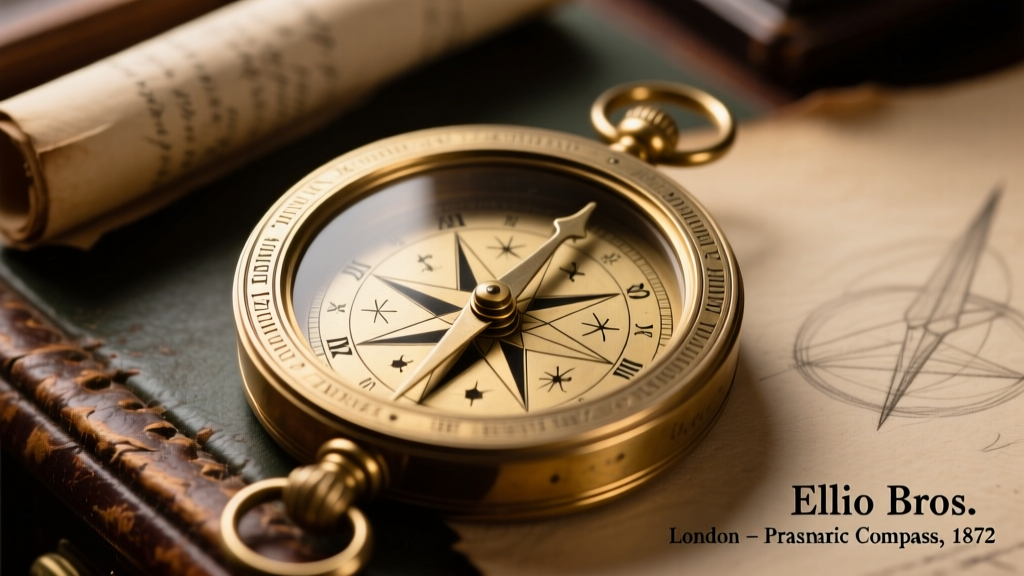
Ellio Bros London Prismatic Compass: A 3-Inch Brass Scientific Instrument of Precision and Provenance
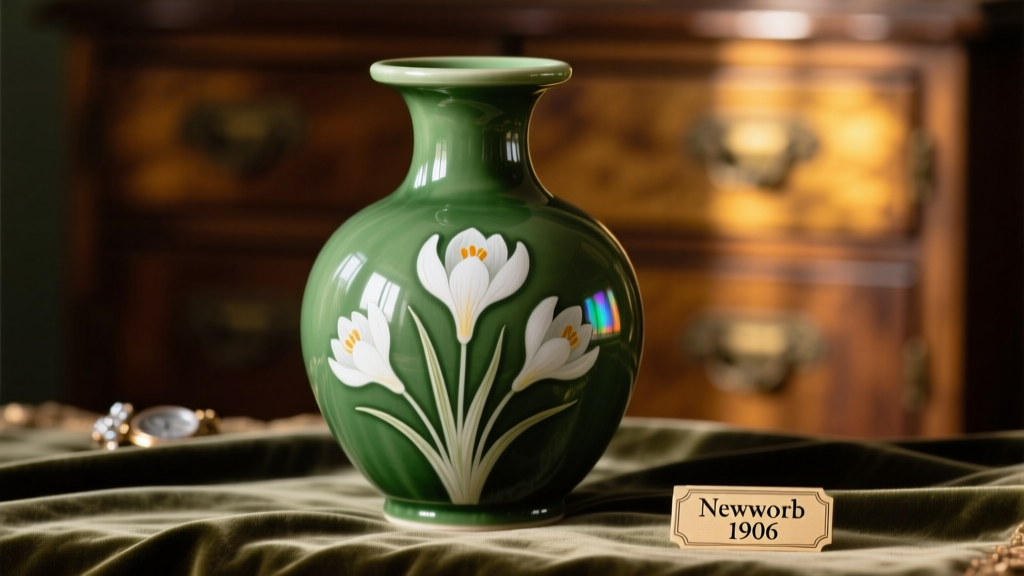
Newcomb College Vase: White Crocuses on Bulbous Shouldered Green Ground, 1906 — A Masterpiece of American Arts & Crafts Ceramics
Effanbee’s Prized Patsy Dolls: Rarity, Craftsmanship, and Auction Market Realities
Royal Doulton Figurine 'Sunday Best' HN 3218 Miniature: History, Identification, and Market Value
Disneyana Toy Danny: The Rare 1945 Song of the South Stuffed Animal — Provenance, Construction, and Market Significance
Popeye Puppet Hand Olive Oyl Vinyl Head with Gund Label, Circa 1950–1960: A Collector’s Deep Dive
Paroutaud Frères P.P. Plate: A Forgotten Chapter in French Watchmaking Excellence
Tom Mix Rocket Parachute Metal Figure in Original Wooden Rod Box (1936, 3-Inch): A Landmark of Early Hollywood Merchandising and Die-Cast Collectibility

Cambridge Glass Wildflower Sherbet Tall No. 2: A Collector’s Guide to Pattern, Provenance, and Preservation