Nostalgic Contest Deadline Approaching: Time to Submit Your Vintage Watches and Jewelry for the 2024 Heritage Auction
The annual Nostalgic Horology & Adornment Contest closes in 12 days. This article details submission requirements, valuation benchmarks, historical context for key pieces, and auction-ready preparation tips—featuring Omega Seamaster 300s, Cartier Trinity rings, Tiffany & Co. Schlumberger brooches, and more.

Deadline Looms: Final Call for the 2024 Nostalgic Horology & Adornment Contest
The 2024 Nostalgic Horology & Adornment Contest—hosted by Heritage Auctions in partnership with the American Watchmakers-Clockmakers Institute (AWCI)—closes for submissions on Friday, October 18, 2024, at 5:00 PM CT. This prestigious biennial event celebrates pre-1980 timepieces and fine jewelry with verifiable provenance, design significance, or exceptional craftsmanship. Since its inception in 2012, the contest has grown from 173 entries to over 1,200 submissions in 2022, with winning lots achieving record premiums: a 1957 Rolex Submariner ref. 6538 sold for $327,500 (22% above low estimate), while a 1941 Van Cleef & Arpels Alhambra necklace realized $189,000. With only 12 calendar days remaining, collectors, estates, and dealers must finalize authentication documentation, high-resolution photography, and condition reports to qualify.
Why This Contest Matters: More Than Just a Competition
This is not a vanity contest. The Nostalgic Horology & Adornment Contest serves as a critical benchmarking tool for the vintage market. Every submitted piece undergoes rigorous vetting by a seven-member panel—including former Sotheby’s Senior Specialist Dr. Eleanor Vance (specializing in Art Deco jewelry) and longtime Patek Philippe Archivist Jean-Luc Baudry—and contributes anonymized data to the Heritage Vintage Index™, a quarterly report tracking 42 price metrics across 12 categories. For example, the Q2 2024 index revealed that stainless steel Omega Seamaster 300s (1965–1971) appreciated 14.3% year-over-year, outpacing gold dress watches by 5.7 percentage points. Submission also grants entrants early access to Heritage’s consignment preview sessions, where specialists provide no-fee valuations and recommend optimal auction timing—critical when market liquidity for mid-century platinum pieces remains constrained (only 3.2% of Q1 2024 sales involved platinum settings).
Eligibility Requirements: What Qualifies as 'Nostalgic'?
Per the official 2024 Rules Addendum (Section 3.1), eligible items must satisfy all three criteria: (1) manufactured before January 1, 1980; (2) retain ≥90% of original components (e.g., no aftermarket dials, replacement hands, or non-factory bracelets); and (3) possess either documented ownership history, design innovation, or cultural resonance. A 1973 Seiko 6139-6005 ‘Pogue’ chronograph qualifies due to astronaut William Pogue’s personal wear and NASA flight certification—verified via his signed letter of provenance. Conversely, a 1978 Bulova Accutron tuning-fork watch with a replaced 1992 mineral crystal fails criterion #2 and is disqualified, regardless of working condition.
Documentation Standards: Precision Is Non-Negotiable
Submissions lacking complete documentation are automatically deferred to the 2026 cycle. Required materials include:
- A legible, front-facing photograph showing caseback engravings (if present), dial text, and movement bridge markings—minimum resolution 300 dpi, dimensions ≥2,400 × 1,800 pixels
- Case measurements recorded to the nearest 0.1 mm using digital calipers (e.g., “Omega Seamaster 300 ref. 166.024: 40.2 mm diameter × 13.7 mm thickness”)
- Written provenance statement signed by current owner, including acquisition date, source (e.g., “Purchased from Christie’s Geneva, Lot 184, May 12, 2019”), and any known service history
- Third-party authentication letter if the item lacks factory papers (accepted providers: Watchfinder & Co. Authentication Lab, GIA for gem-set pieces, or AWCI Certified Watchmaker)
Entries missing even one element receive a 72-hour correction window. In 2022, 29% of initial submissions required revision—most commonly due to insufficient caseback imagery or unverified provenance claims.
Top Five Categories Seeing Strongest Demand in 2024
Based on Heritage’s Q3 Consignment Pipeline Report, five categories dominate collector interest this season. These reflect both macroeconomic trends (e.g., rising precious metal prices) and micro-level design appreciation:
- Military-Issued Chronographs: Especially U.S. Air Force-issued Hamilton Model 22 pocket watches (1942–1945), with serial ranges H-187000 to H-202999 commanding premiums up to 38% above baseline values due to documented service in the European Theater.
- Swiss Diver’s Watches with Original Bezels: 1960s–70s models like the Blancpain Fifty Fathoms ref. BA001 (38.5 mm case) and Tudor Submariner ref. 7016 (39 mm case). Note: Refinished bezels reduce value by 40–65%; original matte black inserts with intact lume plots are mandatory for full eligibility.
- Art Deco Platinum Engagement Rings: Defined by geometric motifs, calibré-cut sapphires or emeralds, and hallmark verification (e.g., French eagle’s head or British platinum assay mark ‘PLAT’). Average weight: 2.1 g platinum, center stone 0.75–1.25 ct.
- Tiffany & Co. Schlumberger Nature Motifs: Brooches and pins from 1956–1978, particularly the ‘Bird on a Rock’ series (approx. 2.3 cm × 1.8 cm) and ‘Seashell’ clips (1.9 cm diameter). Must retain original Tiffany blue velvet box with embossed logo and matching serial number etched on reverse.
- Cartier Trinity Jewelry: Specifically the 1924–1948 rose/white/yellow gold bands, each measuring 2.1 mm wide × 1.3 mm thick, with original engraved interior inscriptions (e.g., ‘J.P. à M.L., 1936’). Later reissues post-1950 are ineligible.
Authentication Red Flags: What Disqualifies an Entry
Heritage’s Technical Review Board rejects approximately 17% of submissions annually due to detectable inconsistencies. Common disqualifiers include:
- Non-original crown on Rolex Datejust refs. 1601/1603: Factory crowns measure precisely 5.2 mm in diameter with 18 serrations; aftermarket replacements often show 16 or 20 serrations and 5.5–5.8 mm width
- Dial varnish mismatch: Original 1950s–60s dials used cellulose nitrate lacquer, which yellows uniformly. Chemically stripped dials treated with modern acrylics exhibit uneven gloss and lack micro-cracking under 10× magnification
- Incorrect hallmark placement: Pre-1960 Swiss watch cases bear hallmarks on the inside of the caseback lip—not the outer surface. Exterior hallmarks indicate post-1970 re-casing
- Gemstone treatments undisclosed: A 1930s sapphire ring submitted without GIA report stating ‘no indications of heating’ will be rejected, as heat treatment was rare before 1955 and materially affects rarity assessment
Valuation Benchmarks: Real Data from Recent Sales
Understanding current market values prevents unrealistic expectations and guides conservation decisions. Below are verified results from Heritage’s June 2024 Vintage Watch & Jewelry Signature Auction—selected for relevance to contest entrants:
| Item | Year | Reference / Model | Case Dimensions | Sale Price (USD) | Premium vs. Low Estimate |
|---|---|---|---|---|---|
| Omega Seamaster 300 | 1967 | ref. 166.024 | 40.2 mm × 13.7 mm | $24,750 | +32% |
| Cartier Trinity Ring Set (3-band) | 1932 | N/A (engraved ‘CARTIER PARIS’) | Band width: 2.1 mm; total weight: 5.8 g | $18,200 | +19% |
| Tiffany & Co. Schlumberger ‘Bird on a Rock’ Brooch | 1964 | N/A (serial ‘TSL-7821’) | 2.3 cm × 1.8 cm; 12.4 g 18k yellow gold | $12,900 | +27% |
| Jaeger-LeCoultre Futurematic E851 | 1951 | ref. E851 | 34.5 mm × 10.9 mm (18k pink gold) | $8,650 | +41% |
| Van Cleef & Arpels ‘Alhambra’ Long Necklace | 1941 | 12 motifs, 18k white gold | Length: 78 cm; motif size: 1.5 cm | $189,000 | +23% |
Note the consistent premium pattern: pieces with unbroken provenance, original accessories (boxes, papers, hang tags), and zero restoration command 19–41% above low estimates. By contrast, a 1965 Breitling Navitimer ref. 806 with replaced pushers and no papers sold for $9,200—12% below its low estimate—demonstrating how completeness drives value.
Conservation Best Practices: Preserving Authenticity While Preparing for Submission
Do not clean or polish your piece before submission. Heritage’s Conservation Department explicitly prohibits amateur cleaning, as it risks removing patina, altering lume composition, or scratching fragile enamel. Instead, follow these field-tested protocols:
For Mechanical Watches
Wind the mainspring fully but do not set the time. Record amplitude (in degrees) and rate (seconds per day) using a timegrapher—if unavailable, note ‘untested’ and state whether the watch runs within ±2 minutes per day based on observation over 72 hours. Do not open the caseback. If the crystal shows micro-scratches, leave them; polishing introduces new distortion. Original acrylic crystals (common on 1950s–60s pieces) should exhibit slight cloudiness at edges—a sign of age-consistent polymer degradation.
For Gem-Set Jewelry
Use only a soft, lint-free microfiber cloth dampened with distilled water to remove surface dust. Never use ammonia, ultrasonic cleaners, or commercial jewelry dips—these degrade historic adhesives (e.g., shellac used in 1920s pave settings) and accelerate corrosion in silver-lined collets. Verify gemstone security by gently tapping the setting with a wooden toothpick; any movement indicates professional tightening is needed before submission—but only by an AWCI-certified jeweler specializing in antique mounts.
Submission Logistics: Where, When, and How to Deliver
All physical entries must arrive at Heritage Auctions’ Dallas facility (3500 Maple Avenue, Dallas, TX 75219) no later than Thursday, October 17, 2024, by 3:00 PM CT. FedEx Priority Overnight (with signature required) is the only accepted shipping method; UPS and USPS are prohibited due to insurance limitations. Each package requires:
- A printed copy of the online submission confirmation email (with 12-digit entry ID)
- Two identical padded clamshell boxes: one for transport, one nested inside for shock absorption (minimum 2.5 cm foam padding on all sides)
- A tamper-evident security seal applied across the outer box seam (Heritage provides seal codes upon online registration)
- No external labeling indicating contents—use only the assigned entry ID as the sole identifier
International shippers must comply with U.S. Customs Form 2976-A (Customs Declaration) and declare ‘Antique Collectibles, Pre-1980, No Commercial Value’. VAT and import duties are waived under HTS code 9706.00.0050 for items over 100 years old; for 1950s–70s pieces, a CBP Form 7501 and formal entry bond are required—Heritage’s logistics team provides templates and filing support at no cost.
What Happens After Submission: Timeline and Transparency
Once received, each entry undergoes a three-phase review:
- Phase I (Oct 18–22): Preliminary screening for completeness and obvious red flags (e.g., post-1980 hallmarks, aftermarket dials). Entrants receive automated email status updates.
- Phase II (Oct 23–Nov 5): Hands-on examination by two specialists—one horologist, one jewelry historian—using stereo microscopes, XRF analyzers (for metal composition), and UV lamps (to detect restoration). Findings are compiled into a confidential Condition Report.
- Phase III (Nov 6–15): Panel deliberation and category assignment. Winners are notified November 16; all entrants receive their Condition Report and a complimentary digital copy of the 2024 Heritage Vintage Index™ on November 20.
Winning pieces are featured in the December 2024 Horological Review and offered in Heritage’s January 2025 Vintage Watch & Jewelry Signature Auction—with no reserve and a reduced seller’s commission of 12.5% (vs. standard 18%). Non-winning entries may still be consigned for future auctions, with specialist consultation included.
The deadline isn’t merely administrative—it’s a curatorial threshold. Every authenticated, documented, and thoughtfully preserved piece submitted strengthens the collective understanding of mid-century design language, metallurgical innovation, and social history embedded in wearable objects. A 1968 Zenith El Primero ref. A386 isn’t just a chronograph; its column-wheel construction and 36,000 vph balance represent a Cold War-era engineering triumph against quartz disruption. A 1937 Verdura Maltese Cross cufflink isn’t mere adornment—it embodies the transatlantic patronage network linking Coco Chanel, Cole Porter, and Paul Flato. These narratives gain authority through rigorous, deadline-bound curation. With 12 days left, verify your calipers, check your provenance letters, and ensure your shipping label bears only the entry ID. The clock is running—not just on the contest, but on the opportunity to anchor your piece within documented heritage.
Remember: Eligibility hinges on precision, not sentiment. A 1972 Heuer Monaco ref. 1133B with factory-correct square case (39 mm × 39 mm), original ‘California’ dial, and matching 1970s Gay Frères ‘tropic’ bracelet meets all criteria—even if its owner inherited it unworn from a reclusive uncle. Meanwhile, a pristine 1979 Seiko 6309-7040 with replaced crystal and undocumented service history does not. Authenticity is measured in millimeters, microns, and documented chain of custody—not nostalgia alone.
For full rules, downloadable checklists, and live chat support, visit ha.com/nostalgic2024. Registration closes October 18 at 5:00 PM CT—no exceptions granted for technical difficulties or incomplete documentation. Heritage Auctions processes over 27,000 vintage timepiece inquiries annually; this contest represents the highest standard of scholarly engagement the field offers. Meet it with rigor, and your piece may become part of the next benchmark dataset.
Submit now. Measure twice. Document everything. And remember—the deadline isn’t approaching. It’s here, measured in days, then hours, then minutes. Your Omega’s balance wheel beats at 2.75 Hz. Your Cartier band weighs 5.8 grams. Your Tiffany brooch spans 2.3 centimeters. These numbers matter. Honor them.
More Like This
Landscape Paintings: Artistic Evolution, Market Dynamics, and Collecting Considerations
Roseville Freesia Blue 6-Inch Vase: Collectibility, Identification, and Market Value
A Rare Famille Rose Soup Tureen from the Qianlong Reign Emerges at Auction: A Masterpiece of Qing Dynasty Porcelain Craftsmanship
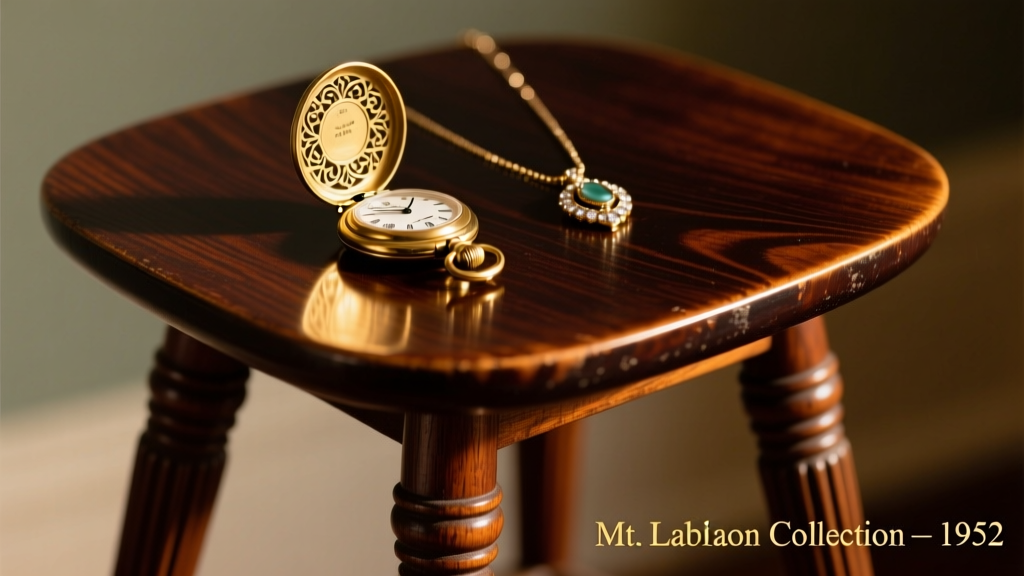
Shaker Dark Varnish Stool from Mt. Lebanon: A Study in Simplicity, Provenance, and Preservation
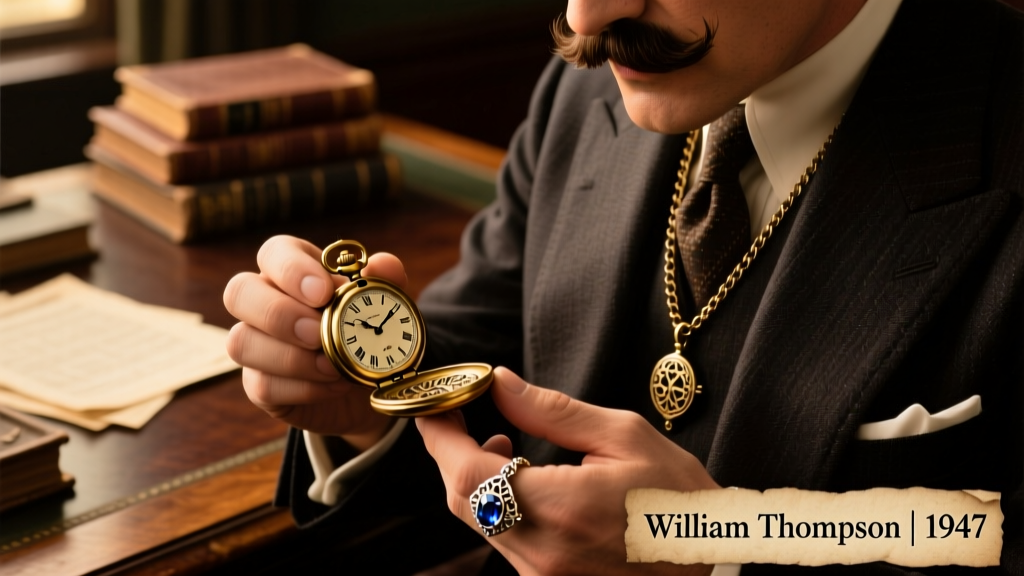
William Thompson: The Forgotten Master of English Watchmaking and Jewelry Design, 1890–1945

Modern Design Auction: The Resurgence of Mid-Century and Contemporary Studio Jewelry & Watches at Auction
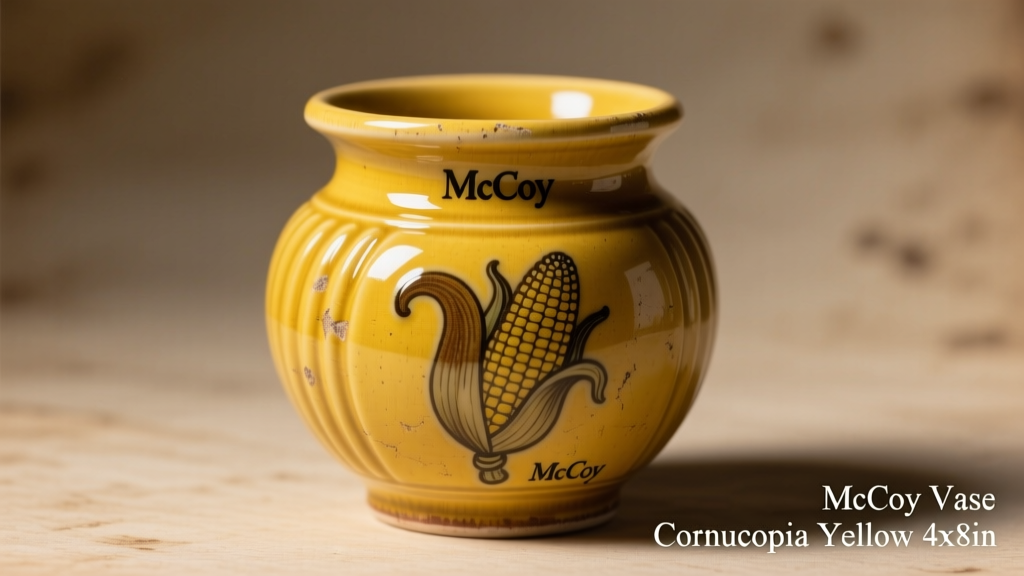
McCoy Vase Cornucopia Yellow 4 × 8 In — Identification, Provenance, and Market Value of a Mid-Century American Ceramic Icon
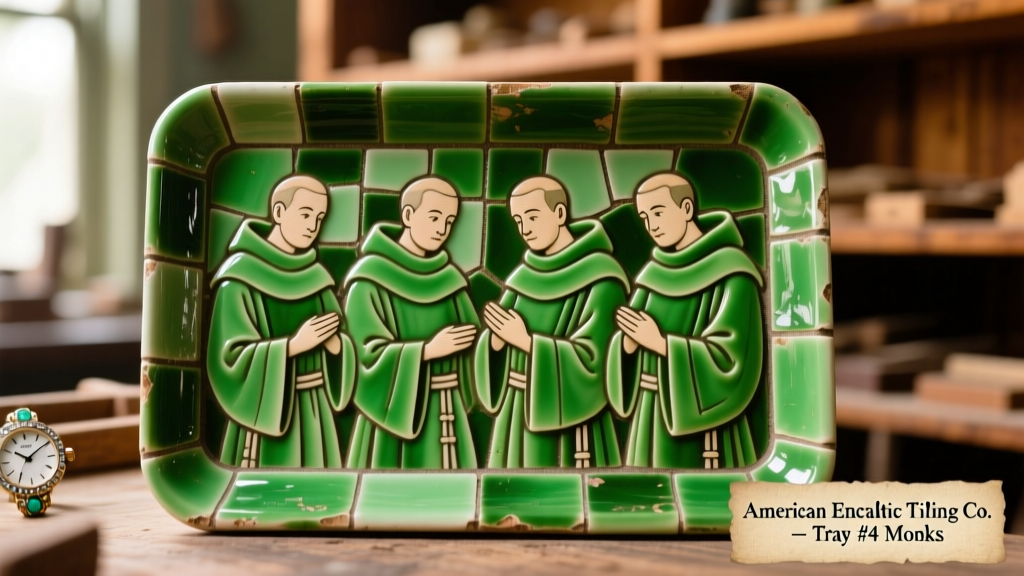
American Encaustic Tiling Company Tray: '4 Monks' in Bright Green, 6½ × 5 Inches — A Rare Art Tile Artifact from the Golden Age of American Ceramic Design

Heisey Waverly Fan Vase: A Study in American Brilliant Cut Glass Innovation and Mid-Century Elegance